
- Description of the plant
- Difference from onion
- Beneficial properties
- Agricultural technology
- Choosing a location
- Illumination
- Humidity
- Soil
- Predecessors
- Good neighborliness
- Landing
- In the spring
- In the fall, before winter
- Growing for greens
- Growing for a head
- Planting technology
- Care
- Watering
- Weeding and loosening
- Fighting diseases
- Top dressing
- Thinning
- Varieties
- Belozerets
- Albik
- Vitamin
- Early Cascade
- Airat
- Guarantee
- Strongman
- Bonilla F1
- Kharkiv Kushchevka
- Siberian amber
- Guran
- Yellow Kuban
- Sophocles
- Family
- Sir 7
- Star
- Sprint
- Kainarsky
- Emerald
- Knyazhich
- Primalis
- Berezovsky the aristocrat
- Snowball
- Octopus
- Ural Red
- Afonya
- Banana
- The White Queen
- Cleaning and storage
- Prevention of diseases and pests
- Onion nematode
- Onion fly
- Aphid
- Fungal infections
- Bacterial soft rot
- Peculiarities of obtaining Ashkelon onion seeds
- Culinary uses
- Application
- Reviews
Shallots have many nutritional, flavor, and medicinal properties. They are grown in Eurasia and North America. A ripe head of this vegetable resembles garlic, breaking apart into individual cloves. The plant requires little care or storage, and is resistant to viral and fungal infections. Pest control relies on preventative measures.
Description of the plant
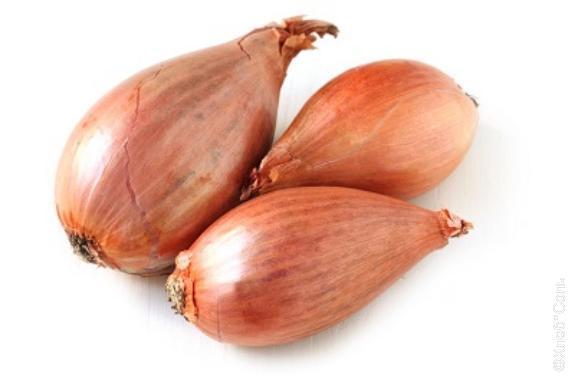
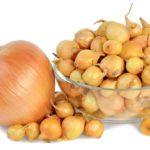
Shallots belong to the onion family. During the growing season, they produce green shoots that form a bulb in the ground.Both parts of the plant are edible, have high nutritional value, and are used in cooking and folk medicine.
The vegetable has a two-year cycle:
- from seeds - formation of a rosette of leaves and small onion sets;
- from sets - formation of a multi-lobed head, green leaves with flower stalks.
The scales can be colored:
- in white;
- yellow;
- red;
- cream;
- brown;
- purple.
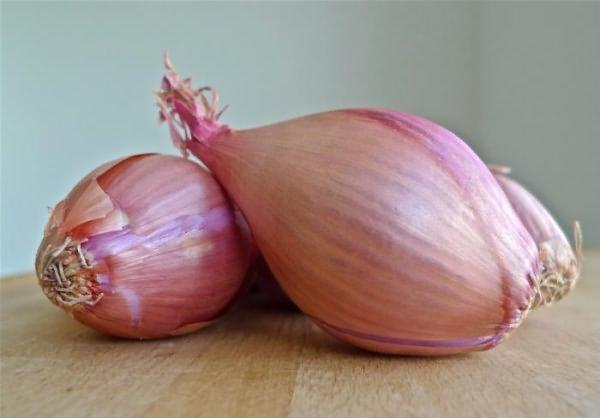
A clove weighs between 16 and 70 grams. The flesh is white, light lilac, greenish, or purple, and juicy. The greens are tender, not bitter, aromatic, and remain firm throughout the growing season. Shallots can have a spicy, semi-spicy, or sweet flavor. According to ripening time, the vegetable is classified as early, mid-season, or late.
Difference from onion
Shallots differ from onions in a number of ways:
- by the number of newly formed heads (one for onions, 5-14 for shallots);
- ripening periods (3 months – onions, 2 months – shallots);
- content of vitamins and microelements (shallots are richer than turnips).
Onions are not planted in the fall due to subsequent bolting. Shallots are grown as a winter and spring crop.
Beneficial properties
Kuschevka has healing properties and is a valuable food supplement.
Shallots contain:
- carbohydrates;
- proteins;
- water;
- vitamins;
- macro-;
- microelements.
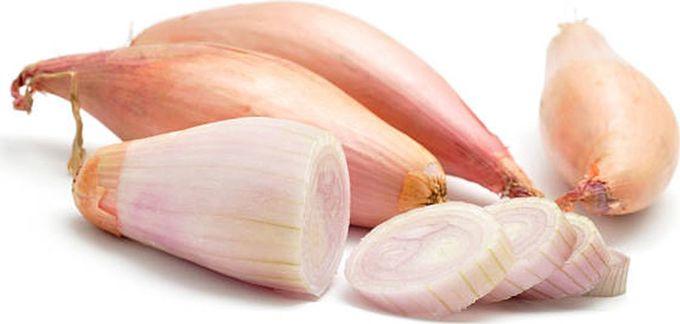
The high percentage of water content (80%) determines the low calorie content of the vegetable crop: up to 40 kilocalories for the bulb, 15 kilocalories for the greens.
Shallots are rich in vitamins B, A, C, and PP. In addition to essential minerals, the vegetable contains cobalt, chromium, selenium, and vanadium.
Carotenoids, flavonoids, and phytoncides have a beneficial effect on the cardiovascular, digestive, and visual systems of the body.
Agricultural technology
Features of shallot cultivation include:
- deadlines;
- landing site;
- soil preparation;
- seed material;
- rules for plant care.
Vegetables are grown for their greens and bulbs, both as a winter and spring crop. In the first year, when planted, the seedlings form up to five bulbs in a nest, and in subsequent years, up to 14. Autumn shallots ripen two weeks earlier than those planted in spring.
Choosing a location
The quality of shallots depends on growing conditions. If these aren't met, the bulbs will be small and tough, the stems will be narrow, and the plant's immunity will be weakened.
Illumination
Shallots grow worse in shaded areas and are less resistant to fungal and bacterial infections.
Humidity
Shallots require moderate watering during the growing season, except for the last month before harvest.
Soil
The soil should have a neutral acidity and a loose, nutritious structure.
Predecessors
When determining the planting location and organizing crop rotation for shallots, it is necessary to take into account the condition of the soil after previous vegetable crops.
Legumes
Peas, beans, and legumes have the ability to enrich the soil with nitrogen, which favors the development of shallots.
Cucumbers
Cucumbers are grown in loose, manured soil. Over the course of the season, the manure rots, creating favorable conditions for planting shallots.
Tomatoes
Tomatoes, like shallots, do not tolerate fresh manure in the soil. During the growing season, the soil beneath tomatoes becomes depleted and acidic. Fertilizers and slaked lime are required for restoration. Otherwise, these plants are good predecessors to each other.
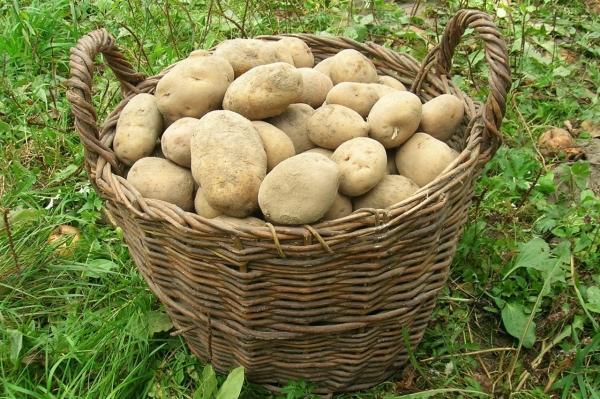
Potato
Potato tubers loosen the soil. Adding manure to clay soils under potato plants creates favorable conditions for growing shallots.
Zucchini
The vegetable requires structured, enriched soil, like shallots. Its strong root system loosens the soil well, and its broad leaves suppress weed growth. Zucchini is an excellent precursor for all vegetable crops except pumpkin.
Good neighborliness
Onions and carrots are mutual repellents. Planting them close together repels onion and carrot flies. Pests that overwinter or pupate in the soil dislike radishes and radishes, which favors shallots.
Landing
Shallots tolerate winter and early spring planting well. The choice depends on the propagation method and the planting purpose.
Sow seeds and bulbs in furrows. The depth for seeds is 3 centimeters, for bulbs – 5-6 centimeters in spring, 7-8 centimeters in fall.
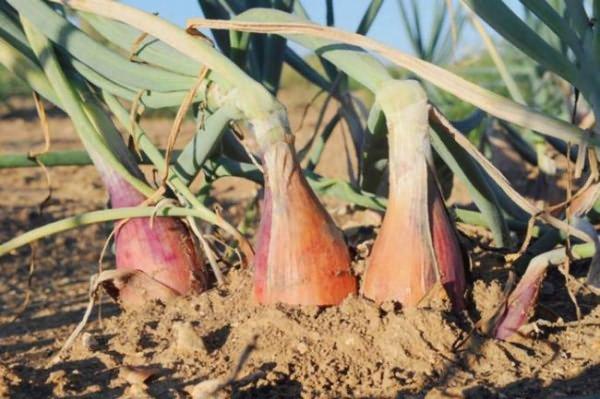
Moisten the furrows with settled, not cold, water. Space seeds 7-10 centimeters apart, bulbs 18-15 centimeters apart, and rows 10-25 centimeters apart.
In the spring
Spring sowing is necessary to obtain seeds and force the green foliage to emerge. In regions with harsh winters, the seeds are planted for heads. Early planting of cold-hardy crops allows the plant to establish itself before pests appear.
Time
Onion sets are grown by sowing seeds directly into the ground after the snow melts (late March). Cloves are planted after the soil warms to 10-12 degrees Celsius (early April).
Site preparation
The soil in the garden bed is prepared in the fall: it is dug to a depth of 10-15 centimeters, and humus and ash are added. In the spring, when harrowing, a complex fertilizer is added at a rate of 50 grams per square meter.
Preparing the seed material
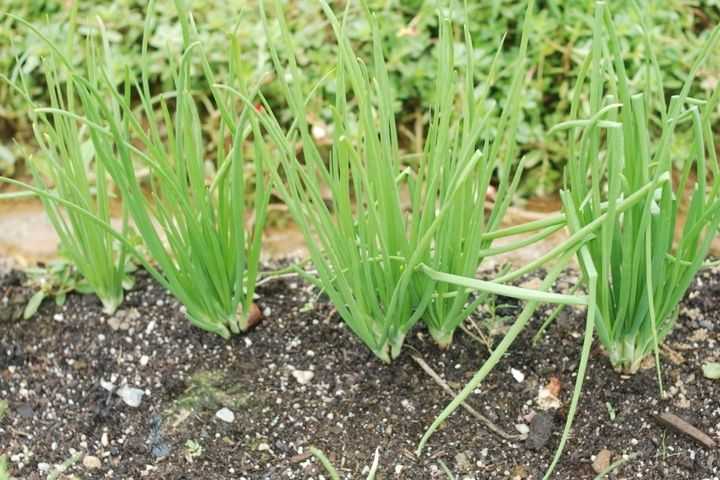
The seeds are kept in the refrigerator for two weeks: the first seven days with moisture, and the following seven days with fertilizer. The seeds are stored in a sealed bag with damp cotton pads and mineral fertilizer (not in contact with the seeds).
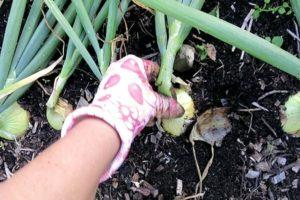
The planting material is calibrated, selecting dense, healthy cloves. The selected bulbs are heated: for two weeks at 20 degrees Celsius, and for 8-10 hours at 40 degrees Celsius. They are then disinfected in a pink solution of potassium permanganate for two hours and dried.
Germination
Peel the bulbs of excess scales and trim the ends. Place the cloves in a wide container and cover with warm water until roots appear. You can add growth stimulants to the water, according to the instructions for the vegetable crop.
Size
Second- and third-generation bulbs are sorted by diameter: large bulbs (3 centimeters and over) are selected for greens; 2 to 3 centimeters are selected for bulbs. One-year-old sets are selected for bulbs. Shallot seeds are used to renew the planting stock (for sets).
Lurastil or mulch
The choice of covering material depends on the region: for southern regions, mulching with peat or straw is best; for northern regions, lurastil.Mulch prevents evaporation, preventing the soil from overheating. Lurastil protects against hypothermia during frosts.
In the fall, before winter
In regions with mild winters, shallots are planted in the fall to obtain early greens and an early harvest of bulbs.
Time
Planting work is carried out at the end of October, the first days of November.
Site preparation
The soil is dug over, and rotted manure and ash are added. For fall planting, the furrows are deepened to 7-8 centimeters. Planting occurs in dry soil. In warm, rainy weather, cover the bed with plastic to prevent premature germination.
Preparation of seed material
For winter planting, seed is calibrated depending on its intended use (feathers or heads) and disinfected. Soaking to accelerate germination is not used.
Growing for greens
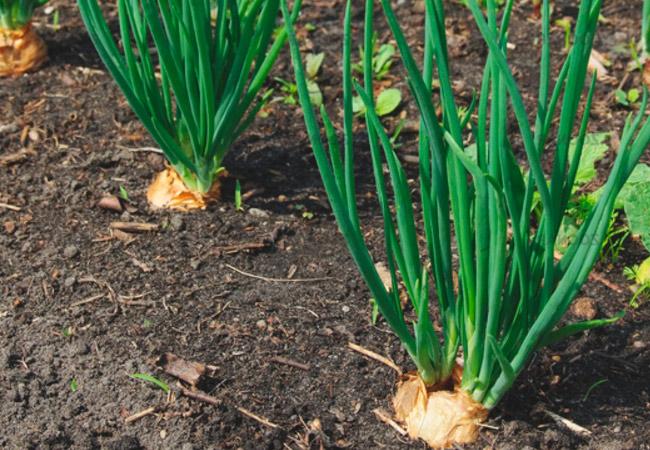
Shallot greens, unlike onions, don't become tough for a long time. They are harvested when the greens reach 25 centimeters, two weeks after germination.
In open ground
To obtain shallot greens in early spring, bulbs of cold-hardy varieties are planted in the fall. When planting in spring, the bulbs are not planted deep, leaving the tops above the soil surface.
At home
Shallots can be grown indoors for their greens by planting the bulbs in boxes with prepared soil in February. Earlier forcing is impossible due to the long dormant period.
Growing for a head
To obtain a multi-lobed turnip, one-year-old onion sets or a two- or three-year-old bulb are planted.
Planting technology
Furrows are marked in the seedbed for either strip or row planting. The spacing in the row depends on the seed: the larger the seed, the wider the spacing should be. The spacing between rows is determined similarly.
Sevkom
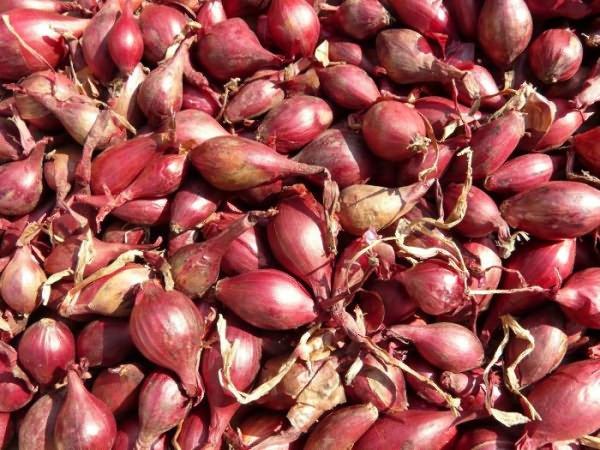
Onion sets are planted shallower than mature cloves, more compactly. Avoid planting them too close to the surface, as this will expose the bulb, and avoid planting them too deep, as this will prevent the bulb from developing sufficiently.
Seeds
The depth of planting in the soil is up to 4 centimeters.
Care
It is necessary to maintain the soil in optimal condition, destroy pests and fight diseases.
Watering
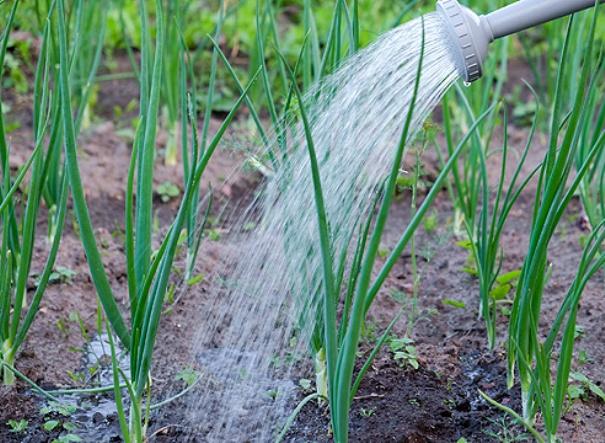
Shallots require watering at the beginning of the growing season and on hot days. Watering should be stopped a month before harvest. Overwatering will lead to the development of pathogens. Drought will cause the bulbs to underdevelop.
Weeding and loosening
Weed control should be carried out regularly, while simultaneously loosening the crust.
Fighting diseases
Shallots are susceptible to fungal and bacterial infections, which can be controlled during the growing season by removing and destroying affected plants. The primary method of disease prevention is preventative measures involving soil and planting material preparation.
Top dressing
Fertilizers are applied twice during the entire period: after the appearance of the 3rd feather - urea, after 2 weeks - superphosphate.
Thinning
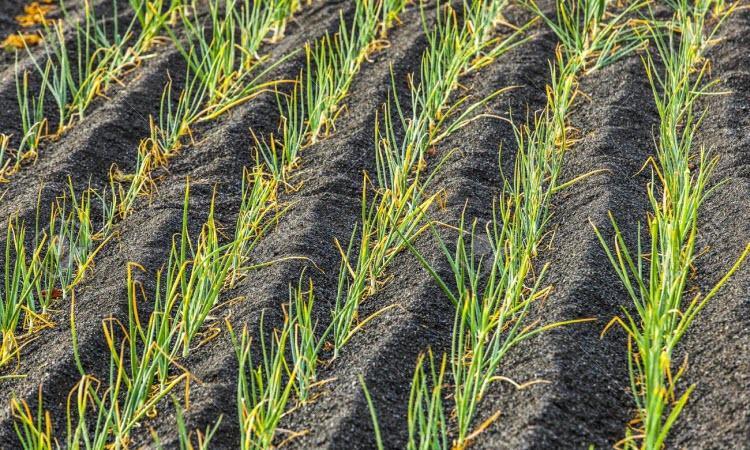
To obtain larger cloves, thinning is carried out: at the end of June, beginning of July, some of the bulbs are removed from the nest, preserving the root system and scales of adjacent cloves.
Varieties
Thanks to selection, a large number of shallot varieties have been developed.
The differences are:
- in terms of ripening;
- taste qualities;
- shape, weight, number of bulbs;
- color of scales and pulp;
- resistance to weather conditions and pathogenic damage.
Hybrid varieties allow onions to be grown as an annual crop and sown with seeds for green mass.
Belozerets
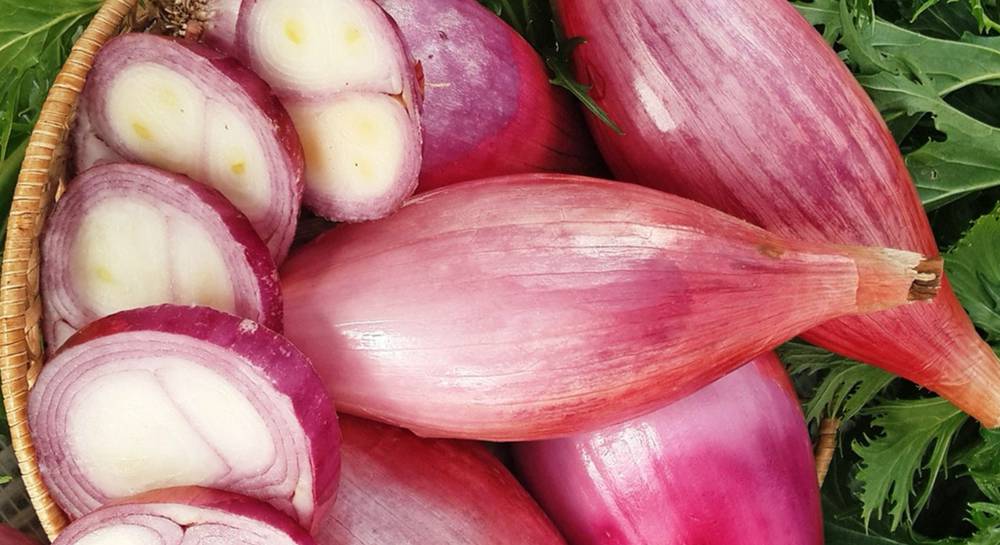
A high-yielding table variety. Ripening time from planting is 2.5 months. The bulbs are small, up to 30 grams, oval-round, with purple scales, and store well.
Albik
- A mid-season variety with good shelf life. Yields up to 2 kilograms per square meter.
- The bulb weighs 28 grams and is yellow in color.
- Ripening period: 45 days from planting. The taste is semi-sharp.
Vitamin
The bulbs weigh 25-30 grams, are yellow, and have a pungent flavor. Frost-hardy, early-ripening, and mature in 1.5 months. Suitable for growing indoors and outdoors. A drawback is the tendency for the greens to lodge.
Early Cascade
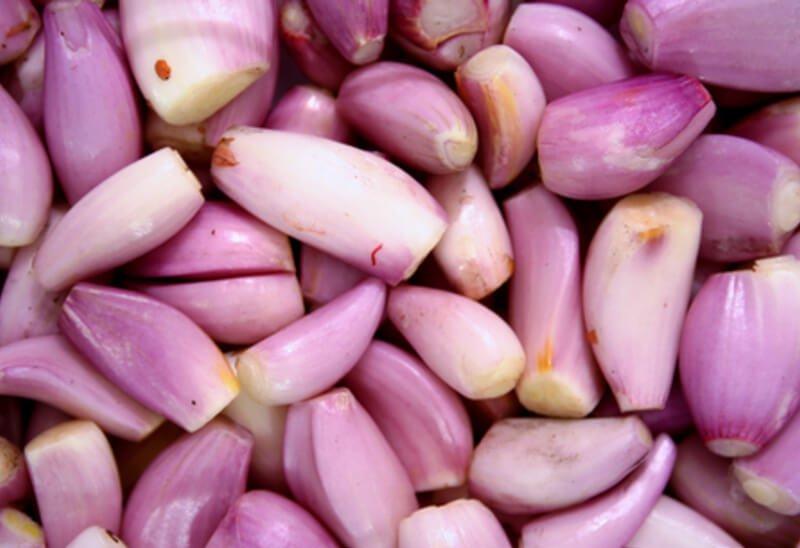
An early shallot. The bulbs are pink, egg-sized, weigh 36 grams, and have a pungent flavor. Yield: 1.7 kilograms of bulbs and 3.5 kilograms of greens per square meter.
Airat
A mid-season variety with a pungent flavor. The bulbs are yellow or orange, weighing up to 16 grams, with 6 bulbs per bulb. Grown primarily for their greens. Yield: up to 1.2 kilograms of bulbs, 3 kilograms of green leaves.
Guarantee
A medium-ripening, semi-sharp shallot. It yields up to 2.5 kilograms per square meter. It is grown for its bulbs and greens. It is used for canning, fresh, and cooking.
Strongman
A pathogen-resistant variety. The bulbs are purple and used for pickling.
Bonilla F1
This annual variety is used for growing greens. The lemon-colored bulbs weigh 32 grams and mature in 60 days. Each cluster contains 4-5 bulbs. The yield per 10 square meters is 16 kilograms.
Kharkiv Kushchevka
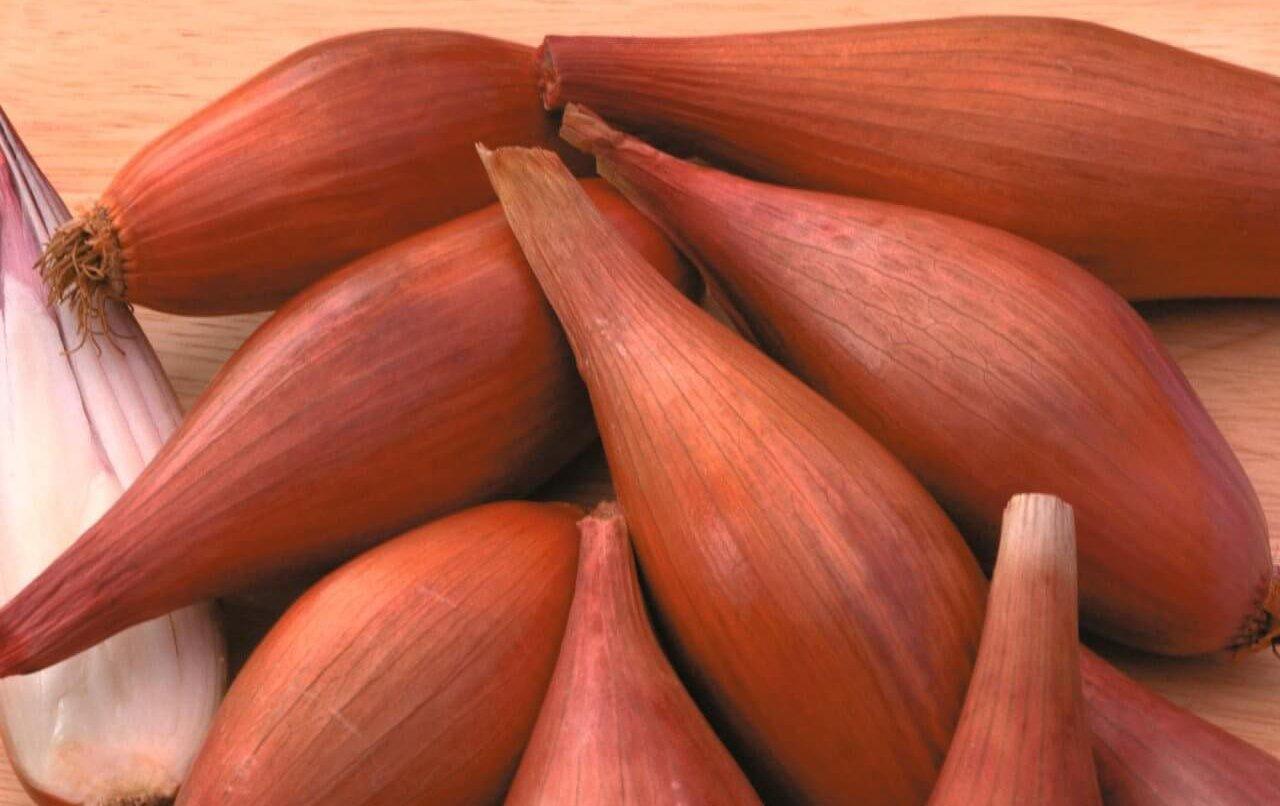
A productive, early-ripening, table-worthy variety. The bulbs weigh up to 28 grams and are purple in color.
Siberian amber
A late-ripening, semi-sharp, table shallot that is cold-hardy. It produces 5-8 orange cloves weighing 28 grams each. It is resistant to fungal attack.
Take a look Also
Guran
A mid-season, semi-sharp variety. Each clove weighs 28 grams. Six cloves per cluster. Yield: 20 kilograms per 10 square meters. Scale color: gray, orange, brown.
Yellow Kuban
The most popular shallot variety: high-yielding (up to 28 kilograms per 10 square meters), large (5 bulbs, 35-42 grams per bulb), and easy to store. Ripening period: 2 months. The skin is yellow. The flesh is white, semi-sharp, and crisp.
Sophocles
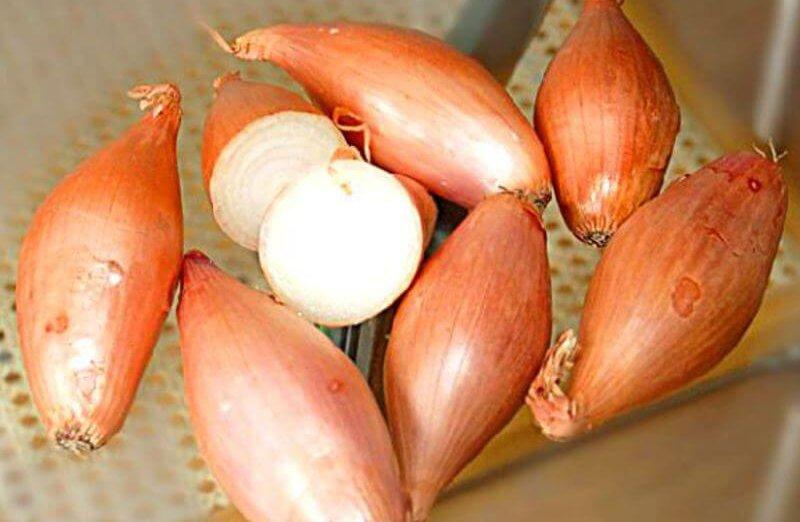
Shallot is an early-ripening variety. It produces a head of five bulbs weighing 52 grams each in 1.5 months. The scales are reddish-brown, and the flesh is purple and pungent. It grows in heavy soils and is resistant to frost and pathogens.
Family
This early-ripening, frost-resistant variety produces five cloves, each weighing 26 grams, with a semi-sharp flavor. It's used in salads and appetizers.
Sir 7
An early-ripening, frost-resistant variety. It produces eight bulblets per cluster. Yields 18 kilograms per 10 square meters.
Star
Shallot, zoned for the North Caucasus region.
Advantages:
- early ripening;
- drought-resistant;
- low susceptibility to downy mildew;
- spicy to the taste.
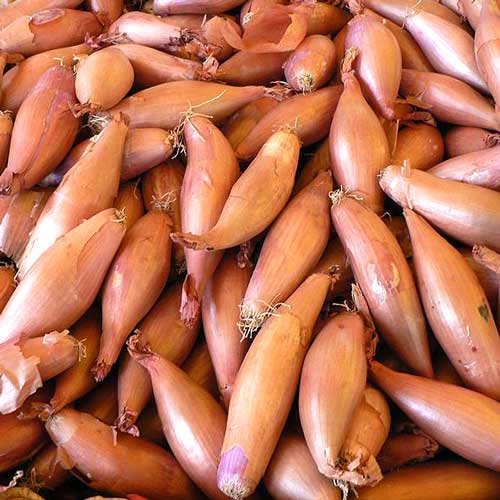
The nest contains 2-4 bulbs, 15 leaves, and a total weight of 70 grams. Yield: 14 kilograms/10 square meters.
Sprint
The variety was bred in 1993. Growing regions: Ural region, Urals, Siberia, North Caucasus.
Characteristics of shallots:
- early;
- 2-14 bulbs per nest;
- color of scales – yellow;
- pulp – light green;
- taste – spicy.
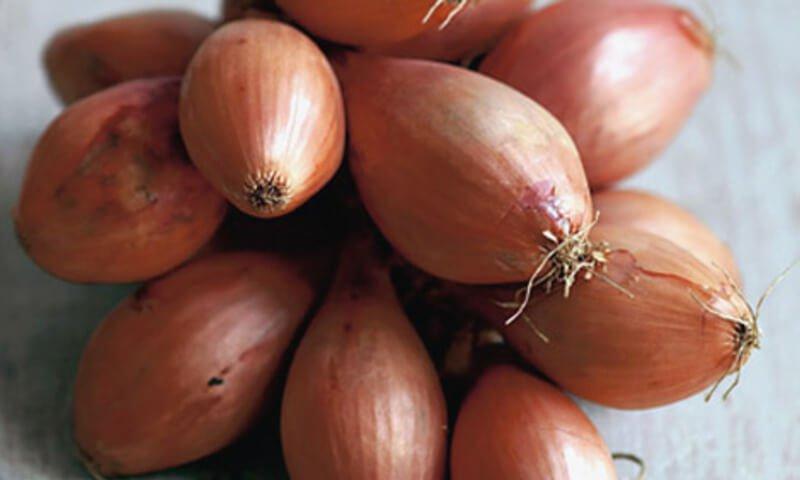
It is recommended to grow onions for their green foliage. The yield is 42 kilograms per 10 square meters.
Kainarsky
A versatile variety, suitable for both bulbs and greens. The time from planting to harvest is 83 days. The bulbs weigh 26 grams, have a semi-sharp flavor, and are brownish-pink. The flesh is pale lilac. Susceptible to downy mildew.
Emerald
Early maturing, semi-sharp. It forms a head of 3-4 bulbs weighing 18 to 22 grams, brownish-pink in color. Productivity: up to 15 kilograms per 10 square meters.
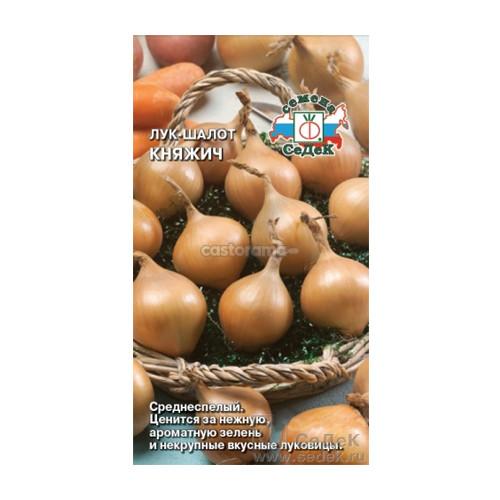
Knyazhich
The bulb harvest begins in 2.5 months, and the green foliage in 3 weeks. The scales are dark brown, the flesh is purple, weighing 25 grams and semi-sharp in flavor. Each bulb contains 8 bulbs. The yield is 30 kilograms of bulbs and 50 kilograms of greens per 10 square meters.
Primalis
This variety is resistant to fungal diseases. It produces bulbs weighing 10-40 grams, with bright yellow scales and white-purple flesh.
Berezovsky the aristocrat
A mid-season, high-yielding (up to 3.5 kilograms per 1 square meter) shallot variety.
Snowball
Bulbs with juicy white flesh, up to 7 pieces in a nest, with a total weight of up to 300 grams.
Octopus
A mid-season, semi-sharp shallot. The cloves are elongated, weighing up to 28 grams. The scales are red, and the flesh is red.
Ural Red
This variety, bred for the Ural region, is easy to store and resistant to bolting. The cloves weigh up to 70 grams, are rounded and flattened, red, and have a semi-sharp flavor.
Afonya
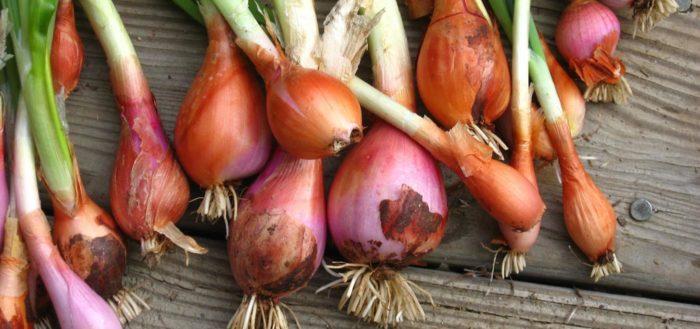
A semi-sharp, mid-season shallot. Each bulb contains 4-6 bulblets, weighing up to 40 grams. Yields up to 20 kilograms per 1/100 square meter. The scales are red, the flesh is pink.
Banana
The bulbs resemble bananas in shape and sugar content. This is one of the most popular varieties. Other names include "centy-tooth garlic" and "Spanish garlic." It is widely used in cooking.
The White Queen
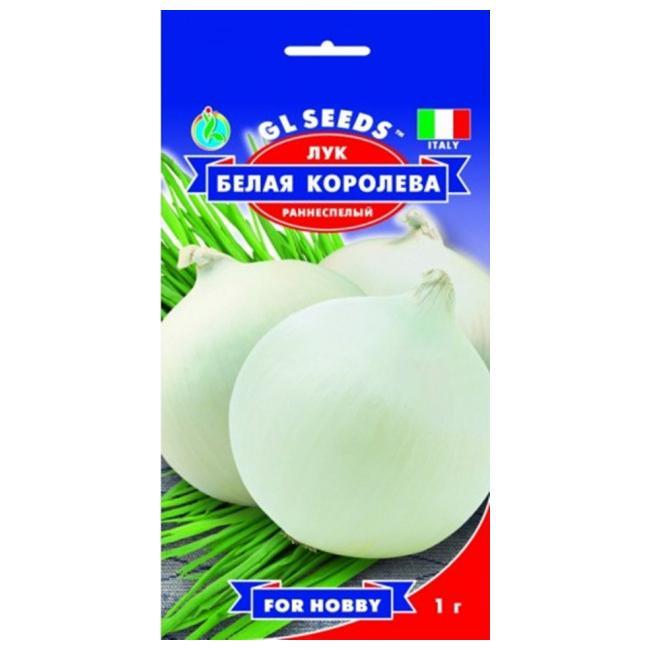
Early ripening dessert variety.
Characteristics of shallots:
- 8-10 bulbs in a nest;
- 50-70 grams per link;
- oblong-round shape;
- light cream colored shell;
- white flesh;
- sweet taste with bitterness;
- good shelf life;
- disease resistance.
Onions are used in preparing salads and appetizers.
Cleaning and storage
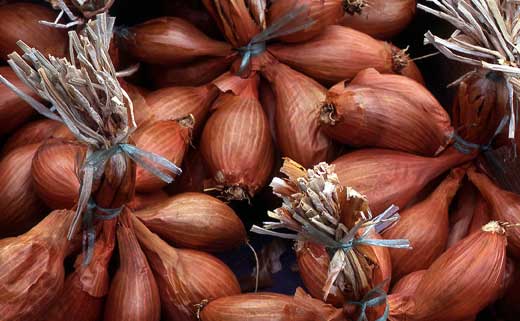
When the shallots are half-dried and lie flat on the bed, it's time to harvest the shallots. Delaying harvesting will cause the bulbs to disintegrate in the soil and begin to sprout. Use a shovel to dig up the nest and pull the bulb out of the ground. After drying (in the sun or in a ventilated area), remove the dried shallots, leaving a 2-4 centimeter stump. Separate the shallots into segments and store them in boxes or nets in a dark, dry, cool place for up to 8 months. Braided shallots are stored hanging.
Before storing the harvest, it is recommended to dry and disinfect the vegetable storage facility with sulfur dioxide gas. Temperature conditions should be between 2-3°C and humidity should be up to 70%.
Prevention of diseases and pests
Protecting plants from parasitic and viral-fungal infections with preventative measures is easier than fighting for the harvest throughout the summer.
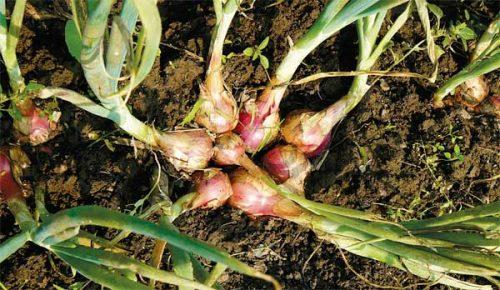
Onion nematode
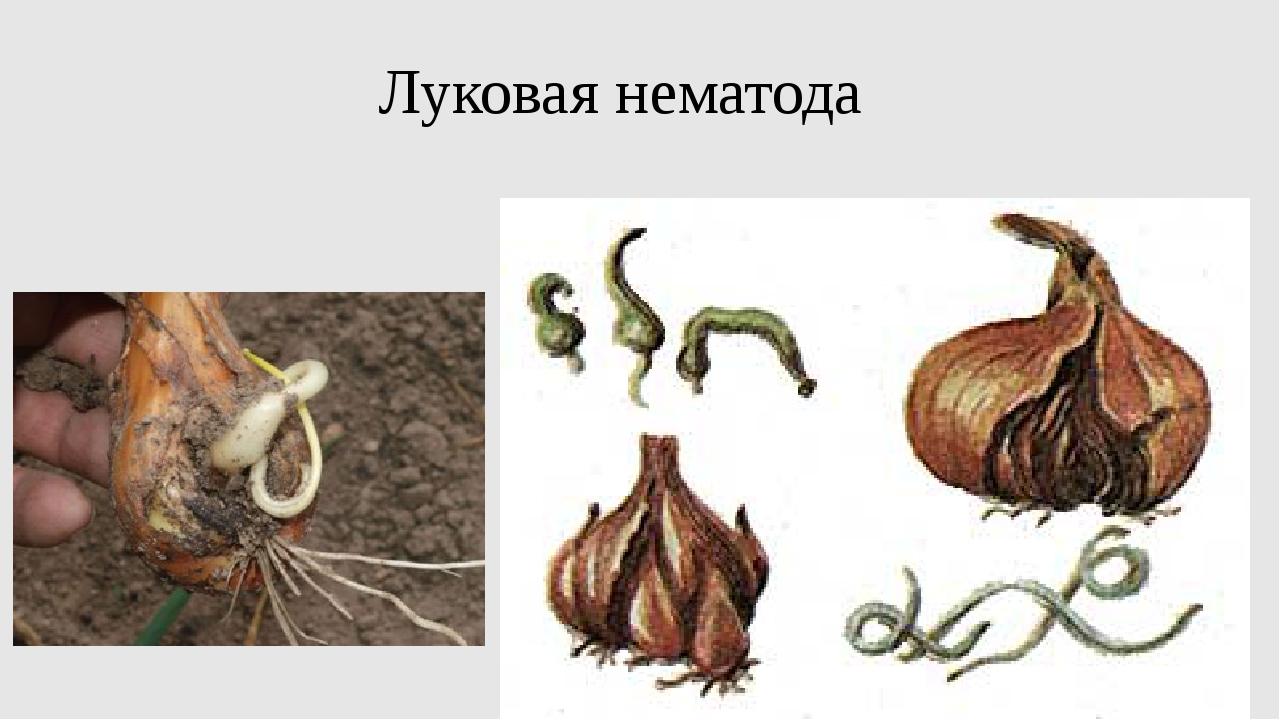
The onion nematode is a microscopic worm that feeds on the sap and tissue of the onion bulb. Adults are no larger than 1.8 millimeters, while larvae are 0.3 millimeters.
Nematodes live in the soil at a depth of up to 1.5 meters, while:
- withstand temperatures down to -2 degrees;
- can survive in the ground without food for 18 months;
- On plant residues they remain viable for 6 months to 3 years.
Penetrating the onion bulbs from the soil, the female lays 400 eggs. Up to several thousand nematodes can coexist in a single bulb. Crop losses can reach 80-100%. In storage facilities, infected bulbs serve as a source of further nematode spread and crop destruction.
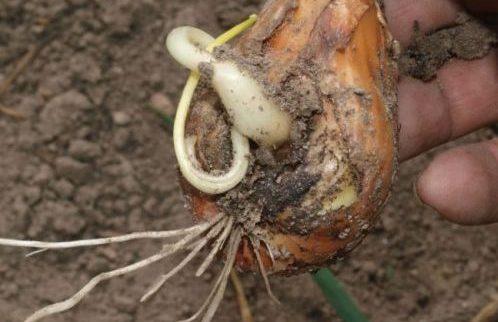
Signs of nematodosis:
- deformation and drying of green mass;
- loose structure of the head;
- white spots;
- peeling of the bottom;
- the smell of rotten onions after soil moistening.
The presence of 20 individuals in 1 kilogram of soil makes planting shallots in this area unprofitable.
Onion nematode infection can only be prevented by preventive measures.
The pre-sowing stage provides the greatest effect in the fight against onion nematodes:
- Maintaining the soil in a loose state by adding peat and sand.
- Soil disinfection:
- soda solution (1 gram per 1 liter) at the rate of 3 liters per square meter;
- percalcite ameliorant (200 grams per 1 square meter);
- ammonia water.
- Careful selection after harvesting and during preparation of planting material.
- Disinfection of sets:
- heating up to 40 degrees for 10 hours;
- soaking in an ash solution for 2 hours;
- 0.05% manganese solution for 24 hours;
- in hot water (45 degrees) for 1 hour, then dry.
Crop rotation, disinfection of equipment, planting onions at an acceptable low temperature and low humidity – additional conditions for pest control.
Onion fly
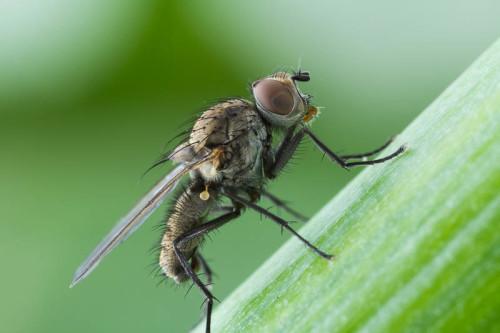
The onion fly resembles a housefly: gray in color and 6-8 millimeters in size. Infection occurs through eggs laid by the parasite on seedlings. After 1.5 weeks, larvae emerge, feeding on the onion scales. External signs of plant infestation include stunted growth, yellowing of the onion leaves, and a loose bulb with a rotten odor. The larvae pupate in the soil at a depth of 10 centimeters. After 3 weeks, new offspring emerge.
Chemical treatment of areas where shallots are planted is necessary.
The following are used as pesticides:
- ammonia solution;
- Fly eater;
- Summer resident.
After treatment, do not eat greens and bulbs for the period specified in the instructions. Planting carrots next to shallots is the best way to repel insects from your crops.
Other repellents include strong-smelling infusions:
- valerian;
- wild rosemary;
- wormwood;
- tobacco.
Spraying should be done regularly throughout the summer. Wood ash and tobacco dust, dusted on each sprout, help prevent egg laying. Crop rotation and disinfecting bulbs before planting are essential for onion fly control.
Aphid
Insect colonies destroy the green foliage of shallots, their main food source. The source of aphid infestation is bulbs and weeds in greenhouses. In vegetable storage facilities, aphids overwinter between dry scales, making them difficult to detect. Distortion, wilting of the shallots, and the appearance of a sugary coating are signs of an aphid attack.
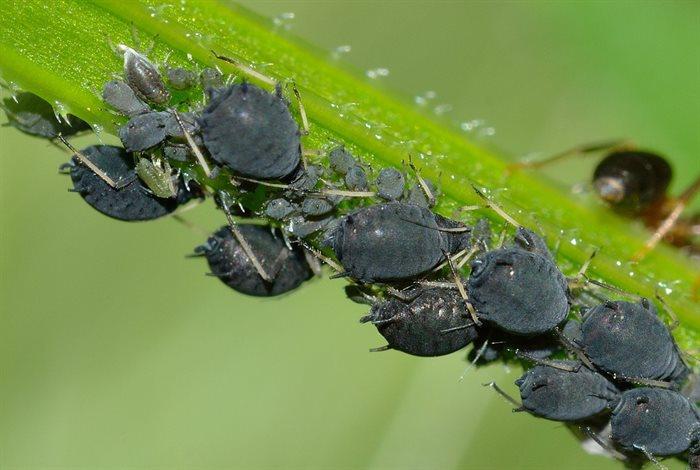
To destroy wingless neotoxoptera, the following are used:
- bioinsecticides;
- tar soap solution;
- apple cider vinegar;
- tobacco dust.
During the growing season, damaged plant parts must be removed and burned. Insect prevention includes disinfecting seed, maintaining crop rotation, and limiting the use of nitrogen fertilizers.
Fungal infections
Shallots are parasitized by specialized and polypathogens. The following are dangerous for shallots:
- powdery mildew;
- downy mildew;
- fusarium;
- gray neck rot;
- yellow dwarfism.
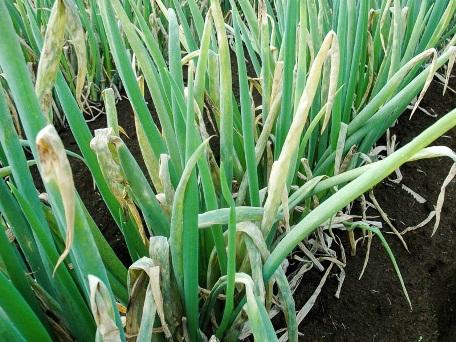
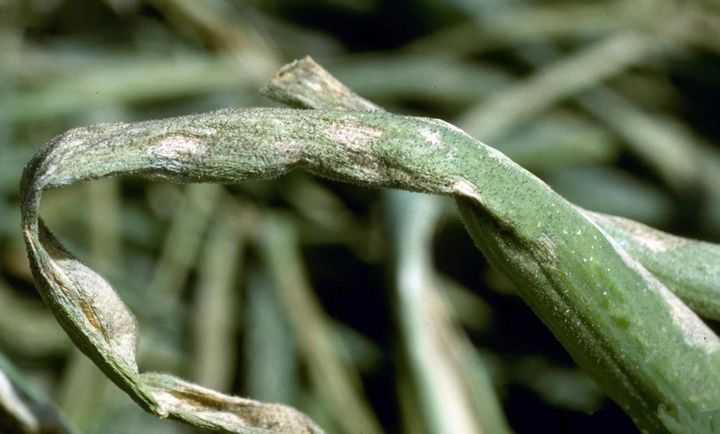
Downy mildew and peronosporium (powdery mildew and downy mildew) are similar fungal diseases that affect both shallot bulbs and shallot stems. Spores overwinter in bulbs, roots, and plant debris. Symptoms of powdery mildew include yellow spots with a gray coating on green seedlings.
Infection is promoted by high humidity and temperatures around 16 degrees Celsius. Spores are carried by the wind. Sunny, hot weather kills the conidia.
Prevention:
- pre-sowing heating of seed material;
- growing shallots in loose soils, sun-warmed and wind-blown areas;
- compliance with crop rotation.
Root rot (fusarium) attacks shallots planted in heavy soil. Heavy rainfall after drought, resulting in a dense crust, creates favorable conditions for mycelial growth in the soil, roots, and bulb.
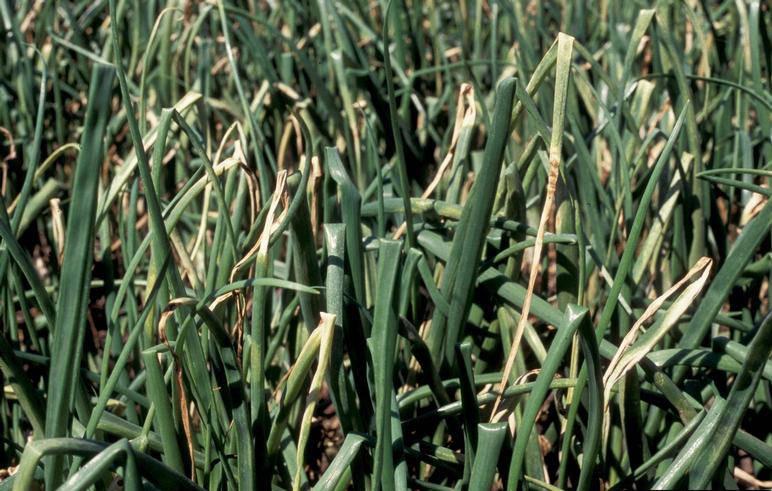
External signs:
- thinned, pinkish-purple roots;
- yellowing of the feather tips;
- wilting of leaves.
Prevention – compliance with agricultural technology requirements.
Gray neck rot infection occurs during the growing season, when cutting greenery. The fungus penetrates the bulb, which eventually mummifies. The source of infection is the bulbs.
Prevention concerns the post-harvest period:
- removing the feather after complete drying;
- sorting onions in storage and removing diseased heads;
- placement next to radishes, the phytoncides of which are destructive to fungal spores.
A decrease in bulb size and weight, along with reduced branching, is a sign of degeneration due to viral infection. Prevention includes regularly renewing seed, using larger bulbs, thinning, and destroying infected plants.
Bacterial soft rot
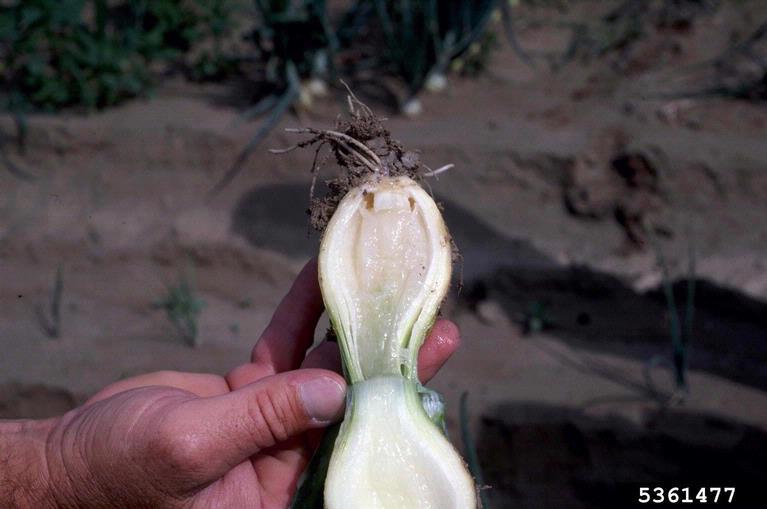
Bulb disease spread by onion flies goes undetected in the early stages of infection. The decay process progresses slowly:
- the scales gradually lose their juiciness;
- change color;
- dormant buds begin to grow;
- sliminess and an unpleasant odor appear.
By spring, the head becomes dark brown and dry. Disease prevention: crop rotation, selection, and preparation of planting material.
Peculiarities of obtaining Ashkelon onion seeds
Planting material degenerates over time, requiring replacement every 3-4 years. To obtain seeds, shallot bulbs are kept at a temperature of 6°C (43°F) for 90 days, after which they are planted in the ground. Instead of a feather, the plants will form stalks that will flower and produce seeds.
Culinary uses
Shallots are a staple and beloved ingredient in French cuisine. In modern cuisine, these bulbs, with their mild aroma and subtle flavor, are considered a delicacy. The vegetable is included in recipes for appetizers, sauces, entrees, first courses, and baked goods. The greens are used in salads and main courses.
Application
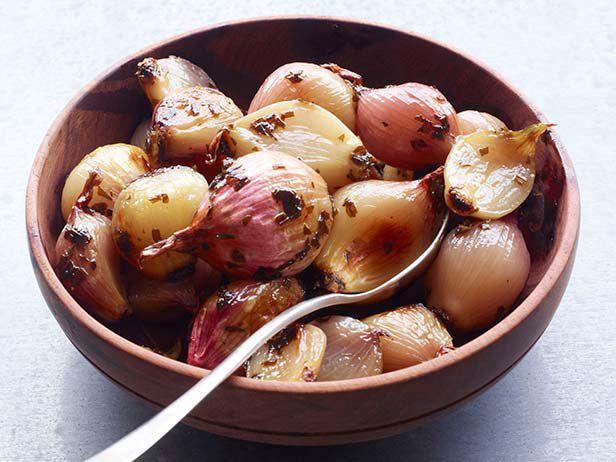
The plant is consumed fresh and processed. Shallots retain their flavor in vegetable storage throughout the fall and winter. The bulbs are pickled as a snack and canned with other vegetables. Chopped greens are preserved in frozen and dried form.
Reviews
Veronica, Taganrog:
"I prefer kushchevka onions to regular onions. The bulbs are tastier, not as pungent. The greens are softer and juicier. To get larger bulbs, I thin them out in the nest."
Svetlana, Krasnoyarsk:
"My onion stork took root in my garden right away, displacing the onions. Despite all its other advantages, I like the fact that it doesn't bolt like turnips. In our region, spring weather often gets cold. With onions, you have to constantly monitor the bolting process, otherwise you won't get any greens or bulbs."
Related posts:
 50 types and varieties of perennial onions with descriptions, cultivation, and care
 Description of the best varieties of onions, planting and care in open ground
 The best eggplant varieties for growing in a polycarbonate greenhouse: planting and care
 50 Best Carrot Varieties with Descriptions and Characteristics
 When is the best time to plant tulips in open ground? Timeframes by region and rules.
 Types of onion varieties with names and descriptions, their differences and cultivation
 Planting and caring for daffodils in open ground, the best time and growing rules
 When and how to plant tulips in the Urals in autumn and care for them outdoors
I've been growing shallots for the last two years, and I like them much better than onions. They have a slightly sweet flavor and a less pungent aroma. They don't fall apart when fried. You should definitely try growing them.