
- Planting Tulips in the Urals
- Soil requirements
- Preparing a flower bed
- Sorting and processing of bulbs
- Optimal planting times
- Spring
- Autumn
- Tulip planting patterns and methods
- To the garden beds
- In pots and baskets
- Tiered method
- The intricacies of plant care in the Urals
- Watering and fertilizing
- Weeding and mulching the soil
- Preventive treatments
- Trimming
- Insulation for winter
- When to dig up tulips after flowering in the Urals
- Deadlines
- How to properly dig up and store spent bulbs
The best time to plant tulips in the Urals is early autumn. This allows the bulbs to root well without sprouting prematurely. Furthermore, the tulips will naturally undergo the necessary stratification process. Only after overwintering in cold conditions will the tulips bloom with spectacular buds in the spring. Below is information on the specifics of planting primroses in the Urals, as well as how to dig up and store the bulbs.
Planting Tulips in the Urals
Choose a sunny site for planting tulips, protected from cold winds. If planted in the shade, the stems will grow thin and weak, and the flowers will be unsightly. To prevent waterlogging, it's best to build the flowerbed at a slight elevation. Tulips are one of the first flowers to appear in spring, so they deserve a worthy location.
Additional information: In the 17th century, culture was considered a symbol of wealth and prosperity. In the Netherlands at that time, there were even tulip exchanges.
Soil requirements
Tulips thrive in loamy soil. If it's too dense, add peat and sand. The soil shouldn't be too loose, otherwise the bulbs will freeze during the harsh winter. To improve fertility, add compost, humus, and wood ash. If the soil is acidic, add slaked lime.
Preparing a flower bed
A month before planting the bulbs, clear the area of debris and dig to a depth of 35 centimeters. Then, add nutrients: humus, compost, saltpeter, and superphosphate. The soil is dug again and leveled with a rake. Just before planting, the flowerbed is sprayed with a solution of potassium permanganate for disinfection.
Sorting and processing of bulbs
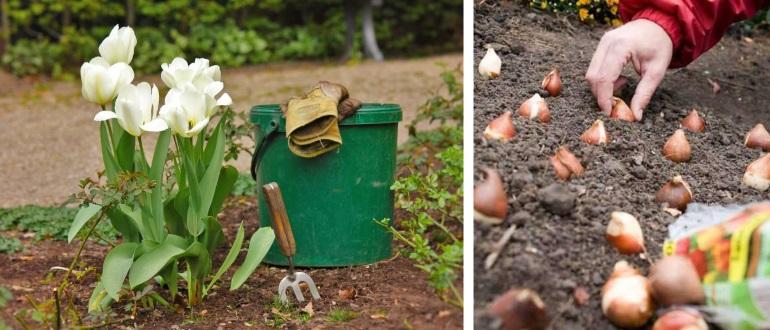
The planting material is sorted, and any damaged bulbs are discarded. The bulbs are separated by size: large bulbs are planted separately from small ones. High-quality planting material should be covered with a shiny, tightly adherent film.
If the damaged area of the discarded bulbs is small, they can be salvaged. To do this, cut out the damaged sections and soak the remaining parts in a potassium permanganate solution for 30-40 minutes. Healthy bulbs can be disinfected in the same manner.
Optimal planting times
Tulips in the Urals should be planted in the fall. The bulbs will have time to adapt over the winter and undergo the necessary natural stratification. If a gardener missed the early fall planting, they can plant the flowers later. However, the flower bed will need to be carefully insulated in this case. Tulips are planted in the spring only in emergencies.
Spring
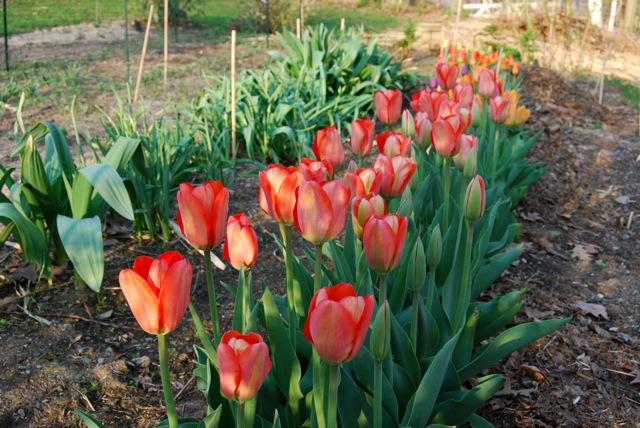
During this period, bulbs should be planted only if absolutely necessary. For example, a gardener might have missed the fall planting, or might have purchased a rare tulip variety in the spring. If planted in the spring, they won't see the plants bloom this season. However, the underground part will develop well, and the following year, the plant will produce beautiful buds.
Autumn
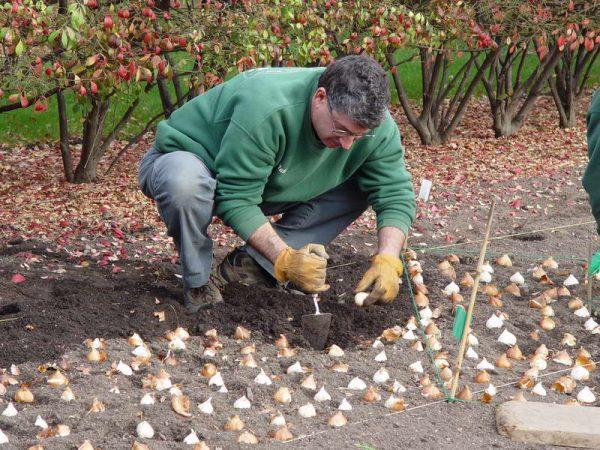
Early planting can lead to premature germination of tulips. A harsh winter with little snow can kill them. In the northern Urals, bulbs should be planted in late August. Planting continues until mid-September. In the south, the process is carried out from the first days of autumn until almost the end of October. By following these timeframes, gardeners can ensure the bulbs survive the winter safely.
Tulip planting patterns and methods
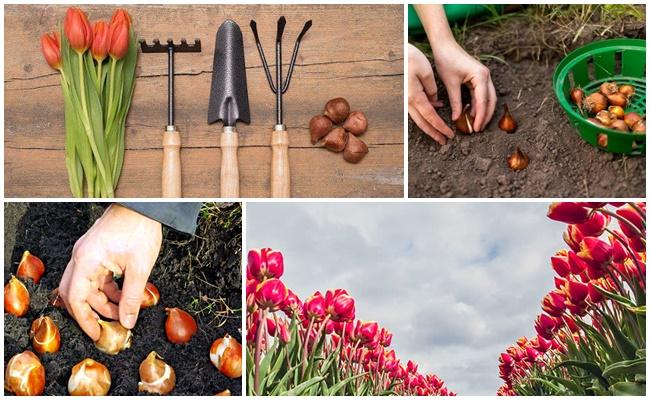
Tulips are traditionally planted in flowerbeds or arranged as borders along garden paths. They can also be planted under tree canopies. By the time the leaves begin to unfurl, the tulips will have finished blooming. Alternatively, the plants can be placed in a suitable container.
To the garden beds
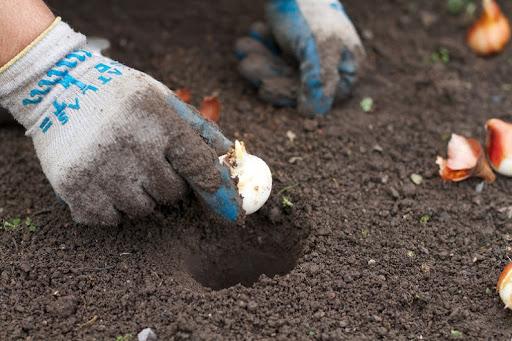
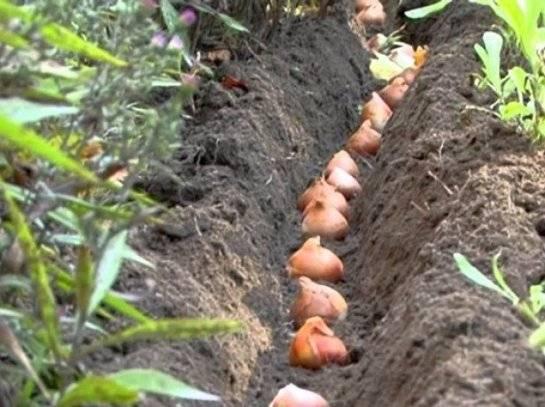
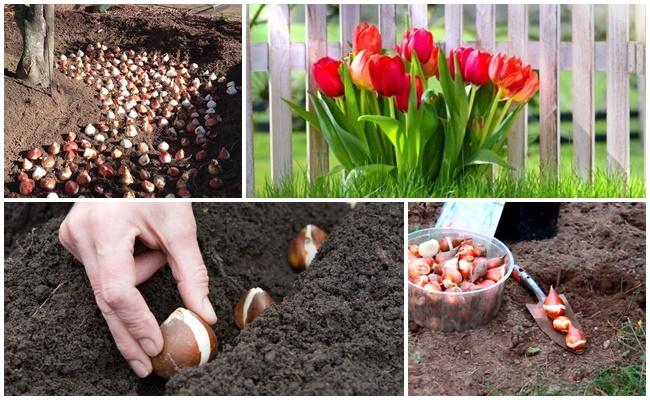
In open ground, bulbs are planted 8-10 centimeters apart. The depth depends on the size of the bulbs. For large bulbs, dig holes 12-15 centimeters deep, and for smaller bulbs, 7-8 centimeters. Fill the holes with soil and water.
Tulips can be used to create a beautiful floral arrangement. Large bulbs should be placed in the center of the flowerbed, with medium-sized ones at the edges. The larger the bulbs, the greater the distance between them. Generally, the distance between bulbs should be 6-10 centimeters.

In pots and baskets
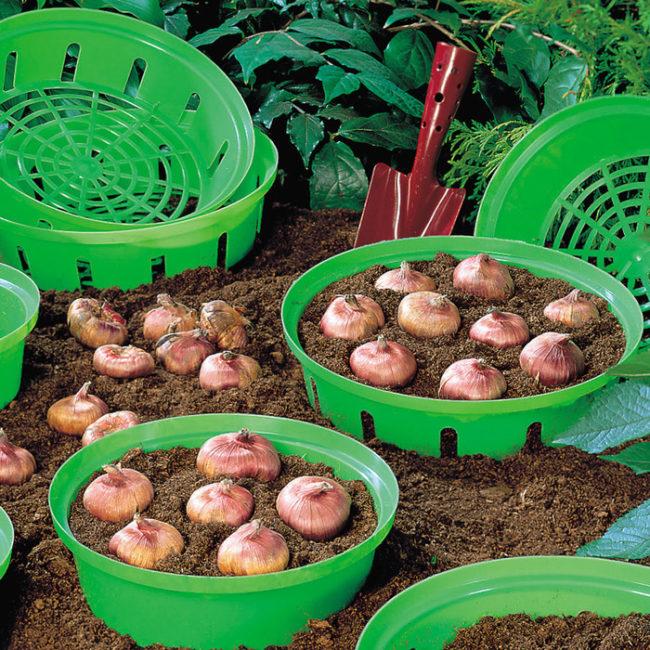
If you plant tulips in containers, you can control when they bloom. Pots, baskets, and boxes must have drainage holes. Line the bottom of the containers with small pebbles or expanded clay. Then fill them with loose soil. Bulbs can be planted close together in pots or boxes. Keep the containers at a temperature of 1-2°C for at least two months.
By placing them in a warm room in the middle of winter, the gardener will be able to admire the flowering plants at the beginning of March.
Tiered method
Bulbs can be planted not only in rows but also in tiers. A container is typically used for this. The bottom tier consists of large bulbs planted at a depth of 15 centimeters. They are then covered with soil, and medium-sized bulbs are laid out in a checkerboard pattern. The top layer consists of small bulbs.
The intricacies of plant care in the Urals
Care consists of timely watering, periodic fertilizing, and loosening the soil. Do not cut off the above-ground portion of the tulips immediately after flowering. The root system continues to receive nourishment through the leaves and flower stalks. Remove only dried flower buds. Once sustained frost sets in, the tulip bed will need to be insulated.
Watering and fertilizing
If the bulbs are planted in the fall, they don't require much watering. Moistening the soil when planting is sufficient. Then, rain and snow will provide sufficient moisture until spring. Tulips should be watered generously during bud formation and flowering. Fertilize them several times throughout the season. In early spring, apply a nitrogen-potassium-phosphorus fertilizer. The same mixture is applied during bud formation. After flowering, use a mixture of potassium and phosphorus. The bed can be sprinkled with wood ash, which contains a large amount of potassium.
Important! Apply nutrients a few hours after watering with plain water. If the fertilizer solution is added to dry soil, the root system may be damaged by salts.
Weeding and mulching the soil
After watering, loosen the soil around the tulips. This is necessary to prevent a crust from forming on the soil surface. Without loosening, air and moisture will have difficulty penetrating deep into the soil to reach the root system. At the same time, weeds should be removed, as they can carry diseases and pests.
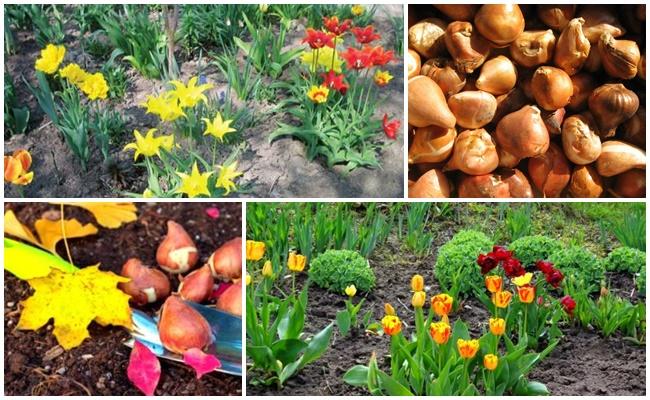
In the spring, when the tulips emerge, the soil around them should be mulched. This is necessary to retain moisture deep within the soil. Straw, peat, compost, and tree bark are all suitable mulching materials. These same materials can be applied to the flower bed in the fall, before severe frosts arrive.
Preventive treatments
To prevent disease, the bushes can be treated with special preparations according to the instructions. Before planting, the bulbs are disinfected in a solution of potassium permanganate or another antifungal agent. If tulips are diseased, treat not only the above-ground and underground parts, but also the soil around the plants.
Trimming
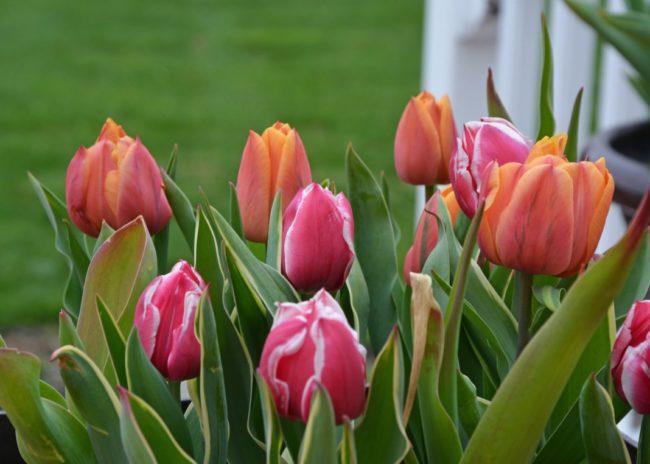
When the buds begin to dry out, they are cut off along with a piece of the flower stalk. Failure to do so can result in seeds forming, which will drain the plant's energy. This energy is needed for the bulb's development. After flowering, the underground part of the plant continues to develop. If the leaves and stems are completely cut off, the bulb's growth will stop. This occurs because the aboveground part continues to supply nutrients. Therefore, the leaves and stems are allowed to yellow and dry naturally.

Insulation for winter
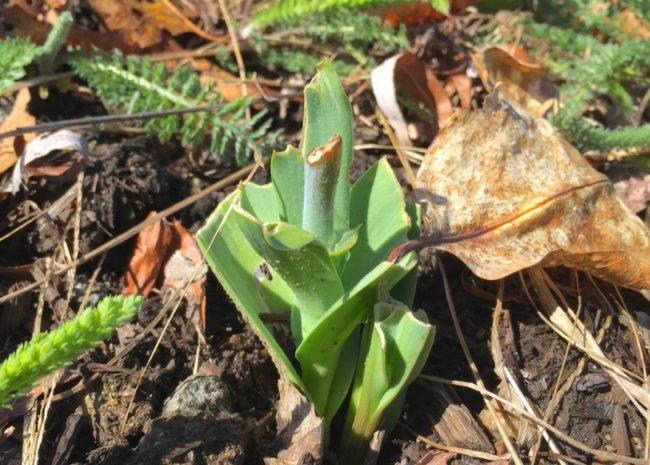
In the harsh Ural climate, insulating flower beds is essential. Before winter approaches, the soil above the tulips is sprinkled with peat, compost, and dry leaves. You can also cover them with spruce branches. For additional insulation, cover the flowerbed with a layer of snow in winter. As soon as the sun warms up, remove the covering material to prevent the bushes from rotting.
When to dig up tulips after flowering in the Urals
Experts recommend digging up and replanting bulbs annually. This is necessary to preserve the variety's hereditary properties. Furthermore, this procedure prevents overcrowding, which can result in small bushes and small buds.
Deadlines
Don't dig up the bulbs immediately after flowering. If you rush, the plant won't have time to absorb the nutrients it needs from the soil. The above-ground portions should turn yellow and dry out. Don't delay, though, otherwise it will be difficult to find a suitable planting site. If you dig haphazardly, you could accidentally cut the bulbs with your shovel.
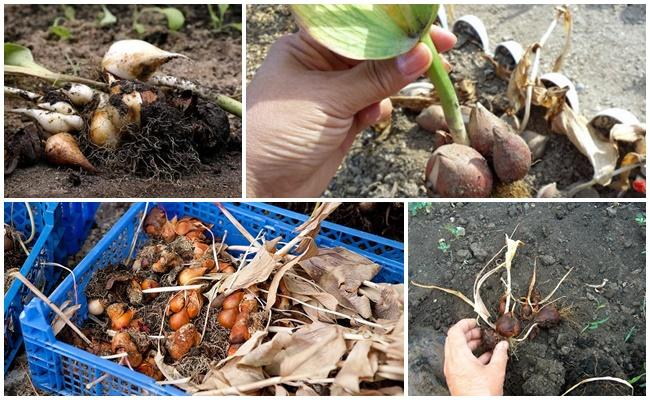
Please note! In the Urals, planting material is typically removed from the ground beginning in late June. By this time, the leaves and stems have dried out naturally.
How to properly dig up and store spent bulbs
The procedure should be carried out carefully, keeping the tool at a distance from the stem. It's best to use a pitchfork instead of a shovel. Young shoots grow close to the soil surface, so careless movements can accidentally damage them. The tool should be disinfected.
Then the bulbs are dried, shaking off any large clods of soil. If any stem fragments remain, do not forcibly remove them to avoid damaging the planting material. Plant debris will fall off a well-dried bulb on its own. The planting material is carefully inspected, and any diseased or damaged parts are discarded.
Before storing, the bulbs can be disinfected. Then, after drying, they are placed in a warm, dry place so they don't touch each other. Cardboard egg cartons, for example, can be used for this purpose. In early autumn, tulips in the Urals are planted outdoors.
Related posts:
 When is the best time to plant tulips in open ground? Timeframes by region and rules.
 Description of the top 20 most beautiful tulip varieties and types, their planting and care
 When is the best time to plant tulips in the Moscow region in autumn? Timing and care instructions.
 How to prepare and store tulip bulbs, possible difficulties
 Description of shallot varieties, cultivation and care, when to harvest
 How to plant tulips beautifully: diagram and ideas for landscape design
 Timing and rules for replanting tulips in the fall, further care
 Planting and caring for daffodils in open ground, the best time and growing rules