
- What is the principle by which tulip varieties are classified?
- Description of groups and best varieties
- Group 1 – early flowering
- Simple early
- Terry
- Group 2 – mid-flowering
- Triumph
- Darwinian hybrids
- Group 3 – late flowering
- Simple late
- Liliaceae
- Fringed
- Green-flowered
- Rembrandt tulips
- Parrots
- Terry late
- Group 4
- Kaufman tulips
- Foster
- Greig
- Low-growing or dwarf tulips
- Other hybrids and varieties
- Blue
- Black
- Yellow
- Whites
- The rarest varieties
- How to choose from such a variety: tips and recommendations
Tulips are a beautiful addition to any spring garden. Numerous varieties have been developed, and breeding efforts are still ongoing. By selecting and planting primroses with different bloom times from a wide selection, you can admire them from late March to early June. Below is information about the various groups and varieties of tulips, as well as tips and recommendations for choosing them.
What is the principle by which tulip varieties are classified?
Tulips are classified by bush height, flowering time, and bud shape. There are early-blooming, mid-blooming, and late-blooming tulips. Dwarf, low-growing, and tall plants are also available. By bud shape, tulips are divided into: goblet-shaped, cup-shaped, lily-shaped, parrot-shaped, peony-shaped, star-shaped, fringed, and ovoid.
Description of groups and best varieties
Plants are divided into three groups based on the time of bud opening. Bushes can be early, mid, or late bloomers.
In addition, there are species tulips, such as Kaufman, Foster, and Greig. They were named after great scientists.
Group 1 – early flowering
The inflorescences of these plants begin to bloom as early as March. Flowering continues until early May. There are single-flowered and double-flowered varieties.
Simple early
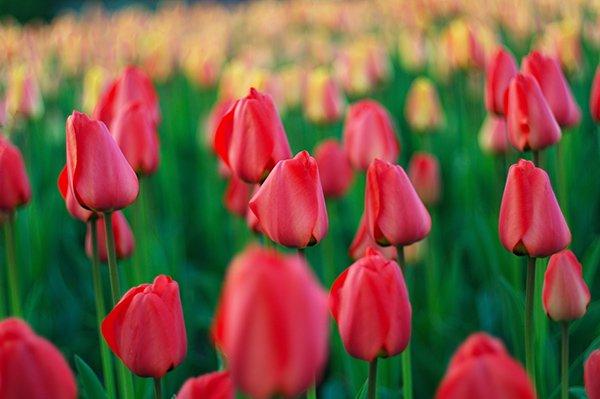
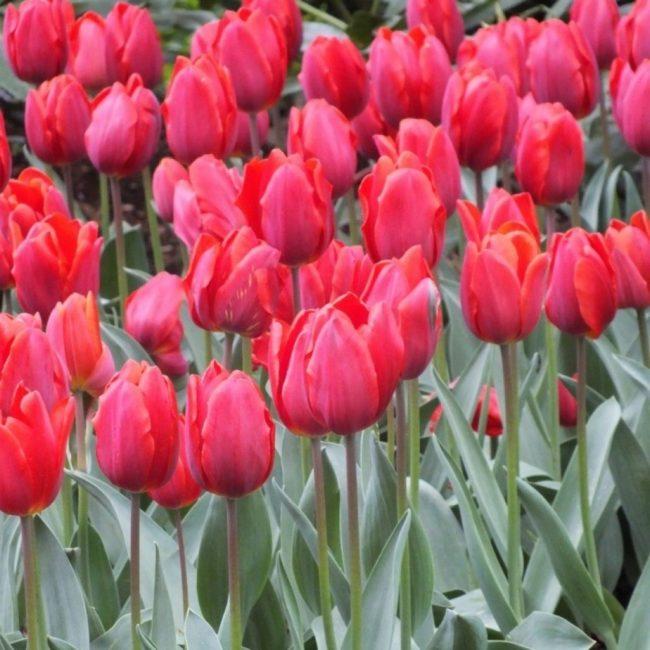
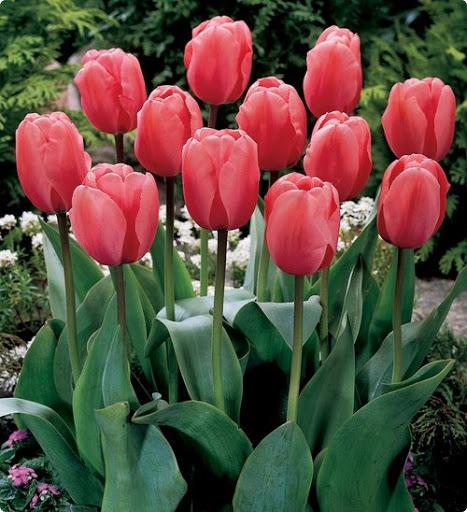
These plants reach a height of 25-40 centimeters. The petals of the buds are colored red, yellow, pink, and white. Bicolor varieties exist. The flowers are goblet- or cup-shaped.
Simple early tulips are used to decorate the garden and are forced to bloom on a specific date, for example, March 8th.
Terry
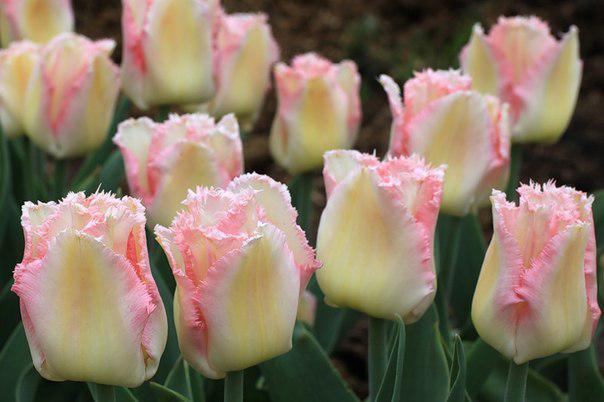
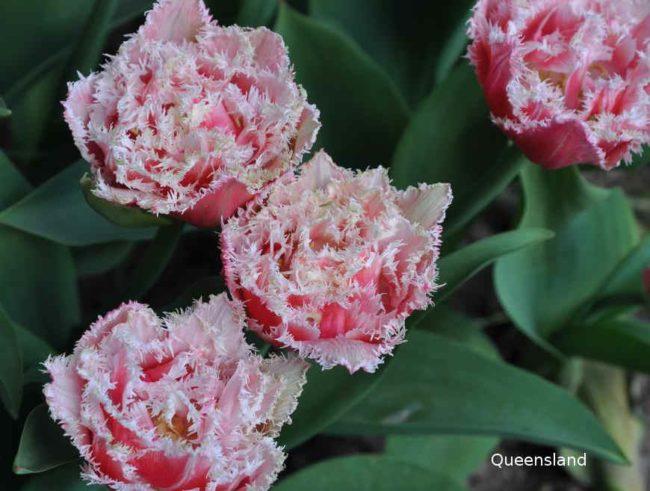
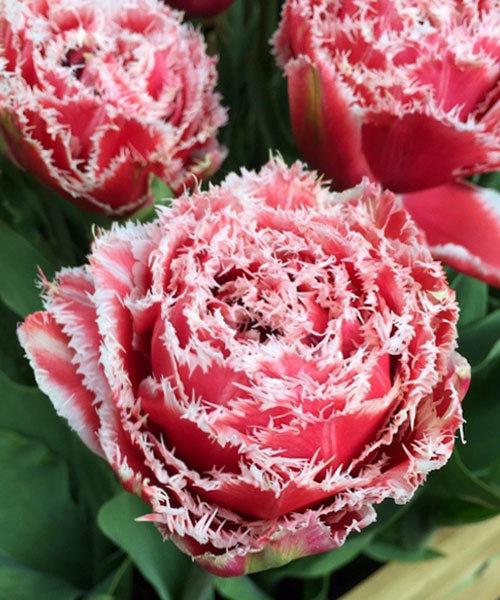
These plants are prized for their lush buds. The inflorescences come in pink, red, orange, purple, white, yellow, and even two colors.
This double-flowered plant is excellent for group planting. The plants are also used for forcing and cutting.
Group 2 – mid-flowering
The plant begins to bloom in late April. Mid-blooming tulips are divided into two classes.
Triumph
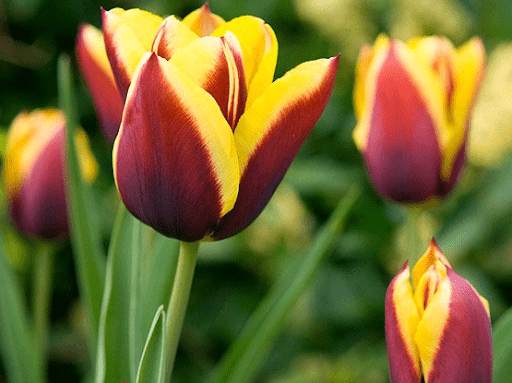
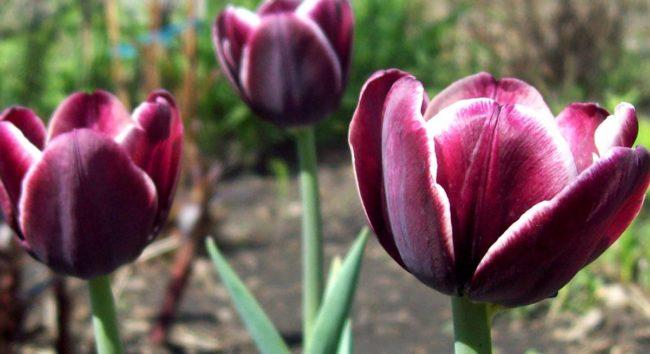
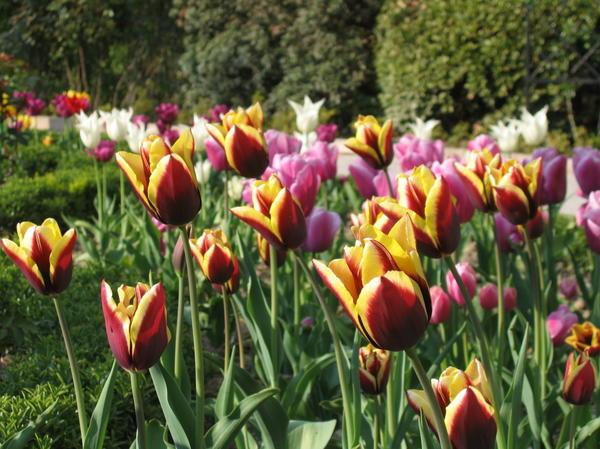
The bushes are distinguished by their tall growth. Flower stalks grow up to 70 centimeters. The goblet-shaped inflorescences come in a variety of colors.
The culture of this group is grown in pots and planted as a garden decoration.
Darwinian hybrids
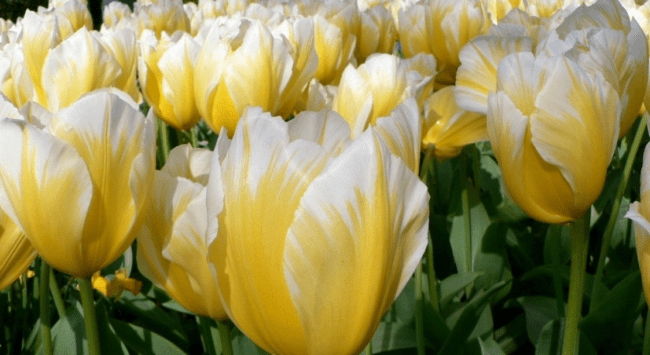
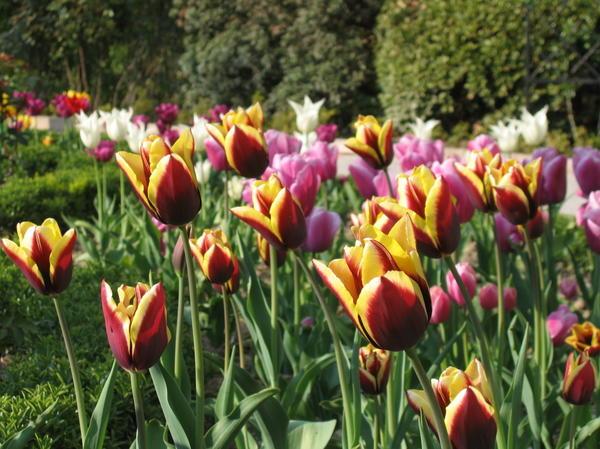
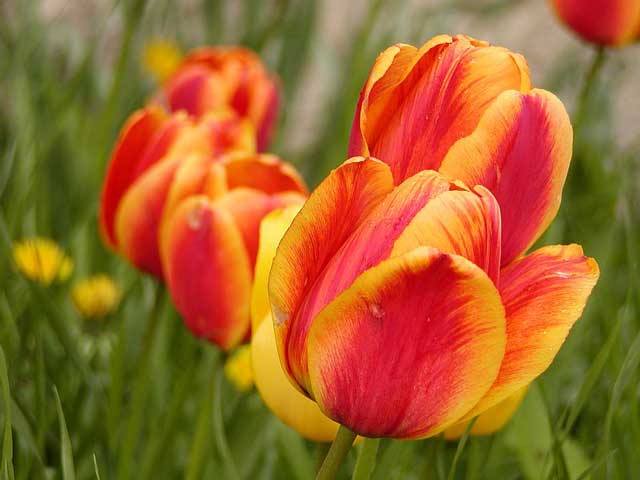
The plants are characterized by stems 70-80 centimeters tall and buds up to 10 centimeters in diameter. A black rectangular spot is located at the base of the inflorescence. The petals are most often red. Buds can also be salmon, white, pink, burgundy, or two-toned.
Plants are used for growing in spring flower beds and for cutting.
Take a look Also
Group 3 – late flowering
Tulips in this group bloom in late May. The buds continue to open until early June. The flower stalks reach a height of 60 centimeters. The buds are colored in a wide range of colors.
Simple late
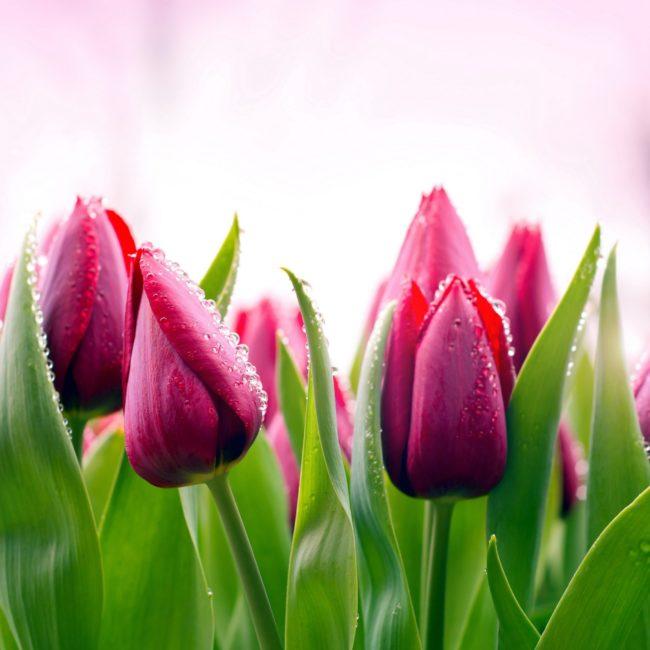
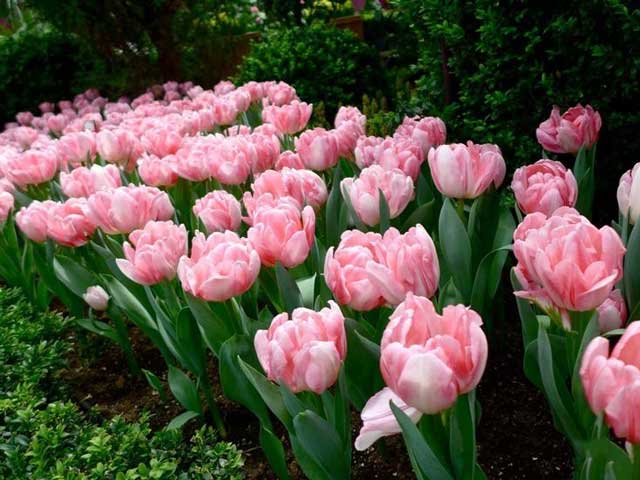
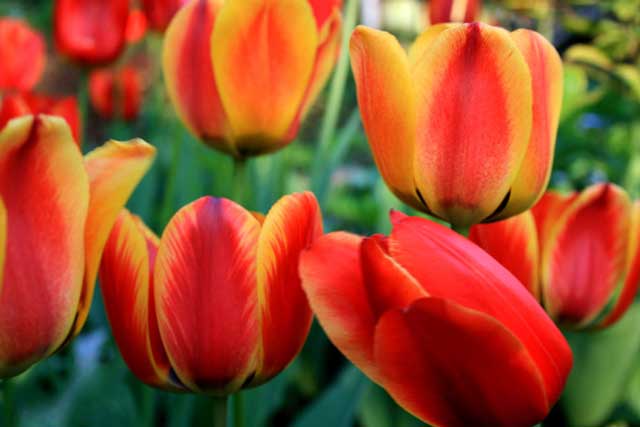
There are many varieties of single late-flowering tulips. Their goblet-shaped buds come in white, yellow, red, and lilac. There are also plants with two-colored petals.
2-5 buds can form on the stem of the plant.
Liliaceae
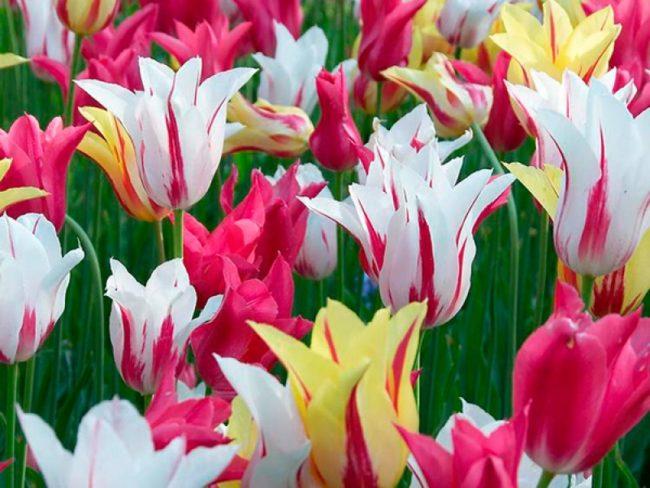
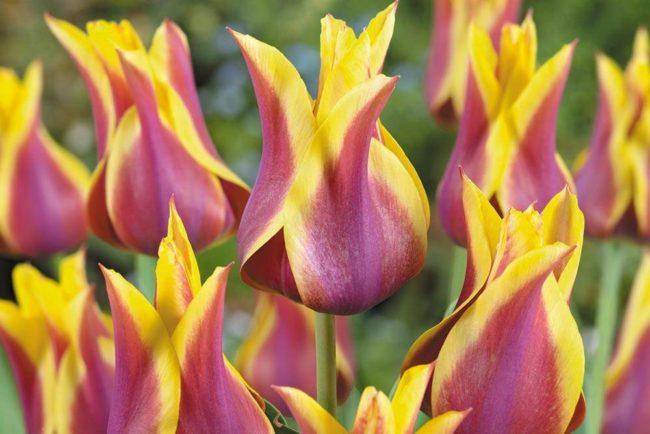
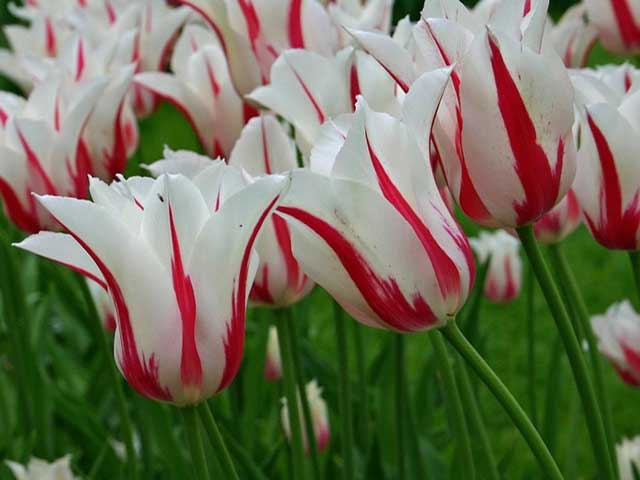
Plants in this group have beautifully shaped buds. The goblet-shaped inflorescences have pointed petals that curve slightly outward. The buds come in a variety of colors.
Spectacular plants with lily-shaped buds are planted to decorate the garden and used for forcing.
Fringed
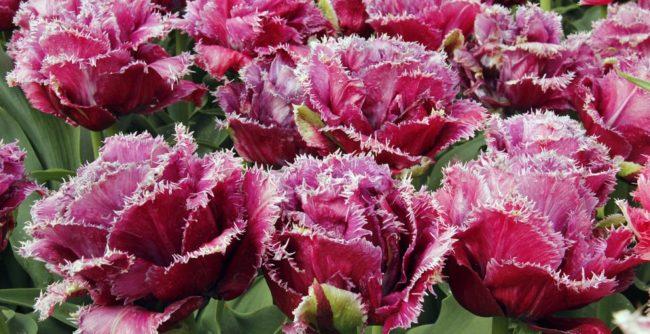
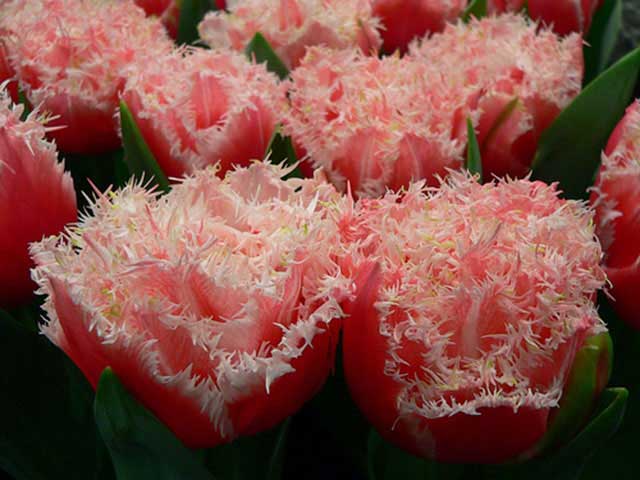
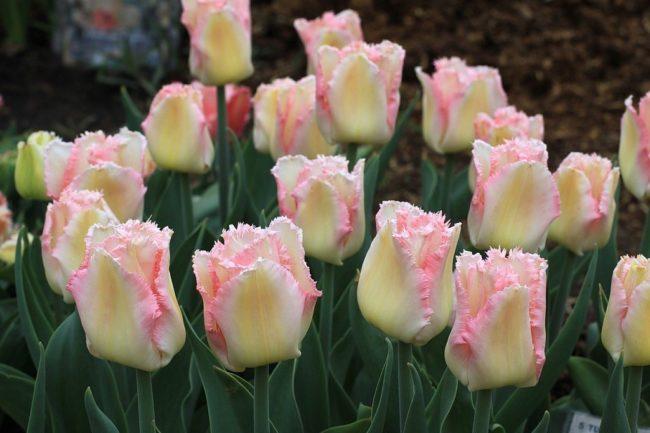
They are also called orchid tulips. The buds can be double, lily-shaped, or goblet-shaped. The petals have a needle-like fringe along the edges.
Fringed varieties of the crop require increased care.
Green-flowered
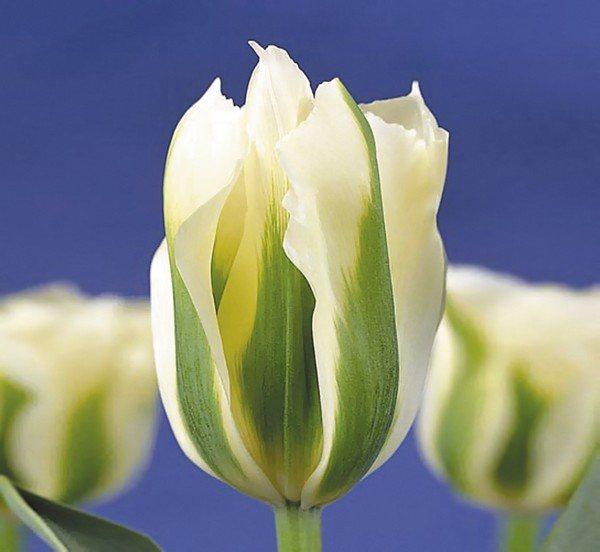
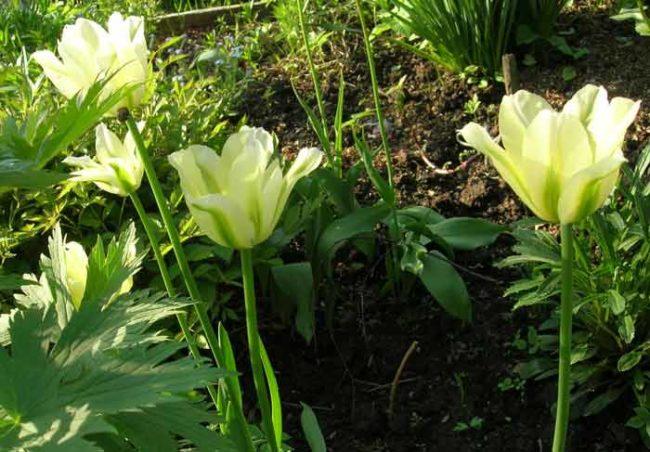
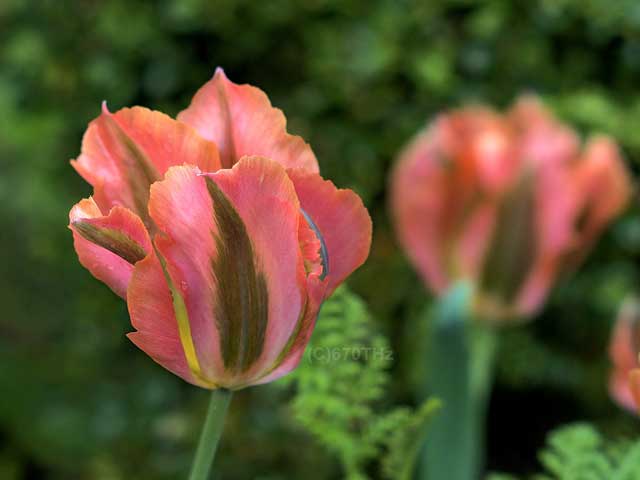
The cultivar gets its name from the green stripe running along its petals. This stripe remains throughout the flowering period. Green-flowered tulips reach 45-50 centimeters in height. The shape and color of the buds are varied.
Green-flowered plants begin to bloom in the second half of May.
Rembrandt tulips
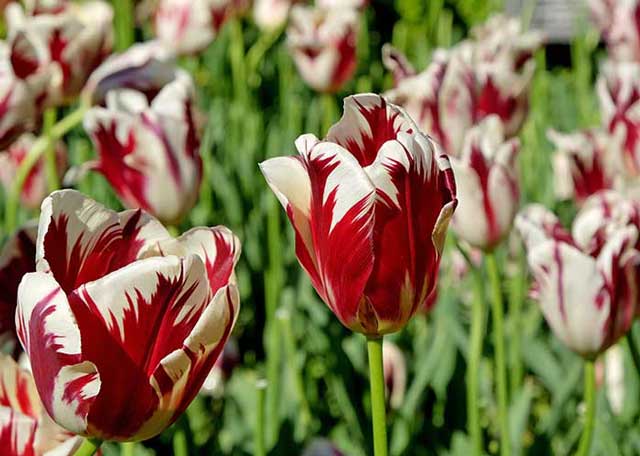
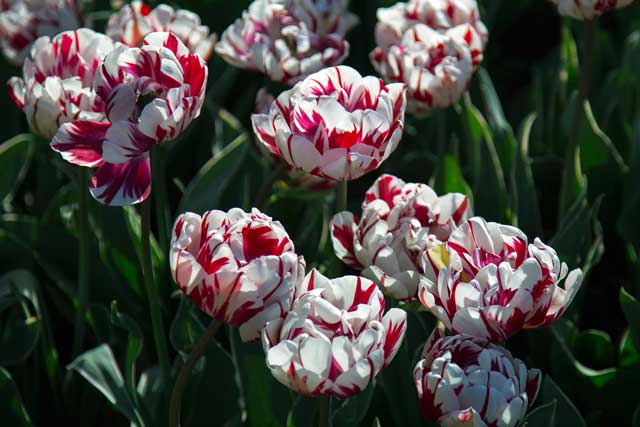
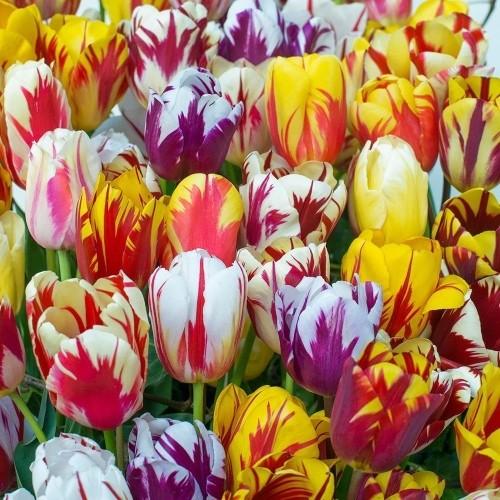
In some varieties, variegation is a viral disease. In Rembrandt tulips, the uneven petal color is genetically determined. The bushes grow to 45-60 centimeters tall. The flowers are large and goblet-shaped.
Rembrandt's flowers begin to bloom in mid-May.
Parrots
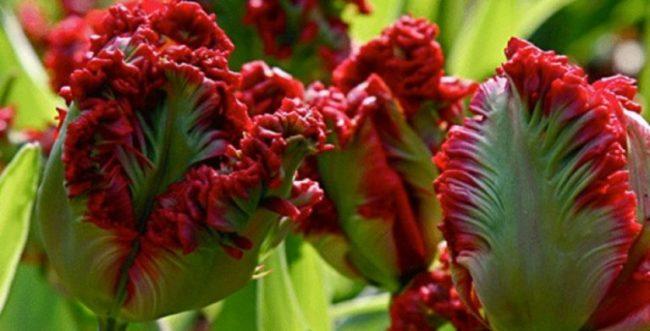
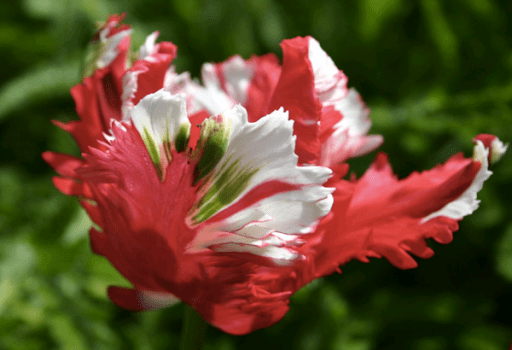
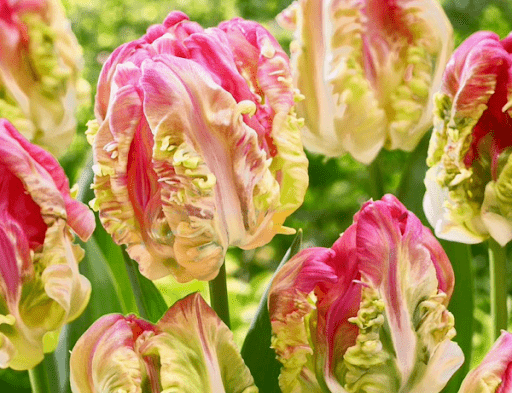
The plant gets its name from its wavy petals, reminiscent of parrot feathers. Plants reach 45-65 centimeters in height. When open, the buds reach 20 centimeters in diameter. Petal colors vary.
Exotic plants are planted along borders and used for cutting.
Terry late
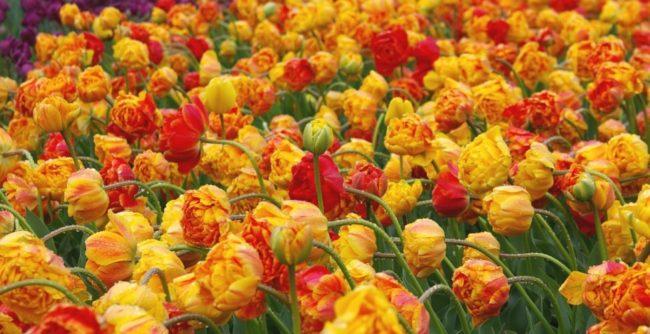
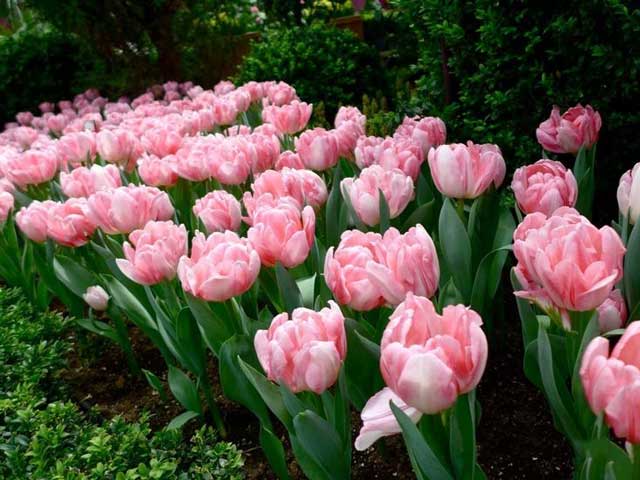
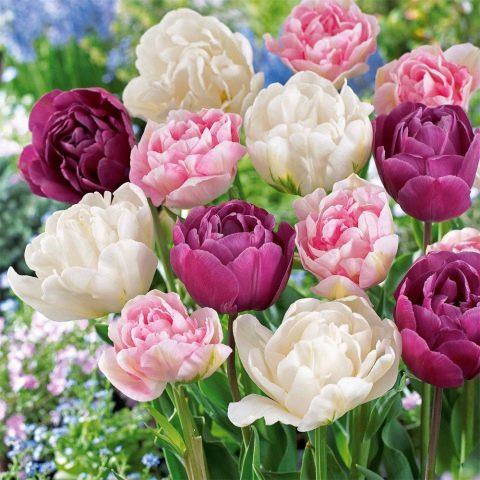
These tulips are also known as peony tulips. The flower stalks reach 45-60 centimeters in height. The buds come in a variety of colors. Flowering begins in the second half of May.
Double tulips are planted in flowerbeds and borders.
Group 4
This group includes hybrids bred from wild tulips. They are typically low-growing and easy to care for. Species tulips bloom early.
Kaufman tulips
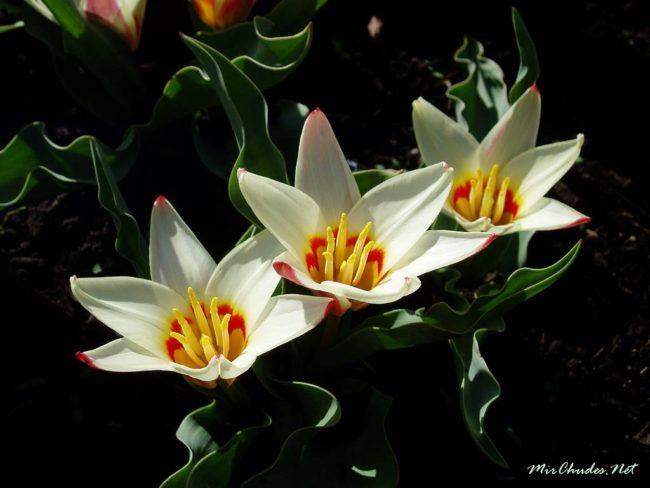
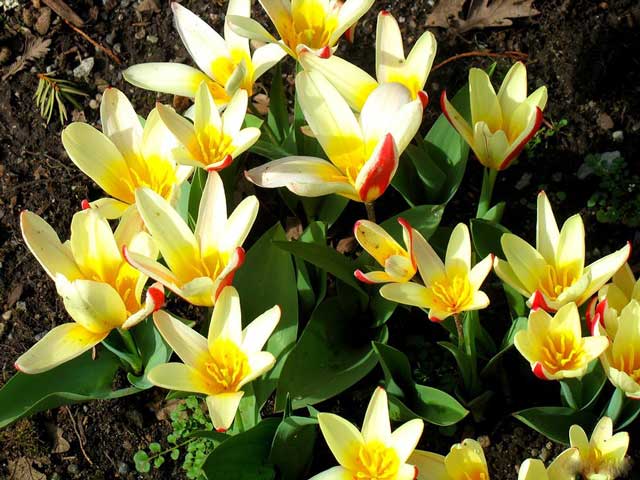
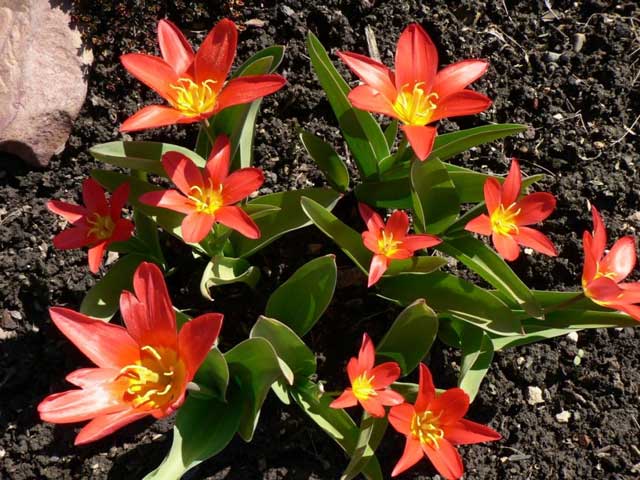
The plants reach a height of 20 centimeters. The buds are a variety of colors, often star-shaped. The flowers bloom in mid-April.
Plants are planted in rock gardens, rockeries, and along garden paths.
Foster
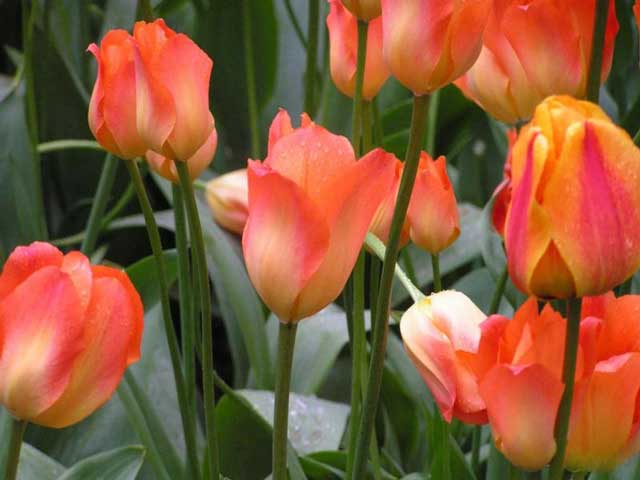
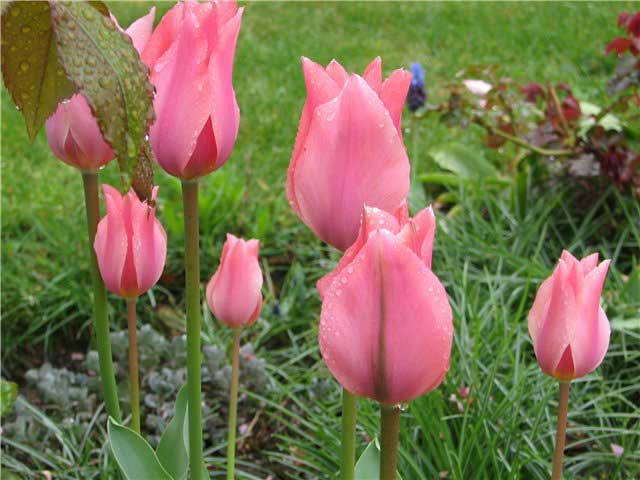
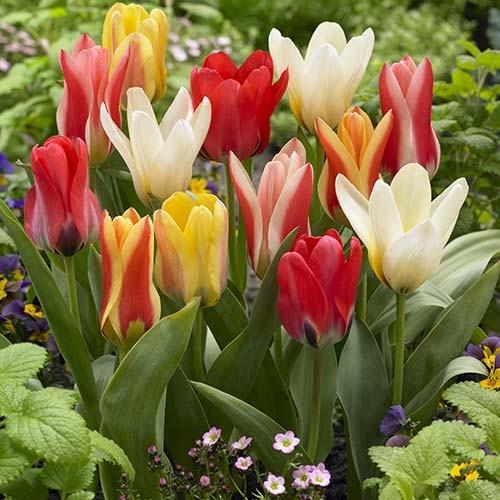
The large flower buds are cup- or goblet-shaped. The height of the bushes is 30-50 centimeters. The flower buds come in red, yellow, and white colors. The leaves have streaks.
Foster tulips are used to decorate rock gardens and flower beds.
Greig
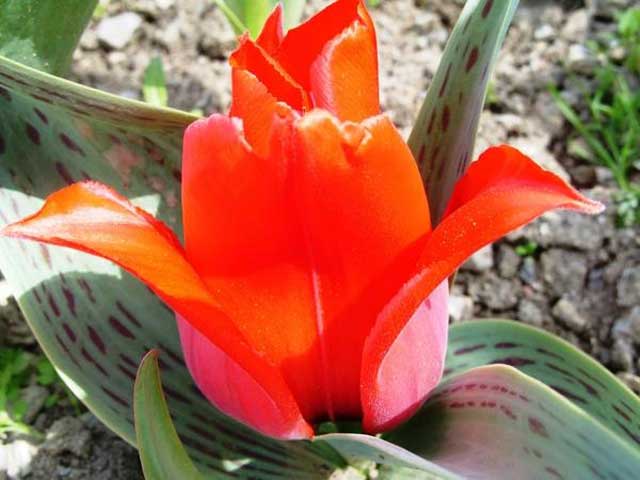
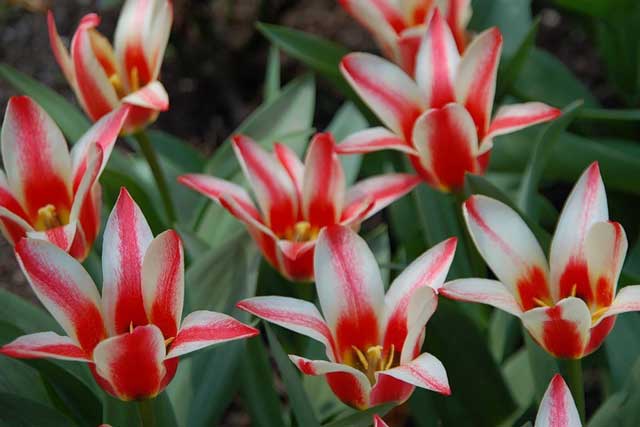
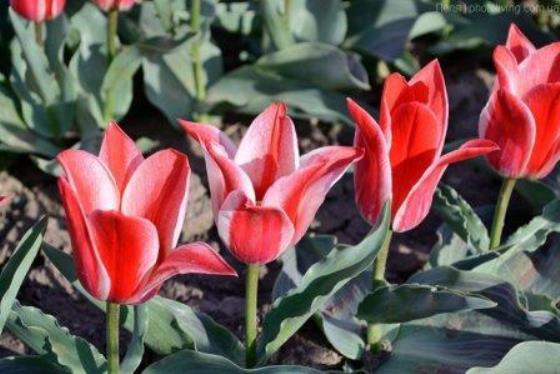
The bushes grow to about 35 centimeters tall. The tips of the elongated petals are slightly recurved. The flowers come in a variety of colors. The leaves have longitudinal stripes.
Greig's tulips bloom at the end of April.
Low-growing or dwarf tulips
This is the name given to a plant with shoots 10-12 centimeters tall. One or two flower stalks grow from the bulb. The buds are a variety of colors. Low-growing tulips bloom in May. They are used as potted plants, planted in rock gardens, rockeries, and in the foreground of flower beds.
Other hybrids and varieties
In addition to those mentioned above, there are other hybrids and varieties of the crop.
Blue
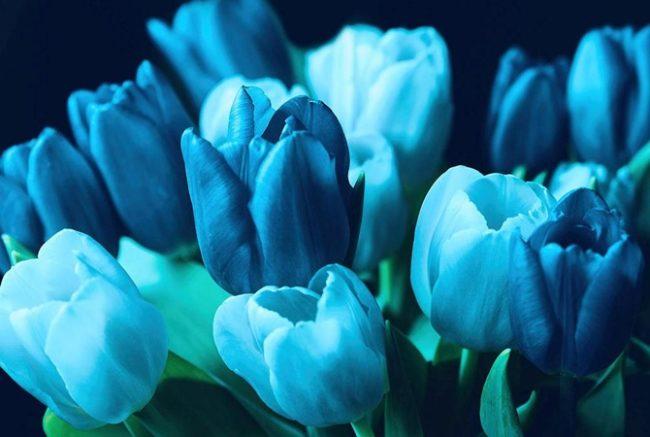


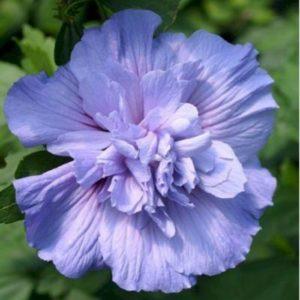
Unfortunately, blue tulips don't exist in nature. However, flower markets sell tulips with blue buds. These are usually white tulips painted with fluorescent acrylic paint.
To create a blue tulip, dip the bud in dye for 10-15 seconds, then rinse. The dried flower is placed in a vase of water. Plants with light purple petals can also be considered blue. When exposed to light, they take on a silvery-blue hue.
Black
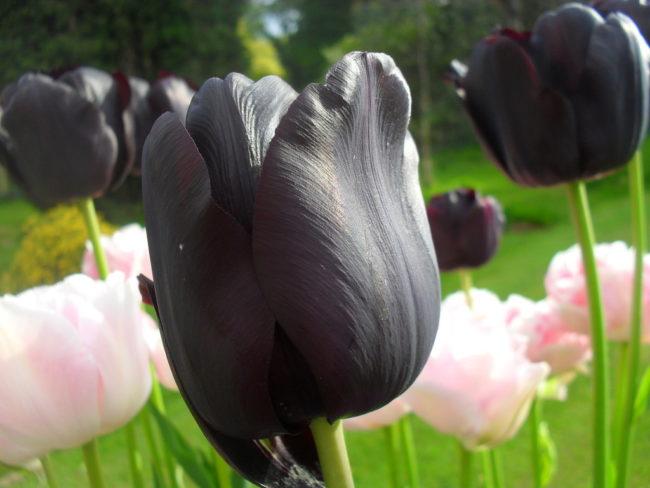
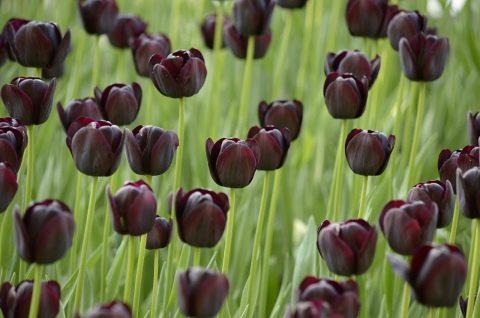
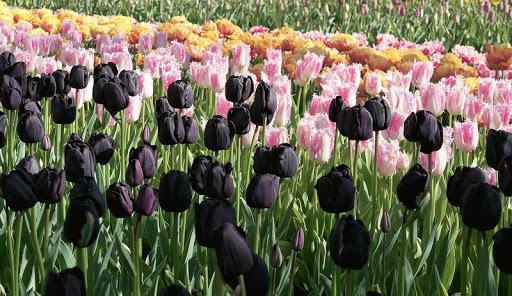
This is the name given to tulips with deep purple or maroon blooms. There are no varieties with completely black flowers. The depth of color depends on the lighting. Depending on the variety, the buds vary in shape and size.
Black varieties of the crop bloom in April or May.
Yellow
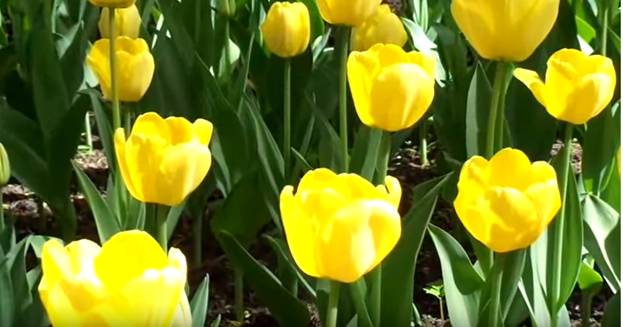
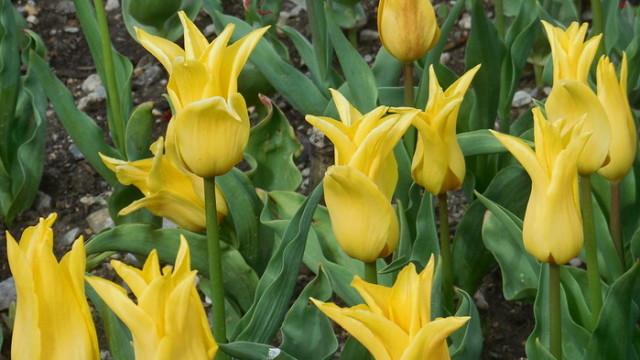
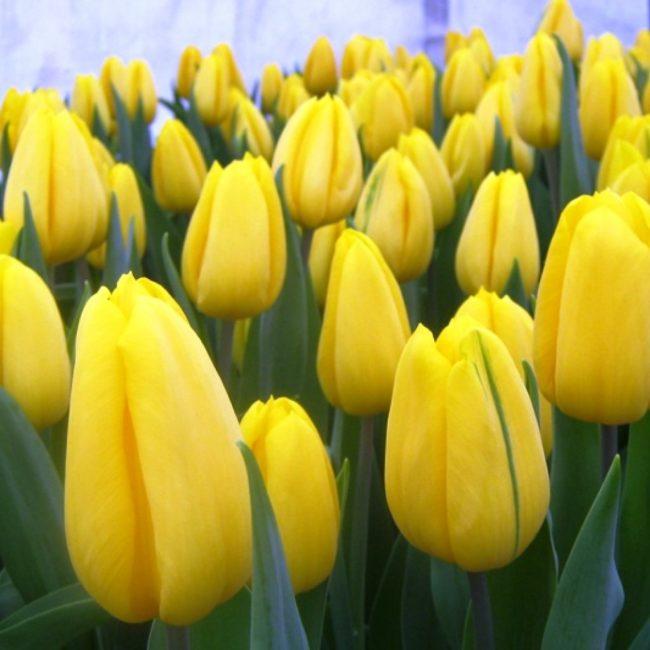
These plants look like little suns in the spring garden. Their inflorescences can be peony-shaped, goblet-shaped, or cup-shaped. They bloom from late March to early June.
The use of yellow tulips is universal.
Whites
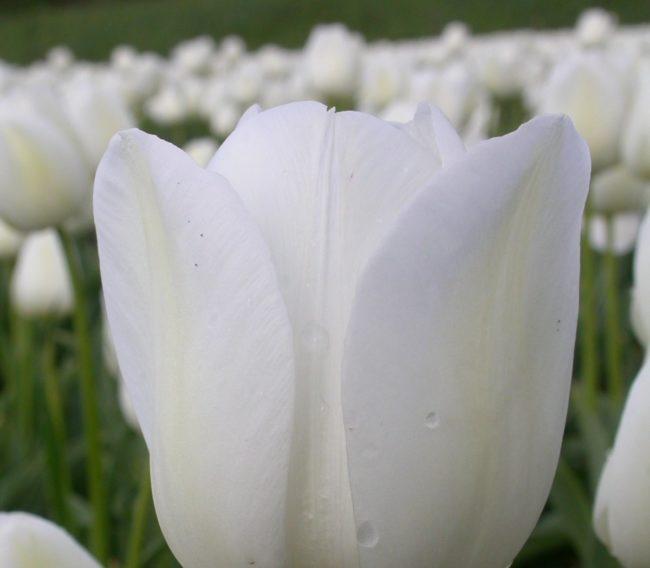
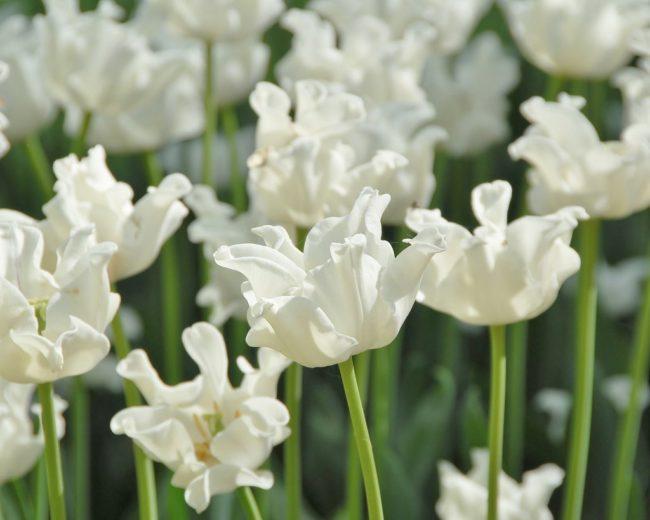
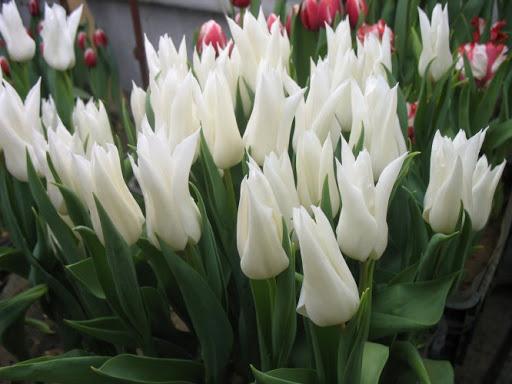
These flowers look very elegant in a garden. Breeders have developed many tulip varieties with white buds. They vary in flowering time and inflorescence shape.
White tulips are a favorite choice among brides for their wedding bouquets. Light-colored plants visually expand the garden's space.
The rarest varieties
Breeders continue to develop new varieties and cultivars of tulips. For example, the bud shape of the Ice Cream tulip resembles an ice cream cone. There are also multi-flowered tulips, with 2-5 buds growing on a single flower stem.
How to choose from such a variety: tips and recommendations
When choosing tulips, gardeners consider several factors. First and foremost, they should select the variety based on the region. For the Moscow region, for example, mid-blooming varieties are best. Early blooming varieties can be grown in the south. For the Urals and Siberia, late blooming tulips are chosen.
If a gardener only visits their dacha occasionally, they don't need to choose fussy varieties. For example, the bulbs of fringed tulips need to be dug up every summer and replanted in the fall. Otherwise, the bushes will lose their decorative appeal within 1-2 years. Florists who have time to cultivate tulips can choose any variety. With proper care, the plants will delight with beautiful blooms every spring.
Related posts:
 Descriptions of hosta species and the top 25 most beautiful varieties, growing rules
 Top 16 Best Hybrid Tea Rose Varieties: Planting and Care in the Open Ground
 Top 15 Korean Chrysanthemum Varieties, Planting and Care in the Open Ground
 Top 16 Peony Rose Varieties, Planting and Caring for Them in the Open Ground
 When is the best time to plant tulips in open ground? Timeframes by region and rules.
 Top 10 Chrysanthemum Varieties, Planting and Care Guidelines for Outdoor Plants
 When and how to plant tulips in the Urals in autumn and care for them outdoors
 Timing and methods for planting tulips with your own hands in baskets for bulbous plants