
- Description of the plant
- Pros and cons of growing
- Common varieties and wild species
- Examples of use in garden design
- Planting and caring for the plant in open ground
- Site selection and preparation
- Preparing seedlings
- Optimal timing and sowing patterns
- Watering and fertilizing regime
- Loosening the soil
- Bush formation and types of pruning
- First pruning
- Sanitary
- Rejuvenating
- Stimulating
- Transfer
- Shelter for the winter
- Diseases and parasites of flowers
- Breeding methods
- Seeds
- Cuttings
- By layering and dividing the bush
Cinquefoil is a shrub or herbaceous plant in the Rosaceae family, found wild in the Northern Hemisphere. Cinquefoil white grows on the Apennine and Balkan Peninsulas and in central Russia. It is cultivated as a medicinal plant and ornamental grass. The plant blooms from late spring to early fall. Cinquefoil white is easy to care for and is suitable for planting in open ground or for hanging cultivation.
Description of the plant
White cinquefoil is a herbaceous perennial. It is also known as Kuril tea, galangal grass, and cinquefoil. External characteristics:
- stem height – 8-25 centimeters;
- root length - up to 1 meter;
- inflorescences take the form of brushes or umbrellas;
- flowers are white, diameter – 3 centimeters;
- there are no leaves on the flowering stems;
- At the roots the leaves are hard, collected in rosettes of five pieces;
- stipules brown;
- the seeds ripen in seed capsules;
- One flower produces 10-80 seeds.
Due to deforestation, white cinquefoil is rarely found in the wild and is listed as a protected plant.
Pros and cons of growing
Pros:
- long flowering from May to September;
- suppresses weed growth;
- suitable for growing in pots;
- attracts pollinating insects to the garden;
- easy to propagate, seeds germinate well;
- frost-resistant.
The plant's root is used medicinally to treat thyroid inflammation. There are no downsides to growing cinquefoil. The perennial adapts to any conditions. The plant is only unsuitable for heavy, humus-rich and acidic soils. Flowering is negatively affected by insufficient light. In dark areas, cinquefoil produces small flowers.

Common varieties and wild species
There are 500 known species of cinquefoil in horticulture. There are annual, perennial, herbaceous, and shrubby varieties.
The most popular garden species of cinquefoil:
- Apennine - rosettes consist of leaves collected in threes, with silvery edging along the edges, flowers are pink and white.
- Goose - long leaves with jagged edges grow at the roots, their length reaches 20 centimeters, there are no leaves on the peduncles, the flowers are yellow.
- Nepalese - the purple stems of this perennial grow up to 50 centimeters long, and the ornamental variety produces red, purple, and coral flowers.
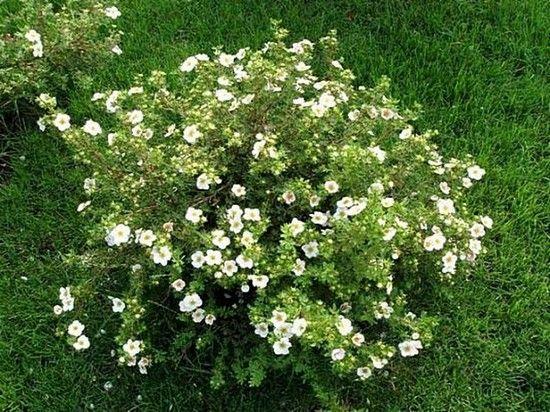
- Abbotswood is a shrub variety up to 1 meter tall with light green leaves, and white buds bloom on the shoots.
- Silvery - distinguished by white velvety hairs on the back of the leaves and small flowers up to 2 centimeters in diameter.
The wild species is Potentilla galangal, or erecta cinquefoil. It grows in the tundra, forest belts of central latitudes, and on the banks of rivers and swamps. The woody roots are used to make a tincture. The flowers are yellow, with four petals.
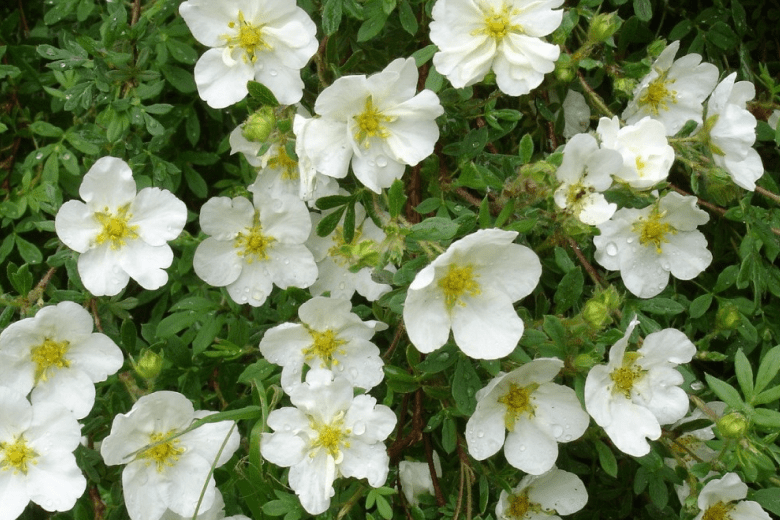
The snow-white cinquefoil is native to North America and Eurasia. Its green and gray-green leaves are covered with a white, velvety down on the underside.
The steppes of China and Mongolia, and the coniferous forests of Siberia are the natural habitat of the acaulis cinquefoil. The plant reaches a maximum height of 6 centimeters and forms a turf-like cover.
Potentilla splendens is an alpine wild variety also grown in gardens. The plant thrives in rocky, sunny areas, but blooms less profusely than in the wild.

Examples of use in garden design
The main use of white cinquefoil is as a garden ornament. The plant is planted in various ways:
- on the lawn;
- along paths, around flower beds;
- on the alpine hills;
- next to hedges.
White cinquefoil is planted in rock gardens and rose gardens. The white flowers create a striking contrast with lavender. The plant is used in urban landscaping. Herbaceous varieties are planted alongside barberry, juniper, and dogwood.

Shrub varieties are suitable for hedges and borders, and pair well with conifers. These plants retain their shape well, making them ideal for zoning a large garden or park.
Planting and caring for the plant in open ground
White cinquefoil is easy to care for and prefers partial shade. Care requirements include moderate watering and mandatory pruning of shrubby varieties.
Site selection and preparation
Favorable conditions for white cinquefoil:
- partially shaded at midday, sunny in the morning and afternoon;
- loose, loamy soil;
- acidity – 7-8.5.
Prepare the cinquefoil plot 14 days before planting. Within two weeks, the soil will absorb the fertilizer and compact. Preparing the planting holes:
- holes are dug twice as wide and deep as the length and width of the roots with a lump of earth;
- pebbles and crushed stone are poured onto the bottom for drainage;
- the excavated soil is mixed with humus and sand - two parts of soil and humus and one part of sand;
- the hole is filled halfway with the mixture;
- add 150 grams of complex fertilizer and mix.
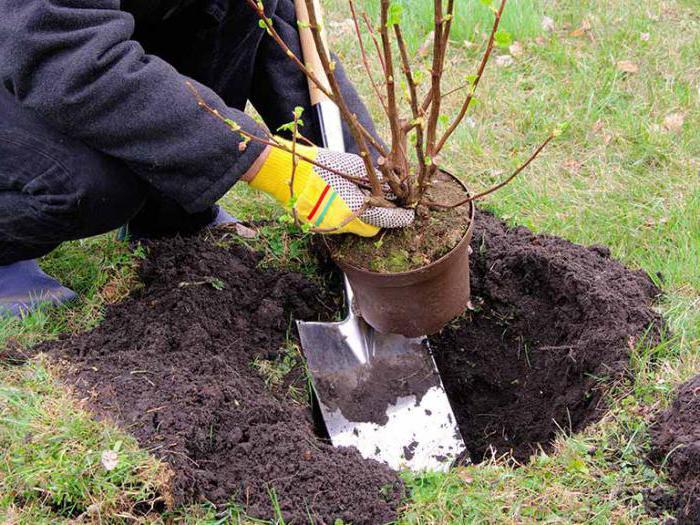
Additionally, lime or wood ash can be added to the planting holes - 100 grams per hole.
Preparing seedlings
Spring planting material is purchased in April and immediately planted in open ground. To ensure the quality of the seedlings is unquestionable, it's best to purchase them from a nursery. Three to four tightly packed shoots indicate well-developed roots.
The seedlings are transferred from their pots to the open ground with a lump of soil. If the roots are exposed, they are rinsed with warm water, straightened, and placed in the planting hole.
Optimal timing and sowing patterns
Cinquefoil is planted after the last spring snowmelt—in late March or early April. September is a good time for planting in the fall. In March and April, the plant roots adapt more easily to the open ground. Cinquefoil seedlings are spaced 60-70 centimeters apart.
- the stems are placed in the planting hole so that the root section is above ground level;
- fill the hole to the top, compact it and water it.
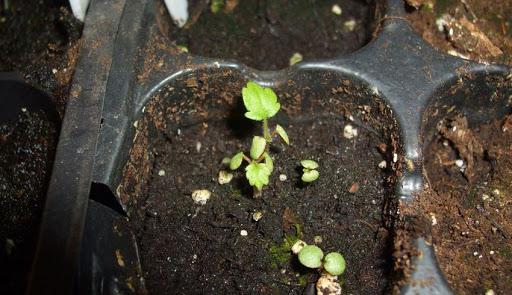
After watering, the soil will settle, and the root collar of the stem will drop to ground level. The area is covered with mulch—pine needles or straw—to a thickness of 5 centimeters. Gardeners often plant cinquefoil in September to avoid the hassle of growing seedlings in winter. Cuttings and layering will have time to root a month before frost.
Watering and fertilizing regime
For the first three weeks after planting, water the soil once a week. Use half a bucket per seedling. Mature plants are watered infrequently: once or twice a month in summer, and once a week during drought, depending on how quickly the soil dries out. For normal growth, the soil should be slightly moist. Avoid drying out to the point of cracking or becoming waterlogged to the point of becoming swampy. During rainy seasons, plants don't need additional watering; just loosen the soil.
One to two buckets of water are used per mature bush. It is recommended to use settled, sun-warmed water for watering. Cinquefoil also benefits from evening sprinkling. The first fertilization is applied in the spring, after the buds open. 30 grams of a mixture of phosphate fertilizer and potassium sulfate are diluted in 10 liters of water. One bucket of the solution is used per bush. The plants are fed a second time during bud formation. Potassium and phosphorus are added to the soil.

Loosening the soil
The soil is loosened shallowly—5-10 centimeters—to avoid damaging the roots close to the surface. Weeds are removed at the same time. Loosening the soil provides oxygen, which is essential for the roots. This procedure is performed after watering, during prolonged rains, to ensure water is absorbed and does not stagnate. Mulching will eliminate the hassle of loosening the soil and frequent watering during drought. Sprinkle the soil with sawdust or straw to a depth of 5-7 centimeters.
Bush formation and types of pruning
Pruning shrubby cinquefoil helps the bush renew itself and bloom profusely each year. Small branches overload the plant. Lateral and basal shoots take away nutrients intended for bud formation. Pruning gives plants a decorative, spherical or flat shape.
First pruning
Cinquefoil is pruned for the first time in the year of its first flowering:
- remove faded small shoots;
- shorten the main shoots by a third.
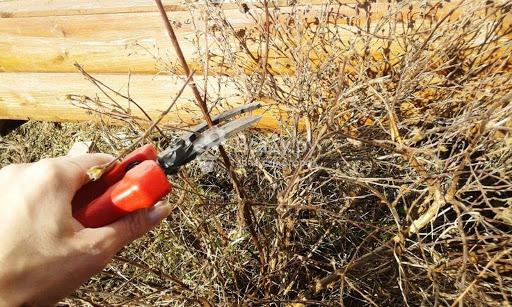
Fresh cuts are disinfected with garden pitch. The first pruning is done in the fall to promote better growth and flowering. In the spring, this procedure is combined with sanitary pruning.
Sanitary
Remove dried, frozen, broken, and diseased branches in the spring, before buds appear, and in the fall, after flowering. Mature plants are pruned to prevent disease. Thinned bushes allow for better air circulation. All branches receive uniform sun exposure. Heat and light prevent the development of fungi and shade-loving pests.
Rejuvenating
Old shoots are pruned annually for three years. Branches are shortened by a third. Radical rejuvenation pruning is performed every five years. Bushes are pruned almost completely, leaving 15-20 centimeters of shoots. After this procedure, the plants require additional fertilizing.
Stimulating
Removing some secondary branches and shoots growing inward stimulates growth and abundant flowering. Without pruning, older plants branch poorly and become bare at the roots.
Transfer
Cinquefoil grows in the same spot for 20 years. However, starting in its fourth year, plants can be replanted. Overgrown bushes are divided and replanted in the spring or fall. They can also be moved to another location in August or September.
Young plants planted in the spring can be repotted after two months. During this time, their roots will become stronger.
Shelter for the winter
Shrub cinquefoil doesn't require protection, as it tolerates frost well. Mature bushes that have finished flowering are pruned and sprayed with Bordeaux mixture. Seedlings and autumn cuttings require protection.

Diseases and parasites of flowers
White cinquefoil grows in the shade, so it sometimes gets sick with fungus:
- powdery mildew;
- rust;
- spotting.

Herbaceous varieties are not seriously affected by fungal diseases. Shrubs and perennials are treated with fungicides. Cutworms thrive in shady bushes. Pests are controlled with insecticides. Pruning is a preventative measure against fungi and parasites.
Breeding methods
White cinquefoil reproduces vegetatively and by seed. In the wild, the shrubby plant produces basal suckers. Herbaceous species are propagated by layering and seeds. All methods are used to grow white cinquefoil in the garden.
Seeds
Seed propagation of white cinquefoil includes:
- autumn sowing in open ground;
- winter preparation of seedlings.
- natural germination of seeds.
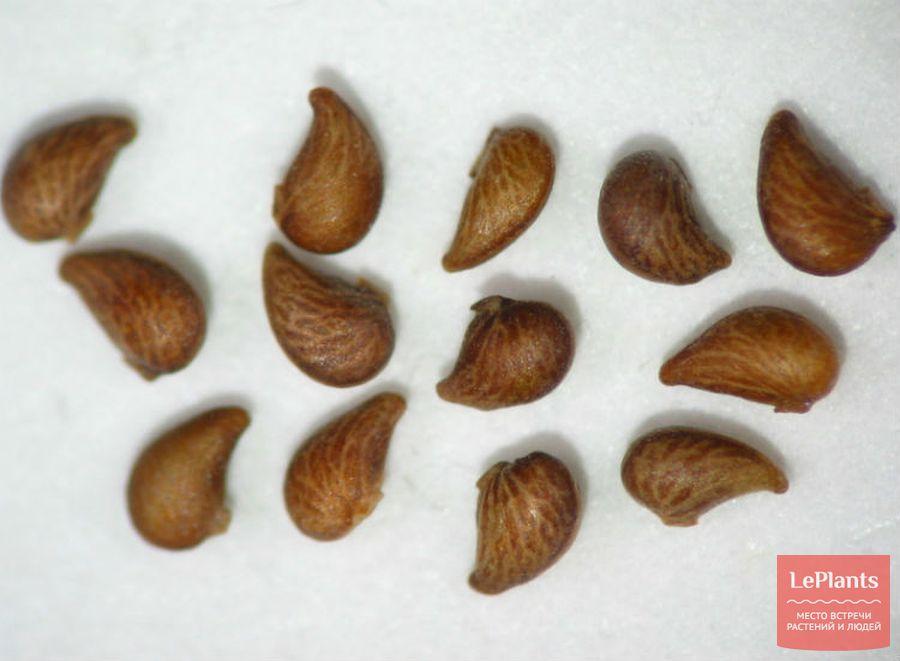
Seeds sown in the fall harden in the soil during winter frosts and germinate well in the spring. Seedlings are grown from February to March. The seeds are planted in large containers and covered with plastic. The seedlings, with strong leaves, are transplanted into small individual pots. In September, the seedlings are transferred to a designated area in the garden and covered for the winter. They will bloom the following spring.
Cuttings
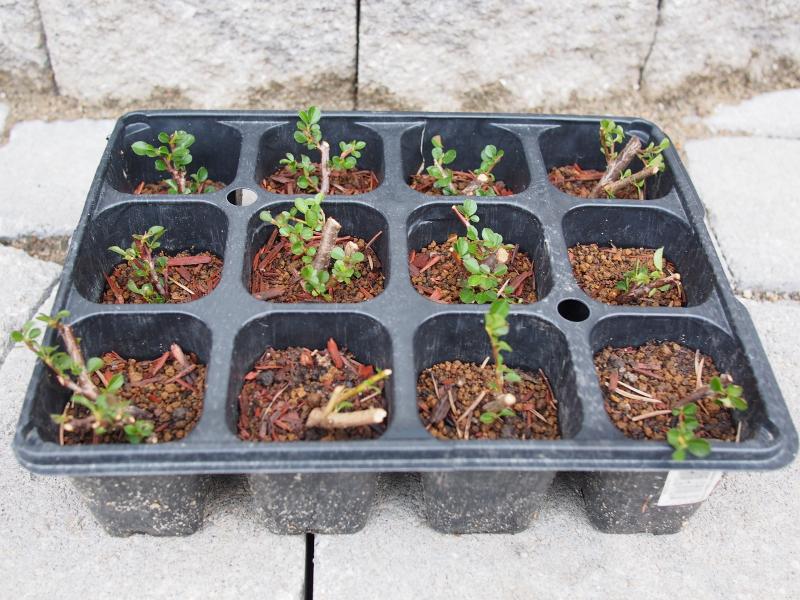
Cuttings are prepared in July and August:
- the ends of the shoots are cleared of flowers;
- cuttings 8 to 10 centimeters long are cut;
- planted in wet perlite;
- The seedlings are kept in a warm room for four or six weeks.
The second method for planting cuttings is in open ground. They are covered with glass jars or plastic bottles and misted three to four times a day.
By layering and dividing the bush
- Propagation by division is suitable for four-year-old plants. Bushes are divided in early September (after flowering) and in April and May (before flowering):
- they dig out;
- wash the roots with water;
- separated with a sterile knife;
- the roots of the cuttings are treated with a solution to stimulate growth;
- New bushes are planted in the ground at a distance of 22-45 centimeters from each other.
A large bush is divided so that each division retains 2-3 buds. These buds are not planted deep. To ensure the divisions take root, their roots are soaked in a soil mixture containing heteroauxin for 24 hours.
Cinquefoil is propagated by layering in the spring:
- choose the shoot that is closest to the ground;
- they dig a ditch underneath it;
- cut the shoot from the outside;
- bend it to the ground and lower the cut section into the groove;
- secure and bury.
During the spring and summer months, roots will emerge from the cut. In September, the shoot is cut off and replanted.
Related posts:
 The best varieties and types of cinquefoil, their description and growing characteristics
 Rules for planting and caring for cinquefoil in open ground, growing and pruning
 Useful properties and contraindications of Potentilla erecta
 Description and rules for growing the Red Ice cinquefoil variety, planting and care
 Nepalese cinquefoil varieties, their cultivation and use in landscape design
 Useful properties and contraindications of white cinquefoil, rules of application
 Description of the shrubby cinquefoil variety Abbotswood, planting and care instructions
 Description and methods of using Potentilla Goldfinger, planting and care rules