
- Characteristics and botanical description
- The most beautiful varieties
- Miss Wilmont
- Hybrid
- Carmen
- Fiery flame
- Flower carpet
- Examples of use in landscape design
- How to plant Nepalese cinquefoil
- Selecting a location and preparing seeds
- Schemes and timing of sowing in open ground
- Plant care
- Watering
- Fertilizer
- Loosening and mulching
- Pruning and shaping the bush
- Winter protection
- Diseases and pests of crops
- How to propagate cinquefoil correctly?
- Cuttings
- Layering
- Division
- Sowing seeds
One of the most beautiful plants for landscaping is Nepalese cinquefoil. It is used not only by amateur gardeners but also by landscape designers. The bushes are prized for their low maintenance, winter hardiness, and, most importantly, their long and abundant flowering. The resulting buds are colored in shades of pink and red. Below are the characteristics and botanical description of this plant, planting and care instructions, and its use in landscape design.
Characteristics and botanical description
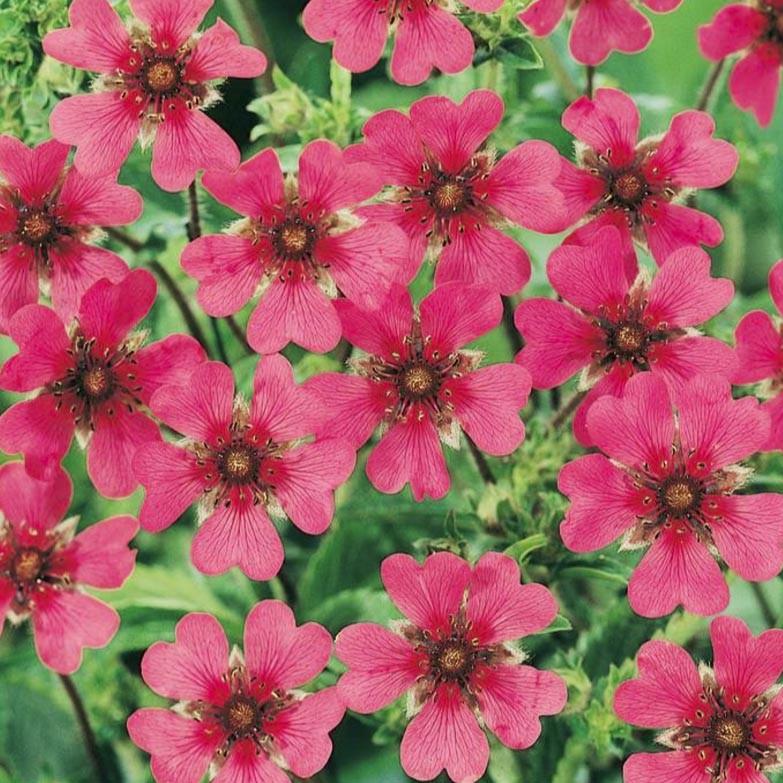
Potentilla nepalensis is a perennial deciduous shrub. It originates from Nepal, hence its name. Depending on the variety, the plant's height ranges from 30 to 50 centimeters. The erect shoots are pink.
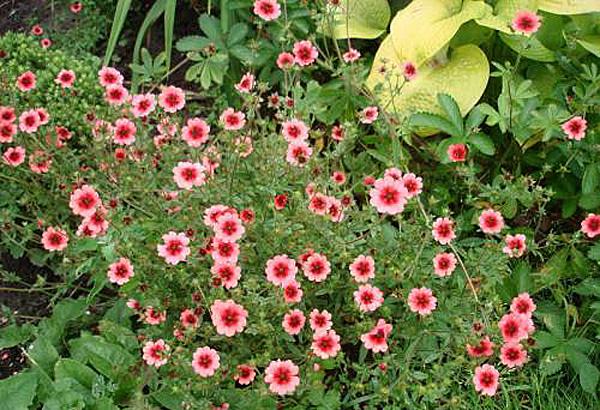
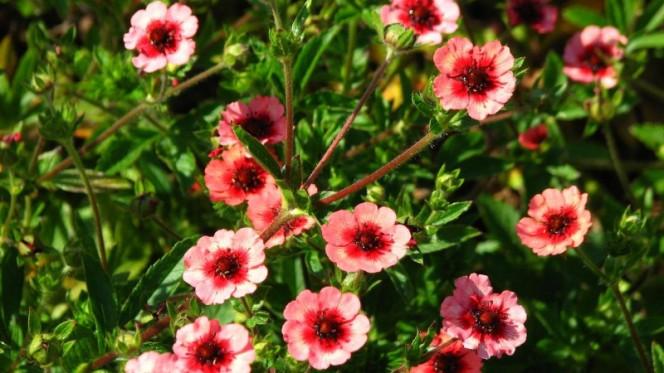
The leaves of the Nepalese cinquefoil are palmate, reminiscent of those of the garden strawberry. Their color ranges from light to dark green. The flowers are five-petaled, 3-3.5 centimeters in diameter, and range in color from pink to red.
Flower buds form at the tops of the stems in the second year after planting. Flowering lasts for two months, from June to August. Some varieties continue until early fall. Nepalese cinquefoil is winter-hardy and does not require winter protection. Diseases and pests are usually a problem when grown in unsuitable conditions.
Additional information: A tea containing many beneficial components is made from the leaves and petals of the cinquefoil plant. In folk medicine, it is used to treat various ailments.
The most beautiful varieties
Potentilla nepalensis is a favorite among landscape designers and amateur gardeners. They appreciate the plant for its diverse varieties, low maintenance, and long flowering period. Bushes with buds in salmon, pink, and red are available. The following varieties of Potentilla nepalensis are among the most beautiful.
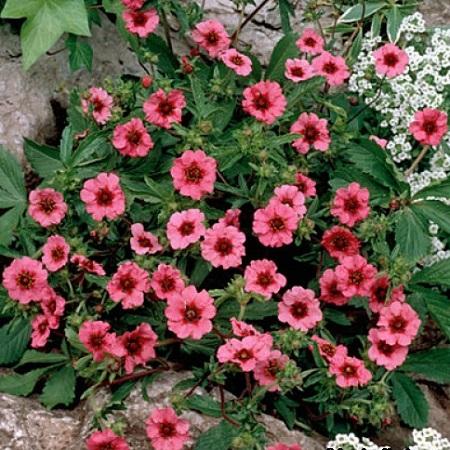
Miss Wilmont
This variety is particularly popular among ornamental plant enthusiasts. Its petals are cherry-red. A dark eye is located in the center of the bud. Miss Wilmont cinquefoil blooms longer than other varieties. The bushes easily withstand frosty winters.
Hybrid
The plant's bushes grow taller than other varieties of Nepalese cinquefoil. Its flowers are also larger, reaching 5 centimeters in diameter. The petals range in color from white to pink and red. Hybrid cinquefoil has good immunity: the bushes are rarely affected by pathogens.
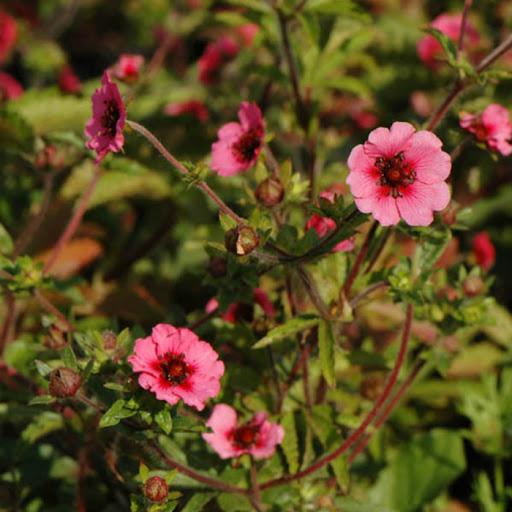
Carmen
This variety grows as a low-growing bush. In landscape design, Carmen is used as a groundcover. The 5-petal buds are borne singly or in clusters. The flowers are colored in shades of dark red. Yellow stamens are located in the center of the bud.

Fiery flame
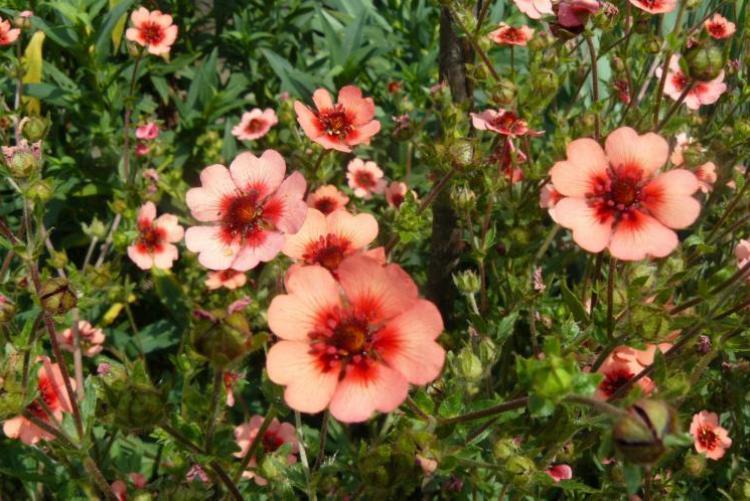
The petals of this cinquefoil variety are multicolored. The center is dark, composed of shades of red and crimson. The edges are dominated by white and pink. Looking at the flower, one gets the impression it's ablaze with a bright flame. This quality is what gave the variety its name.
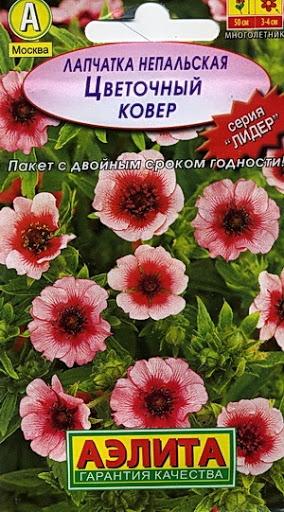
Flower carpet
The edges of the Flower Carpet buds are colored in coral tones. The center is dark cherry. The bushes bloom profusely and continuously. Buds begin to form in mid-June. Flowering ends in early fall. This variety requires ample sunlight.
Examples of use in landscape design
Nepalese cinquefoil is so decorative during flowering that the bushes can be planted as specimens. A green lawn or low-growing ornamental foliage plants are sufficient for edging. The plant will not be lost when planted in a mixed border or flowerbed. Cinquefoil can be used to create a hedge or as a border along a path.
To make plants in a group look decorative, they will need pruning. No matter how the cinquefoil is planted, it will attract attention.
How to plant Nepalese cinquefoil
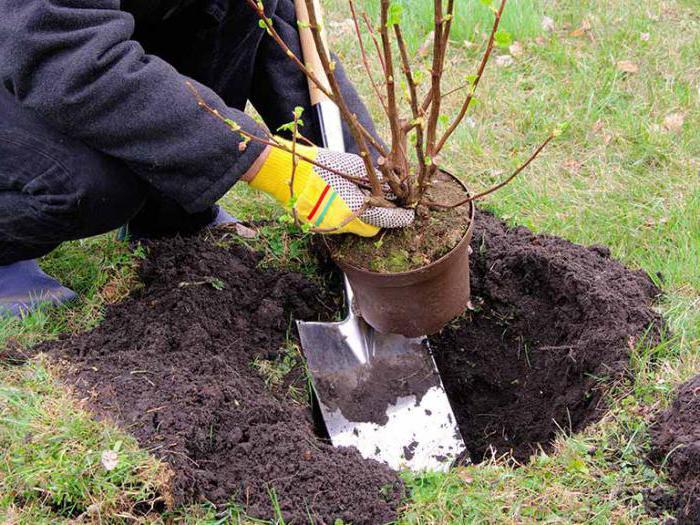
To ensure the bushes look attractive and bloom long and profusely, they need to be planted in the right location. Cinquefoil is planted in open ground from seeds or seedlings, either grown at home or purchased at a garden center. Before planting, carefully inspect the bushes to ensure they show no signs of disease or pest infestation.
Selecting a location and preparing seeds
A well-lit area is selected for the plant. The bushes will thrive in partial shade, but the buds will not appear bright and juicy. Groundwater should not be too close to the soil surface. The soil should be loose, permeable to air and water. When purchasing seeds, keep in mind that they remain viable for 2-2.5 years. They should be sorted beforehand, discarding any of the poor quality ones. To disinfect, the seeds are placed in a potassium permanganate solution for 20-30 minutes.
Schemes and timing of sowing in open ground
Gardeners typically sow seeds first for seedlings. The grown plants are then planted outdoors. However, sowing can also be done directly into open ground. This procedure is performed in the spring, as soon as the weather warms up. To do this, the seeds are placed in prepared soil, 3-4 centimeters apart.
To create greenhouse conditions, cover the plants with plastic film. When seedlings emerge, remove the covering. Thin the seedlings, leaving 15 centimeters between plants. Once the plants have grown, dig them up and transplant them to their permanent location.
Plant care
Care for the plant involves timely watering, fertilizing, and pruning. Young plants planted in the fall require shelter. To prevent diseases and pests, Nepalese cinquefoil is treated with insecticides and fungicides in early spring.
Watering
Only young seedlings are watered generously when planting. Mature plants are watered after the top layer of soil has dried. About 10 liters of warm, settled water is poured under the bush. If there is sufficient rainfall during the season, additional watering is not necessary.
Please note! To retain soil moisture, the trunk circle of Nepalese cinquefoil is mulched.
Fertilizer
Nutrients are applied 2-3 times per season. In early spring, nitrogen is added to promote shoot development. Before flowering, a complex mineral fertilizer with a high potassium and phosphorus content is applied. The bushes can be fed again after flowering, with potassium. This promotes plant recovery and helps them survive the cold winter.

Loosening and mulching
Two to three days after watering, a crust begins to form on the soil surface. This prevents air from penetrating deep into the soil. To prevent this, loosen the soil after watering. Weeds, which rob the cinquefoil of sunlight, moisture, and nutrients, are also removed.
To conserve moisture, the soil around the cinquefoil is mulched. This can include compost, peat, sawdust, straw, or grass clippings. As the mulch gradually decomposes, it will provide additional nutrition for the Nepalese cinquefoil.
Pruning and shaping the bush
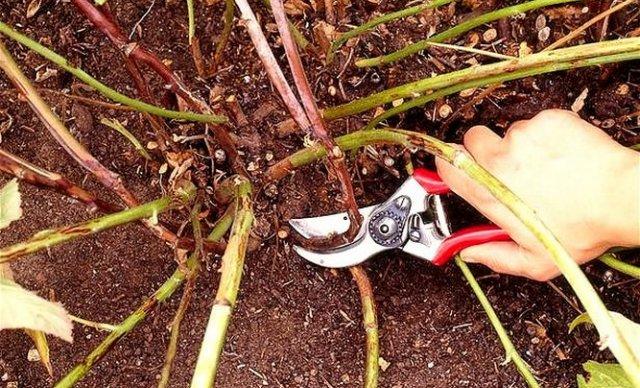
Nepalese cinquefoil grows quickly. However, shoots can block each other's access to sunlight and air. To prevent this, the plant is thinned. Sanitary pruning is performed throughout the season, removing broken and diseased branches. Shoots older than 4-5 years are cut back completely. The bushes can be shaped as desired.
Winter protection
Nepalese cinquefoil is known for its ability to withstand winter cold well. It requires no cover. Simply sprinkle mulch around the roots and place spruce branches on top. Young bushes planted in the fall can be covered with agrofibre. Proper watering in mid-autumn will also help the plant survive the cold.
Diseases and pests of crops
Despite its strong immunity, Nepalese cinquefoil can be susceptible to diseases and pests. This can occur during rainy summers or when the gardener overwaters the bushes. Potential diseases include rust, powdery mildew, and brown spot. Antifungal agents are used for prevention and treatment. The main pest of cinquefoil is the cutworm, which reduces the plant's ornamental value by feeding on leaves and flowers. Pests can be controlled by spraying with insecticides, such as Actellic or Aktara.
How to propagate cinquefoil correctly?
In the garden, the plant is propagated by seeds, cuttings, and layering. Mature bushes that have developed numerous shoots are propagated by division. The disadvantage of seed propagation is that it is labor-intensive. Gardeners will have to put in a lot of effort before the cinquefoil blooms.
Cuttings
For propagation, cuttings are taken from last year's woody shoots. These cuttings are 10-12 centimeters long. Planting is done as follows:
- half of the leaves are removed from the cuttings;
- the lower cuts of the cuttings are dipped in powder that promotes root formation;
- a loose substrate consisting of peat, compost, and sand is poured into the pot;
- plant cuttings, water;
- arcs are installed in the container and covered with film.

The arches are necessary to prevent the cuttings' leaves from touching the covering material. Otherwise, condensation can cause them to become infected with rotting microorganisms. The cuttings are watered as needed. Once they have rooted, the covering is removed. The grown bushes are planted outdoors after a year.
Layering
Propagation by layering is done in the summer. Use strong shoots growing close to the soil surface. The propagation procedure is as follows:
- the shoots are cleared of leaves and cut with a sharp, disinfected knife;
- dig furrows 5-8 centimeters deep;
- bend the layers and secure them with wire bent into an arc;
- watered, covered with soil.
The plantings are tended to: watered, weeded, and the soil loosened. Roots will soon appear at the cut sites. The young bushes are planted in their permanent location the following year.
Division
This method is easy to propagate overgrown Nepalese cinquefoil. Dividing the plant is done in spring or fall. To do this, dig around the plant on all sides with a sharp shovel. The plant is lifted by the roots and divided into sections with a knife. Each section should consist of several shoots and a well-developed root system. The divided sections are planted in prepared holes.
Important! When propagating Nepalese cinquefoil by division, use a sharp, disinfected tool. Otherwise, the plants may become infected with pathogens, which will lead to the death of the plants.
Sowing seeds
The best time to perform this procedure is late winter or early spring. Select a container with low sides for sowing. Drain holes in the bottom. Then fill the container with drainage material consisting of small stones.
The next steps for sowing seeds are as follows:
- the container is filled with loose, air- and water-permeable soil;
- moisten it with water from a spray bottle;
- seeds are spread over the surface and lightly sprinkled with sand;
- cover with glass or transparent film;
- Place the container with the crops in a warm place.
When the seedlings emerge, remove the covering. When the bushes develop a pair of true leaves, transplant them into individual containers. This procedure should be carried out carefully, using tweezers. If you use peat pots for planting, the cinquefoil will easily tolerate subsequent transplantation into open ground.
Related posts:
 The best varieties and types of cinquefoil, their description and growing characteristics
 Rules for planting and caring for cinquefoil in open ground, growing and pruning
 Planting, growing, and caring for white cinquefoil in open ground
 Useful properties and contraindications of Potentilla erecta
 Description and rules for growing the Red Ice cinquefoil variety, planting and care
 Useful properties and contraindications of white cinquefoil, rules of application
 Description of the shrubby cinquefoil variety Abbotswood, planting and care instructions
 Description and methods of using Potentilla Goldfinger, planting and care rules