
- Characteristics of the Abbotswood variety
- Advantages and disadvantages of growing
- Examples of use in landscape design
- Specifics of planting a plant
- Preparing the site and planting material
- Planting dates and patterns
- Recommendations for crop care
- Watering
- Top dressing
- Loosening and weeding the soil
- Trimming
- Transfer
- Should I cover it for the winter?
- Pests and diseases of the flower
- How to propagate Abbotswood cinquefoil
- Dividing the bush
- Cuttings
- Layering
Gardeners value cinquefoil for its abundant and long-lasting blooms and the healing properties of the tea made from it. Abbotswood shrubby cinquefoil is planted as a border, hedge, singly, or in combination with other plantings. Below are planting instructions, advantages and disadvantages of growing it, and examples of its use in landscape design.
Characteristics of the Abbotswood variety
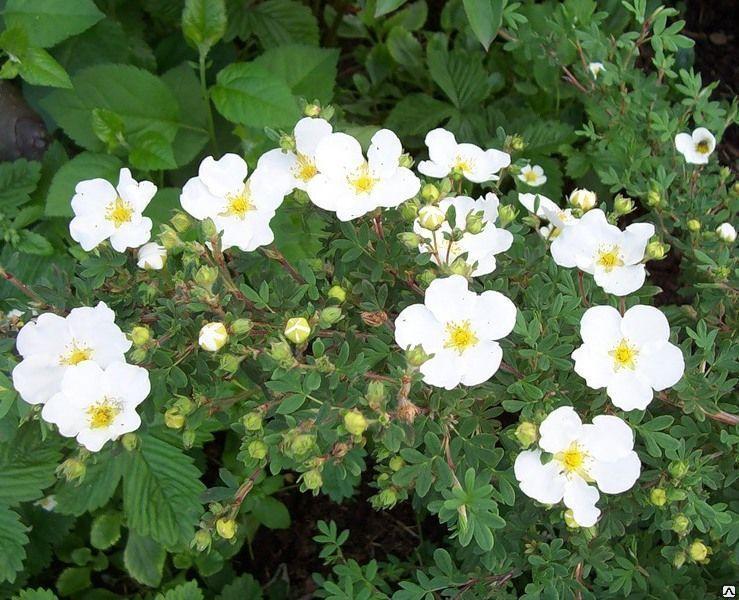
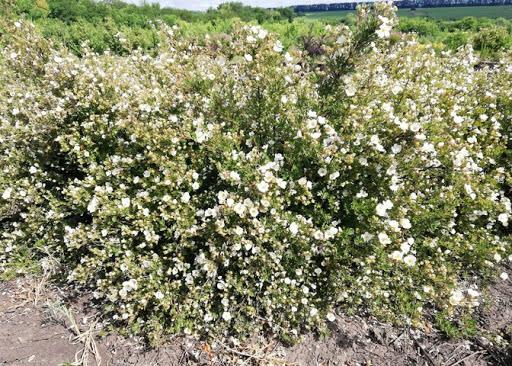
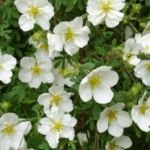
Abbotswood cinquefoil is a perennial shrub growing approximately 100 centimeters tall. Its crown spreads up to 1.2 meters. It grows especially rapidly in its first few years. It can survive in the same location for 25-30 years. Flowering begins in June and continues until mid-autumn. The petals of the buds are shades of white. The flowers, 2-2.5 centimeters in diameter, are gathered in clusters. The light green leaves are lanceolate and no more than 3 centimeters long.
Shrubby cinquefoil has a strong immune system. It is rarely susceptible to diseases and pests. The shrub can withstand temperatures down to -40°C and short-term drought. It thrives in well-lit areas but also tolerates partial shade.
Advantages and disadvantages of growing
The benefits of growing Abbotswood cinquefoil in your garden are as follows:
- decorates the area with flowers from early summer to mid-autumn;
- goes well in a mixborder with many plants;
- the bush is able to withstand severe frosts;
- has good immunity;
- does not require much maintenance.
Disadvantages include the need for rejuvenating pruning every 4-5 years. Additional information: Cinquefoil (Kuril tea) contains a large number of beneficial substances. Its parts are used in folk medicine to treat many ailments.
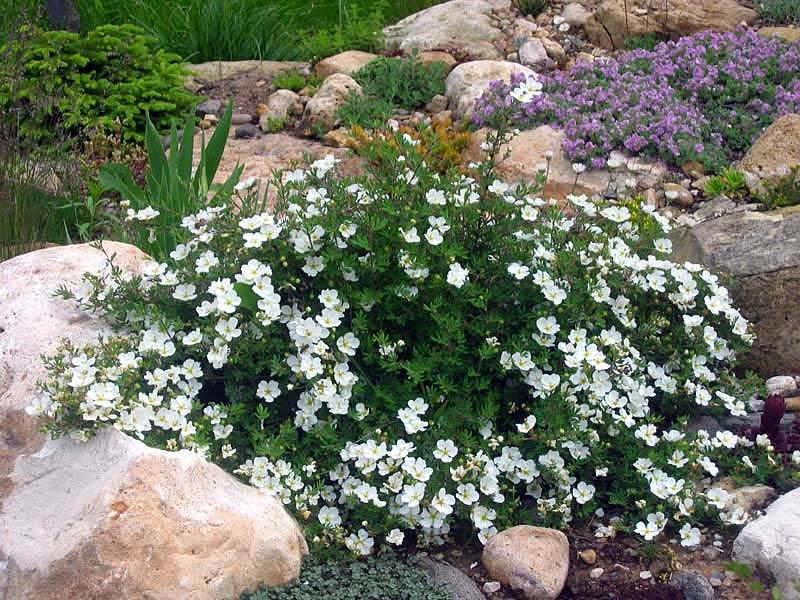
Examples of use in landscape design
Abbotswood cinquefoil can be used in the garden in the following ways:
- Plant singly against the background of a lawn as a solitary plant.
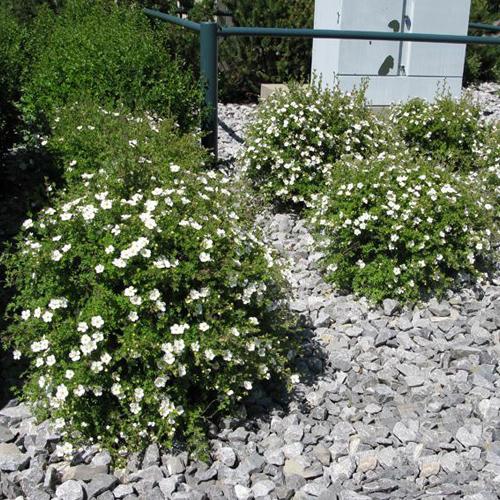
- Plant a few bushes along the path. The cinquefoil border will require frequent trimming.
- Combine in a mixborder with decorative foliage and decorative flowering plants, conifers.
- Use as a hedge.
- Plant in a rock garden.
Due to its abundant and long flowering, Abbotswood cinquefoil can become the main decoration of a site.

Specifics of planting a plant
Planting material is purchased from a nursery or reputable sellers. The seedlings should have a well-developed root system and several shoots. The bush should not have any spots, dents, or growths. Before planting, the bushes are soaked in a disinfectant solution.
Preparing the site and planting material
Abbotswood cinquefoil can grow in one place for about 30 years, so its site must be carefully selected. The site should be open and well-drained. The substrate should be fertile. In poor soil, the flowering will not be as spectacular.
The area is cleared of debris and dug over. Two weeks before planting, holes are dug. If the bushes are not planted immediately after purchase, they are soaked in warm water for 1-2 hours. Potassium permanganate powder is added for disinfection. If the roots are too long, they are trimmed.
Planting dates and patterns
Cinquefoil is planted in the spring, after the ground has thawed. The bushes have time to establish themselves well during the season. In southern regions, planting is permitted in the fall, during September. The root zone will need to be mulched for the winter.
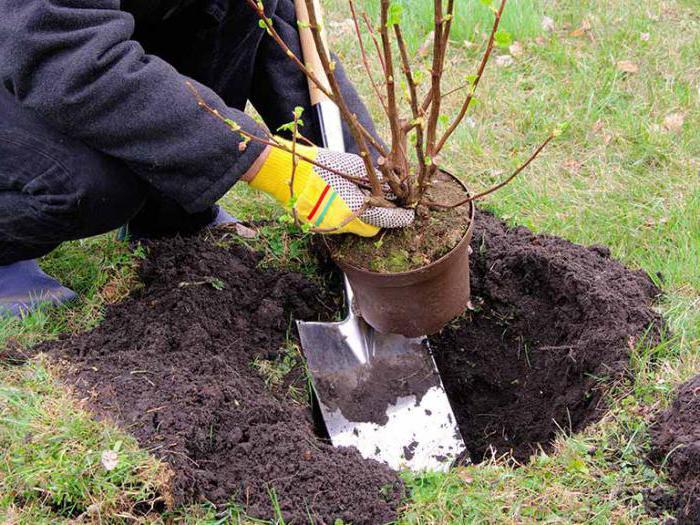
Planting is carried out as follows:
- dig a hole measuring 60x60 centimeters;
- a 15-centimeter drainage layer consisting of small stones and expanded clay is placed on the bottom;
- pour in a substrate prepared from leaf soil, humus, and sand;
- a seedling is placed in the middle of the hole and the roots are straightened;
- fill with substrate up to the root collar;
- The soil is lightly compacted and watered generously.
The root zone is sprinkled with sawdust, straw, and grass clippings. Mulch helps retain moisture in the soil and prevents crust formation.
Please note! For group plantings, the distance between holes is 1 meter. For borders and hedges, the interval is reduced to 50 centimeters.
Recommendations for crop care
Caring for cinquefoil involves timely watering, fertilizing, loosening, and weeding the soil. Mulch is applied around the trunk to conserve moisture. The bushes require periodic pruning and repotting. Young bushes planted in the fall are covered for the winter.
Watering
Abbotswood cinquefoil requires moderate moisture. Young, newly planted plants are watered 2-3 times a week. Mature plants are watered every 10-12 days. Use warm, settled water. If there is significant rainfall during the season, reduce watering. Allow the top layer of soil to dry out. Use up to 10 liters of water per plant. After watering, loosen the soil around the plant.

Top dressing
For long and abundant flowering, Abbotswood cinquefoil requires loose, fertile soil. In early spring, add compost, mullein infusion, or bird droppings. During this period, nitrogen effectively stimulates shoot growth. Before flowering, apply potassium-phosphorus fertilizers. In midsummer, apply a complex mineral fertilizer. In early fall, apply another potassium-phosphorus fertilizer. These nutrients promote a successful overwintering of the shrub and the formation of flower buds for the following year.

Loosening and weeding the soil
After watering, loosen the soil beneath the plants to prevent a crust from forming. Otherwise, air will be unable to reach the root system. Mulch will prevent crusting and also retain moisture. Mulch can be made from peat, sawdust, straw, or grass clippings. While loosening the soil, the gardener simultaneously weeds and removes weeds. Tall grass shades the cinquefoil bushes from the sun. It can also act as a carrier of pests and pathogens.
Trimming
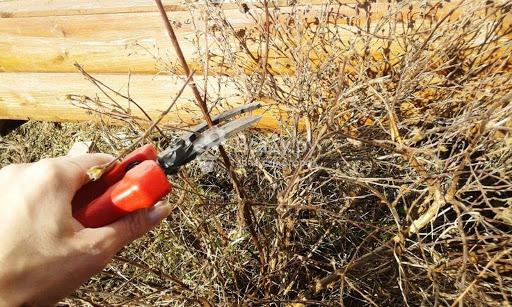
Throughout the season, dry, diseased, and broken branches are pruned. Branches growing deep into the ground are also removed. These thicken the bush, resulting in smaller flowers. Faded inflorescences are pruned, as they diminish the cinquefoil's decorative appeal. Every 4-5 years, the bushes are rejuvenated by cutting back a third of the old shoots.
Transfer
If your cinquefoil isn't growing well, it may be growing in the wrong location. In this case, the bushes need repotting. Follow these steps:
- the bush is dug up on all sides at a distance of 15-20 centimeters from the shoots;
- dig a hole in a suitable place and fill it with fertile soil;
- plant a bush and water it generously.
The soil around the cinquefoil is sprinkled with peat, straw, and sawdust. Mulch helps retain moisture in the soil.
Should I cover it for the winter?
Abbotswood cinquefoil tolerates temperatures down to -40°C, so the bushes don't require winter protection. Simply remove leaves from the root zone and apply mulch. Only young plants planted in the fall should be covered with agrofibre. A moisture-replenishing watering in mid-autumn will help the bushes survive the cold winter.
Pests and diseases of the flower
Abbotswood cinquefoil has a strong immune system: the bushes are rarely affected by diseases and pests. To prevent diseases, plants are treated with fungicides in the spring. Under unfavorable conditions, rust can affect the bushes. This can be controlled by spraying with copper-containing products. Abbotswood cinquefoil is susceptible to caterpillars. The pests nibble the leaves and lay eggs. This causes the cinquefoil to lose its decorative appearance. Actellic or Akarin are used to control pests.
Important! Do not use chemicals during flowering. This could kill the nectar-feeding bees.
How to propagate Abbotswood cinquefoil
The plant can be propagated in several ways: by dividing an established bush, by cuttings, or by layering. Seed propagation is labor-intensive, so gardeners don't use it. This method also may not transmit the parental traits and characteristics.
Dividing the bush
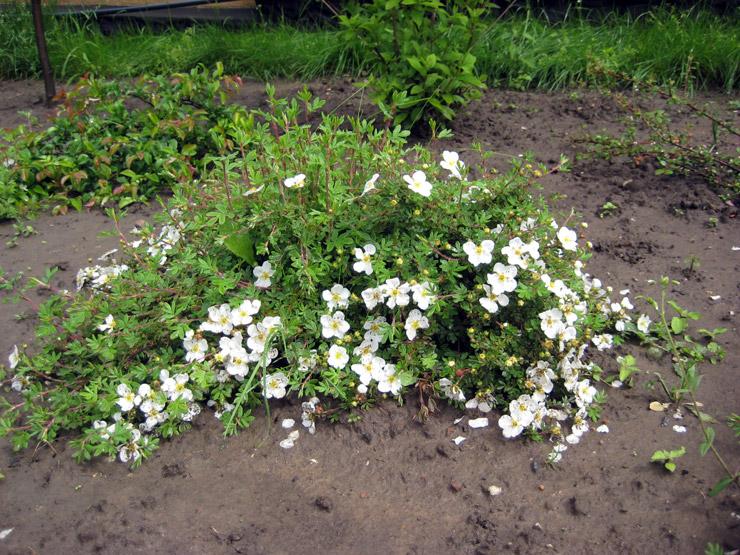
An overgrown bush can be divided into sections. To do this, dig around it on all sides and use a sharp shovel to divide it into 3-4 fragments. Sprinkle charcoal on the root system to disinfect it. Plant each section separately in a prepared area. Several bushes can be used to create a border or hedge.
Cuttings
From June to the end of July, cinquefoil can be propagated using green cuttings. Here's how:
- cuttings are cut into 15 centimeters long;
- placed in a growth stimulator solution;
- planted in containers, watered;
- cover with film to create greenhouse conditions;
- Containers with plants are removed to a dark place.
The plantings are cared for: they are ventilated, and condensation is removed from the film and container. The cuttings are watered as needed. Once they have strengthened, the film is removed. Young Abbotswood cinquefoil bushes are planted outdoors only after a year.
Layering
Propagation of cinquefoil by layering is carried out as follows:
- make a groove 5-7 centimeters deep;
- clear the shoot of leaves;
- they place it in the groove and secure it with staples;
- watered, covered with soil.
During the season, the cutting is cared for: watered, the soil is loosened, and weeds are removed. Soon, roots will appear on the shoot. The young bushes formed from the cutting are planted in their permanent location the following spring.
Related posts:
 The best varieties and types of cinquefoil, their description and growing characteristics
 Planting, growing, and caring for white cinquefoil in open ground
 Rules for planting and caring for cinquefoil in open ground, growing and pruning
 Useful properties and contraindications of Potentilla erecta
 Nepalese cinquefoil varieties, their cultivation and use in landscape design
 Description and rules for growing the Red Ice cinquefoil variety, planting and care
 Useful properties and contraindications of white cinquefoil, rules of application
 Description and methods of using Potentilla Goldfinger, planting and care rules