
- Advantages and methods of propagating sea buckthorn yourself
- Sea buckthorn propagation methods
- By vaccination
- Layering
- Seeds at home
- Lignified and green cuttings
- Undergrowth
- Root suckers
- Basic mistakes
- Preparatory work
- Preparation of planting material
- Germination and rooting
- Landing
- Deadlines
- Site preparation
- Planting technology and further care
There are several methods for propagating sea buckthorn bushes. The simplest is to use shoots, division, and layering. Many gardeners prefer propagation by woody or green cuttings and grafting. Seeds are sown to obtain rootstocks, as this propagation method does not preserve the parent plant's varietal characteristics, but it does provide good material for developing new sea buckthorn cultivars.
Advantages and methods of propagating sea buckthorn yourself
If you have a garden or a private plot, growing sea buckthorn seedlings with your own hands will not be difficult.
Reproduction methods:
- Seeds.
- Cuttings.
- Rhizomes.
- By the undergrowth.
- By layering.
Advantages:
- there is no need to purchase seedlings from a nursery;
- You can ask your neighbor at your dacha for planting material;
- It is permissible to choose the growing method yourself.
Sea buckthorn propagation methods
To grow and propagate sea buckthorn, one or more methods are chosen that are suitable for the growing area and the season of work being carried out.
By vaccination
This method preserves the quality of the grafted variety. The work is carried out in the second half of spring, when the sap begins to flow.
A two-year-old seedling is pruned, leaving 10 centimeters of above-ground growth. The rootstock continues to grow until the following spring. All emerging branches are removed, leaving the bare rootstock.
The following spring, grafting is carried out through improved copulation.
Layering
Sea buckthorn is easy to propagate by layering. Select a well-developed, flexible lower branch from a fruiting plant and bend it to the ground in the spring. A portion of the branch is buried in a small trench, secured with a wire arch. The end of the branch remains above ground.
During the summer, the future plant is watered, the soil is loosened, and fertilized. By the following spring, the cutting will have taken root, and it is separated from the main plant and transplanted to a new location.

Seeds at home
To obtain high-quality seeds, use well-ripened sea buckthorn berries. Before sowing, the seeds are kept on the bottom shelf of the refrigerator for six weeks. The boxes containing the sown seeds are covered with glass and left in a warm room until the seedlings emerge, which should be two weeks later. In mid-July, the seedlings are planted outdoors.
Lignified and green cuttings
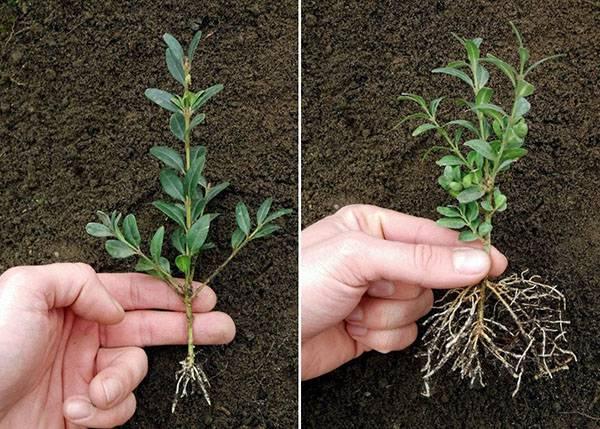
To propagate using woody cuttings, take cuttings in late autumn. Two-year-old shoots are cut to lengths of about twenty centimeters. They are stored in a plastic bag until spring, first wrapped in cloth. The bag should be buried in the ground and covered with leaves. In the first half of summer, shoots are cut for propagation using green cuttings. Planting material is harvested at different times, but planting is carried out in the same manner.
In the evening, the lower part of the cuttings should be treated with a root-forming agent, and in the morning they should be planted in loose soil, deepening them by 4 centimeters.
Undergrowth
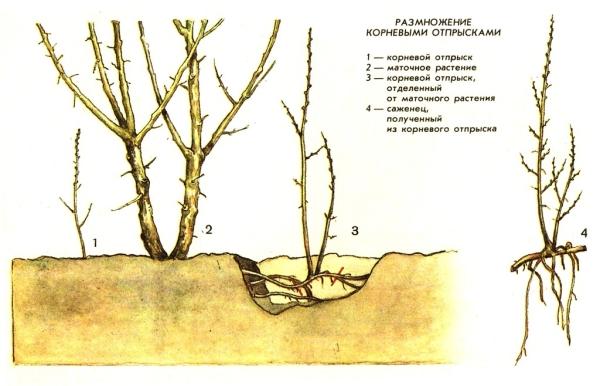
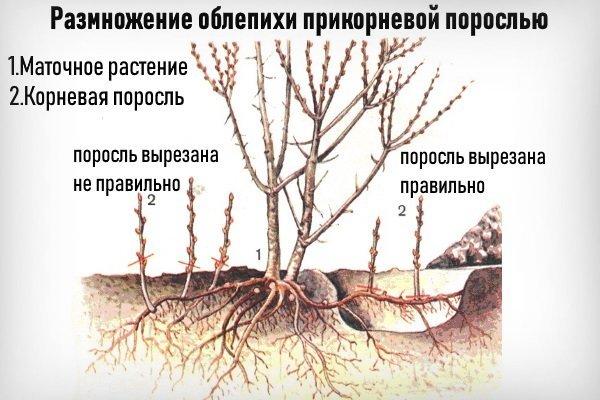
The easiest way to propagate sea buckthorn is to use the suckers that grow around a mature bush. The young plant is planted away from the main bush to avoid damaging its root system. The suckers are replanted in the spring.
Root suckers
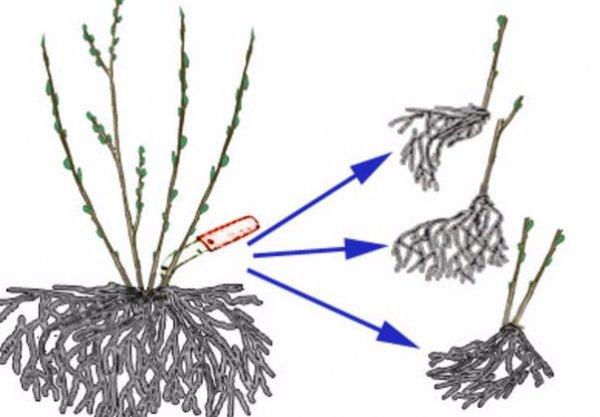
This method is used when renewing a shrub. The bush is dug up and divided into seedlings with root systems, which are then planted in a new location.
Basic mistakes
There are several mistakes that gardeners make when propagating sea buckthorn that can lead to the death of the plant:
- unsuitable time of year for planting seedlings;
- incorrectly chosen planting location – shady side of the site, swampy area;
- untimely watering in a dry summer.
Preparatory work
Before planting sea buckthorn in open ground, it is necessary to devote time to the necessary preparatory work to ensure the successful rooting of the plant.
Preparation of planting material
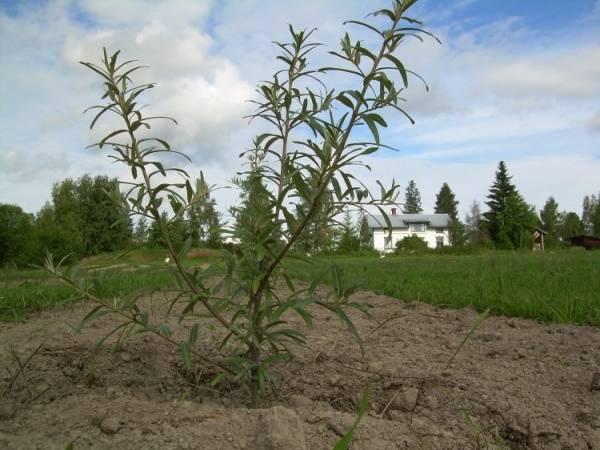
Many gardeners choose one of the easiest methods for propagating sea buckthorn: woody cuttings. In the fall, when the bush, aged three to seven years, is dormant, gardeners can use a sharp blade to cut cuttings one centimeter thick and thirty centimeters long for rooting. The cuttings are placed in sand and stored in a basement.
Germination and rooting
Before planting the cutting in the ground in spring, it needs to be soaked in water for fourteen days. During this time, the cutting will develop roots and buds.
Landing
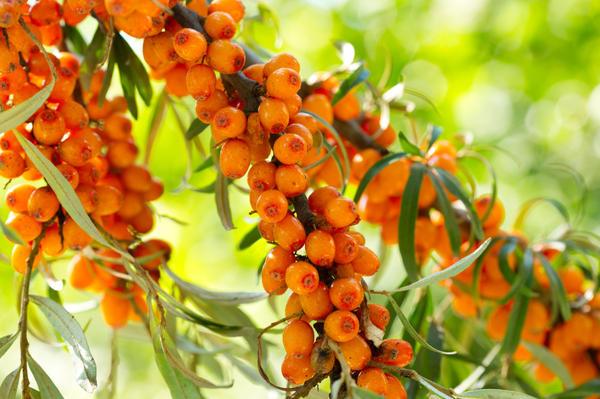
If you follow the recommendations for planting and caring for seedlings, in a few years the sea buckthorn tree will produce a bountiful harvest.
Deadlines
The last week of March and early April are ideal for planting sea buckthorn. This will give the plant enough time to strengthen and develop its root system before frost sets in. The shrub is dormant at this time, and the soil has enough moisture for further development.
Planting seedlings in the fall is not recommended, as there is a high risk of their death. However, if necessary, planting can be done from late September to mid-October.
Note! The timing of autumn planting varies by region; work should be carried out when daytime temperatures do not rise above 4°C (4°F). If sea buckthorn has been growing in a pot for more than a year, it can be planted outdoors in the summer.
Site preparation
To ensure abundant fruiting, the tree should be planted in a sunny location. Before planting, prepare the soil by applying potassium, phosphorus, and organic fertilizers in the fall. Then, dig up the black soil and level it with a rake.
Planting technology and further care
To plant a sea buckthorn seedling, dig a hole 40 centimeters deep and 50 centimeters wide in the prepared area. Spread a layer of crushed stone or any other drainage mixture on the bottom. Mix the soil removed from the hole with sand.
Place a stake in the center of the hole, spreading the seedling's roots evenly throughout the hole. Fill with prepared soil and water thoroughly.
Further sea buckthorn care consists of:
- cuttings of dry branches;
- crown formation;
- timely feeding, application of organic fertilizer once every two years.
Related posts:
 Planting and caring for sea buckthorn in open ground, growing in the country
 Causes and symptoms of sea buckthorn diseases, methods of pest control
 14 Best Step-by-Step Recipes for Preparing Sea Buckthorn for Winter
 How to quickly harvest sea buckthorn with your own hands and the basic tools
 Description and characteristics of the 60 best sea buckthorn varieties, how to choose depending on the region
 Timing and rules for pruning sea buckthorn for beginners
 Simple recipes for making sea buckthorn juice at home using a juicer for the winter
 Top 10 easy recipes for making sea buckthorn jam at home for the winter
