
- Bush aster: botanical description
- Bush aster in landscape design
- Popular varieties
- Starlight
- Jenny
- Lady in Blue
- Blau Lagoon
- Alice Haslam
- Features of flower cultivation
- Site selection and preparation
- Timing and rules for sowing seeds
- Caring for seedlings and adult bushes
- Watering
- Fertilizer
- Loosening the soil
- Treatment against diseases and pests
- Preparing for the winter period
- Methods of reproduction
- Collection and preparation of seeds
- Dividing the bush
- Cuttings
With the arrival of autumn, shrubby asters become a delight for gardens, parks, and homesteads. Before the cold weather sets in, these plants delight the eye with their vibrant and abundant blooms. This ornamental plant is widely used in landscape design. The color scheme and shape of the bush harmoniously complement other late-blooming plants.
Bush aster: botanical description
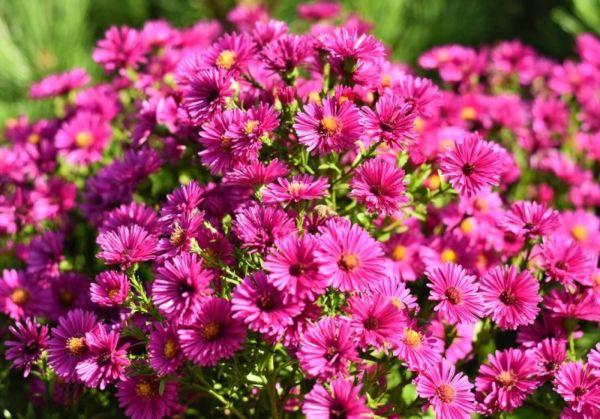
In the wild, bush aster grows in North America. Over two centuries, breeders have developed approximately 1,000 varieties, a third of which are used in floriculture and landscape design.
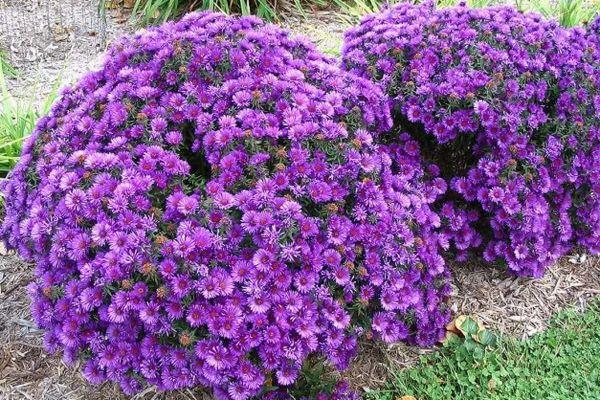
The plant's decorative feature lies in its ability to form a spherical or hemispherical bush. A short horizontal rhizome produces up to 90 pubescent shoots, forming a brightly colored sphere at a height of 20-80 centimeters.
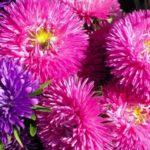
The straight, dense stems range from 20 to 80 centimeters in height. Each stem bears small flowers, up to 2-8 centimeters in diameter. The corolla is a basket-shaped flower with yellow tubes in the center and petals in shades of white, blue-violet, and red-crimson (double or single). Flowering begins in early August and continues until the end of September.
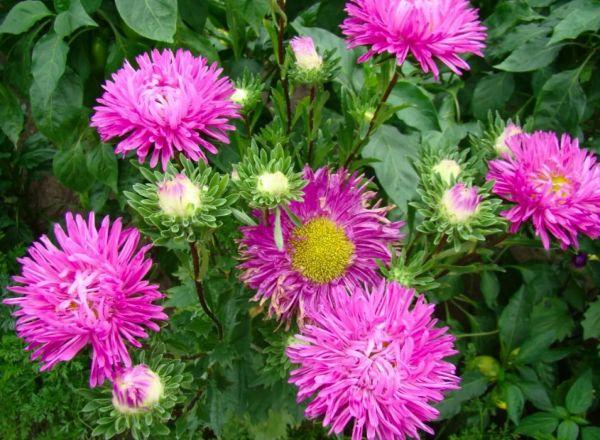
The dark green, oval-toothed, petiole-less leaves cling tightly to the stems, clearly visible against the blossoming buds. Although the shrub aster does not bloom for the first two years after planting, it also serves as a decorative addition to the garden.
This perennial plant loses its decorative appeal after 5-6 years due to excessive tillering. The plant needs to be thinned or replanted every 5-6 years. Shrub aster is resistant to low temperatures but does not tolerate prolonged drought.
Bush aster in landscape design
Bush aster is planted with other flower crops that are similar to it in flower and leaf color, for example, chrysanthemum.
The autumn perennial is used for decoration:
- curbs;
- alpine slides;
- lawns;
- flower beds.
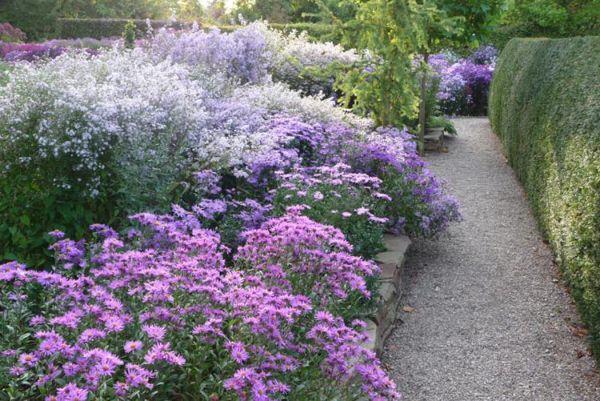
Colourful balls look good in hedges with thuja, barberry and juniper.
Popular varieties
In the Central Belt, frost-resistant low and medium-sized varieties of shrub asters are popular, opening their buds in early August.
Starlight
The bush grows up to 40 centimeters tall. The flower size and color are 3 centimeters across, with lilac-purple petals and a yellow center. Flowering lasts up to 2 months.
Jenny
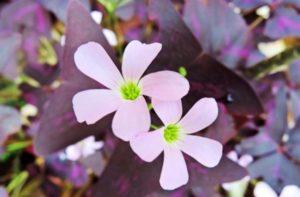
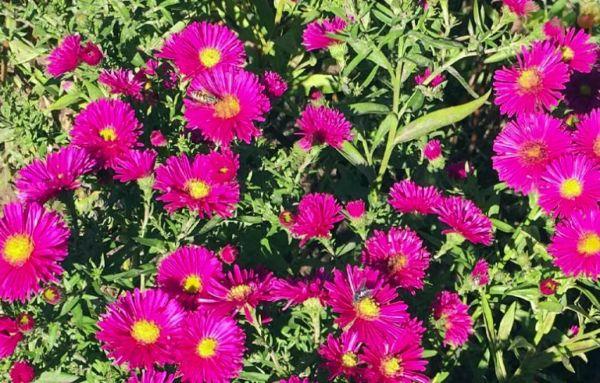
A low-growing bush with abundant pink-burgundy blooms. It's perfect for group plantings and bouquets.
Lady in Blue
This bushy aster is resistant to low temperatures and diseases. The stems form a dense sphere up to 80 centimeters tall. The flowers are simple, up to 3 centimeters in diameter, with a blue corolla.
Blau Lagoon
In late September, lilac flowers with a blue tint bloom on a spherical bush growing up to half a meter tall. The corolla reaches a maximum diameter of 3 centimeters. Flowering continues until the first frosts in October.
Alice Haslam
Low-growing (up to 30 centimeters) bushes in pink-purple-green colors decorate borders and alpine slides from August to October.
Features of flower cultivation
Bush aster is a perennial that is replanted once its root system is sufficiently developed. When choosing a planting location, consider all the growing conditions for the flower.
Site selection and preparation
Despite its shallow roots, the plant does not tolerate close proximity to groundwater or stagnant water after rain or snowmelt. The soil should be loose and rich in nutrients. Prepare the planting site in the fall: dig the soil, remove weed roots, and add compost or humus mixed with river sand.
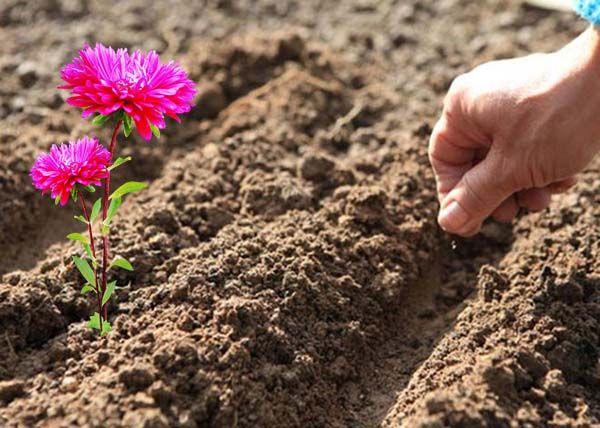
Bright sun and drafts will inhibit the growth of the bushes. The optimal conditions for asters are partial shade and wind protection from neighboring plants.
Timing and rules for sowing seeds
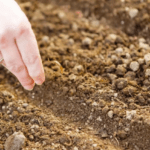
Seeds are sown when the soil is still moist but warm: in late March or early April. The soil is leveled with a rake, and holes are made 70-100 centimeters apart, depending on the variety. The hole should be no more than 1 centimeter deep and 10 in diameter.
Place three seeds in each hole. Since they are very small, they are glued to a strip of paper coated with paste, spacing them 3 centimeters apart. Sprinkle with soil mixed with fine sand in a 1:1 ratio. Water and cover with plastic wrap. As the soil dries, moisten it. When sprouts appear, remove the plastic wrap.
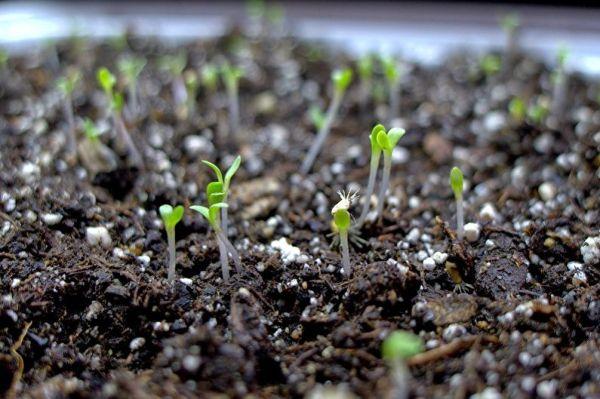
In regions with late springs, shrub aster is propagated from seedlings. In March, the seeds are sown in rows in a container with a soil mixture of peat, humus, and sand in a 1:1:1 ratio. The distance between rows is 5 centimeters. The planting depth is 0.5 centimeters. The seeds are sprinkled with a mixture of sand and peat, moistened, and covered with plastic wrap.
Place the seedling container in a warm location. Once the seedlings emerge, they should receive maximum light at temperatures no higher than 18 degrees Celsius. At the fourth leaf stage, transplant the asters into peat cups. Plant the flowers in their permanent location in June.
Caring for seedlings and adult bushes
Until seedlings get stronger, they require more careful care than adult plants.
Watering
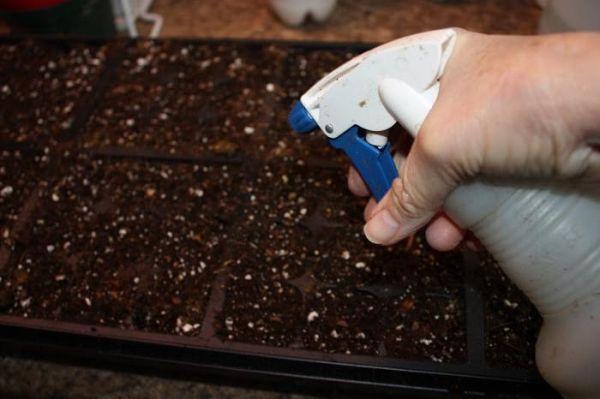
The frequency and amount of watering depend on weather conditions and the size of the bush. In the absence of rain, two-year-old and older asters are watered once a week in the evening. The larger the bush, the more water it requires: 5 to 8 liters. Annual flowers are watered at a rate of 1-2 liters per bush twice a week. After prolonged rainfall and in cool weather, the bush is watered once a month.
Fertilizer
Shrub asters don't grow well in acidic soils. Peat and organic matter acidify the soil. To alkalize the bushes before flowering, water them with a slaked lime solution. 20 grams of dry lime per 10 liters of water is sufficient. Repeat the procedure again at the end of September. Feed the seedlings with a complex fertilizer when buds appear.
The fertilizer contains the following in a proportional ratio of 1:2:3:
- potassium sulfate or wood ash;
- ammonium nitrate;
- superphosphate.
The mixture is applied under the bush at a rate of 30 grams per square meter and watered. After pruning, the aster's root system is mulched with a peat-humus mixture.
Loosening the soil
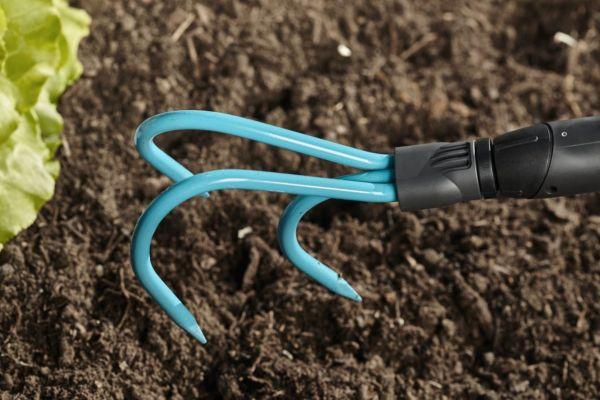
To aerate the top layer of soil and remove weeds, loosening is regularly carried out under and around the bush without damaging the root system of the aster.
Treatment against diseases and pests
When the soil beneath the bush becomes overwatered, not only the root system but also the above-ground portion of the shrub aster suffers. High humidity can also result in the plant being susceptible to fungal diseases such as fusarium wilt and powdery mildew.
In the first case, the leaves on the bush dry out and turn yellow. The second infection affects the stems, buds, and leaves, forming an ashy coating. The affected parts of the plant are removed and burned. To combat fusarium, spray the bush with Fundazol, and to combat powdery mildew, spray with a mullein solution.
Yellowing foliage and stunted growth may be signs of chlorosis, a viral disease transmitted by aphids. The affected bush is removed and burned.
Pests that pose a danger to the aster bush:
- slugs and snails;
- aphid;
- spider mite;
- meadow bugs;
- caterpillars of the moth and cutworm.
Preventative measures include spraying the plant with mullein solutions or a soap-ash suspension, loosening the soil, and weed control. If insects are detected on the plant, treat the bush with insecticides. Snails and slugs are collected by hand.
Preparing for the winter period
Frost-hardy varieties of shrub aster can withstand ground freezing at temperatures down to -20 degrees Celsius. For less hardy varieties, the root area and part of the bush itself are covered with spruce branches and a layer of fallen leaves, which are removed in early spring.
Methods of reproduction
Shrub aster can be propagated by seeds, division of rhizomes with stems, and cuttings.
Collection and preparation of seeds
Aster seeds, which bloom for a long time, may not have time to ripen before frost. Withering flowers with browned centers are picked for seed. These flower heads are wrapped in paper and placed in a warm, dry place to ripen and dry completely.
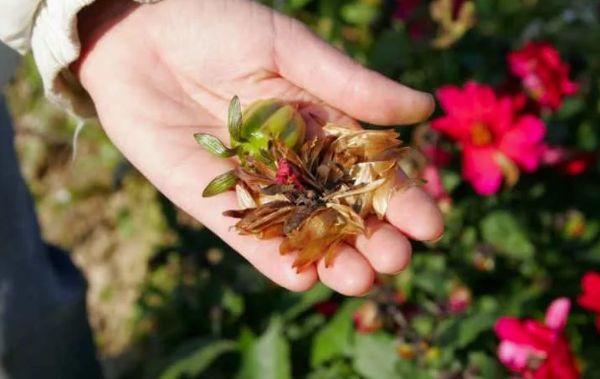
Once completely dry, knead the flower with your fingers over a white sheet of paper, removing any debris. Store the sorted seeds in a paper bag in a cool, dry place.
Dividing the bush
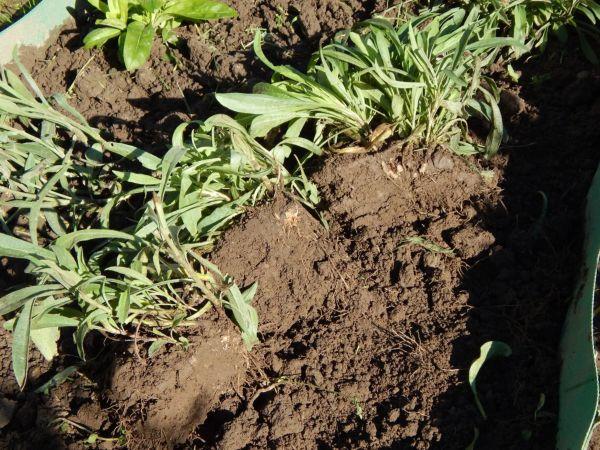
The bush should be replanted when the growing season reaches 4-5 years. In early spring, when the plant begins to emerge, it is dug out of the ground, the roots are cleaned, and divided so that the new bush has at least three stems and a correspondingly large root system. Weak shoots and damaged roots are removed. The asters are planted in holes prepared in the fall.
Cuttings
Aster cuttings have a good survival rate. When leaves emerge, cuttings are taken from 2-3 year-old growth. The cutting is cut at the root at a 30-degree angle. Any shoot longer than 40 centimeters is shortened, and the leaves at the top are removed down to the bud. The shoot is placed in a growth stimulator for 12 hours.
To plant the cuttings, prepare a place protected from wind and sun: a small greenhouse. The soil layer should be 15-20 centimeters thick and consist of a mixture of peat, turf soil, and sand in a ratio of 1:1:0.5.The cuttings are planted 7-9 centimeters deep at the same angle as the cut on the stem, at a distance of 8 centimeters.
After a week, begin acclimating the seedlings to fresh air. During windless midday hours, air them out, gradually increasing the time. After 30 days, the seedlings are ready for transplanting to their permanent location.
Related posts:
 Planting and caring for asters in open ground, propagation and description of species and varieties
 Description of the best varieties of alpine aster, planting and care rules
 Description of heather aster varieties, planting and care rules
 Description and characteristics of the best varieties of New England aster, planting and care
 Description and characteristics of the best varieties of New England aster, planting and care
 Description of cut flower mixtures of Chinese asters, planting and growing rules
 Classification of aster species by shape, height and flowering period and description of varieties
 When and how to plant asters in the fall before winter, is it possible