
- Botanical description of Alpine aster
- The most popular varieties
- Alpine Aster Pink
- Blue
- Perennial aster mix
- White Alps
- Albus
- Illyria
- Astra Blue
- Superbus
- Ruber
- Goliath
- Happy ending
- Alpine aster in landscape design
- Combination with other plants
- Methods of growing flowers
- Seeds
- Seedlings
- Peculiarities of caring for mountain asters
- Watering and fertilizing
- Protection from diseases and pests
- Do asters need to be pruned for the winter? Timing and procedure
- Reproduction of culture
- Potential problems and difficulties when growing
Among the vast number of ornamental plants, the Alpine aster has undeniable advantages. This beautiful and undemanding plant is an indispensable element in landscape design. It is popular among amateur gardeners looking to beautify their gardens or homesteads, and among professionals designing parks.
Botanical description of Alpine aster
This ornamental plant is a groundcover, which explains its widespread use in landscape design. Favorable climate conditions for its growth include the cool latitudes of northwestern Europe, North America, and the Caucasus Mountains.
Alpine aster is a perennial plant with a seven-year period of active growth and flowering. There are over 200 subspecies.
General features:
- the height of the stems varies from 10 to 40 centimeters;
- grows as a bush;
- number of flowers on 1 bush – from 7 to 50 units;
- the structure, size and shape of the leaf changes vertically;
- flower basket – 2- or 3-row;
- flower diameter – 5-6 centimeters;
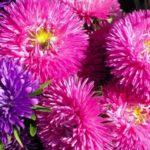
- petal colors - blue, purple, red, pink, white;
- the core is yellow tubular flowers.
Flowering time varies by variety: May to September. The plant tolerates low temperatures and low humidity well, requires little care, and is easy to propagate.
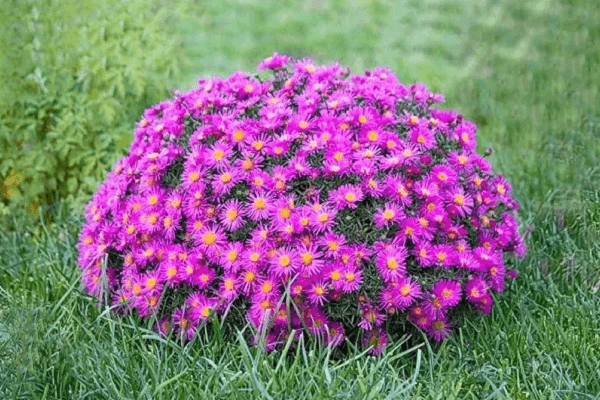
The most popular varieties
To decorate a plot, mainly low-growing varieties with a spreading bush and abundant flowering in the first half of summer are used.
Alpine Aster Pink
An early-blooming variety, pink buds up to 4 centimeters in diameter appear in May. The bush produces abundant shoots, covering an area of up to half a meter. The stems reach a height of no more than 30-35 centimeters.
Blue
Above a spreading green cushion of rosette leaves, a bush rises 10-15 centimeters high, dotted with violet-blue flowers, 6 centimeters in size.
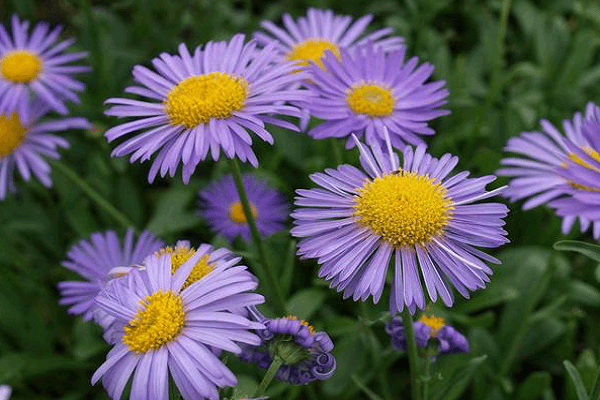
Perennial aster mix
The name of the aster means that the spreading bush will enliven the landscape with bright, semi-double multi-colored buds.
White Alps
Low bushes, strewn with buds, with a basket of yellow tubular flowers, surrounded by two-row, narrow white petals.
Albus
The snow-white flowers with a yellow eye resemble daisies. The stems grow to no more than 20 centimeters tall.
Illyria
The flower heads resemble daisies in shape. Buds of various shades bloom on a single bush.
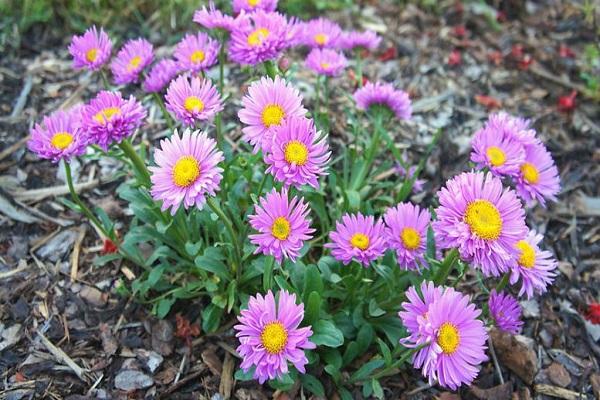
Astra Blue
The robust bush rises up to 50 centimeters above the ground. The petals are blue, with a yellow center. The corolla can reach 8 centimeters in diameter. The plant prefers partial shade.
Superbus
The variety is low-growing, with abundant flowering of small lilac buds with a blue tint.
Ruber
The Alpine aster grows up to 40 centimeters. The flower head is yellow and crimson.
Goliath
Over time, each bush grows to the size of a flower bed with a carpet of lilac buds.
Requires regular pruning to maintain shape.
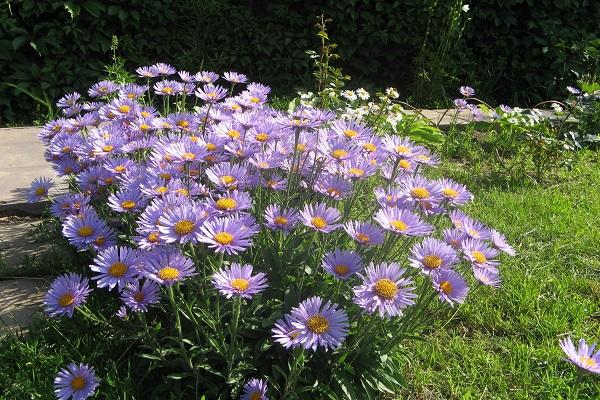
Happy ending
In landscape design, low-growing bushes with delicate pink flowers are used to create borders. This early variety blooms in early May.
Alpine aster in landscape design
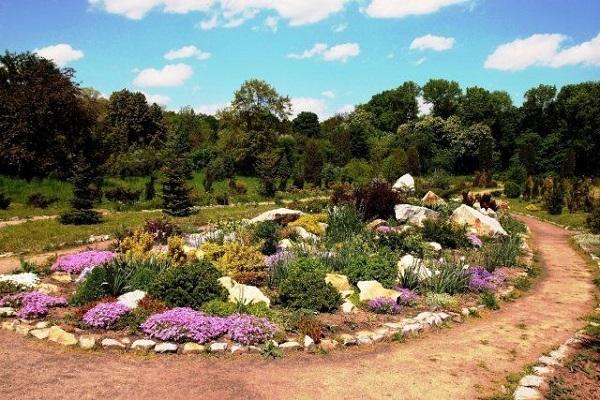
Asters are a popular choice for landscapes. These low-growing plants, with numerous brightly colored buds, are used to create floral ensembles in flowerbeds, borders, and edgings.
Combination with other plants
Alpine aster is planted in combination with other ornamental groundcover crops, both deciduous and flowering. This combination allows for a changing color scheme throughout the summer and early fall. Geraniums, violets, and chrysanthemums are most often planted alongside asters.
Methods of growing flowers
The method of growing asters depends on temperature conditions during the cold season.
Seeds
In regions where winter temperatures don't drop below -20°C and there are no prolonged cold spells in the spring, asters are grown from seeds. For this purpose, they are sown in the ground in November or May.
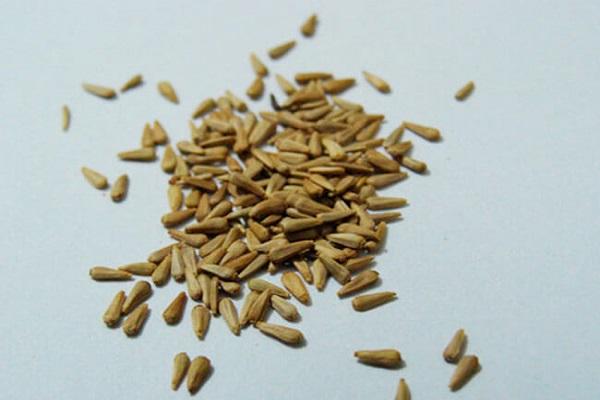
In a sunny area, make shallow furrows (up to 1 centimeter deep) in loose soil. Aster seeds are pre-treated with a biostimulant to speed up the growth process and disinfected.
Since aster seeds are very small, they are covered in furrows with soil mixed with river sand. To avoid replanting later, the distance between furrows should be at least 40 centimeters. As the seedlings become established and grow, thin them out, leaving 15-20 centimeters between seedlings.
In the first year after sowing, asters produce a basal rosette of leaves without producing flower stalks. Buds appear the following year.
Seedlings
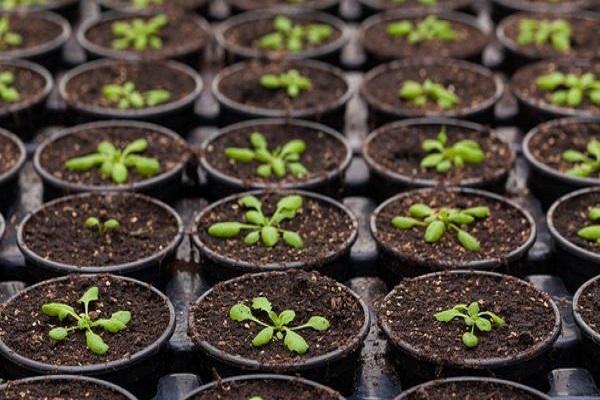
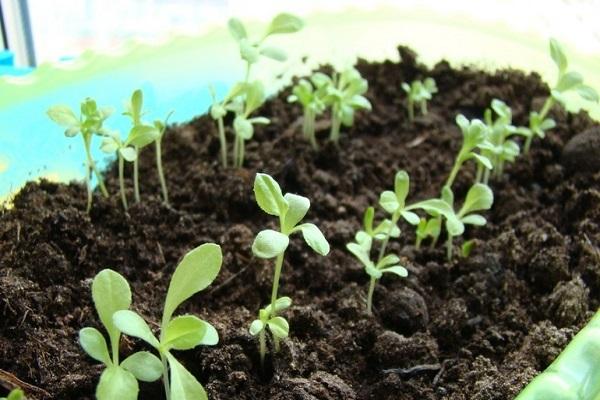
In colder regions, alpine aster is grown in the garden from seedlings. The sowing time is late February. A plastic container with holes for drainage is necessary.
A drainage layer is laid out of broken brick and expanded clay. The soil should be loose. Prepared aster seeds are sown in the same way as for planting in the ground. They should be well moistened, covered with plastic wrap, and placed in a warm place. Once the sprouts emerge, move the container to a well-lit and cool location to prevent stretching.
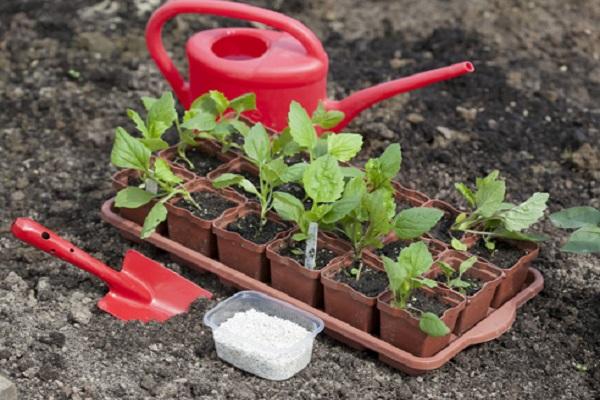
When the asters have three true leaves, they are pricked out, transplanting the plants with a lump of soil into cups. Planting in their permanent location occurs in May or early June, when there is no risk of frost. Before planting, acclimate the asters to fresh air and direct sunlight.
Hardening off asters begins by placing the seedlings on the balcony in warm, calm weather. During the first few days, the plants are shaded for 15-20 minutes. Over the next 15-20 days, the asters' exposure to natural conditions is increased to match the length of daylight, regardless of weather conditions.
As with sowing seeds, the area should not be shaded, the soil should be nutritious sandy loam, fertilized loam.
For each bush, dig a hole 2 centimeters deeper than the root ball. Asters are planted at 40 centimeters between rows and 20 centimeters within a row.
Peculiarities of caring for mountain asters
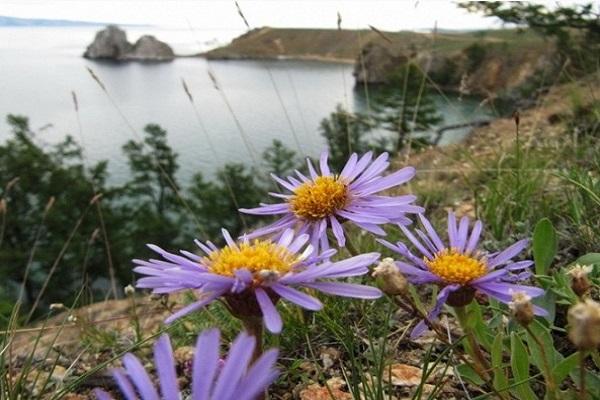
The growth characteristics of this wild alpine beauty are preserved in cultivated plants:
- Aster loves a lot of sun;
- not afraid of drafts and wind;
- does not tolerate low groundwater levels.
The soil condition for good vegetation is a structured condition, with mineral additives.
Watering and fertilizing
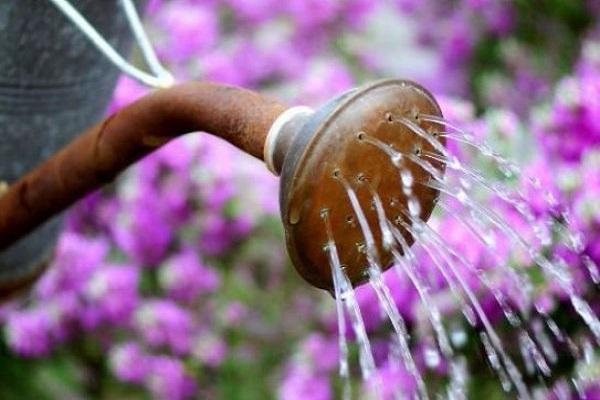
Alpine meadows are abundantly moist. Fog moistens the mountain soils, promoting lush plant growth. Alpine asters also require watering and loosening for the first 2-3 years to improve aeration of the root zone. During dry summers, evaporation is prevented by mulching rows and spaces between rows with sawdust or pine needles. Mature plants form a cap of leaves above the soil, which retains moisture and suppresses weed growth.
To stimulate aster flowering in early summer, add phosphorus and potassium fertilizers or diluted cow manure (1 kilogram of fresh manure per bucket of warm water) to the soil. At the end of the growing season, feed the flowers with an ash infusion (1 cup of decomposed wood ash per bucket of water).
Protection from diseases and pests
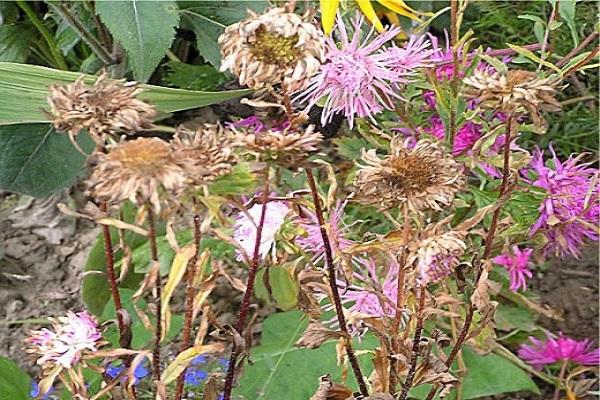
Alpine aster is susceptible to fungal infection if favorable weather conditions are present: rainy, windless weather with temperatures between 16 and 20 degrees Celsius. Young plants (one-year-old seedlings and seedlings) are particularly susceptible, and can die from blackleg (root rot) within seven days.
Fusarium fungi cause stems to wilt and roots to dry out. Powdery mildew attacks the leaves.
Fungal spores live in the upper layers of soil and can be found on seeds.
To prevent infection, use seeds treated with fungicides, such as Fitosporin. Infected leaves and stems should be removed and burned. Thin out dense plantings.
Insect pests are a threat to asters at the beginning of the growing season, when slugs, bud aphids, and spider mites attack tender young leaves and unopened buds. Insecticides are the preferred method of control.

Do asters need to be pruned for the winter? Timing and procedure
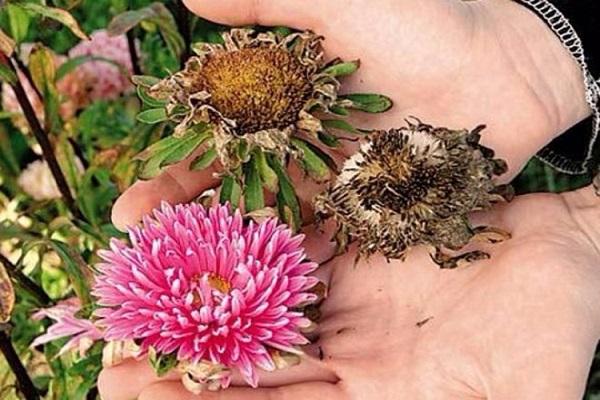
Pruning dried flowers and stems is essential. Pests and fungal spores can overwinter in them. In annual plants, flower stems are removed once they have grown, not left over the winter. Green leaves and stems that remain turgor overwinter under snow.
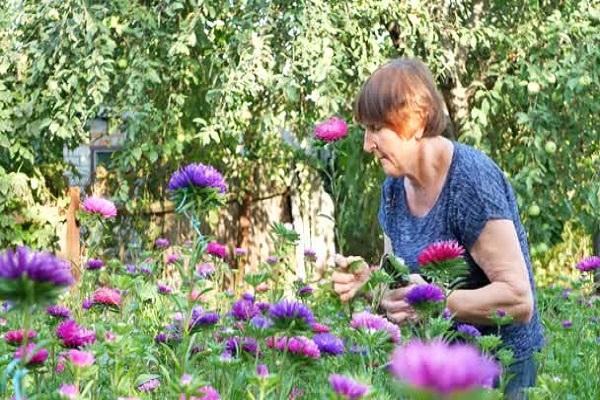
Aster bushes are pruned as they fade. The final treatment, when dead plant parts are removed down to the root collar, occurs in late September, early October, or early November during warm autumns. Use disinfected pruning shears for removal.
Reproduction of culture
Perennial bushes are propagated by division or cuttings. For asters 5 years or older, division is necessary.
The root system of a vigorous bush cannot adequately nourish the shoots and flowers. The plant is dug up, damaged roots and stems are removed, and treated with a potassium permanganate solution. It is replanted in a new, prepared location. Repotting stimulates growth and lush flowering. This procedure can be performed throughout the summer.
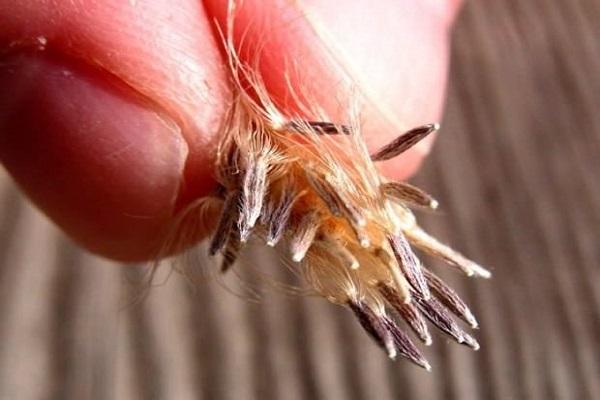
Propagation by cuttings involves planting the tips of 5 to 7 centimeter-long stems in the soil. The key is preparing and maintaining the soil moist. A semi-shaded, well-ventilated area is selected. Peat, sand, and compost are added to the soil.
The cuttings are kept in a growth stimulator according to the instructions, rooted, and covered with plastic wrap. Watering and ventilation are provided as needed. Once established, the cuttings are transplanted to their permanent location in early fall.
Potential problems and difficulties when growing
The choice of variety must correspond to the climatic and soil conditions.
Despite common biological characteristics, each subspecies has its own preferences when growing, which must be taken into account.
Asters grow poorly in lowlands where water lingers after rain and snowmelt. In freezing winters, the root systems of not only young but also mature plants freeze. Straw and spruce branches are used as cover.
Related posts:
 Planting and caring for asters in open ground, propagation and description of species and varieties
 Description of heather aster varieties, planting and care rules
 Rules for planting and caring for shrub asters, the best varieties and growing features
 Description and characteristics of the best varieties of New England aster, planting and care
 Description and characteristics of the best varieties of New England aster, planting and care
 Description of cut flower mixtures of Chinese asters, planting and growing rules
 When and how to plant asters in the fall before winter, is it possible
 Classification of aster species by shape, height and flowering period and description of varieties