
- Chinese aster: characteristics and description of the plant
- Benefits of using in landscape design
- The most beautiful varieties
- Pom-poms
- Princess
- Old castle
- balloon
- Dragon
- Serenade
- Planting and caring for the flower
- Timing and rules for planting seeds for seedlings
- Selecting a site and transplanting into open ground
- Watering and fertilizing
- Loosening the soil
- Protection from insects and diseases
- Pruning and preparation for winter
- Methods of reproduction
- Seedless
- Seedlings and dividing the bush
- Possible mistakes when growing
Like other aster varieties, the Chinese variety is easy to grow and thrives in a variety of conditions. Some flowers bloom when the first frost arrives, while others remain blooming for several months. The Chinese aster stands out due to its rich, eye-catching color. Therefore, it is often used in arrangements and landscape designs.
Chinese aster: characteristics and description of the plant
Chinese aster has the following characteristics:
- depending on the variety - one- or two-year plant;
- suitable for planting directly into open ground, including in temperate latitudes;
- abundant and long-lasting flowering, lasting from the beginning of summer until frost;
- plant length - up to 90 centimeters.
The Chinese aster's root system is strong and resilient. Therefore, if a nearby plant is damaged, a new one will soon grow.
Depending on the variety, the color of the aster can be:
- red;
- blue;
- yellow;
- purple;
- lilac and others.
There are also varieties with flowers in two shades. The inflorescences of the Chinese aster can be flattened, spherical, or round.
Benefits of using in landscape design
The popularity of Chinese aster varieties is due to several factors. These flowers differ not only in size and color, but also in their growth habit. There are trailing varieties that look natural in decorative gardens.
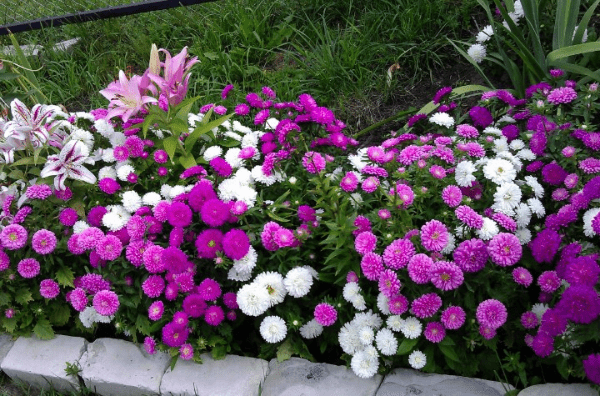
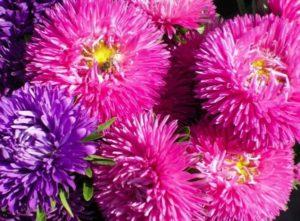
Dwarf varieties stand out due to their unique color palette: purple, deep blue, and others. And needle-shaped asters attract with their unusually shaped inflorescences and pointed petals. This mix of cut flowers looks great in any interior.
The popularity of asters can also be explained by the fact that the plant is undemanding in care, and therefore the flower can grow next to other ornamental crops.
The most beautiful varieties
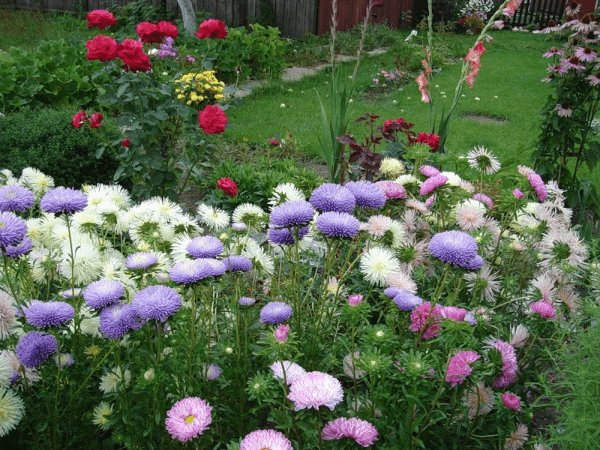
The previously mentioned cut flower varieties are primarily grown in garden plots. This variety of Chinese aster is distinguished by its large inflorescences and stems reaching 70 centimeters in length.
Pom-poms
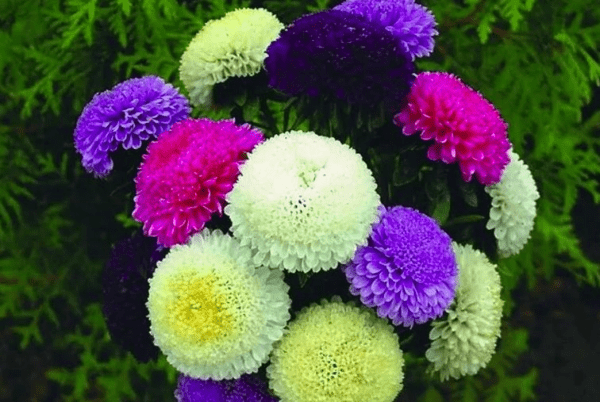
This variety of Chinese asters is characterized by the following features:
- flower diameter - up to 8 centimeters;
- stem length - up to 80 centimeters;
- columnar bush;
- inflorescences are round and flattened.
One bush of the Pomponchiki variety produces up to 30 flowers, which come in a variety of shades and can emit a scent for two weeks after cutting.
Princess
The Princess variety stands out not only for its abundant blooms but also for its expansive bush, reaching 75 centimeters. A single plant produces up to 13 buds. The pastel-colored, spherical flowers of this variety give the bush an attractive appearance.
Old castle
Asters of this variety grow up to 70 centimeters, forming a compact bush. A single plant produces up to 40 flowers in various shades: milky, purple, and others. As they grow, the petals curl inward.
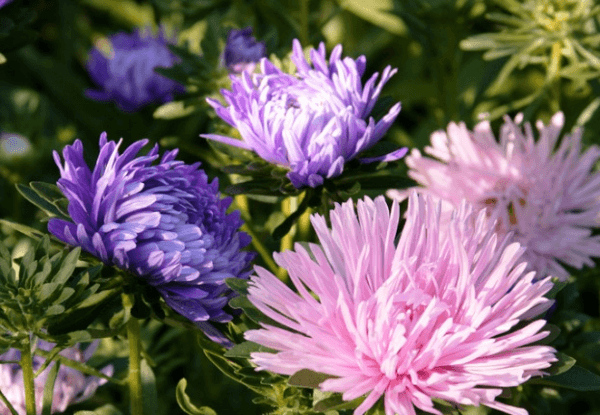
balloon
This variety is characterized by a pyramidal bush, no more than 60 centimeters tall. The plant produces spherical flowers up to 15 centimeters in diameter with double, tightly packed petals. A single bush produces up to seven buds.
Dragon
The name of this variety comes from the fact that the Dragon aster can reach large sizes, and the bush produces flowers with iridescent shades and twisted ligulate petals.
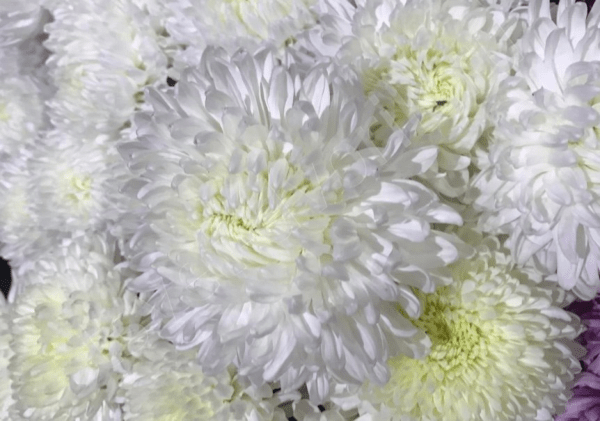
Serenade
This plant requires annual repotting, otherwise it develops signs of fusarium wilt. The Serenade aster produces numerous compact flowers (up to three centimeters in diameter) with white or burgundy petals.
Planting and caring for the flower
Chinese asters can be planted either in open ground or in pots for seedling preparation. The latter option is preferable as it shortens the flowering period.
Timing and rules for planting seeds for seedlings
It's recommended to plant aster seedlings in early March. To do this, first place the seeds on cheesecloth soaked in a weak solution of potassium permanganate. Within a week, the first sprouts should appear, which can be transferred to pots with prepared soil.
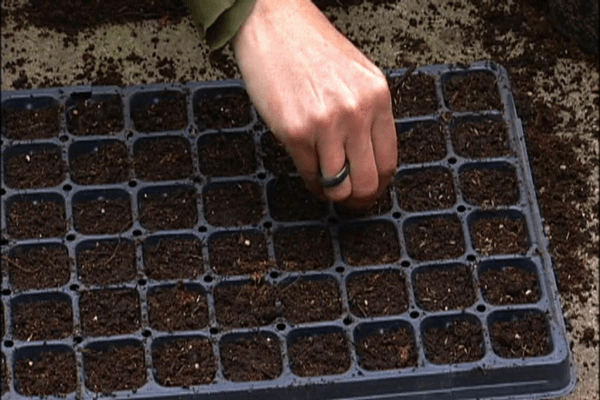
Aster seeds can also be sown directly into the soil. It's recommended to grow the plant in a soil mixture consisting of three parts turf and one part sand. Vermiculite should also be added to this mixture to ensure sufficient oxygen supply to the roots.
Aster seeds should be sown according to the following rules:
- The seeds are buried 1 centimeter deep in the soil and covered with a layer of sand on top.
- The soil with the planting material is watered generously, and the pots are covered with film and kept indoors at a temperature of 23 degrees for a week.
- After 7-10 days, when the seedlings appear, the film is removed and the pots are transferred to a room with a temperature of 18 degrees.
- The seedlings are watered generously and kept in a well-lit place for 12 hours.
- After two leaves appear, picking is carried out.
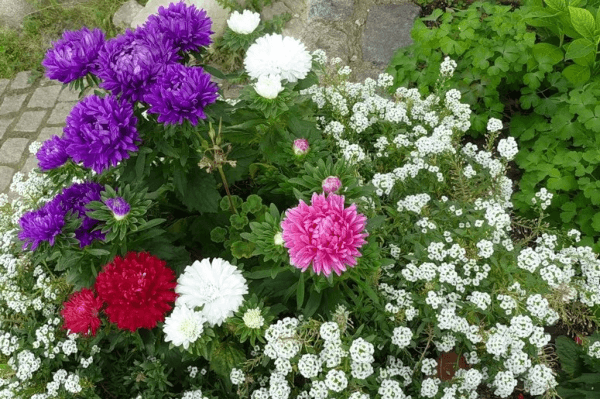
After 10 days, the seedlings are fed with mineral fertilizer. This procedure should be repeated when four leaves appear. During this period, the plant should be taken outside for 30 minutes daily, gradually increasing the interval.
Selecting a site and transplanting into open ground
Asters are recommended to be planted in soil with a neutral pH and fertilized with mineral fertilizer in the spring. Seedlings can be transplanted outdoors in early summer. Place the plant in a sunny location (some varieties don't require this) in a pre-prepared hole. Afterward, water the seedlings thoroughly.
Watering and fertilizing
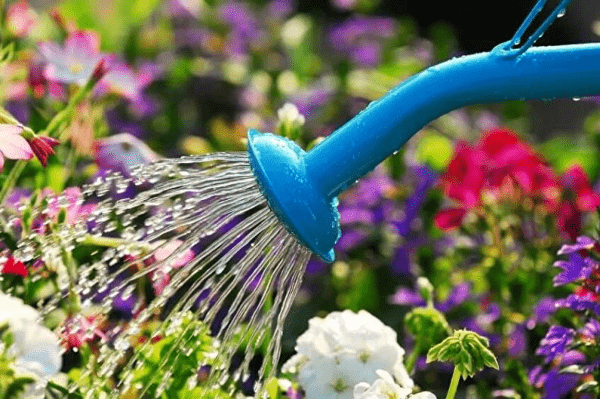
China aster requires abundant watering during dry and hot summers. Up to three buckets of water per square meter are needed. The plant is fed for the first time immediately after planting, using mineral fertilizers; the second time, during flowering, using potassium-phosphorus fertilizers.
Loosening the soil
The soil under asters should be loosened after each watering, when the soil has dried out. Due to the close proximity of the roots, it is recommended not to plant deeper than five centimeters.
Protection from insects and diseases
China aster has weak immunity to fusarium wilt and blackleg. To avoid this, avoid feeding the plant with manure, ensure adequate air flow to the root system, and avoid planting it in acidic soils. It is not recommended to grow asters where bulbous flowers were previously grown.
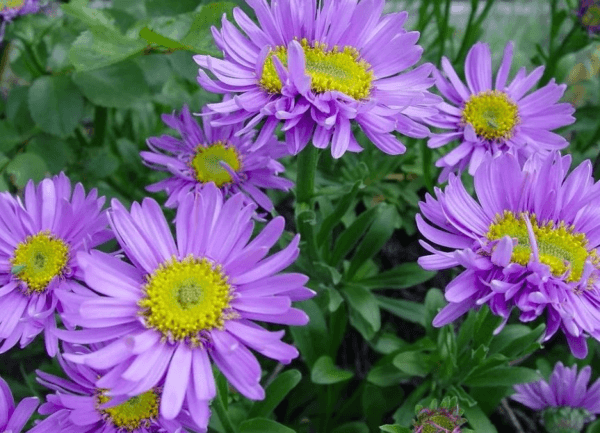
If signs of fungal diseases are detected, asters should be treated with fungicides or the affected parts should be removed and burned.
To prevent aphids and slugs from infesting the bushes, it is recommended to apply a Chlorophos solution.
Pruning and preparation for winter
Asters don't require any winter preparation. However, if the plant is grown in regions where temperatures drop below -40 degrees Celsius, the bushes should be pruned and then covered with leaves, compost, and peat.
Methods of reproduction
Asters are propagated by seeds or by dividing the bush. The latter method is preferable, as it helps preserve the plant's characteristics.
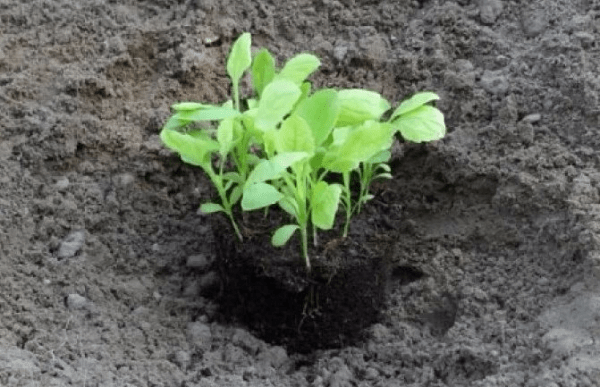
Seedless
This propagation method is convenient because the seeds can be sown outdoors in both fall and spring. Before planting, the soil must be prepared by loosening and fertilizing it. This recommendation should be followed for both fall and spring planting.
Seedlings and dividing the bush
The method for propagating by seedlings was described earlier. To obtain a new plant, you can also cut off a section of the bush along with the root and transplant this seedling to another location.
Possible mistakes when growing
Chinese asters shouldn't be covered with spruce branches for the winter. The plant's proximity to needles encourages rust development. Before planting the aster in the ground, it's recommended to take a small piece of soil and water it with vinegar. Bubbles appearing on the surface indicate neutral pH. The aster can be planted in this soil.
Related posts:
 Planting and caring for asters in open ground, propagation and description of species and varieties
 Description and characteristics of the best varieties of New England aster, planting and care
 Description and characteristics of the best varieties of New England aster, planting and care
 Rules for planting and caring for shrub asters, the best varieties and growing features
 Description of the best varieties of alpine aster, planting and care rules
 When and how to plant asters in the fall before winter, is it possible
 Description and properties of the 50 best varieties of asparagus beans, benefits and harms
 Classification of aster species by shape, height and flowering period and description of varieties