
- Plant characteristics
- Growing conditions requirements
- Use in landscape design
- Benefits of Siberian Irises
- Varieties and description
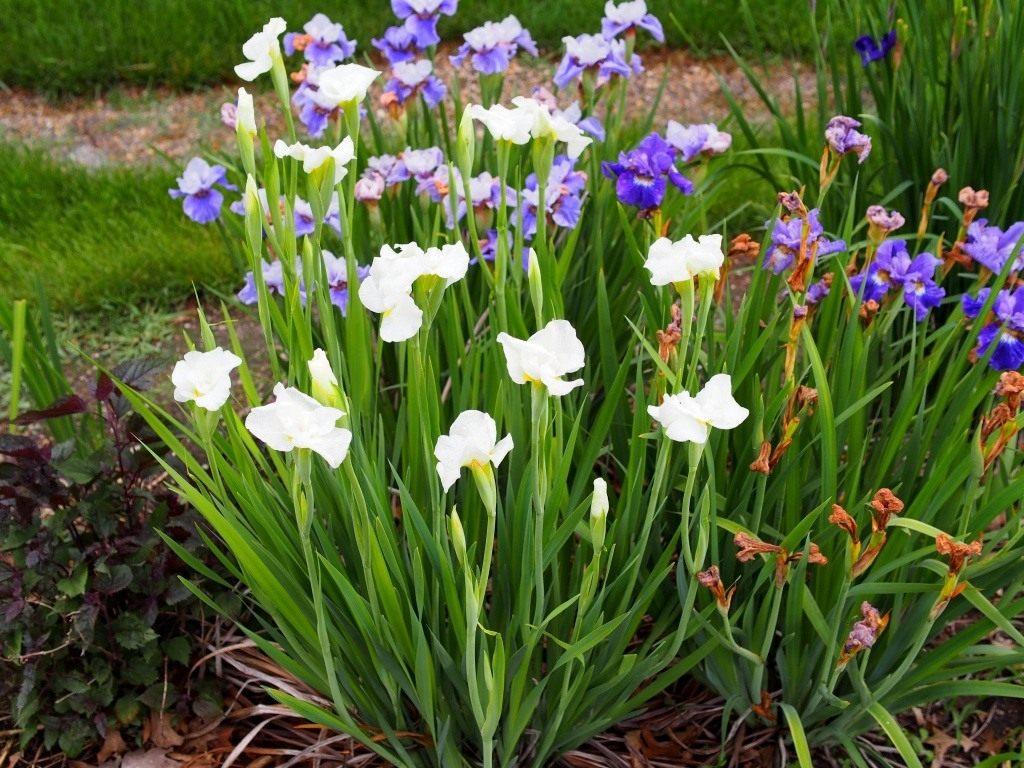
- White
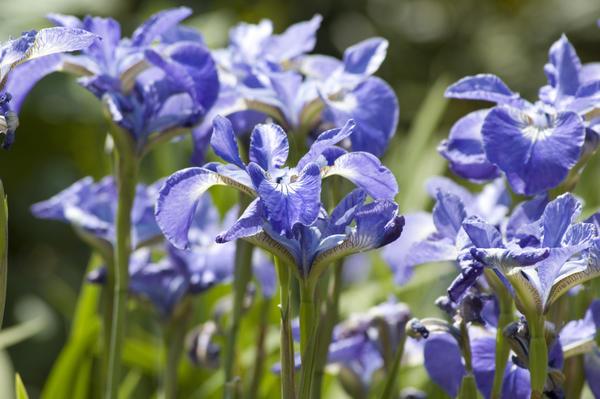
- Blue
- Yellow
- Ruffled Plus
- Cassandra
- Barcelona
- Pink
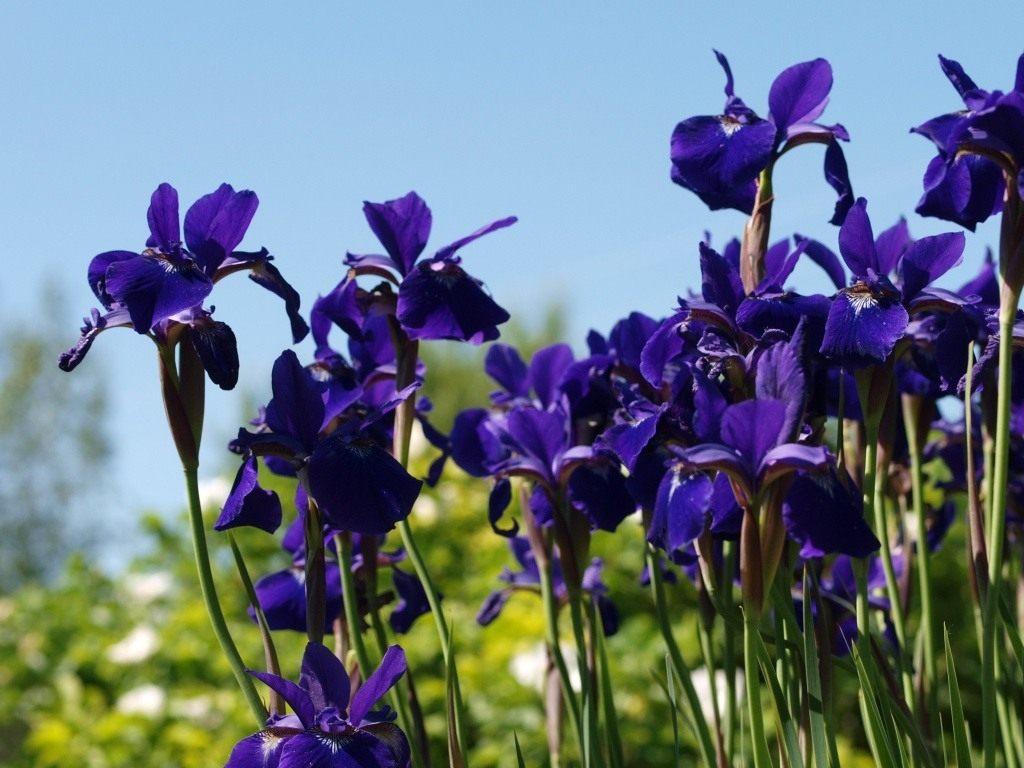
- Violet
- Planting and care
- Soil preparation
- Timing and technology of planting in the ground
- Fertilizing and watering
- Trimming
- Transfer
- Diseases and pests: protection and prevention
- Do I need to cover it for the winter?
- Methods of reproduction
- Gardeners' reviews of Siberian irises
Siberian irises, unlike other varieties, have not yet gained widespread popularity among gardeners. Despite their undemanding nature and high frost resistance, they are rarely seen in gardens. However, every year, gardeners are increasingly turning to these resilient and low-maintenance plants. Siberian irises include specimens with a variety of petal shades, creating striking clumps.
Plant characteristics
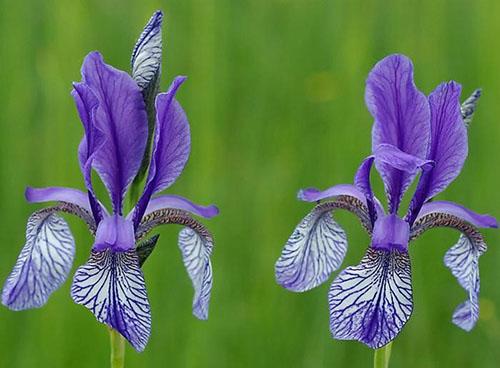
Siberian irises belong to the group of bearded varieties. This may be the reason for their rarity, as gardeners often prefer the bearded garden irises. However, in nature, this group is the most numerous. The flower's name literally means "rainbow." For beginning gardeners, Siberian varieties are an ideal choice, as they are less fussy than garden varieties and hybrids and require less time-consuming care. Their luxurious bushes, framed by sword-shaped leaves, make a striking accent in any garden.
Siberian iris is a perennial rhizomatous plant. Its height ranges from 70 cm to 1.1 meters. Its graceful, beautiful leaves are shorter than the stem. The flowers are no more than 6 cm in diameter, with elongated outer lobes. The flowering period is no different from that of bearded varieties and occurs in June-July, depending on the growing region.
Growing conditions requirements
In its natural habitat, irises thrive in moist, sunny meadows. Therefore, for successful cultivation, a similar location is chosen in the garden. This could be the shoreline of a pond or other body of water. However, excessive moisture should be avoided, as constant flooding negatively impacts the plant's health.
Siberian irises will thrive in the shade, but their blooms will be less abundant and vibrant, so it's best to choose a site that receives at least morning sun. The plant doesn't have any special soil requirements; slightly acidic or neutral soil is suitable. It's recommended to add a small amount of compost when growing outdoors.
Use in landscape design
To ensure the Siberian iris blends harmoniously into a garden, consider its use in landscape design. The tallest varieties and hybrids are placed at the back of flowerbeds to avoid shading lower-growing plants. Evergreen junipers and arborvitaes are ideal companions. Irises look stunning against deciduous shrubs, such as barberry or forsythia.
A group of irises looks beautiful when placed in the center of a garden composition and separated by border plants. Companions can be any plants with similar watering and lighting requirements, such as daylilies, poppies, or hostas. Low-growing varieties of Siberian irises look spectacular in alpine gardens and rockeries. They can be paired with any creeping or trailing plants, and the flowerbed is framed with light-colored stones. Siberian irises are also a must-have in Japanese water gardens, as they tolerate high humidity.
Benefits of Siberian Irises
When considering the advantages and disadvantages of Siberian irises, gardeners growing this crop have found no disadvantages. The advantages include:
- Resistance to severe cold, which allows them to be grown without problems in the northernmost regions of our country without the need for winter shelter.
- Bacterial disease, which affects bearded varieties, is not so dangerous for Siberian irises.
- A single Siberian iris bud blooms for about five days, while bearded varieties delight with their vibrant colors for only two days. If you combine early and late varieties in a single flowerbed, you can enjoy the blooms for up to 1.5 months.
- Siberian iris is a suitable choice for gardeners who react negatively to strong floral scents or are allergic to them. Almost all varieties are scentless, with only a few possessing a subtle, subtle aroma.
- Since the plants have strong stems that can withstand strong gusts of wind, this makes it possible to grow them without supports that spoil the appearance of the flowerbed.
- Undemanding to soil fertility and excess moisture.
- They grow in one place for more than 20 years without requiring replanting, which is the highest rate among similar crops.
- They have a positive effect on the soil characteristics, providing a disinfecting effect.
Varieties and description
Among the varieties and cultivars of Siberian iris, gardeners most often give preference to the following.
White
Among the representatives of the white shade, the most popular are:
- White Swell. It grows to a height of no more than 60 cm, with a flower diameter of approximately 13-14 cm. The iris is completely white, with yellow spots only at the base. Flowering occurs in mid-June.
- Weasley White. A medium-sized variety, reaching a height of approximately 55-60 cm. The yellow spot is only at the base of the inflorescence; the rest of the flower is pure white. The lower lobes are concave inward, a distinctive feature of this variety.
Blue
Among the best varieties of blue Siberian irises:
- Cambridge. The maximum plant height is 70 cm, with flowers no more than 7 cm in diameter. The base color is a soft blue, with a yellow spot at the base. It prefers open, sunny locations; in shade, it blooms less profusely.
- Sea of Dreams. Forms a beautiful shrub up to 90 cm tall. The sky-blue petals are interspersed with darker veins. It looks stunning in group plantings and is an early variety, blooming in June.
Yellow
Of the varieties with yellow petals, the following are most often planted:
- Bate and Sugar. The plant's petals are primarily lemon-yellow, and it grows to a height of no more than 80 cm. It blooms in July, and each bud measures approximately 11 cm in diameter.
- Tom Schaefer. Grows about 60 cm tall. The lower leaves are a darker yellow, the upper ones are lighter.
Take a look Also
Ruffled Plus
This variety grows to a height of approximately 60-80 cm. It is a semi-double variety with petals of a rich purple hue, slightly ruffled at the edges. Flowering occurs in June-July, depending on the specific growing region.
Cassandra
A sturdy plant with stable flower stalks no longer than 55 cm. The total height of the plant is 75 cm. No more than three buds are present on each stalk, with only one or two blooming at a time. The corrugated petals are blue. Flowering begins in late June and lasts for two weeks.
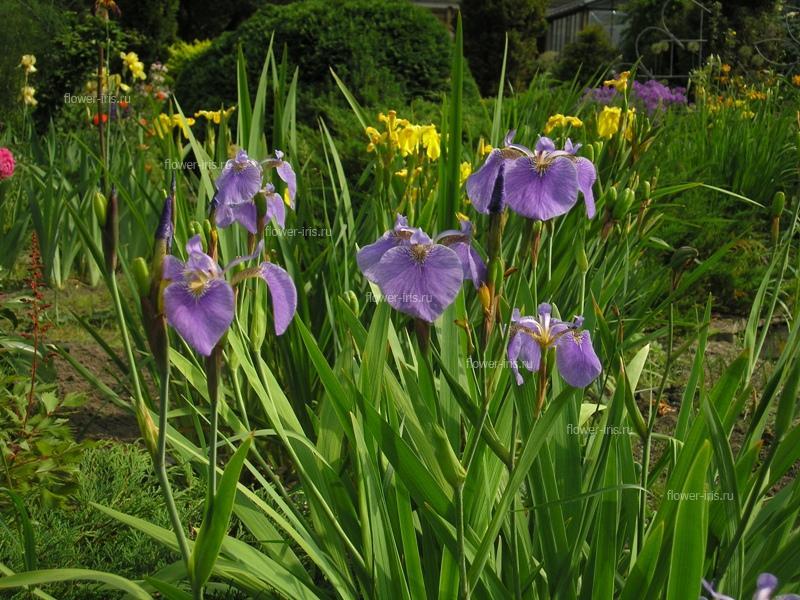
Barcelona
A variety with blue petals. It dislikes shade and tolerates high humidity and poor soil without problems.
Pink
One of the best Siberian iris varieties with pink petals is 'Pink Parfait.' It features wavy petal edges, somewhat reminiscent of a rosebud. It is frost-hardy, tolerating temperatures down to -40 degrees Celsius.
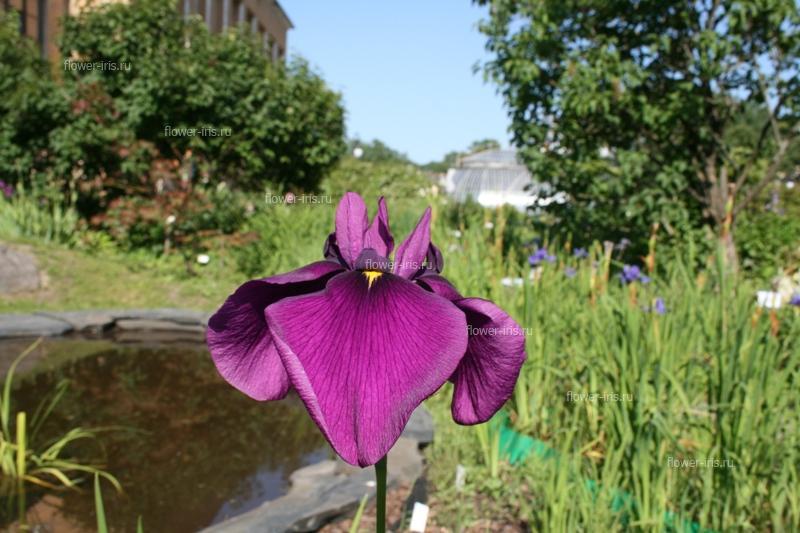
Violet
Among the best varieties with a purple tint:
- Big Ben. It grows to less than 80 cm in height and blooms in June.
- Double Standard. One of the tallest varieties, reaching 1 meter. The petals are a rich purple. It blooms in July-June, with a single bud measuring about 15 cm in diameter.
Planting and care
To ensure that plants bloom abundantly and are not susceptible to diseases and pests, they must be planted correctly and provided with proper agricultural care.
Soil preparation
If the soil is waterlogged and marshy, adequate drainage is essential, otherwise the iris rhizomes will die. In sandy soils, adding organic matter and clay is recommended.
Before planting the selected variety of Siberian iris, the soil is thoroughly dug up and all remains of weed rhizomes are removed.
Timing and technology of planting in the ground
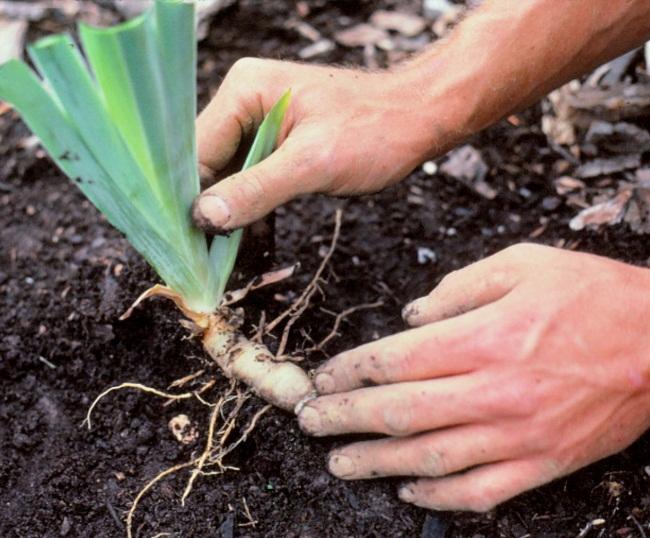
Experienced gardeners say the best time to plant is early spring, when temperatures reach above zero, or the second half of August, so the plant has time to establish itself in its new location before winter. In extreme cases, early fall is acceptable in warmer regions. Dig holes 30-50 cm apart and plant the flowers, burying the rhizomes 5-6 cm deep. Then, sprinkle the soil with a nutritious potting mix, water thoroughly, and apply a layer of mulch around the trunk.
Fertilizing and watering
Siberian irises don't require repeated fertilization. Simply add a complete mineral fertilizer to the soil in the spring, following the instructions on the package. After flowering, apply a potassium-phosphorus fertilizer.
Young flowers require regular watering. As the plant ages, water less frequently. However, when watering, ensure that the soil is moistened to the full depth of the roots. Siberian iris tolerates overwatering better than underwatering.
Trimming
Siberian irises need to be pruned before winter. All flower stalks are removed, and old leaves are trimmed back to 15 cm above ground level. This procedure is performed after the first frost, around the end of autumn.
Transfer
Since this variety of iris is considered long-lived, frequent repotting is unnecessary. Without losing its decorative qualities, the plant can grow in the same place for decades. The only thing it requires is ample space to develop its root system.
Diseases and pests: protection and prevention
With proper agricultural care, Siberian irises are resistant to pests and diseases. The plant can be infested by the cutworm and winter moth. They eat away at the base of the flower stalks, causing yellowing and death. Despite the vigor of Siberian irises, this can cause the flowers to fall over in strong winds.
To prevent the spread of the pest, treatment with Karbofos is carried out twice with a week interval at the very beginning of the growing season.
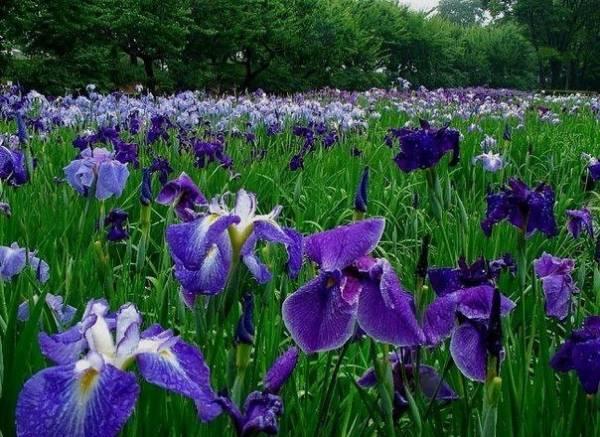
Bacterial blight poses the greatest threat among diseases. The first symptoms are browning of the leaves and subsequent drying of the tips. Over time, the disease spreads to the inner part of the rhizome. To prevent this, soak the root system in a weak solution of potassium permanganate before planting.
Do I need to cover it for the winter?
Thanks to their increased frost resistance, Siberian irises don't require special winter protection. A 5-7 cm layer of mulch is sufficient to maintain the plant's cold-hardiness.
Methods of reproduction
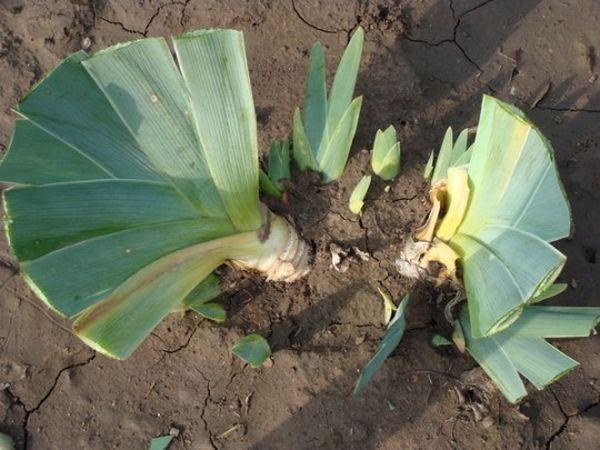
Siberian irises are not propagated from seeds. This method is used only by breeders to develop new varieties and hybrids. The simplest method is rhizome division. To do this, use a one-year-old specimen and cut a 2.5 cm diameter section. It's important that this section has 3-4 leaves. This procedure is performed either in spring or in late August. The first method is preferable for colder regions, as the plant will root before frost sets in and overwinter without problems.
Gardeners' reviews of Siberian irises
Alina Vasilyevna, Lipetsk, 46: "For several years now, on a neighbor's recommendation, I've been growing Siberian irises in my garden. Unlike the varieties I had before, these flowers don't require much care. The main thing is to remember to water them during severe drought. I haven't encountered any diseases or pests yet, and the plants survived the winter without a single death."
Maria Alexandrovna, Samara, 56: "I couldn't be happier with my flowerbed. Siberian irises are a true gem. They don't require constant care or regular repotting. I add a complex mineral fertilizer in the spring and water them a few times over the summer—that's all I need."
Related posts:
 Description and characteristics of the best varieties and types of irises
 Planting and caring for irises in open ground, propagation and variety selection
 Description of Japanese iris varieties, planting and care in open ground
 Description of the best varieties of reticulated irises (Denfordia), planting and care, propagation
 When is the best time to transplant irises and how to do it correctly, care after the procedure
 Why do irises have only leaves and don't bloom? What to do and how to eliminate the causes
 What flowers go well with irises in a flowerbed? What flowers are best to plant them with?
 Description of bearded iris, planting and care in open ground, and preparation for winter