
- The nuances of using irises in flowerbed design
- How and with what to plant irises in the garden
- The best flower arrangements
- Duet with daylilies
- Flower beds of irises with roses and peonies
- Border of irises
- Monochromatic gardens with irises or iridariums
- What to plant next to moisture-loving and dwarf varieties?
- Unnecessary rivals and dangerous neighbors
Gardeners often favor perennials when designing their plots. Figuring out which flowers pair well with irises in a flowerbed, and which ones are best avoided, can be challenging. This is especially challenging for beginners. The variety of colors and shapes allows you to find a plant to suit the tastes and needs of even the most discerning gardeners. However, to properly design a flowerbed, you need to arrange the plants correctly in accordance with landscape design guidelines.
The nuances of using irises in flowerbed design
Irises vary not only in flower shape and color, but also in size, cultivation techniques, and flowering period. There are approximately 25,000 known varieties, both low-growing and tall, used for flowerbeds and garden plots.
When planting irises, it should be taken into account that they have a superficial root system and tend to move as they grow. It is also important to consider the nuances of growing a particular variety, as each has different requirements for this process.
How and with what to plant irises in the garden
When planting irises in a flowerbed with other flowers, keep in mind that their root system is located close to the soil surface. Furthermore, it tends to grow quickly. Neighboring flowers should not interfere with each other.
Irises get along well in the same area with plants such as:
- roses;
- daylilies;
- delphinium;
- conifers;
- pansies;
- spirea;
- lupine.
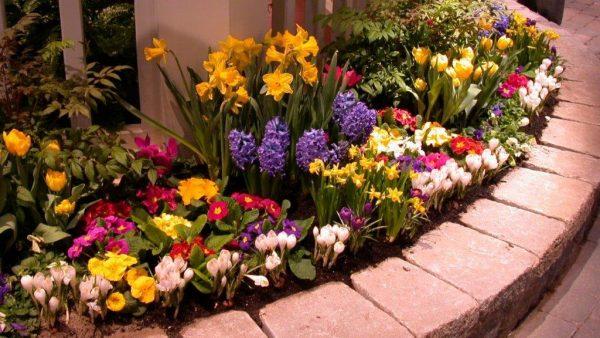
Landscape designers skillfully combine colors and create compositions that can satisfy even the most discerning clients. The rich color palette of irises allows for successful combinations with any variety or species of favorite plants.
The best flower arrangements
Over the years, gardeners have created truly enchanting iris arrangements that will delight the eye for seasons to come. This arsenal continues to expand with new ideas year after year.

Duet with daylilies
Daylilies, which also have shallow root systems, can be planted next to irises. The plants don't compete with each other, require the same amount of moisture, and require almost the same care. The downside is that the blooming times of some varieties may overlap, so the flowerbed will be empty for a period of time.
Flower beds of irises with roses and peonies
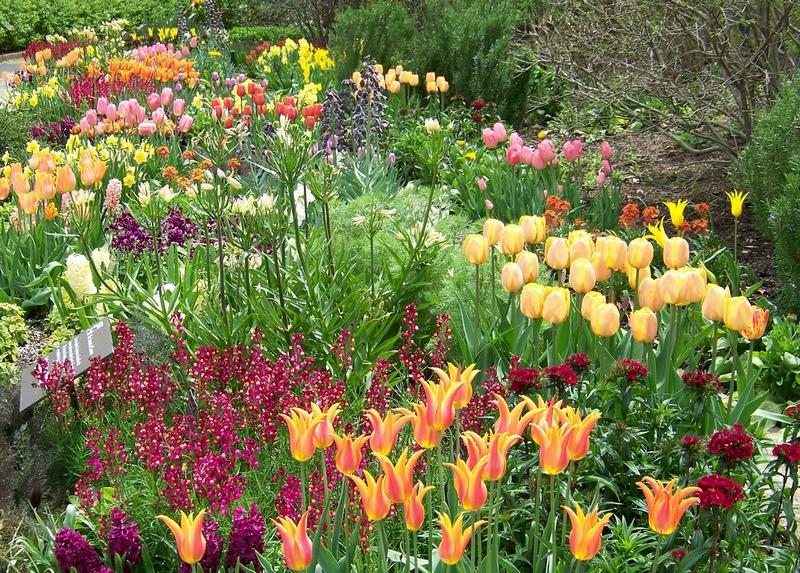
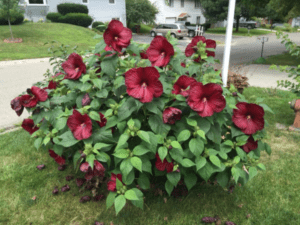
Roses and irises make a wonderful combination in flowerbeds. Rose bushes bloom later than irises, but their green, leafy stems provide a beautiful backdrop and backdrop for the blossoming buds. Experts recommend selecting plants based on color combinations.
In particular, blue or white irises will go well with red roses or peonies.
Peonies also harmonize well with this plant, even though they dominate any arrangement. Irises are planted around the peony bush. They bloom one after another, preventing the flowerbed from looking empty and dull.
Border of irises
Dwarf varieties are perfect for edging paths. For added decorativeness, they can be planted among large stones. Medium-sized varieties with purple or white flowers also look great. Due to the short flowering period, it is recommended to plant irises together with other plants or create a background of conifers so that the border does not lose its attractiveness throughout the season..
Monochromatic gardens with irises or iridariums
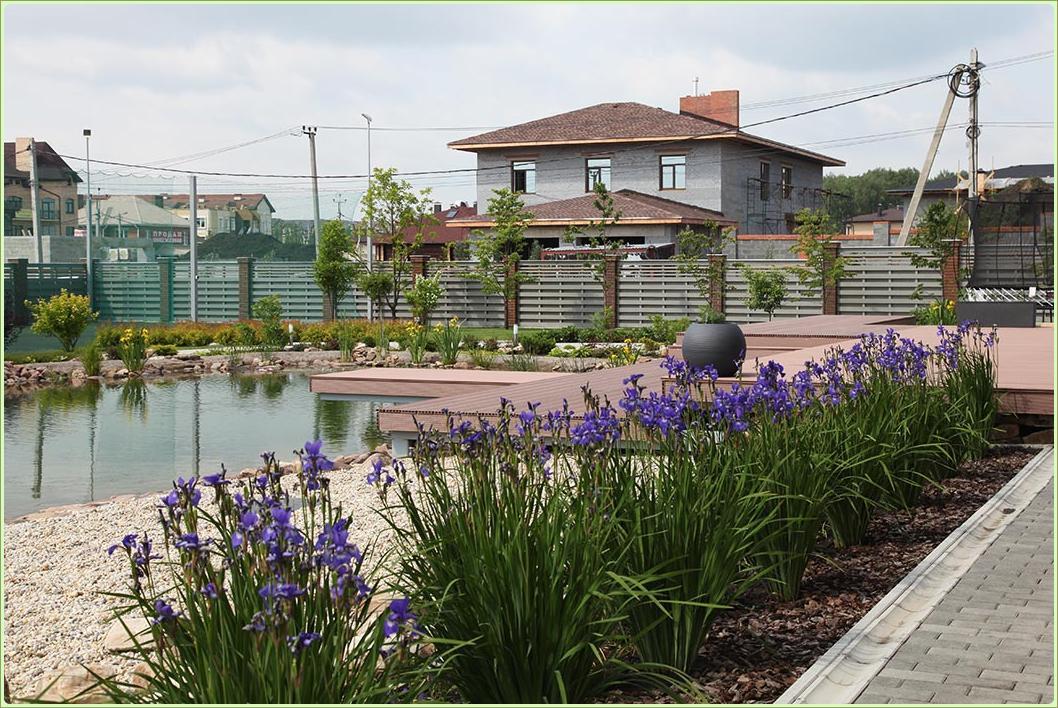
A combination of irises with different bloom times in a single flowerbed is called an iridarium. If planned correctly, the vibrant colors will delight the eye from May to early August. The green grass provides a beautiful backdrop for the flowers, so they can be planted right in the middle of a green lawn or grassy area.
When composing groups, not only flowering time but also petal color are taken into account. Varieties are planted at some distance from one another, filling the empty spaces with pebbles or colored stones. Planting irises in rows is not recommended; asymmetry is preferred. Wrought iron items and a small carved fence can be used to decorate the iridarium. Bergenia foliage will add a touch of beauty.

What to plant next to moisture-loving and dwarf varieties?
Dwarf iris varieties are best planted between large stones and pebbles. This option is ideal for creating a rock garden or alpine garden. Crocuses, dwarf phlox, or junipers make good companions in this case.
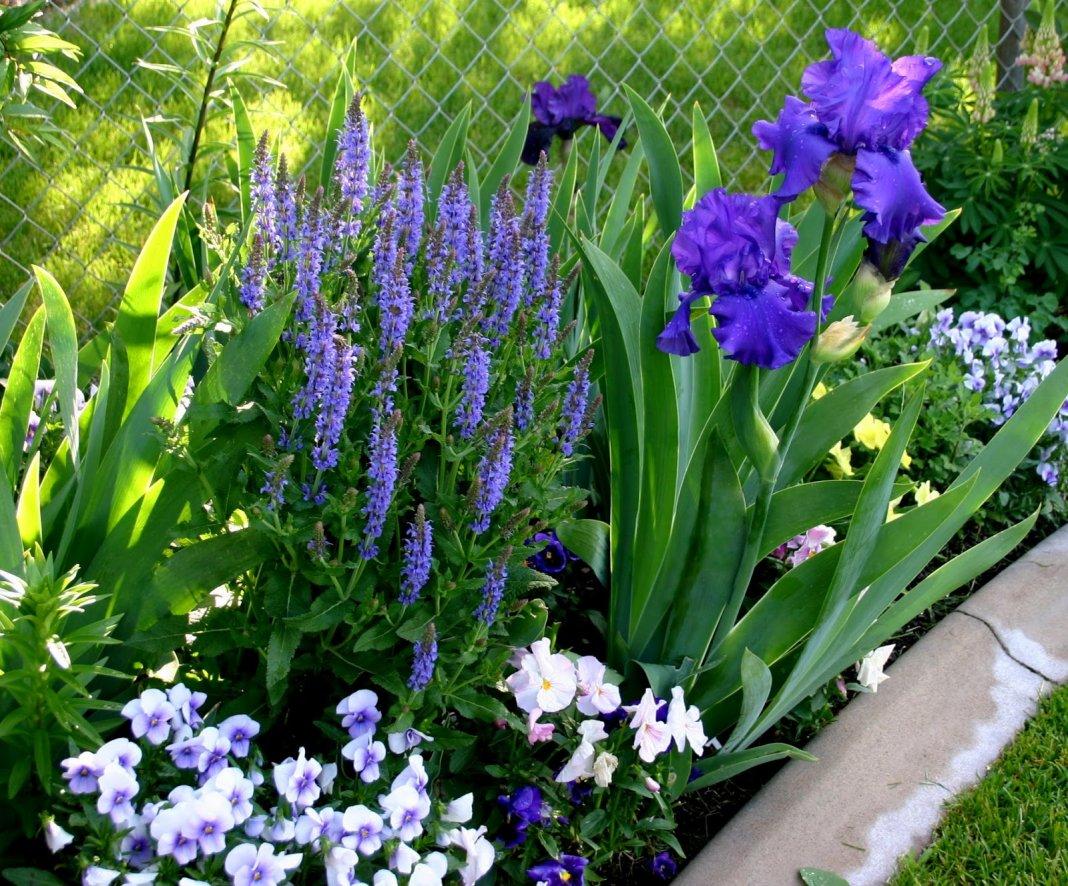
Dwarf irises look great with primroses. The best companions for them are considered to be:
- alyssum;
- spurge;
- phloxes;
- tulips.
Daffodils or imperial fritillaries are an equally winning combination for irises. A gazebo, balcony, or veranda can be decorated with a potted dwarf iris. To ensure the pot remains occupied and pleasing to the eye throughout the season, beautiful and easy-to-grow annuals (such as petunias) can be added.
When designing rock gardens, rock alyssum, phlox, and Caucasian rock cress are planted alongside dwarf irises. They also harmonize with roses, not interfering with their growth at all.
If your property has a small pond, moisture-loving iris varieties will be a worthy addition to its banks. These include Siberian and Japanese varieties. Marsh varieties are grown directly in shallow water. These flowers require little care and are undemanding. Beardless varieties are planted in the shade, as bearded varieties are unable to produce lush blooms in such conditions.
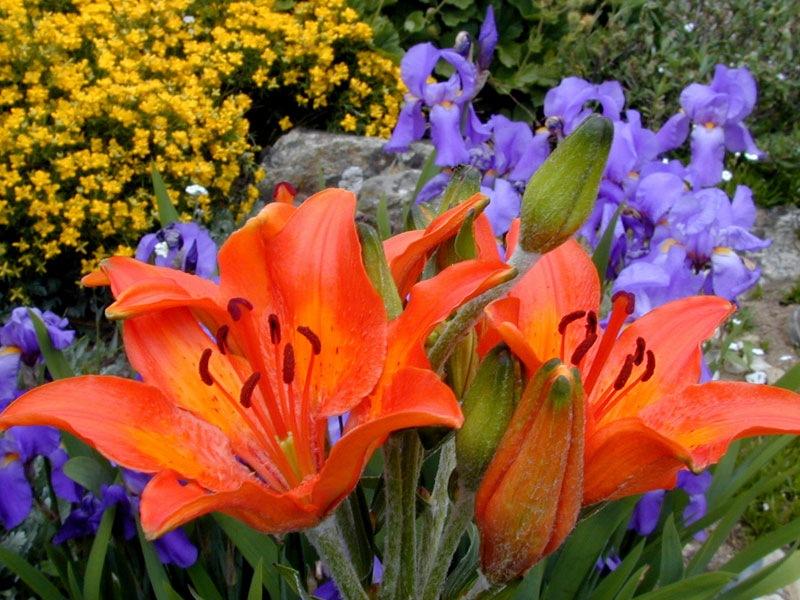
Along with irises, perennials are also planted in the flowerbed. This allows for annual arrangements to be refreshed each year and prevents monotony. It's important to ensure there's enough space between the bushes for new plants to grow, and that the roots aren't too close together. Planting is done carefully to avoid damaging the perennial's roots. Mixes are designed to ensure the flowerbed looks neat and tidy throughout the season, preventing any empty spaces or bare spots.
A combination of annuals and perennials in a single flowerbed is perfect for creative individuals who want some variety year after year. Unpretentious irises pair beautifully with marigolds, petunias, zinnias, asters, and eustomas. Sweet tobacco or night-flowered violets planted between the bushes will help make the flowerbed not only beautiful but also fragrant. A spreading thuja growing in the background will add a vibrant and complete touch to any composition.
Unnecessary rivals and dangerous neighbors
Irises can coexist with many flowers in a flowerbed, but some have a detrimental effect on them. For example, perennials, which can quickly grow and crowd out irises, should not be planted in the same area. It's also important to remember that they don't tolerate shade and will refuse to bloom if there's insufficient sunlight. Therefore, tall shrubs and plants should not be planted near an iris garden.
Opinions differ regarding the compatibility of roses with irises. Some believe they can coexist perfectly with irises, while others claim that the latter have a negative impact on the queen of flowers and hinder the full development of their bushes. Groundcover and trailing plants should not be planted next to irises, as they will suffocate them and prevent them from developing normally. As a result, lush blooms from the irises should be avoided.
Related posts:
 Description and characteristics of the best varieties and types of irises
 Planting and caring for irises in open ground, propagation and variety selection
 When is the best time to transplant irises and how to do it correctly, care after the procedure
 Description of the best varieties of reticulated irises (Denfordia), planting and care, propagation
 Description of Japanese iris varieties, planting and care in open ground
 Why do irises have only leaves and don't bloom? What to do and how to eliminate the causes
 Description of Siberian iris varieties, planting and care in open ground
 Description of bearded iris, planting and care in open ground, and preparation for winter
It grows like a reed...everywhere!! And it blooms everywhere!! It spreads like wildfire, and nothing stops it. It blooms for one week a year, and the best place for it is to cover up some crap. It's perfect as a border. Or for the really lazy. Don't plant it with peonies; they bloom at the same time, or the flowerbed will be empty!