
- Reasons for the lack of color in irises
- Deep planting of plants
- Lack of lighting
- Nutritional deficiencies
- Rotting of rhizomes
- Unfavorable weather
- Diseases or pests
- Freezing in winter
- Peculiarities of the iris variety
- The watering regime has been violated
- The planting density does not allow flowering
- Root system expansion
- Activities to restore flowering
During the spring and summer, irises are the perfect addition to any flowerbed. But when growing this easy-to-grow plant, gardeners often wonder why their irises aren't blooming, instead displaying only leaves. What can be done about this situation, and how can the flower be made to look its best? First, it's important to determine the cause and then take steps to resolve it.
Reasons for the lack of color in irises
There may be several reasons why irises fail to form buds. It's important to properly position them and take prompt action to correct the problem.
Deep planting of plants
Beginner gardeners often plant bulbs too deeply. This not only prevents the plant from blooming but also causes poor growth. Correct planting is determined by the condition of the root collar. It should be buried only a third of the way into the soil. If the collar is buried, the lack of sunlight negatively impacts the irises. Such flowers require careful repotting.
Lack of lighting
Lack of sunlight negatively affects the formation of buds of light-loving irisesChoose only well-lit areas for planting. If the plant ends up in the shade, it will need to be replanted soon. Otherwise, it will grow poorly and won't bloom profusely. The new location should be free of tall trees and tall shrubs near the flowerbed.
Nutritional deficiencies
Like any flower, irises require regular fertilization. This ensures their full development. Otherwise, the plant will stop blooming profusely. They should be fertilized three times per season. The first two times, apply fertilizer before flowering begins, and the second time after flowering has finished. Nutrient deficiencies can be recognized by the following signs:
- flower bud drop;
- slowing of stem growth;
- drying and curling of leaves;
- slowing down of root system development.
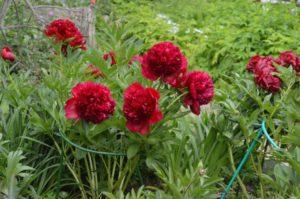
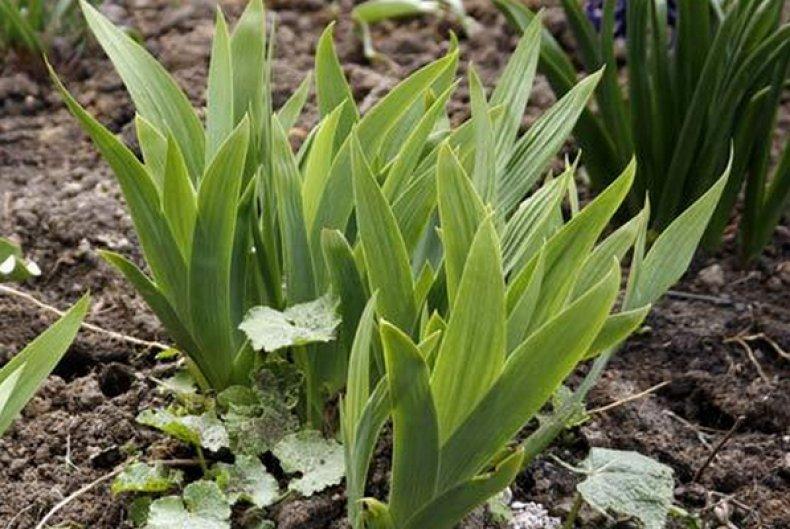
If these symptoms are present, the flowerbed should be fertilized with organic matter and complex mineral preparations.
Rotting of rhizomes
Excessive soil moisture causes iris roots to rot, causing them to stop blooming and possibly die. To prevent this, it's recommended to plant the flowers in well-drained areas free of standing water and water them moderately. Rotting roots should be dug up, carefully trimmed, and treated with activated charcoal. They can then be replanted.
Unfavorable weather
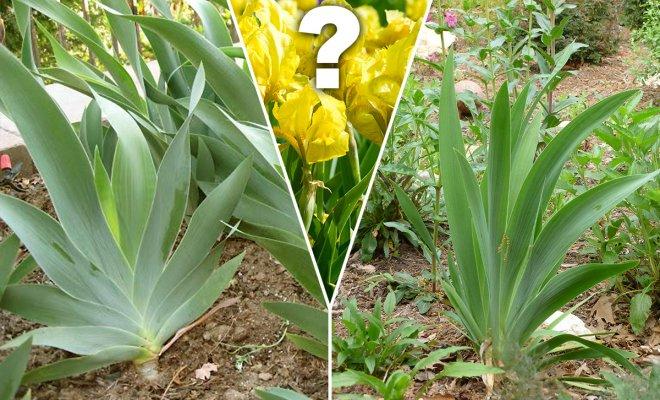
Unfavorable weather conditions often cause irises to refuse to bloom. Sudden temperature fluctuations and frequent rain prevent the plants from fully developing and displaying a riot of color.
Diseases or pests
Pest and disease pressure can lead to poor iris blooms. Irises are susceptible to disease only due to a weakened immune system, which can be triggered by winter root freezes or dense plantings. Regular inspection of the flowerbed is essential for early detection of problems.
Yellowed leaves indicate that flowers are affected by fusarium wilt, spotting, or rust. These diseases can be prevented by timely preventative treatment with fungicides.
Freezing in winter
After a cold, snowless winter, irises often refuse to bloom. This happens because the flowerbed wasn't covered with a covering material in the fall to prevent the soil from freezing. The effects of low temperatures are difficult to detect because they don't manifest immediately. With the return of warmer weather, the flower appears to develop normally, but buds never form.
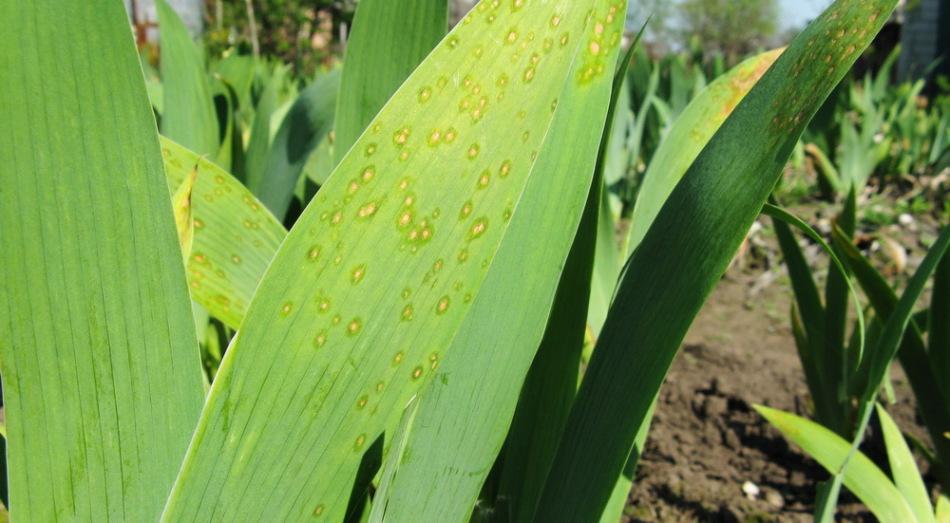
If dark spots become visible on the leaves and stems of irises, these parts of the plant should be immediately cut off with a sharp knife. Treat the cut areas with wood ash or activated charcoal.
Peculiarities of the iris variety
Some iris varieties don't bloom every year. This can only be determined by carefully examining the characteristics before purchasing. Don't rely solely on the plant's attractive appearance. You should ask the seller about all the intricacies of growing and the distinctive features of the variety you like, as well as its winter hardiness and drought resistance. It may not be suitable for growing in certain climate conditions.
The watering regime has been violated
Beginner gardeners often make mistakes when watering irises, believing that drought-resistant plants can be grown without additional irrigation. However, insufficient water not only impairs root growth but also prevents bud formation. Excessive soil moisture also negatively impacts flowering. Furthermore, it can lead to fungal diseases and root rot.

The planting density does not allow flowering
When planting dwarf irises, use a 15 x 50 cm spacing, while tall irises should be planted at 30 x 50 cm. If planting in groups, leave at least 30 cm between adjacent plants within a group, and at least 1.5 m between groups. Crowded plantings result in cramped root systems as they grow, preventing them from developing normally. Flowering will also be prevented.
Root system expansion
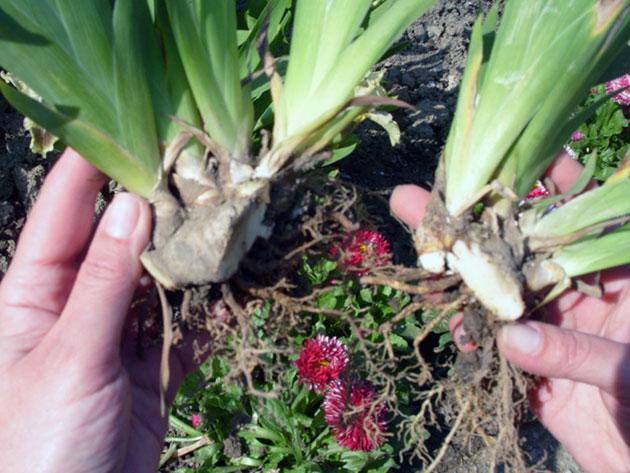
Iris roots tend to grow rapidly. As a result, they become crowded, and root development slows. Stems also develop slowly, and flowering ceases. Crowded plantings weaken the flowers' immune system, making them susceptible to disease and pests.
To prevent this, it's recommended to replant irises every 5-6 years. After planting, neighboring plants should not interfere with the newly planted tubers. To achieve this, choose spacious, uncluttered flower beds.
Activities to restore flowering
To restore iris blooms, it's necessary to correctly determine the cause of their lack of bloom. Experienced gardeners know that a lack of moisture is harmful to plants, so they should be watered regularly. This is especially important during dry periods, when watering should be done every two days. Watering more frequently is not recommended, as excess water negatively impacts the flowers' ability to survive the winter.

Once the iris flowers have completely dried, they should be trimmed with pruning shears. Trim at a height of 1.5-2 cm above the soil surface. Fertilize the plants with phosphorus-potassium fertilizers to promote bud formation. Nitrogen fertilizers impair bud formation, so experienced gardeners do not recommend using them on irises. Also, avoid applying manure to irises, as it often causes root rot.
If the soil in your flowerbed is highly acidic, water it periodically with wood ash or a lime mixture. To encourage irises to bloom, ensure they have sufficient nutrients and moisture. Also, make sure the plants receive adequate sunlight. They should be planted only in an area that receives full sun throughout the day.
To avoid overcrowding, it's recommended to separate and replant irises every 5-6 years. It's important to strictly adhere to the recommended spacing. Following simple planting and care guidelines will ensure your favorite flower will delight you with lush, long-lasting blooms year after year. This is only possible if you choose varieties that bloom annually.
When purchasing seedlings, carefully study the varietal characteristics, cultivation practices, and care requirements. Pay particular attention to the frost resistance and zoning of the plant you're interested in.
Related posts:
 Description and characteristics of the best varieties and types of irises
 Planting and caring for irises in open ground, propagation and variety selection
 When is the best time to transplant irises and how to do it correctly, care after the procedure
 Description of the best varieties of reticulated irises (Denfordia), planting and care, propagation
 Description of Japanese iris varieties, planting and care in open ground
 What flowers go well with irises in a flowerbed? What flowers are best to plant them with?
 Description of Siberian iris varieties, planting and care in open ground
 Description of bearded iris, planting and care in open ground, and preparation for winter