
- Bearded Iris: Description and Characteristics of the Plant
- Appearance and flowering
- Growing conditions
- Application in landscape design
- Varieties and types
- Planting and care in open ground
- How to choose iris seedlings
- Site and soil preparation
- Direct landing
- Caring for irises in open ground
- Watering and fertilizing
- Protection from pests and diseases
- Weeding and loosening
- Pruning after flowering and autumn preparation for winter
- Transfer
- Why don't they bloom?
- The seedling is too young
- Iris fly and its larvae
- Excessive deepening
Irises are a common sight in flowerbeds, gardens, and parks. This plant is popular due to its large blooms. The variety of colors also allows everyone to find the perfect specimen. The bearded iris is also one of the most popular varieties of its kind.
Bearded Iris: Description and Characteristics of the Plant
There are currently about 300 species of iris. Each one differs in size, color, and bloom time. As for the bearded iris, gardeners have developed 35,000 varieties, which is truly astonishing. This diversity makes this plant highly sought after. Ornamental hybrids are especially popular.
Appearance and flowering
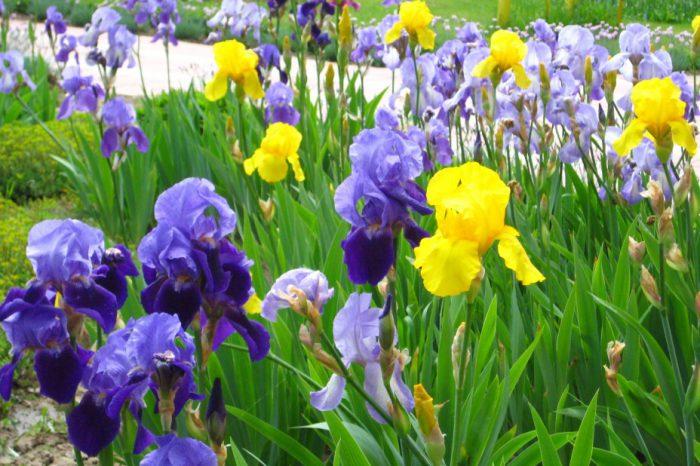
The plant has large leaves, especially at the base, densely covered with fine hairs, resembling a "beard." This is where the variety gets its name. The plant typically has six petals. Three petals are positioned high up on the flower, forming a dome, while the other three gently droop downwards. A wide variety of colors are available. The petals of the iris are arranged separately from each other, making each curve more expressive.
Growing conditions
Growing this beauty isn't particularly difficult. Gardeners are involved in this process. First, they look for a suitable location. The flowers prefer sunny spots, but partial shade is best. This will prevent them from wilting quickly. The plant is often planted near fences. Irises won't thrive in sandy soil, so consider the soil composition in advance.
Application in landscape design
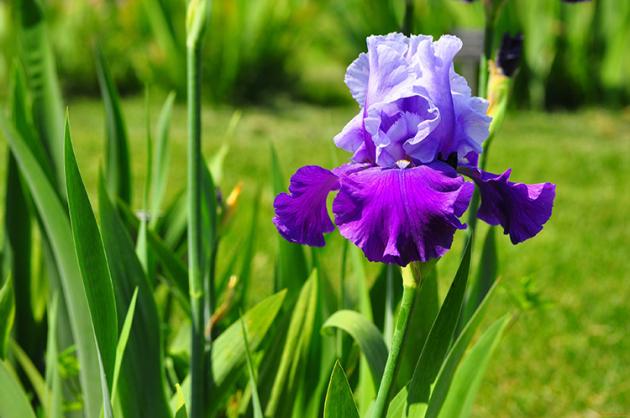
In today's world, brightening up the gray of everyday life has become quite popular. Natural colors can delight the eye and lift the spirits. Designers use irises as the centerpiece of many flowerbeds and walkways. Planting several flowers in one spot can create a lush effect. Small flowers are especially popular, and irises can always be used as the centerpiece of a larger design. This applies not only to public spaces but also to private corners. A colorful spot in the garden can become an oasis for its owner.
Varieties and types
This species is renowned for its diversity. Everyone can find a flower to suit their taste. Bearded irises are divided into the following groups:
- Tall bearded irises.
- Miniature tall bearded irises.
- Border irises.
- Standard dwarf irises.
- Miniature dwarf irises.
The Amsterdam variety is very popular among gardeners, attracting attention with its miniature size and rich yellow color. The plant blooms from April to May. It is often chosen by owners of rock gardens or high borders.
The hybrid Nine Lives is still popular. Its unusual appearance is a curiosity in the world of flowers. The combination of several shades, its small size, and the fact that the plant thrives in gardens are all advantages of this variety. The iris grows up to 70 centimeters tall.

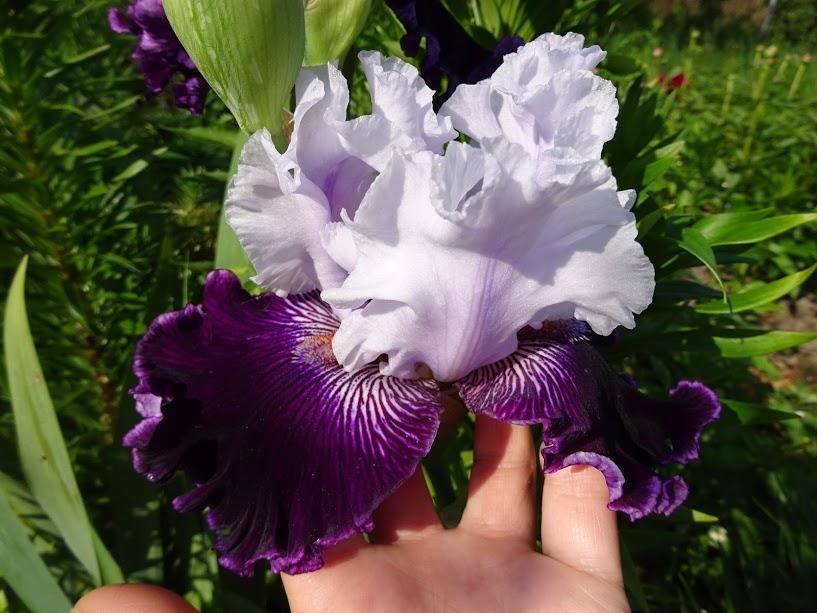
Oregon Skies is famous for its delicate blue bloom. This plant adds a touch of delicacy and purity to the garden. The petals are large and wavy. What makes this iris even more amazing is its vanilla-like aroma. There are countless other irises with unique scents, colors, and shapes.
Planting and care in open ground
To grow such beauties in your garden, choose a good location, planting material, and think in advance about the fertilizer composition that will be used as a top dressing until the plant gains strength.

How to choose iris seedlings
To ensure a good selection of planting material at the market, gardeners prefer to buy already blooming plants. This allows them to be sure they're getting the right variety and that the iris is disease-free. However, this has its drawbacks. A mature plant will take longer to adjust to a new location, and it may become susceptible to disease or even die.
Choose a specimen with two shoots; this means the iris has already developed and will bloom next spring. If there's only one shoot, it will take twice as long.
Site and soil preparation
To begin, look for a sunny, elevated spot in the garden. The plant will grow and develop faster there. Partial shade, such as near borders and fences, is also sometimes used. Irises should not be planted in the shade. The more warmth the flower receives, the faster and more vibrantly it will bloom.
A sandy spot isn't suitable; it requires nutritious soil, which must be dug regularly. The roots need light soil. If the area has only heavy soil, a mixture of sand and peat should be added to the planting hole beforehand. Acidic soils are harmful to flowers, so if there's no other option, lime or dolomite flour should be used.
Direct landing
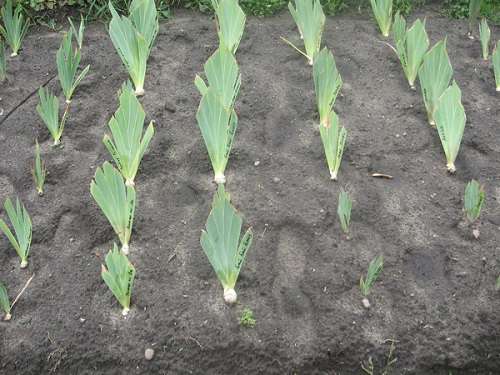
First, select a planting site and prepare the holes. The seedlings are cut back by 1/3 at a 45-degree angle. If there is a flower stalk, remove it to prevent it from slowing the growth of the young iris. The roots should not be buried deep in the soil, as the entire root system is almost at the surface. To do this, create a small mound at the bottom and place the root on it. Spread the small roots. Several irises are planted 40-50 centimeters apart. Next, add nutrients and soil to the hole. Water the planting site generously and mulch the surrounding soil.
Caring for irises in open ground
After planting, irises require additional care. Fertilizing the flowerbed is crucial. During the first year after planting, the plant needs minerals and vitamins, especially if the gardener wants to see flowers soon.
If you adhere to all the rules of disease prevention and quality care, then success is guaranteed.
Watering and fertilizing
If the plant is growing in a sunny location, regular watering is essential. In early spring, watering is rarely necessary, as natural moisture is sufficient. As April approaches, watering increases. In summer, twice a week is sufficient, but this should be done early in the morning or after the sun sets. As autumn approaches, watering is reduced to prevent root rot.

As for fertilizing, the plant is most often fertilized in early spring to help it strengthen after the long winter. The soil is loosened to a depth of 6 centimeters. Potassium-phosphorus fertilizers are applied to the roots. However, these fertilizers are always added to the water to ensure natural absorption. Regular fertilizing will also help strengthen the plant and make it more resistant to diseases and pests.
Protection from pests and diseases
In spring, when the plant begins to grow leaves, it is treated with an insecticide. This is a preventative measure. There are many pests that are attracted to the leaves or flowers themselves. To consolidate the results, the treatment is repeated after 10-15 days.
The most important problem for irises is fungal diseases. To avoid this, fungicides are used as a preventative measure. However, this should be done well in advance, before flowering, ideally six weeks before.
During flowering, carefully monitor the iris' condition. Root rot can occasionally occur after infection. A foul odor is a characteristic sign of infection. The damaged area is excised, and the "wound" is treated with formalin solution and sprinkled with ash. Maintaining a flowerbed in good condition is not difficult, but like other plants, irises still require care.
Weeding and loosening
Mulch the soil occasionally, as the plant dislikes coarse soil. Light soil will allow moisture to evenly distribute to the roots. If water stagnates in one spot, it can lead to root rot. Also, keep an eye on the roots when loosening the soil, as they are very easily damaged.
Remember that irises can't grow in acidic soil. To deacidify the soil, mix it with dolomite flour or lime. This will help the flowers grow even in unsuitable locations.
Pruning after flowering and autumn preparation for winter
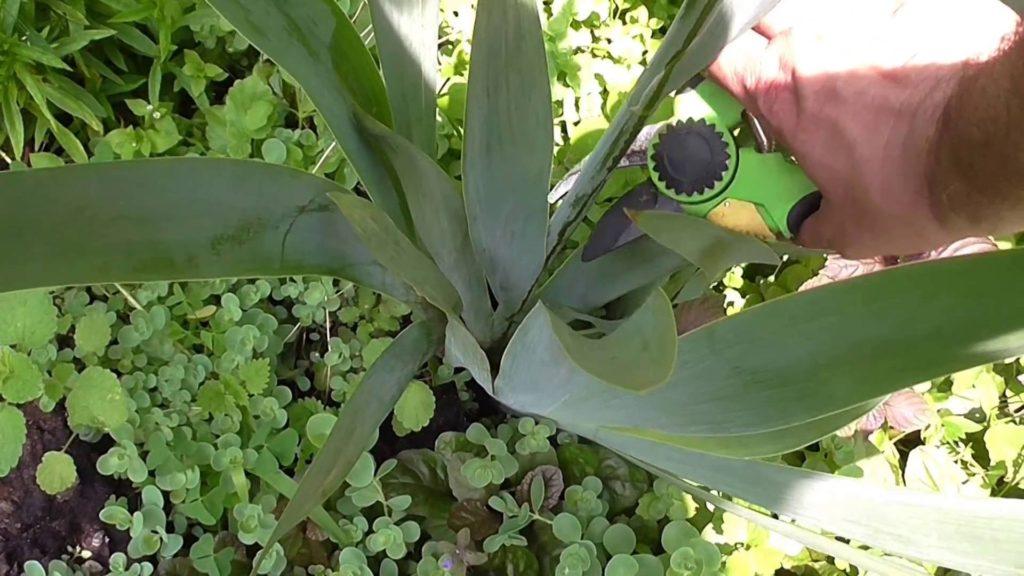
After an iris finishes blooming, it loses a lot of energy. To renew its strength, old, wilted leaves are pruned in the fall to prepare the plant for winter. Damaged leaves are completely removed. Those leaves that haven't completely wilted are trimmed back by one-third. The same is done if fungal diseases are noticed. Compared to last century, irises have become more disease-resistant, larger in size, and more diverse.

Transfer
From time to time, irises are transplanted to a new location. There are many reasons for this. But replanting also requires care from the gardener. To successfully replant irises, this procedure is carried out in the fall. It is necessary to first propagate them, which is done by dividing the bush.
Plants that have been growing in the same location for more than five years are chosen for replanting. Flowers are replanted in September, 15 days after flowering begins. This is also done in July, when all processes in the flowers gradually slow down.
Why don't they bloom?
No matter how hard gardeners try, growing irises in their gardens isn't always easy. Although the plant isn't difficult to grow, mistakes often lead to failure, which can significantly impact the growing process. By learning a few important points, gardeners can take care of their irises in advance, ensuring their planting material isn't wasted.

Maintaining a proper watering schedule is important. Overly wet soil leads to root rot. Sometimes gardeners don't notice this problem. After harvesting in the fall, the plant goes dormant. They notice something is wrong in the spring when the flowering period arrives, but there are no flowers in sight. If the root is completely rotted, even the leaves won't be visible.
Vitamin deficiency may also be the cause, so additional fertilizing is necessary. Providing irises with organic fertilizers is especially important. Dry rot and rust may occasionally appear on the leaves. Leaf death will inevitably lead to the death of the entire stem and flowers.
The seedling is too young
Very young seedlings don't always germinate, so they are planted with specimens that are over a year old. Therefore, to ensure a flowerbed is stocked, gardeners use two- or three-year-old irises. Each plant needs time to establish itself, and young plants rarely survive the winter.
Iris fly and its larvae
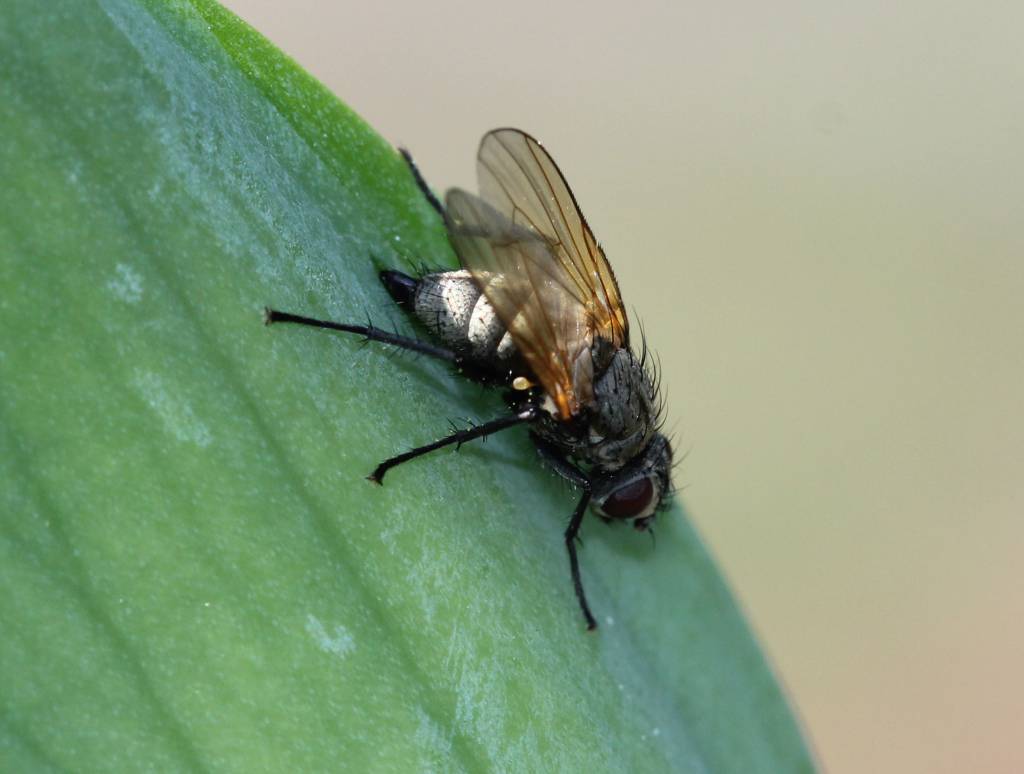
Irises are relatively resistant to fungal diseases, but they can't always cope with pests. Gardeners are well aware of the iris fly. This creature lays its larvae on the leaves of the flower, which can lead to the death of the entire flowerbed. The larvae that hatch from these eggs are very voracious.
Excessive deepening
One of the most common reasons why irises don't bloom is because they were planted too deeply. When planting, remember to keep the roots close to the surface.
The so-called root collar should remain one-third above the surface. This plant organ requires abundant light, so if such an error is detected and the plant has not yet died, repot. To raise the iris above the ground, it is recommended to make a small mound of nutritious soil in the planting hole. Then, place the iris root on this mound and cover with soil.
The rootstock is also deliberately oriented toward the south, ensuring adequate warmth and promoting faster development. If all the rules are followed and preventative measures are taken, the iris will thrive, and the gardener will have a beautiful flowerbed, combining different varieties, and a colorful garden that will delight its creator with a variety of colors.
Related posts:
 Description of the marsh iris, planting and care in open ground, preparation for winter
 Description of Siberian iris varieties, planting and care in open ground
 Description and characteristics of the best varieties and types of irises
 Description of Japanese iris varieties, planting and care in open ground
 When is the best time to transplant irises and how to do it correctly, care after the procedure
 Planting and caring for irises in open ground, propagation and variety selection
 Description of the best varieties of reticulated irises (Denfordia), planting and care, propagation
 What flowers go well with irises in a flowerbed? What flowers are best to plant them with?