
- Brief description
- Appearance and flowering characteristics
- Growing conditions requirements
- Application in landscape design
- The best varieties of swamp iris
- English White
- Crème de la Crème
- Variegata
- Bastard
- Planting a plant
- Selection of planting material
- Soil preparation
- Planting diagram
- Necessary care for the flower
- Lighting
- Watering and fertilizing
- Preparing for winter
- How to combat diseases and pests
- Methods of reproduction
- Gardeners' reviews
If a gardener is also the proud owner of a decorative pond or small lake, they naturally wonder how to beautify the area around it. Not every plant thrives in high-humidity conditions. In this case, it's recommended to consider the marsh iris, also known as the false calamus, or yellow iris. This plant is ideal for growing near bodies of water.
Brief description
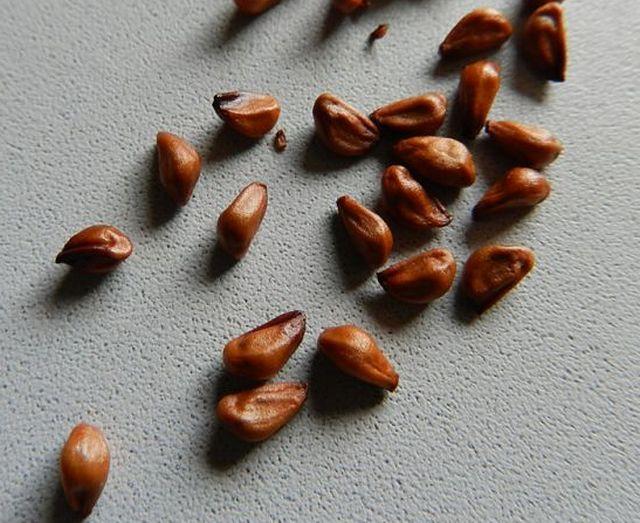
Any body of water in a garden requires beautification. The marsh iris, thanks to its characteristics, is an excellent choice for this task. Before planting, familiarize yourself with the description and characteristics of the plant to avoid mistakes in cultivation. This iris is called a marsh iris because in its natural habitat, it is found on the banks of water bodies, including swamps. With proper care, it grows up to 60 cm tall, with some specimens reaching 2 meters. A characteristic feature of this iris variety is its hydrochoric properties. This means that the plant's seeds can float in water for a long time due to the air gap between the seed coat and the seed kernel.
A distinctive feature of the false calamus iris is that it produces 12 to 15 flowers on a single stem, while the Siberian variety only produces 2-3. The leaves have a matte green hue, sometimes a deep glaucous.
Appearance and flowering characteristics
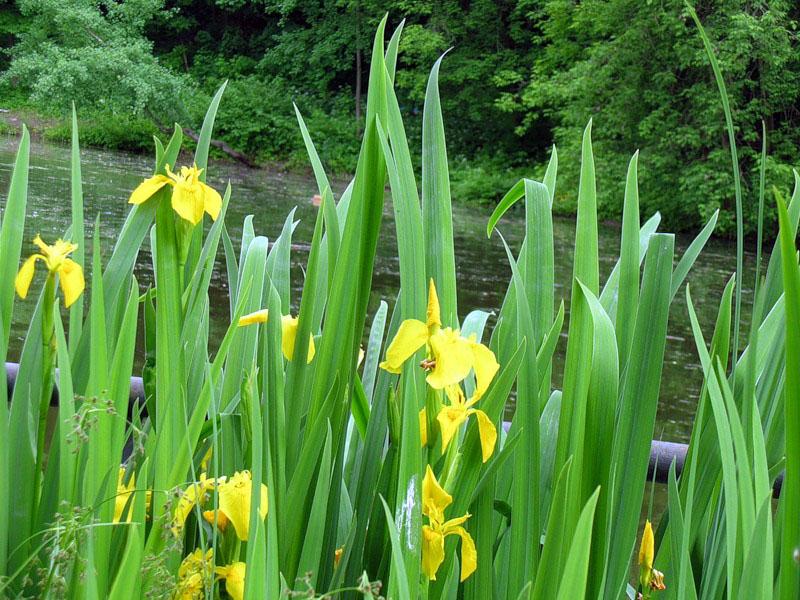
The primary petal color of the bud is lemon yellow. However, in recent decades, thanks to the efforts of breeders, gardeners have been able to grow swamp irises with blue, white, and multicolored buds. The bisexual flowers have a simple perianth and three stamens. Iris pseudoacorus is pollinated by insects.
The plant's flowering period is between June and mid-July. It's considered a perennial plant, and with proper care, it can thrive in one location for about 10 years without losing its decorative qualities.
Growing conditions requirements
In the wild, calamus primarily grows in river floodplains. In gardens, gardeners grow it both on the banks of ornamental ponds and in open ground in flowerbeds. This is another advantage of the plant, making it so popular among gardeners and landscape designers.
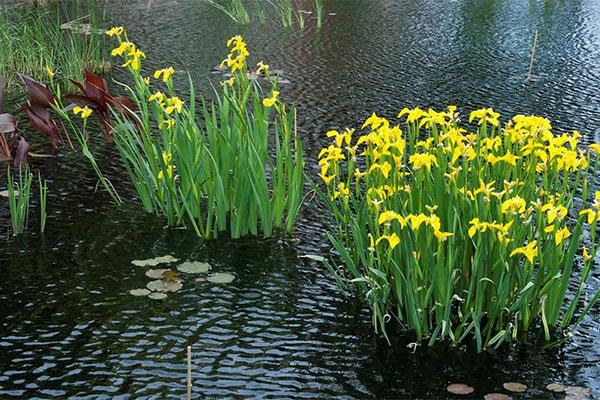
Application in landscape design
Thanks to its low maintenance and rapid reproduction, the marsh iris is a favorite among landscape designers. This plant fits perfectly into almost any composition.
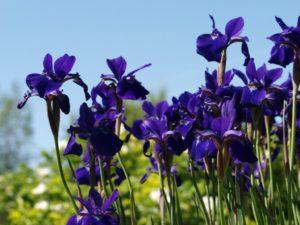
The most successful examples of using yellow iris:
- In compositions with trees and shrubs.
- In flowerbeds with other perennial flowers.
- Due to the density of the bush, it looks organic as a green fence.
- In mono-curtains on a green lawn.
- In meadows, on the banks of any bodies of water.
Even in a swampy area without a drainage system, the marsh iris thrives and delights with the vibrant colors of its numerous buds. Growing it is effortless for the gardener.
The best varieties of swamp iris
Thanks to the work of plant breeders, it's now possible to choose varieties with different petal colors for garden decoration. These varieties are among the most popular among gardeners.
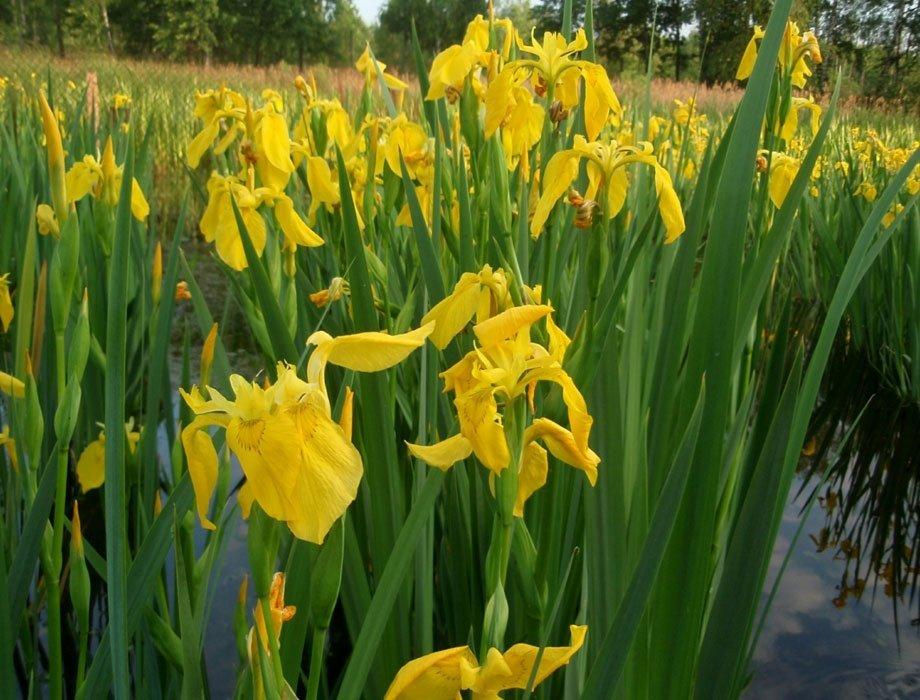
English White
Fragile flowers with white petals are borne on sturdy stems that reach up to 1 meter in height. Each petal features distinct creamy veins running lengthwise. A rich cherry-red stripe runs along the entire perimeter, closer to the center of the bud.
Crème de la Crème
The plant grows from 70 to 90 cm in height and has a very unusual appearance thanks to its large flowers. They range from 8 to 10 cm in size, and the petals are creamy white. At their base are veins of purple-burgundy color.
Variegata
One of the most popular varieties among gardeners. With proper care, it reaches a height of 120 cm, producing a large bush. During flowering, the leaves are yellow-green. This variegation fades as the blooming season ends. The buds are 11-12 cm in diameter. The petals are yellow with small brown veins.
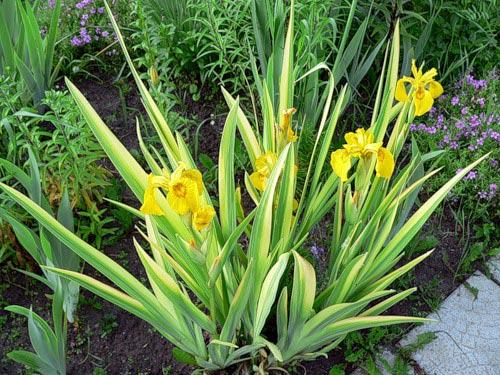
Bastard
This swamp iris variety grows no more than 120 cm tall, with lemon-yellow petals. It differs from the wild iris variety in that the hue is uniform and lacks an orange-red center.
Planting a plant
Before planting, choose the right location for the marsh iris, as well as the right seedlings. Following the advice of experienced gardeners will prevent mistakes and ensure a beautiful and healthy plant.
It is recommended to carry out planting work in August or September, then the plant will take root faster and will delight you with abundant flowering in the spring.
Selection of planting material
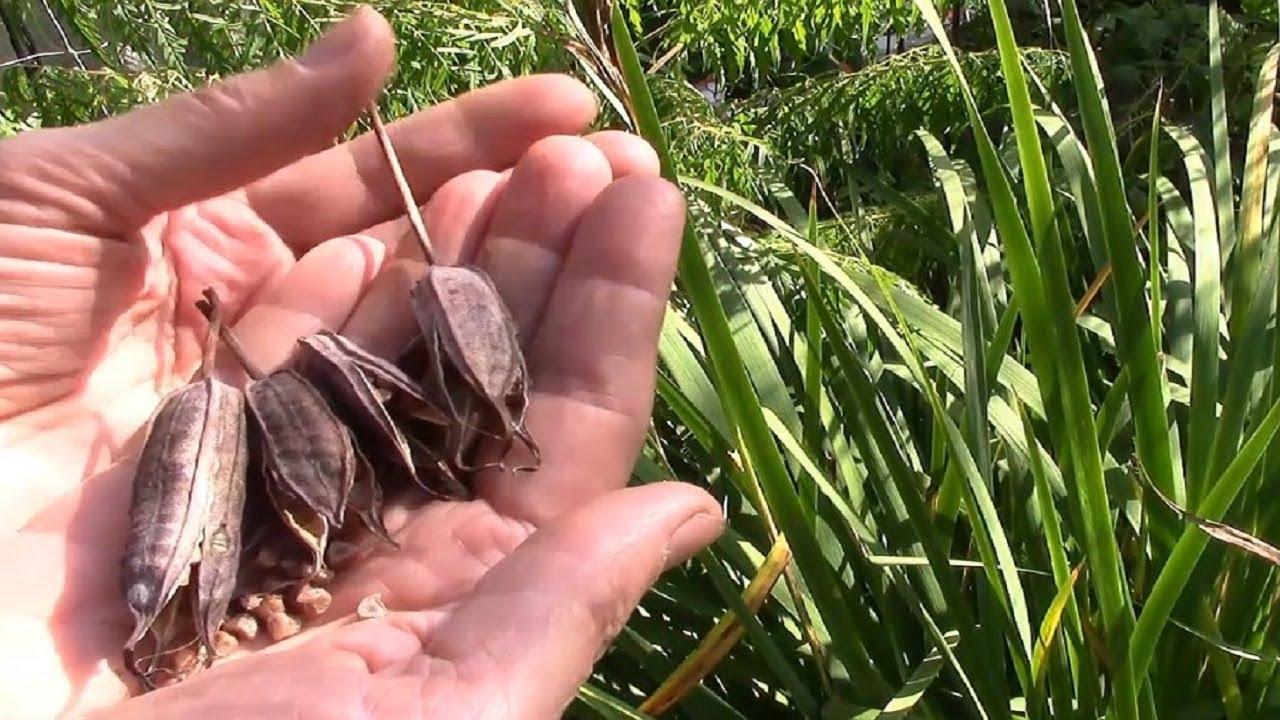
It's recommended to purchase planting material from specialized retailers where sellers provide a certificate of conformity for the variety. They also check to ensure the plants are free of disease or pest damage. The subsequent development and flowering of irises depends on the quality of the planting material.
Soil preparation
All work begins with soil preparation. It's important to remember that successful cultivation of marsh iris requires shallow, moist, and well-drained areas with ample sun exposure throughout the day. The area should also be protected from strong winds and drafts.
Marsh iris has no particular soil requirements. It should have a pH of around 7, be fertile, and have a heavy, clay-like structure.
Planting diagram
The planting process is not difficult and is carried out according to the following instructions:
- To prevent uncontrolled growth of the crop, prepare containers; their volume should be at least 5 liters.
- Take ordinary garden soil and add 2 buckets of humus to it.
- Add a little water to achieve a mushy consistency of the soil and place it in prepared containers.
- The plant's long roots are shortened and the leaves are trimmed by a third. Planting is done in containers at a depth of 10 cm.
- Make sure the root is positioned at the edge of the container, not in the center, as irises tend to grow sideways. The thickening of the rhizome should remain above the soil surface.
- Containers with planted irises are placed on the bottom of the selected reservoir, the immersion depth varies from 20 to 40 cm.
Plants are planted in these same containers not only at the bottom of the pond, but also in the coastal zone and in the garden's flowerbeds. Some gardeners replace the soil in the containers with crushed stone or rocks.
Necessary care for the flower
Growing this aquatic plant requires little effort from the gardener. The marsh iris is easy to maintain and requires minimal attention.
Lighting
Although the marsh iris can grow in partial shade, it still requires full sunlight for optimal development. Moreover, the plant tolerates full sunlight throughout the day.
Watering and fertilizing
If the crop is planted in water, irrigation is not required. In flowerbeds, this cultivation technique is essential. The soil under the irises should be kept moist at all times. If the weather is dry and hot, water up to twice a day. Otherwise, watering once a day is sufficient. Use 2-3 liters of lukewarm water per bush at a time. If it rains, watering should be avoided.

Irises also don't require constant fertilization. This is done once a season, after the flowering period has ended. Any complex fertilizer can be used for iris feeding; many gardeners choose "Kemira."
Preparing for winter
At the end of the summer season, trim all the foliage from the marsh iris. Cuttings no taller than 9 cm are left above ground. Use peat or humus to cover the irises. The thickness of the covering layer is 10 to 12 cm. If the plant is growing at the bottom of a pond, the containers are simply lowered into deeper water.
How to combat diseases and pests
Gladiolus thrips are the most common pests that spoil the decorative appearance of marsh irises. Their attack leaves irregularly shaped holes in the leaves. To eliminate the pest and save the plant, purchase an insecticide from a gardening store—in particular, Inta-Vir or Actellic.

Thanks to their strong immunity, yellow irises are rarely affected by flower diseases. In rare cases, gardeners encounter a disease called Alternaria leaf spot. It is identified by dry spots on the leaf blades. The leaves subsequently dry up completely and die. Unfortunately, there is no cure, so affected plants are destroyed. Another disease affecting the marsh iris is Ascochyta leaf spot. Its symptoms include brown spots on the leaf blades. Treatment is with 3% copper sulfate.
To prevent disease, preventative measures are taken. This involves spraying the marsh iris with a 1% Bordeaux mixture before and after flowering.
Methods of reproduction
There are several simple ways to grow marsh iris in your garden:
- Dividing the rhizome. Remove the iris bush from the soil and carefully brush away any soil particles from the roots. Cut the root system into several sections, ensuring that each section has 2-3 side shoots and one central shoot. Sprinkle the cut sections with crushed charcoal, trim the leaves, and replant in separate containers.
- By seeds. They are sown in open ground before winter and covered with plastic. In the spring, the sprouted seedlings are pricked out and planted in the desired locations.
It is worth remembering that marsh irises grown from seeds bloom only in the 3rd year.
Gardeners' reviews
The marsh iris has developed a positive reputation among gardeners who already grow it in their gardens.
Anna Sergeevna Kopylova, 39, Samara: "I've been growing marsh irises for several years now. At first, I only bought one variety, which amazed me with its ease of care. Now I've planted the entire bank of my pond at my dacha with different varieties—and when they bloom, you can't take your eyes off their beauty."
Liliya Aleksandrovna Ustyugova, 56, Kostroma: "My husband and I recently purchased a dacha plot with a small lake. We couldn't decide for a long time what to decorate it with. Thankfully, a neighbor suggested planting marsh irises. We couldn't be happier—they require virtually no maintenance, and they look stunning."
Related posts:
 Description of bearded iris, planting and care in open ground, and preparation for winter
 Description of Siberian iris varieties, planting and care in open ground
 Description and characteristics of the marsh hibiscus, planting and care in open ground
 Description of Japanese iris varieties, planting and care in open ground
 Planting and caring for irises in open ground, propagation and variety selection
 Description of the best varieties of reticulated irises (Denfordia), planting and care, propagation
 When is the best time to transplant irises and how to do it correctly, care after the procedure
 Description and characteristics of the best varieties and types of irises