
- Swamp Hibiscus: Description and Characteristics of the Plant
- Application in landscape design
- Planting technology
- Seeds
- Seedlings
- How to choose and prepare a planting site
- Transplantation to a permanent location
- Care
- Temperature and lighting
- Watering and fertilizing
- Trimming
- Transfer
- Protection from insects and pests
- Preparing for the winter period
- Features of reproduction
- Possible difficulties and challenges
Growing swamp hibiscus is not difficult. Gardeners value the plant for its low maintenance, long flowering period, and high ornamental value. This tropical beauty can be grown both outdoors and indoors in pots, but it looks more impressive in flowerbeds. There are two methods for growing this exotic plant: sowing seeds outdoors and preparing seedlings indoors. Hibiscus care is standard and straightforward.
Swamp Hibiscus: Description and Characteristics of the Plant
This exotic plant belongs to the Malvaceae family and is native to the tropics and subtropics. There, the marsh hibiscus grows in well-drained soils. This perennial shrub with bright flowers has a well-developed and powerful root system. In the wild, it reaches a height of 3 meters.
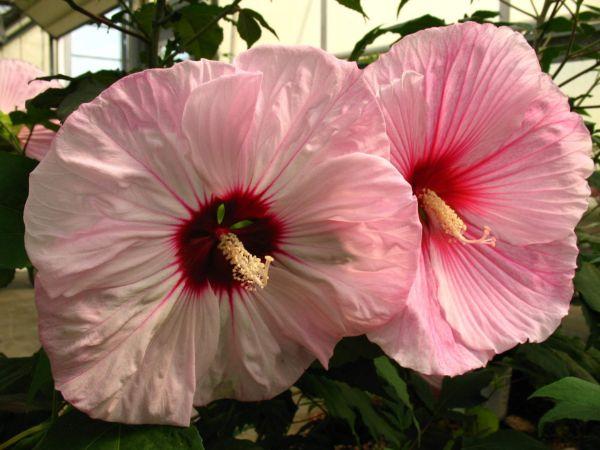
The plant's leaf blades are pubescent below and glossy above, and are characterized by serrated edges and a heart-shaped form. The main advantage of the swamp hibiscus is its long flowering period, which begins in the spring and continues until October. At this time, the bush is covered with red, purple, and lilac flowers, each with crimson spots at the base. Another characteristic of this tropical guest is that its flowers bloom for only one day, and by evening they have already faded and fallen off.
Over time, a fruit, a five-valved capsule, develops in their place. The seeds are pubescent, brownish in color, and have a light wine-like aroma.

Application in landscape design
Swamp hibiscus is used in several ways to decorate a garden landscape:
- They are planted as a bouquet, selecting specimens with different petal shades. As the bushes grow, their crowns will close, creating a spectacular multicolored tree.
- In the form of individual plantings against a background of green lawn.
- Hibiscus looks good with low-growing varieties of roses.
- Used in mixborders.
- Decorate walls and fences.
Planting technology
Drop off swamp hibiscus in the garden There are several ways to cultivate a plot of land; each gardener chooses the option that suits them best and follows the algorithm of actions.

Seeds
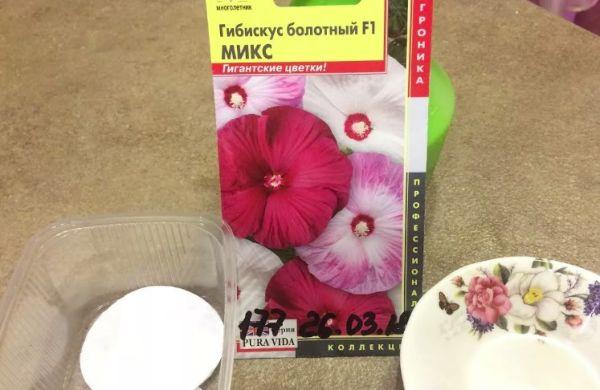
Growing hibiscus from seeds isn't as difficult as it might seem at first glance. However, some gardeners prefer to buy ready-made plants or use cuttings. Planting material is purchased at a gardening store. It's recommended to prepare the seeds at home in March. To speed up germination, soak them in a growth stimulant such as "Zircon," "Kornevin," or "Epin." While soaking, stir the seeds several times to ensure they are thoroughly moistened.
After this, wrap them in a damp cloth and place them in a plastic bag, but do not wrap them. After a couple of days, they will begin to sprout, at which point they are sown in prepared soil. Plant the seeds no more than 6 cm deep. If the weather is still cool, cover each seed with a cut-off plastic bottle.

Seedlings
You can also transplant ready-to-plant seedlings grown indoors into open ground. The seeds are prepared as described above, but after soaking, they are not placed in a bag but sown directly into containers with potting soil. To prepare the soil, mix one part vermiculite with two parts peat. Spread the dried seeds over the soil surface and press them lightly into the soil.
The containers are covered with glass or transparent plastic film to create a greenhouse effect. The containers with seedlings are placed in a location with a temperature of at least 25 degrees Celsius and provided with underfloor heating for several hours a day to speed germination. The covers are removed daily for ventilation and, if necessary, for additional moisture. Once seedlings emerge above the soil, the film or glass is removed.
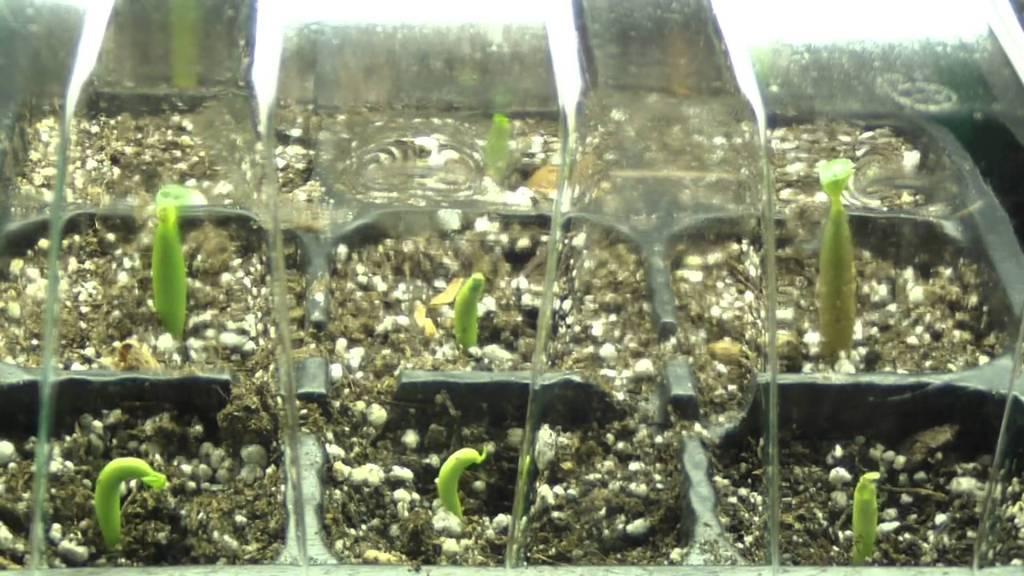
Place containers with seedlings in a warm and bright place, but keep in mind that seedlings do not tolerate direct sunlight and are afraid of drafts.
When the seedlings have developed 3-4 full leaves, they begin transplanting into individual containers. At this stage, humus is added to the soil mixture. Once the weather is consistently warm and the threat of frost has passed, the seedlings are transplanted to their permanent location in the garden.
How to choose and prepare a planting site
To ensure that swamp hibiscus thrives outdoors, it's important to choose the right location. The site should receive full sun; placing hibiscus in the shade is undesirable. Dig the soil and mix the top layer with humus or leaf compost. If these components are unavailable, replace them with 30 grams of complex mineral fertilizer. However, it's important to remember that too much fertilizer will negatively impact the plant's growth.
Transplantation to a permanent location
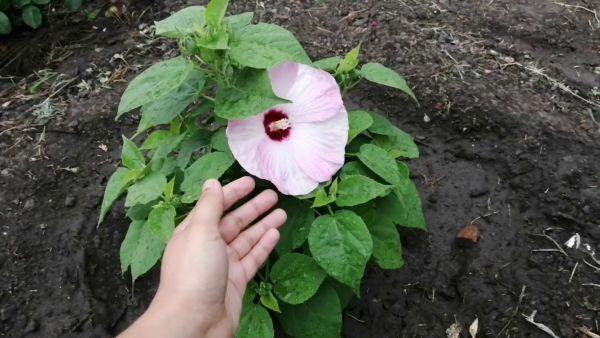
Once the plot is prepared, begin planting the seedlings. They are transplanted into the holes along with the root ball, maintaining a distance of 35-45 cm between plants, and watered. If there is a risk of night frost, cover the young hibiscus with spunbond for the first few days.
Important! Do not mulch the bushes, as this inhibits plant growth and development. This procedure should only be performed in the third year after planting, using a layer no thicker than 4-5 cm.
Hibiscus grown from seeds blooms only after three years.
Care
After planting hibiscus outdoors, provide it with comprehensive care. This includes watering and fertilizing, pruning, and disease and pest prevention.
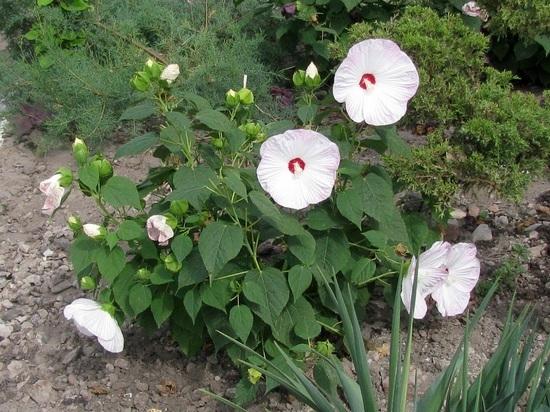
Temperature and lighting
The temperature for growing hibiscus should not exceed 30 degrees Celsius; shade is provided on particularly hot days. Ensuring adequate light is a key consideration when selecting a site. Hibiscus will survive in the shade, but flowering will be shorter and less abundant.
Watering and fertilizing
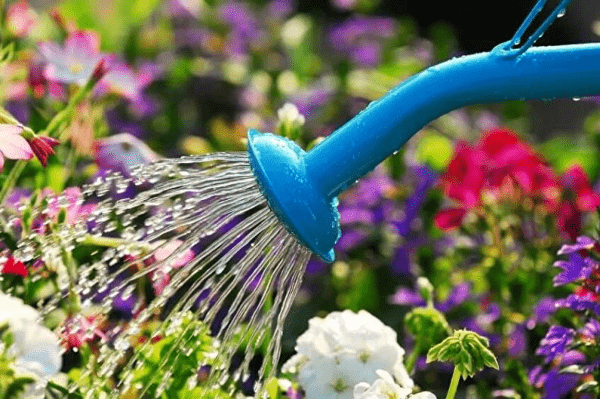
Swamp hibiscus is a moisture-loving plant that doesn't tolerate dry soil. Therefore, it should be watered regularly and generously, preventing the formation of a crust. This tropical plant thrives in well-drained soils, so irrigation is essential.
The plant isn't as demanding when it comes to fertilizers. In this case, it's better to under-fertilize than over-fertilize. Nitrogen fertilizers are applied in the fall, and fluoride and potassium fertilizers are used in the fall. However, if possible, it's best to replace all fertilizers with organic ones; swamp hibiscus responds better to them.
Trimming
Hibiscus bushes are pruned for the first time when they reach 60-70 cm in height. Subsequently, this is done annually, in the spring before the sap begins to flow. All broken, dry, and diseased shoots are removed, and the crown is also thinned occasionally.
Transfer
Hibiscus should be repotted no more than once every three years. However, if the bush hasn't grown much, simply replacing the top layer of soil with fresh, more nutritious soil is sufficient.
Protection from insects and pests
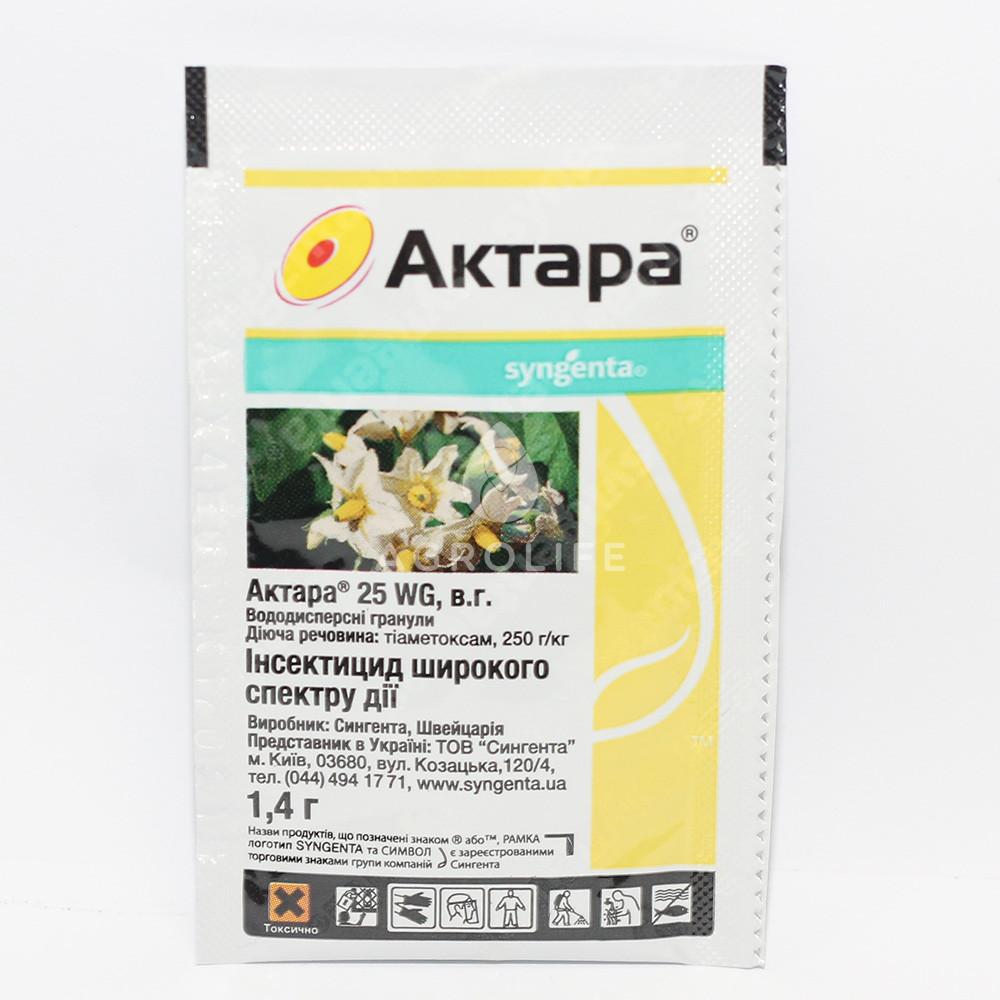
Swamp hibiscus is rarely affected by diseases; problems mostly arise from improper care. The main enemy of this exotic plant is spider mites. The first sign of an infestation is the appearance of fine webbing entangling the bushes. For minor infestations, wash the leaves with soapy water and wipe with an alcohol solution. For severe infestations, use acaricides such as "Aktara."
Preparing for the winter period
In winter, the above-ground portion of the marsh hibiscus dies back and is covered with dry straw or simply soil. The plant tolerates frosty, snowy winters well, so it doesn't require special insulation.
Features of reproduction
In addition to propagating hibiscus from seeds, cuttings are also used. With this method, the plant blooms within the first year after planting. Branches are cut from a mature bush in the spring and rooted in wet sand or containers of water. After two weeks, when roots appear, the plants are transplanted into a pot or open ground.
Possible difficulties and challenges
Difficulties in growing hibiscus arise as a result of improper care:
- Yellowing and leaf drop. This is caused by high chlorine concentrations in the water, so let it settle before watering.
- Hibiscus failure to bloom. This problem is often caused by overfertilization. It can also be caused by inadequate lighting or high temperatures.
- Cold and dampness cause the hibiscus root system to rot and the subsequent death of the plant.
Related posts:
 Description and characteristics of terry hibiscus varieties, planting and care in open ground
 Care and propagation of garden hibiscus, planting and growing rules
 Rules for planting and caring for herbaceous hibiscus, growing features
 Description of the marsh iris, planting and care in open ground, preparation for winter
 How to properly plant peas in a greenhouse and open ground
 How to grow ginger in the open ground at your dacha, planting and care
 How to propagate and grow peas, cultivation technology, and care in open ground
 Description of varieties of sowing peas and cultivation, to which family they belong