
- The need for chrysanthemum replanting
- How to determine when it's time to repot a plant
- When do planting operations take place?
- Spring
- Summer
- Autumn
- Do you transplant blooming chrysanthemums?
- Selection and preparation of a new site
- Methods and technology of transplantation
- Post-procedure care
- Mistakes of novice gardeners and useful tips
Chrysanthemums are among the most popular perennial flowers in Russian gardens. These easy-to-grow plants create a cozy atmosphere throughout the summer and fall and require little maintenance. One of the most important agricultural practices is replanting chrysanthemum bushes. This is because the plant draws nutrients from the soil during the growing season.
The need for chrysanthemum replanting
Since chrysanthemums are perennials, they can overwinter outdoors. However, the plants need to be replanted periodically. This is because during the growing season, the plant absorbs all the nutrients from the soil, and in poor soil, the following season, it grows poorly, develops poorly, and produces few flowers.
When replanting, apply fertilizers specific to chrysanthemums, and the flowers will once again delight you with abundant blooms and a beautiful appearance. If this isn't done in time, the bushes will wither and may even die during the cold season.
How to determine when it's time to repot a plant
If a plant lacks nutrients, its appearance is affected. Buds lose their shape, flowers become smaller, and the bush itself slows down. If a gardener notices that a chrysanthemum has begun to lose its decorative qualities, this is a sign that the soil is depleted and the plant needs to be replanted.
When do planting operations take place?
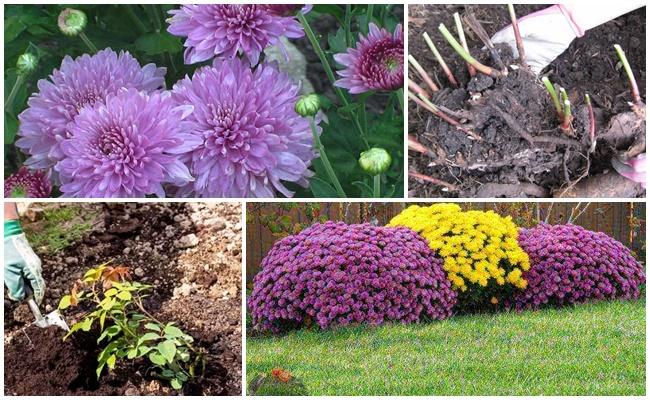
Experienced gardeners say it's best to transplant chrysanthemum bushes to another location after the flowering period ends, in the fall. This will increase their winter hardiness, and the first buds will appear the following season much earlier than with spring transplants. However, if necessary, the work can be carried out in both spring and summer.
Spring
In some cases, gardeners begin replanting chrysanthemums in early spring, as soon as the snow melts. This is done if winters in the region are very cold. Since moving the flower from one location to another is stressful for it, it may not have time to establish itself and adapt to the new location, and as a result, it will die during the winter. Another advantage of spring replanting is that after the snow melts, the soil is moist and soft, making it much easier to dig up the chrysanthemum bushes than in the fall, without damaging the roots.
Summer
Moving chrysanthemum bushes to a new location is not recommended during the summer months. Overdried soil will make it difficult to remove the plant, and there's a high risk of damaging the root system. Furthermore, persistent heat will prevent the chrysanthemum bushes from establishing themselves in their new location. In northern regions, transplanting is possible in late August, due to the early onset of cold weather.
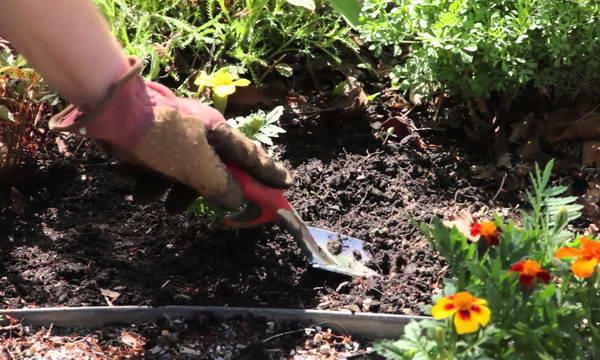

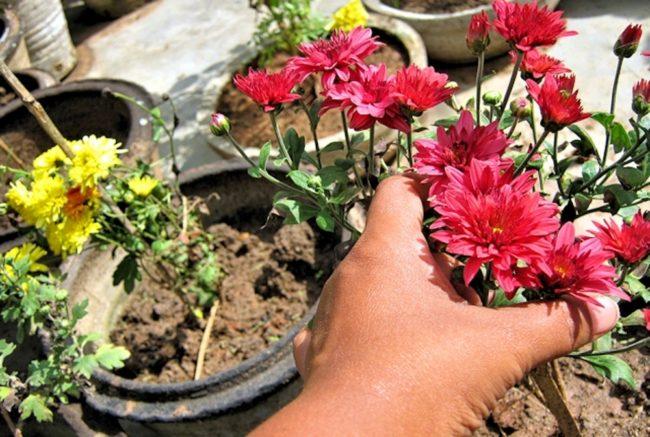
However, if the plant was purchased in a pot in the summer, it should be moved to a container two to three times larger. Since the plants are sold in small containers, the nutrients will not be sufficient to keep the chrysanthemum alive until autumn.
Autumn
Experienced gardeners consider autumn—late September or early October—the optimal time to repot perennial chrysanthemums. During the first two to three years of cultivation, flowers can be repotted once a year, but subsequently, they should be moved every six months. Repotting in autumn will make the plant more frost-resistant and promote root development. It's important to allow at least a month before the first significant cold snap, so the flower has time to adapt to its new location.
Do you transplant blooming chrysanthemums?
Chrysanthemums typically still have blooming buds in the fall. They can be repotted before flowering ends, but this must be done with extreme care to avoid damaging the plants.
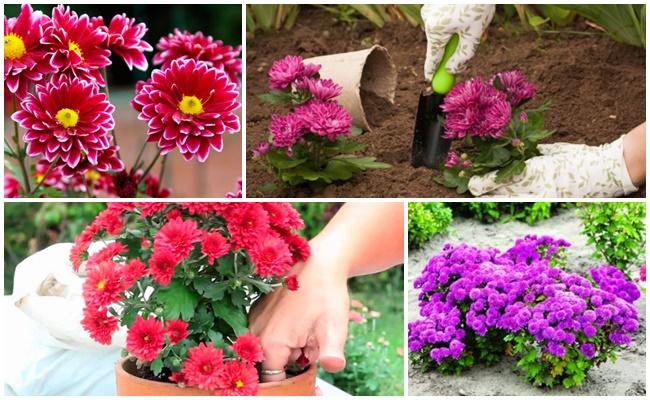
Selection and preparation of a new site
For replanting chrysanthemums, select a site in the garden on a slightly elevated area with at least six hours of sun per day. Plants react negatively to excess moisture, so if the groundwater level is close to the surface, a drainage system is essential. Use broken brick or fine crushed stone for this purpose.
The soil should be loose and light, with a slightly acidic reaction. If the soil is heavy, it should be mixed with peat or well-rotted compost.
The selected area is dug over to the depth of a spade, and weeds are removed. The soil is allowed to settle for two weeks. After this, the necessary nutrients are added; the amount depends on the initial soil composition. In poor soils, compost, humus, and a complete mineral fertilizer should be added.
Methods and technology of transplantation
The methods for transplanting chrysanthemums into open ground depend on the chosen time. If the gardener decides to transplant in the fall, choose a cloudy, cool day without precipitation. Ideally, the nighttime temperature should be around 32 degrees Fahrenheit (0 degrees Celsius).


How to transplant flowers correctly:
- Chrysanthemum bushes are watered to soften the soil.
- In the selected area, dig holes 60 cm deep.
- The roots around the bush are trimmed with a sharp, disinfected shovel. This stimulates new root growth, and the plant will establish itself well in its new location.
- Carefully remove the bush from the ground along with the root ball.
- They transfer it to the chosen location, sprinkle it with soil taken from the hole and add fertilizer.
- After two weeks, the soil around the bushes will need to be replenished, as it will settle under the influence of watering.
- After planting, do not press down too hard on the soil around the bushes, as this could damage the roots.
If the work is carried out in the spring, division of the bush is necessary. First, the plant is carefully dug out of the ground, the soil is lightly shaken from the roots, and the plant is divided into several parts. Care must be taken to ensure that each division retains roots and shoots. The subsequent procedure is no different from that for autumn replanting.
Post-procedure care
The steps for caring for chrysanthemums will vary depending on when they are replanted. In the fall, chrysanthemum bushes should be watered once a week. Use settled or rainwater, but it should be warm. When watering chrysanthemums, be careful not to let water get on the leaves, as this can lead to the development of fungal diseases in cool weather.
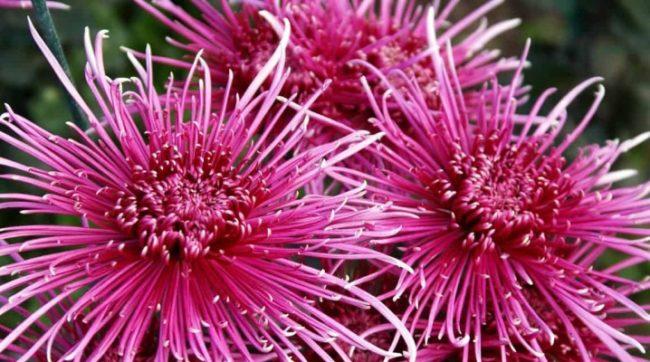
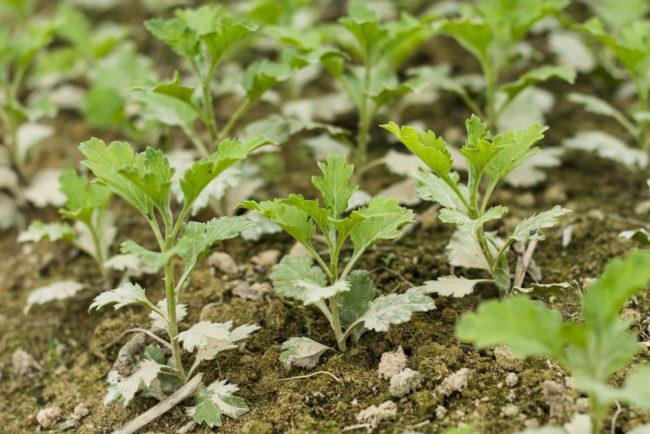
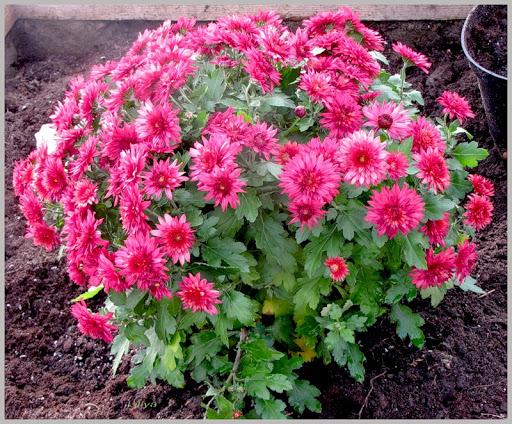
Spring and summer irrigation is carried out depending on the weather; if the weather is extremely hot, the procedure is carried out twice a week. After each watering, the soil around the bushes is loosened and weeds are removed. After each watering, mineral fertilizers containing phosphorus and potassium are applied. Nitrogen-containing compounds are avoided to avoid stimulating active growth of green mass before the onset of cold weather. In addition to industrial fertilizers, organic fertilizers are also used. Cow manure or bird droppings are dissolved in water and the bushes are watered with this solution.
In the spring after replanting, chrysanthemum bushes require nitrogen fertilizers for active growth; this is done two weeks after moving the plant to its new location. During the budding period, potassium and phosphorus are essential for lush blooms.
The next step in chrysanthemum care is pruning. This shaping procedure is performed only in the spring. To achieve a spherical shape, the upper shoot should be pinched above the seventh leaf. This is done when the shoot is at least 15 cm long. At the same time, remove side branches. This work must be completed before the inflorescences begin to form.
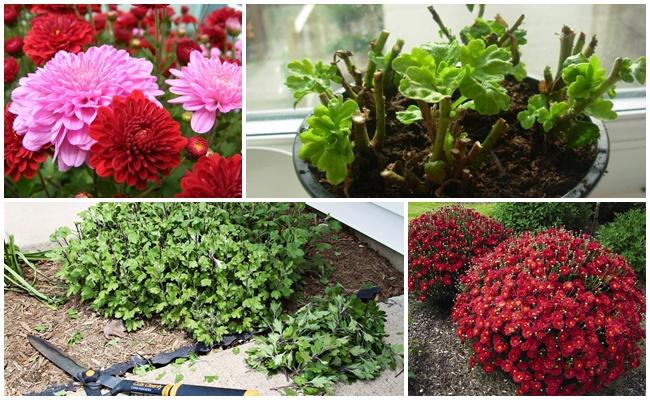
Some gardeners prefer not to prune flowers before winter, but this procedure has many advantages:
- During the pruning process, diseased, broken and infected shoots are removed.
- Shortened chrysanthemum stems require much fewer resources for their vital functions; the rest is used to maintain the root system during the cold period.
- Cut flowers become compact and are easier to protect from frost.
Pruning begins as soon as a sustained cold snap with subzero temperatures sets in. Stumps should be left 10-15 cm above the ground and mounded with soil and humus. The layer should be about 10 cm high. It's important to carry out all work with disinfected tools to avoid introducing pathogens. Alcohol or a potassium permanganate solution are used for this purpose.
Before winter, it's recommended to insulate chrysanthemum bushes. The scale of the shelter depends on the climate of the growing region. In southern regions, a half-meter layer of dry hay or sawdust is sufficient, followed by a topping of spruce branches. In northern regions, wooden boxes or boards are used for shelter. This is then covered with hay mulch and then covered with a breathable material. Avoid using plastic film to insulate chrysanthemums, as this will lead to damping off during thaws.
Mistakes of novice gardeners and useful tips
When replanting plants, it's important to install a support nearby and tie the young plants to it, otherwise gusts of wind will break the flowers. Don't forget to water regularly after moving chrysanthemums to a new location, as this plant loves moisture.
Related posts:
 Descriptions and characteristics of chrysanthemum species and varieties, growing rules
 Why chrysanthemums sometimes fail to bloom in open ground and how to speed up the process
 Planting and care guidelines for the Multiflora chrysanthemum and the top 9 beautiful varieties
 How to properly prepare chrysanthemums for winter and storage methods by region
 Top 15 Korean Chrysanthemum Varieties, Planting and Care in the Open Ground
 Top 10 Chrysanthemum Varieties, Planting and Care Guidelines for Outdoor Plants
 Timing and methods of propagating chrysanthemums at home, their cultivation
 How to plant grapes step by step, with a description of the process and care