
- General description of the flower
- Pros and cons of using in landscape design
- Types and characteristics of chrysanthemums
- Perennials
- Annuals
- The most beautiful varieties
- Large-flowered
- Ruby
- Chalcedony
- Mid-flowered
- Alex Bedser
- Evelyn Bush
- Korean
- Memphis
- Haidar
- Short stature
- Mascot
- Elf White
- Bushy
- Optimist
- Jordi
- Growing methods
- Seeds
- Planting by cuttings
- Dividing the mother plant
- Rules for caring for plants in the garden
- Watering, fertilizing, pruning
- Post-flowering care and preparation for winter
- Diseases and pests of chrysanthemums
- Cultivation of culture
- Tips and advice from experienced gardeners
Bush chrysanthemums adorn gardens from midsummer to late fall. There are tall and short varieties. The buds come in a variety of shapes and colors. They are easy to grow, have good immunity, and are winter-hardy. Below is information on planting and caring for chrysanthemums outdoors, as well as cultivation methods.
General description of the flower
The garden chrysanthemum is a herbaceous perennial shrub. Its height, depending on the variety, ranges from 25 to 150 centimeters. It consists of several slender, densely foliated shoots. Flowers with petals of various colors form at the tops of the branches. The inflorescences can be single or double.
Additional information: There is an edible variety of chrysanthemum, Chrysanthemum esculenta. Its petals and leaves are used in cooking and brewed into a fragrant tea.
Pros and cons of using in landscape design
Chrysanthemums are often called the queen of the autumn garden. Their buds open when many other plants have already finished blooming. They are planted singly or in groups. They can be alternated with other beautiful plants.
Benefits of using chrysanthemums in landscape design:
- serves as a decoration for the autumn garden;
- can be grown in containers;
- There are many varieties of different heights and flowering periods;
- flower shoots are used for cutting;
- chrysanthemums are used to build a border or hedge;
- The plants are easy to care for.
The disadvantages include lodging of tall varieties grown without support.

Types and characteristics of chrysanthemums
The culture is divided into 2 varieties.
Perennials
This group includes most chrysanthemums. Flowering begins in midsummer and continues until frost sets in. They even withstand the first frosts. Perennial chrysanthemums bloom profusely and have good immunity. Tall varieties are suitable for cut flowers.
Annuals
This variety of chrysanthemum is planted from seeds in open ground in spring. The buds open in June-July. The shape of these annual flowers resembles daisies and asters. Several dozen inflorescences of varying ages form on a bush. Outdoor cultivation is undemanding and has good immunity.

The most beautiful varieties
Breeders have developed many varieties of chrysanthemums, varying in height and bud size.
Large-flowered
The plant's inflorescences reach 25 centimeters in diameter. They are typically used in bouquets. The most beautiful varieties are:
Ruby


The shoots reach a height of 80-90 centimeters. The inflorescences are double and hemispherical. The buds, reaching 15-16 centimeters in diameter, are colored copper-red.
The inflorescences open at the end of October.
Chalcedony

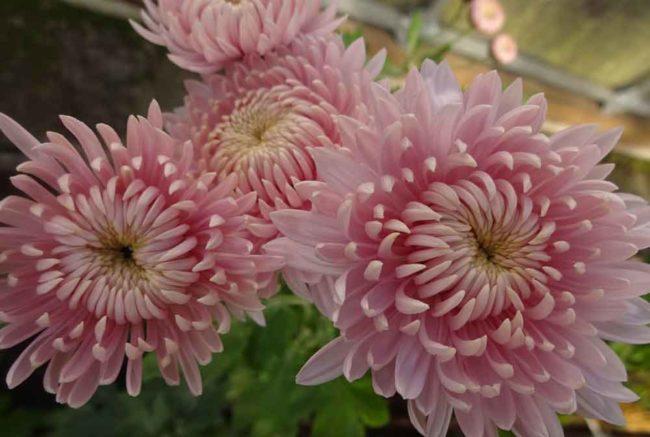
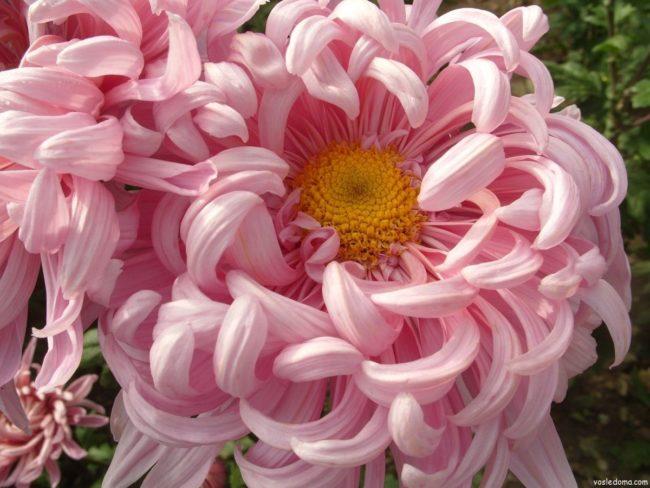
The shoots are no more than 100-110 centimeters long. The buds are semi-double, curly, and pink. Their diameter is 15-16 centimeters. The inflorescences bloom in mid-autumn.
Chalcedony is a beautiful addition to the autumn garden. The shoots are also used for cut flowers.
Mid-flowered
These chrysanthemums have smaller inflorescences, reaching 10-18 centimeters in diameter. They are used to decorate gardens and as cut flowers. These are the most beautiful varieties.
Alex Bedser


The bushes reach a height of 70 centimeters. Hemispherical yellow buds form, 10-14 centimeters in diameter. It blooms in early autumn.
Chrysanthemum Alex Bedser is used to decorate the plot, the shoots are used for cutting.
Evelyn Bush


The bushes reach a height of 1.5 meters. The buds are snow-white and hemispherical, reaching 14 centimeters in diameter. It blooms in August-September.
The variety was bred in England in 1955.
Korean
This group includes hybrid chrysanthemums. These plants are also called oak chrysanthemums because of their oak-like leaves.
Memphis

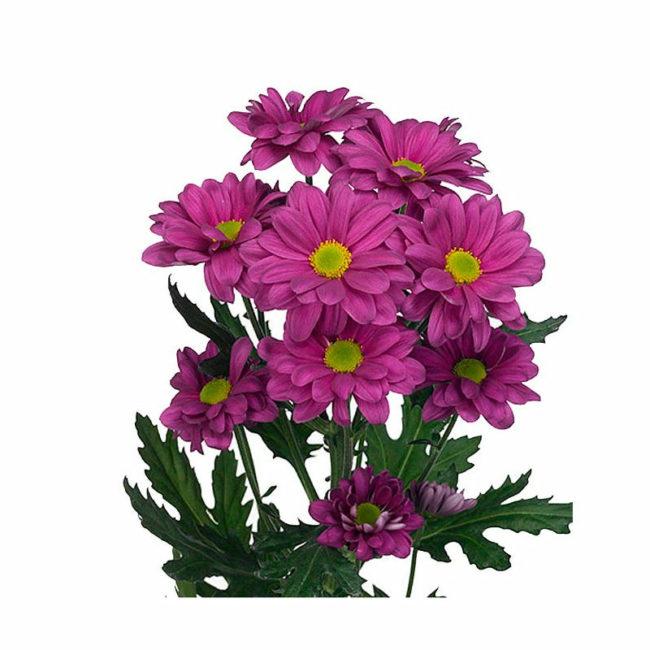

The shoots grow up to 70 centimeters. The stems are erect and densely foliated. The simple inflorescences are a rich purple color.
Cut shoots of the Memphis chrysanthemum stand in water for a long time.
Haidar


The bushes grow to 80 centimeters tall. The daisy-shaped inflorescences are burgundy in color. A white stripe runs along the edge of the petals.
Chrysanthemum Haydar shoots can be used for cutting.
Short stature
This group includes chrysanthemums with shoots up to 50 centimeters tall. They are often spherical in shape.
Mascot


The bushes grow to a height of 30-35 centimeters. The plant produces numerous inflorescences, each 4.5-5 centimeters in diameter. The buds are a bright burgundy color.
Talisman blooms from the end of August to the beginning of October.
Elf White


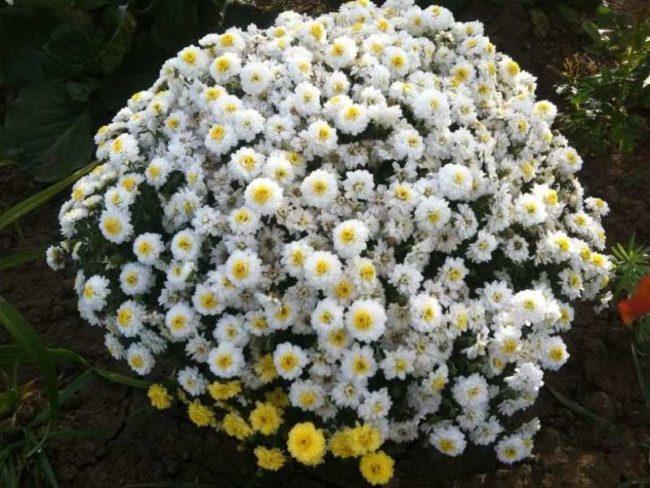
The bushes grow to a height of 45-50 centimeters. The petals are white, with a lemon-colored center. The buds reach a diameter of 3.5 centimeters.
Elf White chrysanthemum buds bloom in early autumn.
Bushy
The culture is represented by varieties with a variety of inflorescence shapes. Shrub chrysanthemums differ in crown height and width, as well as flowering period.
Optimist


The bushes grow 60-80 centimeters tall. The inflorescences are anemone-shaped. The petals are pinkish-lilac.
Optimist looks beautiful in a flowerbed and as a cut flower.
Jordi


The plant grows to 70 centimeters tall. The inflorescences are daisy-shaped. The petals are orange-yellow.
Jordi blooms until the frost sets in.

Growing methods
Gardeners can grow chrysanthemums in several ways. They are easily propagated by cuttings and division. Not all varieties can be grown from seeds, as this may not preserve the parental traits.
Seeds
To grow chrysanthemums using this method, follow these steps:
- the seeds are disinfected in a solution of potassium permanganate and dried;
- the container is filled with loose soil;
- spread seeds over the surface;
- the container is covered with glass or film;
- transferred to a room with a temperature of 18 °C.
When the sprouts appear, remove the covering. When 3-4 leaves have formed, they should be planted in separate containers. The bushes are then hardened off and planted in the ground in the spring, after the threat of frost has passed.

Important! The covering material must be wiped down daily to remove any condensation that may form, as this can be a source of mold.
Planting by cuttings
The procedure begins in the spring. Apical cuttings measuring 6-7 centimeters are planted. They are soaked for 1-2 hours in an Epin solution. Drainage is placed at the bottom of the container. The container is filled with a substrate consisting of peat, sand, and perlite. Before planting the cuttings, the lower leaves are removed. They are planted at a 45° angle to the first internode. The containers are placed in a room with a temperature of 18°C.
Water after the top layer of soil has dried. After about a month, the plants will take root and can be planted outdoors.
Dividing the mother plant
One of the simplest ways to propagate chrysanthemums is by dividing the bush. Plants older than three years are divided. This procedure is performed not only to propagate the plant within the plot, but also because the bushes become denser over time, and the shoots become smaller. Divide the plants in early fall or late spring.

Chrysanthemums have shallow root systems, so the bushes are carefully dug around on all sides. They are then lifted with a garden tool, removed from the soil, and divided into sections. Bare-rooted plants are replanted in pre-prepared holes. They are then watered, and the root zone is mulched.
Please note! Seed propagation may not preserve the parent plant's traits. However, the gardener can take on the role of a breeder.
Rules for caring for plants in the garden
To ensure beautiful, abundant blooms, chrysanthemums require constant care. This includes timely watering and fertilizing. Faded shoots should be pruned. To ensure the bushes survive the cold, they need to be properly protected for the winter.
Watering, fertilizing, pruning
Chrysanthemums are moisture-loving plants. Water them after the top layer of soil has dried, in the morning or evening. Use settled water. Avoid overhead watering due to the risk of fungal infection of the above-ground parts. After watering, loosen the soil slightly to prevent a dry crust from forming.

Fertilize the soil immediately after planting chrysanthemums. Use organic matter for this purpose. After two weeks, the plants can be fertilized again. During the budding period, apply potassium and phosphorus. The nutrients are added to moist soil. To ensure good branching, pinch the chrysanthemums. This awakens the lateral shoots, which produce numerous flower buds. Remove side shoots from large-flowered chrysanthemums. These plants produce few shoots, and the flowers are large and solitary.
Post-flowering care and preparation for winter
After the onset of frost, the bushes lose their decorative appeal. The shoots are cut back, leaving stumps 10-12 centimeters high. These are then earthed up and covered with pine branches.
If the variety is not frost-resistant, it is dug up and stored in a cool room until spring.
Diseases and pests of chrysanthemums
Under unfavorable growing conditions, chrysanthemums can be affected by the following diseases and pests:
- Powdery mildew. This disease causes white spots to appear on leaves. The affected parts are removed, and the remaining parts are treated with a solution of soap and washing soda.
- Gray mold affects leaves and petals, causing dark, water-soaked spots. Fungicides are used to prevent and treat the disease.
- White rust. White spots appear on the leaves, eventually turning dark. These should be removed, and the bushes treated with an antifungal agent.
- Aphids appear on stems and suck out the cellular sap. As a result, the bushes lose their decorative appearance, and buds may fail to open. If pests are detected, the bushes are sprayed with an insecticide.
- Spider mites appear in hot, dry weather. The insects cover bushes in webs, causing plants to stop developing properly. Spider mites are washed off with running water. If this doesn't help, an insecticide is used.


To prevent diseases and pests, weeds around chrysanthemums should be removed promptly, and the soil around the bushes should be dug up in the fall.
Cultivation of culture
Chrysanthemum can be grown in a plot in 3 ways.
- By seeds. They are sown in containers at the end of winter. The mature, hardened plants are planted outdoors in the spring.
- Cuttings. Cut off 6-7 cm long tops, remove the lower leaves, and plant in a container. Once the cuttings have rooted, they are planted outdoors.
- By dividing the bush. Bushes older than three years are divided in spring or early fall. Each division is planted in a separate hole.
Chrysanthemums can be planted not only in the garden, but also in a beautiful container, which is placed on the terrace, porch, or near the gazebo.

Important! When propagating plants, use sharp, disinfected tools. Otherwise, the bushes may become infected with fungus.
Tips and advice from experienced gardeners
The bush chrysanthemum is an easy-to-grow plant. However, inexperienced gardeners make some mistakes when growing it. Experienced gardeners offer the following tips and recommendations for growing the plant:
- Plant in the spring, after the threat of frost has passed, or in early fall. The chrysanthemum should have time to establish roots before frost sets in.
- Flowers are planted at a slight elevation, as they do not tolerate stagnant moisture.
- To ensure the plant branches well, pinching should be done above the 8th to 10th leaf.
- For large-flowered chrysanthemums, no more than three shoots are left. To ensure a large flower, only the central bud is left on the stem; the others are removed.
- The crop is planted in a well-lit place, protected from cold winds.
- As a preventative measure, flowers are treated with fungicides several times per season.
- The crop should be watered only at the roots. Otherwise, the plants may become infected with fungus.
- Fertilizer should be applied to moist soil. Otherwise, there is a risk of burning the root system.
- Plants are covered only after the negative air temperature has remained for several days.
- The covering should be removed in the spring, at the first rays of sun. If you wait too long, the bushes may rot.
The bush chrysanthemum is a beautiful addition to the autumn garden. There are many varieties and cultivars. By selecting bushes based on height, ripening time, and bud color, gardeners can enjoy beautiful blooms from midsummer until frost.
Related posts:
 Descriptions and characteristics of chrysanthemum species and varieties, growing rules
 Top 15 Korean Chrysanthemum Varieties, Planting and Care in the Open Ground
 Planting and care guidelines for the Multiflora chrysanthemum and the top 9 beautiful varieties
 How to properly prepare chrysanthemums for winter and storage methods by region
 Why chrysanthemums sometimes fail to bloom in open ground and how to speed up the process
 Timing and methods of propagating chrysanthemums at home, their cultivation
 The best time and rules for transplanting chrysanthemums to another location in the fall, care
 Top 12 Floribunda Rose Varieties: Planting and Care in the Open Ground