
- Selection and general description of floribunda roses
- Variety of varieties
- Gold Bunny
- Aspirin Rose
- Arthur Bell
- Maria Theresa
- Midsummer
- Alotria
- Coco Loco
- Freesia
- Samba
- Iceberg
- Love Song
- Rumba
- Recommendations for selection depending on the growing region
- Planting roses
- Site selection and preparation
- Timing and technology of planting
- Plant care rules
- Watering
- Fertilizing bushes
- Mulching and loosening the soil
- Trimming
- Preparing for winter
- Protection from insects and pests
- Black spot
- Rust
- Powdery mildew
- Green rose aphid
- Bronze beetle
- Rose sawfly
- Methods of reproduction
- Cuttings
- Layering
- Difficulties arising from improper care
Roses look elegant and majestic in a garden. Some varieties bloom only once and cannot withstand harsh winters. This is not the case with floribunda roses. This winter-hardy plant blooms almost all summer long. It is easy to care for and has a strong immune system. Below is a description of floribunda roses, information on the variety of cultivars, and how to grow them in a garden.
Selection and general description of floribunda roses
The floribunda rose group was developed in the mid-20th century. Breeding efforts continue to this day. Specialists are constantly developing new rose varieties of varying heights and bud colors.
Floribunda is a winter-hardy, easy-to-grow plant with a strong immune system. It is characterized by abundant and long-lasting blooms. Bushes range in height from 40 centimeters to 1.5 meters. Flower buds can be double, semi-double, or single. Their colors vary.
Variety of varieties
From a wide variety of varieties, gardeners can choose a rose suitable for their garden. Roses can be short or tall, and come in pink, red, or white. The industry offers the best rose varieties.
Gold Bunny
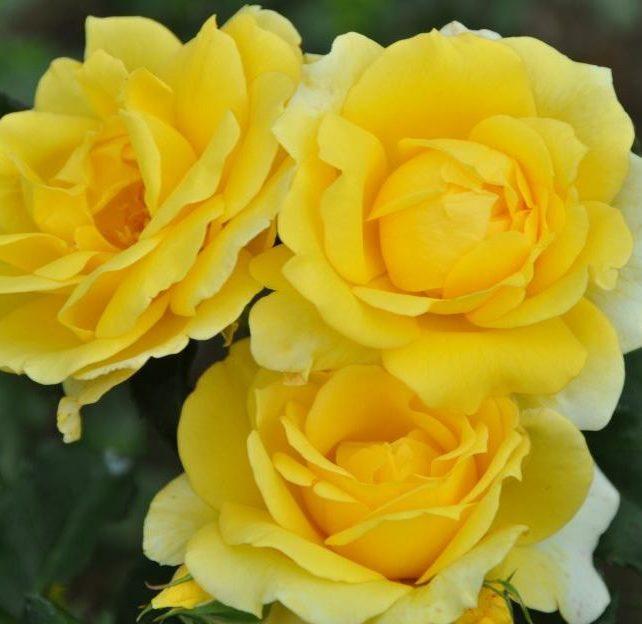
The bush grows to a height of 80-90 centimeters. Large buds, 8-10 centimeters in diameter, are yellow. Each flower contains 26-40 semi-double petals.
Advantages:
- decorativeness;
- long flowering;
- does not fade from bright sunlight.
Flaws:
- when the flower opens, the center is visible;
- If moisture gets on the crown, it can become infected with black spot.
Floribunda rose Gold Bunny is used to create borders and flower beds.
Aspirin Rose
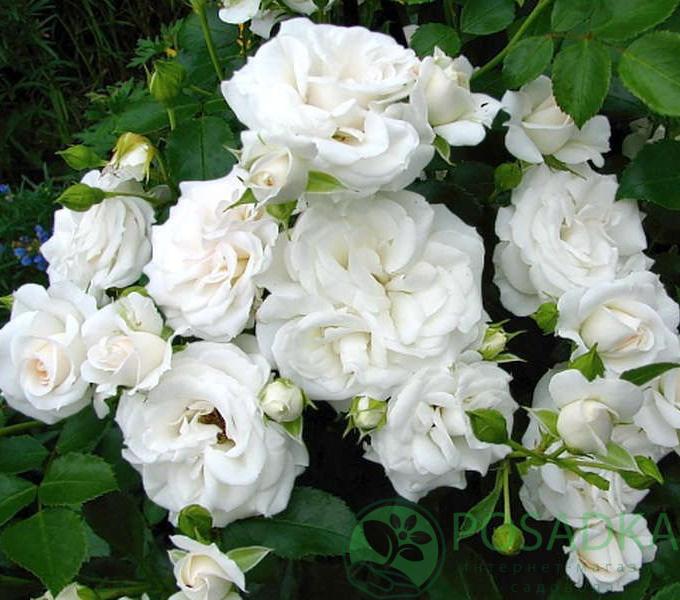
The bushes grow to 50-80 centimeters. The buds are white with a slight pink tint. Each inflorescence produces 5-15 buds, each 5-6 centimeters in diameter.
Advantages:
- good immunity;
- there is no wild root shoots;
- abundant, long-lasting flowering.
Flaws:
- small flower diameter;
- the middle is revealed in the dissolution.
The variety is used to create hedges and plant along garden paths.
Arthur Bell
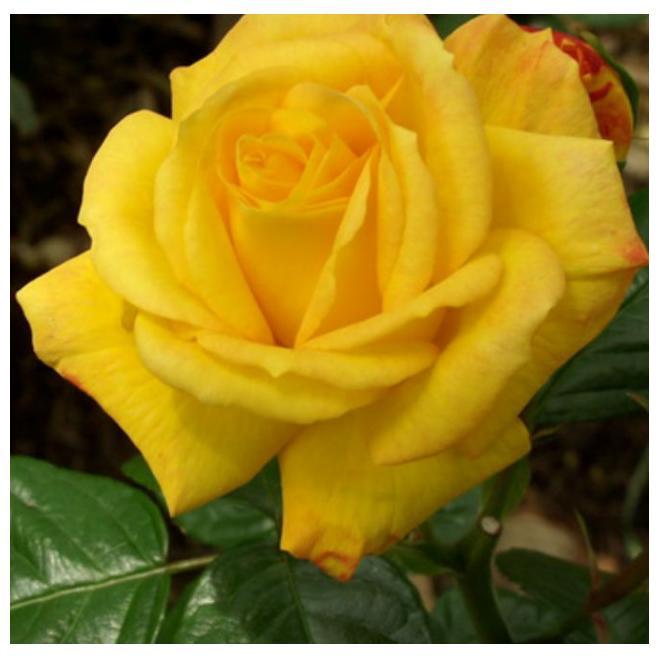
The bushes don't exceed 1 meter in height. The buds consist of 20-25 petals. The inflorescences are yellow. With proper care, a second flush of blooms occurs in late summer.
Advantages:
- good immunity;
- rich aroma;
- long flowering.
Flaws:
- the buds fade from the bright rays of the sun;
- small number of petals in a bud.
The Arthur Bell rose is planted in a rose garden, combined with low-growing ornamental plants.
Maria Theresa
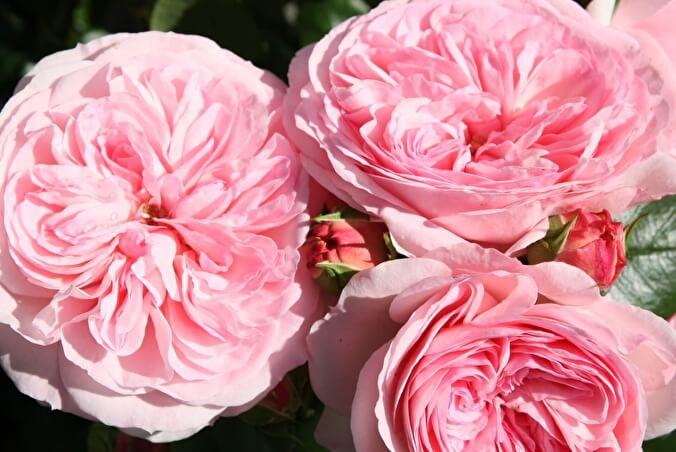
The plant grows 60-80 centimeters tall and 40-50 centimeters in diameter. The peony-shaped buds, 7-8 centimeters in diameter, are a soft pink. Three to five flowers form on the stem in a cluster.
Advantages:
- repeat flowering;
- has good immunity;
- heat-resistant.
Flaws:
- poor frost resistance;
- At an early age it bends downwards under the weight of the inflorescences.
Maria Theresa is grown in flowerbeds and borders.
Midsummer
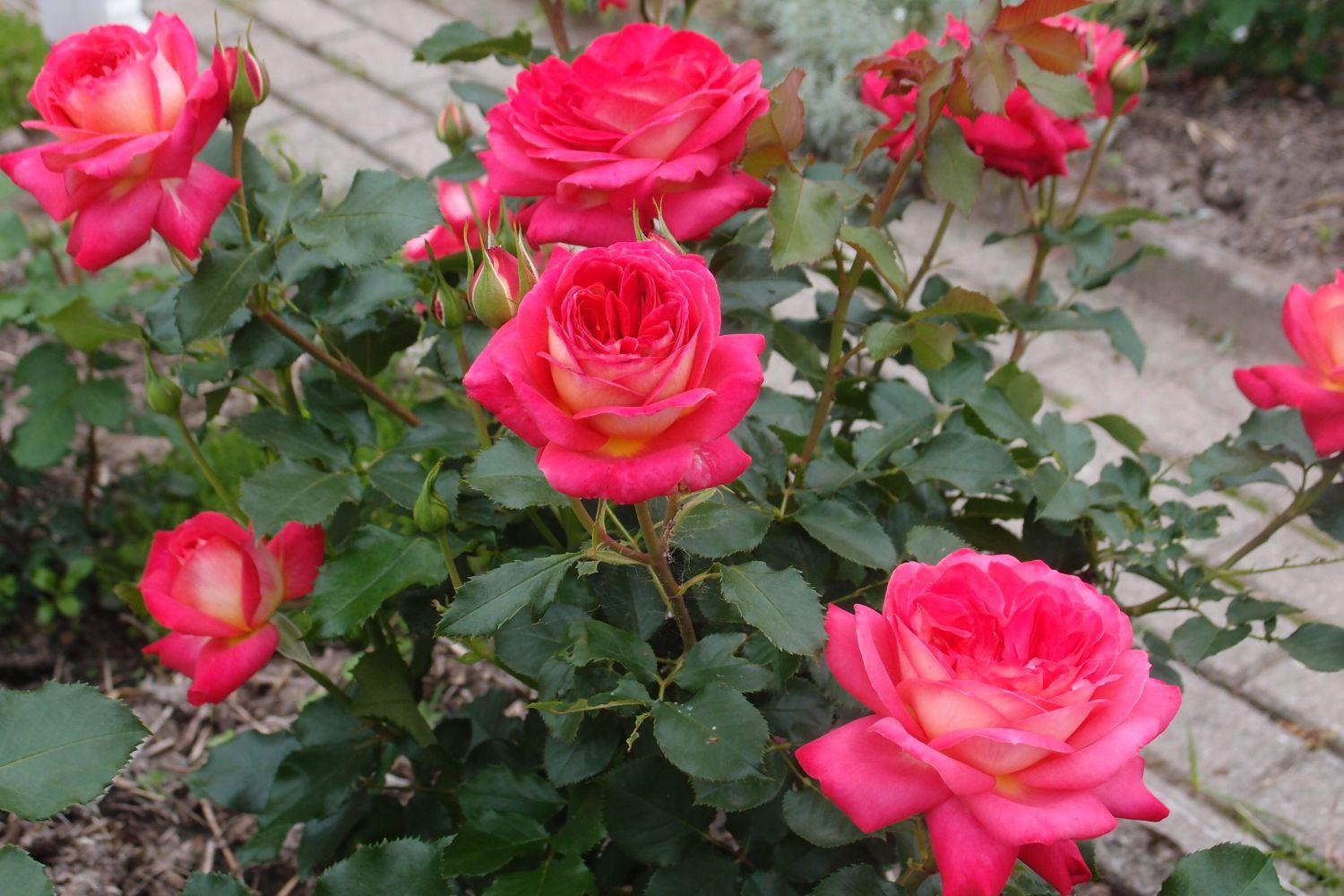
The bushes grow to a height of about 1 meter. Two to nine flowers grow on a shoot. The buds are about 8 centimeters in diameter and orange-red. The bases of the petals are yellow.
Advantages:
- strong peduncles;
- endurance;
- beautiful appearance.
Flaws:
- rapid bud opening;
- repeat flowering is weak.
Floribunda rose Midsummer is used in single and group plantings.
Alotria
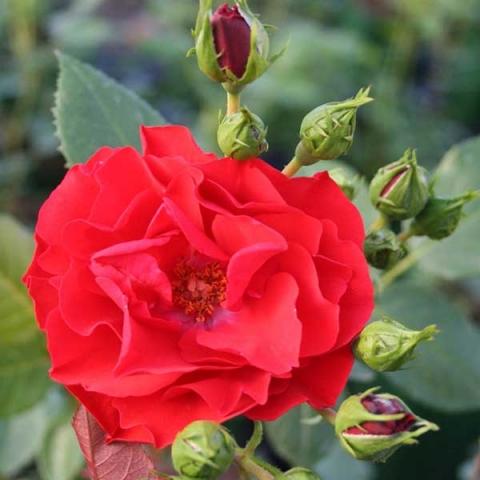
The rose stem reaches a height of 70 centimeters. It bears an inflorescence of 3-8 buds. The flowers are spectacular at all stages of bloom. The petals are scarlet, sometimes bright orange.
Advantages:
- juicy color of buds;
- used for cutting;
- long flowering.
Flaws:
- presence of thorns;
- average disease resistance.
The Alotria rose is used to decorate garden paths and flower beds.
Coco Loco
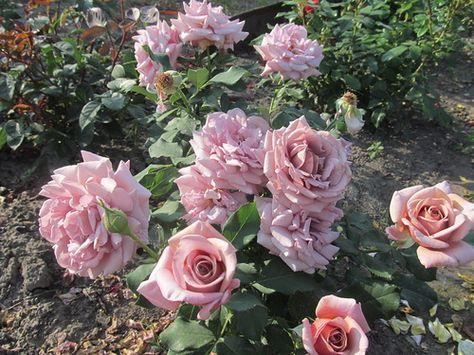
The bush grows 75-90 centimeters tall. Each inflorescence contains 1-3 lavender-colored buds. As they fade, they turn coffee-colored. The flower consists of 26-40 petals.
Advantages:
- a light candy aroma emanates from the bushes;
- good immunity;
- abundant flowering.
Flaws:
- as they fade, the buds acquire a dirty color;
- There are thorns on the shoots.
Floribunda rose Coco Loco is used in group and individual plantings.
Freesia
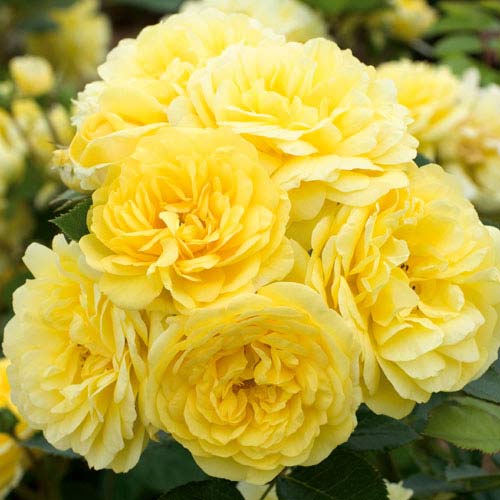
The bushes reach a height of 70-80 centimeters. Bright yellow flowers form on sturdy shoots. They can grow singly or form clusters of 3-7 buds.
Advantages:
- the variety is resistant to diseases;
- the flowers are bright and fragrant;
- Flower shoots can be used for cutting.
Flaws:
- without shelter in a harsh winter it can freeze;
- the flower opens quickly.
Freesia roses are planted in flowerbeds, borders, and combined with more modest plants.
Samba
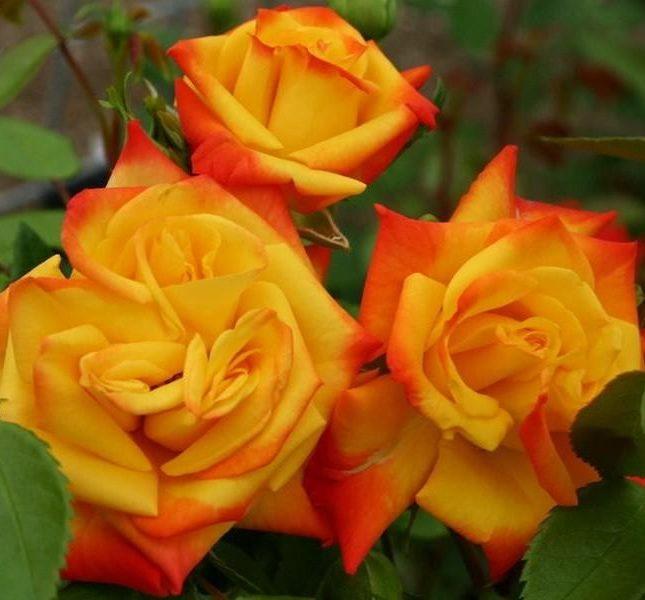
This rose grows compactly, reaching 40-60 centimeters. Semi-double buds form on the stems. The flowers are initially bright yellow, then gradually turn a vibrant red. The hue changes from the petal tips.
Advantages:
- smart look;
- abundant and long-lasting flowering;
- the buds do not fade in the sun.
Flaws:
- freezes without shelter in cold areas;
- has no aroma.
Rose Samba looks beautiful next to conifers.
Iceberg
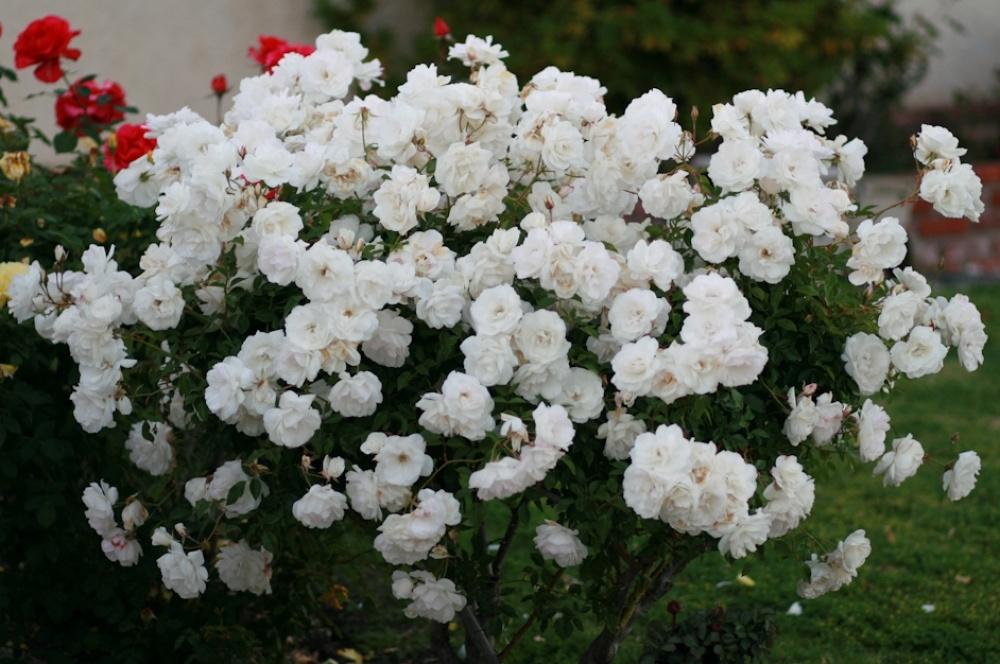
This is a climbing variety of floribunda. Its stems reach a height of 2.5 meters. The flowers are cup-shaped. The petals are double and pearly white. In cool summers, the bud may turn a soft pink.
Advantages:
- beautiful appearance;
- abundant flowering;
- unpretentiousness.
Flaws:
- under unfavorable conditions it can be affected by black spot;
- grows rapidly.
Floribunda rose Iceberg is used for vertical gardening of the area.
Love Song
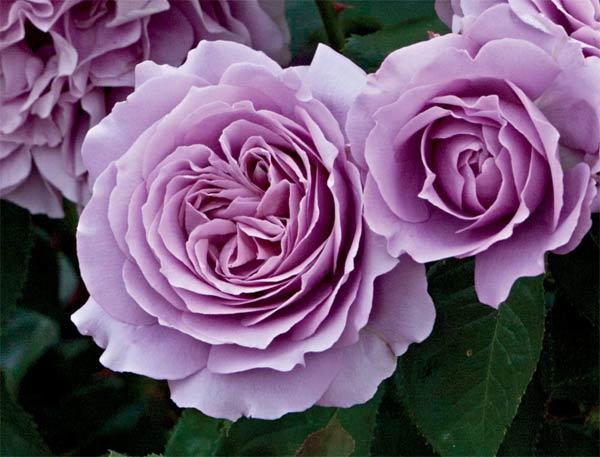
Rose stems reach a height of 120 centimeters. Lavender inflorescences, consisting of 1-5 buds, form at the tops. The flowers are 11-12 centimeters in diameter. Each bud contains 35-40 double petals.
Advantages:
- impressive appearance;
- re-flowering;
- The rose is disease resistant.
Flaws:
- does not tolerate harsh winters well;
- weak aroma.
Love Song blooms from June until frost.
Rumba
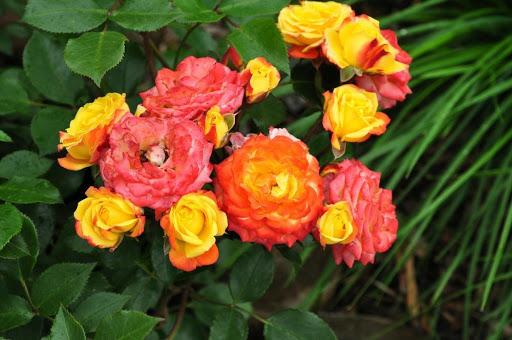
The plant's shoots reach a height of 60 centimeters. Yellow-red inflorescences consisting of 3-15 buds form on the stems. It blooms intermittently throughout the summer.
Advantages:
- beautiful appearance;
- abundant and long-lasting flowering;
- tolerates poor soils.
Flaws:
- freezes without shelter in northern regions;
- has no smell.
The variety's characteristics state that repeat flowering is as abundant as the initial one.
Recommendations for selection depending on the growing region
Any floribunda rose variety will thrive in warm climates. The south offers sufficient sun and light for abundant and long-lasting blooms. In colder climates, floribundas are best grown grafted onto the roots of hardy rose hips.
Experts recommend the most frost-resistant varieties for the northwest: Leonardo da Vinci, Deja Vu, Freesia, Arthur Bell, and Evelyn Fison. It's important to keep in mind that in this region, shoots need to be covered for the winter. With a frame, plants can withstand temperatures down to -35-40°C.
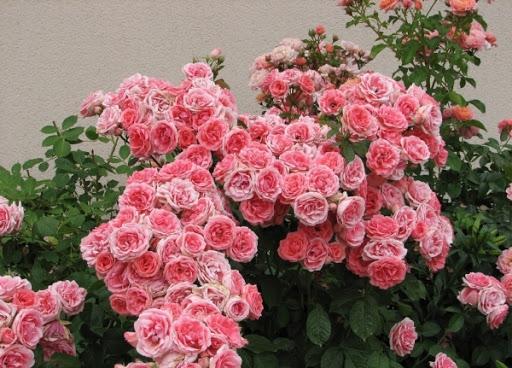
According to experts, the following frost-hardy rose varieties are suitable for central Russia: Brothers Grimm, Rotilia, Marie Curie, Aspirin Rose, Coco Loco, Leonardo da Vinci, and Flamentanz. Bush shoots should be heavily earthed up for the winter.
Planting roses
Carefully select both the seedlings and the outdoor planting site. This will ensure the rose quickly establishes itself and blooms profusely.
Site selection and preparation
Choose a sunny location for planting floribundas. It should be protected from cold winds. The groundwater level should be no more than 1 meter. It's best to have shade over the bushes during hot midday hours. This will prevent the buds from burning.
The area is cleared of debris and dug over. Loamy, permeable soil is selected. Heavy, clayey soil is lightened with peat and sand. Clay and garden soil are added to light, sandy soil. Otherwise, the root system will dry out quickly.
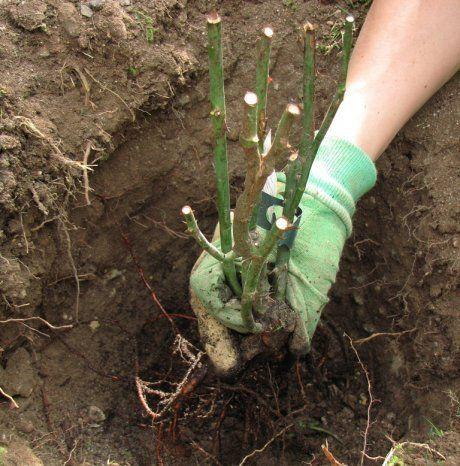
Nutrients are added to depleted soil. A hole is dug two weeks before planting. This allows the soil to settle slightly, preventing the root system from becoming too deep.
Timing and technology of planting
In northern regions, floribunda roses are planted in the spring, after the soil has warmed. Over the summer, the rose takes root well and develops foliage. The sturdy bushes easily survive frosty winters. In the south, they can be planted in spring or fall.

Planting roses is done as follows:
- dig a hole 60 centimeters deep and wide;
- the root system is placed in a container with water for 2-3 hours;
- after the specified time, the seedling is placed in the middle of the hole;
- cover with soil and water generously;
- too long shoots are shortened.
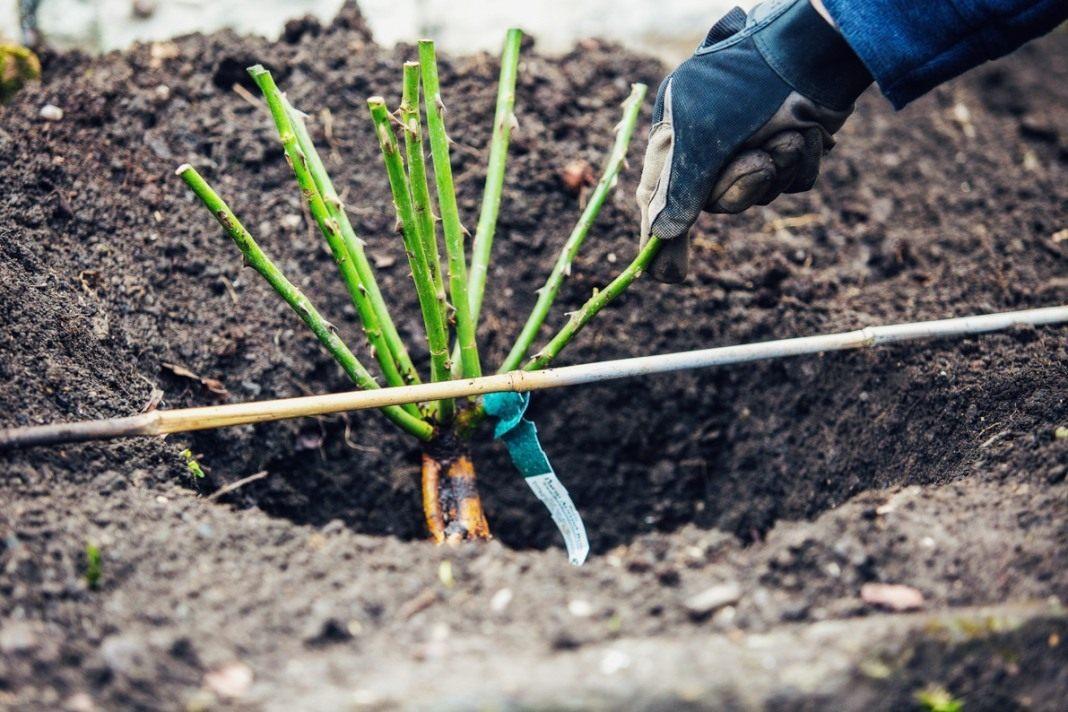
Important! When planting, deepen the root collar by 5-6 centimeters. Planting deeper will reduce the growth of the bushes.
Plant care rules
Floribunda care involves regular watering, fertilizing, mulching, and loosening the soil. To maintain its shape and ensure long-lasting blooms, pruning is done annually. If necessary, the bushes are covered for the winter.
Watering
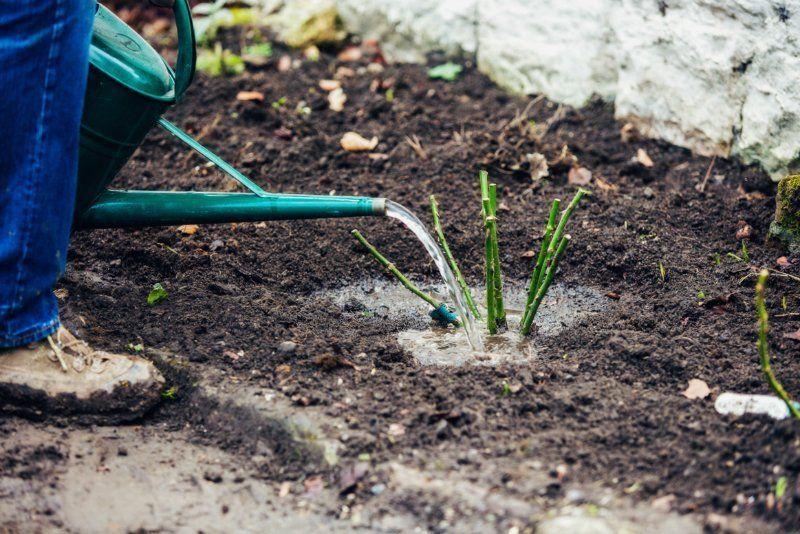
In hot weather, water the rose at least once a week. Add 15 to 20 liters of warm water under each bush. Avoid getting the foliage and buds wet, as this can burn them. Water the floribunda in the morning or evening.
Fertilizing bushes
In spring, before the leaves emerge, roses are fed with nitrogen. During budding and flowering, the plant requires increased potassium and phosphorus levels. It's best to use a complex mineral fertilizer that contains these nutrients prominently.
It's essential to feed roses after the first flush of bloom. Fertilized soil helps the bushes develop new shoots with blooming buds. A fall potassium fertilizer is essential for the plants to survive the winter. The nutrients are added to moist soil.
Mulching and loosening the soil
When planting, the root zone is sprinkled with compost, humus, straw, and grass clippings. Mulching helps retain moisture in the soil. Furthermore, weed growth is suppressed under the mulch.
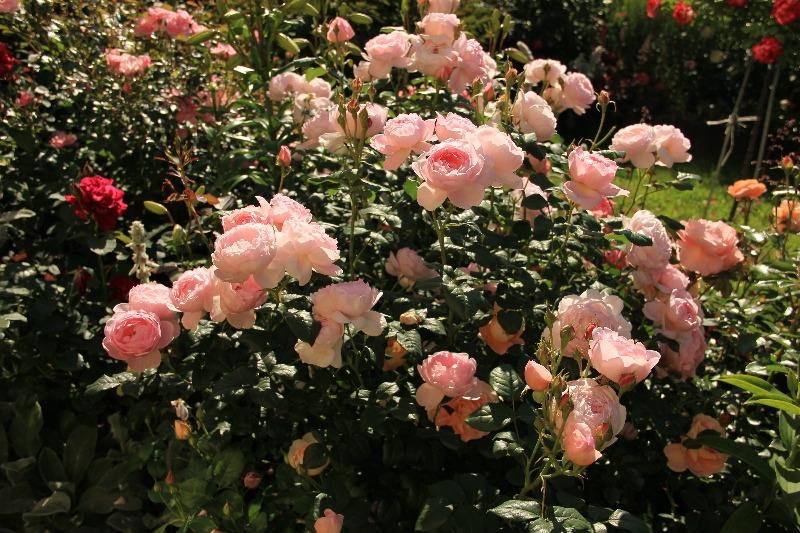
To allow air to reach the root system, the soil is loosened after watering. Weeds growing around the bushes, which carry diseases and pests, are also trimmed. This procedure is carried out carefully, taking care not to damage the root system.
Trimming
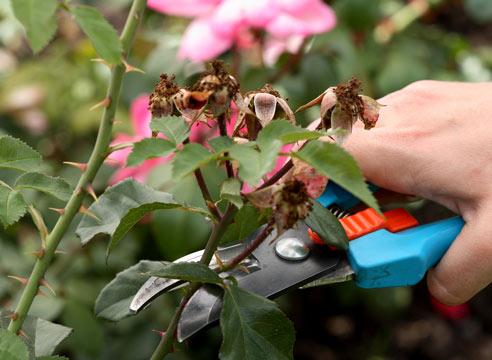
To promote abundant flowering, perform a combination pruning. This means cutting back older shoots low, while trimming back young shoots only slightly. This procedure is performed in the spring. Autumn pruning is necessary to remove thin, diseased, and dry shoots. After the first and second flushes of flowering, remove buds that are beginning to dry out.
Preparing for winter
In mid-autumn, floribunda roses are watered generously. Moist soil will reduce the root system's exposure to the damaging effects of frost. In the south, in late autumn, the bushes are earthed up with garden soil and then covered with spruce branches. In the north, a structure is erected over the bushes and covered with agrofibre or spunbond. This cover will protect the roses from freezing of the roots and shoots. As soon as the sun warms the spring, the covering is removed to prevent the plants from rotting.
Important! To ensure a successful wintering of floribundas, water them to replenish moisture in mid-October.
Protection from insects and pests
Floribunda roses have good immunity. However, if improperly cared for or exposed to unfavorable climatic conditions, they can be susceptible to certain diseases and pests. Special preparations are used for prevention and treatment.
Black spot
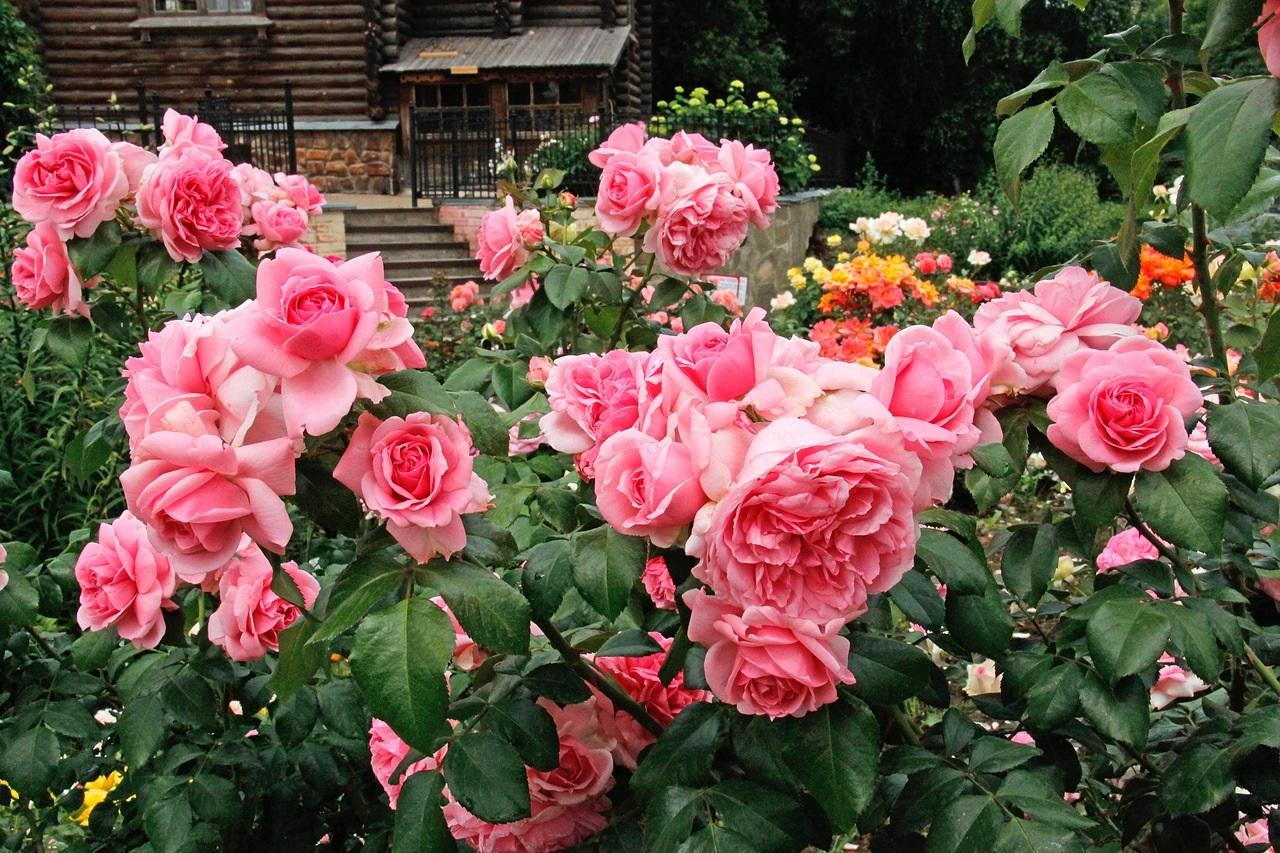
This is one of the most common crop diseases. It appears in dense plantings, with overwatering, and with insufficient or excessive fertilizer. The disease manifests itself with the appearance of brown spots that gradually turn black. These spots gradually merge.
Affected plants grow slowly, shed their leaves, and can freeze in winter. If black spot appears on a plant, first remove all affected parts. Then, treat the floribunda rose with a fungicide.
Rust
This disease manifests itself as yellow spots on stems, leaves, and buds. It spreads rapidly. If left untreated, it will reappear the following year. Excess nitrogen in the soil and high humidity contribute to the disease's development.
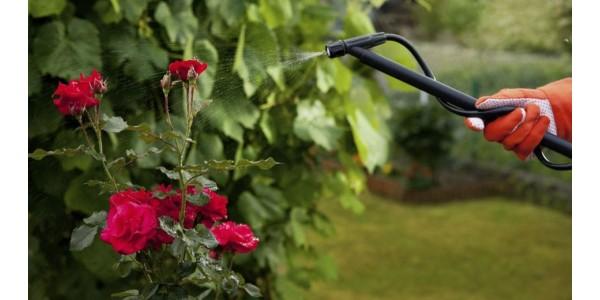
As a preventative measure, in early spring and then several times throughout the season, the bushes and soil are treated with copper-containing preparations. Additionally, to prevent rust, the bushes are thinned in the spring and summer, and plant debris is removed from the root zone in the fall.
Powdery mildew
The disease manifests itself as a white coating on leaves and shoots. Pathogens are triggered by rainy weather, contact between roses and other infected plants, and sudden fluctuations in daily temperatures.
Green rose aphid
The insect appears on young shoots. Rose aphids feed on the plant's cell sap. As a result of their negative effects, leaves curl, shoots become deformed, and buds fail to open.
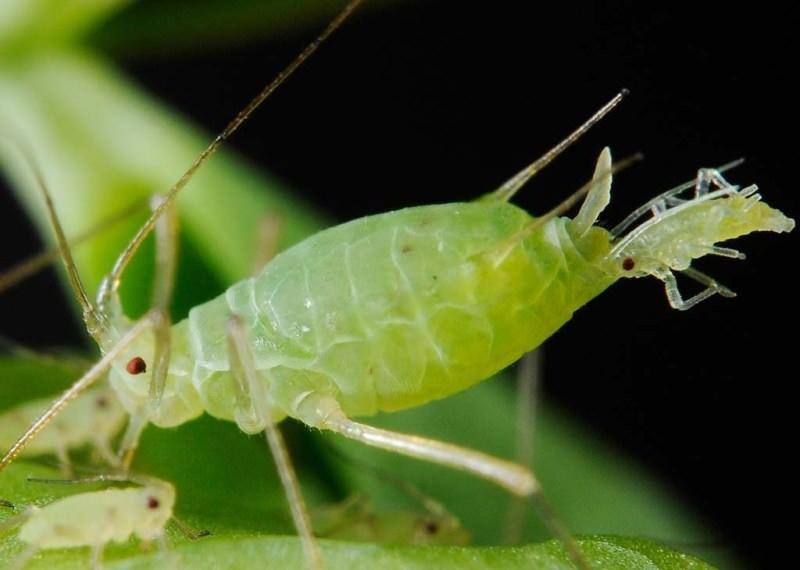
The insect reproduces quickly. It can be controlled with insecticides such as Karbofos, Actellic, Agraverin, and Fitoverm. Planting lavender and savory near roses can help repel aphids. The plants' aroma will repel the insects.
Bronze beetle
These beetles infest buds, eating away at the petals. The rose chafer's larvae nest in plant debris. Therefore, leaves and dry grass from the root area must be removed. Rose chafers are removed from flowers by hand.
Rose sawfly
The larvae cause damage to the plant. The parasites feed on young rose shoots from the inside. The stems gradually wither and dry out. Affected branches are pruned, and the bushes are sprayed with an insecticide. To kill the larvae during the winter, the soil under the plants is dug up in the fall.
Please note! Plants should not be treated with chemicals during the flowering period. Otherwise, pollinating insects may die.
Methods of reproduction
Floribunda roses are easily propagated by cuttings and layering. Experienced gardeners typically use rosehip root grafting.
Cuttings
The procedure is carried out as follows:
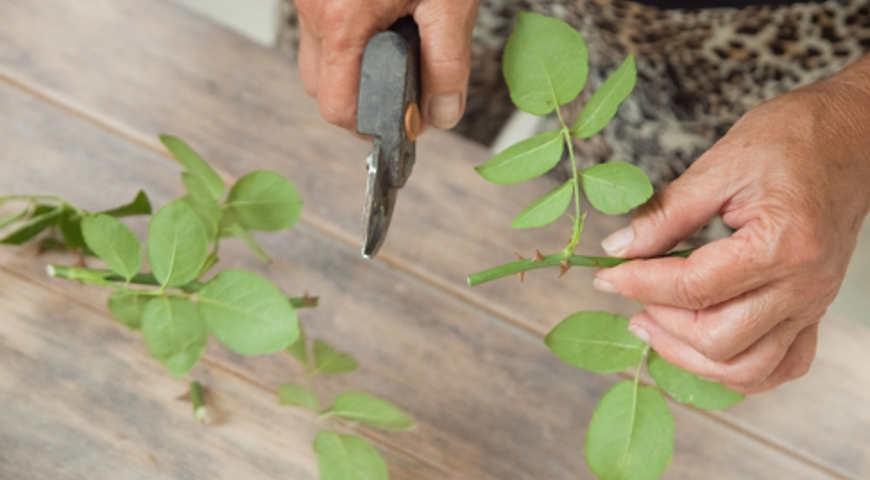
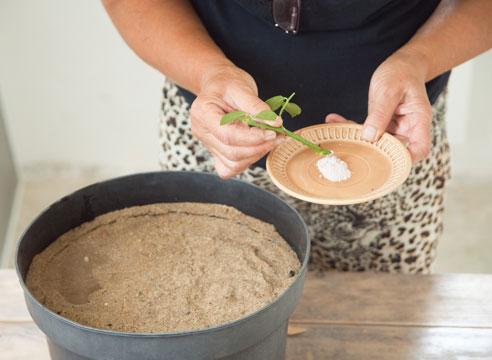
- cuttings 10-15 centimeters long are cut from lignified shoots;
- thorns and leaves are removed from the bottom;
- the cuts are powdered with a growth enhancer;
- planted in open ground, watered;
- cover with transparent film.
The mini-greenhouse is insulated for the winter. The following year, the bushes are transplanted to a new location.
Layering
This method is used to propagate floribundas with long shoots. To do this, dig furrows and lay the stems, stripped of leaves, in them. They are then watered and covered with soil. Throughout the season, the cuttings are tended to: watered, the soil loosened, and weeded. The following year, they are separated from the parent plant and planted in their permanent location.
Difficulties arising from improper care
Inexperienced rose growers make some mistakes when growing floribundas. These mistakes result in poor growth and poor blooms. The main difficulties faced by novice rose growers are:
- The plants froze over the winter. The problem arises from late autumn planting and inadequate shelter in cold regions. Roses are planted a month before the expected frost.
- The bushes are rotted. This problem is discovered when the covering material is not removed in a timely manner. It should be removed in the spring at the first rays of sun.
- The rose is growing slowly. Perhaps the soil is depleted of nutrients, or the rose was planted in the wrong location.
- Weak flowering. This problem occurs when the plant is overfed with nitrogen. Another cause is failure to trim the buds after the first flush of flowering.
- The bushes are developing poorly. This can happen if the root collar is too deep. It should be 5-6 centimeters below ground level.
- Spots of various colors appear on the leaves. This indicates that the plant is infected with pathogenic microorganisms. Fungicide treatment is necessary.
Floribunda is a rose that, with proper care, blooms several times per season, is winter-hardy, and has a strong immune system. With proper gardening practices, it will delight with its blooms from early summer until late fall.
Related posts:
 Top 7 varieties of shrub roses, their planting and care in open ground for beginners
 Growing Climbing Roses and the Top 10 Varieties, Planting, and Care in the Open Ground
 Top 50 best new rose varieties of 2025 with descriptions and characteristics
 Description of the Cordana rose, planting and care at home
 How to plant roses in autumn and at what distance, and further care
 Top 16 Best Hybrid Tea Rose Varieties: Planting and Care in the Open Ground
 Top 4 indoor rose varieties, their cultivation and care at home
 Planting and caring for park roses in open ground, growing rules