
- Features of indoor roses
- The most beautiful varieties and types
- Eleanor
- Pixie
- Baby Carnival
- Bengal rose
- How to choose the right indoor rose in the store
- Do I need to repot it immediately after purchase?
- Recommendations and rules for plant care
- Choosing a location
- Room temperature and humidity
- Watering regime
- How and what to feed a rose bush with
- Trimming
- Rest period
- Transfer
- What diseases do indoor plants suffer from?
- Will a rose bloom with proper care?
- Methods of reproduction
- In the water
- In the soil
- Problems in growing plants
- Drying out
- Yellowing of foliage
- The leaves wither and fall off
Rose lovers don't want to part with their roses after the summer season ends. Gardeners successfully cultivate these prickly beauties indoors. Many varieties have been developed for indoor cultivation. Indoor roses are renowned for their long flowering period and the exquisite beauty of their buds. Let's look at the care instructions for varieties and cultivars suitable for growing on windowsills, the specifics of propagation, and potential problems.
Features of indoor roses
The indoor rose is a member of the Rosaceae family. It is as beautiful as its outdoor counterparts, but thrives indoors—in a limited space and with a small amount of soil in the pot.
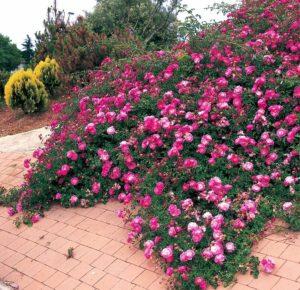
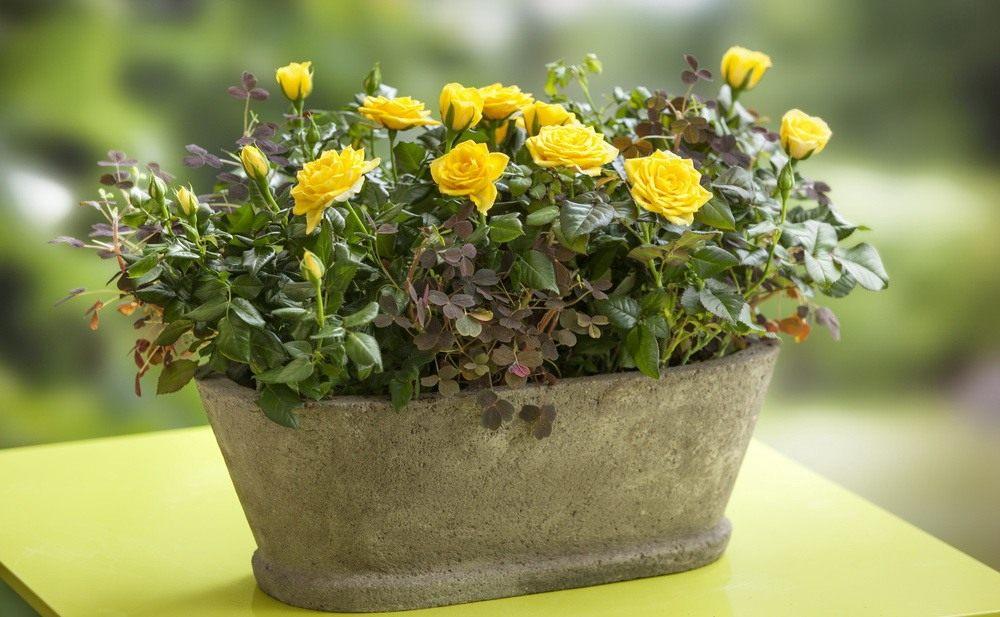
Compactness and miniature size are the main characteristics of indoor roses. The buds come in a variety of colors and are no less vibrant than those of flowers grown outdoors. Different types of roses can be grown indoors:
- bush;
- standard;
- climbing;
- ground cover.
Caring for roses at home doesn't require protection from adverse weather conditions, but creating a comfortable environment is essential for lush and abundant blooms. Many varieties have a strong fragrance, so those who are sensitive to odors should avoid them. Some indoor varieties bloom repeatedly throughout the year and do not require winter dormancy. Every 2-3 months, the bush produces new buds. The bushes are usually no more than 60 centimeters tall, with dense stems that hold the foliage and buds well. The foliage is bright or dark green, with pointed tips. The buds vary in shape, and the open flower reaches 1.5-5 centimeters.
The most beautiful varieties and types
The most popular and widespread are bush roses. They fit comfortably on windowsills or in large floor pots. Pots serve as an additional decorative element. Let's consider which indoor roses are most beloved by gardeners.
Eleanor
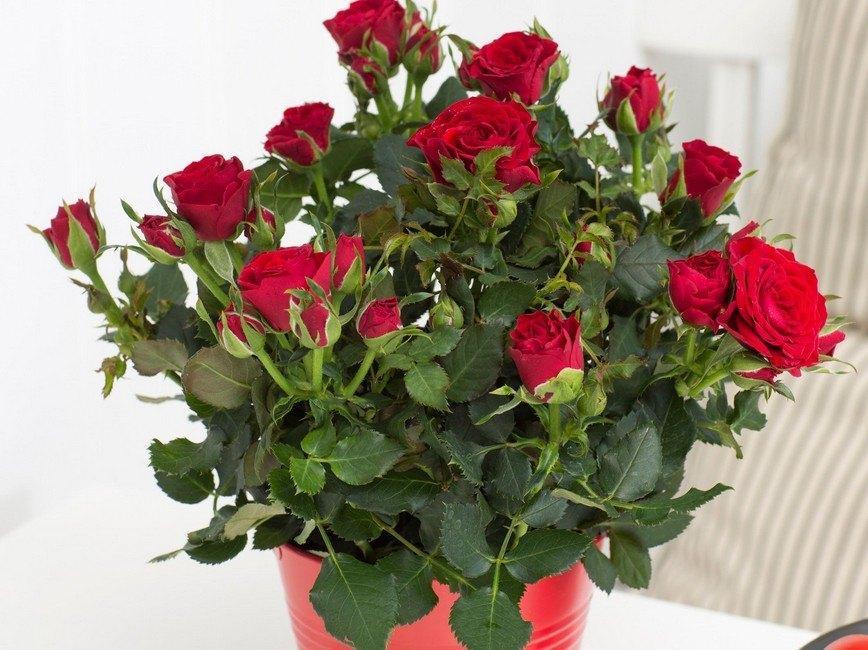
The Eleanor variety is a wonderful choice for a small space. It grows compact and sturdy, reaching a height of no more than 30 centimeters. The flower boasts a pinkish-coral hue to its petals, reaching 3 centimeters when fully open. The unopened buds have a pointed, elongated shape, a favorite among many gardeners.
The buds are gathered in lush inflorescences of 10-15. The aroma is weak and inconspicuous, making the Eleanor variety suitable for apartments where not all household members appreciate the scent of roses.
The variety is used for growing at home and in garden plots in the southern regions.
Pixie
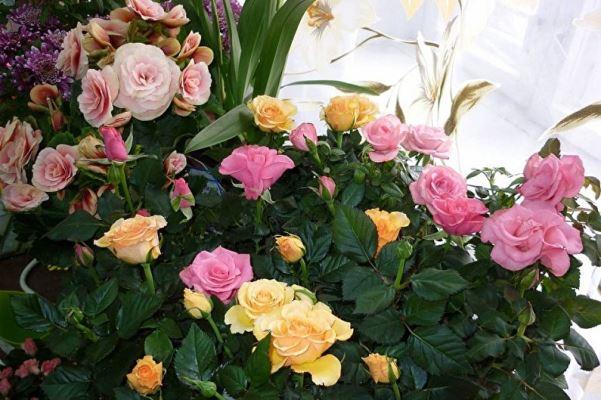
A miniature ornamental rose with a compact bush, not growing taller than 20 centimeters. The small plant bears fine foliage and 1.5-centimeter-diameter rosettes. The flowers are faintly scented, with white petals that are pink at the base.
Pixie thrives outdoors and tolerates cold winters. It's also used as a border plant in flower beds.
Baby Carnival
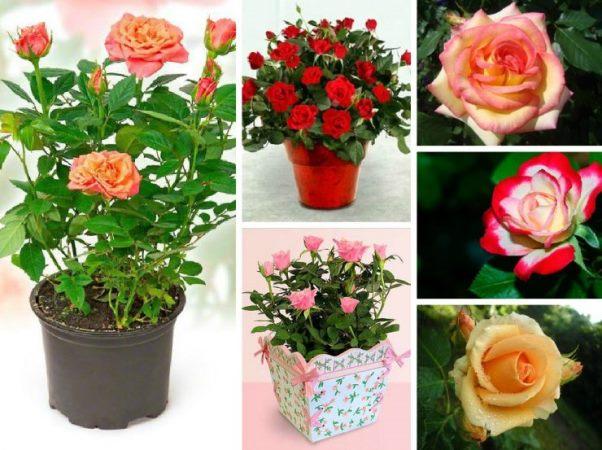
The indoor rose Baby Maskerade grows up to 30 centimeters. Its branched stems are virtually thornless. The chameleon-like flowers change color from yellow-gold to pink and red. The flowers are double and grow up to 3-5 centimeters.
When planting outdoors, you need to choose a sunny location.
Bengal rose
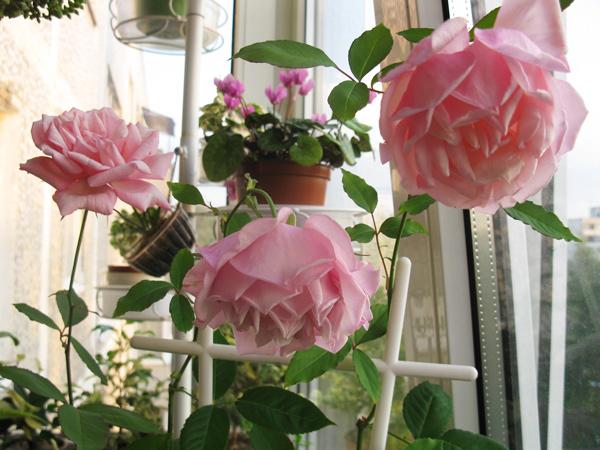
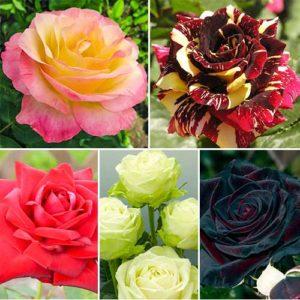
The Bengal rose bush can grow up to 50-60 centimeters. Flowering lasts from May to October, and the bush remains decorative in winter as it does not shed its leaves.
This variety of house rose is distinguished by its large flowers, reaching up to 5 centimeters when fully open. The petals come in a variety of colors—white, pink, coral, and red. The flowers stay fresh for up to 10 days.
Many varieties of Bengal roses have been developed for indoor cultivation. Miniature varieties such as Angela Rippon, Yellow Doll, and Fire Princess are particularly popular.
How to choose the right indoor rose in the store
When purchasing roses for home growing, you should go to a reputable specialist store. When purchasing, be sure to check the plant variety to determine proper care.
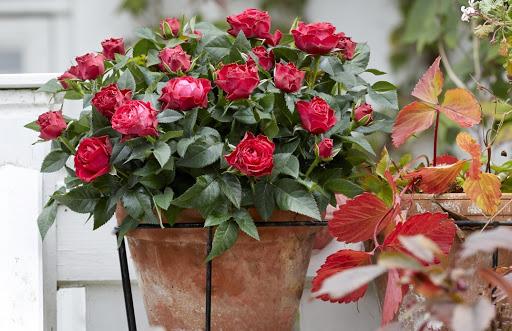
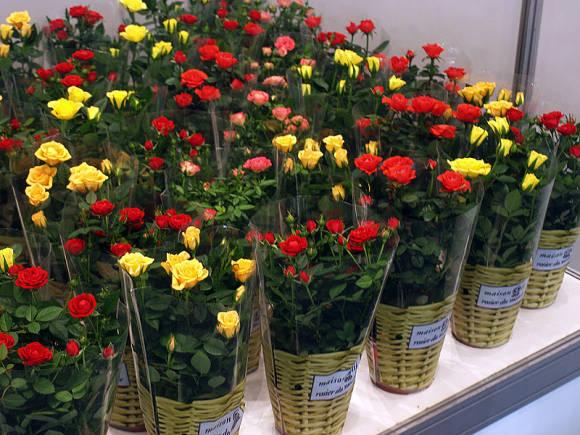
Avoid choosing a plant with a large number of buds and flowers, as you'll have to discard them anyway. Remove the pot from its packaging to inspect the bush. What does a healthy plant look like?
- a strong, symmetrical bush without damaged branches;
- foliage – bright, shiny, green, without creases or signs of wilting;
- the leaves do not fall off when lightly touched.
Leaves should be lifted and inspected from the underside—that's where pests usually hide. A large number of buds often indicates not the health and vigor of the bush, but rather active stimulation of growth. The use of growth stimulants often leads to the death of roses immediately after flowering.
Do I need to repot it immediately after purchase?
Let's look at the sequence of care for a purchased rose:
- After removing the packaging, the bush is carefully inspected - damaged branches are trimmed, and the presence of pests and rot is checked.
- Buds and flowers are cut off with pruning shears - flowering caused by stimulants will exhaust the plant, and the bush will not have enough strength to develop normally.
- The rose is washed under the shower or in a basin, adding a little soap.
- If insects or fungi are detected, they are treated with insecticides or fungicides, and sprayed with protective preparations Fitoverm or Epin.
- The rose is sent to a quarantine zone away from other flowers for 2 weeks.
- After the quarantine is over and the flower has adapted to the conditions of the new room, the bush should be replanted, replacing the soil.
- The rose is transferred to a permanent pot, shaking the soil from the roots.
- If there are several bushes with independent roots in a container, each one should be planted in a separate pot.
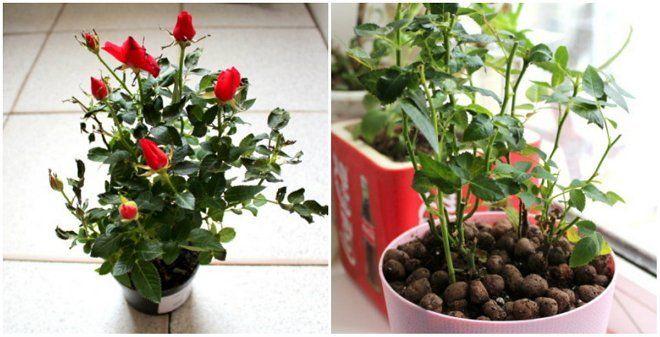
Place the container in a location sheltered from direct sunlight and provide warmth and water. Once it's clear the flower has taken root and the first shoots have appeared, move the pot to its permanent location.
Recommendations and rules for plant care
Many gardeners consider the rose a capricious beauty that requires special attention both outdoors and indoors. Its blooms will be lush and long-lasting if you care for the plant regularly, observing seasonal conditions and proper agricultural practices.
Choosing a location
Choose a bright, sunny room for your rose—from the south, east, or west. During periods of intense midday sun, shade the plant with a light curtain. The container can be placed on a windowsill, being careful not to crowd the rose with other flower pots. Hang pots with climbing varieties close to the window and direct sunlight.
During the heating season, it's best to remove the rose from the windowsill or carefully cover the radiators with shields or thick blankets—roses don't like hot, dry air. In the summer, indoor rose containers can be moved to the balcony, garden, or loggia.
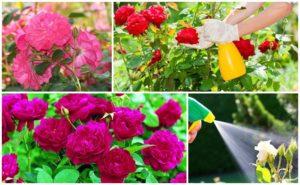
Tip: To ensure uniform growth of the bush and distribution of buds, it is useful to turn the pot towards the light in different directions.
Room temperature and humidity
For a comfortable life, the flower requires the following conditions:
- air temperature – 20-25 °, not lower than 15 °;
- humidity – not less than 45-50%.
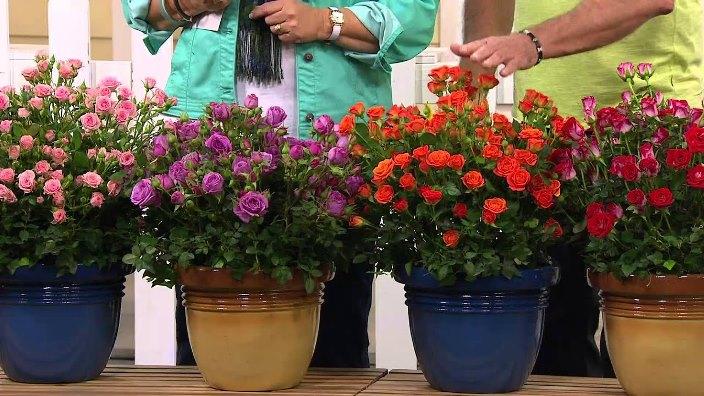
In a dry room, I mist the rose 1-2 times a day. A shower every two weeks is beneficial. The room should be regularly ventilated, protecting the plant from drafts.
Watering regime
Roses' seasonal development requires a specific watering regime. Basic watering guidelines:
- water temperature should not be lower than room temperature, and should be left to stand for at least 24 hours;
- regular watering, do not allow the soil to dry out;
- in spring, when the plant emerges from dormancy, watering is increased (100-150 milliliters per bush);
- in summer, during the active growth of buds and flowers, watering should be maximum - in hot weather up to 200 milliliters per bush (before the next watering, the surface layer of soil should dry out);
- towards the end of flowering and a decrease in room temperature, watering is reduced.
Roses react poorly to excess moisture, as the roots can rot. Before watering, check the soil moisture by lightly digging the soil. Flowers placed outdoors can be watered twice—morning and evening. If the container is small, the soil dries out more quickly, so take this into account when watering.

How and what to feed a rose bush with
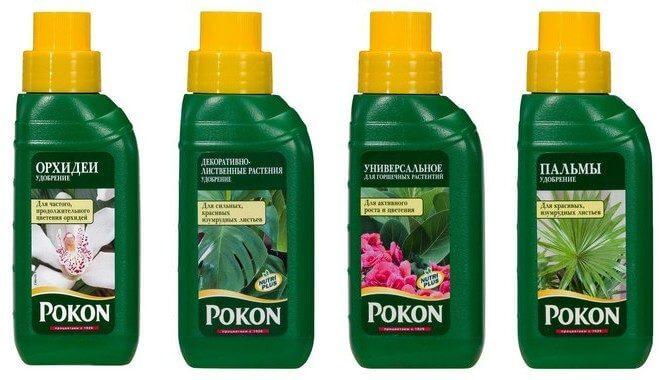
During periods of intensive growth, indoor roses require regular fertilizing to help the plant establish and produce lush blooms. Fertilizers can be applied both in the soil and foliarly. Ready-to-use preparations such as Pokon, Ideal, and Agricola are particularly popular. They are applied every 7-10 days after watering.
Gardeners often divide the weekly dose into portions and apply it daily, finding this method more effective. By the end of summer, the frequency of fertilizing is reduced. Roses do not require fertilization in the following cases:
- in winter, during the dormant period;
- for any diseases and pest infestations;
- in the first month after transplantation.
Flowers placed outside can be fed with organic matter (bird droppings, manure).
Trimming
During active growth, trim damaged shoots and remove remaining flowers. Scheduled pruning is performed before the plant enters winter dormancy. Branches are trimmed with pruning shears at a 45° angle, leaving five buds on the stem. If pre-winter pruning is not performed, it can be done in the spring, before the plant's vigorous growth begins. Without pruning, the bush ages, becomes unsightly, and will not bloom abundantly.
Rest period
For the winter, the plant is placed in a cool room with a temperature of 4-10°C. Insulated balconies and loggias are suitable for this purpose. Covering the plant with plastic is not recommended to prevent rot. Water only when the soil becomes dry, and mulching is beneficial. In mid-February, the plant is moved to a warm room, gradually increasing the temperature, and intensive care begins.
Transfer
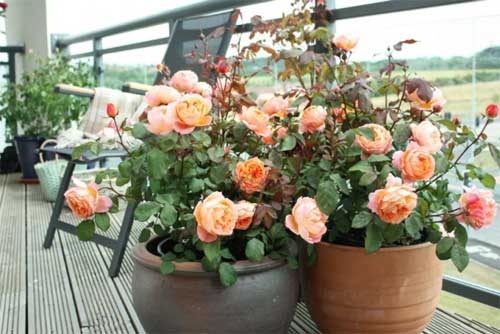
Young roses are repotted annually, while mature plants are repotted every 2-4 years. The best time is spring (before active growth begins). Add a drainage layer to the pot. Without exposing the roots too much (this will harm the rose), remove the top layer of soil, and transfer the plant from its container to a new container. Add soil (a special rose potting mix), level the bush, and firm it with your hands.
Advice: after replanting, it is useful to water the plant with growth stimulants and phytohormones – Epin, Zircon.
What diseases do indoor plants suffer from?
Diseases develop due to improper care, contamination of houseplants from purchased soil, and new plants. If roses spend part of the season outdoors, they can easily become infected. Dangerous fungal diseases include:
- Powdery mildew is a whitish coating on the upper part of the leaf, similar to lime mortar;
- rust – red spots and bumps on leaves, stems, buds;
- Gray rot - progresses during wintering.
For treatment, use antifungal agents (Fundazol, Abiga-Peak), carefully cut out damaged areas of the plant, and disinfect the soil. Spider mites, thrips, and aphids are the most common pests that attack rose bushes. To prevent widespread infestation, inspect the plants regularly and wash the foliage with a soapy solution every 2-4 weeks.
To remove pests, use insecticides and acaricides (Masai, Sanmite, Aktara) in accordance with the instructions.
Will a rose bloom with proper care?
To ensure a rose blooms, it needs proper care:
- winter dormant period with low temperatures;
- timely watering without excess moisture, lighting, warmth, fertilizing;
- sufficient space for growth.
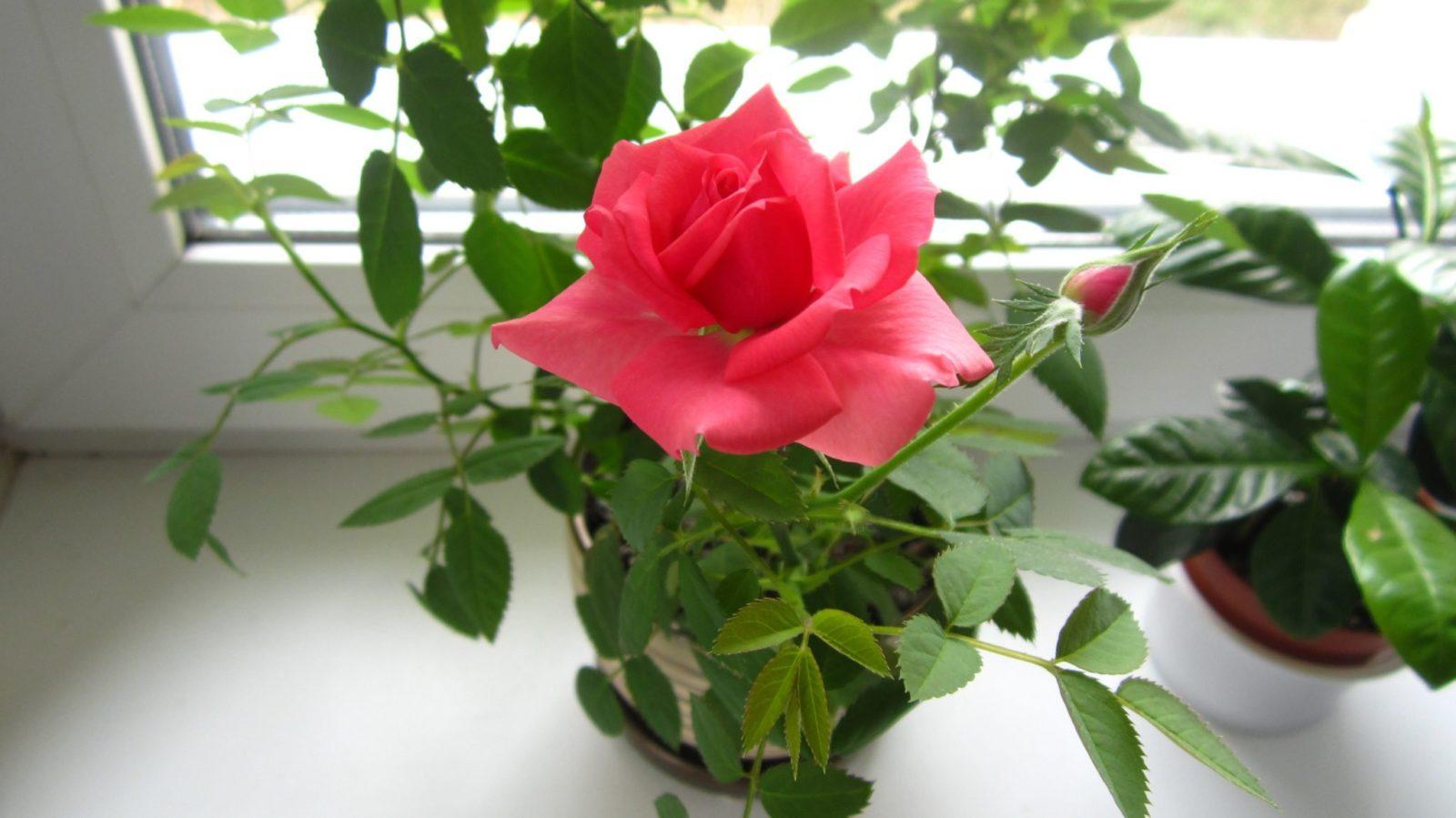
Roses bloom from May to October, with short breaks, under proper care. Diseases and pests, micronutrient deficiencies, and a small pot that doesn't accommodate the root system can interfere with flowering.
Methods of reproduction
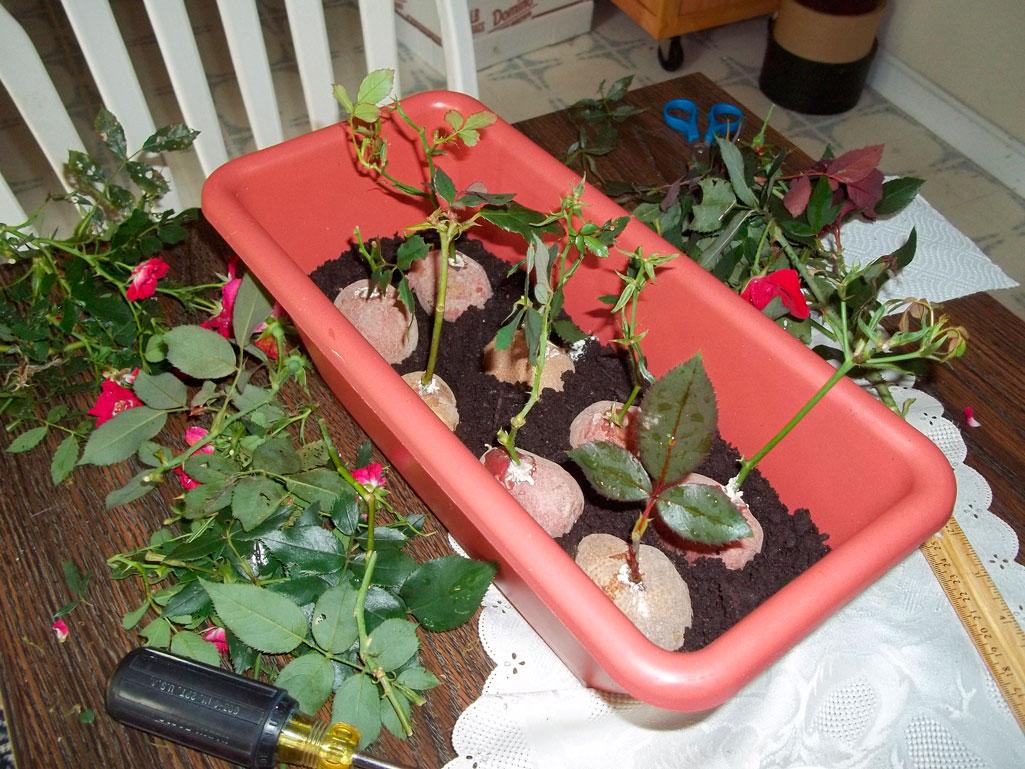
All varieties of this flower are easily propagated vegetatively, using cuttings. It's convenient to combine propagation with spring or fall pruning. This way, you won't have to prune the shoots. For planting, select a semi-woody stem 10-15 centimeters long with 3-4 buds. Carefully trim off the lower leaves.
In the water
Prepared cuttings are placed in a small container of settled water. The container is placed in a warm, well-lit area. Rooting is accelerated by adding rooting stimulants (such as Kornevin) to the water.
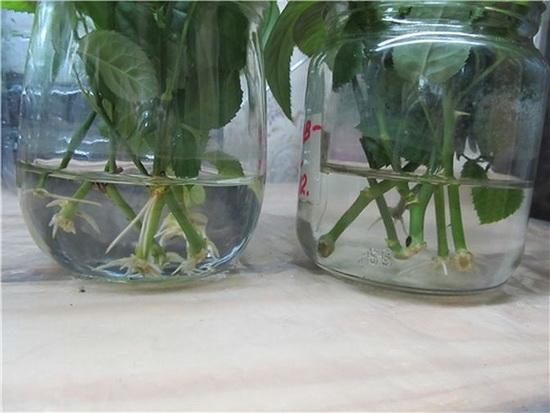
Monitor the liquid level in the glass and top up as needed. Roots appear in 2-3 weeks. To root the young seedling, prepare the soil and plant the cutting in a small pot. When shoots begin to grow, transplant the rose into a larger pot.
In the soil
The soil substrate for the cutting is prepared from a mixture of sand and peat. It is placed in a small container with drainage and moistened. Before planting, the cutting is soaked in a Kornevin solution for 30 minutes. The seedling is covered with a transparent dome to create a greenhouse effect. It takes 2-3 weeks for the flower to root.
Problems in growing plants
House roses, like all potted plants, suffer from dry or overly humid air in apartments, improper watering, and insufficient pot space. Let's look at the most common problems faced by gardeners.
Drying out
The bush may dry out for the following reasons:
- insufficient and rare watering;
- on the windowsill or near it – from overheating by radiators;
- damage to roots by fungi or soil pests.
The flower is provided with moisture, sprayed, and vessels with water are placed nearby.
Yellowing of foliage
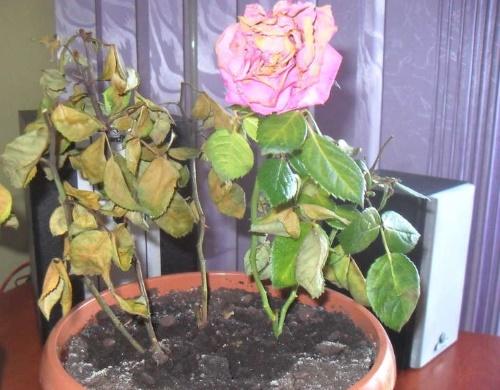
Leaves turning yellow and falling off are usually due to a lack of nutrients. The soil needs to be enriched with fertilizers containing a complex of micronutrients, and the pot size should be increased in a timely manner. Another cause is excess moisture and stagnant water.
The leaves wither and fall off
Wilting of leaves and stems occurs for a number of reasons:
- frequent drafts, streams of cold air;
- overwatering the flower, leading to root rot;
- pests.
Leaves lose turgor if the flower does not have enough moisture, the air is too dry, or spraying is too infrequent.
Charm and abundant, long-lasting blooms are the main advantages of indoor roses. Gardeners who have mastered the challenging process of growing these vibrant beauties can admire them for up to six months. The joy these gorgeous flowers bring is worth the effort.
Related posts:
 Top 7 varieties of shrub roses, their planting and care in open ground for beginners
 Top 12 Floribunda Rose Varieties: Planting and Care in the Open Ground
 Description of the Cordana rose, planting and care at home
 Growing Climbing Roses and the Top 10 Varieties, Planting, and Care in the Open Ground
 Top 50 best new rose varieties of 2025 with descriptions and characteristics
 Top 16 Peony Rose Varieties, Planting and Caring for Them in the Open Ground
 Planting and caring for park roses in open ground, growing rules
 The best eggplant varieties for growing in a polycarbonate greenhouse: planting and care