
- General description of the park rose
- Varieties of varieties
- Canadian
- English
- Examples of use in landscape design
- Planting and care rules
- Optimal timing for planting
- In the fall
- In the spring
- Preparing holes and planting patterns
- Watering and fertilization
- Caring for the soil
- Pruning and shaping
- Covering roses for the winter
- Prevention and control of pests and diseases
- Breeding methods
- Dividing the bush
- Graft
- Propagation by root suckers
- Cuttings
- Digging in cuttings
- Tips for Beginner Gardeners
Garden roses are sensitive to soil composition, watering, and light. Blooming decreases in response to environmental changes, even with proper care. Park rose varieties are less sensitive to temperature and humidity fluctuations. They are frost-hardy and easy to care for. Thanks to their long blooming period, their bushes with vibrant buds are included in spring and summer arrangements.
General description of the park rose
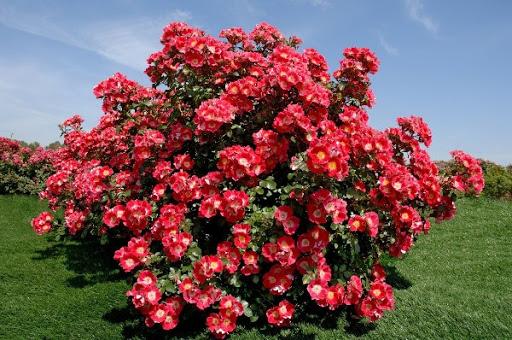
Park roses begin blooming in May and exude a pleasant fragrance. Characteristics:
- height - 1-1.5 meters;
- abundant flowering for 3 months;
- the color of the buds is white, dark purple, rarely orange, yellow, with shades of red, pink;
- flowers are cup-shaped, complex.
Rose bushes grow wide, so they are planted at a distance from each other.
Varieties of varieties
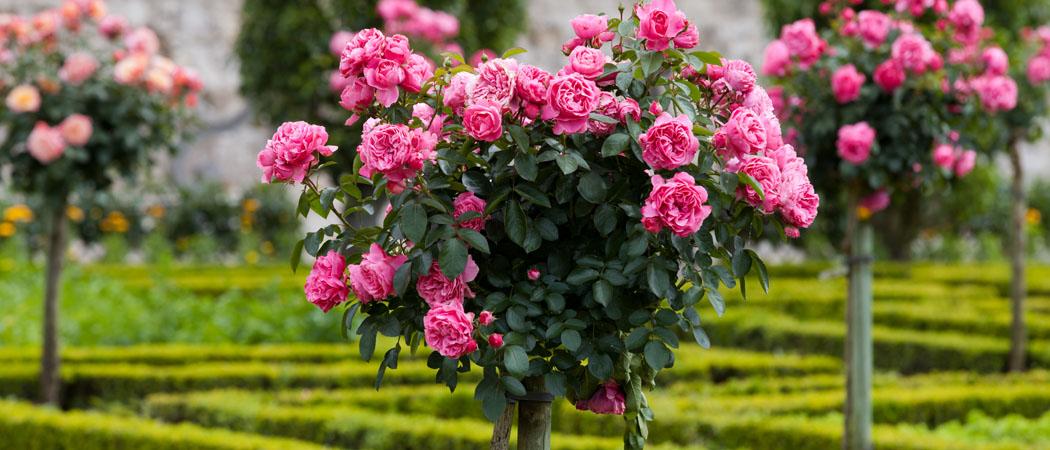
Traditional park roses include rugosa, white, prickly, and French roses. Their bushes are covered in pink and white flowers in late spring.
Canadian and English varieties have become increasingly common in park compositions. They better tolerate frost and inclement weather and are less susceptible to pest damage.
Canadian
Popular varieties:
- John Davis – classic-shaped buds with pink petals exude a sweet fragrance. Bushes reach 2.5 meters in height and spread 2 meters in width. Flowering lasts 4-5 months, from June until the first frost.
- John Franklin is a 120-centimeter-tall plant that reaches 1 meter in width. The buds, with double red petals, are shaped like carnations and appear on the bushes from June to August.
- Morden Sunrise features flowers in a unique orange-pink hue. The delicate buds with wavy petals are 8 centimeters in diameter. The bush grows to 1 meter in height and 70 centimeters in width. This variety has strong disease resistance.
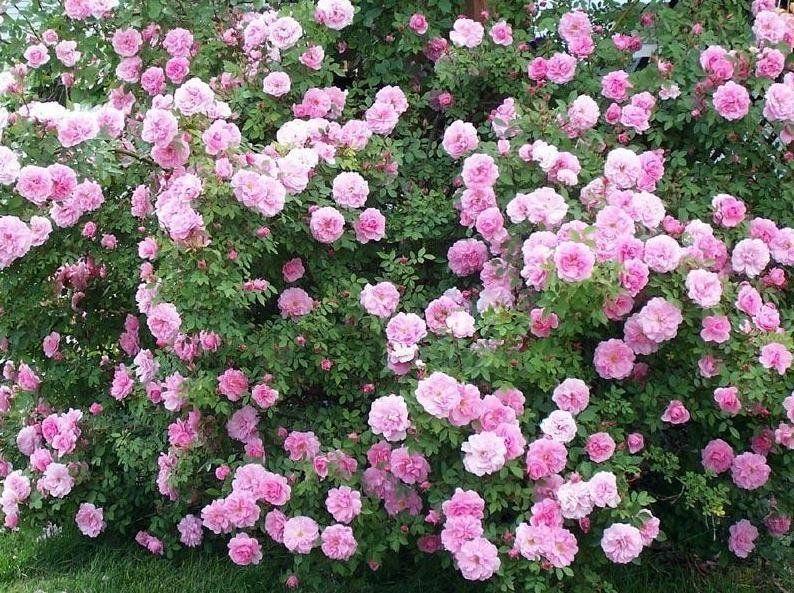
These varieties are suitable for growing in central and northern regions. In southern regions, they require ample watering. Canadian roses are tolerant of temperatures as low as -35°C (-35°F), but are not suited to arid climates.
English
The following varieties are found in flower beds:
- Abraham Derby is a flowerbed veteran, known since 1985. Its classic, cup-shaped buds are apricot-colored. A pink border extends along the petal edges. In cool climates, the bushes bloom more vividly. Up to three flower stalks appear at the end of each shoot. This variety grows quickly, blooms in two waves annually, and is disease-resistant.
- Benjamin Britten is a young cultivar, introduced in 2001. Distinguishing features include orange-red, cup-shaped buds, 1-meter-tall bushes, and a fruity, wine-like aroma. The cultivar is less suited to rainy weather;
- William Shakespeare—the main variety—blooms with pink buds, while the 2000 variety blooms with red ones. The double petals are densely arranged. The flower sepals flatten toward the end of the 14-day bloom period.
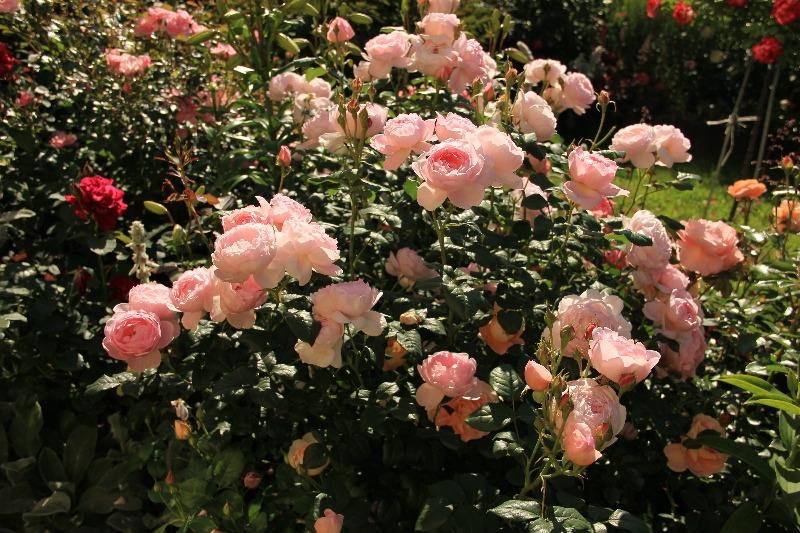
Rose varieties from the UK are distinguished by their gigantic buds, up to 12 centimeters across. Their spreading habit, double, pleasantly scented flowers, and minimal maintenance make them desirable garden additions.
Examples of use in landscape design
A simple way to decorate a plot with park roses is to plant them as a border. Fragrant bushes are used to line paths. In flowerbeds, thorny flowers are planted in a checkerboard pattern. Roses are used in mixed arrangements with plants blooming at different times of the year. Large bushes are planted in the background if the flowerbed is located near a fence. In a circular plot, roses are placed in the center, with shorter plants planted closer to the edges.
Planting and care rules
To plant park roses outdoors, choose a sunny site with loamy soil with a pH of 6-7. Heavy soil should be thinned with sand, while sandy soil should be mixed with compost. Roses should be able to easily absorb nutrients, and water should be quickly absorbed. Growing in unsuitable conditions will negatively impact the quality of their blooms.
Optimal timing for planting
Planting time depends on the regional climate. Seedlings with closed roots are planted throughout the warm season. For young bushes with exposed roots, the best time is early spring and fall.
In the fall
September and October are suitable for southern regions with late winters. In temperate climates, the weather is changeable, so the bushes don't have time to develop roots. Unrooted plants freeze in freezing temperatures. The advantage of fall planting is abundant flowering the following summer.
In the spring
In the central and northern regions, roses are planted in mid-April. Favorable conditions arrive after several days of sunny, dry weather and soil warming to 10 degrees Celsius.
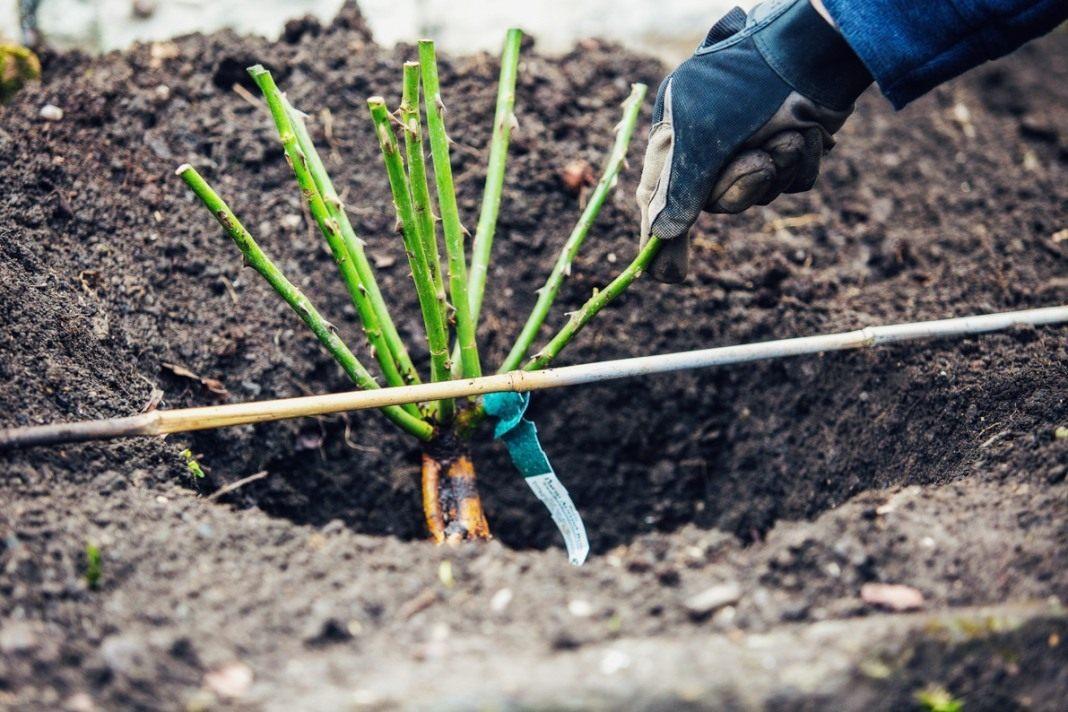
Preparing holes and planting patterns
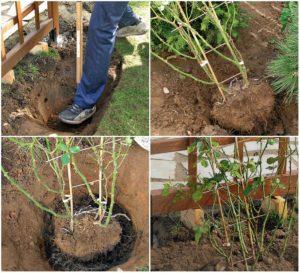
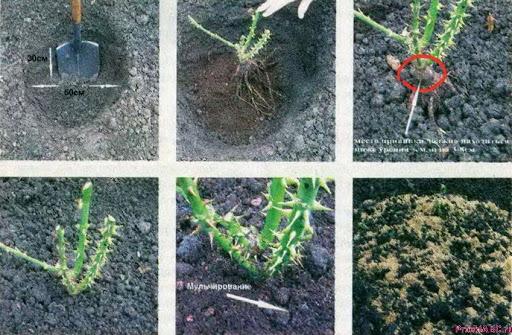
The depth of the planting holes is selected individually for the seedling.
Features of site preparation and planting:
- roses are planted in groups or in a row in the form of a border or hedge;
- the distance between bushes is 40-60 centimeters;
- when planting in a line, maintain an interval of 25-35 centimeters;
- holes are dug, on average, 10-15 centimeters deeper than the length of the roots of the seedlings;
- roses are removed from containers with a lump of earth and placed in a hole;
- Open seedlings are placed in water for 24 hours before planting.
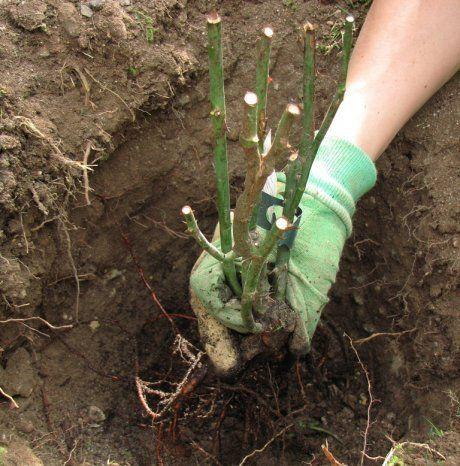
After soaking, it's important to straighten the roots. Bent or damaged roots will not be able to supply the plant with sufficient nutrients, which will lead to slower growth.
Watering and fertilization
The watering schedule depends on the soil density. Loose soil drains well, so it needs to be watered frequently, every two days. If the soil is dry on the surface but moist underneath, the flowerbeds need to be watered once a week. During rainfall, the plants' natural moisture is sufficient. Heavy watering is required during budding and flowering. One bush requires 10 liters of water. Signs of dehydration in roses include stunted growth, dried buds, and leaf tips.
After flowering, watering is gradually reduced and stopped before wintering. Water should be applied to the roots, ensuring the leaves and stems remain dry. Wet plants are more susceptible to disease.
In spring, roses are fertilized with humus or slurry. A complex fertilizer containing boron, magnesium, and iron is also added to the soil. At the end of August, the bushes are fed with potassium, calcium, and phosphorus. In August and again in September, the feeding is combined with watering. Dissolve 16 grams of monopotassium phosphate and 15 grams of superphosphate in a bucket of water. The rose garden is fertilized with compost for the final time of the season to ensure sufficient nutrients until spring.
![TOP 50 best new rose varieties of [year] with descriptions and characteristics](https://harvesthub.decorexpro.com/wp-content/uploads/2019/02/big-perpl-300x200.jpg)

Caring for the soil
The day after watering, loosen the soil to a depth of 5 centimeters. Raking improves oxygen flow to the roots. Loosening prevents water stagnation and weed growth. Mulching helps keep the soil moist in dry, sunny weather. Cover the rosebed soil with straw, tree bark, and leaf mold. The organic matter serves as additional fertilizer.
The mulch gradually turns into humus. During loosening, the mulch mixes with the soil. When little mulch remains, more is added. The soil is mulched in late April or early May, and again in the fall, before it cools. A 30-centimeter mound of peat or humus is piled on top of the mulch near the stem.
Pruning and shaping
Park roses grow wide. To keep the bushes neat, they are pruned in the fall and spring. Before winter, faded buds are removed, and shoots are shortened by 10 centimeters. In the warm autumn, the bushes produce new branches. Pruning these will encourage vigorous growth. New flower stalks are broken off and left on the bush.
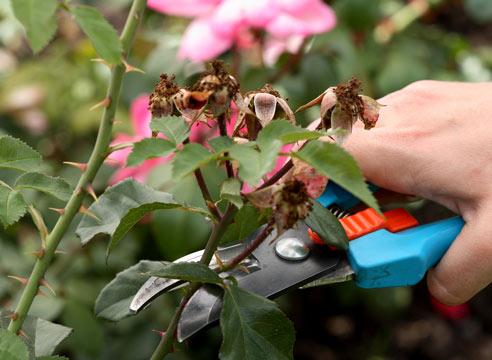
Spring pruning promotes abundant summer flowering and is done before bud break. Dry, damaged, and densely growing inner branches are trimmed. Shoots are shortened by three buds. Cuts are made at a 45-degree angle. In summer, dry leaves and wilted buds should be removed.
Covering roses for the winter
In the south, park rose varieties are left exposed. In northern and central regions, young plants will need to be covered after fall planting. Preparation for winter begins in August with a gradual reduction in watering. Before frost, bushes are earthed up, adding 20 centimeters of soil or peat moss above the roots. The stems are wrapped in agrofibre and covered with spruce branches. Roses are also covered with wooden boxes and roofing felt.
Prevention and control of pests and diseases
Roses are more susceptible to disease if they are planted in "tired" soil. Plants draw nutrients and excrete waste products through their roots. As a result, the soil becomes depleted, increasing the number of pathogens and bacteria.
Preventive measures against plant diseases:
- do not plant bushes next to other crops of the Rosaceae family;
- dig up old soil and add fertilizer;
- remove weeds;
- Prune bushes annually, spray with insecticides and fungicides.
Park roses have a strong immune system, but fungal infections occur in conditions of high humidity:
- white or powdery mildew;
- downy mildew;
- black spot;
- rust;
- Botrytis or gray mold.
Rose pests:
- scale insect;
- spider mite;
- thrips.
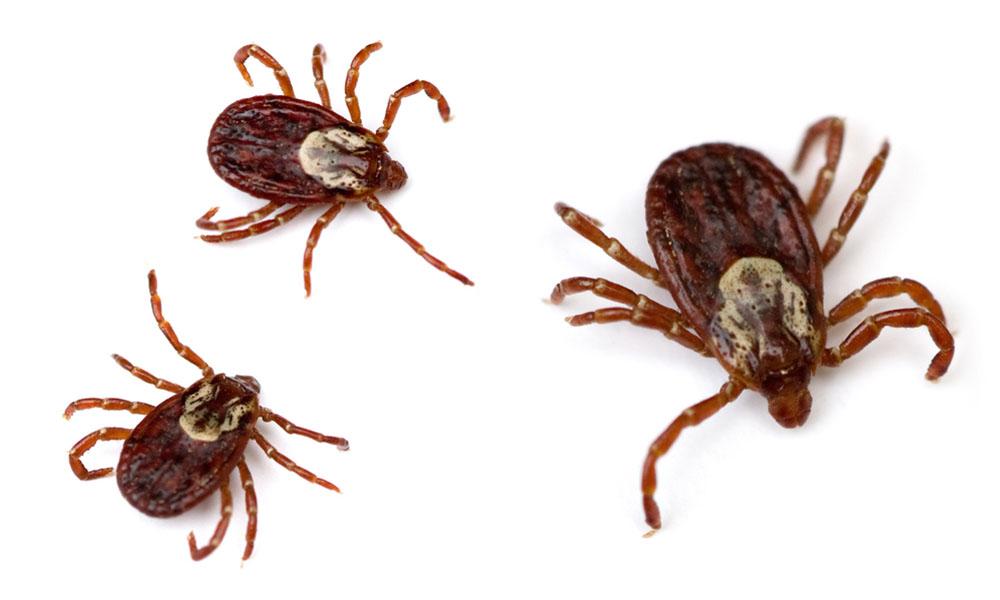
To combat insects and diseases, before wintering and after opening in the spring, the bushes are sprayed with solutions:
- 3% copper sulfate;
- 2% nitrofen;
- 5% ferrous sulfate.
Also effective in the fight against insects are the preparations Aktara, Confidor Maxi, and Actellic.
Breeding methods
Park roses are propagated vegetatively and by grafting.
Dividing the bush
The bushes are divided in the spring, before the buds begin to develop, or in the fall, after flowering has finished:
- dig up the plant;
- future divisions are marked out so that each one has a stem and roots;
- cut with sterile pruning shears.

Parts of the bush are planted in prepared holes as seedlings with an open root system.
Graft
Roses are grafted onto the trunk of a rosehip or a variety of suitable height and frost resistance.
Method of grafting a cutting with a bud into the root collar of a rosehip:
- at the site of the vaccination, a T-shaped incision is made;
- the cutting bud is cleared of bark and inserted into the cut;
- The grafting site is tightly wrapped with plastic film.
Take a look Also

Grafting is done in early summer. The plant is earthed up before wintering. At the end of February, the rootstock is pruned above the graft to allow the plant to focus its energy on developing the scion. The grafted shoot is pinched to shape the bush.
Propagation by root suckers
Root suckers are transplanted a year after they appear. The best time to do this is spring. The shoots are dug up, separated from the main plant with sterile pruning shears, trimmed by a third, and replanted.
Cuttings
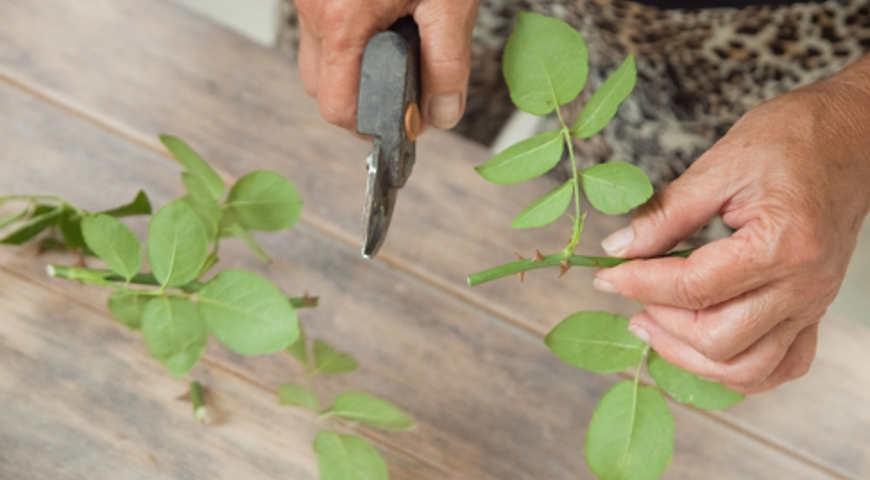
Roses are propagated by green and woody cuttings.
Green cuttings are prepared before flowering:
- 10 centimeters of the top of young shoots are cut off at an angle;
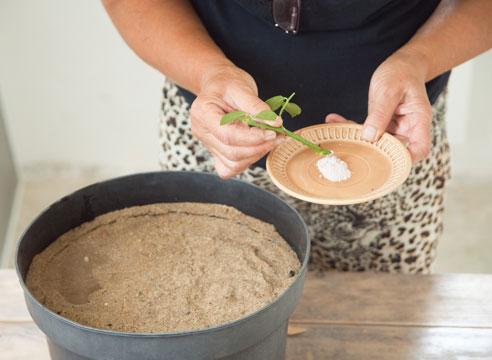
- keep the cut end in a rooting solution;
- after the roots appear, plant in an earthen substrate consisting of garden soil and sand, or in a ready-made mixture;
- In autumn, the cuttings are transplanted into the ground.
Cuttings with dense bark are stored until spring:
- the material is cut after flowering;
- cuttings of shoots are buried in containers with sand;
- the blanks are stored at a temperature of +5 degrees;
- In February and March, the cuttings are dug up and placed in a stimulant solution.
The stems and roots are planted in containers, watered moderately, and maintained at a temperature of 20-25 degrees Celsius with bright light. Once warm weather sets in, the seedlings are transplanted into the ground, complete with root ball.
Digging in cuttings
In spring, a strong green shoot is selected from the outside of the bush and rooted:
- bend to the ground;
- a trench is dug at the point where the stem touches the soil;
- lower the bend of the stem into the hole and bury it;
- a bracket is placed on top or a stone is pressed down.
Over the summer, the cutting will take root. In the fall, the new bush is dug up and separated from the main plant.
Tips for Beginner Gardeners
Rose growing tips for beginners:
- To straighten dried roots of exposed seedlings, soak them in water for 24 hours. Some of them will straighten, while the rest will be easy to straighten;
- Add fertilizer to the planting hole in advance, 2 weeks before planting or after the seedlings have rooted. Roots can be burned by contact with fertilizer.
- Immediately after planting, the seedlings should be watered and hilled. Gradually, as the plant grows, the mound above the roots is eroded with water during watering;
- in the first year, seedlings need to be covered for the winter;
- In spring, nitrogen-based fertilizers are beneficial. Once budding begins, they should be replaced with phosphorus and potassium fertilizers, otherwise the plants will not bloom.
When choosing a location and planting frequency, consider the space needed for shelter. The optimal distance between bushes is 50 centimeters. Roses planted at this distance will receive sufficient light and air.
Related posts:
 Top 7 varieties of shrub roses, their planting and care in open ground for beginners
 Description of the Cordana rose, planting and care at home
 Growing Climbing Roses and the Top 10 Varieties, Planting, and Care in the Open Ground
 Top 16 Peony Rose Varieties, Planting and Caring for Them in the Open Ground
 Top 12 Floribunda Rose Varieties: Planting and Care in the Open Ground
 How to plant roses in autumn and at what distance, and further care
 Top 50 best new rose varieties of 2025 with descriptions and characteristics
 Top 16 Best Hybrid Tea Rose Varieties: Planting and Care in the Open Ground