
- Selection and description of the variety
- Features of flowering
- Advantages and disadvantages compared to other varieties
- Examples of use in landscape design
- Growing Rosarium Uetersen roses outdoors
- Preparing the seedling and planting site
- Timing and technology of planting
- Watering and fertilizing
- Formation and removal of dry inflorescences
- Preventive treatments
- Winter protection
- Reproduction
- Cuttings
- Rooting cuttings
- Difficulties faced by beginning gardeners
Climbing roses are ornamental flowering plants used for vertical landscaping. Bushes are planted near gazebos and can be used to climb arches, pergolas, and trellises. They can also be used to cover outbuildings. One of the climbers is the Rosarium Uetersen variety. Here's information on growing it in your backyard.
Selection and description of the variety
The Rosarium Uetersen rose was bred by German specialists in the 1970s. At the time, it wasn't properly appreciated. It only gained recognition in 2000. Rose growers finally appreciated this variety with its densely double flowers growing on long stems.
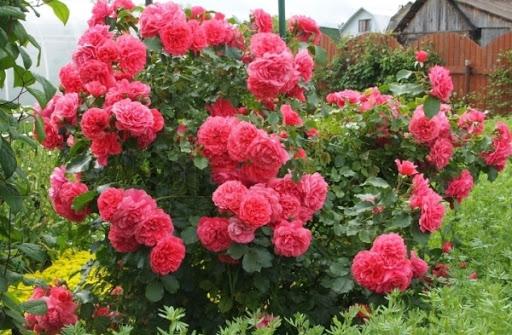
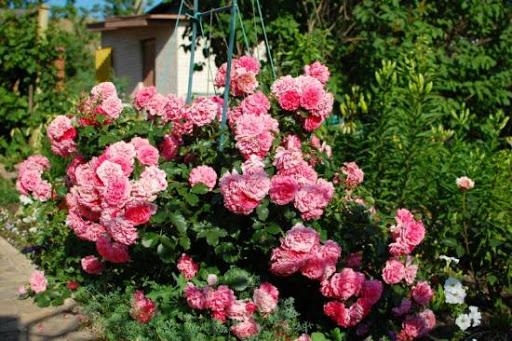
Depending on growing conditions, the bushes reach a height of 1.2-3.5 meters. The plant spreads up to 1.5 meters in width. The strong shoots are thorned. At the top of the stems, inflorescences form, consisting of 3-7 bright pink buds. Each flower contains up to 100 petals. When fully open, the bud reaches a diameter of 12 centimeters.
Features of flowering
In June, the climber rose blooms in large numbers. Throughout its life cycle, each bud changes color from soft pink to vibrant crimson. After the initial flush of bloom, a break occurs. Following this brief rest, the climbing rose begins to grow vines with densely double buds again. With proper care, blooming continues until frost. At this time, the bushes exude a subtle apple aroma.
Advantages and disadvantages compared to other varieties
The main advantage of the Rosarium Uetersen rose is its abundant and long-lasting blooms. Another advantage over other varieties is that its dense buds contain up to 100 petals. Furthermore, climber roses are resilient and rarely affected by diseases and pests. A drawback is the presence of thorns on the shoots.

Examples of use in landscape design
Since the plant's bushes can spread up to 1.5 meters, it's best planted in a larger space. Rosarium Uetersen looks spectacular when planted alone against a lawn. Gypsophila, sage, and lavender can be planted around it.
Low-growing conifers and ornamental deciduous shrubs make good neighbors for roses. Rosarium Uetersen is also used as a means of vertical division of a space. For this purpose, shoots are trained up a trellis or lattice. The plant is also planted near a gazebo or terrace. Long shoots can be used to camouflage outbuildings.
Growing Rosarium Uetersen roses outdoors
When purchasing seedlings, make sure the shoots are strong, free of disease, and the root system is uniform in color. One- to two-year-old plants will take root most easily.

Preparing the seedling and planting site
Roses grow best on a south- or southwest-facing slope. The site should be protected from cold winds. Prepare the planting area in advance. Dig a hole and fill it with a mixture of garden soil, compost, peat, and sand. If the soil is too loose, add clay.
The seedlings are inspected, and broken stems and roots are trimmed if necessary. To ensure the bushes are hydrated, they are placed in a bucket of water for 2-3 hours. A small amount of potassium permanganate can be added for disinfection. If the shoots are too long, they are shortened to 3-4 lower buds.
Important! Dig the hole 2-3 weeks before planting the roses. Otherwise, the root collar may be too deep in subsequent years.
Timing and technology of planting
Rosarium Uetersen roses are planted in spring or fall. Planting in the first half of the year is preferred for areas with cool climates. This allows the root system time to establish itself over the summer, and the above-ground portion of the bush to develop new shoots. In warmer regions, the rose can be planted in early fall.
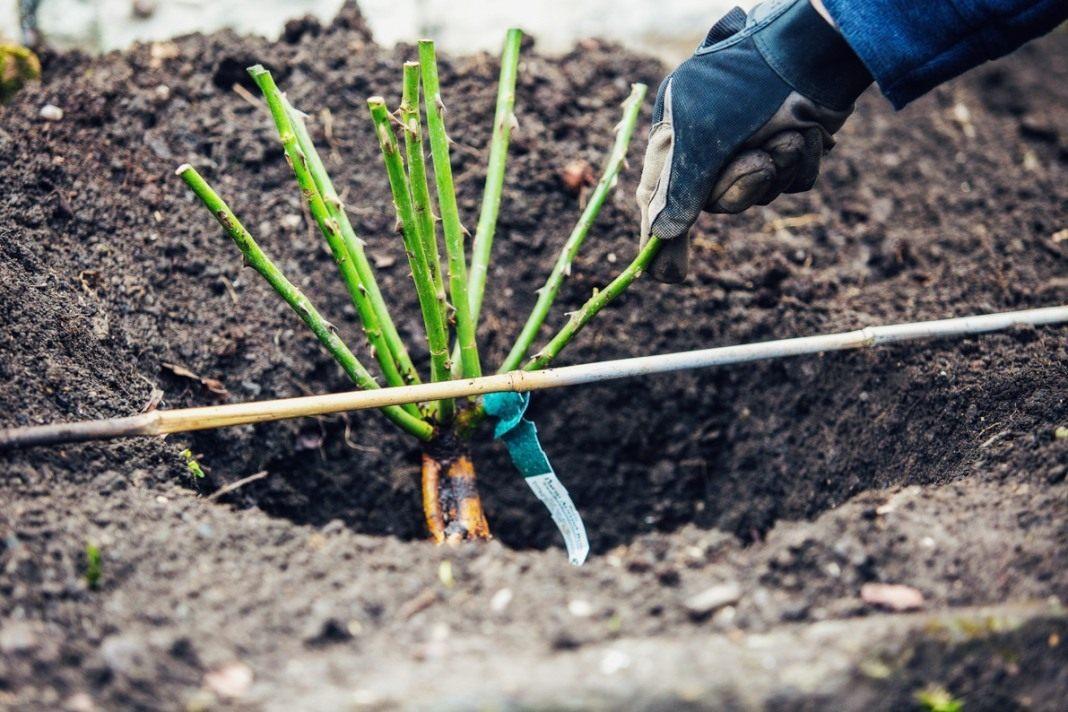
The crop is planted in open ground as follows:
- dig a hole measuring 70x70 centimeters;
- if the soil is heavy, drainage made of expanded clay, small stones, and sand is placed on the bottom;
- fill the hole with fertile substrate;
- seedlings are placed in the middle, and the root system is carefully straightened;
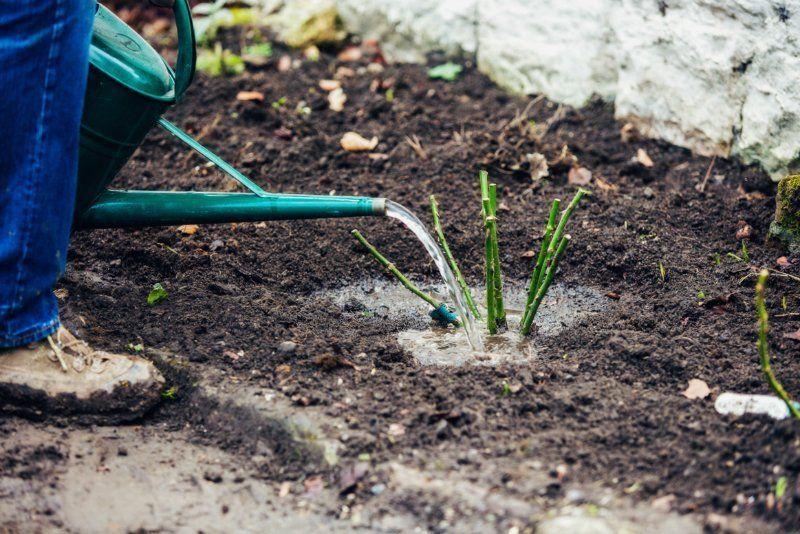
- fill with substrate and water generously.
The root circle is sprinkled with mulching material to retain moisture.
Watering and fertilizing
Roses are characterized by the fact that weak, shallow watering prevents their root system from developing normally. Plants stop growing and flowering. Therefore, at least 15 liters of water should be added weekly to the root zone. The water should be warm and settled. Watering should be done in the morning or evening.
Take a look Also
Caring for the plant also includes fertilization. Climbing roses require a nitrogen supplement in the spring. To do this, dissolve 30 grams of urea in water and sprinkle the soil under the bushes. During budding, apply potassium and phosphorus. After flowering, apply a cow manure solution. To ensure a successful wintering, use potassium supplements, such as wood ash, in the fall.
Formation and removal of dry inflorescences
In the spring, the bush is shaped. To do this, shoots are cut at a 45° angle with sharp, disinfected pruning shears. Pruning helps the gardener shape the bush and prevent it from becoming overgrown. Broken, diseased, and dead branches should also be trimmed throughout the season.
After the first flush of flowering, trim back shoots with dried buds. After a while, new shoots with bright pink flowers at the top will form from the lateral buds. In the fall, after the second flush of flowering, prune back thin, immature branches.
Preventive treatments
Roses can become susceptible to disease due to care errors. This can be avoided by watering only at the roots, thinning the crown, and removing plant debris from the area around the trunk. Additionally, it's important to prune dry, diseased branches, which can harbor pathogens and pests.
To prevent and treat diseases, bushes are treated with fungicides. Aphids can infest young shoots, and excessively dry weather can lead to spider mites. These pests, feeding on the cell sap, weaken the rose. Insecticides are used to combat these problems.
Please note! Treatment with special preparations should be carried out in windless weather.
Winter protection
In the fall, the vines are removed from their supports and trimmed slightly. They are then laid on spruce branches on the ground. A frame is installed on top. When steady frost sets in, the structure is covered with spunbond. In the spring, as soon as the sun warms up, the covering material is removed.
Reproduction
You can propagate the Rosarium Uetersen rose in the garden using cuttings or layering.

Cuttings
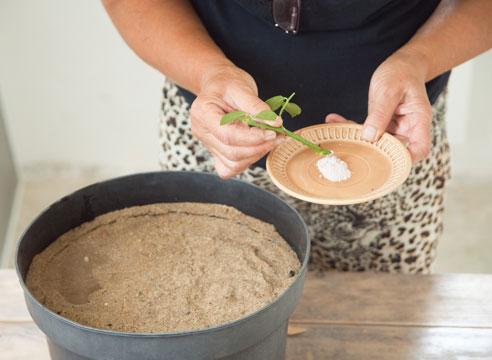
The procedure begins after the first flush of flowering. Rooting of cuttings is carried out as follows:
- from the middle of the shoots, cut into pieces about 15 centimeters long;
- Leave the leaves only at the top and remove the rest;
- the lower cuts are sprinkled with growth enhancer powder;
- planted in a prepared place on the site or in a container;
- cover with film so that it does not touch the cuttings.

When the cuttings take root and leaves appear on them, they are planted in a permanent location.
Rooting cuttings
The Rosarium Uetersen rose has long shoots that are easy to propagate. To do this, dig furrows around the bush. The outermost shoots, stripped of foliage, are laid in these furrows and secured to the ground with staples. The branches are covered with soil and watered. After a year, the cuttings will begin to root. They are separated from the parent plant and planted separately.
Difficulties faced by beginning gardeners
It's difficult for beginners to immediately achieve rapid growth and abundant blooms from roses. Due to their lack of experience, they make mistakes in care. The main challenges rose growers face are the following:
- The bushes are developing poorly. This happens when the soil is frequently watered with small amounts of water. Roses require 15-20 liters of water once a week.
- The bushes are developing well, but the blooms are weak. It's possible the gardener is overfertilizing the roses with nitrogen. This is causing foliage to develop at the expense of blooms.
- The second flush of flowering is weak. Faded buds should be cut off after the first flush. Then, numerous branches with beautiful inflorescences will develop from the lateral buds.
- Over time, the bushes have deepened. This can slow their growth. To avoid this, prepare the hole 2-3 weeks before planting. This will allow the soil to settle, preventing the root collar from becoming too deep.
- The tip of a young shoot is wilting. The plant is likely attacked by rose sawfly. To get rid of the pest, use a stomach-contact insecticide.
Rosarium Uetersen is a climbing rose with striking, bright pink blooms. With proper care, it can produce buds until late autumn.
Related posts:
 Top 7 varieties of shrub roses, their planting and care in open ground for beginners
 Description of the Cordana rose, planting and care at home
 Planting and caring for park roses in open ground, growing rules
 Top 50 best new rose varieties of 2025 with descriptions and characteristics
 Growing Climbing Roses and the Top 10 Varieties, Planting, and Care in the Open Ground
 How to plant roses in autumn and at what distance, and further care
 The best varieties of groundcover roses, rules for planting and growing them
 Top 12 Floribunda Rose Varieties: Planting and Care in the Open Ground