
- General description of plants
- The most beautiful varieties and types of hollyhocks
- Majorette
- Margarita
- Violet
- Carnival
- Royal
- Forest mallow
- Wrinkled
- Pink
- Application in landscape design
- Planting a rose
- Seeds
- Seedlings
- Rules for caring for flowers in open ground
- Watering
- Fertilizer
- Removing faded inflorescences
- Preparing for the cold season
- Transfer
- Propagation and seed collection
- What diseases does hollyhock suffer from?
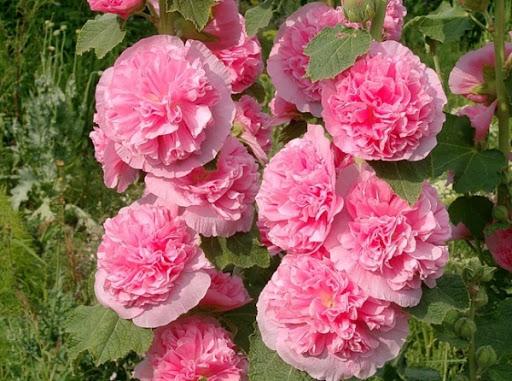
Plants with stems covered in flowers can be found not only in rural courtyards but also in city parks. The Germans named this plant "hollyhock," which translates as "rose stick." Gardeners love it for its beautiful appearance, long blooms, and low maintenance. Below is information about the most beautiful rose varieties and cultivars, planting, and care instructions for outdoor gardens.
General description of plants
Hollyhock is a herbaceous plant with straight stems reaching 2.5 meters in height. The heart-shaped leaves have serrated edges. Single or double inflorescences form along almost the entire length of the shoots. The buds begin to open in midsummer. Flowering continues until the end of September.
When the buds fade, a fruit capsule begins to form within them. These capsules can contain 15-50 light-brown seeds. Once ripe, the capsules open on their own. The seeds emerge and, after surviving the winter, begin to hatch in the spring.
Hollyhocks are sometimes called mallows. However, there is a difference between the two: the former can grow up to 2.5 meters tall, while the latter's shoots do not exceed 1.5 meters. Furthermore, hollyhocks can be perennial, while mallows are typically annual or biennial.
Additional information: The plant is used in folk medicine as a diuretic, choleretic, and tonic.
The most beautiful varieties and types of hollyhocks
Breeders have developed numerous varieties and subtypes of this plant. The following are considered the most beautiful:
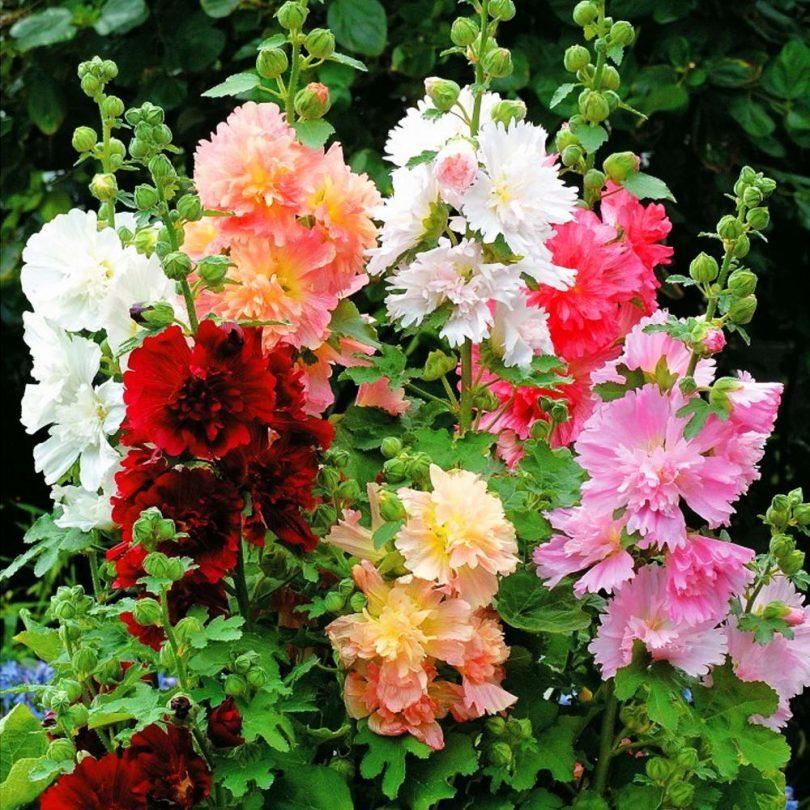
Majorette
The shoots reach a height of 80 centimeters. The inflorescences are bright and double. The buds can be pink, burgundy, chocolate, or red.
Advantages:
- beautiful appearance of inflorescences;
- long flowering.
Flaws:
- buds begin to form the following year;
- may become infected with rust.
Majorette is planted along a garden path, in a flower bed.
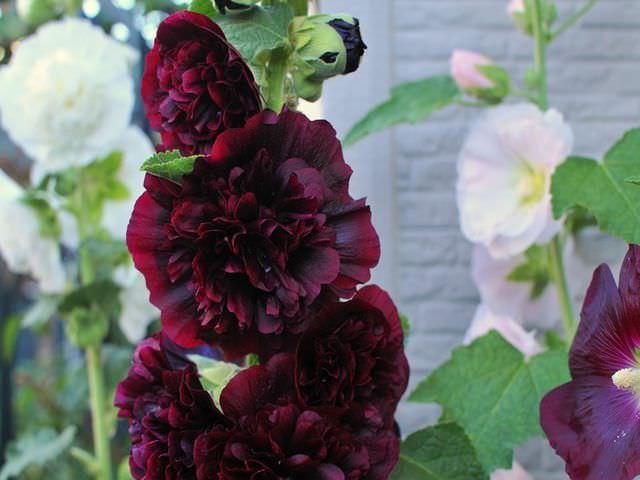
Margarita
The stems of this plant reach a height of 2 meters. They are densely covered with purple inflorescences. The diameter of the buds when open is 10-12 centimeters.
Advantages:
- abundant flowering;
- drought resistance.
Flaws:
- fertile soil is required for growing;
- does not like windy places.
The Margarita rose stock is used for vertical gardening.
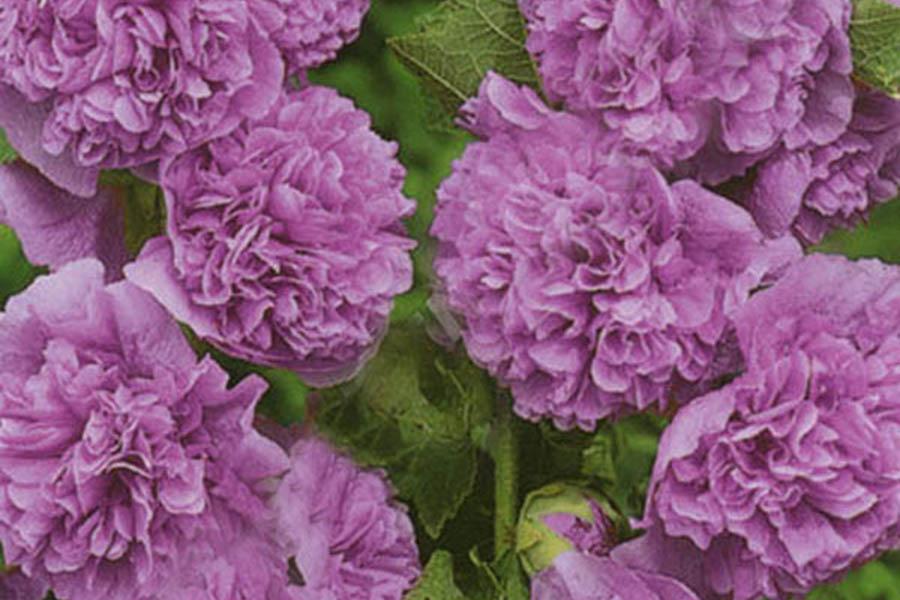
Violet
The bushes grow to a height of 2-2.5 meters. Velvety, blue-violet inflorescences grow on the shoots. The double flowers are gathered in racemes.
Advantages:
- beautiful color of flowers;
- long flowering.
Flaws:
- may be susceptible to diseases due to excess moisture;
- does not grow well in shaded areas.
Hollyhock Violet is planted in the background of the plot and used as a hedge.
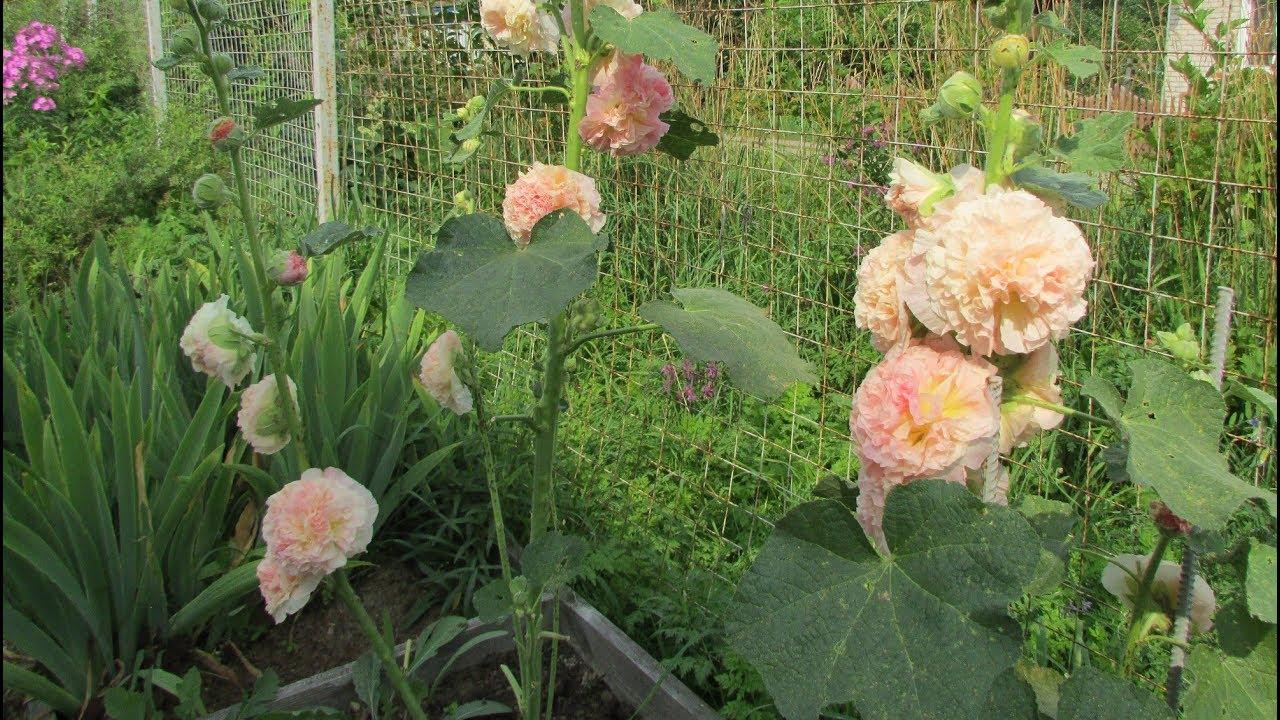
Carnival
Summer Carnival bushes range in height from 1.5 to 2 meters. Large, double blooms form on straight stems. The buds can be yellow, white, pink, or red.
Take a look Also

Advantages:
- beautiful appearance;
- can be used for cutting.
Flaws:
- may get sick in cold summer;
- increased demands on soil fertility.
Hollyhock bushes are used in landscapes for vertical gardening.
Royal
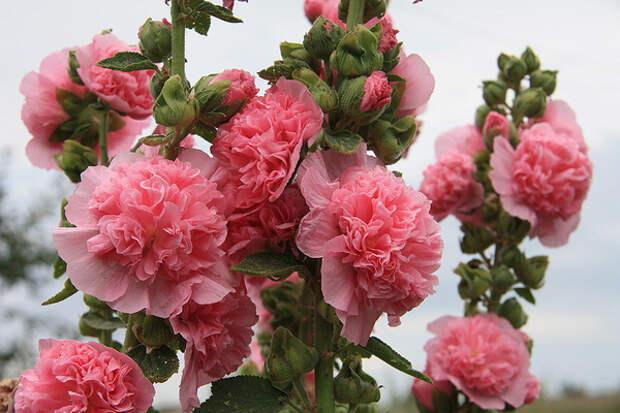
The plants grow to about 50 centimeters tall. The inflorescences are large and double. The buds are colored white, pink, lilac, and purple. The vibrant flowers bloom from July to September.
Advantages:
- large beautiful inflorescences;
- a delicate aroma emanates from the bushes.
Flaws:
- planting in a well-lit area is necessary;
- requires abundant feeding.
The variety is used for decorating flower beds, mixborders, and outdoor containers.
Forest mallow
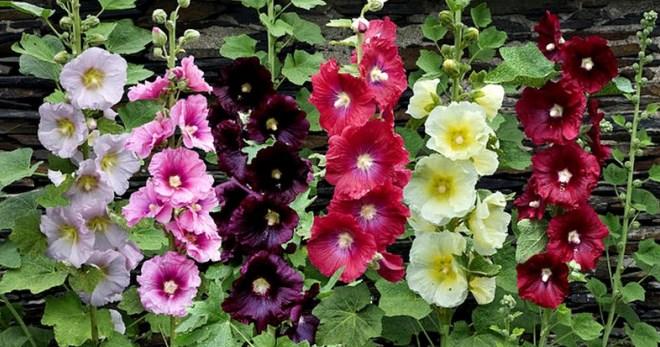
The plant's other name is mallow. Bushes range in height from 30 centimeters to 2 meters. Flower buds form singly or in clusters of 2-4. They are pink or purple in color.
Advantages:
- ease of care;
- The plant has medicinal properties.
Flaws:
- may be susceptible to fungal diseases;
- The decorative qualities of the bushes are not at a high level.
The culture can be found on the edges of forests, in ravines, and in meadows.
Wrinkled
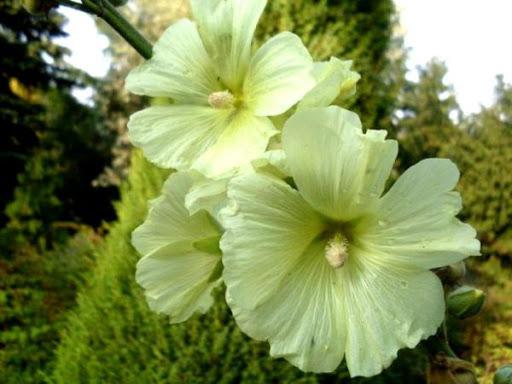
This is one of the oldest varieties of hollyhock. The bushes grow to about 2 meters tall. The petals of the buds are light yellow and orange. Breeders have developed numerous hybrids of this plant.
Advantages:
- endurance;
- unpretentiousness.
Flaws:
- if there is excess moisture, it can be affected by fungal diseases;
- The flowers have a simple shape.
Tall crops are used in the background of the plot.
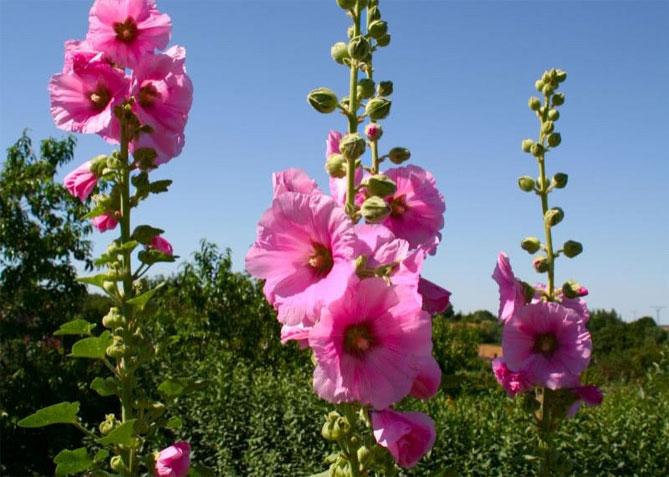
Pink
This perennial plant is grown as an annual or biennial. The bushes reach a height of 2.5 meters. The buds are colored purple, lilac, red, white, yellow, and lilac.
Advantages:
- undemanding to soil;
- easy to care for.
Flaws:
- needs abundant watering;
- Requires planting in a place protected from the wind.
Pink hollyhocks are used to decorate walls and hedges and for cutting.
Application in landscape design
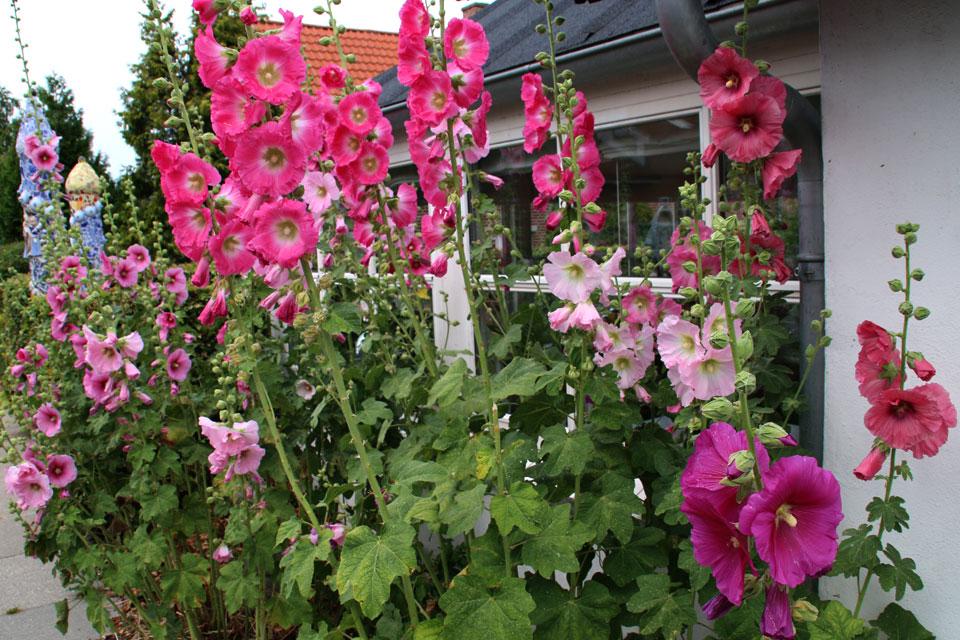
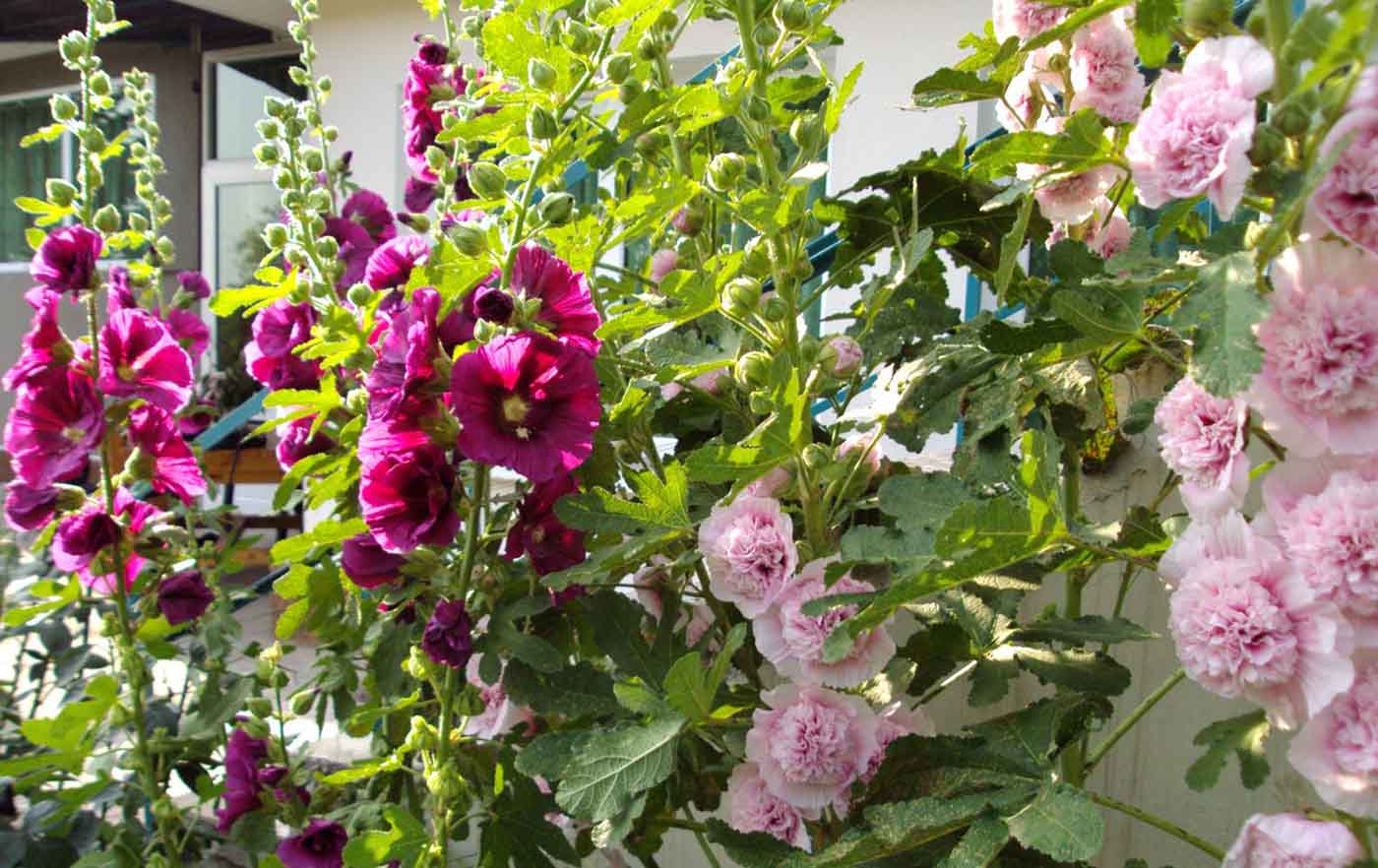
Hollyhocks are planted in a separate group in the garden, combined with other plants. Hollyhocks can be planted in the center of a flowerbed, surrounded by low-growing flowers. Taller bushes are planted at the back of the plot, along walls and fences, and used as hedges. They can also be used to decorate unsightly outbuildings.
Additionally, low-growing varieties are planted in pots and planters and displayed on terraces and porches. They pair well with lupines, chamomile, phlox, sunflowers, and cosmos. Hollyhocks are also useful as cut flowers.
Planting a rose
The crop is grown from seedlings or sown directly into the ground. The seeds are frost-resistant, so they can be sown in the fall. The crop is also capable of self-seeding. In the first year, the bushes develop a rosette. Flowering occurs the following year. However, there are also varieties that produce buds the same year they are planted.
Seeds
Hollyhocks don't like being pricked out, so they're planted directly into small containers. The procedure is as follows:
- the seeds are soaked in warm water for 12 hours;
- the pots are filled with a substrate consisting of peat, sand, and garden soil;
- lay out 1 seed;
- fill it with a 1-centimeter layer of substrate;
- watered, covered with film.
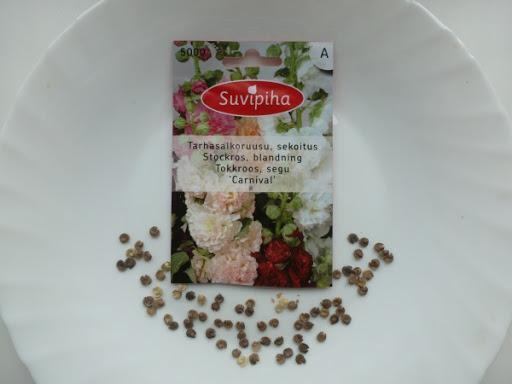
The seed pots are moved to a warm place. Sprouts will appear in about two weeks. After this, the covering material is removed. Growing the bushes is simple: water the seedlings as needed and gradually acclimate them to fresh air.
Seedlings
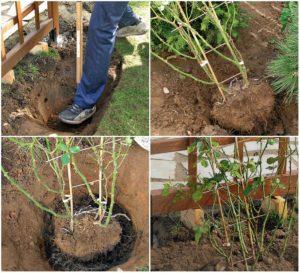
Plants are planted in the spring, after the weather has become consistently warm. Choose a sunny location, protected from cold winds. Groundwater should not be too close to the soil surface. Dig holes 30-60 centimeters below the surface. If the soil is heavy, add small stones or sand to the bottom. Hardened bushes are planted in the prepared holes and watered. Plants grown from seedlings can bloom in the year of planting.
Rules for caring for flowers in open ground
Care consists of timely watering, infrequent fertilizing, and removing faded blooms. After watering, the soil should be loosened slightly, being careful not to disturb the plants. This procedure is necessary to allow air to reach the root system. Weeds are removed, as they interfere with flower development and can also carry diseases and pests.
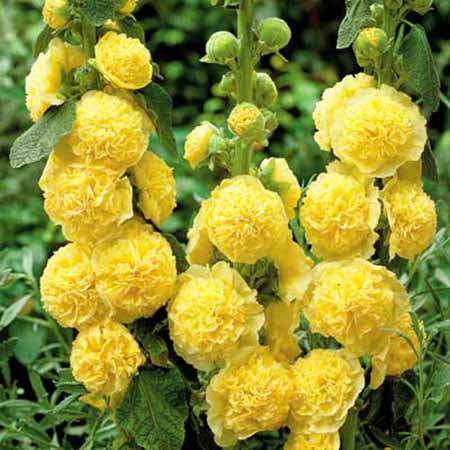
Watering
Although hollyhocks are drought-tolerant, they will thrive with regular watering. Water the soil beneath the bushes typically once a week. If dry, hot weather persists for an extended period, reduce the intervals between waterings. Water in the morning or evening, taking care to avoid moisture coming into contact with the foliage and flowers.
Fertilizer
Hollyhocks thrive without any fertilizer. Many varieties thrive in unattended locations, such as forest edges or roadside areas. Apply a complete fertilizer 2-3 weeks after planting outdoors, then again in August.

Removing faded inflorescences
When buds begin to fade, they should be removed from the shoots. This helps maintain the bush's decorative appearance. Furthermore, after flowering, seeds are formed, which require a lot of energy from the plant to develop. As a result, new flowers are weak and smaller.
Please note: If a gardener wants to propagate hollyhocks, they can leave a few dried flower buds, which will form seeds.
Preparing for the cold season
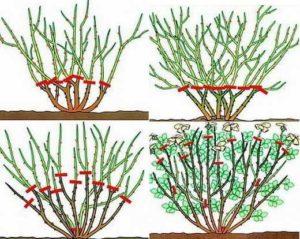
In the fall, shoots with faded buds are cut off at the base. After this, the plant focuses on preparing for the winter. Almost all hollyhock varieties tolerate cold well. Therefore, when frost sets in, it's sufficient to cover the root zone with leaves or spruce branches. There's no need to erect a frame over the plant.
Transfer
The planting site is chosen immediately, as the plant does not transplant well. Only young seedlings, which must be planted with a clod of soil, can withstand the procedure. Planted plants can grow in one place for 3-4 years. Then, seeds are collected from them, from which young bushes are grown.
Propagation and seed collection
Hollyhocks are easily propagated in your garden using seeds collected in September. These seeds are stored until spring, then planted as seedlings in pots. Once hardened off, the container-grown bushes are planted outdoors. Keep in mind that when using seed propagation, the young plants may not inherit all of their parent's characteristics.
Hollyhocks also reproduce by self-seeding. Numerous seeds fall to the ground in the fall and bury themselves over the winter. They sprout in the spring. Numerous bushes interfere with each other, so the weakest ones are removed.
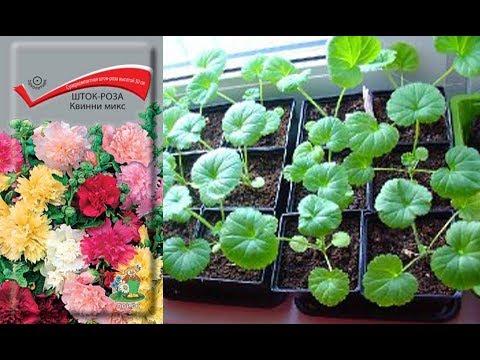
Another method of propagating the plant is by cuttings. Young lateral shoots are used for this purpose. They are separated from the stems in the spring, and the cuts are dusted with a rooting enhancer. They are then planted in containers and covered with plastic wrap. The rooted, grown cuttings are then transplanted into the plot in the fall.
Please note: Two-year-old seeds have the best germination rate.
What diseases does hollyhock suffer from?
Under unfavorable climatic conditions or improper care, the flower may be susceptible to diseases and pests. The main ones are:
- Rust. This disease manifests itself as brown pimples on the undersides of leaves, which eventually fall off. If the disease is detected, the affected parts should be removed and the bushes treated with Bordeaux mixture.
- Cercospora leaf spot. This fungal disease causes rusty-brown spots to appear on the leaves. Fungicides are used to treat cercospora leaf spot on hollyhocks.
- Ascochyta blight. The disease is identified by raised, gray-brown spots. Affected bushes are treated with an antifungal agent.
- Snails. These pests love to gnaw on leaves, which can completely destroy young plants. Snails are collected by hand.
Hollyhock diseases can be prevented by promptly removing weeds, treating the soil with an antiseptic, and spraying the bushes with antifungal agents. With this simple care, gardeners can enjoy plants with spectacular blooms from June to September.
Related posts:
 Growing Climbing Roses and the Top 10 Varieties, Planting, and Care in the Open Ground
 Top 12 Floribunda Rose Varieties: Planting and Care in the Open Ground
 Top 15 Korean Chrysanthemum Varieties, Planting and Care in the Open Ground
 Top 10 Chrysanthemum Varieties, Planting and Care Guidelines for Outdoor Plants
 Planting and care guidelines for the Multiflora chrysanthemum and the top 9 beautiful varieties
 Top 16 Peony Rose Varieties, Planting and Caring for Them in the Open Ground
 Top 16 Best Hybrid Tea Rose Varieties: Planting and Care in the Open Ground
 TOP 20 Itoh Peony Varieties and Their Characteristics, Planting and Care Guidelines