
- Chrysanthemum multiflora spherical: general description
- Growing conditions requirements
- Lighting, humidity, temperature
- Soil
- The most beautiful varieties
- Branbeach: white, purple and orange
- Branindio
- Branfountain: purple, salmon, and lemon
- Brandroyal: red, pink, yellow and white
- Branhill: dark red and cherry
- Jacqueline Peach
- Branspider Spirit
- Bransky plum
- Elfie White
- Advantages and disadvantages of the plant
- Examples of use in landscape design
- In the flower garden
- On the terrace
- Along the paths
- Timing and features of planting
- In the pot
- Into open ground
- Care instructions
- Watering
- Top dressing
- Protection from insects and diseases
- Loosening and mulching the soil
- Preparing multiflora for winter
- Covering the plant in open ground
- Storing potted flowers in the basement and on the balcony
- Methods of reproduction
- By dividing the bush
- By cuttings
- Seeds
The globe chrysanthemum has recently become very popular among gardeners. When planted in open ground, it decorates a garden plot. It can also be planted in a container and placed in a relaxing spot. These plants delight with blooms from August until frost. Below is information about the most beautiful varieties of the multiflora globe chrysanthemum, growing the bushes, and storing them during the winter.
Chrysanthemum multiflora spherical: general description
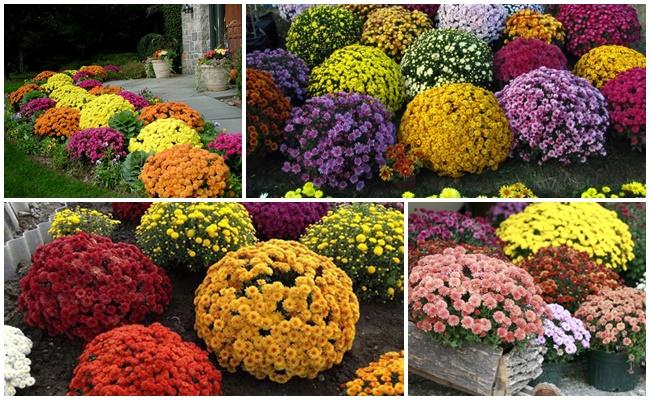
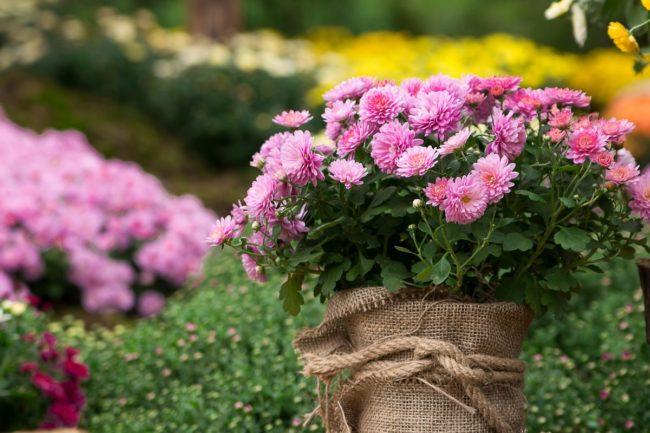
This is the name given to all chrysanthemums whose ball shape is a genetically determined feature of the bush. Plant height varies, depending on the variety, from 20 to 70 centimeters. Based on flowering time, Korean chrysanthemums are classified as early-blooming, mid-blooming, and late-blooming. Buds form with a diameter of 2 to 8 centimeters. The color palette is extremely diverse. The buds begin to open in early August. Blooming lasts until frost. If a perennial chrysanthemum is grown in a pot, it can be brought into a cool room in the fall. There, blooming will continue for some time.
Additional information: Chrysanthemums can be used as cut flowers. A flowering branch can last for 3-4 weeks in water.
Growing conditions requirements
Chrysanthemums are short-day plants. For buds to bloom, they require 8-10 hours of daylight. This cold-hardy plant is grown not only in the south, but also in the Moscow region, the Urals, and Siberia. The plants can withstand temperatures as low as -7°C.
Lighting, humidity, temperature
Plant spherical chrysanthemums in a well-lit location. Sunlight is essential for the growth of a vigorous bush and subsequent beautiful blooms. If plants don't get enough sunlight, their shoots will stretch and thin out.
A unique feature of chrysanthemum blooms is that they don't require high temperatures. Buds begin to form at daytime temperatures of 20-25°C and at nighttime temperatures of 16-20°C. Chrysanthemums' root systems are located close to the soil surface, so frequent watering is necessary.
Soil
The plant is planted in loose, fertile soil. This soil is made up of garden soil, compost, and peat. The planting site should be slightly elevated, as chrysanthemums do not tolerate stagnant water around the roots. In addition to open ground, the plant is also planted in pots placed on a terrace, porch, or veranda.
The most beautiful varieties
Experts have developed numerous varieties of spherical chrysanthemums with a variety of petal colors. Many plants also boast early flowering times. Breeding efforts are still ongoing. The most beautiful varieties of spherical chrysanthemums are as follows.
Branbeach: white, purple and orange
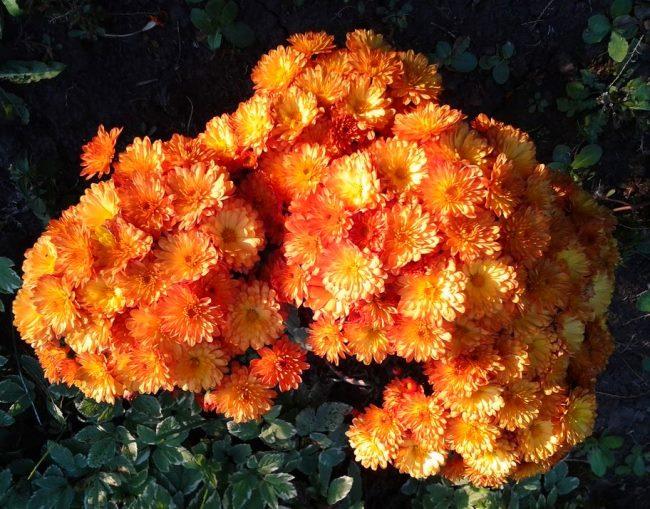
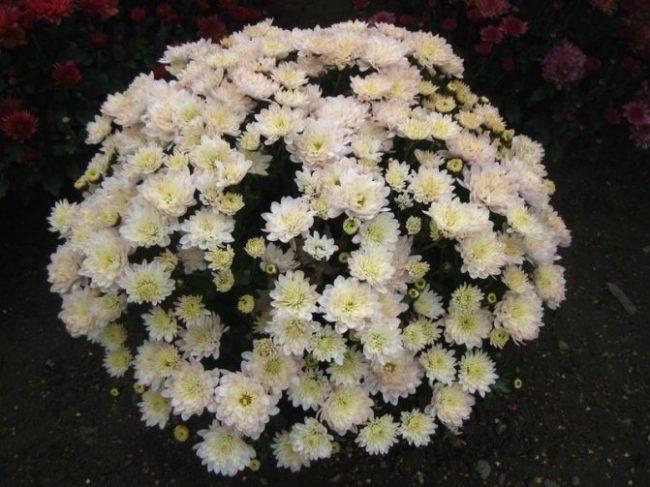
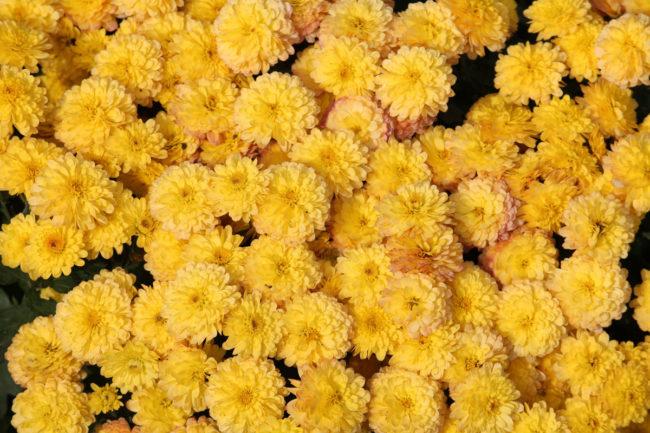
This variety has several varieties. These plants have much in common, differing only in the color of their petals. The bushes reach 35-45 centimeters in height. The shoots spread 40-45 centimeters in width.
Plants bloom in early September.
Branindio
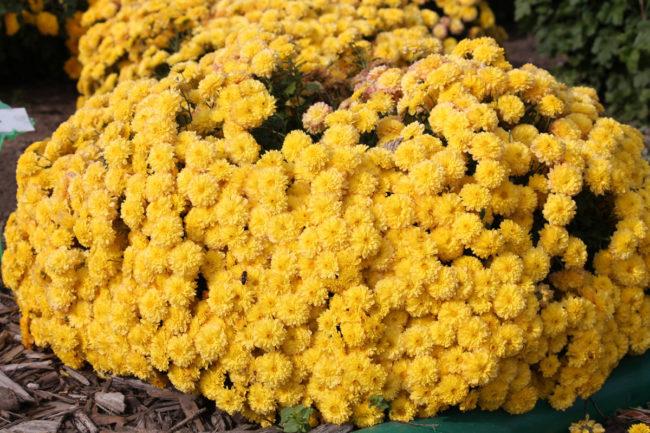

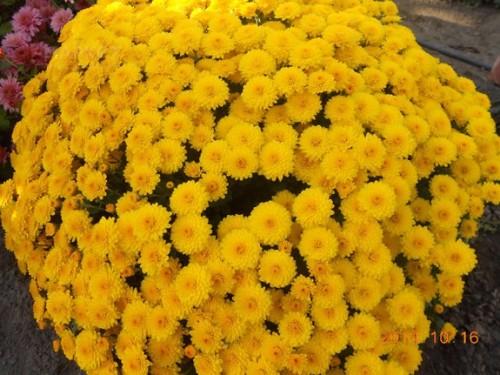
The spherical chrysanthemum bushes reach a height of 50 centimeters. When half-opened, the buds are orange. Later, the center remains orange, and the petals turn golden yellow.
The crop begins to bloom at the end of August.
Branfountain: purple, salmon, and lemon
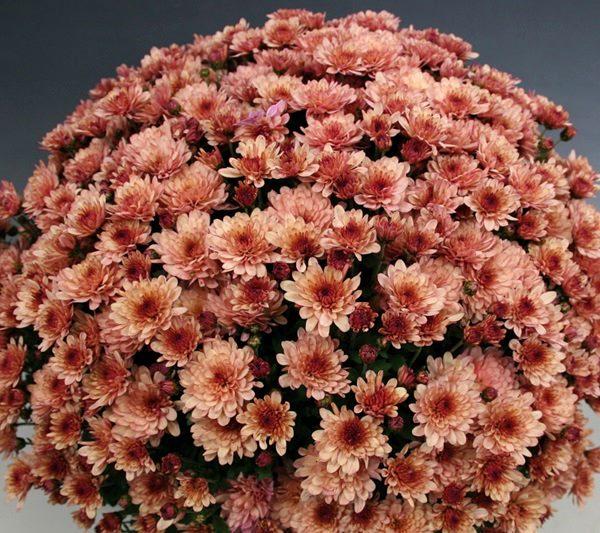
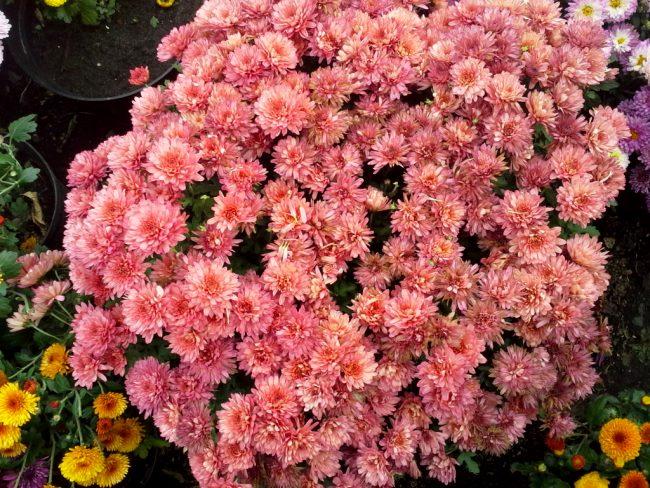

Breeders have developed varieties with identical characteristics but different petal colors. The plants' shoots reach a height of 40-50 centimeters. The buds form up to 4 centimeters in diameter.
Chrysanthemum begins to bloom in September.
Take a look Also

Brandroyal: red, pink, yellow and white
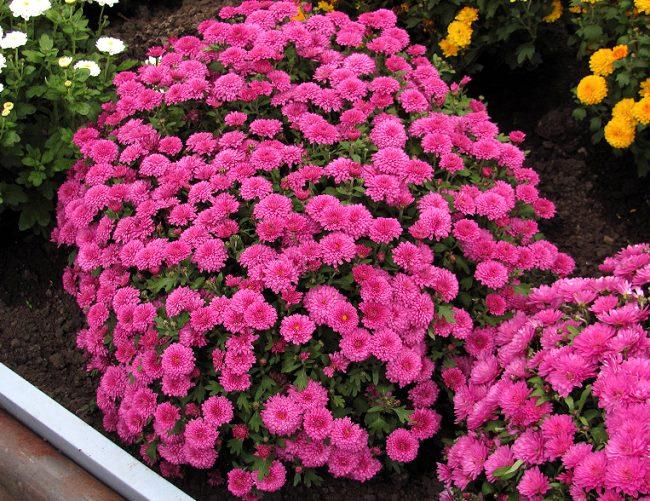
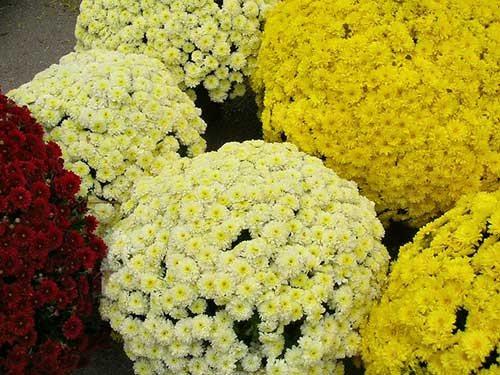
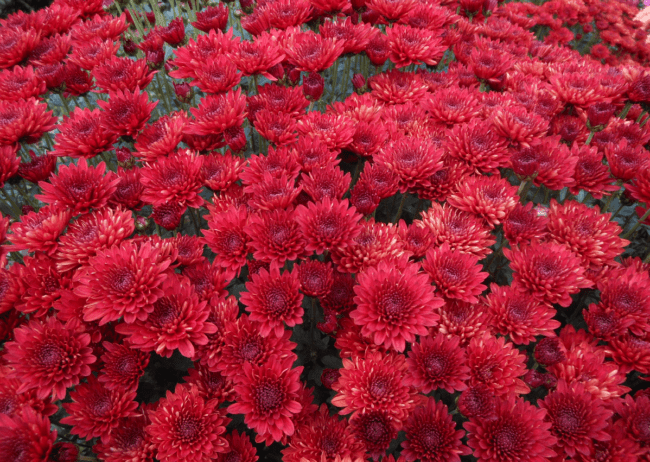
Brandroyal spherical chrysanthemums are a beautiful addition to any autumn garden. Depending on care, the bushes reach a height of 40-70 centimeters. The red, yellow, white, or pink flowers measure 4-5 centimeters in diameter.
Branhill: dark red and cherry
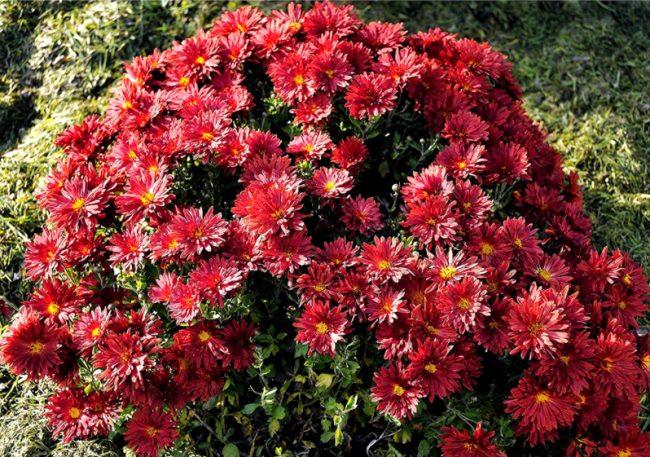
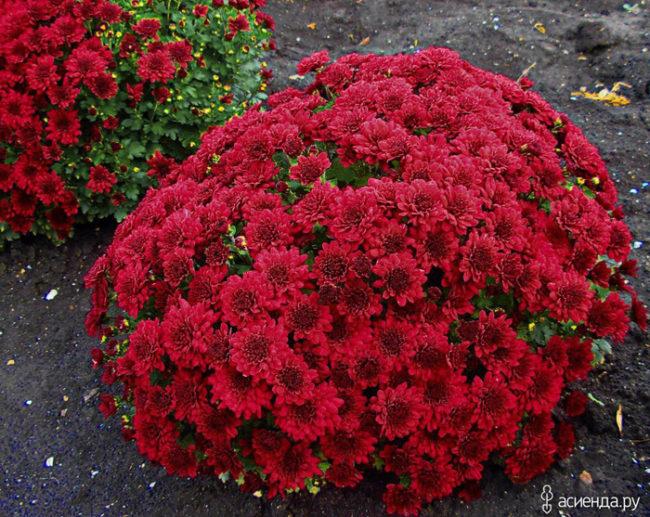
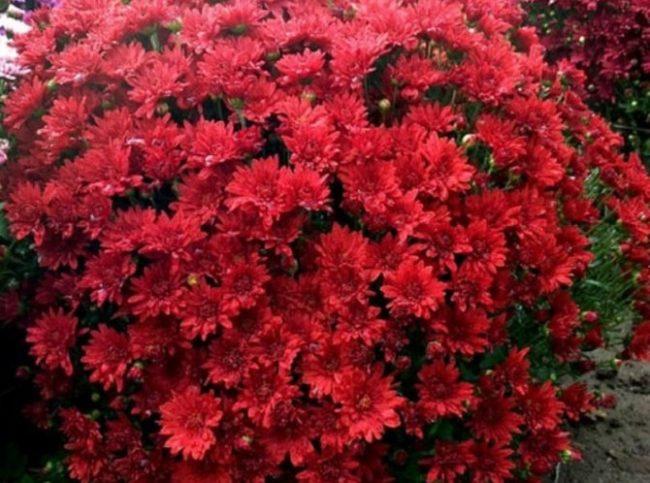
Compact bushes are covered with inflorescences up to 5 centimeters in diameter. The shoots reach 35-40 centimeters in height. The petals are dark red or cherry-colored, depending on the variety.
Low bushes of this crop are used to decorate alpine slides and flower beds.
Jacqueline Peach
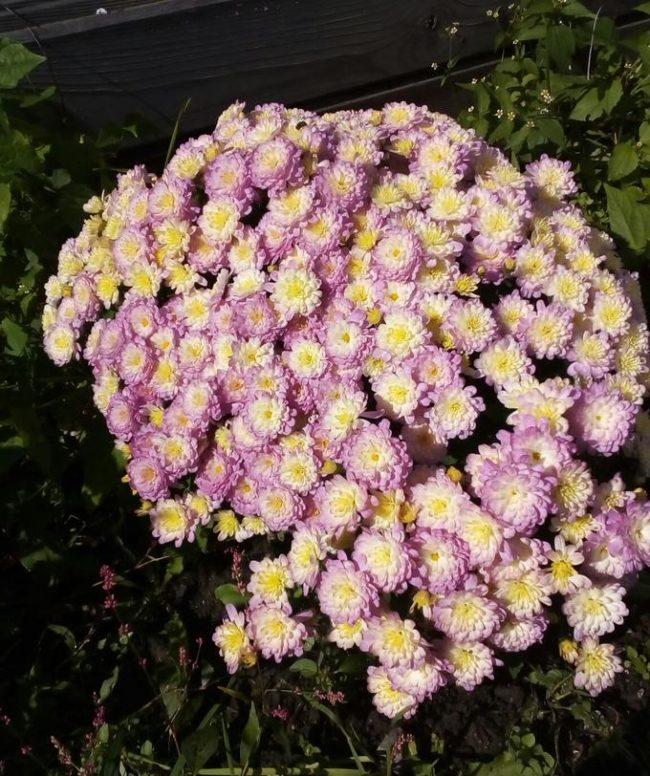
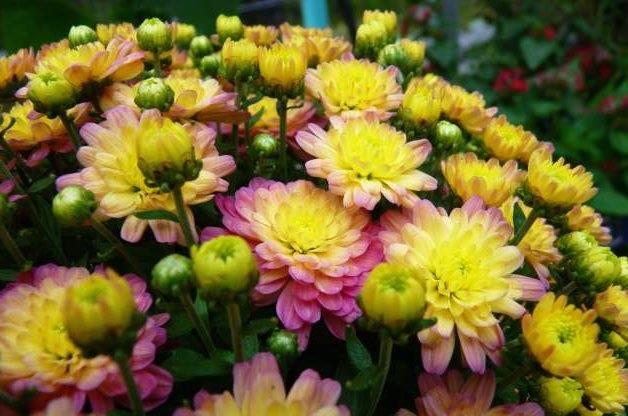
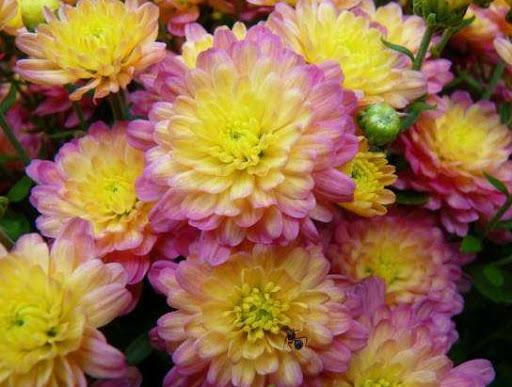
The petals of this spherical chrysanthemum are two-toned: yellow-pink and yellow-purple. Jacqueline Peach bushes grow 35-40 centimeters tall. The diameter of the fully opened buds is 3-5 centimeters.
The inflorescences of the chrysanthemum spherical Jacqueline Peach begin to bloom at the end of September.
Branspider Spirit
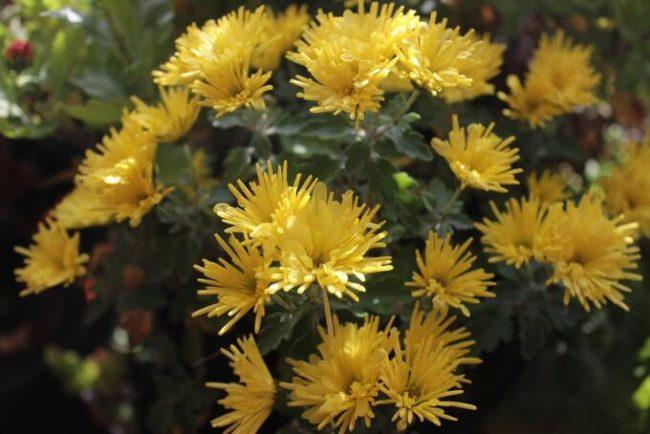
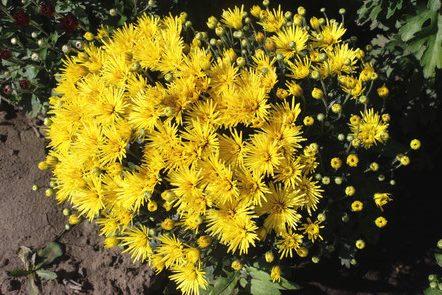
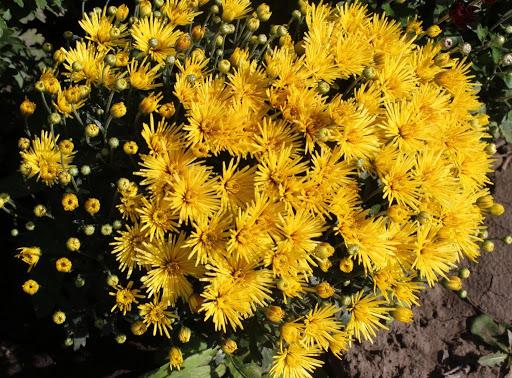
This variety stands out from others with its needle-like petals, which are a bright lemon color. The bush reaches a height of 70 centimeters. Flowering begins in late August or early September.
The crop is planted in a plot, in a container, and used as a cut plant.
Bransky plum
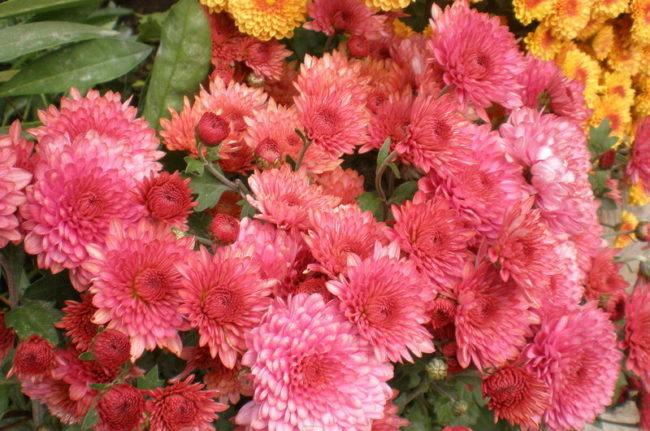
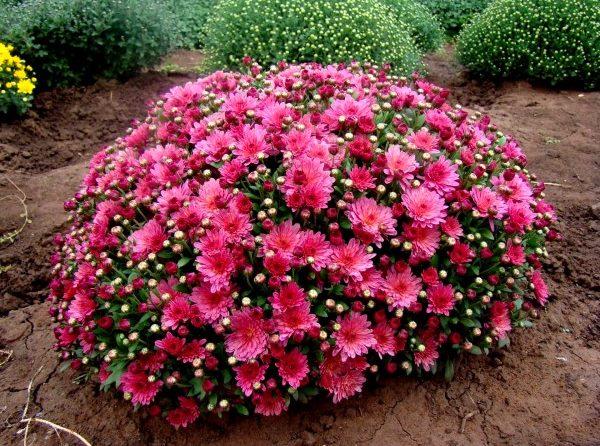
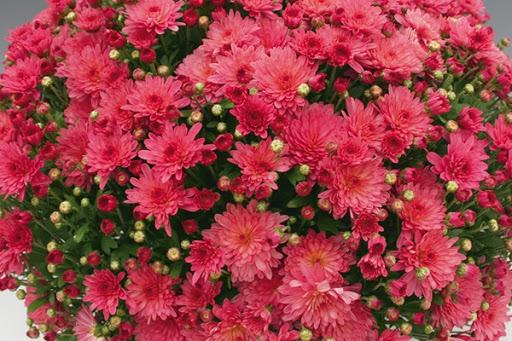
Chrysanthemum shoots spread 70 centimeters wide and tall. The petals are a bright plum color. The buds are about 4 centimeters in diameter. Korean chrysanthemums bloom in September.
The spherical chrysanthemum Bransky plum blooms in September.
Elfie White
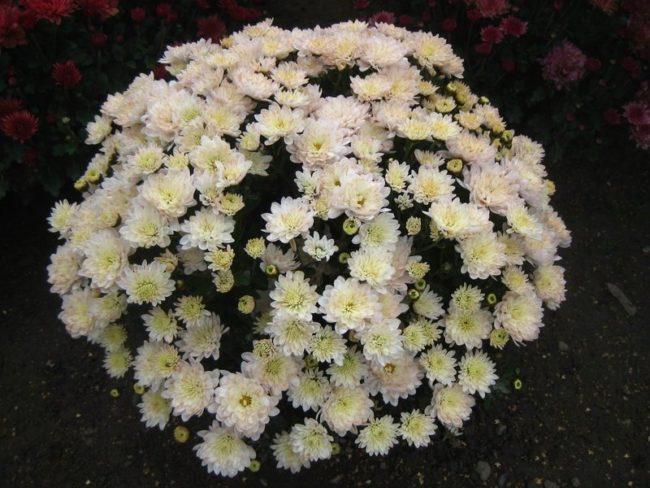
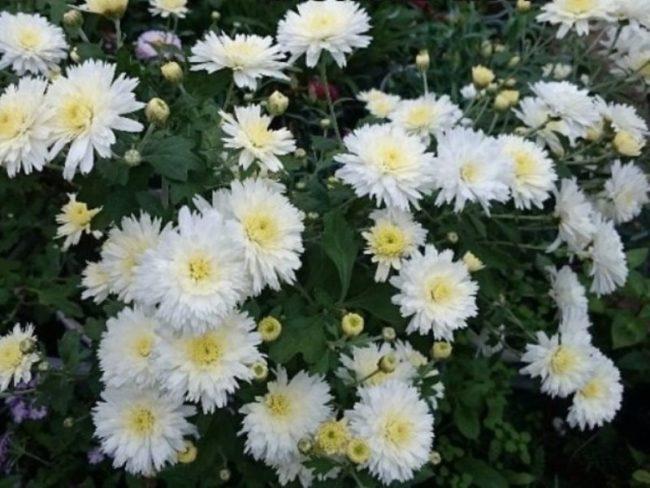
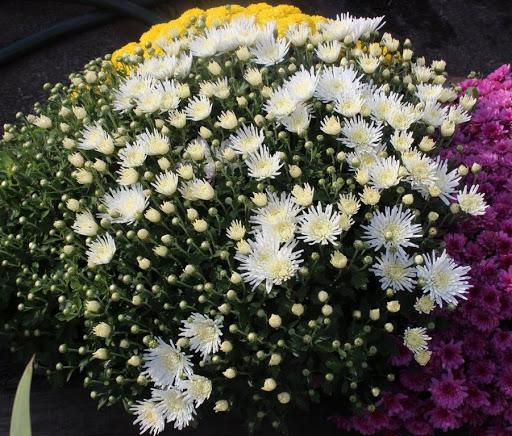
Elfie White multiflora stems reach 40-50 centimeters in height. The buds are white and small, reaching 3 centimeters in diameter. The plant blooms in September.
Chrysanthemum White Elf is planted in open ground, pots.
Advantages and disadvantages of the plant
Most varieties of the crop have the following advantages:
- beautiful in appearance;
- easy to care for;
- tall flower shoots are used for cutting;
- serve as decoration for the garden plot in autumn.
The following characteristics can be considered as disadvantages:
- susceptibility to fungal diseases due to excess moisture;
- thinning of shoots when kept in shade and partial shade;
- Decorativeness can reduce the appearance of aphids on shoots.
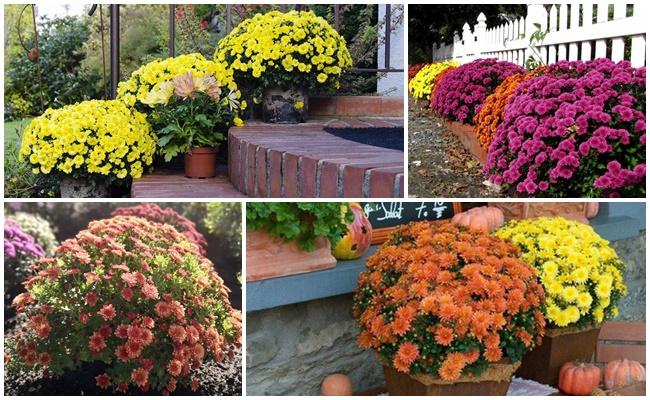
Please note! Korean chrysanthemums do not require pinching. The spherical shape is genetically determined.
Examples of use in landscape design
The plant has a variety of uses. It can be planted in open ground or in a pot. Flowering shoots are cut and placed in a vase of water.
In the flower garden
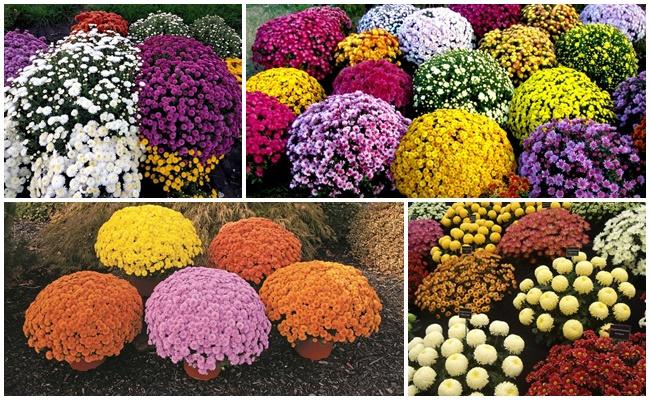
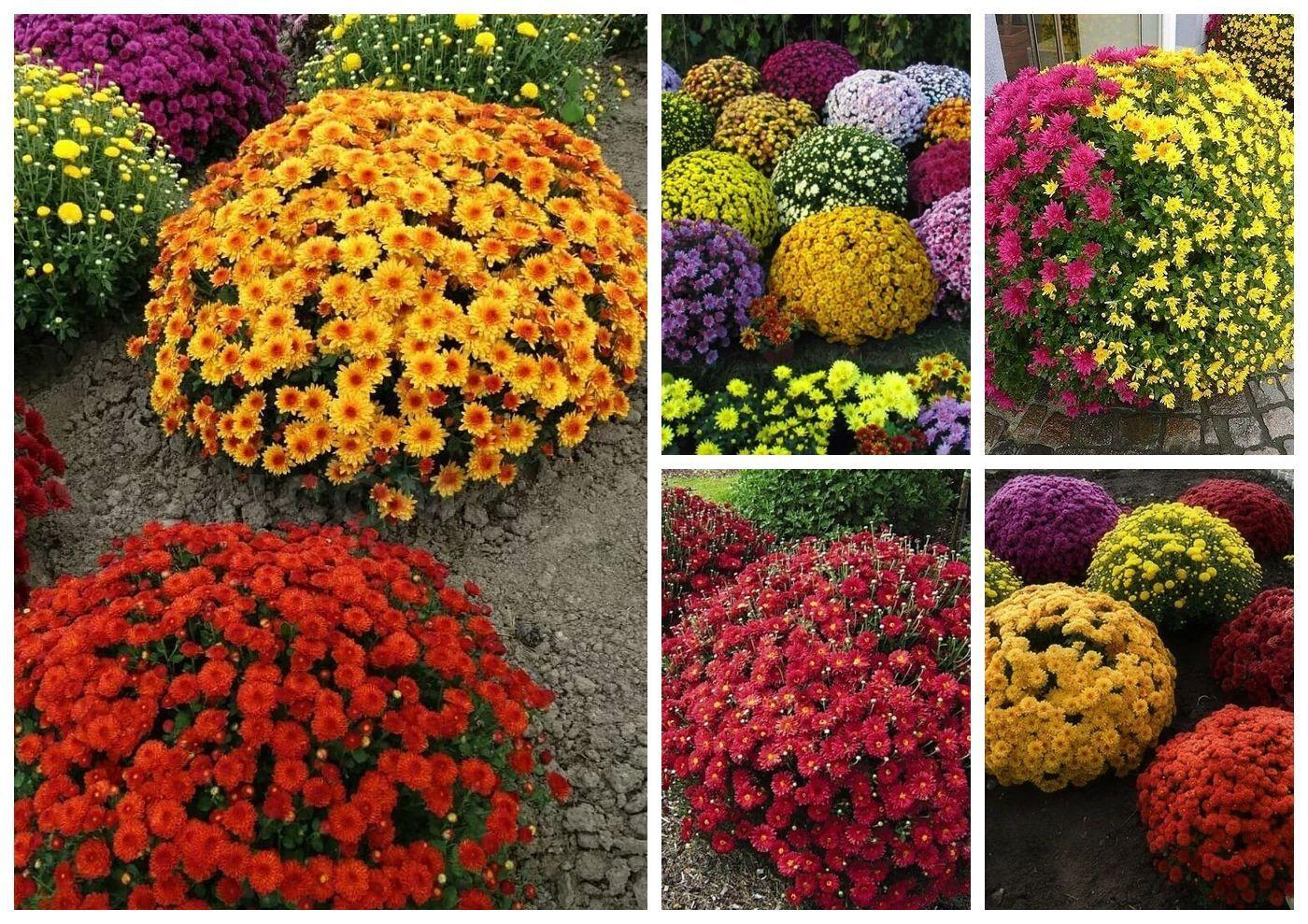
One way to use the globe chrysanthemum is to plant it in a group in a flowerbed. Alternating plants with different flower colors will look beautiful. Garden chrysanthemums are planted against a lawn backdrop, paired with green pyramidal bushes.
On the terrace
This plant can be planted not only in open ground but also in pots. Containers are also ideal for porches, terraces, and verandas. Dwarf varieties look best in pots. As they mature, they will remain compact and neat. These spherical container-grown bushes can be placed in any recreational area.
Along the paths
Low-growing varieties of multiflora chrysanthemums will look beautiful planted along paths. Choose plants with different ripening times. Then they will decorate the path from August until frost.

Timing and features of planting
Chrysanthemums are planted in spring and fall. In the south, they are most often planted outdoors in the fall. In the spring, the bushes are divided and replanted. In northern regions, planting occurs in May.
In the pot
Dwarf varieties are typically planted in containers. A small pot is chosen initially. As the bushes grow, they are transplanted into a larger container. A potted ball chrysanthemum can be used to decorate a terrace, gazebo, veranda, or porch.
The planting procedure is carried out in spring as follows:
- drainage consisting of expanded clay or small stones is poured into the bottom of the pot;
- fill with fertile, loose soil;
- plant the bush, lightly pressing down the soil;
- watered generously.
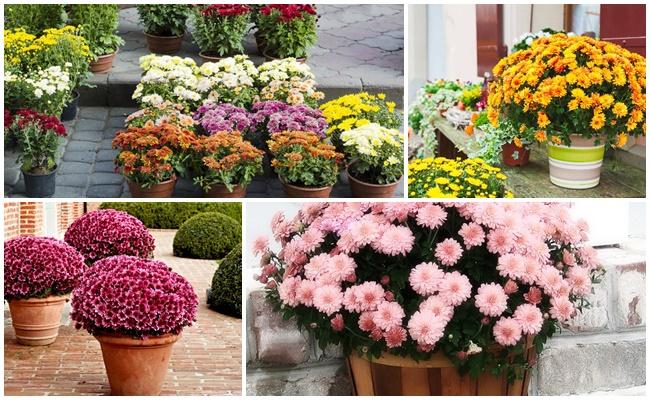
The soil in the pot dries out quickly. Therefore, in hot summers, water every day. Use warm, settled water. If it's cold, the plant may become ill.
Into open ground
To grow spherical chrysanthemums in your garden, plant them in the fall. Many flowering bushes are available for sale during this time. The gardener selects a suitable variety and immediately plants it in the ground. In colder regions, the plant is thoroughly mulched before the onset of frost. In Siberian climates, pots with plants are stored in a basement until spring, then planted outdoors.
By spring, spherical chrysanthemums planted in the fall produce numerous offshoots. If these are left undisturbed, the bush will become too dense. The shoots will be thin and the flowers small. Therefore, in the spring, the bushes are dug up, divided, and the offshoots planted separately.
Planting on the site is carried out as follows:
- dig holes at a distance of 50 centimeters from each other;
- drainage is placed on the bottom;
- fill with fertile soil;
- planting plants;
- watered generously.

The ground around the bushes is sprinkled with straw, peat, and compost.
Care instructions
To ensure rapid growth in the summer and beautiful blooms in the fall, chrysanthemums require careful care throughout the season. Water, fertilize, loosen the soil beneath, and perform preventative treatments.
Watering
Water the soil under the plants as needed. The top layer of soil should be allowed to dry out. Overwatering can cause root rot. Insufficient moisture will result in loss of ornamental beauty: shoots will stunt growth, and flowers will develop into small ones. Water Multiflora chrysanthemums in the morning or evening, at the roots. Watering the bushes from above in hot weather can cause leaf burn. Settled water and rainwater are beneficial for the plants.



Top dressing
Fertilizing the bushes begins two weeks after spring planting. Nitrogen and potassium are used to promote rapid shoot growth. During budding, mineral fertilizers rich in potassium, phosphorus, and magnesium are applied. Potassium is added in early October to promote successful overwintering of the bushes outdoors. Nutrients are applied to the soil after moistening with plain water. Otherwise, the root system may be damaged. In summer, foliar feeding with potassium humate is possible.
Important! Nitrogen should only be applied in early spring. Otherwise, excessive bush growth will occur at the expense of flowering.
Protection from insects and diseases
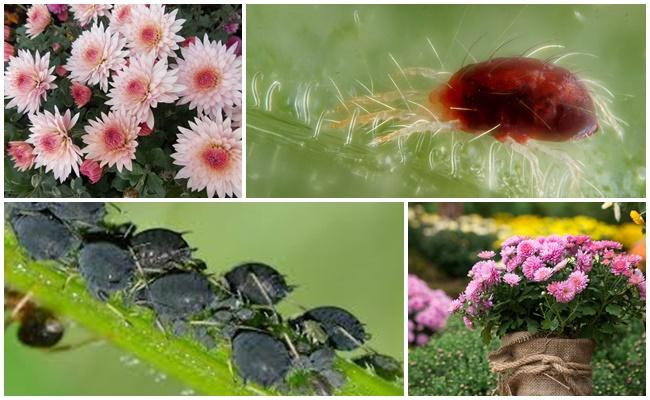
Chrysanthemums can be susceptible to disease if not properly cared for or exposed to adverse weather conditions. If white spots appear on the leaves, it means the plant has been infected with powdery mildew. Rust is another common disease. Copper-containing preparations are used for prevention and treatment.
Common pests include aphids and spider mites. These insects feed on the sap of the leaves, causing plant damage. To control these pests, use an insecticide solution. Slugs that feed on the lower shoots of the Multiflora spherical chrysanthemum are collected by hand.
Loosening and mulching the soil
After watering, loosen the soil. This prevents crust formation and allows air to reach the root system. Careful loosening is essential, as chrysanthemums have a shallow root system. Clumsy movements can easily damage it.
Weeding is carried out simultaneously with loosening the soil. Weeds can carry pathogens and harmful insects. Tall weeds rob chrysanthemums of nutrients and sunlight. If the root zone is mulched, it will be difficult for the grass to reach the surface. Mulch also helps retain moisture.

Preparing multiflora for winter
In southern regions, the plant survives the winter safely in open ground. In areas with harsh weather, the bushes will need to be dug up in the fall. Store them in a cool room over the winter.
Covering the plant in open ground
Preparing for winter begins with pruning shoots with dried inflorescences. Leave stumps 10-15 centimeters high. Sprinkle the root area with mulch: sawdust, compost, or straw. In southern regions, this will be sufficient.
In temperate climates, bushes should be additionally covered with spruce branches. This procedure is performed after the onset of sustained frost. Covering the bushes prematurely can cause the root system to rot in the soil. As soon as warmer weather arrives, remove the covering.
Storing potted flowers in the basement and on the balcony
In Siberian conditions, it's best to play it safe and dig up the bushes in the fall. This is the only way to preserve the chrysanthemums until spring. Place the rhizomes in containers, cover with soil, and store them in a basement or on an unheated balcony. Inspect the bushes periodically. If necessary, moisten the soil with water from a spray bottle.
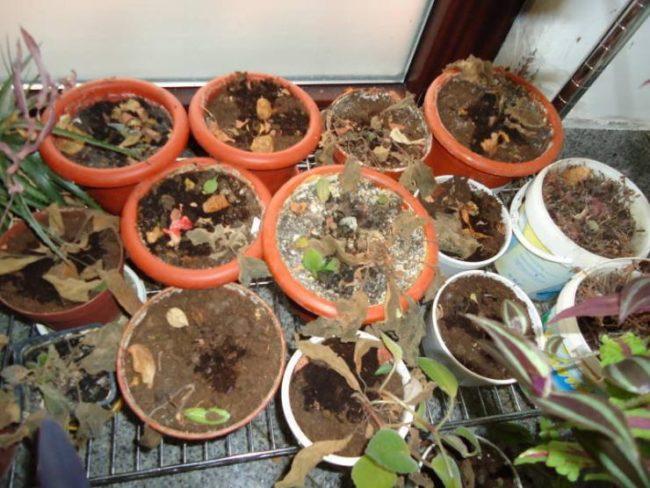
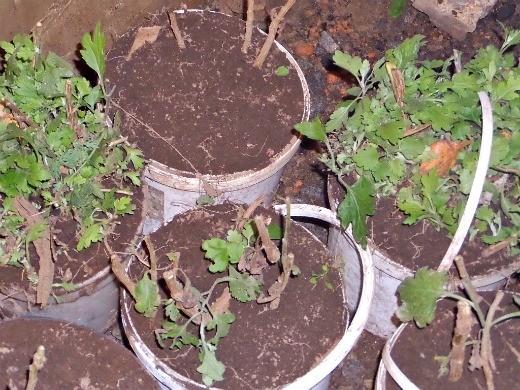
If a gardener wants to enjoy flowering bushes indoors, they should dig them up in advance and place them in a pot. Chrysanthemums can continue to bloom indoors for another 2-3 weeks. The key is to keep the room cool. If the plants are placed in a warm room, the foliage will immediately begin to yellow and wilt.
Please note! If your spherical chrysanthemum has been affected by fungus while stored in the basement, the affected parts should be removed and the bushes treated with a fungicide.
Methods of reproduction
At home, the plant is propagated by dividing the bush and taking cuttings. Seed propagation is generally not used. This process is time-consuming and labor-intensive. Furthermore, propagating the plant by seed may not convey all the stated characteristics of the variety.
By dividing the bush
If the plants are planted in the ground in early fall, numerous new shoots will form over the winter. These can be planted separately in the spring. This way, the gardener will get many new chrysanthemum bushes without any expense. This procedure is also performed when the plant becomes overcrowded. If a bush has too many shoots, they will grow thin and weak.



Dividing the bush is done as follows:
- the plant is dug around on all sides with a shovel;
- they take it away;
- shake off the soil, separating the shoots;
- new bushes are planted in pre-prepared holes;
- watered.
The ground around the plants is sprinkled with mulching material.
By cuttings
Propagation by this method is carried out at the beginning of spring as follows:
- cut the apical cuttings 8-10 centimeters long;
- the lower leaves are removed;
- the cuts are powdered with Kornevin;
- planted in a container;
- watered.

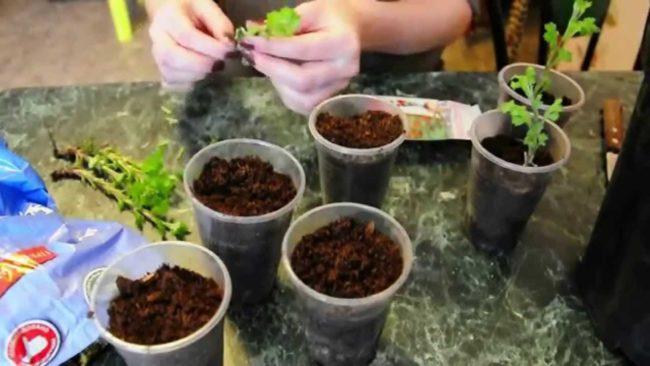
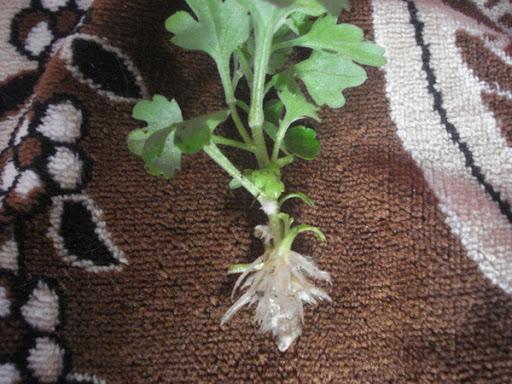
To create greenhouse conditions, the container is covered with plastic film. The cover is removed daily, and the plants are aired. In 2-3 weeks, roots will appear on the cuttings. After this, they are planted in open ground or in individual pots.
Important! Remove condensation from the film and container. Failure to do so may result in the cuttings becoming infected with pathogenic microorganisms.
Seeds
This is a rarely used method for propagating the multiflora spherical chrysanthemum. The process begins in late winter or early spring. Fill the container with a substrate consisting of turf, leaf mold, and sand. Then, moisten it with water from a spray bottle. Seeds are scattered over the surface and covered with a thin layer of soil.
Cover the container with glass or plastic and place it in a warm location. Care for the seedlings: water as needed and ventilate daily. When sprouts appear, remove the cover. After two leaves appear, transplant them into individual containers. When the seedlings reach a height of 20 centimeters, plant them in the ground.
Related posts:
 Top 15 Korean Chrysanthemum Varieties, Planting and Care in the Open Ground
 Top 10 Chrysanthemum Varieties, Planting and Care Guidelines for Outdoor Plants
 Descriptions and characteristics of chrysanthemum species and varieties, growing rules
 How to properly prepare chrysanthemums for winter and storage methods by region
 Why chrysanthemums sometimes fail to bloom in open ground and how to speed up the process
 Timing and methods of propagating chrysanthemums at home, their cultivation
 The best time and rules for transplanting chrysanthemums to another location in the fall, care
 The best eggplant varieties for growing in a polycarbonate greenhouse: planting and care