- Why is delphinium replanted?
- When should a perennial plant be replanted?
- In the spring
- In summer
- In the fall
- How to transplant a flower to a new location
- Site selection and preparation
- Transplantation scheme and technology
- How to feed the plant after the procedure?
- Possible difficulties and problems
- Tips from experienced gardeners
Delphinium's popularity stems from its decorative qualities. Its tall flower stalks attract attention and evoke admiration. With its vibrant hues, the plant can brighten any corner of the garden. To achieve this, it's important to carry out all necessary gardening procedures in a timely manner, including repotting the delphinium in the fall.
Why is delphinium replanted?
The plant can grow in one place for up to 10 years, but with each season the flower will weaken, lose its decorative effect, and will also produce sparse flowering with small inflorescences. Therefore perennial delphiniums They require regular replanting. Over time, the soil in which the crop grows becomes poorer, and even fertilizing it fails to improve its quality.
When should a perennial plant be replanted?
Both young seedlings and mature bushes do not tolerate transplanting well. It is recommended to transplant plants at 4-5 years of age. At this time, the bushes form numerous rhizomes suitable for division, which are able to root well.
If the flower begins to get sick, or its foliage has dried out, or you suspect that the plant's roots are cramped, you can move the delphinium to a new bed earlier than planned.
Tip! You can repot your plant in spring, summer, or fall, depending on the variety.
In the spring
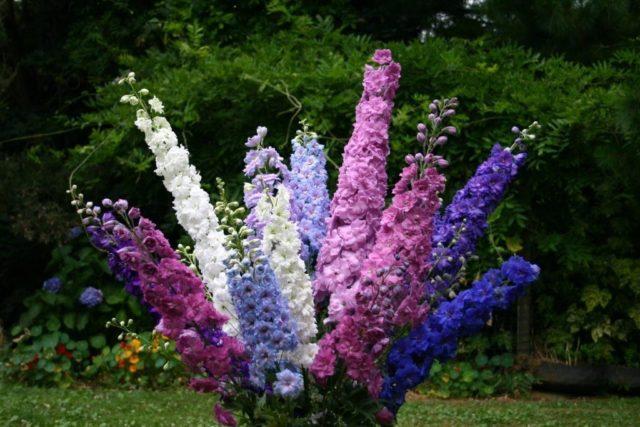
Spring is considered the best time to repot delphiniums. It's recommended to do this in mid-April, after the threat of frost has passed.
In summer
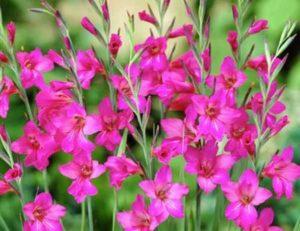
Gardeners also repot delphiniums in the summer. It's important to do this in August, after the plant has finished flowering.
In the fall
Excellent adaptability and vigorous rooting allow delphiniums planted in the fall to gain strength before frost sets in. And then, next season, they'll adorn your garden with a lush display of blooms.
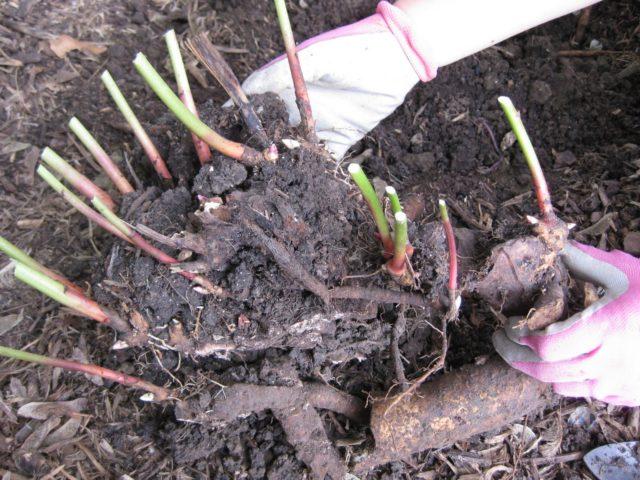
The procedure can be performed in September by dividing the rhizome. This method is suitable for delphiniums that have grown too large. To do this, dig up the perennial and divide it into sections, without damaging the renewal buds. Treat any breaks or cuts with wood ash. Then, replant the plants in a prepared flowerbed. Care must be taken when dividing, as damaging part of the root can cause the plant to die.
 Important! Bushes transplanted in the fall need protection from frost.
How to transplant a flower to a new location
Repotting is stressful for any plant. Delphiniums are no exception, so this process requires careful consideration: choosing and preparing the site correctly, and knowing the proper procedure and technique.
Site selection and preparation
Important criteria for site selection:
- The area should be protected from the wind. Since the flowers are tall, they can break in strong gusts. Therefore, it's best to tie shoots over 50 cm tall to secure supports.
- It is not recommended to plant the crop where groundwater is close.
- You should not give preference to swampy areas, since prolonged stagnant water will lead to rotting of the plant roots.
- It is desirable that the flowerbed be illuminated by the sun in the morning and evening hours, and shaded at midday.
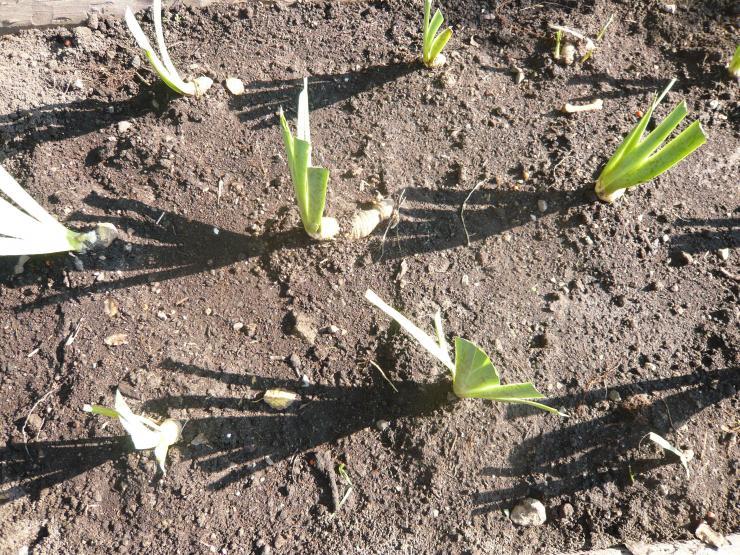
If you choose the right site, the plant will delight you with blooms in just two weeks. Delphiniums will thrive in sandy or loamy soil enriched with organic matter. The plant prefers neutral or slightly acidic soil.
Before replanting perennials, dig the soil to the depth of a spade. Then remove weeds and fertilize with nutrients. Well-aged compost can be used as fertilizer.
Transplantation scheme and technology
The transplant involves the following steps:
- Form a hole no more than 40-50 cm deep.
- Place drainage at the bottom to a height of 15 cm.
- Combine the soil from the hole with ash, compost and superphosphate and fill the hole halfway.
- Place the seedlings into the hole, spreading out the roots.
- Sprinkle with soil and compact it, while holding the plant in an upright position.
- Carry out watering.

It's important not to plant delphiniums too deeply when repotting. When planting, position the plant so that the root collar, with its replacement buds, is level with the ground surface after the soil has been moistened and settled.

How to feed the plant after the procedure?
It's best not to fertilize the flowers immediately after repotting. They'll need 2-3 weeks to adapt to their new location. The soil contains all the necessary nutrients for the initial period, and applying additional fertilizer right away can result in an overdose, which will negatively impact the plant's growth and development. After this, the delphinium will require additional feeding. It's best to use a complex fertilizer consisting of mineral and organic substances.
Possible difficulties and problems
A danger for transplanted delphiniums is the alternation of frosts and thaws in late autumn and early spring. During this time, sudden temperature fluctuations and excessive moisture can cause root rot. Therefore, it is recommended to plant the plant in elevated areas. Also, in a harsh winter, transplanted flowers can die in the fall. It is helpful to cover them with spruce branches or a layer of fallen leaves.
Tips from experienced gardeners
To avoid many mistakes when growing, you need to follow several valuable tips from experienced gardeners:
- Transplant only bushes that have reached 15 cm in height.
- Maintain a distance of at least 50-55 cm between transplanted flowers.
- Immediately moving the delphinium to a new location will help solve the problem of diseases and changes in its appearance.
- Weeding and loosening of the soil around transplanted seedlings should be done regularly.
To ensure your plants continue to delight you with their lush blooms for a long time, don't be afraid to repot your delphinium. It's important to do so at the right time and with extreme caution.
Related posts:
 How to properly plant peas in a greenhouse and open ground
 How to propagate and grow peas, cultivation technology, and care in open ground
 How to plant walnuts, care for them, and grow them at home
 When is it better to transplant gooseberries to another location – in spring or autumn?
 Description of varieties of sowing peas and cultivation, to which family they belong
 How to plant grapes step by step, with a description of the process and care
 When is the best time to replant hostas in the fall? Rules and mistakes.
 The best time and rules for transplanting chrysanthemums to another location in the fall, care