
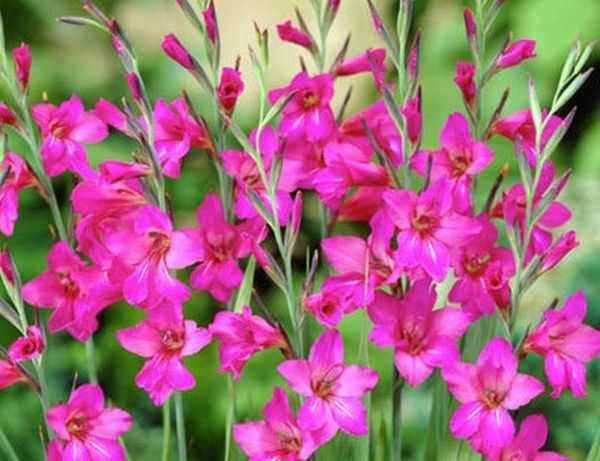
Among existing gladiolus varieties, the Byzantine variety stands out for its bright, large flowers, which appear on arrow-shaped stems. This bulbous plant originated in the Mediterranean region but later spread to northern regions, including Russia. The Byzantine gladiolus requires little maintenance, but it does not tolerate weeds.
The legend of the Byzantine gladiolus
The name "gladiolus" comes from an ancient legend dating back to BC. At that time, two Thracians, Seuthes and Teres, were captured by the Roman Empire. The young men were assigned to be gladiators. One day, Seuthes and Teres were forced to fight each other. But during their imprisonment, the young men became friends and decided to disobey the order. Instead of fighting in the arena, Seuthes and Teres stuck their swords into the ground and embraced.
For this offense, both young men were executed. The young gladiators' blades took root and eventually grew into a beautiful flower, known as the gladiolus.
Thanks to the legend described, these flowers are today perceived as a symbol of friendship and fidelity.
Botanical description of the variety
Gladiolus is a bulbous plant in the Iridaceae family. The Byzantine variety is distinguished by the following characteristics:
- the trunk is thin, straight, up to 60 centimeters long;
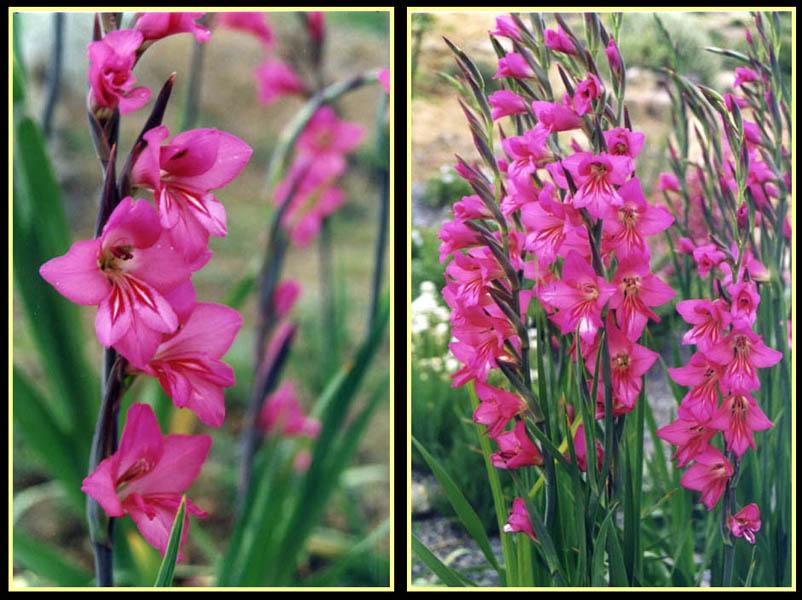
- flowers are large, 4-6 centimeters in diameter;
- common flower colors are purple and crimson;
- bracts form tubes up to 1.5 centimeters long;
- leaves are thin and sword-shaped;
- Up to 10 flowers are formed on one trunk.
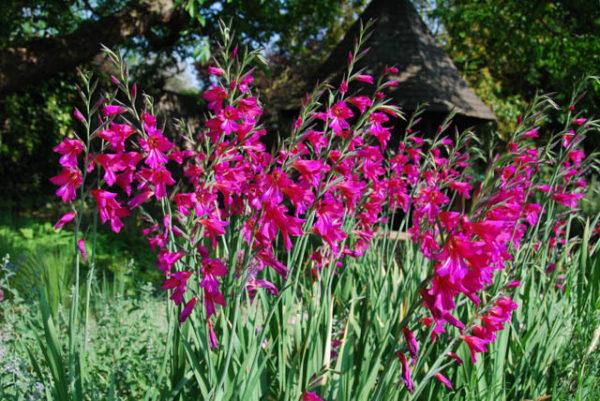
The Byzantine gladiolus variety tolerates frost well, making it popular in both central Russia and the Ural Mountains. It is a perennial plant and is grown primarily to decorate flowerbeds.
Features of planting and growing
To ensure that gladiolus delights gardeners with the beauty of its flowers every year, several essential rules must be followed when preparing the plant for planting. When growing the plant, certain requirements must also be met; otherwise, signs of infectious diseases will appear on the stems and leaves.
Preparing the bulbs
Gladiolus bulbs are recommended to be dug up every fall and stored in a cellar until the thaw sets in. Twenty-five days before planting, the bulbs should be sorted, removing any damaged parts. Before planting, remove the bulb scales, which protect the plant over the winter. If the damage is minor, scrape away the damaged areas with a knife, and treat the bulbs with a weak solution of potassium permanganate.

Before planting, it's recommended to cut large bulbs over eight centimeters in diameter in half, being careful not to damage the sprouts. This procedure helps rejuvenate the tubers. Similar steps should be taken with store-bought bulbs. After preparation, the tubers are planted in separate boxes and left for several days. It's recommended to treat the bulbs with Fufanon or Decis solutions, which will protect the future gladiolus from diseases.
Selecting a location and landing
Gladioli should be planted in well-lit and ventilated areas, in loose soil rich in micronutrients. However, the plant should be protected from strong gusts of wind. Gladioli thrive in soil previously occupied by strawberries, garlic, or onions. To ensure healthy sprouts, it is recommended to add a mixture of 50 grams of superphosphate and 20 grams of potassium sulfate to the planting site in the fall. You can also use the humus used to fertilize the soil in the spring.
The bulbs are planted in mid-April or early May. It is recommended to place the tubers in holes 6-10 centimeters deep, with the bottoms covered with sand. If the soil is light, the gladiolus should be planted 15-20 centimeters deep. Then, sprinkle the tubers with a small amount of sand and water them with a warm solution of potassium permanganate. Finally, add soil to the hole.

The plant is planted at a distance of 20 centimeters from each other. A distance of 30 centimeters should be maintained between rows of gladioli. In southern regions of Russia, the flower can be planted in the fall, covering the area where the tubers grow.

Watering and fertilizing
In summer, after emergence, water the plant up to once a week. During the flowering period, water twice as often. A month after planting the bulbs, apply nitrogen fertilizer. After 2-3 weeks, apply potassium sulfate combined with superphosphate. The last fertilization should be in mid-August.
Loosening the soil
It's recommended to loosen the soil around gladioli every 10 days. This will prevent the plant from wilting prematurely. Weeds, which can cause the plant to die, should also be removed with equal frequency.

Protection from insects and diseases
Gladiolus is most often infested by thrips. To prevent this insect from infesting the flower, it is recommended to soak the tubers in solutions of Intavir, Fitoverm, and Karbofos before planting. These solutions are also applied to the plant during the growing season.
Gladioli are primarily susceptible to fusarium wilt. This disease develops due to elevated nitrogen levels in the soil. If the first signs of fusarium wilt are detected, the plant should be treated with copper-containing preparations.
For other diseases, it is recommended to pull out and burn the damaged plant. Gardeners in southern regions also encounter signs of bacterial scab. This microorganism thrives on plants growing in marshy areas with highly alkaline soils. A 3% solution of ferrous sulfate helps combat bacterial scab.
Wintering
For the winter, gladiolus tubers are dug up and stored in a basement. If the flower grows in southern regions, the bulbs can be left in the soil, covered with spruce branches.
Methods of reproduction
Gladioli are propagated by seeds and bulbs. The former method is not used in horticulture. This is because seeds do not retain the full set of genes necessary for the new flower to retain the characteristics of the parent plant. Propagation by bulbs is more popular. To obtain a new flower, the original tuber is cut into two or more pieces, taking care not to damage the shoots (cormels). The number of resulting cloves depends on the size of the bulb.
The resulting parts are then treated with a mixture of coal and sulfur and disinfected.
Next, the tubers are placed in warm water, heated to 30-35 degrees Celsius, for 24 hours, after which they are planted in peat or fine gravel. The plant is grown in these conditions for 5-7 days. Then, after the first sprouts appear, the crop is transferred to well-loosened soil.

Reviews
Svetlana, Solnechnogorsk
"Despite gardeners' recommendations, we planted a Byzantine gladiolus in the fall. And with the arrival of the following spring, the first shoots appeared. Growing and caring for this flower presented no problems. The gladiolus thrived in the rose bed."
Nadezhda, Volgograd
"I was drawn to the Byzantine variety for two reasons. First, this plant boasts beautiful flowers that appear in early summer. Second, gladioli are low-maintenance, despite what the internet says. We tested this trait in our own garden. Over two years of growing it, it didn't cause any problems. We watered it weekly in the summer and less frequently in the spring. We only fed it during the first year after planting. We didn't dig up the tubers for the winter, although we plan to do so now."
Valentina, Voronezh
"The Byzantine gladiolus is a real find for lazy gardeners. It's easy to care for, yet grows well, brightening up flowerbeds. Another advantage of the plant is its ability to survive the winter in the soil."
Related posts:
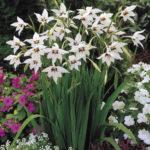 Description of the fragrant gladiolus Acidanthera, planting and care in open ground
 Description of Japanese gladiolus varieties, planting and care in open ground
 Description and characteristics of the Jelly potato variety, planting rules and care
 Description and treatment of potato diseases, methods of control using folk and chemical means
 Description and characteristics of wild and cultivated varieties of gladioli
 Description of New Zealand delphinium, growing from seeds and propagation methods
 Description of the best potato varieties of domestic and foreign selection
 Planting and caring for indoor pomegranates at home for beginners