
- Jelly Potato: History of Variety Development
- Characteristics and description
- Appearance of the bush
- Potato yield and taste
- Where is the root vegetable used?
- Resistance to diseases and insects
- Recommended climate zones for growing
- Growing conditions requirements
- Required soil composition
- Choosing the best place to plant potatoes
- Temperature conditions
- Planting a crop on a plot
- Seed preparation
- Timing and sowing pattern
- How to care for the variety
- Watering
- Fertilizers
- Pest control
- Loosening and mulching the soil
- Harvesting and storage of crops
- Reviews of the variety
Among the vast variety of potatoes, which have long been our second bread, a modern variety, Jelly, has emerged. The description of the Jelly potato variety, reviews, and photos indicate that the breeding process was successful and the new potato will find fans.
Jelly Potato: History of Variety Development
The creators of the Jelly variety are German breeders who consider their "brainchild" to be a mid-early table potato variety: Jelly tubers mature in 70-90 days. The new potato variety was officially recognized in 2005, and by 2009, it was included in the State Register of the Russian Federation.
Characteristics and description
This nightshade crop is distinguished by its large size and the large number of tubers per cluster. The uniformly sized tubers have excellent characteristics and are distinguished by their excellent flavor. They have a marketable appearance and are versatile in use.
Appearance of the bush
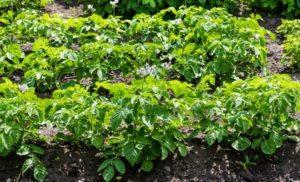
Jelly forms a tall, upright bush, sometimes semi-spreading. Few large stems bear lush, green foliage with wavy edges. During flowering, 5-star-shaped, white flowers appear. These flowers ripen into a few green berries.

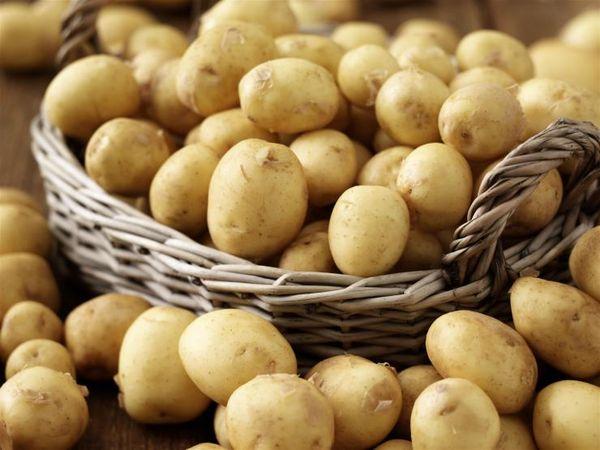
Up to 15-18 tubers ripen in a single cluster. They are characterized by a smooth, slightly rough surface, yellow skin, and a rounded-oval shape. The tubers, uniform in shape, weigh between 80 and 140 g. The eyes are practically invisible on the surface. The dark yellow flesh is the color of butter.
Potato yield and taste
The Jelly variety is considered high-yielding, but it's not a record-breaker: it yields 300 centners per hectare. This is a decent yield for a mid-early variety. The tubers are roughly uniform in size, and small specimens are rare in the cluster.
The potato is distinguished by its excellent taste. Cooked tubers are characterized by a creamy flavor and a distinct potato aroma. The starch content is 15-17%, so Jelly tubers retain their shape and crispness during cooking.
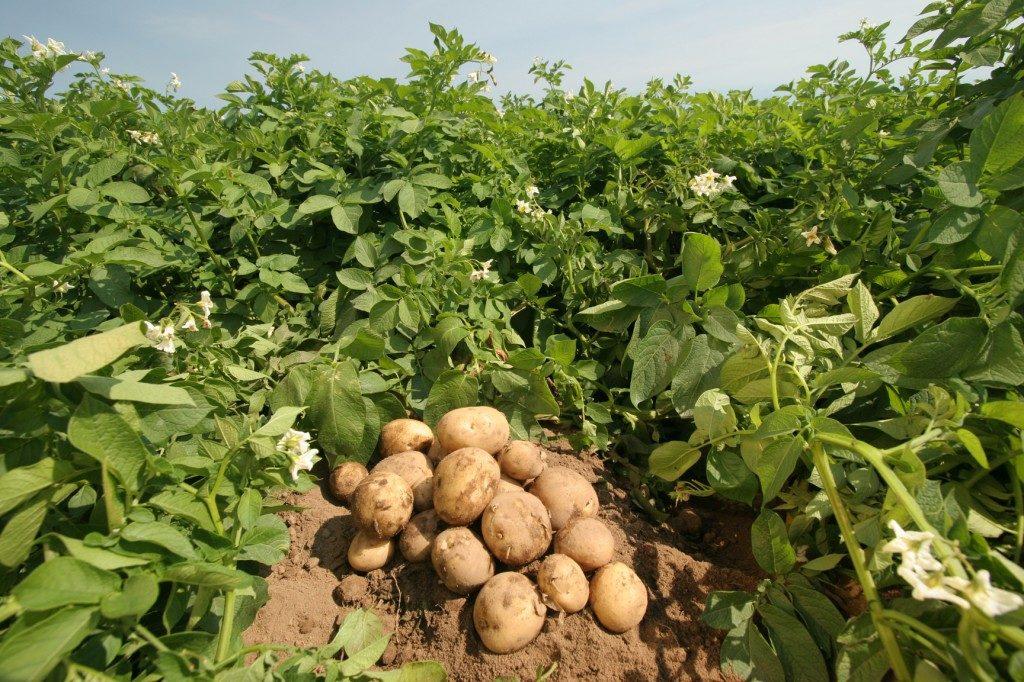 Note! Thanks to their thick skin, the tubers are resistant to mechanical damage and store well. This quality makes it possible to use a combine harvester when harvesting on farms.
Where is the root vegetable used?
In cooking, Jelly tubers are used to prepare first and second courses. They are suitable for frying, making chips, and French fries. The dark yellow flesh does not lose its color when cooked. However, the puree is not quite as good in consistency and flavor.
Resistance to diseases and insects
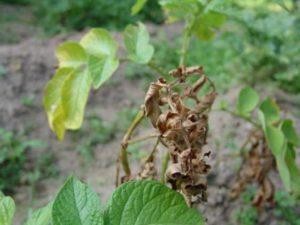
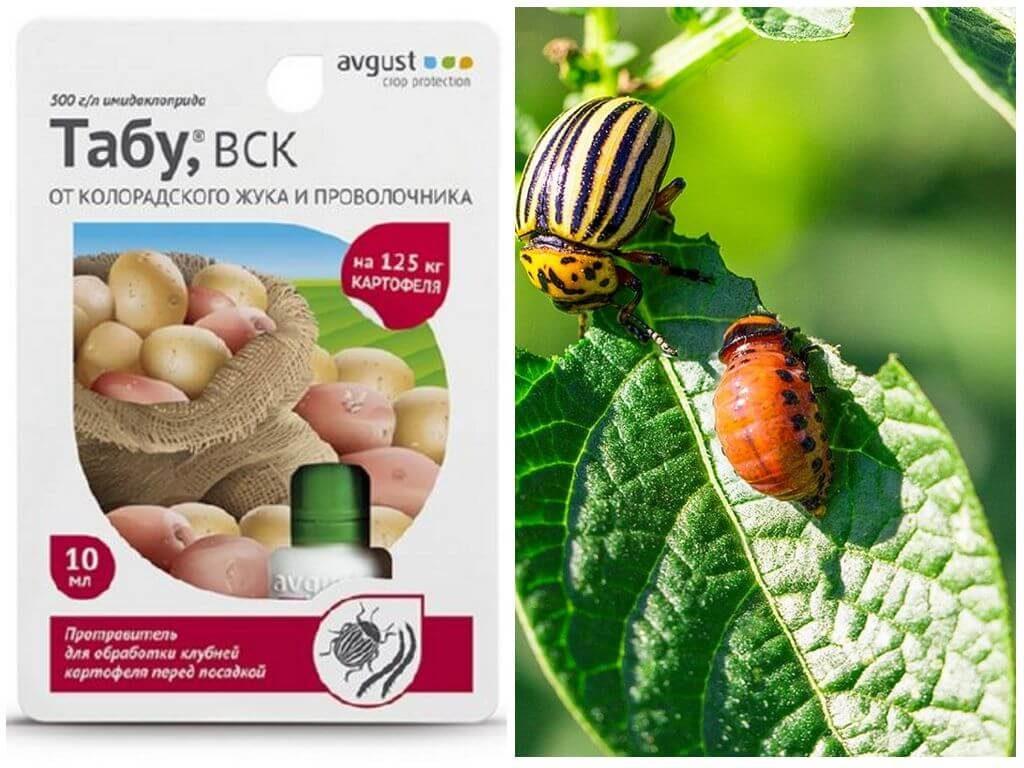
Jelly potatoes have good immunity and are resistant to potato cancer and a number of fungal diseases. They are susceptible to late blight, which attacks them in rainy summers. The fungal infection affects not only the leaves but also the tubers. Among pests, the Colorado potato beetle causes serious damage to plantations. If potatoes occupy large areas, chemical treatment is essential.
Recommended climate zones for growing
In our country, this variety is recommended for cultivation in the Central and Volga-Vyatka regions. It has proven itself in Russia, Ukraine, and Belarus. In our country, it has spread throughout the country and is known in the central part of the country and beyond the Urals. It grows in the Moscow region, the Leningrad region, and further north, where, thanks to the short growing season, it produces a productive harvest.
Growing conditions requirements
For the Jelly potato variety, site location, soil composition, and nutrient content are important. It's important to plant the nightshade crop at the right time, choosing the optimal temperature conditions.
Required soil composition
The ideal soil type is sandy loam, light and fertile. They can also be grown in loamy soils, adding humus and peat for better aeration. Potatoes thrive in slightly acidic soils with a moderate pH.
Choosing the best place to plant potatoes
Since the Jelly variety is a mid-early variety, it should be planted early. Elevated, sun-warmed sites where snow melts quickly are ideal for planting.
Every 2-3 years, the variety needs to be replanted to a new location, otherwise it will degenerate. It's important to choose the right location, one where winter crops, legumes, lupines, and phacelia have previously grown. These are ideal precursors for nightshade crops.
Advice! Avoid planting Jelly potatoes in areas where nightshades were grown, as they are members of the same family. Fungal spores accumulate in the soil, and pest larvae overwinter, subsequently attacking young potato shoots.
Temperature conditions
To plant tubers, the soil must warm to 8-9°C. The ideal time for planting is sunny, dry weather and moist, yet not completely dry soil. Timing will vary by region, ranging from early May to late May. You can use the birch trees as a guide: when the buds begin to open and the first leaves appear, it's time to plant Jelly tubers.
Planting a crop on a plot
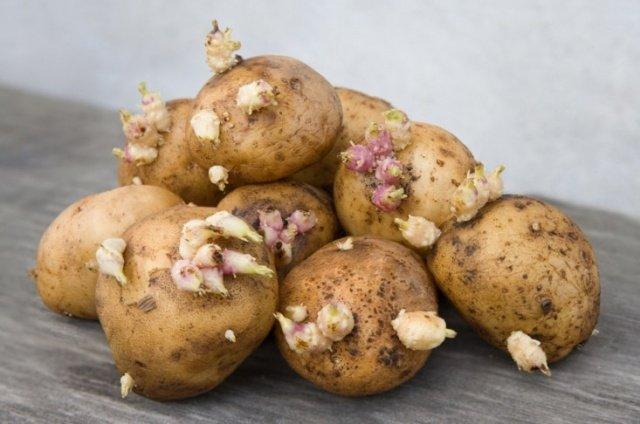
This is an important step, which involves preparing the tubers and choosing the right planting pattern to ensure the bushes grow spaciously and don't shade each other. When planting, consider the subsequent hilling, which will require additional soil.
Seed preparation
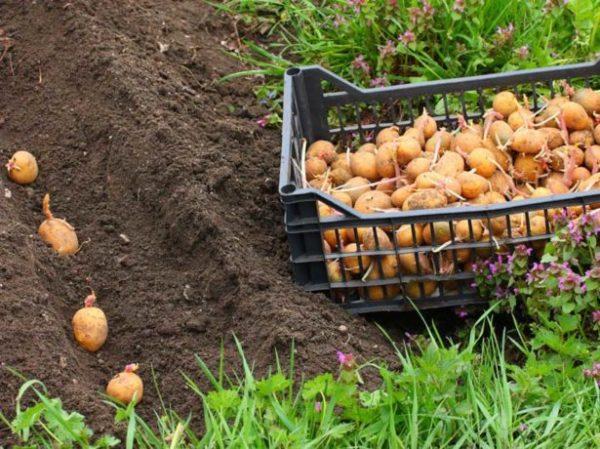
The seed material is prepared in advance, 2-3 weeks before planting:
- The tubers are taken out of storage and laid out in a warm room in a single layer.
- The tubers should turn green, and shoots should gradually emerge from the eyes.
- With proper care, a single tuber will produce several strong, thick shoots. Their vigorous growth and elongation are a bad sign.
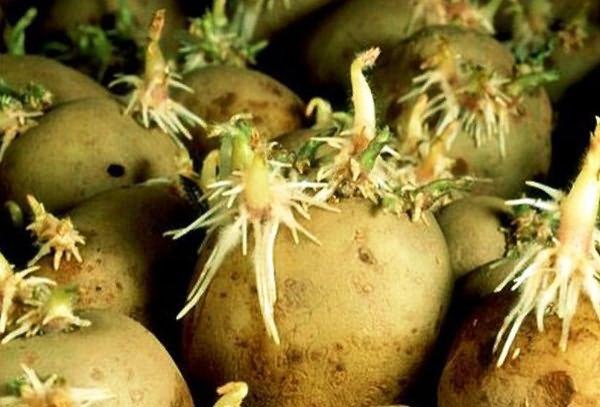 Tip! If there's not enough seed, cut the tubers in half so that each half contains sprouts. Treat the cut area with dry ash and let it dry slightly.
Timing and sowing pattern
The timing falls in May, when the birch trees are in bloom. The sequence of actions:
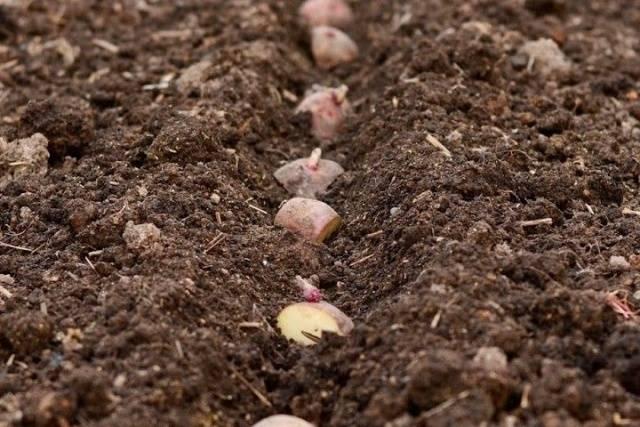
- For planting, furrows or holes 8-12 cm deep are prepared.
- Add a handful of humus and ash to each hole, as well as some onion peel to repel pests.
- Fresh manure, which contains fungal spores and weed seeds, should not be used as fertilizer. The tubers will become diseased and lose their flavor. Kemira, a complex fertilizer, can be used.
- Jelly tubers are placed at a distance of 40 cm from each other, maintaining a width of 80 cm between rows.
Early planting poses the risk of recurrent frosts, which can damage young sprouts. Hilling the shoots up to the crown will provide protection. This won't harm the nightshade crop; the tubers contain enough nutrients for continued growth.
How to care for the variety
Care includes traditional measures typical for any potato variety. Jelly is unpretentious and requires only basic agricultural techniques.
Watering
Jelly is a drought-resistant variety. It requires watering during dry, hot summers, as well as during flowering and budding. Watering can be done simultaneously with fertilizing to ensure nutrients penetrate deeper into the soil.
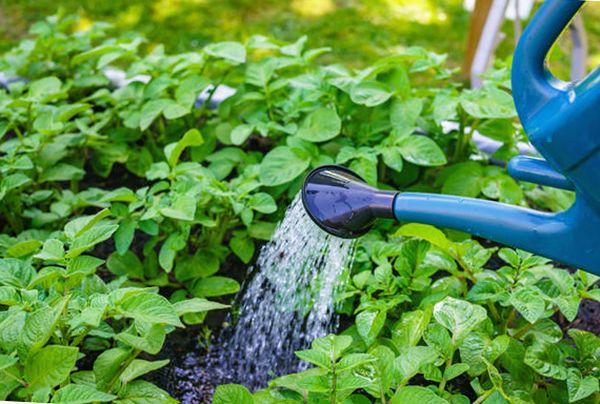
Excessive moisture leads to the development of fungal infections and reduces the quality of the harvest. If the summer is rainy, it is recommended to add sand to the soil and loosen it more frequently. If the groundwater table is close, potatoes are planted in raised beds (up to 20 cm).
Fertilizers
The soil should be well-fertilized before planting and contain the necessary nutrients. During the growing season, Jelly potatoes are fertilized three times:
- at the beginning of growth – with nitrogen compounds;
- During the flowering and budding period, apply fertilizers containing potassium;
- Phosphorus compounds are needed to form tubers.
During the growth process, it is not forbidden to use organic mixtures or complex fertilizers.
Advice! Don't overfeed potatoes. This changes the length of the growing season and affects the taste of the tubers.
In winter they are stored much worse.
Pest control
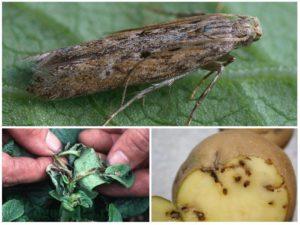
On small plantations, Colorado potato beetles are removed mechanically by shaking the larvae into a bucket and collecting the beetles by hand. Larger plantings require treatment with pesticides, a wide selection of which are available. At the first signs of late blight (spots on leaves), use copper oxychloride, Oxychom, or Arcedil, following the instructions. If late blight remains on the leaves before harvest, mow them down, remove them from the area, and burn them. The tubers are left in the ground for another two weeks to allow them to develop a thick skin.
The Jelly variety is resistant to many diseases. It is not affected by potato cancer, golden nematode, common scab, blackleg, or viral infections.
Loosening and mulching the soil
Mulching protects Jelly potatoes from drought and overwatering. Green manure, which can be sown between rows of nightshade crops, is an ideal mulch material. Mustard, for example, effectively repels wireworms, and phacelia provides the tubers with additional nutrition. Properly planted green manure makes Jelly care much easier.
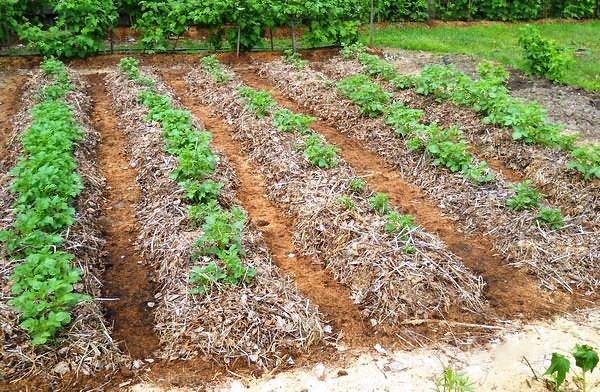
Loosening the soil is necessary to ensure oxygen reaches the roots. Loosening is usually combined with hilling, which is done in two stages. The soil can be loosened to a considerable depth, as the roots are deep. To improve permeability, peat, sand, and compost are added to the soil. Bushes are planted according to a pattern to ensure each receives sufficient moisture, air, and sunlight.
Harvesting and storage of crops
The harvest is carried out in August–September, depending on the climate zone. The harvesting signal is the lodging and yellowing of the tops. The following procedures are followed:
- cleaning is carried out in dry weather;
- diseased, small, and injured tubers are discarded;
- If green tubers are found, they are left for seed material;
- the harvest is left in a ventilated room for 1-2 weeks so that the skin becomes dense;
- dry, high-quality tubers are placed in the cellar and laid out in boxes or containers with holes;
- The temperature in the storage room is +2-+3C; at higher temperatures, the tubers germinate.
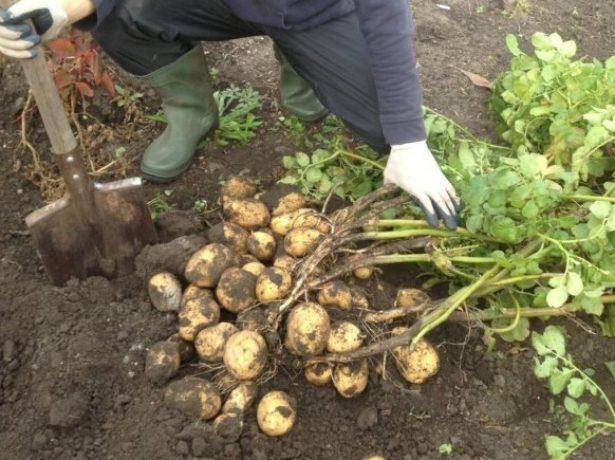
The shelf life of the Jelly variety is good, but inferior to other varieties. The German variety has a shelf life of 86%, while most varieties have a shelf life of 98-99%.
Reviews of the variety
Nikolay, 35 years old, Tver
We grew this variety for the first time last year. The harvest was impressive, producing even, uniform tubers. The flesh is yellow and tastes like butter. When boiled in their skins, the potatoes retain their appearance and don't become mushy.
Alina, 40 years old, Kazan
I don't particularly care for the Jelly variety, so I don't have huge harvests. But all the fruits are uniform, with no visible eyes. They're easy to peel and have a good flavor after cooking.
Natalia, 37 years old, Krasnoyarsk
We live in a risky farming zone, but Jelly pleases us with stable yields and beautiful tubers. I make a variety of dishes with potatoes; they're good in any form.
Anton, 52 years old, Irkutsk
Early and mid-season varieties are suitable for our regions with a short growing season. Among these, I singled out Jelly. It's easy to grow, its tubers ripen earlier than other varieties, and it stores well.
The Jelly variety doesn't boast any particularly striking qualities. The tubers are medium-sized, and the yield is decent, but there are no record-breaking figures for this variety. Its ripening time and excellent taste are pleasing, satisfying many vegetable growers and making Jelly a welcome addition to gardens.
Related posts:
 Description and treatment of potato diseases, methods of control using folk and chemical means
 Description of the best potato varieties of domestic and foreign selection
 Description and characteristics of the Colette potato variety, planting and care instructions
 Why potatoes aren't growing well in the garden, and what to do to ensure a bountiful harvest
 How to properly prepare planting material and when to plant potatoes to get a rich harvest
 Description and characteristics of the Gala potato variety, planting and care instructions
 Description and characteristics of the Breeze potato variety, planting and care instructions
 Description of the best potato varieties for 2025, selection for regions