
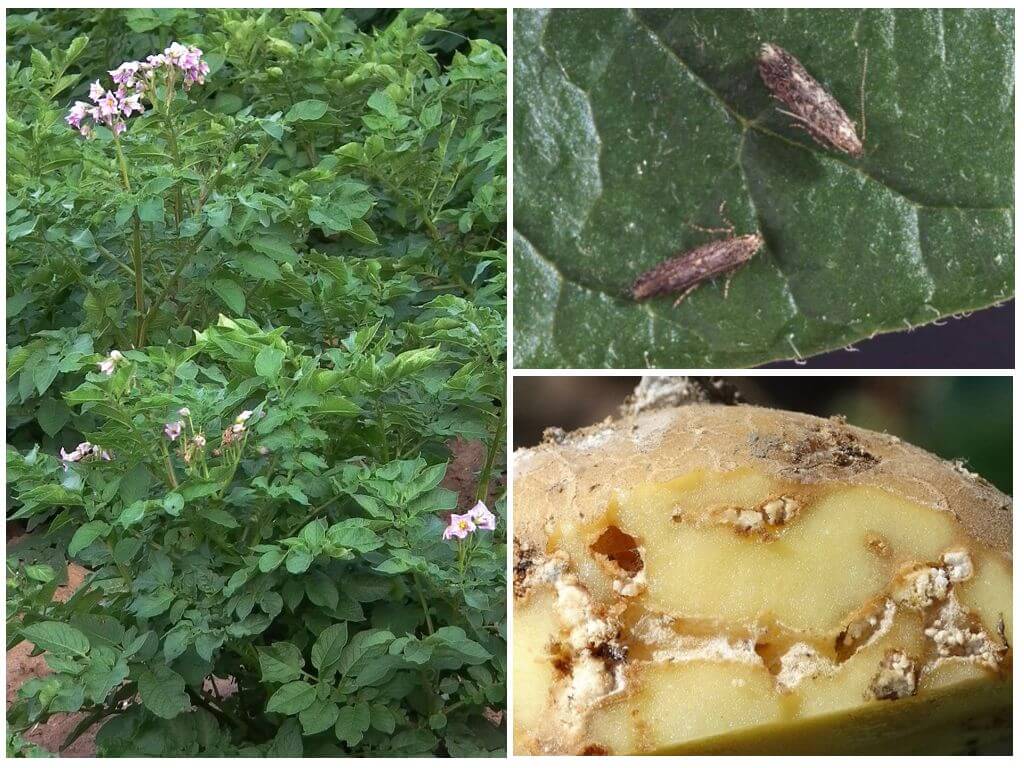
The potato moth can be compared to the Colorado potato beetle in terms of damage. This quarantine pest, despite its small size, can destroy up to 80% of a crop in a matter of days. It is dangerous even to potatoes stored in cellars. The pest can be identified by the numerous dark lesions that appear on the outside of the tubers and the small worms that feed on the inside. To prevent such negative consequences, it is recommended to familiarize yourself with the pest's lifestyle and control methods.
Appearance
The potato moth, a harmful butterfly, can be spotted by its dirty brown wings, which are marked with numerous black spots. When the insect folds its wings, these spots transform into dark stripes. The potato moth has antennae and a reduced mouth cavity. The parasite's lifespan is less than a week, and its length is 6-7 centimeters. Varieties with white-pink and white-green coloring are also found. The pest larvae enjoy feeding not only on leaves, but also on plant stems and tubers.
Lifestyle and reproduction of potato moth
Potato moths begin laying eggs one day after mating, a period lasting 2-16 days. Reproduction occurs equally actively in storage areas, in the soil, and in gardens. Due to their tiny size (0.5 millimeters), the eggs are virtually impossible to detect, especially since they are located on the underside of leaves. As they develop, the eggs change color from white to yellow.
Potato moth larvae are very similar in appearance to caterpillars. After some time, they pupate and transform into a butterfly. The pupa is 10-12 millimeters long.
It takes one month from egg laying to adulthood. Development in winter continues for almost two months. Potato moths are virtually unheard of in regions with harsh climates; they die at temperatures below -4 degrees Celsius.
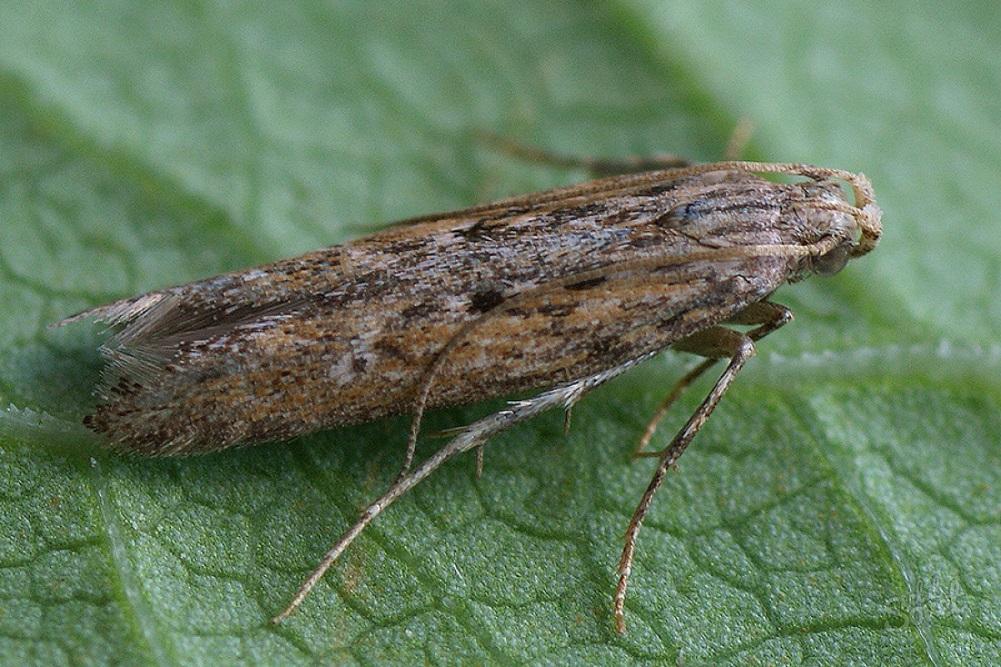
The annual spread of potato moth larvae is facilitated by their transfer to storage facilities where the harvested crop is stored. They reproduce during the winter, and in the spring, along with the planting material, they find favorable conditions—the soil. Potato moths can also overwinter among fallen leaves in open areas. This harmful insect can attack not only potato plants but also tomatoes, eggplants, and peppers.
Signs of potato infestation
You can determine the presence of potato moth on your property by the following signs on your bushes:
- drooping leaf blades;
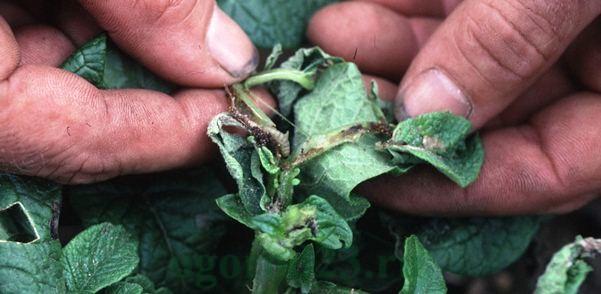
- the presence of cobwebs and remains of caterpillar activity on the underside of leaves;
- dried leaves;
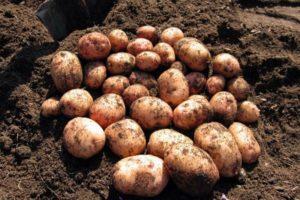
- dark spots on root vegetables.
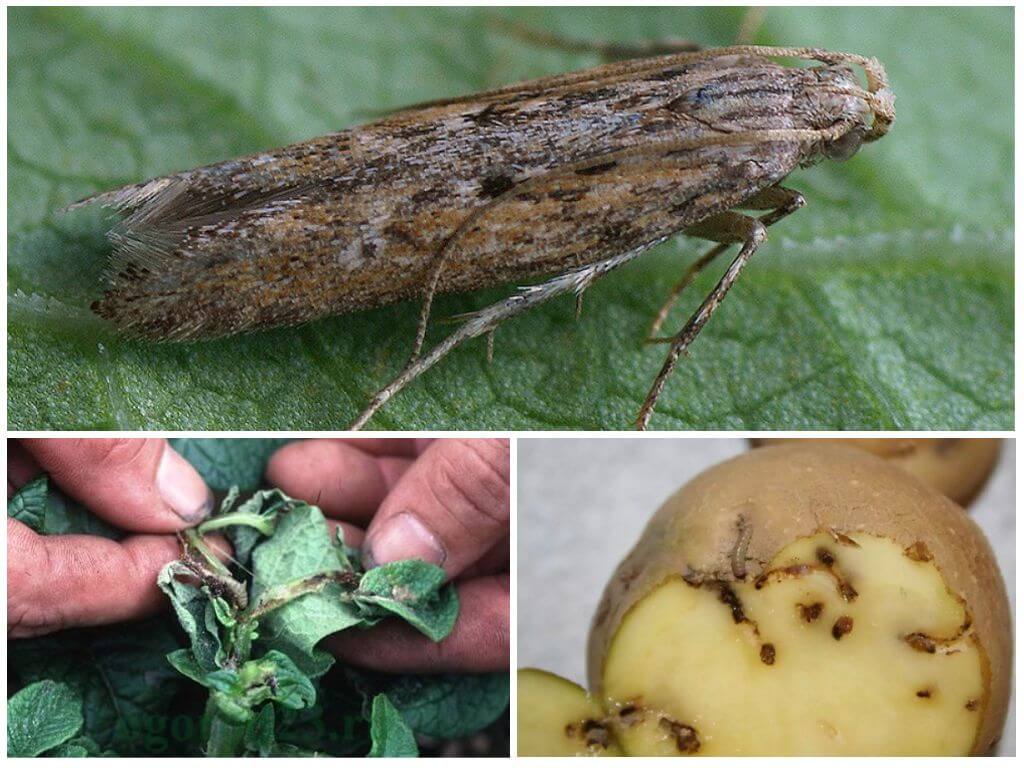
The first to be infected by potato moth are the leaf blades of the bush, then the stems, and only then it destroys the tubers.
To save your plants from potato moth, you need to start treatment as early as possible, at the first signs of damage.
Potato moth larvae penetrate tubers most quickly when the stems on the plant are completely dry. Infected tubers should not be stored, as there is a high risk of infecting the entire crop.
Damage caused
Among the negative consequences of potato moth, experienced gardeners highlight:
- Destruction of the bush's green mass. During the maturation stage, the larvae create numerous tunnels, causing damage not only to the plant's leaves but also to its stems.
- Potatoes infected with this quarantine pest are unfit for consumption. To prevent potato tuber infestation, plant them 10-20 centimeters below the soil surface.
- In addition to potato plants, also eggplants, peppers, and tomatoes are at risk.
- Both the plants themselves and their fruits stored in storage suffer from the parasitic organism.
- Crop losses can reach up to 80%. If measures are not taken promptly, the scale of the infestation will rapidly increase.
- The quality and quantity of planting material is decreasing.
Pest control methods
To prevent the spread of potato moth during storage of crops, it is necessary to know how to combat it and which methods are effective.
Biological method
The advantage of this method is the environmentally friendly nature of the tubers. Unlike agrochemicals, biological products do not harm either the plants or the fruit. The roots are completely safe for human health. Among the most effective remedies against potato moths are:
- Lepidocide is suitable for use at all stages of potato planting, including before the seasonal harvest. It does not accumulate in plants, contains no toxic components, and has a distinctive odor that is particularly unpleasant to potato moths. To prepare the solution, use 35-50 milliliters of the product per 2-6 liters of water. The number of treatments is two, 10 days apart.
- Dendrobacillin is available in powder form. It poses no danger to humans or animals. This insecticide is used for control in the early and mid-season stages of the growing season. A working solution is prepared at a rate of 60-100 grams per 10 liters of liquid. The concentration of the solution depends on the severity of the infestation. Two treatments are performed, 7 days apart, with the final one performed one week before harvest.
- Bitoxybacillin has a strong intestinal effect on insects that damage leaves and tubers. It is also highly effective against potato moths. The working solution is prepared at a rate of 100 milliliters per 10 liters of water. Spraying should be done in the evening or during the day. It is best to apply at temperatures between 18 and 30 degrees Celsius.
- Enterobacter is used during the blooming stage and during harvest. This biological product is available in powder form and works similarly to dendrobacillin. Its action period is 24 hours. It can be used in combination with other agrochemicals. The working solution is prepared at a rate of 35-60 grams per 10 liters of water and used in dry weather at a temperature of 20 degrees Celsius.
Take a look Also

By using the above mentioned preparations it is possible to destroy most of the potato moth larvae.
A decrease in the fertility of females and a cessation of growth processes in harmful insects are also observed.
In some cases, folk methods are also used to increase the effectiveness of chemical or biological agents:
- plant root crops in holes with ash;
- spray with a solution based on 1 glass of ash and 200 grams of wormwood, which are poured with boiling water and left to brew for three hours;
- for surface treatments, use a decoction of onion peel, wormwood and ash with the addition of laundry soap;
- to spray bushes, an infusion based on tomato shoots or marigolds is often used;
- A decoction of celandine stems works well against the pest; they are boiled for 20 minutes, filtered and diluted at a rate of 1 glass of concentrate per 5 liters of water.
Chemicals
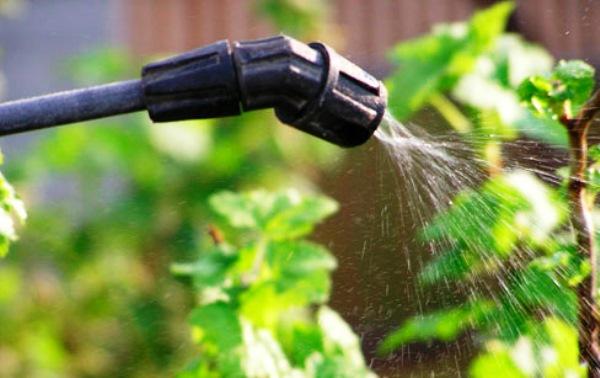
For severe potato moth infestations, it's advisable to use agrochemicals such as Decis, Arriva, Sherpa, Danadim, and Zolon. Surface treatments should be performed at the first sign of pest infestation. For best results, two applications, spaced two weeks apart, are recommended.
In early May, it is recommended to spray potato plantings with a working solution based on Prestige, diluted according to the manufacturer's instructions. This agrochemical has proven highly effective not only against potato moths but also against the Colorado potato beetle. This product is capable of killing the larvae of these parasites and reducing the fertility of females.

Agrotechnical method
Among the main measures in the fight against potato moth it is necessary to:
- apply a competent approach to planting work;
- periodically hill up the bushes;
- plant only healthy root crops;
- Before planting in holes, the planting material should be carefully sorted;
- plant tubers at the optimal depth;
- Remove weeds regularly.
Preventive measures
To achieve high results, it is necessary to follow the following preventive measures:
- Before storing the harvest, the cellar should be whitewashed with quicklime;
- temperature indicators in the storage area should be within +2-3 degrees;
- Before storing root crops for a long time, they need to be treated with a working solution based on Lepidocide by immersing them in it;
- leave only healthy specimens from the entire harvest for storage;
- The recommended planting depth for potatoes is 15 centimeters;
- After precipitation, potato bushes need to be hilled up high, as well as after irrigation activities;
- use only selected tubers for planting;
- If potato moth is detected, the crop should be dug up before the stems dry out;
- regularly destroy weeds between rows of potato bushes;
- After harvesting, the area must be dug up for the winter.
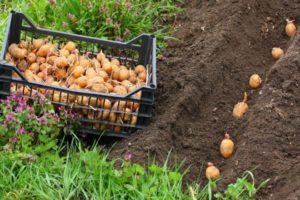
It is best to choose early ripening potatoes for planting, this will minimize the risk of infestation by moths.
Related posts:
 Signs of the appearance of apple moth and how to properly combat the pest
 The best eggplant varieties for growing in a polycarbonate greenhouse: planting and care
 Description and types of potato scab, effective measures to combat rhizoctonia
 What folk remedies are best for treating cabbage from pests to protect it?
 How to control carrot flies with medications and folk remedies
 How to properly plant peas in a greenhouse and open ground
 Methods for planting and propagating cherries at home
 Description of varieties of sowing peas and cultivation, to which family they belong