
- What pests parasitize cabbage?
- Pros and cons of using folk remedies
- Universal methods of fighting parasites
- Potato broth
- Tomato-garlic infusion
- Dandelion infusion
- Infusion of tobacco leaves
- Celery decoction
- Vinegar solution
- Ammonia solution
- Camomile tea
- Naphthalene with sand and ash
- Yarrow decoction
- Milk solution with iodine
- Hot pepper infusion
- Valerian
- Ash
- Mulch against slugs
- Serum
- Tobacco dust
- Tar
- Mustard powder
- Toothpaste
- Soap solution
- Baking soda
- Timing and technology for processing cabbage plantings
- How to prevent reinfection
How can you treat cabbage against its numerous pests? What folk remedies are available? Insects that damage cabbage beds don't tolerate tobacco dust, mustard powder, and strong-smelling pharmaceutical products (tar, ammonia). Pests also die after treating cabbage with toxic herbal infusions. Many gardeners have to try various folk remedies before finding the most effective one.
What pests parasitize cabbage?
During its development, cabbage is constantly attacked by insect pests. They feed on the sap, leaves, stems, and roots of this crop. There are many insects that can quickly destroy newly planted seedlings. If pests damage the apical bud, the head will never form. Even a fully formed head can rot if cabbage caterpillars get inside.
Protecting your cabbage bed from all kinds of insects can be done using chemicals, biological products, or simple homemade folk remedies. It's best to treat the plants with insecticidal solutions that kill multiple pests (both adults and their larvae) at once.
Aphids are insects that feed on cabbage sap. These tiny, soft-bodied, light-green insects settle in colonies on the undersides of leaves. Infested leaves turn yellow and wilt. The plant stunts growth and produces poor heads.
Thrips are small, elongated brown insects that suck the sap from cabbage. White leaves with numerous black spots from their excrement indicate the presence of the pests. The affected leaves subsequently dry out. Thrips are most active in hot weather.
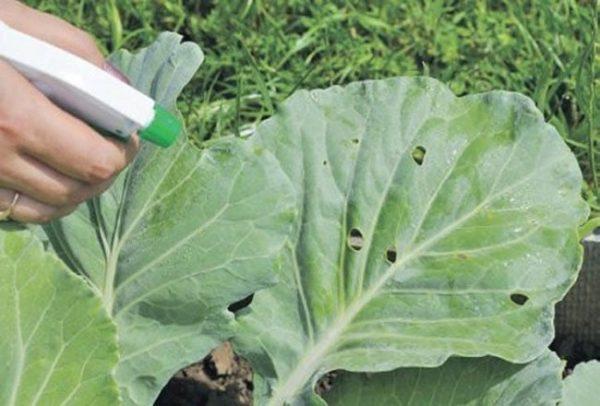
Cabbage bugs are fairly large insects with orange and black coloring. They feed on cabbage sap. The leaves become marbled, turn yellow, and wilt. Cabbage heads grow poorly and become unsightly. The bugs can destroy newly planted young seedlings.
The cabbage fly is an insect somewhat similar to a fly. In late spring, it lays tiny eggs in the soil near cabbage plants. The hatched larvae feed on the plant roots and bore tunnels into the stems, causing the leaves to wilt and fall to the ground.
The cabbage moth is a small butterfly with grayish-brown wings. It lays tiny eggs on the undersides of leaves. The hatched greenish caterpillars eat the leaves, leaving holes in them. They can also burrow into cabbage heads, causing them to rot.
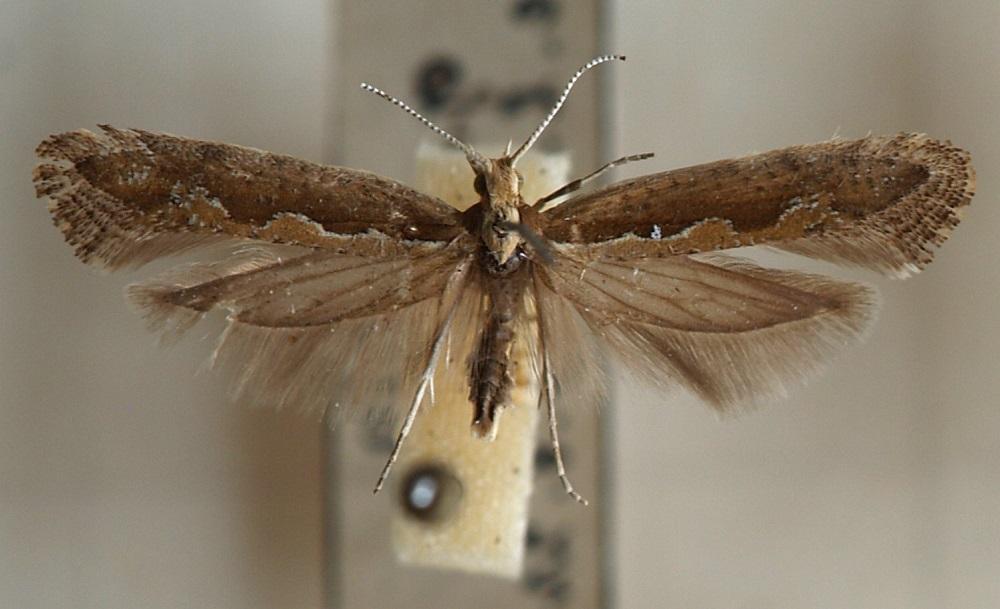
The cabbage white butterfly is a beautiful insect with white wings. It is actually a huge moth with black round spots on its wings. The butterfly lays eggs, which hatch into spotted caterpillars. They feed on cabbage leaves, making holes in them.
The cabbage moth is an inconspicuous, light-brown butterfly that flies only at night. Its brown, spotted caterpillars feed on succulent, young cabbage leaves, chewing holes in them. The caterpillars can burrow into the cabbage head, damaging it and causing it to rot.

Flea beetles are small, jumping black bugs. They feed on young cabbage leaves and can destroy young seedlings growing in the garden. Round holes on cabbage leaves indicate their presence.
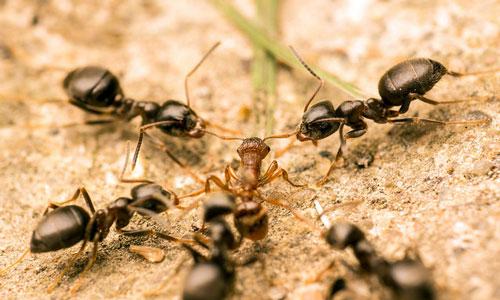
Cabbage beds often suffer from infestations of ants, mites, slugs, and mole crickets. Signs of insect pests include yellowing or suddenly wilting leaves, holes and excrement in cabbage leaves, slow growth, and poor head formation.
Pros and cons of using folk remedies
Saving your cabbage planting from numerous insects is easy with simple folk remedies. You can prepare insecticidal solutions, tinctures, decoctions, and dry dusting mixtures at home.
It is advisable to carry out preventative treatment of plants before insects appear.
Cabbage can be protected without chemicals or commercial insecticides. However, in addition to spraying and dusting, you need to remove weeds from the garden, till the soil in the fall, loosen the soil in the summer, mow the grass around the beds, and plant insecticidal plants (onions, garlic, tomatoes, marigolds, and calendula) nearby.
Benefits of using folk remedies:
- saving money – tinctures and mixtures are prepared from plants or pharmaceutical products;
- no harmful chemicals accumulate inside the cabbage;
- The harvested crop is environmentally friendly.
Disadvantages of folk methods:
- You need to prepare the insecticidal solution or dry mixture yourself;
- Cabbage is treated several times, since folk remedies quickly stop working and are washed away by rain;
- Home remedies cannot exterminate the entire insect population, but only reduce their numbers.
Some folk remedies contain poisonous plants (tomato and potato tops). These should be used with caution. Allow at least two weeks between treatment and harvest.
Universal methods of fighting parasites
Organic farming enthusiasts, eager to preserve their cabbage crops, use simple folk remedies to control flying and crawling insects. Homemade solutions and dry mixtures are best applied in the evening, during dry and windless weather. These folk remedies rid cabbage crops of all kinds of insects and help gardeners reap a bountiful harvest.
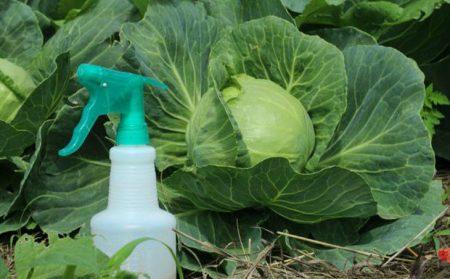
Potato broth
It's used against aphids, flea beetles, cutworms, and moths. For every kilogram of potato tops, use five liters of heated water. Boil the stems and leaves for 16 minutes and let steep for another 10 hours. Spray the cabbage crop with the infused infusion.
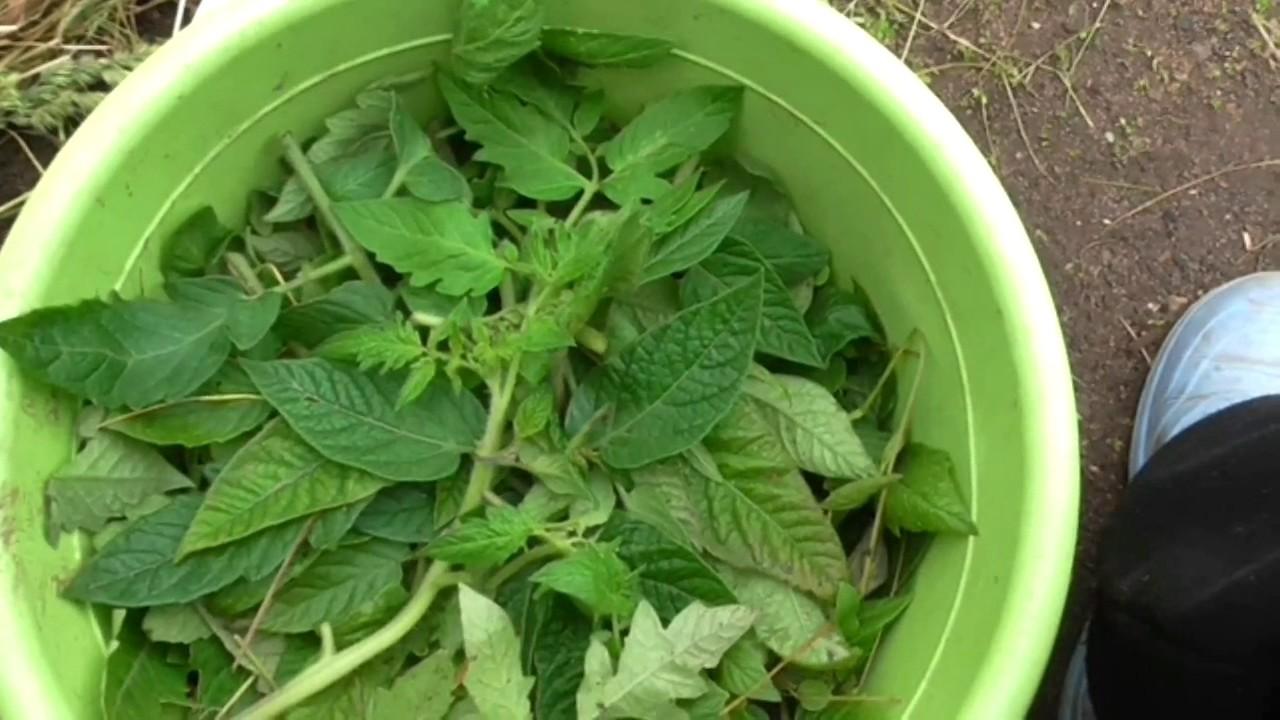
Tomato-garlic infusion
Protects against flea beetles, moth caterpillars, and aphids. Chop 500 grams of tomato tops. Add 200 grams of finely chopped garlic, pour in ten liters of boiling water, and let steep for at least ten hours. Before spraying, add a couple of milliliters of liquid soap to the infusion.
Dandelion infusion
Helps repel flea beetles. Add ten liters of water to one kilogram of fresh dandelion leaves and roots. Let the herbs steep for 7-10 hours. Spray the freshly prepared infusion on the insect-infested leaves.
Infusion of tobacco leaves
It's used against fleas, moths, and aphids. To prepare the tincture, take 500 grams of fresh tobacco leaves and ten liters of boiling water. Let the mixture steep for 5-10 hours. Before spraying, add a small amount of dissolved soap shavings.
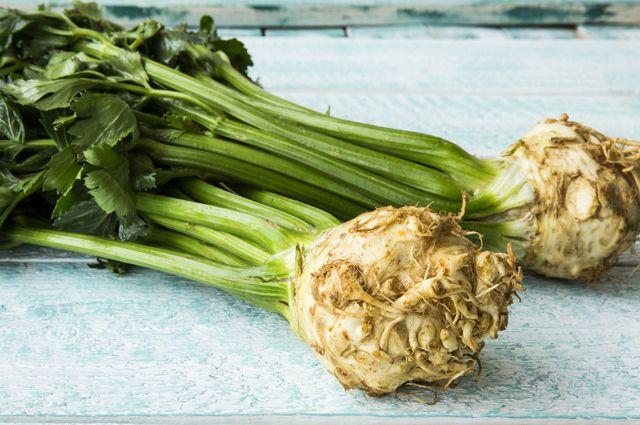
Celery decoction
It's used to get rid of cabbage flies. For 2 kilograms of chopped celery stalks, use ten liters of water. Boil the greens for 35 minutes and let them steep for 5-8 hours. Before spraying, add 33 grams of soap or 55 milliliters of milk.
Vinegar solution
A remedy for cabbage whites, slugs, and flea beetles. Add one cup of 9% vinegar to ten liters of water. Test the prepared solution on cabbage. If the insects react to the vinegar, you can spray the solution over the entire cabbage planting.
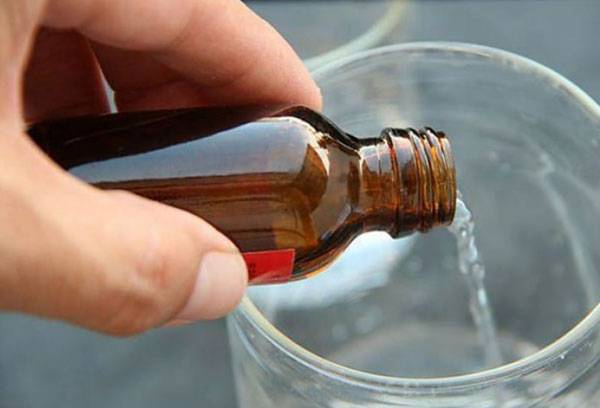
Ammonia solution
Ammonia will repel aphids, ants, mole crickets, and slugs. Use ten milliliters of ammonia per ten liters of water. Pour the freshly prepared solution onto the soil around the cabbage. The ammonia smell repels flying and crawling insects. Spray the cabbage leaves with a solution containing ammonia and soap.
Camomile tea
A remedy for aphids and caterpillars. For 500 grams of crushed leaves and flowers, add five liters of boiling water. Let the mixture steep for twelve hours. Before use, add 30 grams of soap shavings.
Naphthalene with sand and ash
A protective agent against cabbage flies. Mix one part crushed naphthalene with five parts sand. Apply the mixture to open ground. Sprinkle the soil around the cabbage with dry sand and crushed naphthalene. Apply 30 grams of the mixture per square meter of the plot.
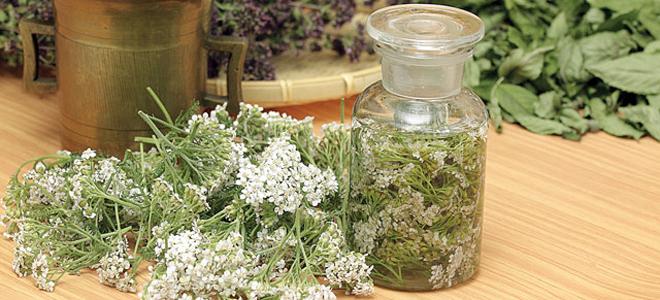
Yarrow decoction
It's used to repel aphids and caterpillars. For every 500 grams of crushed flowers, leaves, and stems, add five liters of water. Boil the mixture for fifteen minutes and let it steep for another day. Spray the cabbage planting with the decoction. Add a few soap shavings to the solution before applying.
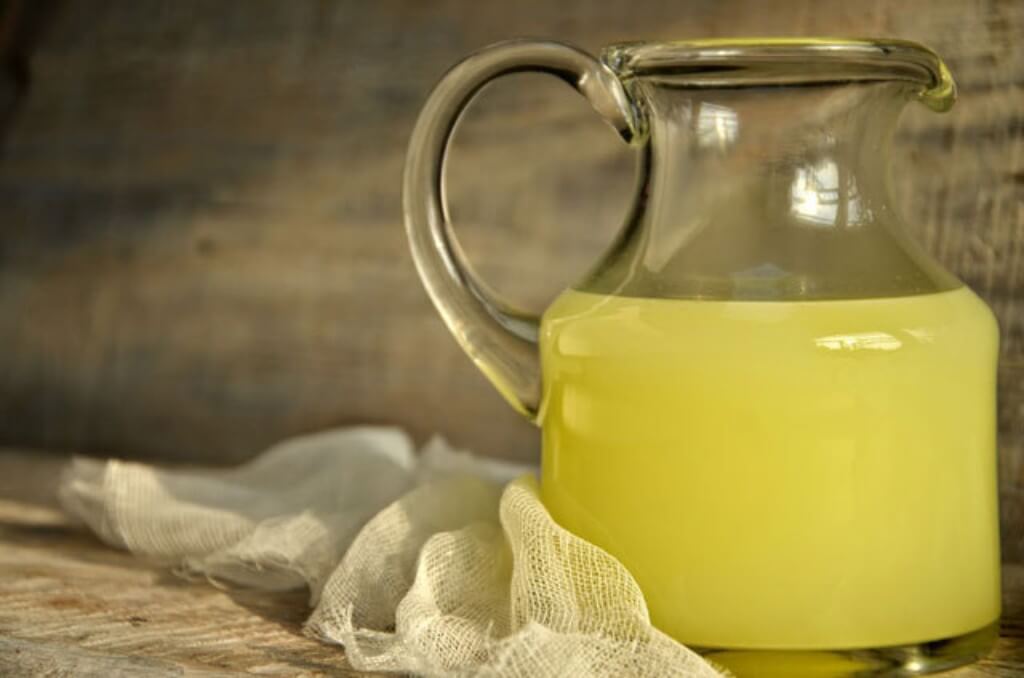
Milk solution with iodine
An aphid repellent: Mix 505 milliliters of milk and ten drops of iodine in one bucket of water. Spray the cabbage leaves with the solution.
Hot pepper infusion
It's used to repel slugs. Take 105 grams of crushed pepper and one liter of liquid. Let the mixture steep for two days. Strain the infusion and dilute it in ten liters of water. Add a couple of grams of soap shavings to the liquid.
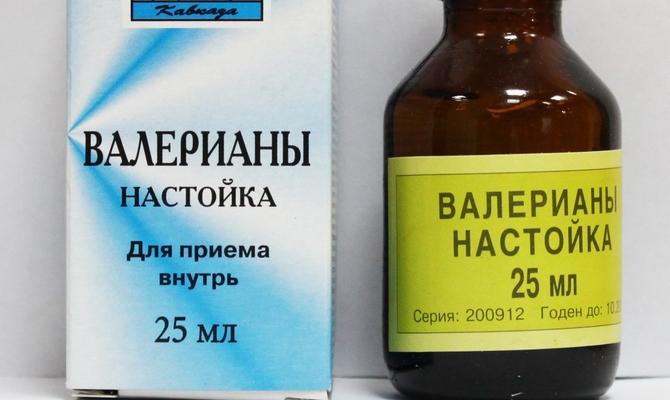
Valerian
Valerian tincture is used against fleas. The contents of one bottle are dissolved in three liters of water. The solution is sprayed on cabbage leaves.
Ash
Dry ash provides protection against cabbage flies and slugs. Ash mixed with mustard powder protects against cabbage fleas, cutworms, aphids, caterpillars, and moths. In addition to mustard, tobacco dust or lime can be added to the ash. All ingredients should be used in equal parts. It is known that insects that eat cabbage will not eat leaves sprinkled with an ash mixture.
Mulch against slugs
Insects won't be able to get to your cabbage if you mulch the soil around it. Mulch options include spruce needles, sand, sawdust, crushed eggshells, and nettle stems.
Serum
This remedy protects against fungal diseases and insects. Take one liter of whey per five liters of water and add ten drops of iodine. You can add a little soap to the spray solution.
Tobacco dust
Good protection against flea beetles, aphids, thrips, and cabbage leaf beetles. Sprinkle dry tobacco dust on cabbage leaves. You can also make a spray solution. Use 300 grams of tobacco dust per five liters of liquid. Boil the mixture for 16 minutes, then let it steep for 23 hours. Add a little liquid soap to the solution.
Tar
Birch tar is used against aphids, cabbage flies, flea beetles, moths, and ants. To make a solution, take 5.45 liters of water and one tablespoon of tar. Water the soil and spray the leaves with the mixture.
Mustard powder
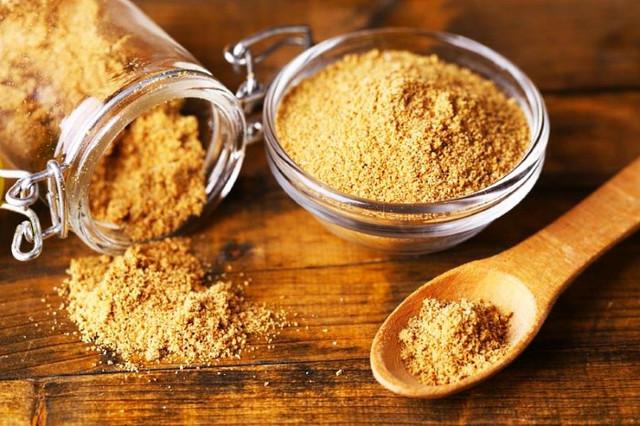
You can sprinkle the dry powder on the soil around your cabbage plants. It helps repel slugs. A mustard-based solution helps repel fleas, butterflies, and caterpillars. Dissolve 52 grams of the dry powder in 5.2 liters of boiling water. Let the mixture steep for 24 hours. Add a small amount of liquid soap before spraying.
Toothpaste
A protective agent against fleas, aphids, cabbage flies, and moths. Dissolve 25 milliliters of the paste in two liters of warm liquid. Let the mixture steep for two hours. Spray your garden beds with this infusion weekly.
Soap solution
An easy-to-make aphid repellent: dissolve 30 grams of soap or flea shampoo in five liters of warm water. Wash the cabbage leaves with the solution using a washcloth.
Baking soda
A remedy for crawling insects. Caterpillars don't like baking soda. Cabbage leaves can be sprinkled with dry baking soda.

Timing and technology for processing cabbage plantings
Many gardeners are interested in the question of how often to combat insects using simple folk remedies. Spray the plants as soon as pests appear on the cabbage leaves. Cabbage should be treated throughout the growing season.
As a preventative measure, the soil can be sprinkled with ash, mustard powder, or watered with a vinegar or tar solution before planting the seedlings, that is, in mid-May.
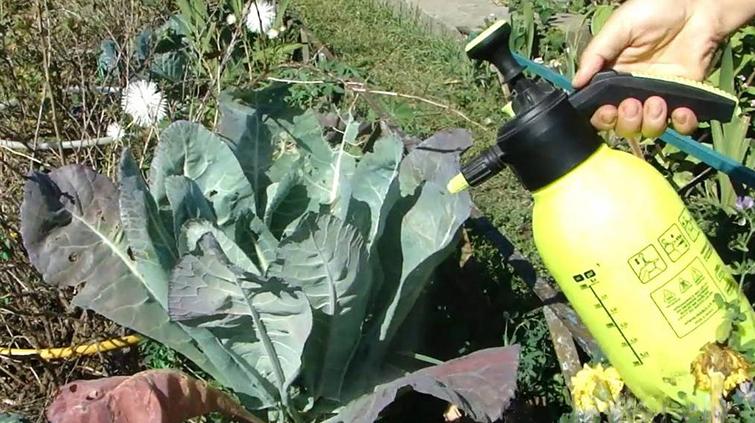
It's best to sprinkle young cabbage plants with ash or tobacco dust in early June. If insects appear, treat the cabbage with folk remedies weekly until all pests are eliminated. Spray with insecticidal solutions using a spray bottle or a plastic bottle with holes in the lid. Apply 100 milliliters of the infusion or 20 grams of the dry mixture per head. Pour 0.5 liters of the solution under each plant.
How to prevent reinfection
To prevent pests from visiting your cabbage patch, you need to take protective measures. You can plant plants near the garden (honey plants, tansy, marigolds) that attract beneficial insects. Hoverflies, ladybugs, and lacewings also enjoy eating aphids.
Pests avoid cabbage treated with ash or fragrant substances (ammonia, vinegar). It's advisable to grow onions, garlic, celery, and tomatoes near cabbage plantings. The scent of these plants repels many insects.
If folk remedies fail to get rid of pests, use commercial chemicals (Iskra-M, Bankol, Fury). These insecticides penetrate the cabbage plant and poison the insects that feed on the sap and leaves. However, these can only be used once or twice per season.
Related posts:
 How to treat peppers for aphids, how to fight them with folk and chemical remedies
 What is the best way to treat cabbage from pests? Folk, chemical and biological remedies.
 Why cabbage leaves wilt in the garden and what to do
 How to control aphids on carrots using medications and folk remedies
 What is the best way to treat cabbage from caterpillars and butterflies, folk remedies
 Can cabbage be sprayed with valerian to control pests and what are the treatment guidelines?
 How to control aphids on raspberries during flowering and fruiting, what to treat them with
 How to treat peach trees for aphids and the best methods for pest control
I mostly encountered aphids; they reproduce quickly and spread throughout the crop. I've never used chemicals to combat this pest. Potato broth works great.