
- Types of moths and description
- Apple fruit moth
- Ermine
- Pocket leaf miner
- Rowan moth
- Hawthorn
- Time of appearance and signs of parasitism
- How dangerous are moths for apple trees?
- Methods of insect control
- Biological preparations against moths
- Treatment with chemical compounds
- Mechanical methods
- Folk remedies against moths
- Hot pepper
- Tobacco
- Natural enemies of the rowan moth
- Preventive measures
The presence of apple moths on trees causes various problems. The parasites feed on various parts of the tree—leaves, branches, and fruit. This disrupts the crop's development, and its yield may decrease. Various methods are used to combat the problem, including mechanical methods, chemicals, and folk remedies.
Types of moths and description
There are many species of moths in nature. They have different appearances and colors. Some pests live only on a single tree, while others can infest almost the entire garden.
Apple fruit moth
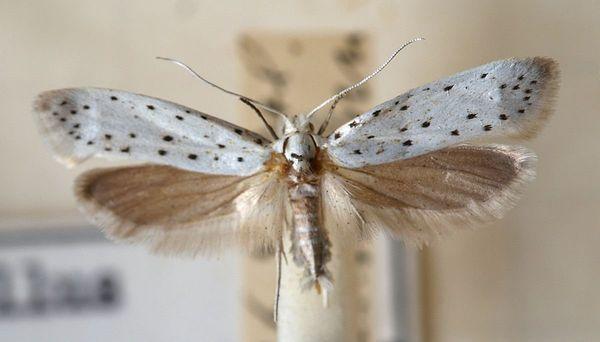
This pest belongs to the ermine moth family. It poses the greatest threat to apple trees. This butterfly has a beautiful body color. Moreover, it can not only lead to crop loss, but also cause the complete death of the plant.
Ermine
This moth has a distinctive coloration that distinguishes it from other parasitic species. These pests grow to a maximum of 2 centimeters. Each wing of the insect has speckles, which is why the moth is called the ermine moth.
Pocket leaf miner
This pest causes serious damage to apple, apricot, and pear trees. It also damages plums. Adult insects grow to a maximum of 7-10 millimeters and are distinguished by a silvery-brown color.
Rowan moth
Initially, this moth parasitizes rowan trees, but gradually causes damage to apple trees. The insects quickly consume the plant's leaves. The parasites overwinter as pupae.
Hawthorn
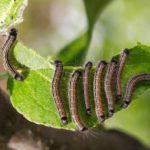
Hairy caterpillars with orange and black stripes pose a major threat to apple, plum, and pear trees. Eggs are laid in June and July. The ribbed caterpillars congregate on the upper surfaces of leaves.
Time of appearance and signs of parasitism
The appearance of pest caterpillars is observed even before bud break. The moths emerge in the first half of June. During the day, the moths hide on the undersides of leaves, and at night, their active flight begins.
How dangerous are moths for apple trees?
This pest is considered very voracious and is characterized by rapid reproduction. Over the course of a season, the moth can cause damage to an entire orchard of apple trees.
It causes damage to all parts of trees – leaves, bark, flowers, fruits.
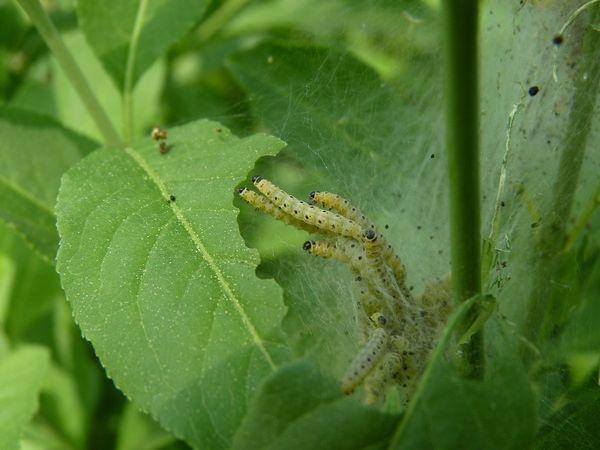
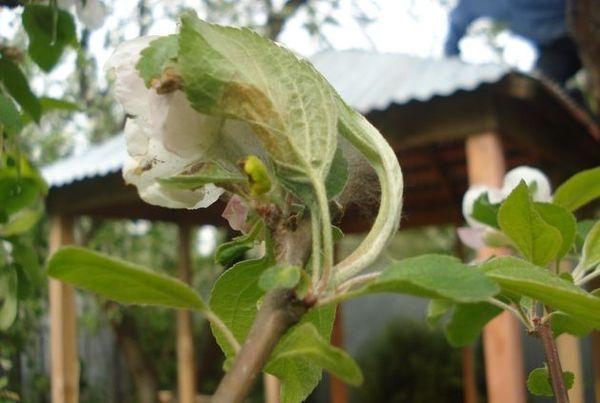
The moth poses the greatest threat to plants during the caterpillar stage. When the parasites emerge from their cocoons, they begin actively mining the foliage. A webbing of webbing forms around the foliage. Damaged leaves turn brown, dry out, and fall off.
The insects can consume greenery for 1.5 months. They then pupate in the nest and produce their offspring. After two weeks, the butterflies lay eggs.
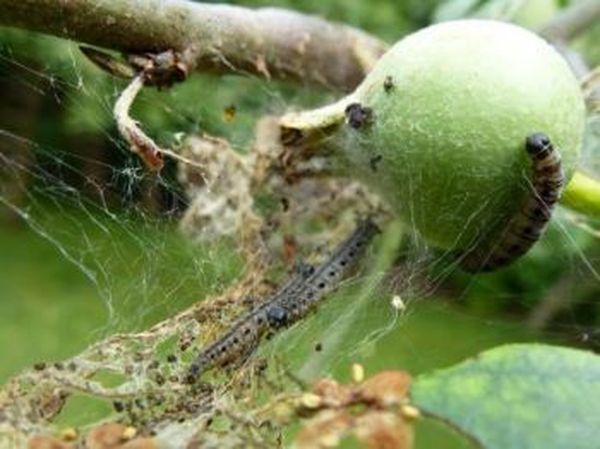
As the parasite progresses through its entire life cycle, the plant's photosynthesis process is completely disrupted. As a result, the apple tree becomes less resilient to low temperatures and more vulnerable to winter frosts.
In late May, caterpillars attack the upper part of the plant's crown. Here, they form large nests, causing damage to new leaves. A single nest can contain up to 1,000 caterpillars.
Massive tree infestation causes complete cessation of fruiting. Harvesting from diseased apple trees is only possible two years after the parasites are eliminated.
Methods of insect control
It's recommended to begin controlling apple moths at the end of April. At this time, the caterpillars are weakened after winter and therefore less susceptible to chemicals.
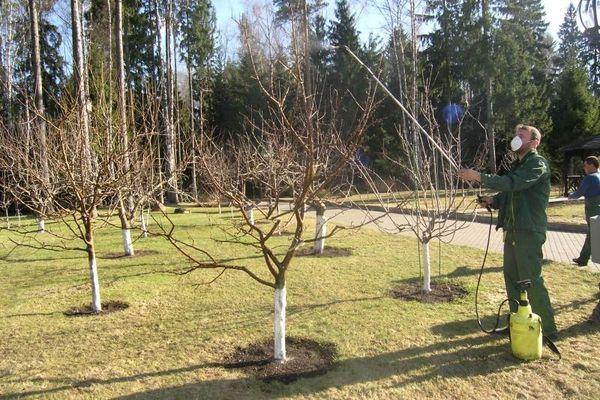
To cultivate your garden, you should adhere to the following scheme:
- First, examine the plant thoroughly for moths. It's also recommended to assess the nature of the infestation.
- If a large infestation of pests is detected, insecticides should be used. If isolated insects are detected, biological control agents may be sufficient.
- The tree should be treated throughout. Selective spraying will be ineffective, as the pests will migrate to untreated crops.
- To kill eggs, apple trees should be sprayed at least twice a season. Paraffin-based products are recommended.
Biological preparations against moths
The key advantage of biological products is their gentle effect on plants and people. Moreover, such products can be used an unlimited number of times.
It's important to note that such compounds are less effective than chemicals. The caterpillars will only be eradicated a week after spraying. Therefore, biological products are not recommended for use in cases of widespread tree infestation. In such a situation, emergency measures will be necessary.
To defeat the apple moth, you can use the following preparations:
- Entobacterin - to prepare a solution, you need to take 100 grams of the product per 10 liters of water;
- Bitoxybacillin - it is recommended to take 70 grams of the substance per 10 liters of water;
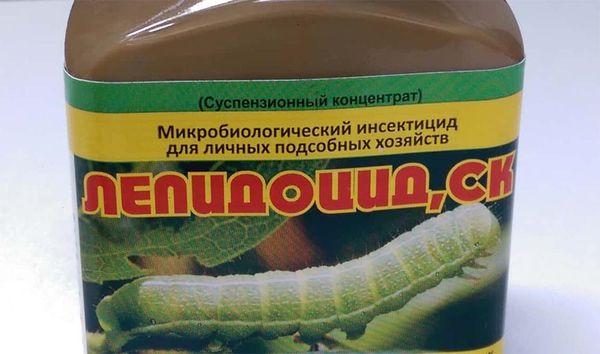
- Lepidocide - 20 grams of the product is required for 10 liters of water.
It is recommended to treat plants with biological preparations at air temperatures above +15 degrees.
Treatment with chemical compounds
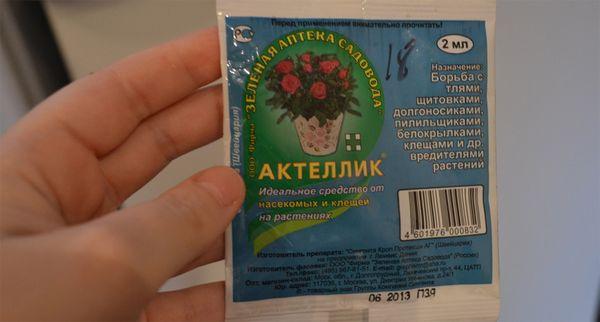
In case of widespread infestation of the garden, insecticides are essential. It is recommended to spray trees with these products in early spring, before flowering. Effective agents include Intavir, Fosfamide, and Actellic.
If you're experiencing a large infestation, you can use Fozalon. This product contains organochlorine compounds that are lethal to 70% of pests.
If large areas are infested, chemical treatments may be ineffective. In this situation, parasites quickly become accustomed to the active ingredients. Rotating treatments can help prevent this.
One insecticide treatment is enough to kill adult parasites. To completely eliminate caterpillars, 5-6 chemical sprays are recommended.
Mechanical methods
In addition to insecticides and biological products, mechanical pest control methods can be used. The following methods are acceptable for this purpose:
- In spring, manually remove brown young leaves affected by caterpillars;
- wash pests off leaves with a stream of water;
- During the flowering stage and after its completion, manually collect caterpillar cocoons.
Various traps are also considered an effective method of combating parasites:
- pheromones – attract males, preventing fertilization of females;
- with ultraviolet radiation - attract insects with light and cause their death from a coronary discharge.
Folk remedies against moths
In simple cases, folk remedies can help control pests. In more severe cases, they are combined with other methods.
Hot pepper
To prepare this mixture, we recommend crushing the hot pepper and mixing it with 1 liter of water. Boil for an hour and let it steep for 24 hours. Add 40 grams of laundry soap to the strained mixture.

Tobacco
To make this effective infusion, we recommend using 800 grams of tobacco and 10 liters of water. Let the mixture steep for 24 hours.
Natural enemies of the rowan moth
The moth has natural enemies. These include tachinid flies and braconid wasps. They parasitize the moth caterpillars. However, these insects are very rare today.
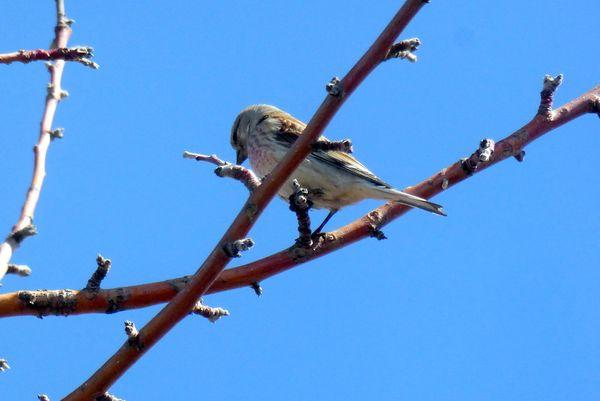
Birds are also considered natural enemies of the codling moth. To attract them to your garden, hang birdhouses.
Preventive measures
To prevent caterpillars from breeding, remove and burn leaves in the fall. Also, check the bark for eggs. In the spring, treating trees with chemicals is recommended.
The moth is considered a dangerous pest that reduces apple tree yields. Chemicals, biological products, and folk remedies can help control it.
Related posts:
 How to control potato moth, description of the pest, protective measures during storage
 Methods for planting and propagating cherries at home
 Methods of dealing with caterpillars on apple trees, how to treat them correctly and what is the best way to do it
 Signs of apple blossom beetle and how to control the pest
 The best eggplant varieties for growing in a polycarbonate greenhouse: planting and care
 What folk remedies are best for treating cabbage from pests to protect it?
 The best grape varieties for growing in the Urals, planting and care rules in summer
 Nitrophoska composition and instructions for use of fertilizer, errors