
- Selection of the Gala apple tree
- Description of the variety
- Habitat
- Tree height and crown size
- Pollinator varieties
- Foliage, flowering and fruiting
- Productivity and annual growth
- Tasting evaluation and scope of application of fruits
- Resistance to diseases and pests
- Resistance to low temperatures and drought
- Lifespan of a tree
- Landing features
- Optimal timing
- Preparing the site and planting hole
- Seedling planting technology
- How to care for the Gala apple tree
- Regularity of watering
- Fertilization
- Caring for the tree trunk circle
- Preventive treatments
- Preparing apple trees for winter
- The nuances of harvesting and storing fruits
- Varieties of the variety
- Gala Brookfield
- Delicious
- Galaxy
- Royal
- Red
- Natalie
- Cube
- Costa
- Mondial
- Mast
- Shniga
Gala apples are highly sought after and popular with consumers worldwide. The fruits of this variety not only boast a unique taste but also contain a large amount of vitamins, amino acids, and beneficial nutrients. Therefore, Gala apple varieties have been developed that incorporate the fruit's best qualities and characteristics.
Selection of the Gala apple tree
Gala variety was developed by New Zealand breeders in the late 1950s. The Kids Orange variety and Golden Delicious apple treeIn the early 1970s, this new fruit variety began to be cultivated worldwide. Today, Gala apples hold a respectable second place among the most sought-after fruits.
Description of the variety
Like every fruit crop, Gala apple trees have both advantages and disadvantages.
Advantages:
- High yield variety.
- Fruiting occurs annually, without interruption.
- According to experts, the fruits have excellent taste qualities.
- Natural immunity to some diseases and pests.
- A thick stalk that prevents ripe fruits from falling off.
- Duration of storage and the possibility of long-distance transportation of the harvested crop.
Flaws:
- Fruit trees are poorly protected from moniliosis and codling moth.
- During prolonged frosts, apple trees freeze.
- The age of a fruit crop affects the quality of the fruit and its yield.
Important! Gala apples are low in calories, making them ideal for dietary use.
Habitat
Gala apples are grown commercially in the United States, Brazil, Canada, throughout Europe, Russia, and Ukraine. The trees thrive in fertile soils in subtropical and temperate climates. In long, cold winters, the plants quickly freeze and die.
Tree height and crown size
Mature apple trees grow to a maximum height of 5 m. The crown is wide, spreading, flattened, oval, and features numerous irregularly spaced branches that point upward at an acute angle.
Pollinator varieties
Gala apple trees are partially self-pollinating. However, for higher yields, the trees require the right pollinating neighbors. Gala trees are planted next to apple varieties with similar flowering times. The best neighbors for pollinating Gala include Red Delicious, Idared, and Elstar.
Foliage, flowering and fruiting
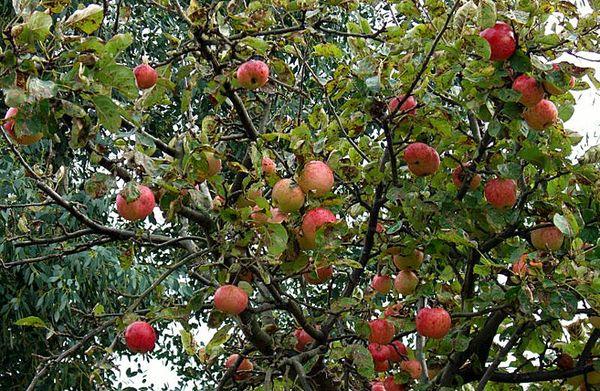
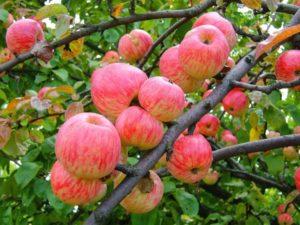
The leaf blades are elongated, pointed, and richly green. The undersides of the foliage are hairy. The trees begin flowering in late spring. Large inflorescences open with white flowers. Fruit ovaries form on both old shoots and new growth.
The Gala apple tree begins bearing fruit in its fifth to sixth year of growth. Exceptions include trees grafted onto dwarf rootstocks. In these cases, fruiting begins two to three years earlier.
Important! The tree bears fruit every year, but the number of ovaries and young shoots must be monitored. Otherwise, the yield will decrease annually and the fruit will become smaller.

Productivity and annual growth
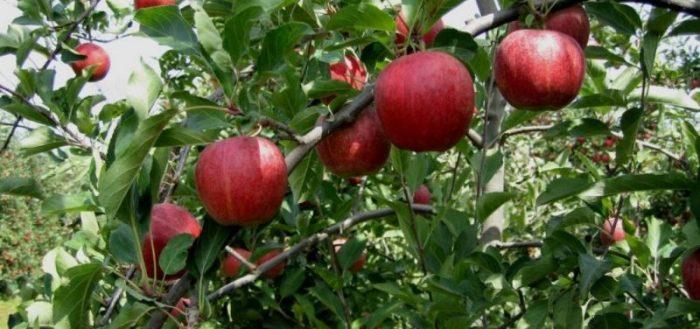
The main advantage of this variety is its large, high-quality yields. A mature tree yields 60 to 90 kg of delicious, ripe fruit. This is why apple trees of this variety are grown commercially. Each year, the tree produces numerous new shoots, which are ready to bear fruit the following year.
Every spring, young shoots are cut back by 1/3, which helps prevent the crown from becoming oversaturated and the tree from bearing too many fruits.
Tasting evaluation and scope of application of fruits
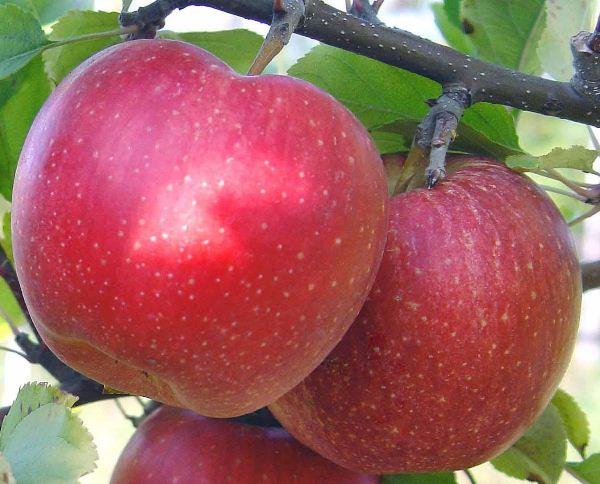
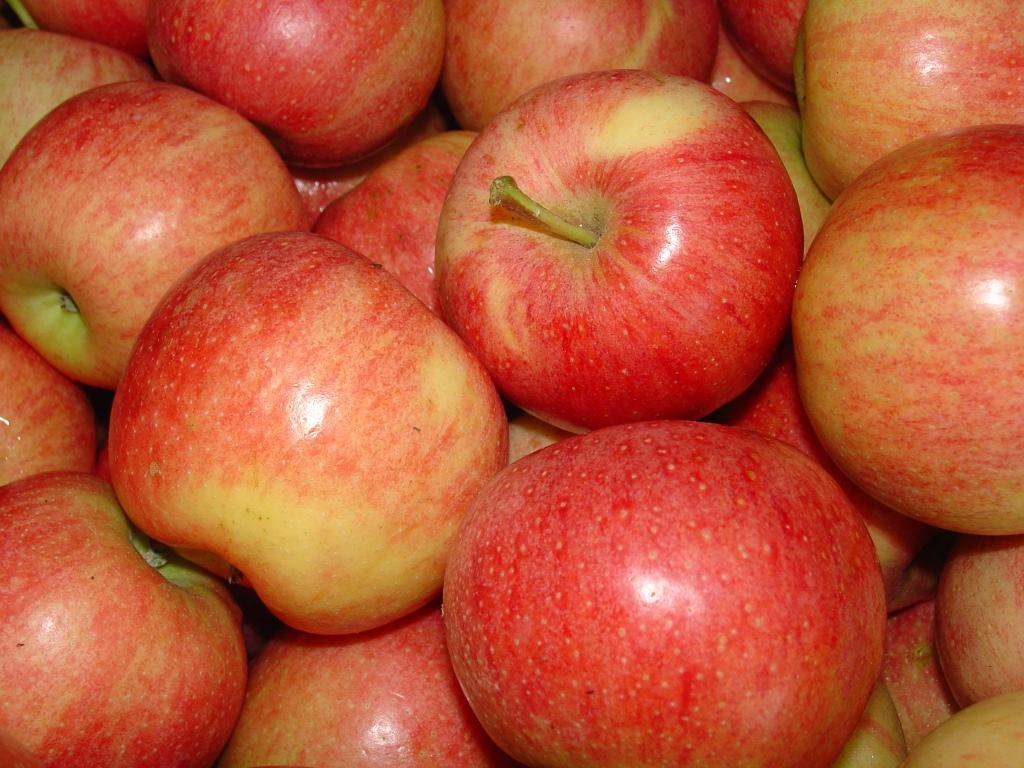
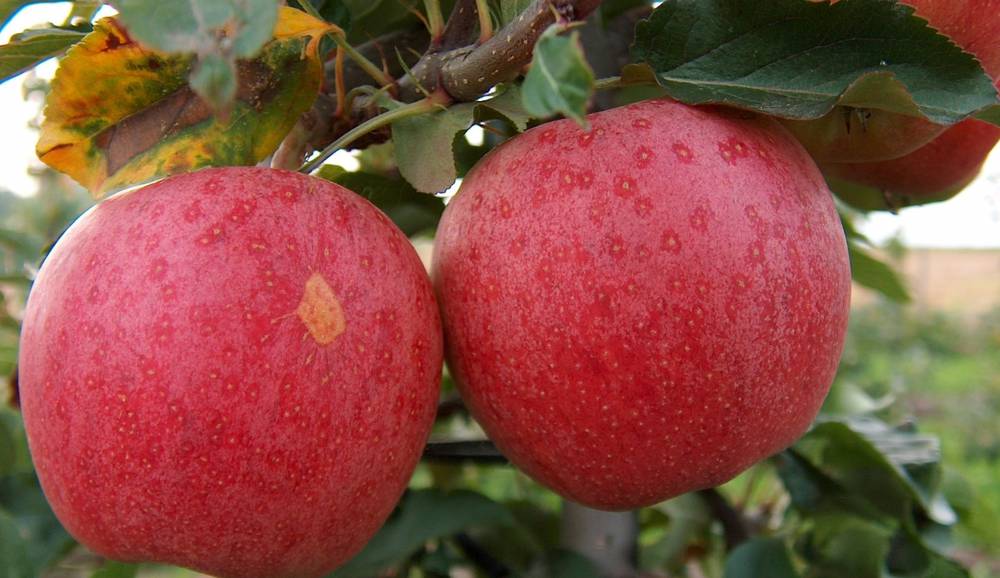
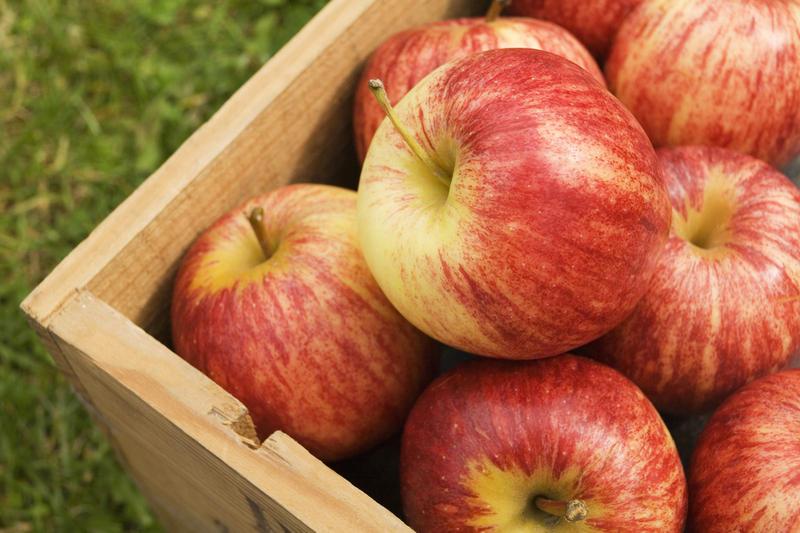
According to experts, Gala apples have excellent flavor and are considered a dessert fruit. Ripe fruits are uniform, round, and have a thin but firm yellow or green skin. A distinctive feature of this variety is the bright red blush, evenly distributed across the apple's surface.
The flesh is firm, crisp, yellowish in color, sweet, with a slightly tart flavor. Ripe fruits are recommended for both raw consumption and processing. On an industrial scale, Gala apples are a staple in baby food.
Resistance to diseases and pests
Fruit crops are immune to many diseases and pests. However, to prevent scab and bacterial canker, spring preventative treatments are necessary.
Resistance to low temperatures and drought
Gala trees easily survive winters in moderate climates down to -30°C (-22°F), provided severe frosts are not persistent and last only 1-2 days. In northern regions, apple trees freeze and die. Apple trees tolerate high temperatures and drought well. They do not tolerate excessive soil moisture.
Lifespan of a tree
Apple trees are long-lived. Depending on growing conditions and care, their main fruit-bearing period ranges from 25 to 50 years.
Landing features
Fruit yield depends on the correct planting location, light, and soil quality. Gala apple trees are planted in well-lit, dry areas. In the shade, the trees grow poorly and bloom sparingly, which negatively impacts the quantity and quality of the harvest.
Optimal timing
Seedlings are planted in open ground in spring or fall. In spring, it's best to plant the tree in late April. The soil is already warm enough, and the risk of sudden cold snaps is minimal.
If an apple tree is planted in the fall, the climatic features of the growing region are taken into account.
The key is to plant the seedling 25-30 days before the first frost. Only then will the plant's root system have time to establish itself and absorb the nutrients it needs for a long winter.
Preparing the site and planting hole
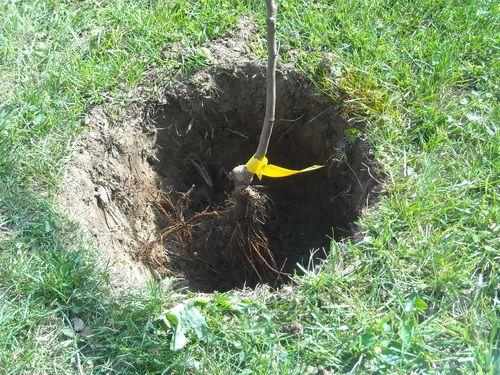
The Gala apple tree prefers loose, fertile soil. A slightly elevated site is ideal. Holes 70 to 100 cm deep and the same width for the planting material are dug in advance, approximately 2-3 weeks before planting. The soil from the holes is mixed with humus, mineral fertilizer, and a small amount of ash.
Seedling planting technology
When purchasing, seedlings are inspected for damage and disease, and only then do they begin the main work.
- Before planting, the seedling is placed in a bucket of water and left for 2-3 hours.
- After the root system has been moistened, it is treated with antibacterial preparations.
- The seedling is placed in the hole.
- The rhizomes are evenly distributed along the bottom of the hole and sprinkled with prepared soil mixture.
- The soil around the seedling is compacted, watered and mulched.
- To support the young tree, a stake is driven in and tied to it.
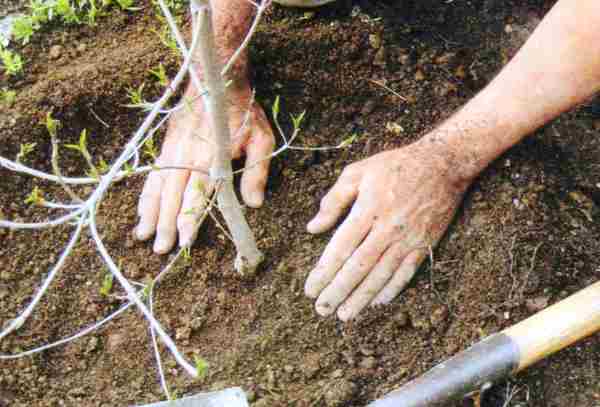 Important! When distributing and covering the roots with soil, try to ensure there are no gaps between them.
How to care for the Gala apple tree
Caring for apple trees doesn't require any special knowledge or skills. A consistent watering schedule, timely fertilization, and timely pruning are the keys to a high-quality fruit harvest.
Regularity of watering
While the seedling is establishing roots, watering is required once every 7-10 days. Mature fruit trees do not respond well to excessive moisture. Water apple trees only as needed, when the soil dries out. During the rainy season, watering is completely avoided.
Fertilization
For proper growth, development and fruiting, apple trees need additional vitamins and nutrients.
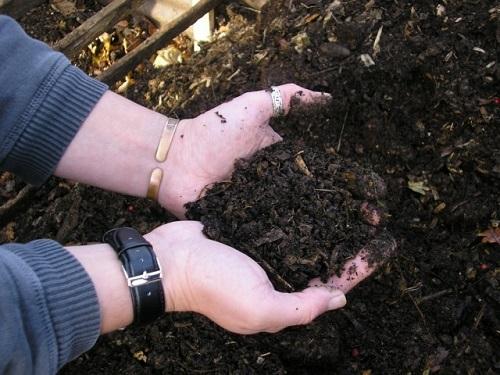
Every year, in early spring, humus and nitrogen fertilizers are added to the soil. In June, the trees are fed with potassium and phosphorus fertilizers. Before the onset of frost, organic and mineral fertilizers are added to the soil.
Caring for the tree trunk circle
Caring for the tree trunk circle involves loosening the soil, promptly removing weeds and mulching the soil.
Preventive treatments
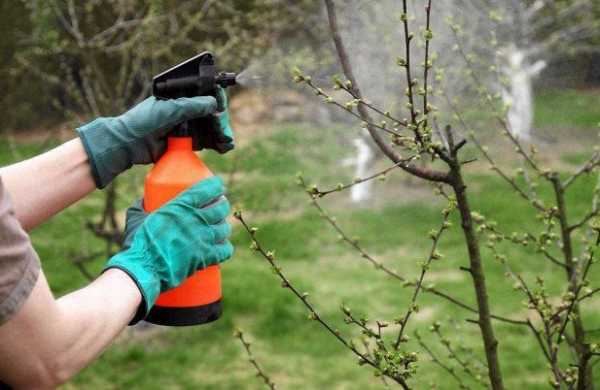
Sanitary pruning is performed in spring and fall. Damaged, dry, broken, and weak branches are trimmed, and the cut areas are treated with garden pitch. If necessary, formative pruning is performed in spring. For preventative purposes, trees are sprayed with special preparations.
Preparing apple trees for winter
Mature trees are not affected by short-term frosts in moderate climates, so in the fall, it's enough to mulch the soil around the apple tree with sawdust, pine needles, and peat and treat the trunk with lime. Young saplings are insulated with special materials or ordinary fabric. To prevent branches from breaking under the pressure of snow, they are gathered into bundles and tied together.
The nuances of harvesting and storing fruits
The fruit ripens in September. A dry, warm day is chosen for harvesting. The apples are carefully separated from the branches and placed in prepared containers. If the fruit is to be stored for a long time, any damage to the skin, signs of disease, or rot are eliminated.
Fruits can be stored in a well-ventilated, cool place for 2.5 to 3 months. In special refrigerators, the shelf life can be doubled.
Varieties of the variety
The Gala apple tree was taken as the basis for the development of new hybrid varieties of fruit crops.
Gala Brookfield
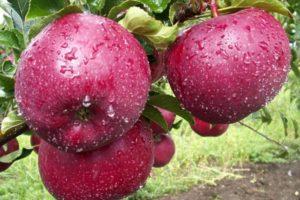
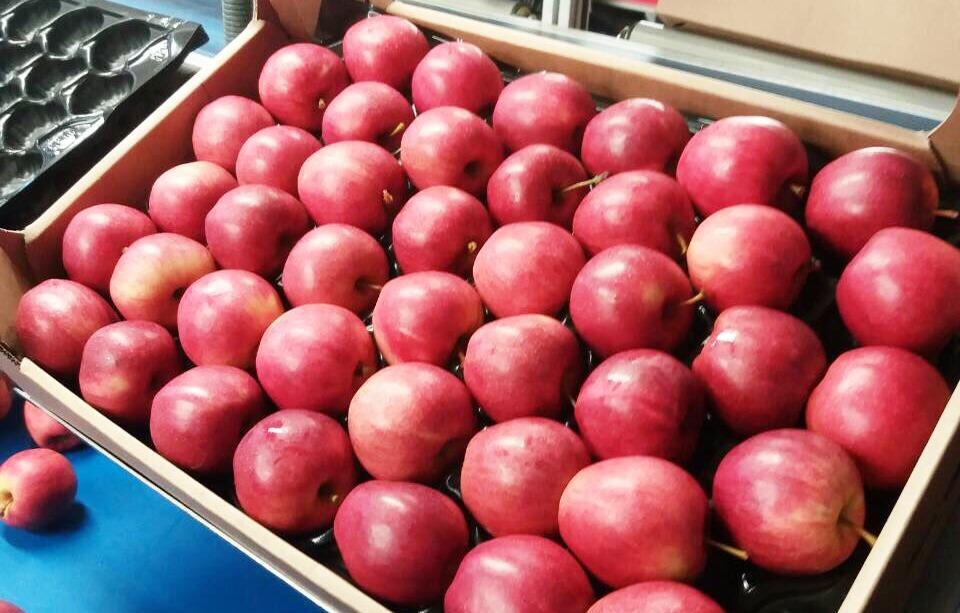
The Brookfield variety quickly gained popularity among gardeners and farmers. Its large fruits with crisp, sweet flesh and a reddish-purple blush are sought after worldwide. The apples ripen in September. Brookfield apple trees are susceptible to scab and bacterial canker.
Delicious
A distinctive feature of this variety of fruit tree is its undemanding nature regarding soil and climate conditions. The fruits ripen in September. The apples are large, bright red, and have juicy, sweet-tart flesh.
Galaxy
A clone of the Gala apple tree from New Zealand. The tree blooms in late spring, producing numerous fruit buds; monitoring is necessary. The fruits are large, with aromatic and delicious caramel flesh. The skin is thin and dense, with a dark red blush. The tree begins to bear fruit in its second or third year of growth.
Royal
The Royal variety is widely grown commercially by gardeners and farmers worldwide. Ripe fruits are slightly elongated, with vibrantly colored skin and sweet, juicy flesh.
Red
The Red cultivar is distinguished by its early flowering. The fruit ripens in the second half of August. The medium-sized, cone-shaped fruits have a bright, dark red blush and sweet, yellow flesh.
Natalie
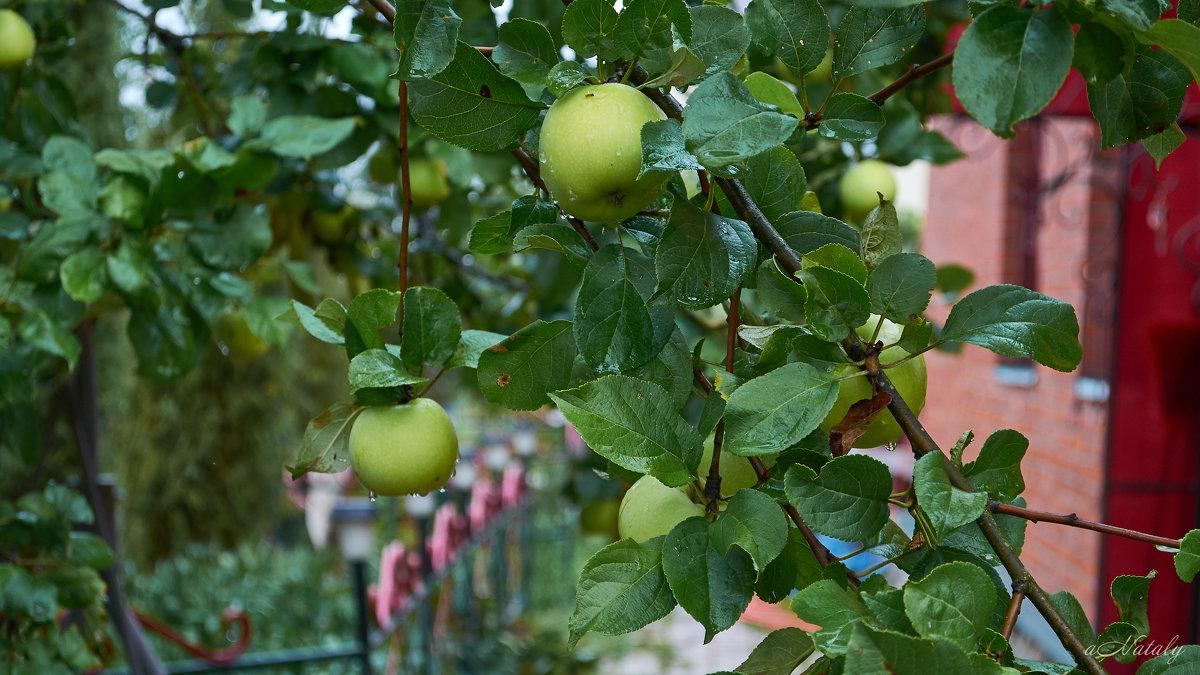
A distinctive feature of this variety is the early blush that develops on unripe apples. Because of this characteristic, harvesting often occurs before the fruit has time to ripen.
Cube
The Gala apple clone was developed in the Krasnodar Krai. Since 2007, it has been widely planted in orchards across the Caucasus region. The fruit ripens in late summer. The medium-sized fruits have a firm, yellow-orange skin. The flesh is juicy, sweet, and slightly creamy.
Costa
The Costa variety is virtually identical to the Gala Mast apple, except for the size of the ripened fruits. Costa's are smaller, but this doesn't affect the taste.
Mondial
This variety was developed in New Zealand. Mondial apples ripen in August. The fruits are elongated, with juicy flesh and a bright pink blush on the skin.
Mast
Gala, a Mast variety, is the most successful apple clone. Its main distinguishing features are its natural immunity to powdery mildew and large, red fruits.
Shniga
The Schniga variety was developed by Italian breeders. The tree is characterized by good frost resistance but weak immunity to diseases and pests. The fruits ripen in late August. The fruits are large, sweet, and juicy, with a dark red blush on the skin.
Related posts:
 Description and characteristics of the Gala potato variety, planting and care instructions
 Description of the Chudnoe apple variety, planting and caring for a dwarf tree
 Signs and treatment of apple tree cancer, varieties resistant to the disease
 Description and varieties of the Sinap apple tree, planting and care rules
 Description and characteristics of the 22 best apple tree varieties for the Moscow region, to plant in your dacha
 Description and characteristics of the Orlovim apple variety, cultivation nuances
 Description and characteristics of the Fuji apple tree, planting and care
 Description of the Red Early apple tree variety, agricultural technology and specific care