
- The history of the Orlovim apple tree breeding
- Advantages and disadvantages
- Characteristics and description of the variety
- Tree size
- Root system
- Fruiting
- Flowering and pollinators
- Apple ripening and harvesting times
- Productivity
- Taste qualities and scope of application
- Resistance to diseases and pests
- Resistance to low temperatures
- Planting an apple tree
- Site preparation
- Required soil composition
- Dimensions of the planting hole
- Landing dates and plan
- Caring for a seedling
- Watering
- Top dressing
- Crown formation
- Seasonal processing
- Wintering and mulching
- The nuances of growing in different regions
- In Siberia
- In the Leningrad region
- Belarus
- Methods of reproduction
- Gardeners' reviews
Table apple varieties have gained popularity for their excellent taste. But growing a garden apple requires some effort. It's best to choose the Orlovim apple tree, which is easy to grow and weather- and disease-resistant. It's no wonder this variety's popularity among gardeners is growing every year.
The history of the Orlovim apple tree breeding
To develop a late-season apple variety, specialists at the All-Russian Research Institute of Fruit Crop Breeding conducted crossbreeding experiments between the Antonovka variety and seedlings. The combination with the artificially bred SR0523 seedling, a summer specimen, resulted in the Orlovim variety, which carries a gene against scab.
Testing of the apple variety in 1989 led to its inclusion in the State Register of Breeding Achievements, where it is recommended for cultivation in the Central region of Russia.
Advantages and disadvantages
The popularity of this variety in gardens is due to the fact that the Orlovim apple tree:
- easily tolerates temperature drops in winter;
- bears fruit annually and quickly;
- famous for its tasty and juicy fruits;
- resistant to scab.
Ripening in August and September, apples don't spoil and can be stored for up to a month. They also make delicious preserves for the winter.
The only drawback of this variety is that the tree's great height makes it difficult to care for.
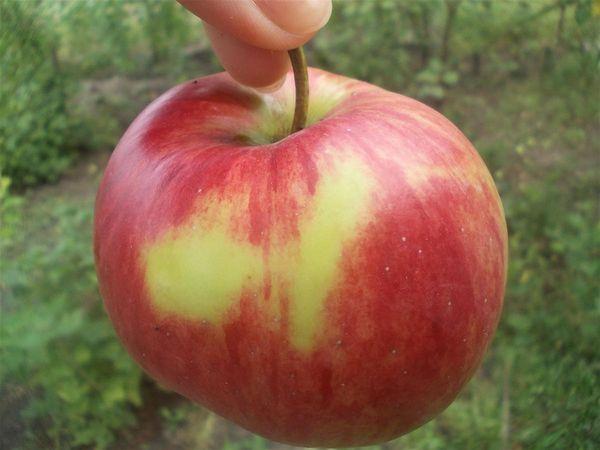
Characteristics and description of the variety
Before planting an apple tree, it's important to determine the tree's location on the property. Therefore, it's important to know what the plant will look like after several years of growth.
Tree size
The Orlovim apple tree can reach a height of 4 to 5 meters. This depends on the rootstock onto which the seedling is grafted. The diameter of the spherical crown of this garden tree is also considerable—approximately 6 meters.
But when pruning, you can reduce the size of the apple tree to make it easier to care for.
Root system
The apple tree's root system consists of skeletal, fibrous, and absorptive roots. The skeletal roots form the framework of the tree's underground system. Vertical and horizontal roots are located at depths of 4 meters and below. Fibrous roots, highly branched, are located at the surface. They are tipped with small white hairs up to 4 millimeters long. These hairs absorb nutrients from the soil. Between the trunk and the root system there is a root collar, which is used to determine the planting depth of the apple tree.
Fruiting
The onset of fruiting is crucial for varietal apple trees. The Orlovim variety produces apples in the third or fourth year of the tree's life.
Flowering and pollinators
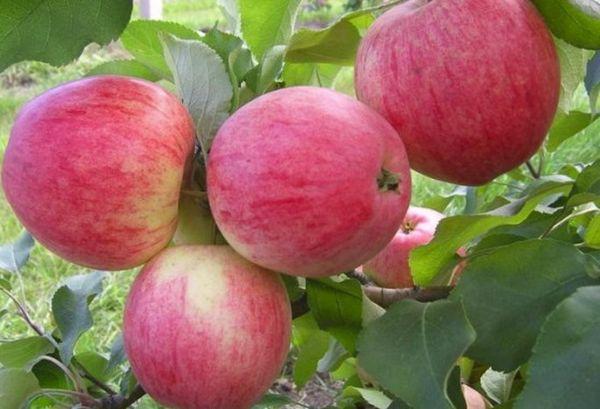
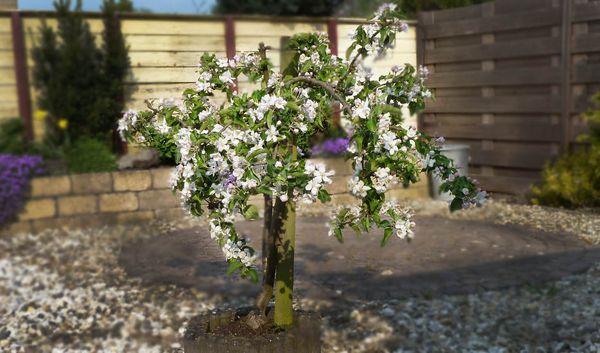
The apple tree is covered with white and pink flowers in May and early June. Fruit then begins to set, forming until late summer and early fall. However, since the Orlovim variety is self-sterile, nearby pollinators are needed. They are planted 5-6 meters apart. For pollination, choose apple varieties with late summer ripening. The best ones are Anis Alyi and Wells.
Apple ripening and harvesting times
On average, fruits ripen on a varietal basis apple tree at the end of AugustThey are harvested gradually as they ripen. Care is taken to ensure the apples don't fall onto a hard surface. A strong impact will cause the fruit to split.
Productivity
The Orlovim variety's advantages include its early maturity and high yield. After nine years of growth, the apple tree produces up to 80 kilograms of fruit. A mature tree can yield up to 100 kilograms of apples. Average yields are estimated at 200 centners per hectare.
Taste qualities and scope of application
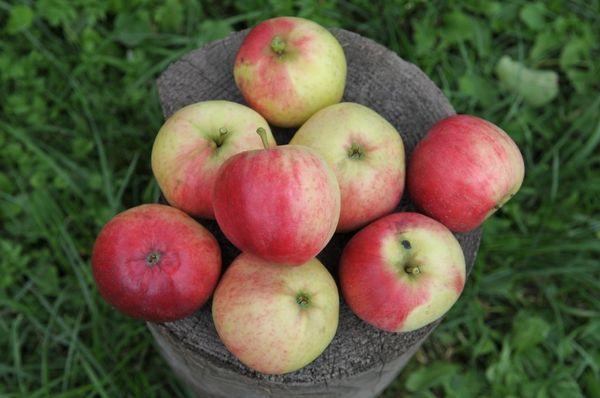
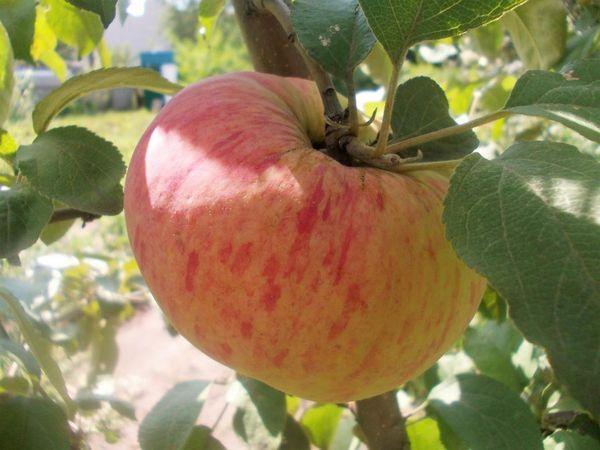
The weight of one apple of this variety reaches 120-170 grams. The fruits of the apple tree:
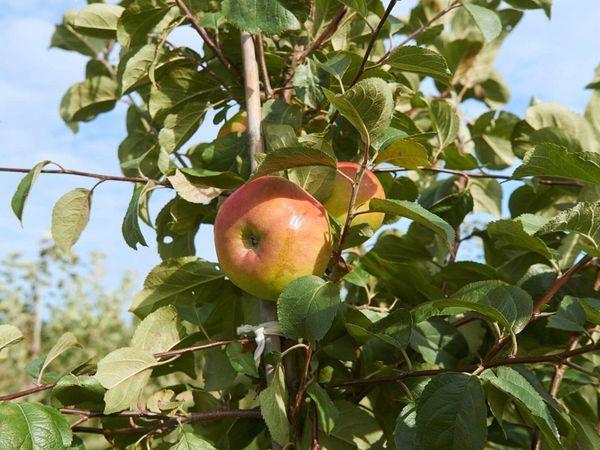
- greenish in color during harvesting and yellowish during consumption;
- with creamy flesh of dense texture;
- sweet and sour taste and strong aroma, reminiscent of Antonovka;
- contain 10.2% sugar, 10.2 mg/100 g ascorbic acid.
The apples' outer appearance is rated at 4.3 points, and their taste is 4.5.
Apples keep fresh for up to a month. Therefore, they are used to make jams, preserves, compotes, and juices.
Resistance to diseases and pests
The Orlovim variety is noted for its high resistance to scab on its leaves and fruit. Occasionally, apple trees can be susceptible to other fungal infections and pest attacks if poorly maintained.
Resistance to low temperatures
Apple trees of this variety are frost-resistant. It has been observed that temperatures as low as -35°C (-95°F) did not cause any damage to the tree.
Planting an apple tree
Plant this variety in sunny, open areas. Keep in mind that the groundwater table should be at least 2 meters deep. If your garden is prone to flooding, plant the apple trees on higher ground. The soil should be neutral, with a pH of 6.0.
The planting time chosen is autumn or spring.
Site preparation
The soil where apple trees are planted is cleared of weeds, especially couch grass and sow thistle. The area under the fruit trees should be dug to a depth of 30-40 centimeters. Apply half a bucket of manure, 50 grams of superphosphate, 30 grams of potassium salt, and ammonium sulfate per square meter. Harrow the soil thoroughly, breaking up large clumps of soil.
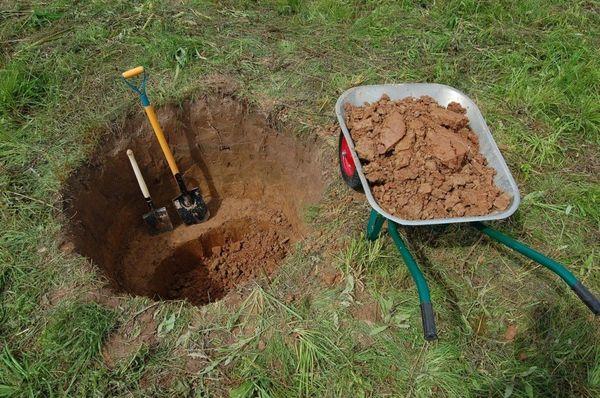
Two to three weeks before planting, prepare the holes. When digging, the top fertile soil layer is stored separately from the bottom. The bottom, infertile soil layer is not used to fill the hole, but is spread between the rows after planting.
Required soil composition
Apple trees require loamy and sandy loam soils. Level areas facing northeast, west, and northwest are best.
In sandy soils, the holes are made wider and deeper than usual. Salty soils require a 10-centimeter layer of compost at the bottom of the hole. The salt will be retained by the compost or rotted manure.
Dimensions of the planting hole
The holes are dug 50-70 centimeters deep and 75-100 centimeters wide. The distance between them should be 5-6 meters.
Landing dates and plan
Apple trees are planted in the spring before the buds open. In autumn, planting is carried out before October 10th in areas with early snowfall. In this case, remember to protect the seedlings from frost.
When planting, fill the hole with a mixture of topsoil mixed with 2-3 buckets of compost, 200 grams of mineral fertilizer consisting of 170 grams of superphosphate and potassium salt. If the soil is highly acidic, add 200 grams of slaked lime.
Once the hole is three-quarters full, add a bucket of compost, mixing it with soil to form a mound in the center. Place the tree on the raised platform, spreading its roots. Cover with soil until the root collar is 1-2 centimeters above the ground surface. Drive a stake 3 centimeters near the trunk for tying.
When adding soil, shake the seedling so that the clods of soil are distributed between the roots.
Be sure to compact the soil around the apple tree with your feet and make a ridge to form a hole.
At the end of the procedure, water the tree, using up to 30-50 liters of water per plant.
Caring for a seedling
After planting an apple tree, the gardener's task is to create a strong and sturdy tree skeleton with properly spaced branches. Until fruiting begins, the tree's trunk and row spacing must be maintained.
Watering
During a dry summer, the Orlovim apple tree's harvest will depend on adequate moisture. In the first year after planting, water 5-6 times, and in subsequent years, 4 times is sufficient. Water the root zone first in the spring, then twice in June, once each in July and fall. The soil needs to be moistened to a depth of 50 centimeters, so pour 5-7 buckets of water onto each root zone.
Top dressing
During the summer, fertilizer is applied to the tree trunk area. Once the apple trees have begun to bear fruit, apply up to 2-3 kilograms of manure per square meter, 30-50 grams of superphosphate, and 12-15 grams of potassium salt and ammonium nitrate are sufficient. Manure and potassium phosphate fertilizers are applied in the fall, and ammonium nitrate is added before spring cultivation. It is best to dilute the fertilizer in a bucket of water and water it into furrows located 1.5 meters from the trees.
To form fruit, phosphorus-potassium fertilizers are needed: 20 grams of superphosphate and 10 grams of potassium salt per bucket of water. This is enough for 2-3 linear meters of furrow.
Crown formation
Pruning apple trees can increase fruit yield. Thinning the crown allows the apples to receive more light and air, which helps them ripen faster. Branches that grow parallel to or into the crown should be pruned.
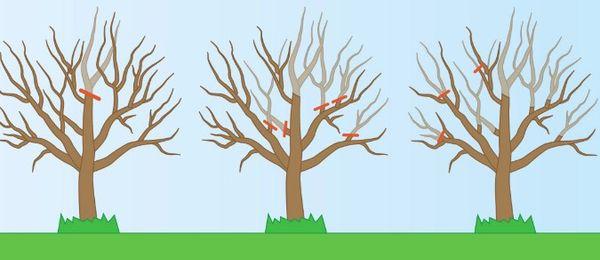
Dried, diseased branches are removed regularly in spring and autumn.
Seasonal processing
Skeletal branches should be pruned by a third a year after planting. When the tree begins bearing fruit, the emphasis is on sanitary pruning.
Wintering and mulching
Young Orlovim trees are tied with matting or reeds in late autumn. The soil around the apple tree should be mulched with sawdust or compost. The mulch layer should be 20 centimeters thick.
The nuances of growing in different regions
Breeders developed this apple variety for cultivation in the central and central regions of Russia. However, it can also be planted in other regions with similar climates.
In Siberia
You can grow seedlings in cold climates. However, you need to pay attention to crown formation. A creeping type of tree will thrive best, and it should be covered in the fall to protect it from frost.
In the Leningrad region
This fruit tree variety will thrive in northwestern Russia. Proper care is all that's required.
Belarus
The Belarusian climate is suitable for growing late-season apple trees. Here, the tree can reach 4-5 meters, but timely pruning is necessary.
Methods of reproduction
This apple tree variety is propagated by grafting. If grafted onto a dwarf rootstock, the apple tree will bear fruit in its second year. This will also keep the tree from becoming too tall, making it easier to care for.
Gardeners' reviews
Gardeners' opinions on the Orlovim variety are important. They will help avoid mistakes when choosing a variety.
Vadim, Moscow: "I have a large garden on my estate. And it has more apple trees. I found an open, sunny spot for the Orlovim variety. I harvest it every year. Recently, I harvested 102 kilograms from a tree. The family ate the delicious fruit all month, and the rest I used for juice. I like the Orlovim variety for its cold and disease resistance, and for its juicy fruits."
Alexandra, Novokuznetsk: "It's hard to get a bountiful apple harvest here in Siberia. But Orlovim makes me happy every year. And the kids are happy, too. They enjoy the juicy, slightly tart fruits in August. And the jam made from these apples is incredible!"
Ivan, Kursk: "I recommend that novice gardeners not overlook the Orlovim variety. It's easy to care for. The crown can be shaped into various types. I grafted it onto a dwarf rootstock, and the tree grew to a compact size. Now I enjoy delicious jams and apple compotes every year."
Related posts:
 Signs and treatment of apple tree cancer, varieties resistant to the disease
 Description of the Chudnoe apple variety, planting and caring for a dwarf tree
 Description and varieties of the Sinap apple tree, planting and care rules
 Description and characteristics of the Spartan apple variety, cultivation tips
 Description and subtleties of growing the Sverdlovsk Beauty apple tree variety
 Description and planting of the Dream apple tree variety, care and propagation
 Description and varieties of Gala apple trees, planting and care in open ground
 Description of the ornamental Nedzvetsky apple tree, cultivation technology