
- History of selection
- Advantages and disadvantages of the Imrus variety
- Growing regions
- Characteristics and description of the culture
- Tree size and annual growth
- Root system
- Fruiting
- Flowering and pollination
- Ripening times and harvesting of apple trees
- Fruit yield and taste
- Storage and use periods of apples
- Resistance to low temperatures and drought
- Susceptibility to diseases and parasites
- Planting a tree
- Site preparation
- Depth and dimensions of the planting hole
- Disembarkation times and rules
- How to care
- Irrigation
- How to feed an apple tree
- Crown formation
- Preventive treatments
- Caring for the tree trunk circle
- Winter protection
- Subspecies and variants
- Columnar
- Dwarf
- Semi-dwarf
- Methods of reproduction
- Reviews of the variety
The Imrus winter apple tree is grown commercially and in private gardens. Saplings are difficult to obtain, but the variety is in high demand. Thanks to its robust immunity, the tree is disease-resistant and resistant to powdery mildew, fruit scab, and leaf scab.
History of selection
The name sounds a bit odd. It reflects the characteristics of the fruit tree. Breeders developed a variety resistant to fungal infection and named it Imrus, where "Im" stands for immunity and "rus" stands for Russian.
Breeding work was carried out in the city of Orel; to create the variety, scientists used several parental forms:
- Antonovka ordinary;
- winter-hardy apple hybrids of the OR₁₈T₁₃ series.
The creation of the new seedling took over 10 years (1977-1988). Testing was conducted from 1989 to 1996. The trials were successful. The Imrus variety was added to the State Register.
Advantages and disadvantages of the Imrus variety
Just listing a few characteristics of Imrus is enough to understand why gardeners choose this apple variety. The following are noted for this apple tree:
- keeping quality;
- strong immunity to pathogens of powdery mildew and scab;
- regular fruiting;
- stable yield.
The only downside is the fragile skin.
Growing regions
This variety can be found in various regions of Russia and Belarus. It adapts well to the climate of the Leningrad Region. For gardeners in the Moscow region, the Imrus apple tree is an ideal choice, as it begins bearing fruit earlier there than in other regions.
Characteristics and description of the culture
When planting, it's important to know the mature tree's dimensions (height and crown width). These dimensions determine the planting pattern, which determines the feeding area.
Tree size and annual growth
The height of apple trees on seed rootstocks is 5.5-6 m. If the rootstock is dwarf, then no more than 4 m. The crown of a young tree is rounded.
Over the years, it remains compact but becomes overgrown. Growth per season is 10 cm.
Starting in the sixth year, the crown is thinned every two years. Sparse skeletal branches grow upward, extending from the trunk at an acute angle. Young apple trees have greenish-brown bark, which changes to a dark brown with age. A distinctive feature of this variety is the uniform coloring of both the branches and the trunk.
Root system
The size and depth of the root system depend on the type of rootstock.
Fruiting
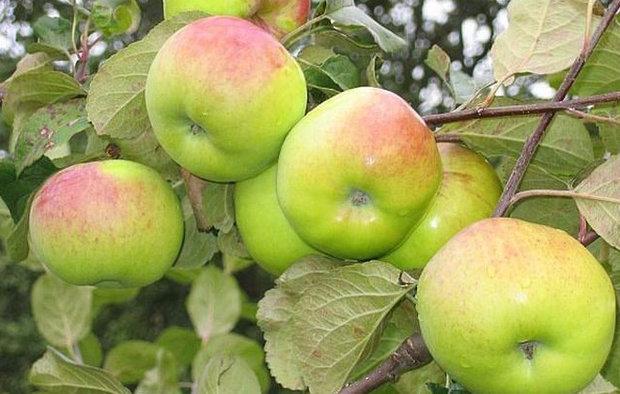
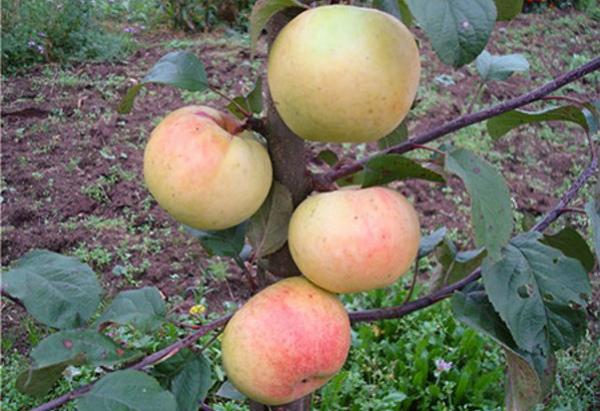
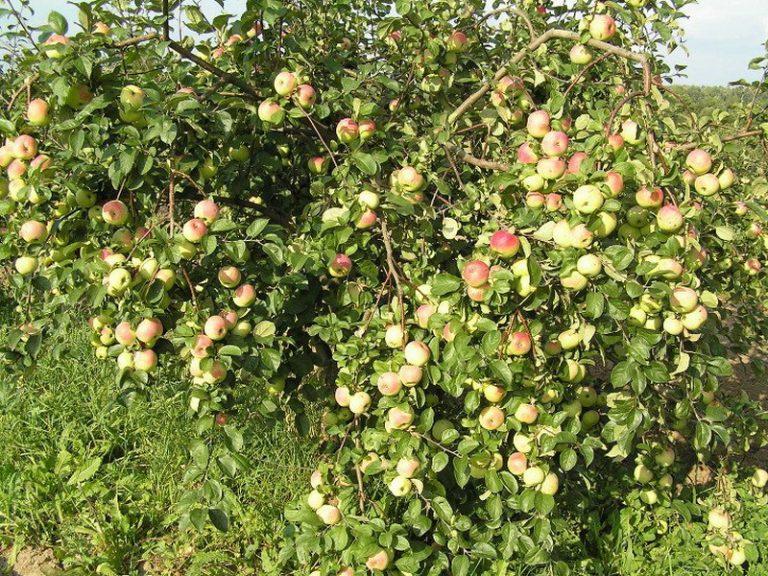
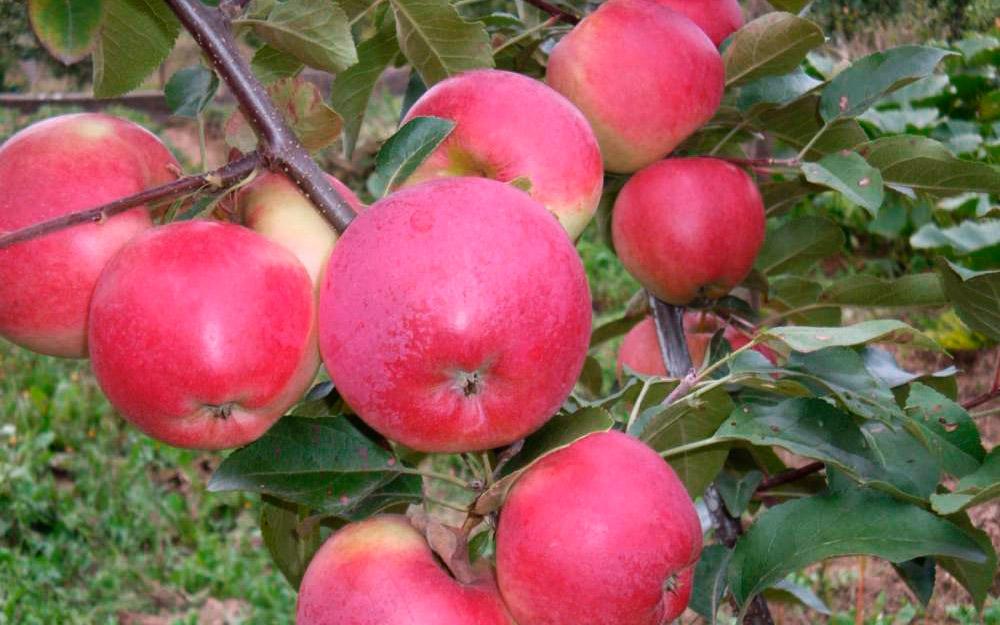
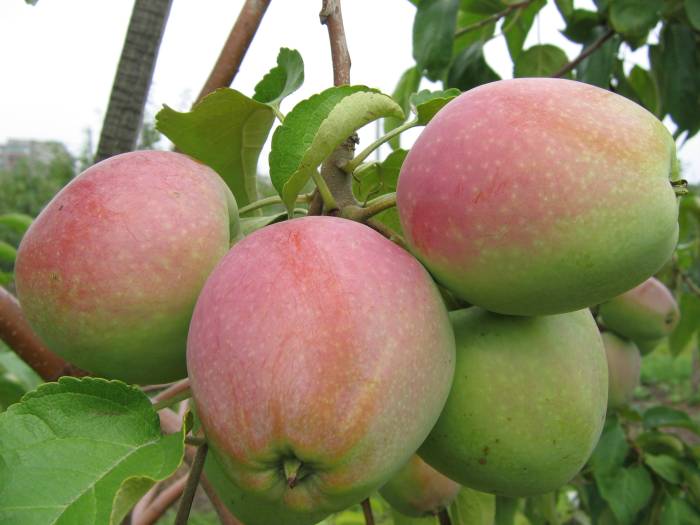
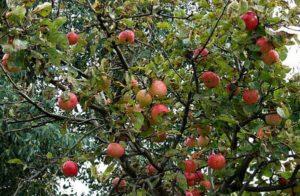
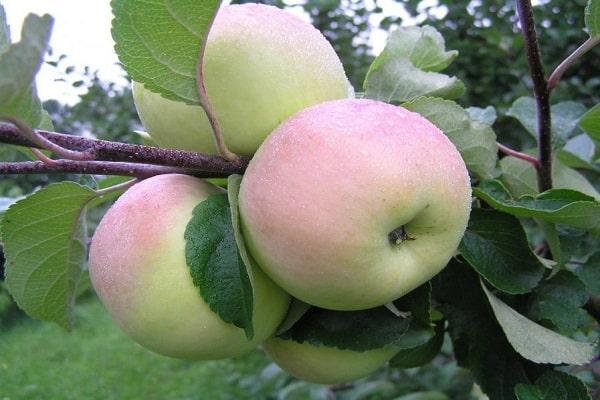
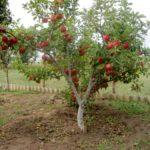
The main harvest is formed on the ring-shaped branches; there are apples on the fruiting twigs and spears, but fewer in number. The fruits are medium to large in size, weighing 135-180 g. They are flattened in shape and have little ribbing.
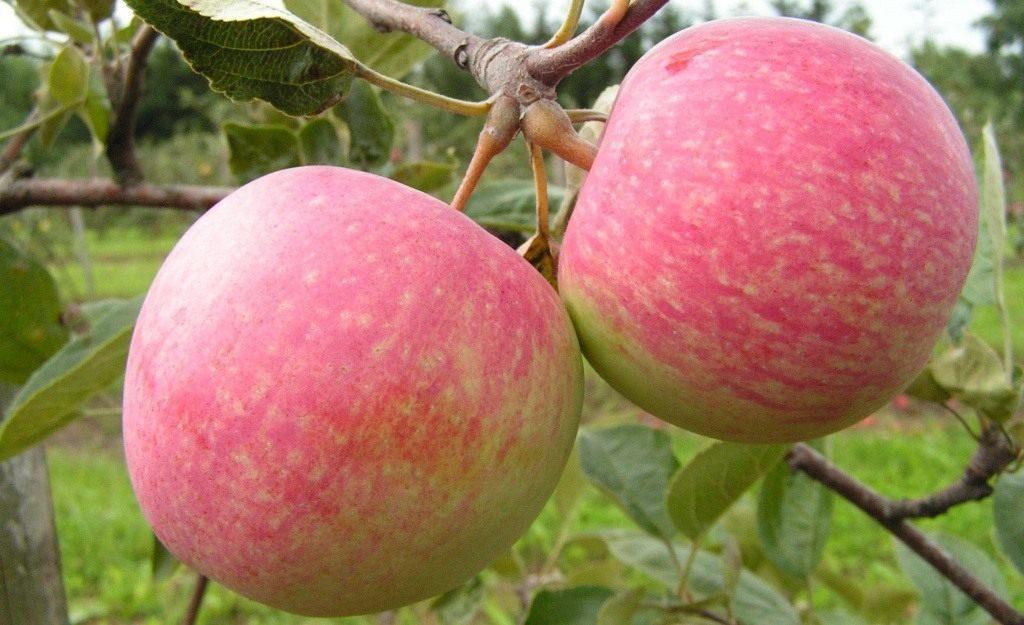
The fruit has a smooth, oily-looking skin, greenish when picked, turning light yellow during storage. The flesh has a pleasant creamy hue, while the skin is greenish. Up to 50% of the fruit is covered with stripes, streaks, and a brownish-red blush. This blush is especially vibrant on apples growing on the south side of the canopy.
During storage, the color of the blurred blush turns crimson. There are numerous subcutaneous dots.
They are small in size, but clearly visible. The funnel is rusty, pointed conical, and medium deep. The saucer is grooved and wide. The seed chambers are closed and medium in size. The seeds are brown, conical, and medium in size.
Flowering and pollination
The Imrus apple tree is partially self-fertile. To increase yields, pollinators are planted in the orchard. Suitable varieties include:
- Memory of the warrior;
- Freshness;
- Kandil Orlovsky;
- Veteran.
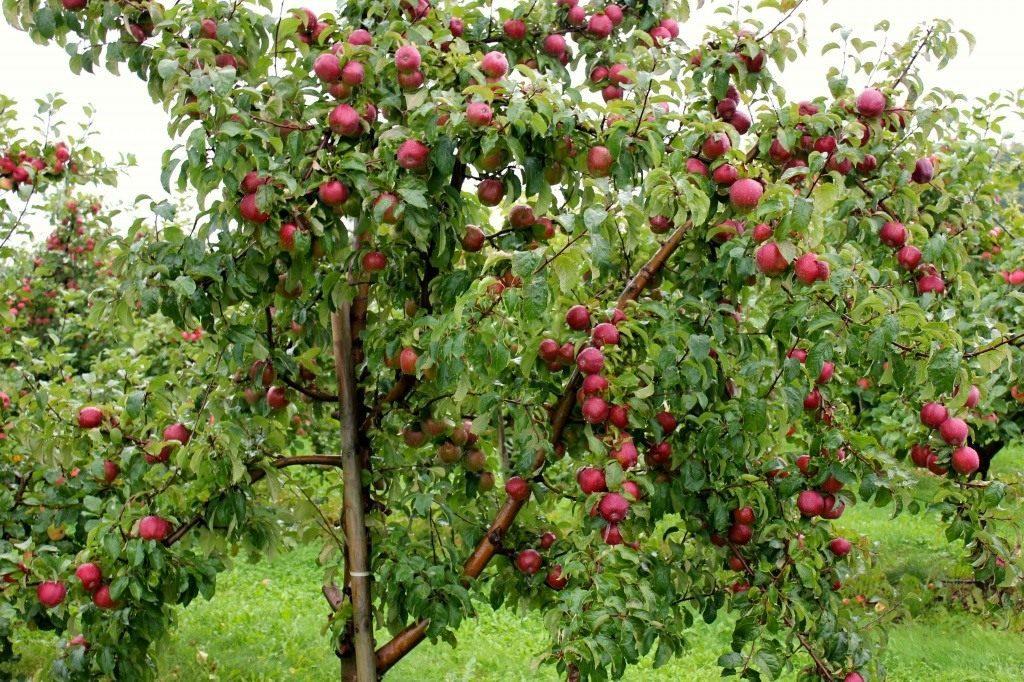
They are used in gardens as pollinators. Flowering begins in early May. Harvest is often affected by recurrent frosts. The buds are pinkish-white, and the small flowers are pale pink. They are collected in inflorescences of 4-6. The inflorescence is corymbose.
Ripening times and harvesting of apple trees
The region's climate influences the ripening time of Imrus apples. The apples ripen in large numbers in September, with some fruits ripening in October.
Fruit yield and taste
Climate and agricultural practices influence the yield. According to statistics, the Imrus apple tree begins to bear fruit abundantly at 4-6 years of age, with a single young tree yielding 20 to 30 kg of fruit.
Three-year-old trees produce their first fruits, producing no more than 10. The yield increases with age.
Mature Imrus apple trees yield over 100 kg of fruit. A record harvest of 185 kg has been reported.
The tasters assessed the taste and commercial appearance of the fruits:
- Imrus commercial qualities - 4.3;
- pulp taste - 4.4.
A 5-point scale was used for the assessment.
Storage and use periods of apples
In a dark room with moderate humidity and cool temperatures (2-8°C), the fruits can be stored until March. The sweet and sour pulp of the apples is used to make juice, yielding 65% of the juice; the rest is pulp. The fruits are eaten fresh. They are rich in pectin and vitamins P and C.
Resistance to low temperatures and drought
Demand for Imrus apple tree seedlings has remained steady over the years because the trees overwinter well and are not sensitive to sudden temperature fluctuations. Drought affects yield, fruit flavor, and immunity. In the absence of rain, the trees require watering.
Susceptibility to diseases and parasites
In high humidity conditions, the tree is susceptible to bacterial blight. In June, aphids can attack young Imrus shoots.
Planting a tree
The longevity of the tree and its productivity depend on the choice of location and correct planting.
Site preparation
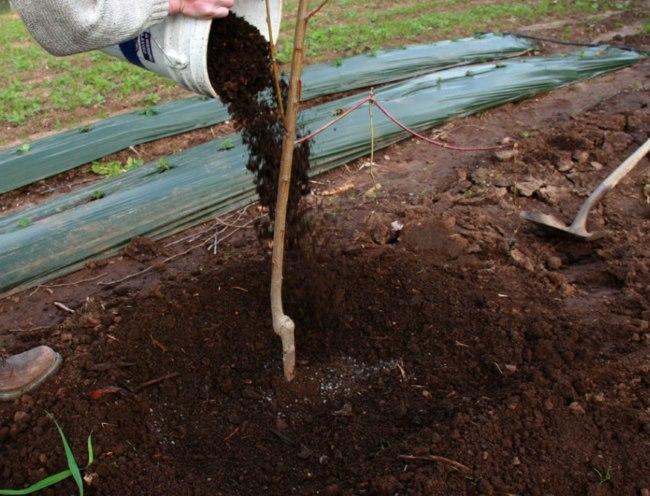
Choose a sunny location. In the shade, apple trees take longer to establish, the fruit tastes worse, and the color is less vibrant. Before planting, dig up the soil, remove the roots of perennial weeds, and apply fertilizer:
- humus - at least 1 bucket per 1 m²;
- peat - ½ bucket per 1 m²;
- nitroammophoski - 1 tbsp. l/m².
Depth and dimensions of the planting hole
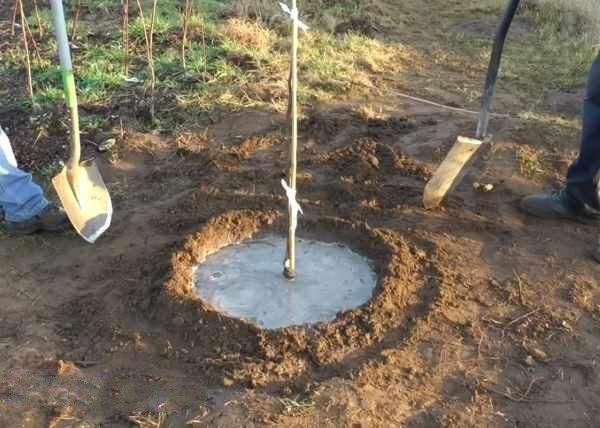
To ensure proper root development, dig a hole 0.6 m deep and at least 0.8 m wide. Place a layer of broken brick or crushed stone at the bottom. Drainage prevents water stagnation and protects the seedling's roots from rotting. For spring planting, dig the hole in the fall.
Disembarkation times and rules
Imrus seedlings are planted in spring and early fall in warm, unfrozen soil. The optimal average daily temperature during planting is 12-14°C. A soil mixture is prepared for backfilling the hole. The bulk of the soil is garden soil taken from the top 15-25 cm (6-10 inches). Two to three buckets of compost and half or a full bucket of peat are added.
The landing algorithm is standard:
- a stake 1.8-2 m high is driven into the center of the hole and a mound of soil mixture is poured into it;
- a seedling is placed on top of the mound, its roots are straightened and laid along the sides of the earth cone;
- the hole is filled with prepared soil, each layer 15 cm thick is compacted;
- form a hole near the trunk, making sure that the neck is above the ground (5-7 cm);
- the seedling is watered generously;
- the tree trunk hole is mulched with humus.
How to care
Gardeners who grow the Imrus variety enjoy organically grown apples. They manage to grow their harvest without the use of strong insecticides.
Irrigation
Approximate watering rates are provided in the table. Water consumption depends on the age of the apple tree and weather conditions. Moisture requirements increase during hot weather.
| Age of the tree | Water consumption (l/m²) |
| 1 year | 20-30 |
| 2 years | 40-50 |
| 3-4 years | 70-80 |
| 5 years and older | 90-100 |
How to feed an apple tree
For two years, the seedlings are fed with fertilizer placed in the hole and applied during soil cultivation. In the third year, the Imrus apple trees are fed with additional fertilizer. In the spring, nitroammophoska is applied at a rate of 1 tablespoon of granules per bucket.
After harvesting, fertilize with a mixture of ash (500 g), superphosphate (1 tbsp), and potassium salt (1 tbsp). The consumption rate is given per 1 m² and increases as the tree's crown grows.
Crown formation
In the spring, before the sap begins to flow, sanitary pruning is performed. This involves removing branches damaged by weather, frost, pests, and infection. The first four years are spent shaping the apple tree's crown. During formative pruning, shoots growing inward, suckers, and any excess branches that create unwanted shade are removed.
Preventive treatments
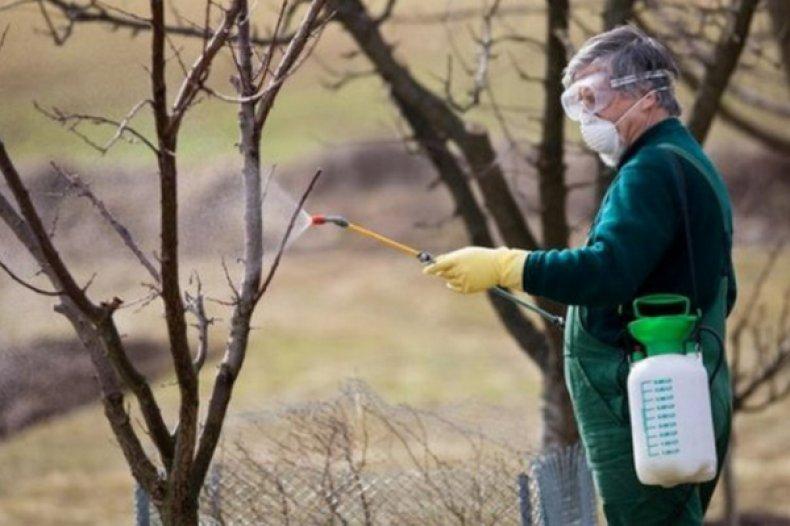
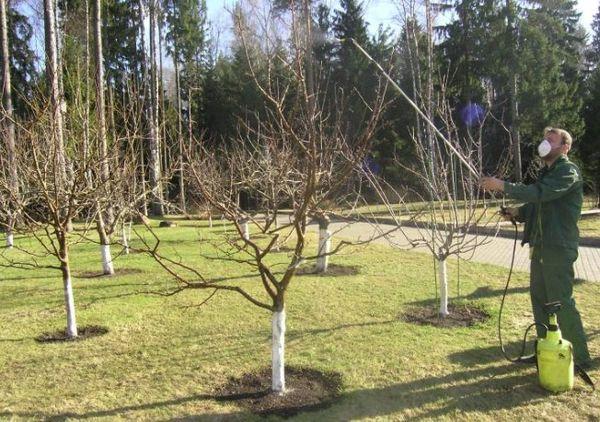
The trunk and skeletal branches are whitewashed. Copper sulfate is added to the lime. This reduces the risk of fungal diseases. In the spring, a trapping belt is placed on the trunk. It is changed every 10 days. This protects the Imrus apple tree from pests.
Caring for the tree trunk circle
The area around the trunks of young trees is kept clean, weeds are kept out, and the topsoil is loosened. Every two years, the soil around the trunk is covered with a layer of manure; as it rots, it turns into humus. Around mature apple trees, the soil is turfed, and the grass is mown several times during the summer.
Winter protection
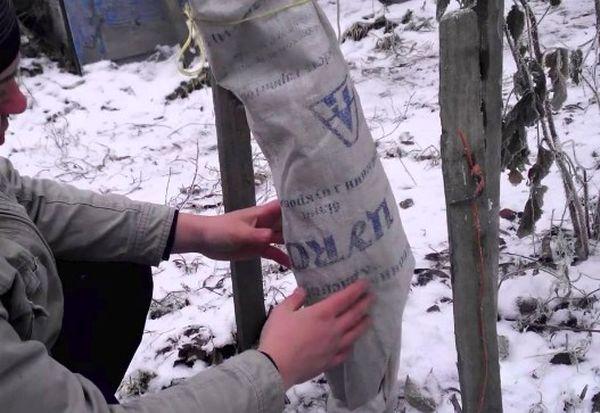
Two weeks before the onset of frost, water the trees to replenish moisture. At the same time, apply phosphorus-potassium fertilizers (superphosphate, potassium sulfate) to the soil. The application rate is taken from the table printed on the package. In regions with frosty winters, young Imrus apple trees are covered with covering material, and the area around the trunk is mulched with humus, peat, and rotted sawdust.
Subspecies and variants
The Imrus variety has three additional varieties, produced using different types of rootstock.
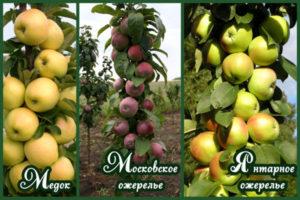
Columnar
There are no skeletal or lateral branches. The trunk is approximately 3 meters tall and is covered with fruit during the fruiting season.
Dwarf
M-9 bkb 62396 is used as a rootstock. The dwarf apple tree Imrus begins to bear fruit in the 2nd-3rd year, and after 10-15 years, the yield decreases.
Semi-dwarf
Imrus apple tree cuttings are grafted onto semi-dwarf rootstock 54118 or M4. The first apple harvest occurs in the fifth to eighth year.
Methods of reproduction
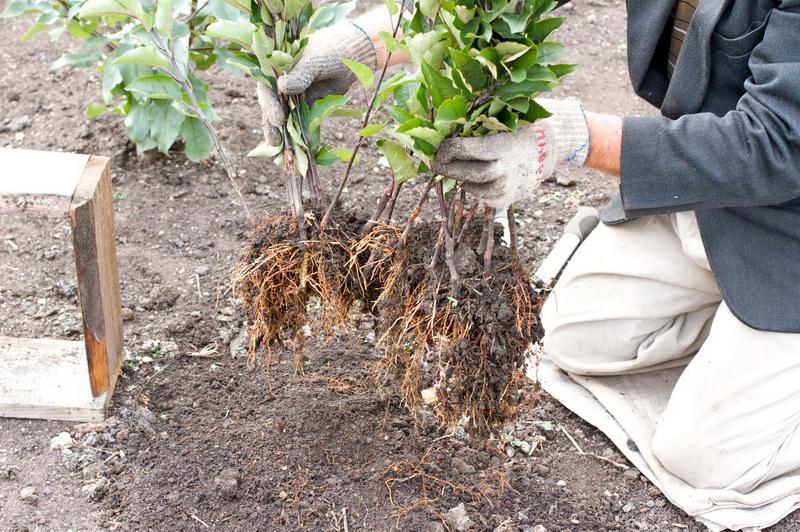
Own-rooted apple tree seedlings are grown from stratified seeds. Imrus seedlings are grown in open ground. The variety is most often propagated vegetatively using cuttings. These are collected early in the spring or late in the fall and stored in a basement or refrigerator until warm weather arrives. They are then planted in a nursery for rooting.
Reviews of the variety
Anna Viktorovna, 44, Moscow: "The groundwater table at my dacha is high, so I plant apple trees on dwarf rootstock. The Imrus fruits have thin skins, so we pick them carefully to avoid damaging them. We store them in baskets in the cellar and eat them in February."
Ekaterina Ivanovna, 60, Lesosibirsk: "After retiring, I got busy with my garden. I planted several varieties of apple trees, the Imrus being my favorite. We don't start eating these apples right away, but after a month. The flavor becomes richer."
Galina Sergeevna, 33, Moscow region: "We grow this variety for long-term storage. Other apple trees lose their flavor quickly, but Imrus apples last in the basement until spring."
Related posts:
 When and how to prune an apple tree, and is it possible to shape the crown in summer?
 How to plant walnuts, care for them, and grow them at home
 Description and characteristics of the Stroevskoye apple tree variety, the subtleties of cultivation
 Description of the Red Early apple tree variety, agricultural technology and specific care
 Description and characteristics of the columnar apple tree variety Medok, planting and care
 Description of the columnar apple tree variety Arbat and the subtleties of growing it
 Description and characteristics of the Mackintosh apple tree, planting and care
 Fruiting and description of the best varieties of dwarf apple trees, planting and care