
- Why is pruning necessary?
- Frequency of the procedure
- When apple trees are shaped
- In the spring
- In summer
- In the fall
- In winter
- What tools will you need?
- Methods for removing branches
- The best crown shaping techniques
- Flat crown
- Whorled-tiered
- Creeping
- Bushy
- Vertical palmette
- Fusiform
- Cup-shaped
- Tiered-discharged
- Apple tree pruning patterns
- When forming a young seedling
- For 2 and 3 year old trees
- Formation of a mature tree
- Rejuvenation of old apple trees
- How to care for a tree after pruning
- Spring pruning of apple trees for beginners – tips for gardeners
A fragrant apple orchard and a bountiful harvest of delicious, juicy apples is every budding gardener's dream. Proper care and timely pruning of apple trees will help create a beautiful and strong crown, improve the taste of the fruit, prevent fungal diseases, and allow you to grow a magnificent orchard.
Why is pruning necessary?
Without pruning, a young apple tree begins to bear fruit too early. Early fruiting drains the tree of much energy and nutrients, preventing the formation of a strong crown. Mature apple trees with a dense crown are susceptible to fungal diseases of the leaves and wood. Dense foliage also attracts pests.
A dense crown loses strength and resistance to squalls, hinders the ripening of large fruits, and alters their flavor. Such a tree produces small, sour-tasting apples. Pruning promotes uniform and regular fruiting, preventing sudden fluctuations in yield.
The tree's height makes it difficult to harvest fruit from the upper branches and prevents effective pest control. Timely pruning prevents a number of diseases, promotes the formation of a strong, resilient crown, and extends the fruiting period and life of the tree.
It's best to prune gradually. A one-time pruning with massive removal of branches and shoots takes a lot of energy from the apple tree, making it more difficult for damaged areas to heal.
Frequency of the procedure
Annual apple tree pruning will help maintain the tree's crown, remove dead branches, and accelerate fruiting. It can be done at any convenient time, avoiding periods of active flowering and fruit ripening.
When apple trees are shaped
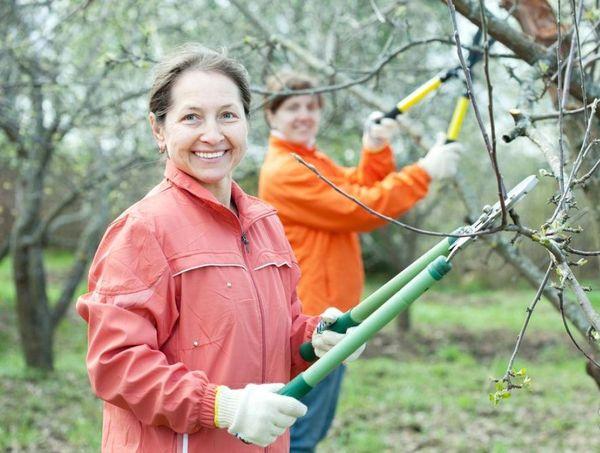
Crown formation is carried out throughout the life of the tree. The most productive deadlines Depends on the region of residence. Typically, these are the first months of spring—March and April.
The ideal time for fall pruning is after the apple harvest and before the first prolonged frost. Spring pruning is done before the buds swell.
Dry weather with temperatures above 0°C is chosen for work.
In the spring
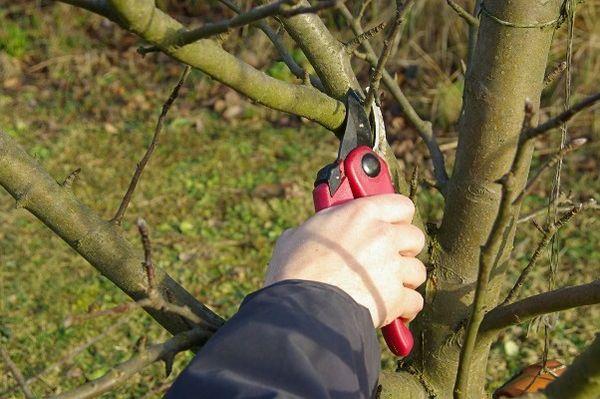
Spring pruning is performed before the sap begins to actively flow and buds appear. At this point, the tree devotes all its energy solely to repairing any damage. Forming the apple tree during this period promotes its active growth and development during the summer. Sanitary pruning is also performed in the spring, removing branches that were frozen during the winter and those damaged by wind.
In summer
Formative pruning in the summer is performed as a last resort, as it often causes delays in the development of apple trees, prolongs the growing season, and sometimes reduces fruiting.
Supplementary pruning can also be performed in summer. During this period, actively growing shoots are pinched. This technique causes minimal damage to the tree. Pinching improves sunlight access to the central leaves and regulates the growth of skeletal branches. This practice is performed before the shoots become woody. In the Moscow region, pinching is typically performed in June. In regions with mild climates, it is performed in May.
With the arrival of August, autumn sanitary pruning begins in northern regions, the purpose of which is to prepare the tree for the winter period.
In the fall
Once the harvest has been gathered and the leaves have completely fallen, you can begin fall pruning. This is practiced in regions with mild and temperate climates. In northern regions with unpredictable temperatures, the tree may not have time to recover. This can lead to branches drying out and sometimes even the death of the entire tree.
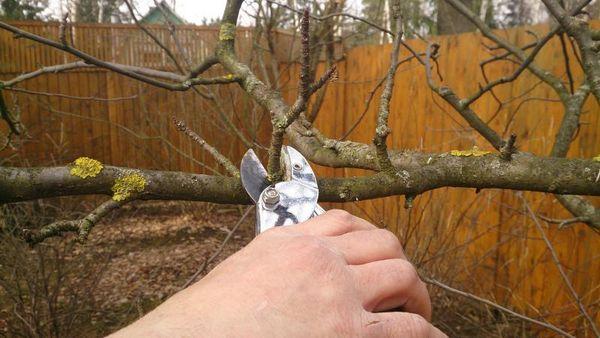
When preparing an apple tree for winter, rotten, weak and broken branches are removed.
In winter
In regions with mild climates, pruning damaged branches can be done in winter while the tree is still dormant. Winter pruning is performed after the leaves have completely fallen and before the buds begin to swell in spring, excluding frosty days with low temperatures. Cold days can cause the bark to become brittle and become severely damaged.
What tools will you need?
Apple tree pruning is done using the following tools:
- adult branches are cut with a garden saw;
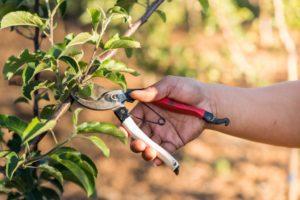
- To trim young growth, use pruning shears;
- Removing branches from hard-to-reach places is done using loppers.
For this work, use well-sharpened tools and treat them with alcohol. Using unsterile and blunt tools causes irreparable damage to the branch and is often the cause. black apple cancer.
Methods for removing branches
Before removing a shoot, it's important to know exactly why and how. Incorrect pruning can cause the tree's death.
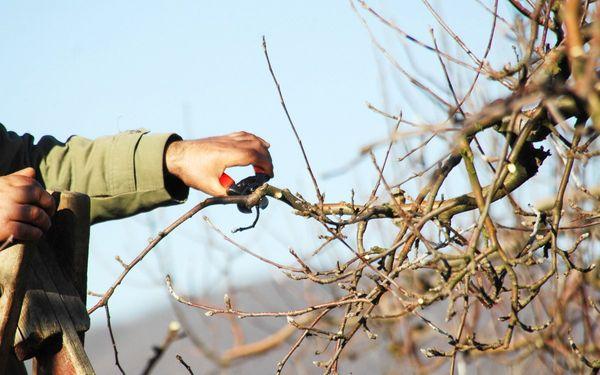
Depending on the purpose, there are several common types of apple tree pruning:
- Sanitary pruning is used to maintain the tree's health. It involves removing dead, diseased, and damaged branches. Early spring or summer are suitable for sanitary pruning.
- Rejuvenation pruning involves removing old and non-fruiting branches to increase the tree's overall productivity. It involves thinning the crown and curbing vigorous growth.
- During the first years of an apple tree's life, formative pruning is performed to create strong lower branches. This ensures the tree's resistance to external environmental factors.
Following pruning rules helps remove dry and damaged branches in a timely manner and promote the formation of a healthy tree with intensive fruiting.
The best crown shaping techniques
Experienced gardeners use several techniques to create healthy apple tree crowns. These techniques allow for minimal branch spacing, ensure adequate sunlight, increase productivity, and speed up apple ripening.
The appropriate option for crown formation is selected taking into account the age of the apple tree, its variety, and the characteristics of the grafting.
Below are the most common apple tree crown shapes that allow for high yields and an attractive aesthetic appearance.
Flat crown
To effectively utilize a garden plot and achieve a unique appearance, apple trees are trained to have a flat crown. This crown consists of symmetrically arranged skeletal branches. As a result, after just a few years, the tree appears flat rather than voluminous. Flat crowns are most often cultivated for apple trees growing near a house or fence on trellises.
The flat crown is otherwise called palmette and is divided into the following subspecies:
- horizontal;
- vertical;
- Italian oblique;
- free;
- Verdier.
Forming a flat crown requires care, diligence and time.
Take a look Also
Whorled-tiered
The five-branch or whorled-tiered crown is distinguished by its ease of formation. It gets its name from the fact that each tier is formed from five branches growing from adjacent buds. A few years later, another tier consisting of three branches is created above the established tier.
This type of crown has its drawbacks: apple trees grow large, require large areas, and are difficult to maintain. Due to the large number of branches in a layer, the crown loses its strength and often breaks.
Creeping
Forming a tree's crown in width is called creeping. A properly formed creeping crown is effective in cold regions with strong winds and unfavorable climates. Even in such unfavorable conditions, gardeners have the opportunity to grow excellent apple crops.
Bushy
For vigorous and branching varieties, a bushy crown is used. This is a lifesaver for small garden plots, as it allows for a healthy apple tree to be formed without harming neighboring trees. It is also suitable for harsh northern conditions, allowing gardeners to quickly renew the tree after widespread frost damage.
To form a bush-like crown, a one-year-old seedling is pruned to a height of 40-60 cm. Six skeletal branches are then left, located close to each other, and all other branches are removed.
Vertical palmette
For industrial mass production of apples from dwarf varieties, vertical palmette training is used. This method involves shaping branches not in a standard pattern around the tree, but in a single plane. Vertical palmette training allows for fairly dense plantings, spaced 1-3 meters apart, without compromising yield.
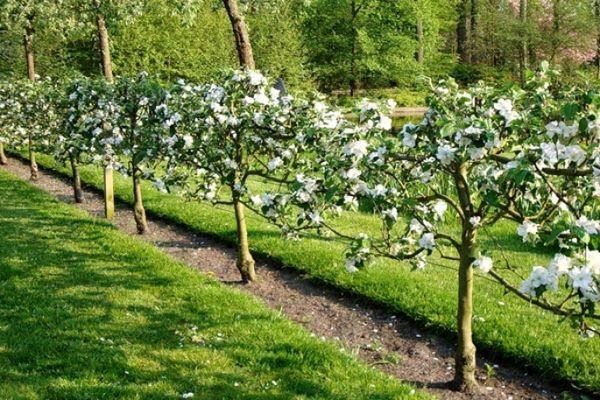
This pruning method is often used for apple trees used as decorative fences.
Fusiform
Spindle pruning involves removing a small number of shoots and removing the skeleton of the vascular branch. Spindle pruning provides excellent light for the tree, resulting in a bountiful harvest. It is easy to perform and requires minimal effort. Suitable for beginners with little experience, it allows you to create a beautiful and healthy apple tree crown in three years.
Cup-shaped
Forming a bowl-shaped crown is ideal for varieties characterized by weak growth and short lifespan. To form a bowl-shaped crown, shoots extending from the main branch by about 40 cm are removed. The main branch is completely cut off above the main branch.
Tiered-discharged
One of the simplest and most common crowns is the tiered, open-topped crown. It gives the apple tree a natural appearance and promotes multi-layered branch formation. A tiered, open-topped crown on a mature apple tree is maintained at a height no higher than 2.5 meters.
Apple tree pruning patterns
The age of the apple trees influences the choice of pruning scheme.
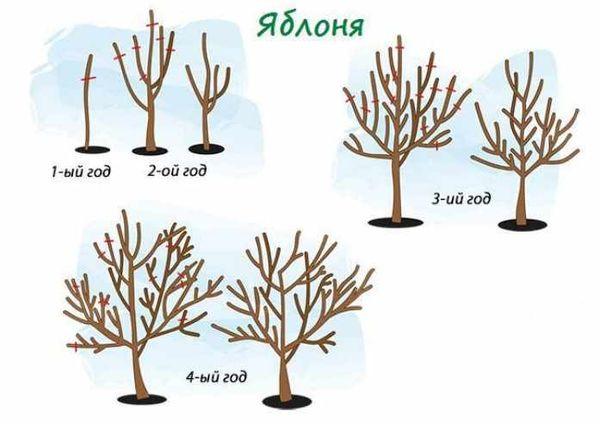
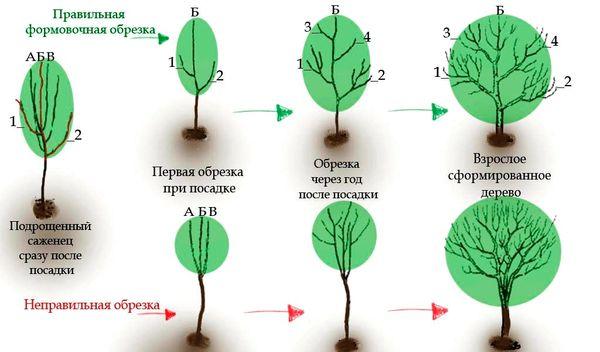
When forming a young seedling
When planted in spring, a one-year-old, unbranched seedling is pruned to a height of no more than one meter, following a bud. This promotes the active formation of lateral shoots. Autumn-grown seedlings are not pruned during the first year after planting.
During this period, it's important to ensure proper trunk development. To do this, remove all lateral shoots at a height of 50 cm on seedlings with vigorous rootstocks. For dwarf and semi-dwarf apple trees, this distance is no more than 40 cm.
For 2 and 3 year old trees
Two-year-old saplings branch out extensively and require shaping of their main branches. If this isn't done, they can grow on one side and severely shade each other. Typically, five to six main branches are left on an apple tree. If the main branches interfere with each other, they are separated and tied with twine. This is where the next tier of the three-year-old apple tree will begin to form.
In the second year after planting, weak shoots are clearly visible on the apple tree. These are tied to the trunk at a 90° angle, and within a year, the first fruits can be expected.
The top of the apple tree is also pruned at a bud. The cut top should always be above the skeletal branches.
Formation of a mature tree
Formative pruning is performed on apple trees up to the age of five. During this period, efforts are made to minimize interference with natural growth, preventing a decline in fruit production. In subsequent years, rejuvenation pruning is performed: dead and damaged branches are removed, and the tops are trimmed to the desired height.
Rejuvenation of old apple trees
When apple yields begin to decline and their flavor begins to deteriorate, experienced gardeners resort to rejuvenation treatments. To prolong the tree's life and increase yield, most of the skeletal branches are removed, and new growth is formed from young shoots.
In the first year after such pruning, yields are significantly reduced, but larger fruits ripen. Within a year, massive growth of young shoots is observed, requiring pruning.
By periodically pruning over several years, an old tree can be rejuvenated and its original productivity restored.
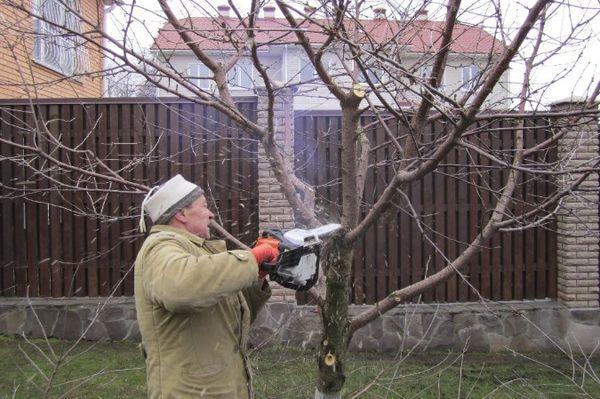
How to care for a tree after pruning
After the crown has formed, the cuts require careful treatment with garden pitch. If this is not available, oil paint or copper sulfate can be used. These measures prevent excessive sap leakage. Open wounds heal quickly, and the apple tree's vigor is restored.
After spring pruning, apple trees require additional feeding. Nitrogen fertilizers are needed for the growth of young shoots, and phosphorus for vigorous flowering. Potassium fertilizers improve fruit quality and increase resistance to adverse weather conditions.
Spring pruning of apple trees for beginners – tips for gardeners
If you follow generally accepted rules, shaping a healthy apple tree will not cause difficulties even for a novice gardener:
- Spring pruning is carried out strictly adhering to the optimal timing.
- Using sharp tools causes minimal injury to the apple tree.
- Removing young shoots prevents the formation of a dense crown and causes minor damage to the apple tree.
- Pruning of large shoots is carried out in several stages, removing no more than one third of the branches at a time.
- Weak, damaged, thin, and improperly developed branches are removed, leaving strong shoots.
- Competing shoots also require timely removal.
- After pruning, each branch is carefully treated with garden pitch.
Timely pruning, taking into account the variety, age, and regional characteristics, helps create a beautiful and healthy apple tree. A well-maintained tree will delight the gardener with delicious, juicy apples for many years to come.
Related posts:
 Timing and rules for peach pruning, formation scheme after harvesting
 Rules and timing for pruning cherry plum in summer, crown formation scheme
 Signs and treatment of apple tree cancer, varieties resistant to the disease
 Timing and types of apricot pruning, schemes and methods for crown formation
 How to properly prune columnar apple trees in summer and autumn
 Fruiting and description of the best varieties of dwarf apple trees, planting and care
 Description of the Chudnoe apple variety, planting and caring for a dwarf tree
 Description and subtleties of growing the Sverdlovsk Beauty apple tree variety