
- The history of the Korobovka apple tree breeding
- Advantages and disadvantages of fruit crops
- Cultivation regions
- Moscow region
- Urals and Siberia
- Leningrad Oblast
- General description and characteristics
- Size and annual growth of the tree
- Lifespan
- All about fruiting
- Flowering and pollinators
- Ripening time and harvesting of fruits
- Yield and taste of apples
- Scope of harvest application
- Immunity to diseases and pests
- Frost and drought resistance
- Planting Features of the Korobovka Variety
- Site selection and preparation
- Permissible groundwater level
- Preparing the seedling
- Timing and rules for planting a tree
- Further care
- Irrigation
- Top dressing
- Graft
- Trimming
- Insect and disease control
- Protection from cold
- Transfer
- Methods of reproduction
- Gardeners' reviews of the Korobovka variety
- Conclusion
The Korobovka apple tree has a pleasant flavor and aroma. It requires little care and can be grown in a variety of soil types. The fruit lacks a sour note, so it's safe to eat even when unripe.
The history of the Korobovka apple tree breeding
This variety first appeared in 1855. The apple tree got its name from the method of acquiring the fruit. The apples are small, so they were often purchased in boxes. It is believed that the variety emerged from the pollination of two wild crops.
Advantages and disadvantages of fruit crops
The apple tree has the following advantages:
- the variety is not damaged by frost and dry weather conditions;
- can be grown in any type of soil;
- has a pleasant aroma;
- the wood is durable and rarely damaged;
- The fruits can be stored.
Disadvantages include its small size. Also, the plant is not self-pollinating, which can be inconvenient when growing in small gardens.
Cultivation regions
The apple tree tolerates sudden changes in weather conditions, so it can be grown in almost all regions.
Moscow region
Growing in this region requires little care. The tree doesn't need winter shelter. It thrives and adapts quickly to changing weather conditions.
Urals and Siberia
The plant's strong immunity allows it to grow fruit in harsh conditions. However, in the Urals and Siberia, it is necessary to cover the tree during winter. Frost damage to the tree tops is a common problem; to overcome this, dwarf rootstocks or pruning are necessary.
Leningrad Oblast
The region's climate is suitable for growing the crop. However, it is necessary to treat the crop against fungal infections, which often occur due to the humid climate.
General description and characteristics
Although the plant produces large yields, the apples have different characteristics.
Size and annual growth of the tree
The tree can reach a height of 5-6 meters. The crown is gently spreading. However, over time, the tree becomes more spreading. The branches are strong and virtually immune to damage. Annual growth is 6-7 cm, but after 25 years, the tree stops growing.
Lifespan
The apple tree is a long-lived tree. It can live for over 75 years. However, after 50 years, productivity declines significantly.
All about fruiting
Fruiting on the tree begins early, the fruits are small in size, located densely on the branches.
Flowering and pollinators
The tree begins to bloom in mid-April. It is distinguished by its lush blossoms, which exude a pleasant honey aroma. To ensure a successful harvest, pollinators are required. Varieties that ripen in the summer are suitable for this purpose.
Ripening time and harvesting of fruits
The apple tree ripens in late July. If weather conditions are favorable, the apples are harvested after they are fully ripe. If transport is necessary, the fruit is picked one week before ripening; this does not affect the flavor. The fruit does not fall off even after ripening, allowing for undamaged harvesting.
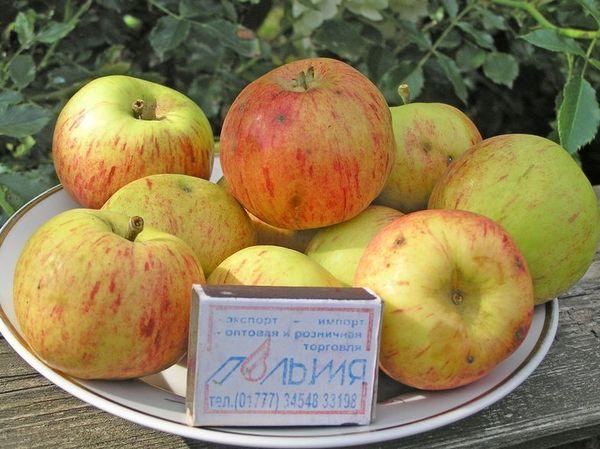
Important: Apples are sweet when unripe. However, the honey flavor only develops after they're fully ripe.
Yield and taste of apples
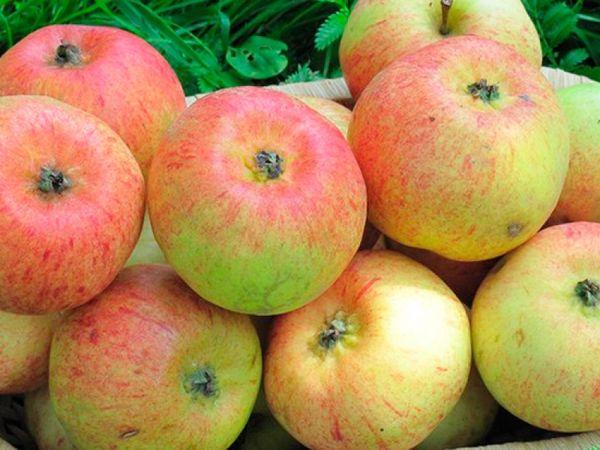
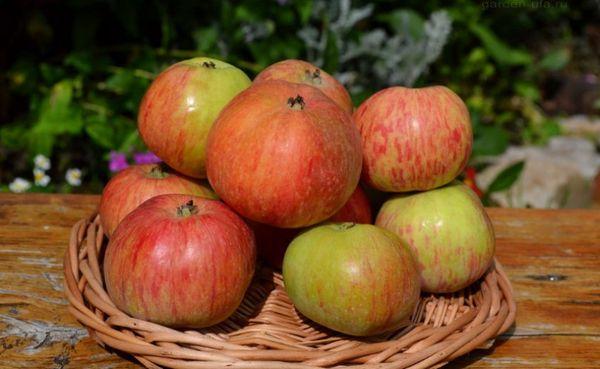
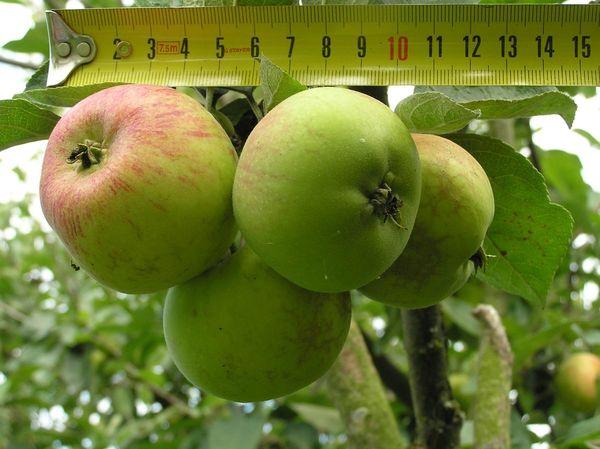
The fruits are small, weighing 50 grams. The outer skin is dirty green. The flesh is firm and sweet, with no sour notes. A single tree can yield up to 50 kg of fruit.
Scope of harvest application
Apples are eaten fresh. They contain up to 10% sugar, making them suitable for making jam and compotes. They can also be used for canning and drying. They are rarely used for storage, as their shelf life, once picked, is no more than three weeks in cool conditions.
Immunity to diseases and pests
The plant is rarely attacked by insects. However, if improperly cared for, it can be damaged by codling moths. Apple trees are also immune to diseases. However, they can be damaged by scab. Therefore, it is important to implement the necessary preventative measures in a timely manner.
Frost and drought resistance
A distinctive feature of the apple tree is its ability to tolerate low temperatures. A mature tree requires no winter protection and can be grown in harsh conditions.
Planting Features of the Korobovka Variety
This crop doesn't require any special care. However, following proper planting guidelines will not only speed up the planting material's adaptation to its new growing location but also promote a higher yield.
Site selection and preparation
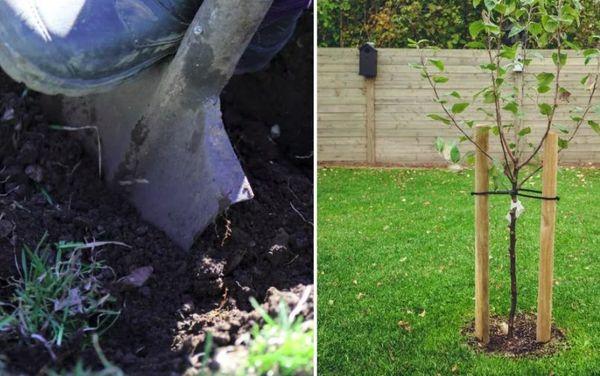
Before planting, it's crucial to properly prepare the site. The planting site must be cleared of weeds, which can carry diseases. Also, the soil in the area must be dug and a planting hole prepared. The plant's roots are extensive, so the hole should be at least 50 cm deep. The planting hole should be 60-70 cm wide.
The planting site should be sunny and draft-free. Apple trees can be grown in small depressions, but drainage must be provided first.
Permissible groundwater level
When planting, the groundwater level should be no more than 2 meters above the surface. Otherwise, the roots will rot and the plant will die.
Preparing the seedling
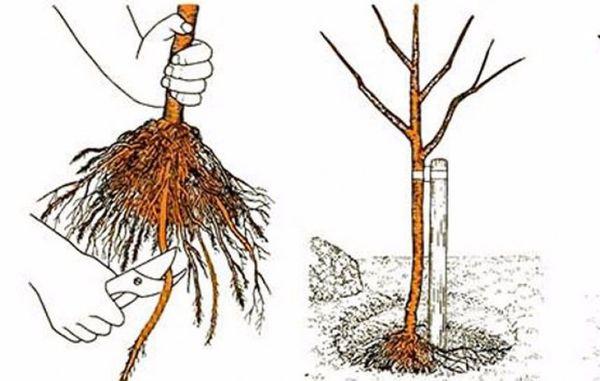
It's important to properly prepare seedlings before planting. Remove the soil from the roots and soak them in Kornevin for two hours. This will speed up the plant's adaptation to its new growing location.
Timing and rules for planting a tree
It is recommended to plant the tree in the ground in the fall, around mid-September. It will take several weeks for the tree to adapt to its new location and survive frosts.
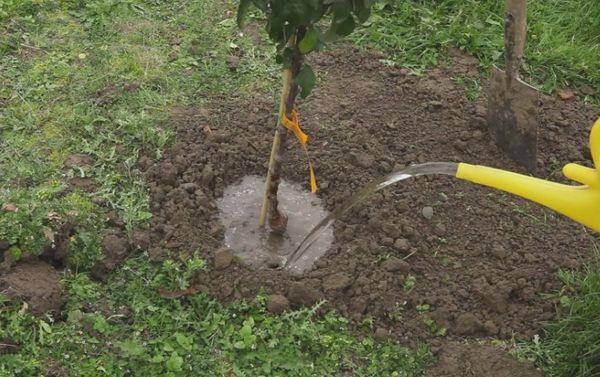
Place a brick or gravel at the bottom of the planting hole. Prepare the soil mixture for planting. Mix the topsoil with humus in equal parts. Fill the hole ¼ full with the resulting mixture. Place a wooden stake in the center to act as a support. Place the seedling and cover with soil. Water with two buckets of water.
Further care
In order for the tree to take root and begin to develop, it is important to properly care for it after planting.
Irrigation
The plant needs to be watered from spring to late September. During the first year, water every three days. Up to two buckets of water are needed per seedling. For mature plants, water twice a month. Three to four buckets of water are used per tree.
Top dressing
No additional feeding is required during the first year. In the second year, mineral fertilizers should be applied in the spring. Organic fertilizers should be applied in the fall. Complex fertilizers can be used during the summer. Potassium supplements should be added before flowering.
Graft
Grafting is done when the plant is dormant. Grafting should be done in late winter or early spring. Using a sharp knife, make an incision in the rootstock, insert the apple scion, and treat it with garden pitch.
Trimming
Pruning is done at planting time. Side shoots are removed. One main shoot and two side shoots are left on the cutting, which will form the tree's skeleton. After the seedling has established itself and begun to develop, pruning is done in the spring. Inward-growing branches and shoots that do not produce fruit are removed. The gardener then shapes the tree's crown.
 Important: The first crown pruning is performed at age 3. It is necessary to remove old branches that interfere with crown formation.
Insect and disease control
The apple tree has a strong immunity to diseases, but for prevention it is necessary to carry out the following procedures:
- Spray the tree with Zircon in the spring. This product boosts the plant's immunity.
- Spraying with copper sulfate in spring helps reduce diseases.
In the fall, the tree is treated with chemical pest control products. In the spring, the apple tree trunk is whitewashed with lime, which helps remove pest larvae hiding in the bark.
Protection from cold
Apple trees tolerate frost well. For apple trees up to three years old, use spruce branches and peat moss to cover the root zone. Young trees should be covered with burlap to reduce the risk of frost damage to the shoots.
Transfer
Apple tree transplantation is performed when the tree needs to be relocated. Trees are replanted before they reach three years of age. The tree is dug up along with the soil and replanted. The soil around the roots protects the tree from potential damage. This procedure is performed in the fall, three to four weeks before frost.
Methods of reproduction
To obtain planting material, you can use the following propagation methods:
- Cuttings. To propagate this way, take cuttings from young shoots in the spring before the buds swell. Soak them in Kornevin for two hours. Then plant them in soil mixed with sand. Water regularly until roots appear.
- Layering. A small shoot should be bent toward the ground and covered with soil. Water the area where it meets the tree regularly. Within a year, a young shoot will emerge. Using sharp scissors, separate the seedling from the mother plant and transplant it to a new location.
- Root suckers. A mature tree produces shoots that extend from the parent roots. These seedlings can be used immediately after digging.
Gardeners do not use the seed method of growing, which requires a lot of effort and time.
Important: To speed up root formation on young shoots when propagating by layering, cut the shoot slightly with a sharp knife where it contacts the soil.
Gardeners' reviews of the Korobovka variety
Maxim Igorevich, 34, Oryol: "The tree has been growing at our dacha for 25 years. The apples are small, but have a pleasant flavor and sweet flesh. I regularly trim the crown, which only increases the yield."
Irina Petrovna, 29, Moscow region: "I remember the taste of apples from my childhood. We planted a sapling recently, and for three years the tree has been growing vigorously and gaining strength. It's easy to care for and doesn't require any special care."
Conclusion
The Korobovka apple tree is an old, productive variety. Its fruits are small, but have excellent flavor. They can be used for storage or canning. They are also often eaten fresh, due to their pleasant honey flavor.
Related posts:
 Description of the Venyaminovskoye apple tree variety, planting and care
 Description and rules for growing the Bratchud apple tree variety
 Description of the Borovinka apple tree variety, cultivation and care
 Description and subtleties of growing the Berkutovskoye apple tree variety
 Description and subtleties of growing the Sverdlovsk Beauty apple tree variety
 Description and characteristics of the Veteran apple tree variety, the subtleties of cultivation
 Description and subspecies of the Sakharny Arkad apple tree variety, cultivation technology
 Description of the ornamental Nedzvetsky apple tree, cultivation technology