
- History of the Berkutovskoye apple tree breeding
- Region of growth and distribution
- Subspecies and variants
- On a dwarf rootstock
- Late
- Advantages and disadvantages
- Botanical information
- Size and annual growth
- Crown and branches
- Foliage and buds
- Fruiting of the tree
- Cyclicity
- Flowering and pollinators
- Ripening time and yield per tree
- Harvesting and storing apples
- Fruit tasting and the scope of apple trees
- Winter hardiness and drought resistance
- Susceptibility to diseases and pests
- How to plant a tree on a plot
- Required soil composition
- Selecting and preparing a landing site
- Dimensions and depth of the planting hole
- Timing and step-by-step algorithm for planting a seedling
- Tips for caring for the Berkutovskoye apple tree
- Irrigation
- We apply fertilizers
- We trim and shape the crown
- Loosening and mulching the tree trunk circle
- Prevention and protection of wood
- Covering a fruit tree for the winter
- Methods of reproduction
- Gardeners' reviews of the Berkutovka variety
The Berkutovskoye apple tree is a winter-season variety. It is characterized by high yields and excellent flavor. It is a versatile apple tree, grown in private gardens and commercially. Its winter hardiness and drought tolerance allow it to be cultivated throughout Russia. Berkutovskoye is grown not only in Russia, but also in Poland, Belarus, Europe, and Asia.
History of the Berkutovskoye apple tree breeding
The variety was developed by scientists at the Saratov Horticultural Experimental Station. Authors include O. D. Berkut and G. V. Kondratyev. In 1988, it was included in the State Register of Russia. Three years later, the variety was awarded a gold medal by the All-Russian Exhibition Center.
Region of growth and distribution
The apple tree was originally grown in the Saratov and Volgograd regions. These areas offer the most optimal conditions for the tree. Over time, the variety spread to other regions. Today, it can be found in the south, central Russia, and the north. It is also grown in other countries.
Subspecies and variants
The Berkutovskoye apple tree has subspecies: on a dwarf rootstock and late.
On a dwarf rootstock
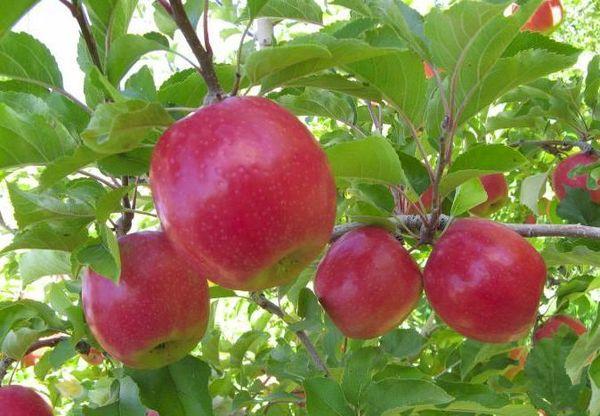
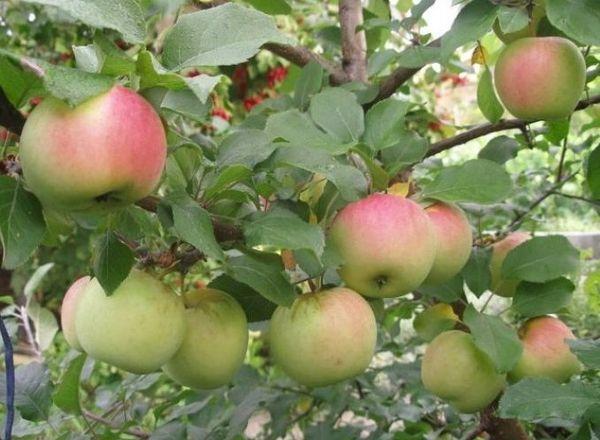
The scion is made from a different apple tree variety. Shoots with a diameter of 0.7 cm are selected. The strongest branch on the parent tree is chosen and used as the scion. Over several years, the scion grows and begins to bear fruit. Its compact appearance allows for easy harvesting. The apples are medium-sized, with yellow skin with a pink blush. They have a shelf life of approximately 200 days after harvest.
Late
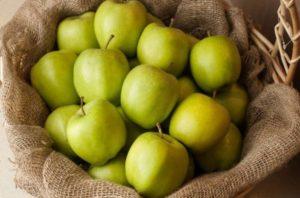
This variety is very popular. It is characterized by high yields and is often planted commercially. The tree is medium-sized, producing medium-sized, juicy apples of a yellow color with a pink blush.
Important! This is a unique variety suitable for all regions. The key is to create optimal growing conditions.
Advantages and disadvantages
The Berkutovskoye apple variety has its advantages and disadvantages. Among its positive aspects are:
- stable fruiting;
- high yield;
- commercial appearance of fruits;
- pleasant taste;
- transportability;
- storage for about 200 days;
- easy care;
- disease resistance.
This variety has virtually no flaws. The only drawback gardeners have noted is a susceptibility to powdery mildew. However, with proper cultivation practices, this will not occur.
Botanical information
To decide whether to grow an apple tree in your own garden, you need to familiarize yourself with the botanical description.
Size and annual growth
A medium-sized tree, reaching 3 m in height. On rootstock, it has a more compact crown. Annual growth is 70-80 cm. Crown shaping is essential to prevent unruly branch growth.
Crown and branches
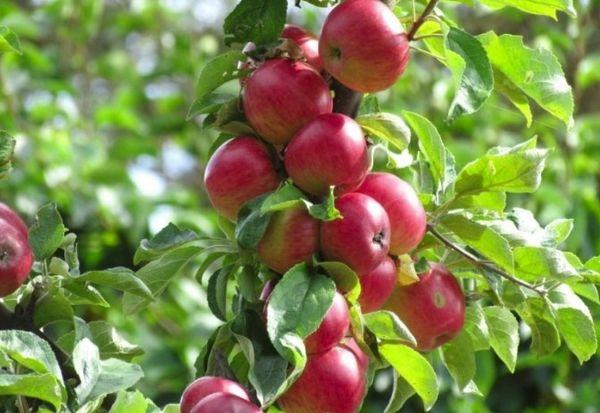
Branching begins in the first year, after transplanting to the ground. The Berkutovskaya apple tree forms a spherical crown. The branches are straight, covered with brown bark, with a slight fluffy coating on the surface.
Foliage and buds
Buds up to 1 cm in size open in late May. Leaves are medium-sized and dark green, finely pubescent, giving them a lighter shade.
Fruiting of the tree
Fruiting includes several detailed characteristics: cyclicity, flowering and pollination, ripening time and yield, harvesting and storage of the crop, and evaluation of the fruit by tasters.
Cyclicity
Apple trees begin bearing fruit in the fourth or fifth year of growth. If you buy a two-year-old seedling, you can expect to see the first fruits after three years. Apple ovaries form annually.
Flowering and pollinators
Flowering occurs in early June. Large white flowers form, gathered in clusters of 3-4 on branches. The flowers are 5 cm in diameter, with yellow stamens in the center. The tree is self-sterile, producing flowers of only one sex. To ensure good fruit set, pollinators should be planted nearby. Berkutovsky is suitable. Northern Sinap apple treeVarieties with similar flowering periods are also grown nearby.
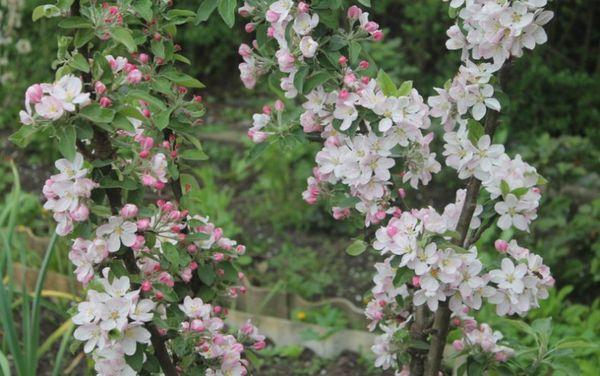
If you plant two Berkutovsky trees, pollination will not occur. They will not be able to cross-pollinate and produce fruit.
Ripening time and yield per tree
Apples ripen until the end of October. The fruit is resistant to the first frosts and does not spoil. The entire harvest is harvested at the same time. Ripening takes up to 180 days from bud break.
The yield per tree is 50 kg up to the sixth year of life. After that, it increases to 70 kg per tree. The older the plant, the more it yields. Rejuvenating pruning is performed starting at age 15.
Harvesting and storing apples
The harvest begins in late October. The tree is short, so picking the apples is easy. A ladder and gloves are all you need. Each fruit is carefully placed in a crate. Avoid shaking the tree; bruised apples don't store well.
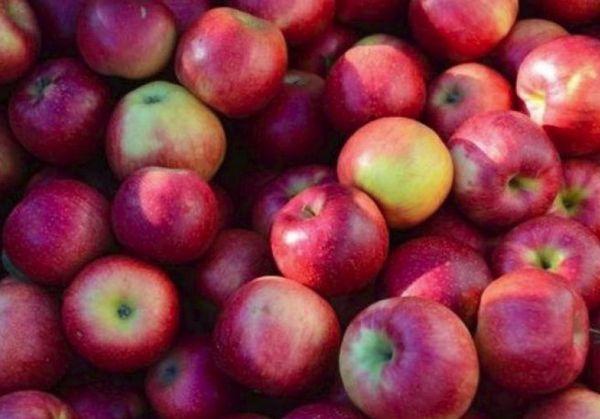
The harvest is distributed into breathable wooden or plastic boxes and placed in a cool, dark place. They are stored in this way until March or May.
Fruit tasting and the scope of apple trees
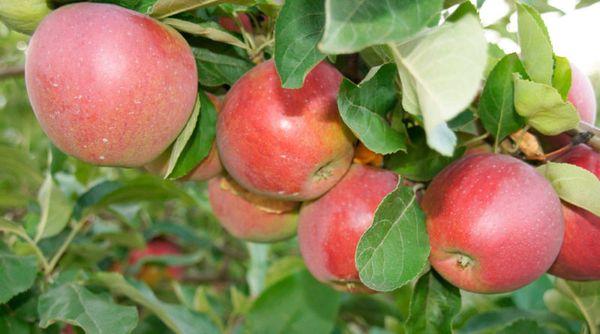
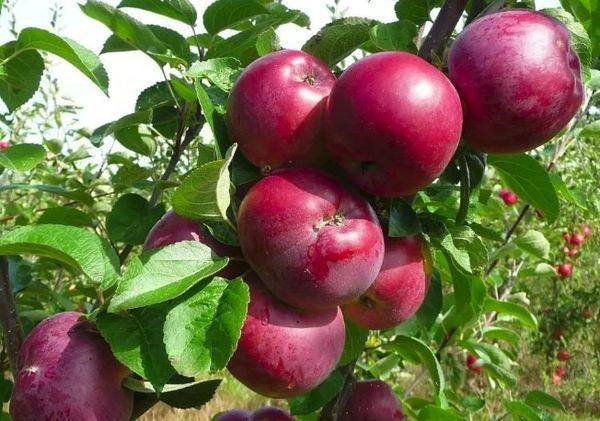
After conducting the test, tasters awarded scores ranging from 4.6 to 4.8 out of 5. They described the apples as sweet, with a slight tartness. The flesh is light yellow, crisp, and juicy.
Apple trees have very good characteristics. They are often found on farms, private gardens, and apple orchards. Not only do they tolerate any weather conditions well, but they also produce a large, good harvest.
Winter hardiness and drought resistance
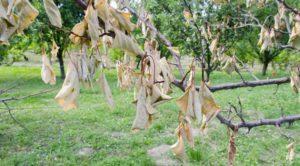
The Berkutovskoye apple tree is distinguished by its high winter hardiness and good drought tolerance. The tree tolerates temperatures down to -38°C. In regions with harsh winters, winterization is recommended.
The plant has a well-developed root system. It grows and draws nourishment from groundwater. This helps it cope with heat and drought. Therefore, the tree does not require frequent watering, requiring only 3-4 times per season.
Susceptibility to diseases and pests
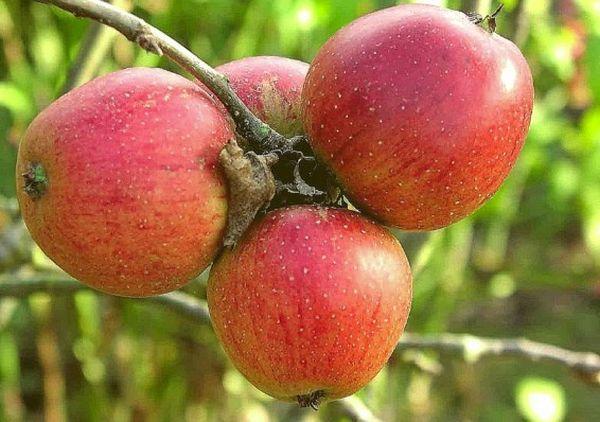
Berkutovskoe has strong immunity to almost all diseases. However, during the rainy season, it is susceptible to infection:
- powdery mildew;
- moniliosis;
- scab;
- rust;
- spotting.
To combat them, fungicides are used. They help completely rid the plant of harmful infections. Besides diseases, there are also insects. They love to feast on buds, bark, fruits, and foliage. The most common pests are:
- aphid;
- thrips;
- codling moths;
- leaf rollers;
- weevils;
- May beetles.
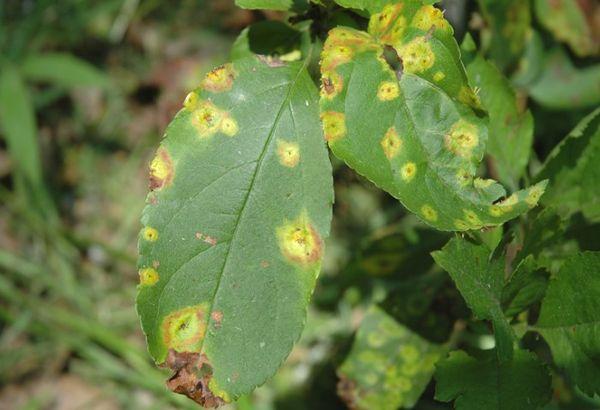
To combat them, spray with insecticides. These are available at any specialty store. Treatment with an insecticide and a fungicide can be combined. The procedure is usually repeated after the effect has expired.
Important! Observe safety precautions when working with chemicals.
How to plant a tree on a plot
Planting a seedling has several nuances and requirements. These must be met to ensure the tree takes root and produces a good harvest.
Required soil composition
Apple trees prefer black soil, sandy loam, or loamy clay soil. Ideally, the groundwater level in the selected area should be at least 2 meters deep. If the soil is wet or marshy, it's best to mix it with sand and provide drainage during planting.
The soil should be neutral or slightly acidic. The tree will quickly die in alkaline soil.
Selecting and preparing a landing site
For Berkutovsky, select a well-lit area, sheltered from strong gusts of wind, and free from shade. Pollinators should be located nearby, 3 meters away from the tree.
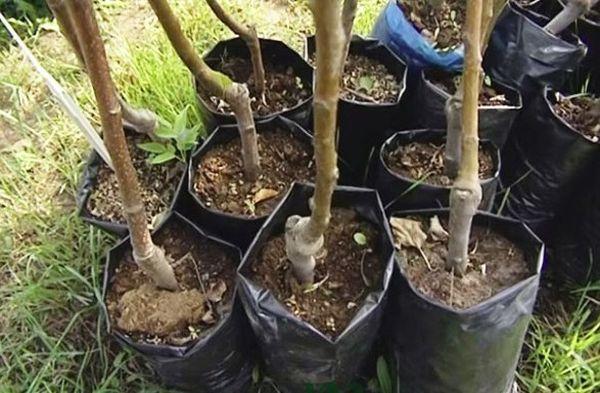
The planting site is prepared in advance. Select a location and mark out a circle or square of the desired size. Then dig a hole. Mix the soil from the hole with:
- 10 kg of humus;
- 300 g superphosphate;
- 200 g of potassium salt.
Half of the mixture is returned and left until planting time. The site should be prepared in advance, for example, from spring to fall or from fall to spring. It is acceptable to prepare the planting site up to 14 days before planting. However, this time will prevent the minerals from fully absorbing into the soil.
Dimensions and depth of the planting hole
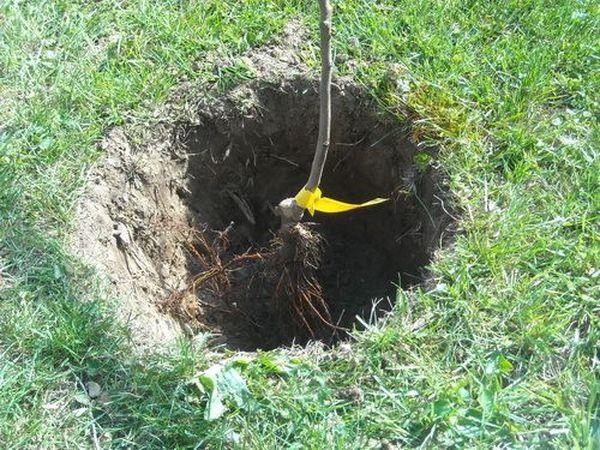
The tree is compact and not very large. A hole 70-80 cm deep and 70 cm in diameter is suitable for planting it.
Timing and step-by-step algorithm for planting a seedling
Planting is carried out according to a specific algorithm:
- The roots of the seedling are soaked in water for 24 hours.
- Place the tree in the hole with its roots down.
- They straighten them out with their hands.
- Fill with the rest of the mixture and compact it with your hands.
- Form a tree trunk circle 10 cm deep.
- Water with 6 buckets of water.
To protect the seedling from strong wind and rain, before planting, drive a wooden stake into the bottom of the hole and tie it to it.
Tips for caring for the Berkutovskoye apple tree
How to care for an apple tree is described in detail below. This knowledge is essential for maintaining the tree's health and achieving a bountiful harvest.
Irrigation
Water the apple tree 3-4 times per season:
- after winter;
- during flowering and ovary formation;
- during fruiting;
- before wintering.
Use 8-10 buckets of water, settled in advance, per tree.
We apply fertilizers
Fertilizing is combined with watering. If fertilizer was added at planting, the tree should not be fertilized for another 3 years. In subsequent years, the following should be used:
- mineral fertilizers;
- manure;
- humus;
- chicken manure;
- wood ash.
We trim and shape the crown
The crown is formed starting from the first year after planting. The central shoot is selected and the others are removed. The following year, two more shoots are selected from the lower tier and the process is repeated. This process is continued until three or four tiers have formed.
Loosening and mulching the tree trunk circle
Loosen the soil around the tree trunk regularly and remove weeds. To avoid these steps, mulch. For this purpose, use:
- straw;
- chopped grass;
- moss;
- humus;
- manure;
- fallen leaves.
Prevention and protection of wood
To prevent diseases and pest infestations, spray with insecticides and fungicides. These can be combined into a single solution and applied simultaneously. This treatment is done in the spring before flowering.
Important! The use of chemicals is prohibited during fruiting.
Covering a fruit tree for the winter
Apple trees are highly winter-hardy, but it's best to prepare them for winter. This involves several steps:
- watering and fertilizing after harvesting;
- sanitary pruning;
- whitewashing the trunk;
- mulching the tree trunk circle;
- For seedlings up to 4 years old, the crown is covered with insulation.
Methods of reproduction
The Berkutovskoye apple tree is propagated by several methods:
- by cuttings;
- scion;
- shoots.
Gardeners' reviews of the Berkutovka variety
Veronica, 56, from Saratov: "The Berkutovskoye apple tree has been growing on my property for seven years now. It's easy to care for and overwinters well. Every year it produces beautiful fruit. They're medium-sized, juicy, and sweet. During rainy seasons, it can get powdery mildew, but after treatment, the fungus quickly disappears."
Arkady, 48, Arkhangelsk: "I've been selling apples for several years now. I first planted Berkutovskoye apple trees on my farm. They're very hardy and sturdy, easily withstanding bad weather. I like the high yield and the marketable appearance of the apples. They sell out very quickly."
Anton, 35, from Vladimir: "My wife and I bought a plot of land; the previous owner left behind a Berkutovskoye apple tree. It produces high yields. The apples ripen late but store well. You can eat fresh apples year-round."
Related posts:
 How to plant walnuts, care for them, and grow them at home
 Description and subtleties of growing the Sverdlovsk Beauty apple tree variety
 Description and technology of growing the Vishnevoe apple tree variety
 Description and rules for growing the Bratchud apple tree variety
 Description of the Chudnoe apple variety, planting and caring for a dwarf tree
 Description and subspecies of the Sakharny Arkad apple tree variety, cultivation technology
 Description of the ornamental Nedzvetsky apple tree, cultivation technology
 Description of the Borovinka apple tree variety, cultivation and care