
- The history of Semerenko's apple breeding
- What is characteristic of the Semerenko apple tree?
- Tree dimensions
- Varieties and variants of the Semerenko apple tree
- Columnar
- Dwarf
- Semi-dwarf
- Vigorous or clonal rootstock
- Leaves and shoots
- Apple blossom and pollinators
- Fruiting
- Productivity and annual growth
- Rules for harvesting Semerenko apples and using the harvest
- Sustainability
- To sub-zero temperatures
- To diseases and pests
- Necessary conditions for growing Semerenko apples
- How to plant a crop in a plot
- Deadlines
- Preparing the site and planting hole
- Layout and Neighborhood
- Semerenko apple tree planting algorithm
- How to care for an apple tree
- Watering
- Top dressing
- Caring for the tree trunk circle
- Semerenko apple tree transplant
- Insect and disease prevention
- Preparing the Semerinka for winter
- Pruning and crown shaping
- Possible problems and solutions
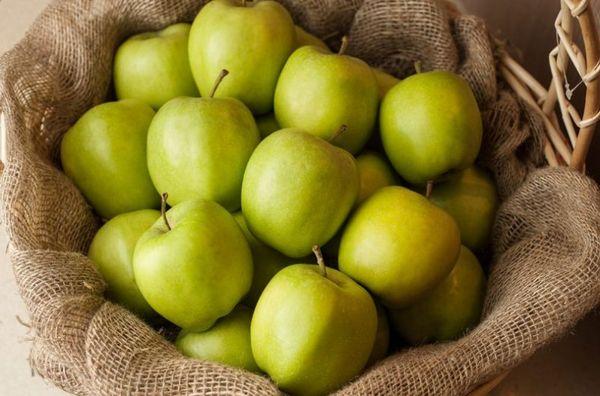
Most people in our country have been familiar with the taste of Semerenko apples since childhood. They are the ones they choose when purchasing, rather than the red-sided giants that litter the shelves. This ancient Russian variety remains a leader. Semerenko apples are distinguished by their rich flavor and aroma and keep well until spring.
The history of Semerenko's apple breeding
The first records of Semerenko apples date back to the end of the last century. The variety's origin remains a mystery, and its description is associated with the name of agronomist Lev Platonovich Simirenko. The gardener believed the variety was created through cross-pollination and included it in his apple tree catalog. Another theory is that these delicious apples originated in Europe, somehow miraculously brought to our orchards.
Lev Platonovich named the apples after his father, who discovered and began cultivating the new variety. This has led to confusion in the names. The apples are known by various names: Semirenko, Simirenko, Semerenko, and Simirinka. Another name for the original Russian variety is the green renet Simirenko.
But the correct and full name is Platon Semerenko's Renet. Under this name, the new apple variety was entered into the USSR State Register in 1947 and remains the most popular in our country to this day.
This undemanding apple tree produces good yields in the southern regions of Russia and the CIS countries. It is also widely grown in Ukraine.
What is characteristic of the Semerenko apple tree?
The Semerenko apple variety is a late-ripening, high-yielding, and self-sterile variety. It's a winter Reinette variety whose apples store well for 8-9 months.
Tree dimensions
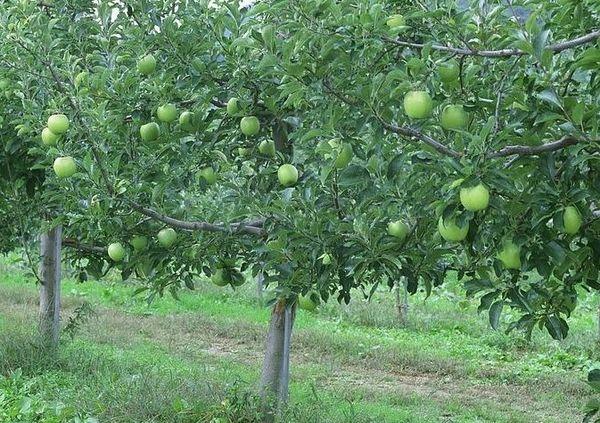
This tall tree has a spreading crown reminiscent of a mushroom cap. The bark is gray or dark gray, turning reddish-brown over time on the sunny side. The medium-thick, brownish-green shoots are angled, straight or slightly curved.
Varieties and variants of the Semerenko apple tree
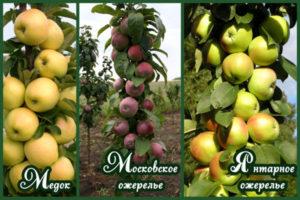
Breeders have created varieties of the Semerenko apple cultivar with varying crown shapes. The variety of crown shapes allows you to choose the perfect tree for your orchard. Dwarf, semi-dwarf, and columnar apple trees have been developed, as well as those grown on clonal rootstock.
Columnar
Grows up to 2.7 m. Bears fruit for 10 years.
Dwarf
Reaches a height of 2.5 m. Grows up to 30 years.
Semi-dwarf
Height – up to 4.5-5 m. Life expectancy – 35 years.
Vigorous or clonal rootstock
The Semerenko variety is grafted onto the vigorous rootstock of another apple tree, which makes it possible to obtain a large tree and a high yield.
Leaves and shoots
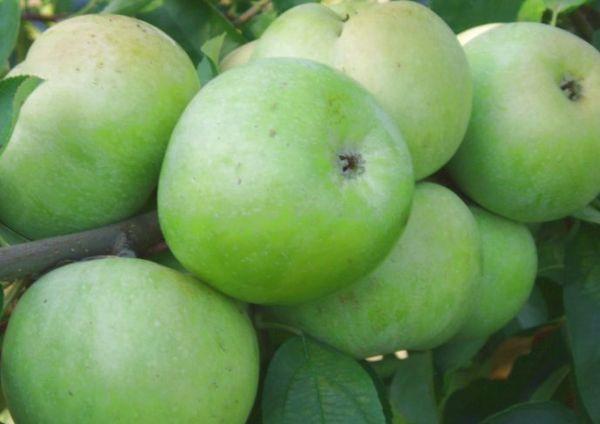
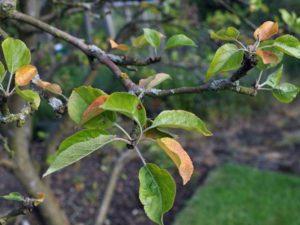
The dense crown is formed by straight, medium-thick shoots. The leaf blade is simple, rounded, and elongated. The surface is light green with a characteristic sheen. The edges are covered with sharp teeth that curve slightly upward. The center of the leaf is boat-shaped, visible by the central vein.
Apple blossom and pollinators
Buds open quickly in spring, but flowering occurs in mid-May. At this time, the apple tree is covered in a profusion of snow-white flowers, gathered in corymb-shaped inflorescences.
The large, bluish-shaped flowers have a fairly simple structure. A five-lobed corolla crowns the pistil and stamens. However, only 11% of the flowers set when self-pollinated. The Semerenko apple variety is considered partially self-sterile: for high yields, a pollinator variety must be grown nearby.
The following varieties are suitable for cross-pollination: Pamyat Sergeevu, Golden Delicious, Idared, Kuban Spur.
Fruiting
The Semerenko apple tree begins bearing fruit in the fifth year after planting, which is considered average. This period can be extended or shortened by using different rootstocks. On a vigorous rootstock, the first apples will appear only in the seventh year, while on a dwarf rootstock, the first harvest occurs in the third year.
Note! Harvesting continues for several weeks. The apples, thanks to their strong stems, hold well on the branches. The fruits of this variety do not fall off even when ripe..
Productivity and annual growth
As the variety ages, its yield gradually increases:
- at 8 years of age it produces up to 15 kg of fruit;
- from the 10th year onwards, there is a sharp increase in fruiting: up to 100 kg of fruit are harvested from each apple tree;
- Up to 15 years old, Semerenko produces a good harvest, after which the number of apples gradually decreases.
The yield of an adult tree is high: 140-170 kg.
Each shoot grows 45-60 cm per year (the rate of growth depends on the tree's age). This rapid annual branch growth results in a dense crown that requires annual pruning. This increases yield and improves air and light penetration into the crown.
 Note: Renet Platon Semerenko isn't known for its consistent yield. This can be improved by pruning some of the flower buds and fertilizing regularly..
Rules for harvesting Semerenko apples and using the harvest
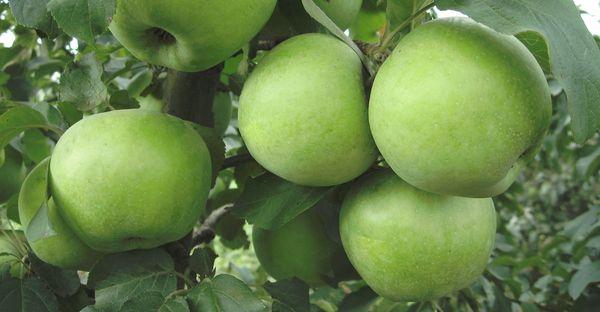
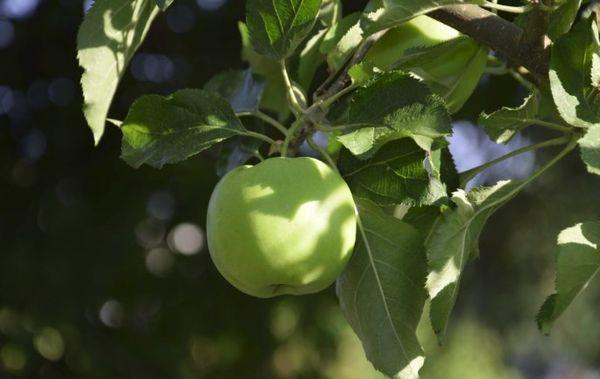
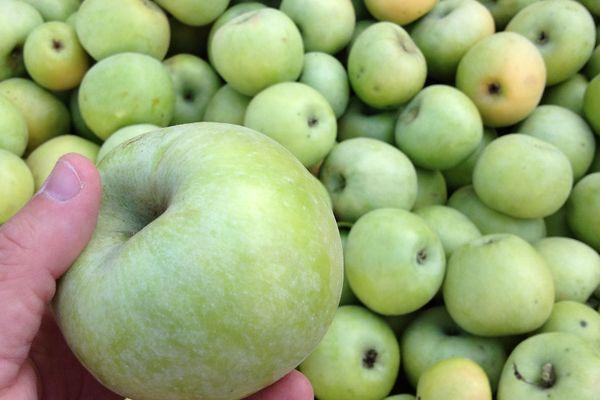
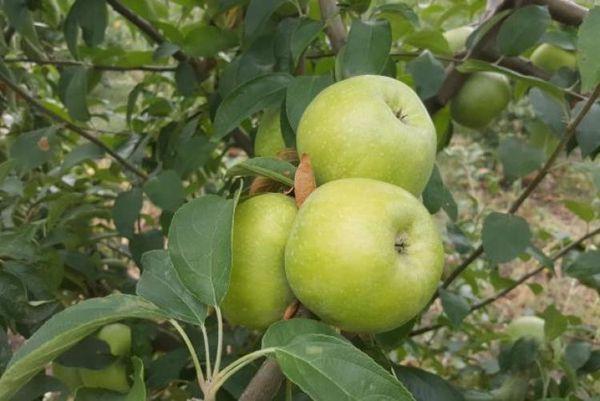
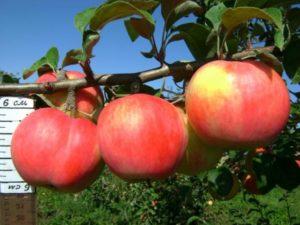
The apples are harvested in September and October. This variety is considered a winter variety: the apples retain their flavor and marketable appearance until the next harvest. The fruits ripen on the fruiting branches, spears, and rings. The signal for harvesting Semirenko is the bright green color of the fruit. Ripe apples are distinguished by a crimson blush on the side. The fruits are considered large, weighing up to 150-200 g.
Apples are picked from the bottom up, carefully placed in baskets, and sorted. The fruits are stored or eaten fresh. They are delicious in jam, preserves, marmalade, juice, and compote. Children love sweet salads and sauces with pieces of renet.
The benefits of Semerenko apples are obvious. They are recommended for inclusion in the diet for:
- low hemoglobin levels;
- disrupted metabolic processes;
- excess body weight;
- poor functioning of the digestive tract;
- "jumps" in blood pressure.
People with duodenal ulcers, gastritis, or diabetes should consume the fruit with caution. In these cases, it can cause harm. Allergies or thinning tooth enamel are a warning sign and should limit this fruit in the diet.
Note! Winter apples should not be picked once they are fully ripe.
It's best to start harvesting while the fruit is slightly unripe. This way, they store better and retain their marketable appearance. With prolonged storage, the apples turn yellow with soft flesh.
Sustainability
The Semerenko apple tree is considered an easy-to-grow variety. It has many advantages and positive qualities. It is resilient to many environmental factors, but it does have its weaknesses.
To sub-zero temperatures
This variety is characterized by low winter hardiness, so it grows in southern regions. Young seedlings require winter protection for several years. Mature trees suffer from frost damage. If a tree is severely damaged by frost, it will recover within three years.
To diseases and pests
The Semerenko apple tree is susceptible to damage from leaf roller caterpillars, fruit mites, apple weevils, and hawthorn moths. Severe infestations result in the tree's death. Diseases most commonly found on this variety include scab, powdery mildew, and fungal diseases.
Necessary conditions for growing Semerenko apples
Renet Semerenko prefers a mild climate with warm winters. Choose a level, sunny site for planting, sheltered from winds and drafts. Sun exposure and direct sunlight are essential. This allows the fruit to ripen in September and develop its flavor and sweetness.
How to plant a crop in a plot
It's important to plant the tree correctly, keeping in mind that it will grow in its permanent location for 20-30 years. For this variety, select a site without groundwater, ensure drainage, and carefully select the soil.
Deadlines
Spring planting (March-April) is recommended, once the snow has melted and the soil has warmed to a significant depth. Planting should be done before the buds open. Fall planting is best in September-October. Varietal seedlings should be established before the first frost.
Preparing the site and planting hole
The soil is prepared in advance. If planting is planned for spring, the site is prepared in the fall. In the fall, the soil is prepared a month before planting. Two weeks before the scheduled planting date, a hole 60 cm deep and up to 1 m in diameter is dug.
Layout and Neighborhood
The distance between apple trees is 3 m. The diameter of the tree trunk circle is 1 m. In a small area, apple trees are planted in groups of 3-4 trees, maintaining a distance from other fruit crops.
The Semerenko apple tree thrives alongside plums, raspberries, and pears. It should not be planted next to cherries, sweet cherries, or golden currants. Plants of the same species are most compatible.
Semerenko apple tree planting algorithm
- The excavated soil is mixed with river sand and rotted compost.
- The bottom of the pit is loosened and a mound of fertile soil is poured in.
- I spread the roots of the seedling on the mound and cover them with soil, to which I add humus and ash.
- The soil is compacted well so that no voids remain.
- The seedling is tied to a peg and watered with 40 liters of water.
- They create a tree trunk circle which is mulched.
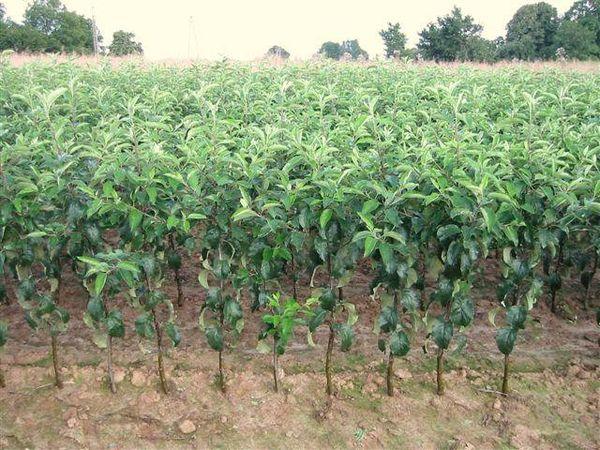
Note! Select a healthy, undamaged seedling for planting. If purchased late (October-November), cover it with soil and leave it until spring, after which it can be planted in its permanent location.
How to care for an apple tree
Caring for the Semerenko variety includes traditional measures that are carried out when growing fruit trees.
Watering
Saplings are watered once every two weeks. Three to five buckets of warm, settled water are poured under each plant. A mature tree requires three to four waterings per season:
- before flowering;
- during flowering;
- when the fruits ripen;
- in the fall before hibernation.
The soil should be thoroughly moistened, so watering should be generous. For more even moisture distribution, apply 50% of the water in the morning and 50% in the evening. Then, loosen and mulch the soil under the apple trees.
Top dressing
Nutrients are depleted by the third year after planting. This apple tree requires three applications of fertilizer:
- In spring, nitrogen-containing compounds are added to quickly restore the plant after winter and increase green mass;
- during the period of fruit setting, phosphorus-potassium fertilizers are needed;
- Before wintering, complex mixtures are introduced.
Fertilizers are applied dry while digging around the tree trunk (as per instructions), then watered thoroughly or diluted with water. When applying, additional watering is important to ensure the fertilizer penetrates the root system and prevents burning.
Caring for the tree trunk circle
This includes loosening the soil, weed control, mulching, and fertilizing. Mulch helps retain moisture for a long time and protects the roots from excessive heat or cold. Fertilizing (according to the schedule) allows for good yields of this variety without compromising its health.
Semerenko apple tree transplant
Early spring or late fall is ideal for transplanting the Semerenko variety. The tree should be dormant: in the spring, before bud break and sap flow begins, and in the fall, after leaf fall. Mature trees are transplanted in winter when temperatures reach at least -5°C.
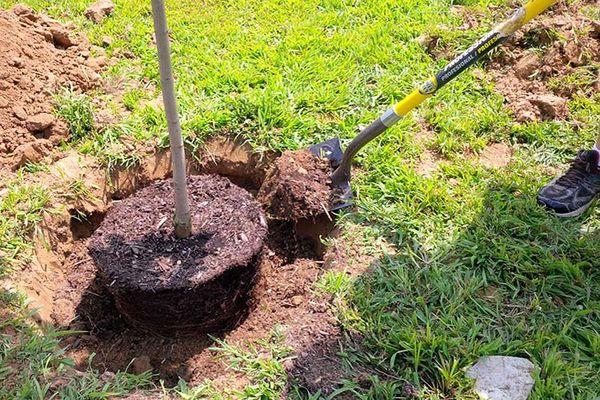 Note! When replanting, maintain the apple tree's orientation. The tree's branches should remain aligned with the cardinal directions.
Insect and disease prevention
Main preventive measures:
- removal of weeds and debris that may contain microorganisms;
- removal and burning of fallen leaves;
- spring treatment with copper-containing preparations;
- double spraying in spring and summer with Euparen or Polycarbacin.
The Semerenko apple tree is whitewashed with lime and the trunk circle is covered with a net (roofing felt, burlap) to protect the bark from damage by rodents.
Preparing the Semerinka for winter
In the fall, the soil around the tree trunks is watered generously and covered with a thick layer of mulch. Before winter, young seedlings of this variety are covered with spruce branches, a wooden box, and a layer of snow. This is essential, as young plants cannot withstand even a slight cold snap.
In the spring, it's important to remove the apple tree from its cover promptly to prevent damping-off. Large trees don't need to be covered in winter.
Pruning and crown shaping
The Semerenko variety is pruned in the spring or fall during the dormant period, removing old, damaged, and abnormally growing branches. This variety is known for its rapid shoot formation, so strong shoots are pruned annually and the most densely growing branches are thinned. It's important to note that fruit buds form on one-year-old shoots.
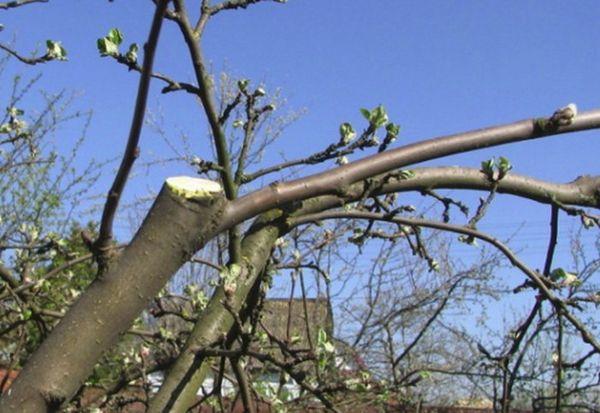
No more than a third of the tree's shoots are removed per pruning, otherwise the Semerenko Renet will take a long time to recover. Cuts are made without stumps and the exposed area is treated with garden pitch. If there are numerous fruit buds, some are plucked to regulate the yield and increase the fruit size.
Possible problems and solutions
Inexperienced gardeners have a lot of questions about growing Renet Platon Semerenko. The most common problems are:
- After a cold winter, the Semerenko variety dries out and is uprooted. There's no need to rush, as renewal buds appear on the "stump" in the second year. The tree is capable of recovering.
- An apple tree may not bear fruit for a long time, depending on the rootstock. This may be due to the root collar being too deep or the branches growing vertically (they need to be bent back).
- Brown cores in apples of this variety are caused by a lack of micronutrients or by fusarium rot. In the first case, the fruit is edible; in the second, it is not.
- The apple flesh looks “glassy”, which is due to freezing of the fruit or excess moisture in the soil.
- Tree bark cracks as a result of frost or sunburn. In this case, it should be cleaned and the damage filled with garden pitch.
Platon Semerenko's Renet apple tree will be a worthy addition to any garden. Knowing its advantages and disadvantages and mastering the proper growing techniques, you can enjoy its delicious and healthy fruits almost year-round.
Related posts:
 Description and varieties of the Sinap apple tree, planting and care rules
 Description of the 10 best columnar apple tree varieties for the Moscow region, planting and cultivation
 Description and varieties of the Ranetki apple variety, what they look like and when they ripen
 Description and characteristics of the 22 best apple tree varieties for the Moscow region, to plant in your dacha
 Description and characteristics of Granny Smith apples, planting and care features
 Description of the Red Early apple tree variety, agricultural technology and specific care
 Description of the Chudnoe apple variety, planting and caring for a dwarf tree
 Description and varieties of Gala apple trees, planting and care in open ground