- The history of the selection of the Red Early apple tree
- Subspecies
- On a dwarf rootstock
- Columnar
- Cultivation regions
- Pros and cons
- Characteristics and description of the Red Early variety
- Tree size and annual growth
- Crown width
- Lifespan
- All about fruiting
- Flowering and pollinators
- Ripening time and yield
- Tasting qualities of apples
- Fruit collection and use
- Sustainability
- To diseases and pests
- Unfavorable climatic conditions
- Specifics of planting fruit crops
- Deadlines
- Site selection and preparation
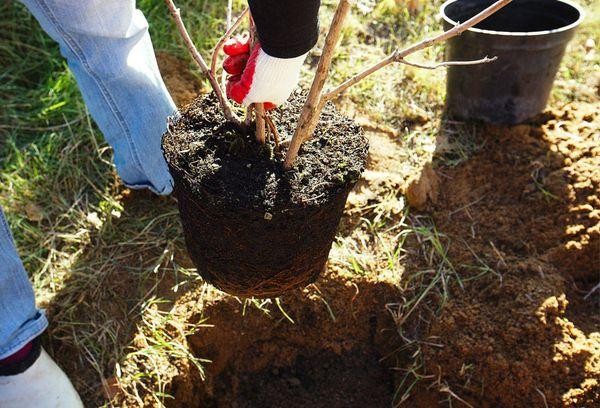
- Preparing seedlings
- Technological process of landing
- What can be planted nearby?
- Further care
- Watering and fertilizing
- Trimming
- Caring for the tree trunk circle
- Preventive treatments
- Winter protection
- Methods of variety propagation
- Gardeners' reviews of the Red Early apple tree
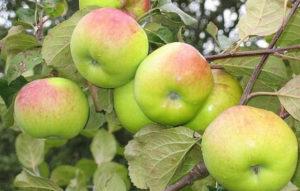
The Red Early apple tree is a dwarf tree that produces small dessert fruits in midsummer. This variety is not popular among beginning gardeners because it requires quite a bit of care. It is grown in private plots, industrial lands, and as an ornamental in gardens. The tree's fruits are highly flavorful.
The history of the selection of the Red Early apple tree
The Krasnoe Rannee apple variety was developed by breeders from the Michurin Institute in 1965. The Melba and Vesna apple trees were used for the development. After extensive testing, the variety was added to the Unified State Register of Russian Cultivars. However, one significant drawback was never corrected: reduced resistance to cold conditions and winds. For these reasons, the apple tree was abandoned.
It is recommended to grow Red Early in the central and southern regions, and if frosts occur, the tree should be pre-treated.
Subspecies
The apple tree variety Krasnoe rannee has two subspecies:
- on a dwarf rootstock;
- columnar.
Experienced gardeners can distinguish these plants even when purchasing cuttings. These species have distinctive characteristics that are important to know when planting.
On a dwarf rootstock
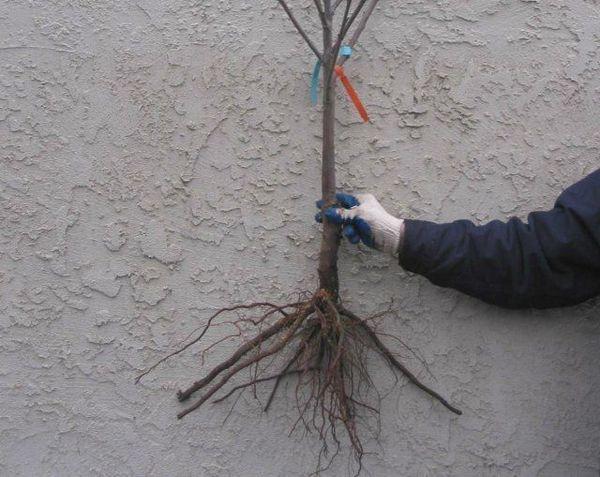
Apple trees on dwarf rootstocks differ from ordinary tall trees. When purchasing a sapling, pay attention to the roots: these trees lack thick branches. Other distinguishing features include large buds at the tips of the branches and a clearly visible junction between the trunk and the root collar.
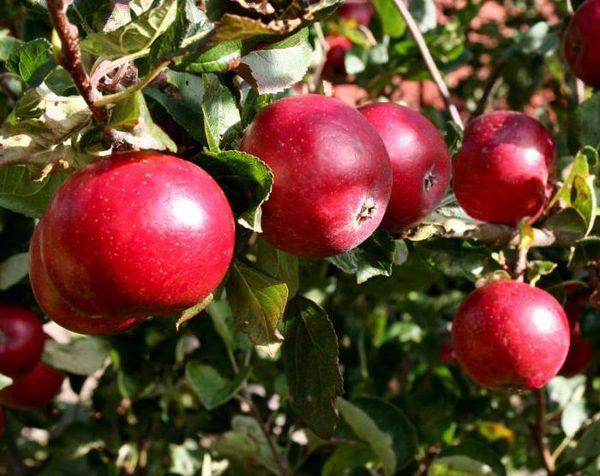
Dwarf plants are usually more expensive because they have the following advantages:
- small dimensions that save space on the site;
- early onset of first fruiting;
- large amount of harvest from the first years of fruit appearance;
- easier plant care;
- rapid growth and development;
- less amount of preparations for tree fertilizers.
Plant growth ceases in the first half of autumn, preventing the plant from experiencing frost. Apple trees on dwarf rootstocks also have some disadvantages:
- short lifespan, which is 2-3 times shorter than that of tall trees;
- the close location of the root system to the surface of the earth, which can cause freezing during the winter;
- excessive harvest, which reduces the level of fruiting, and the apples begin to become smaller and develop unevenly;
- poor storage and transportation of the dwarf subspecies.
Under heavy weight, the plant branches may not be able to withstand the load, so if the harvest is large, special supports should be installed.
Columnar
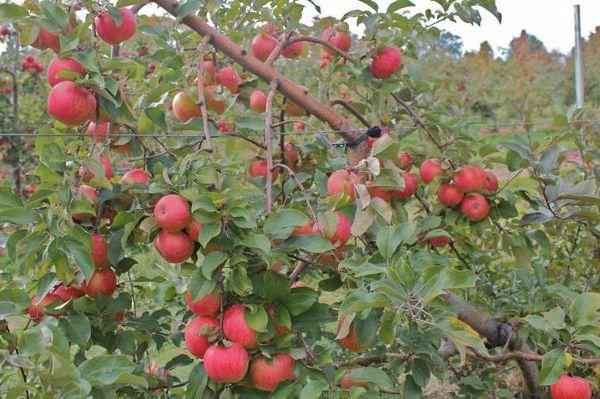
Columnar apple trees of this variety are very popular in Europe. This type of cultivation allows several times more trees to be grown on a single plot. This type is expensive, but has many advantages:
- takes up little space even in comparison with trees on dwarf rootstock;
- large amount of harvest;
- early fruiting;
- ease of plant care;
- rapid growth of the tree.
Among the disadvantages it is worth highlighting:
- fastidiousness in proper care;
- the need for systematic fertilizing and pruning of shoots;
- an unreliable structure that can break under the weight of its own fruits or a gust of wind (it is necessary to install a special support);
- the possibility of crushing the harvest if there is an excessive amount;
- high location of the root system, which provokes the possibility of frostbite;
- short lifespan;
- complex storage and transportation.
Cultivation regions
Since the Red Early apple variety has increased drought resistance and intolerance to cold climatic conditions, the best regions for growing the plant are considered to be the Central and Southern ones.
Pros and cons
The Red Early apple tree variety has the following characteristic advantages:
- high level of taste and appearance of fruits;
- early ripening, which begins in the second half of July;
- small size and the possibility of using it as a decorative ornament for a garden, park or square;
- increased resistance to drought and hot climate conditions;
- early onset of first fruiting, usually 2-3 years after planting the crop;
- ease of maintenance;
- high yield rates per season.
This culture also has a large number of disadvantages:
- intolerance to cold climates, strong gusts of wind, drafts and sudden temperature changes;
- high location of the root system;
- uneven development of fruits;
- poor storage and transportation performance;
- rapid fall of fruits when fully ripe;
- the need for systematic and high-quality care.
Characteristics and description of the Red Early variety
The Red Early apple tree is characterized by small, dessert-quality fruits that bear fruit every season, but only with proper care. Its flavor is its main advantage, making it popular among gardeners worldwide. Growing this apple tree is challenging; it requires constant care, including fertilizing and pruning.
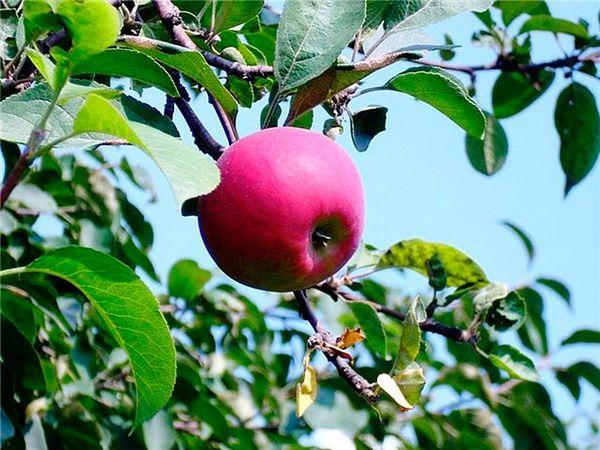 Due to its poor cold tolerance, this variety is best grown in regions with hot, dry climates. It bears fruit early and has average yields.
Tree size and annual growth
This variety has a spreading crown, although it has a spherical shape in the early stages of development. The tree can reach a maximum height of 3 meters, but this is only possible with proper care. Annual growth ranges from 50 to 70 centimeters.
Crown width
If grown on a dwarf rootstock, the tree can reach 2-4 meters in width. The crown has brown bark with a yellow tint. The tree produces a large number of suckers each season, so they must be removed promptly.
Lifespan
Like all dwarf trees, this variety has a short lifespan compared to taller trees. On average, it lives 20-30 years, but can last longer under favorable conditions for rapid growth.
When grown in cool regions or with constant drafts, the plant's lifespan may be reduced to a maximum of 10 years.
All about fruiting
This variety bears fruit early and has a moderate yield. Its flowers are self-pollinating, eliminating the need for additional trees in the same plot as the apple tree. The apples have excellent flavor and an attractive presentation. Due to the juiciness of the fruit, they are difficult to transport over long distances and have a short shelf life, even in cold conditions.
Flowering and pollinators
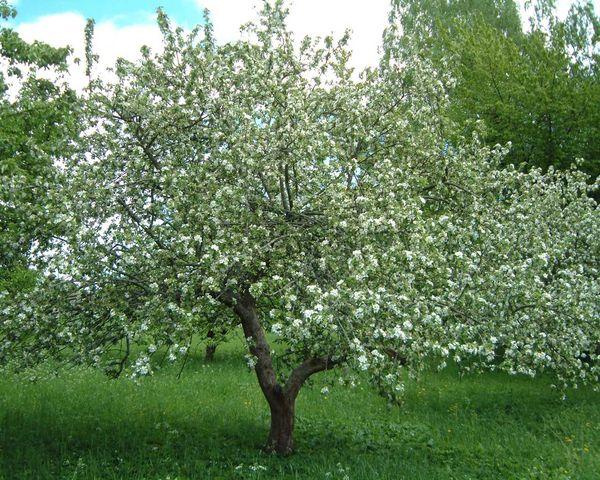
The Red Early apple variety is self-pollinating, requiring no additional trees to be planted. Flowering begins in mid-May and ends in the first half of June.
Ripening time and yield
Fruit formation begins in the first half of June, and apples fully ripen in mid- to late August. The yield for this type of tree is average, ranging from 20-40 kilograms, depending on weather conditions and proper care.
The apples are small in size, and their weight is on average 90 grams, but in extreme cases can reach 120 grams.
Tasting qualities of apples
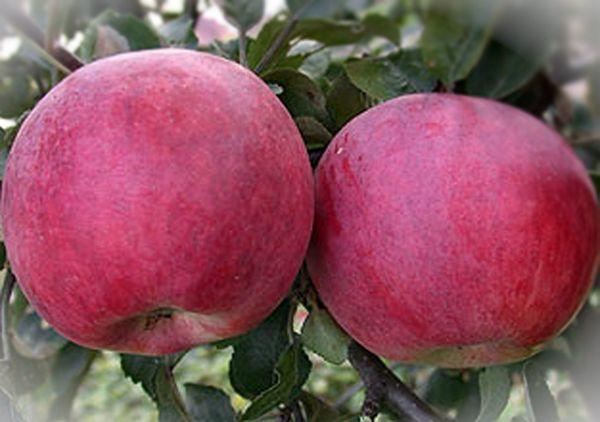
Tasters rated the Krasnoe Rannee apples 4.5 out of 5 possible points due to their moderate sweetness, characteristic slightly tart aftertaste, and tender, juicy flesh. Among the drawbacks, they cited an excessively soft texture, which makes them unsuitable for long-distance transport, as well as a short shelf life of up to one month when stored in a cool environment. The apples are well-shaped, with medium-thick skin and a yellowish-red color. On average, a 90-gram fruit contains:
- 10 grams of sugars;
- 1 gram of titratable acid;
- 12-13 grams of ascorbic acid;
- 66 grams of other substances.
Fruit collection and use
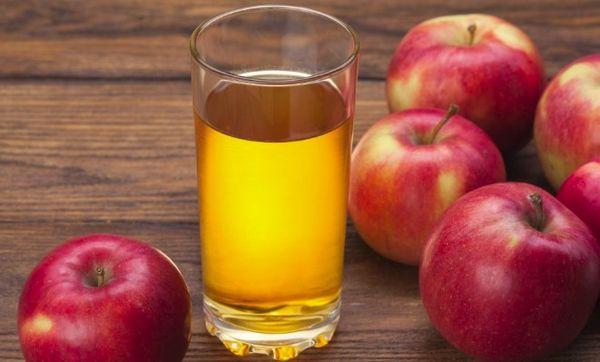
The fruit should be harvested immediately after ripening, in mid- to late August. Once fully ripe, the apples begin to fall, and due to their soft texture, they become damaged during the fall and lose their marketable appearance. Fruits of this variety are considered dessert fruits and are widely used in various dishes, confectionery, liqueurs, natural juices, for sale, and for eating raw.
Sustainability
The Red Early variety of tree has good characteristics for growing in warm and hot regions, but is absolutely not suitable for cold and windy areas.
To diseases and pests
Among the diseases that affect this apple tree variety, the following can be highlighted:
- powdery mildew;
- scab;
- apple cancer;
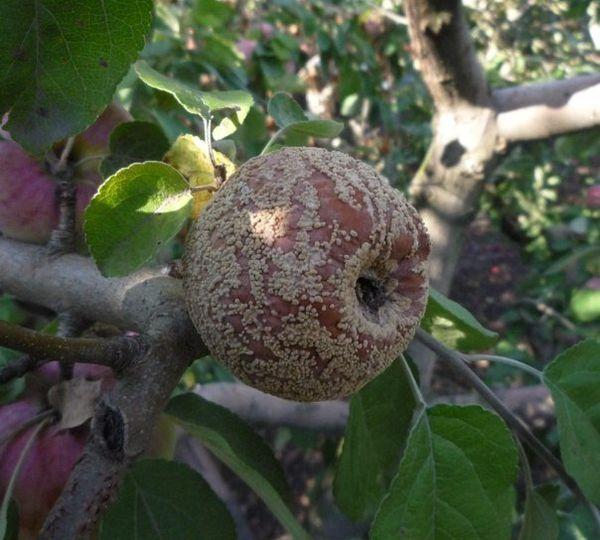
- fruit rot;
- Cytosporosis.
The tree is susceptible to the following pests:
- peduncle;
- moth;
- aphid;
- leaf roller.
Unfavorable climatic conditions
After extensive testing and trials, breeders were unable to overcome a significant drawback of the variety: poor tolerance to cold conditions. In frosty regions, the apple tree will not produce a large harvest, even with proper care and systematic frost preparation through mulching and covering. The tree does not tolerate temperatures below -10 to -20°C.
Unlike frost, the plant easily tolerates drought and heat, even at temperatures as low as 30°C. However, in such situations, regular watering is necessary, as without it, the plant will become diseased, and the fruits will develop unevenly and become smaller.
Specifics of planting fruit crops
To ensure stable annual growth and a large harvest, an apple tree must first be properly planted in a pre-prepared area and all necessary procedures must be carried out.
Deadlines
It's best to plant this tree variety in the second half of April or in mid-autumn. The latter option is only suitable if winters are not very cold.
Site selection and preparation
The Red Early apple tree is best planted in a flat area with a high water table, approximately 1-1.5 meters deep. The plant should be planted in a sunny location only. The site may have partial shade, which will periodically obscure the tree's exposure to sunlight.
The plant is sensitive to soil conditions, and it's best to use light soil with sand and humus. Black soil is also suitable for planting. Before planting, fertilize the soil with a light solution of cow or bird manure. Fertilize after digging the hole, 1-2 weeks before planting.
Preparing seedlings
It's important to purchase healthy seedlings, as only then will they grow quickly and remain disease-free. When purchasing cuttings, pay attention to their overall condition; the sprout should be free of:
- visible damage;
- withered branches;
- darkening and spots of various colors;
- processes of rotting of the root system;
- raid;
- root damage.
If any of these signs are detected on the plant's surface, avoid purchasing it. Before planting, soak the root system in a growth stimulating solution (available at any gardening store) for 1-2 hours.
Technological process of landing
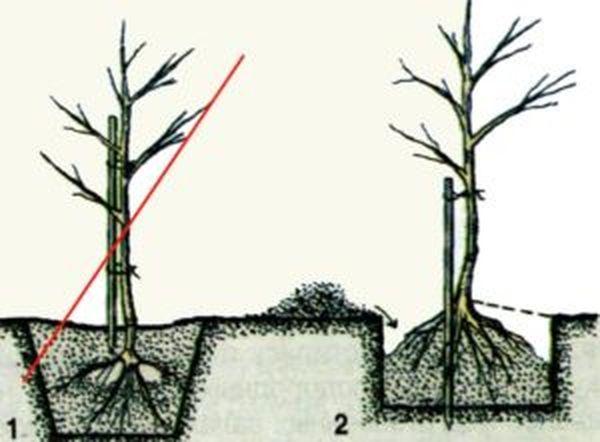
To plant an apple tree sapling, you must first dig a hole 40-50 centimeters deep and 50 centimeters wide. This should be done 1-2 weeks before planting. The distance between the hole and other plants should be 4-5 meters. This is necessary to ensure normal growth and the uptake of nutrients from the soil.
After this, you need to adhere to a certain sequence of actions:
- When digging a hole, the top layer of fertile soil should be set aside for later use.
- Place mineral fertilizer or humus into the hole and fill it with fertile soil, forming a mound.
- Place the seedling in the hole and, having straightened the root system, place it on the formed hill.
- Sprinkle the roots with the remaining fertile soil so that the root collar is above ground level.
- Compact the surface around the plant.
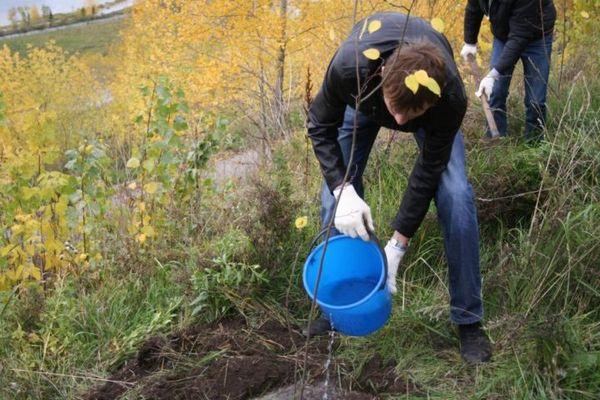
- Water generously with slightly warm water (10-20 liters are needed).
- If the seedling is small or weak, you should first dig a stick into the hole for support, to which you can later tie the planted cutting.
What can be planted nearby?
Any other crop can be planted next to the Red Early apple tree, but only if spaced 4 to 5 meters apart. Otherwise, the tree's growth may be stunted due to a lack of nutrients drawn from the soil.
Further care
This variety requires careful care, and without these procedures, tree growth will slow and the fruit will become smaller. Mandatory care procedures include:
- watering;
- fertilizer;
- pruning shoots;
- mulching;
- loosening the soil;
- preventive treatments against diseases and pests;
- preparation for the winter period.
Watering and fertilizing
The tree requires regular watering, depending on environmental conditions and temperature. In dry climates, the soil should be moistened daily with 10-20 liters.
If the weather conditions are moderate and there is occasional rainfall, 2-3 waterings per week will be sufficient for the crop.
This variety requires fertilizing 2-3 times a year, depending on the plant's condition. The first mineral fertilizer application should be done in the spring before the flowers bloom. For this, use potassium sulfate or ammonium sulfate. The second application should be done in the fall, before frost, to nourish the tree. You can use either mineral or organic fertilizers. For the latter, a solution of bird droppings or manure is suitable.
Trimming
Pruning prevents the development of diseased and damaged shoots. Shaping is done not only to remove unwanted shoots that interfere with the growth of other branches but also to facilitate maintenance.
Caring for the tree trunk circle
After watering the plant, loosen the soil to allow moisture to penetrate more quickly to the tree's root system and oxygenate the soil. If other plants are growing near the plant, weeding is necessary. To prevent the roots from freezing during frosty periods, mulch is necessary. For this, you can use:
- straw;
- fallen leaves;
- wood sawdust;
- inorganic materials.
Preventive treatments
To prevent the occurrence or development of diseases that affect apple trees, preventative treatments should be carried out. For this purpose, you can use:
- Fast;
- Hom;
- Tops.
To prevent pests from appearing, the tree should be treated with one of the following preparations:
- Chlorophos;
- Nitrofen;
- a solution of tobacco and soap.
Also, as a preventative measure, whitewash a quarter of the tree trunk each season. To enhance the effect, add fungicides to the lime.
Winter protection
Before winter sets in, the first step is to whitewash the tree to a depth of ¼ of its height. After this, the tree trunk should be lined with straw and wrapped in several layers of burlap. The entire structure should be securely fastened. This method helps the tree better withstand frosts and winter. Failure to do this may result in a poor harvest.
The shoots do not need to be protected from the cold; they will be able to survive on their own.
Methods of variety propagation
Conduct apple tree propagation The Krasnoe Rannee variety can be propagated in a number of ways, but the most common is by cuttings. This method involves pruning several healthy shoots in the spring, those with at least four leaves and two internodes. These branches are left in suitable conditions for several months until the roots begin to develop. After this, the cuttings are placed in prepared containers with fertile soil and grown until the planting season (fall and spring).
Hardening off should be done periodically. To do this, the plant in a pot or other container is placed outside for several hours to allow it to adapt to the new conditions. When the planting time arrives, the cutting is removed, the root system is prepared, and the plant is replanted.
Gardeners' reviews of the Red Early apple tree
Mikhail, 46 years old, Krasnodar.
"I grow this apple variety at my dacha. The tree is compact and doesn't take up much space, and it's also easy to care for. The yield per plant is small, but the apples are delicious. This variety isn't suitable for beginner gardeners; it requires careful care, otherwise it can become diseased or stop bearing fruit."
Artem, 41 years old, Vladivostok.
"The Red Early apple tree produces some of the most delicious apples. The yield is small, but sufficient for a dwarf tree. To ensure consistent fruiting, the plant requires careful maintenance: watering, fertilizing, loosening the soil, and cultivating. Before frost, the tree should be wrapped in burlap, otherwise it will die."
Milana, 36 years old, Sochi.
"Growing this tree is difficult because, compared to others, it's more demanding. It requires consistent warm weather, and in winter, it's best to cover it, mulch it, and do anything else that can help with frost. The fruit is juicy, tasty, and sells quickly, but transporting and storing it is difficult. It's important to pick it immediately once it reaches maturity, otherwise it will fall and spoil."
Related posts:
 Description of the Chudnoe apple variety, planting and caring for a dwarf tree
 Signs and treatment of apple tree cancer, varieties resistant to the disease
 Description of the Uralets apple tree variety and the rules for growing standard trees
 Description of the Modi apple tree variety, planting and care features
 Description and subtleties of growing the Sverdlovsk Beauty apple tree variety
 Description and characteristics of the Spartan apple variety, cultivation tips
 Description and varieties of the Sinap apple tree, planting and care rules
 Description of the ornamental Nedzvetsky apple tree, cultivation technology