
- Timing and specifics of apple orchard propagation work
- In winter
- In summer
- In the spring
- Methods for propagating apple trees
- Cuttings
- Cuttings without grafting
- Green
- Root
- lignified
- How to prepare cuttings?
- Seeds
- By eyes (budding)
- Broken branch method
- Air layering
- Rooting instructions
- Selection of soil and fertilizers
- Rooting methods
- In potatoes
- In the box
- Planting in the ground
- Graft
- In the water
- Peculiarities of propagation of columnar apple trees
- Basic mistakes in cuttings
To ensure a fruit-bearing garden every year, trees need to be renewed. Apple trees are easy to propagate. If they've reached the end of their lifespan, you don't necessarily need to buy a seedling from a nursery; you can use shoots or cuttings from a tree that has been bearing fruit for a long time, producing juicy and delicious apples. The best way to propagate an apple tree depends on the gardener's experience and knowledge. Not every gardener can handle budding, but they can use the simpler method of rooting cuttings.
Timing and specifics of apple orchard propagation work
To grow healthy fruit trees, rejuvenate old ones, and develop new varieties, certain procedures are carried out on the plot each season.
In winter
During the coldest period of the year, snow is raked up to the base of the apple trees, and the trees are whitewashed if they weren't done in the fall. Experienced gardeners begin pruning at the end of February.
In summer
In July and August, apples ripen, marking the time for harvesting and storing. This season, only dead and damaged branches are removed; healthy shoots are not pruned, but pinched to limit growth.
In the spring
The heaviest work occurs in March and April. The garden area is cleared of debris and the soil is loosened. Before the sap begins to flow:
- form the crown;
- perform maintenance pruning;
- Spray trees with Bordeaux mixture.
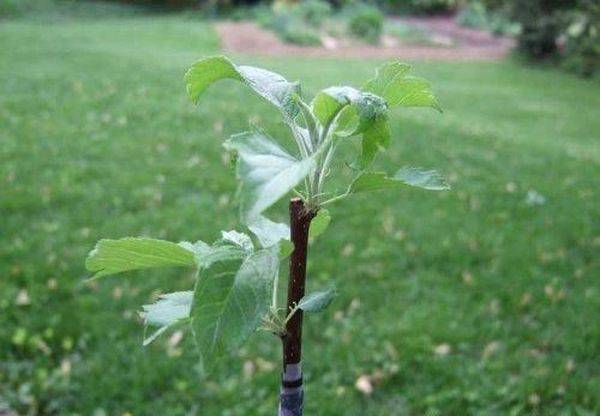
To whitewash tree trunks, mix chalk, casein glue, and copper sulfate. Nitrogen-containing fertilizers are added to the soil.
Methods for propagating apple trees
There are different methods used to renovate a garden, some of which are only available to professionals, while others are suitable for novice gardeners.
Cuttings
Apple tree propagation material can be harvested at any time of year, even in winter, but early summer is even better. Fresh growth is selected from the tree's lower tier:
- Early in the morning, the branches are shortened to obtain cuttings 15 or 20 cm long.
- The cuts are lubricated with the drug "Kornevin".
- The blanks are placed on the window, placed in water along with a growth stimulator.
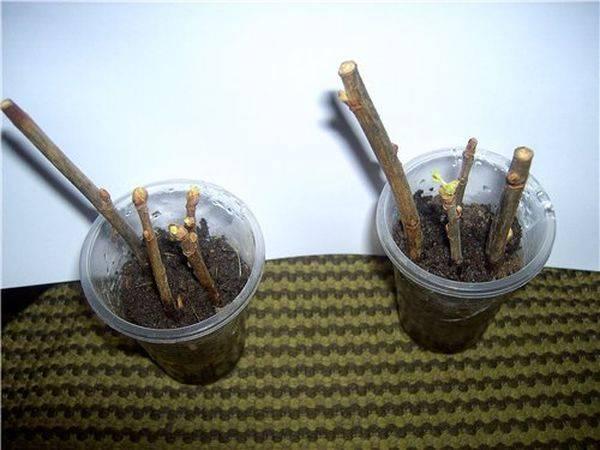
After three weeks, small roots will form on the apple tree cuttings. When they reach 60 mm in size, the cuttings are moved to open ground.
Cuttings without grafting
Before planting, dig holes in the ground and fertilize them with humus and mineral fertilizers. Place not one, but several rooted cuttings in each hole. Water them regularly and loosen the soil to ensure they take root. In the fall, dig up the mature seedlings and place each one individually. For the winter, insulate the trunks with spruce branches or fabric, and the roots with peat or compost.
Green
To preserve the apple tree's varietal characteristics and ensure high survival rates, green cuttings are taken from the shoots in late spring to early summer, ensuring the lower cut is above the bud and the upper cut is 10 mm above it. One leaf is removed, and the other two are shortened in half.

Fill the box with soil to a depth of 6 or 7 cm, then add damp sand. Insert the prepared cuttings, each with three buds, to a depth of 20 mm. The distance between them should be approximately 5 cm.
A greenhouse is constructed over the box, which is kept in partial shade, using arches and plastic sheeting. The film is periodically removed and the substrate is sprayed with water. The cuttings begin to root within three weeks, and the plastic sheeting is removed. The soil is regularly loosened and watered. In the fall, the apple tree seedlings are moved to a greenhouse or outdoor area and insulated for the winter.
Root
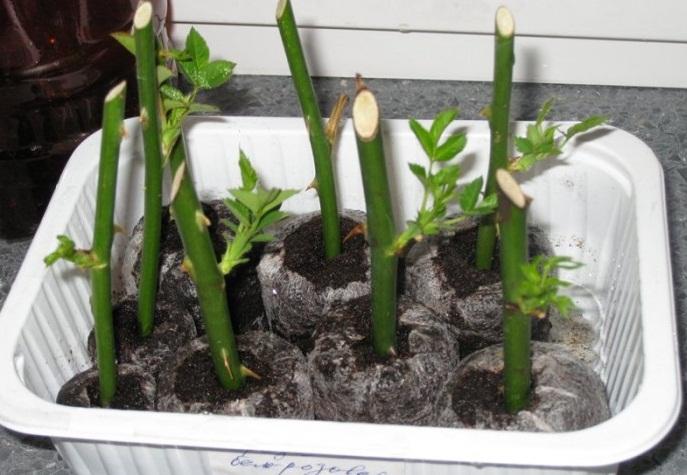
Fruit trees of any variety can be propagated from cuttings taken from apple trees up to seven years old. These cuttings are taken not from branches, but from roots at least 10 cm long and 5–8 mm thick. A trench is dug in the area, sawdust is added to the bottom, and the cuttings are covered with sawdust. The cuttings are then covered with soil, and in areas free of snow, the cuttings are insulated with spruce branches.
In early spring, the blanks are placed at an angle in a box filled with sawdust, so that the top part rises above them.
The container is moistened and left in a room with a temperature of at least 20°C. When buds appear, root shoots begin to grow. When they reach 1 cm in length, they are planted in furrows to a depth of 20 mm.
lignified
At the end of December, healthy shoots aged one to two years are selected from the apple tree. These shoots are located in the middle tiers of the canopy, facing south or east, and have already developed woodiness. The branches are broken off in several places without damaging the bark.
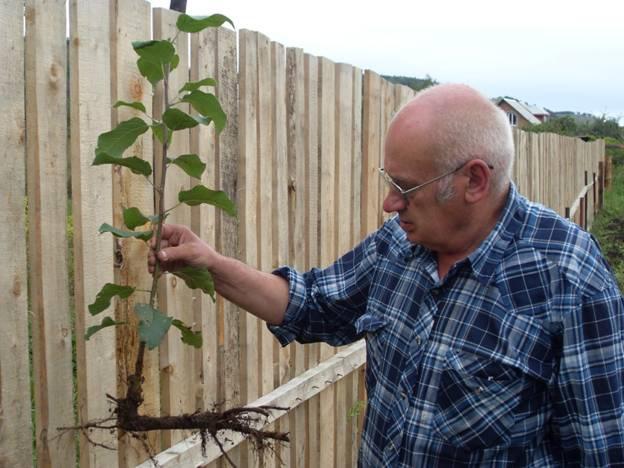
Apply duct tape to the fold lines. Remove the tape in early spring, cut the cuttings at an angle at the breaks, and place them in dark plastic bottles without necks. Place a porous sponge at the bottom, add a 5 cm layer of soft water, and add charcoal tablets.
The containers are kept on a windowsill. When roots emerge from the ends of the cuttings, they are moved to a semi-shaded area. By autumn, the woody branches have grown into true apple tree seedlings. This propagation method preserves the tree's varietal characteristics.
How to prepare cuttings?
In the spring, strong young one-year-old branches are selected from the lower tier of an apple tree no older than 10 years old. In the morning, before the moisture evaporates, 20-40 cm long cuttings are removed with pruning shears or a knife. The shoots harvested in the summer are immediately rooted or left for grafting, after the cuts have been treated with a growth stimulant.
Seeds
Apple seeds are used by breeders to create hybrids. By pollinating the blossoms of one tree variety with another, the resulting seeds contain characteristics of both parents.
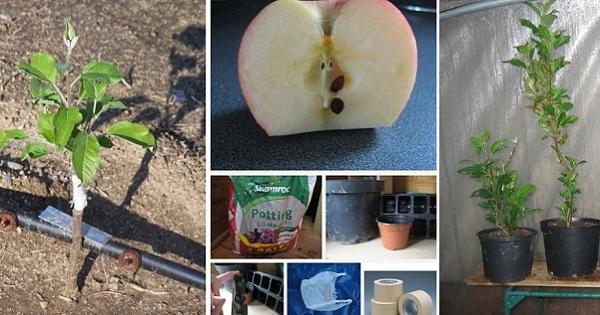
In summer cottages, a wild apple tree is grown from an apple seed, onto which a favorite variety is grafted. The tree begins to bear fruit after at least six years. An apple tree grown from a seed rootstock is easy to grow and produces a high yield.
By eyes (budding)
Experienced gardeners use various methods to propagate fruit trees. One of them is grafting:
- An incision is made on the selected rootstock with a sharp knife.
- The bark is folded back at the ends.
- A cutting with a 15 mm long petiole is inserted into the exposed layer of the apple tree.
- The unused bark is tightly applied to the cut of the bud, fixed to the trunk, without touching the growing soil.
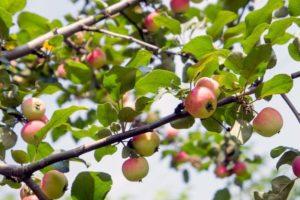
To improve survival, budding begins in the morning in the fall; a positive result in the spring is observed in only 10% of cases.
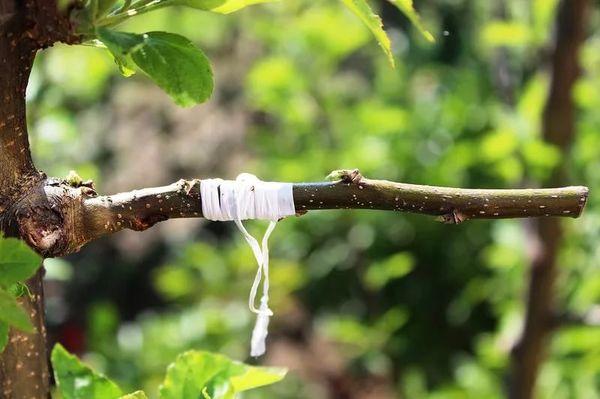 The advantage of this method is that up to 4 crowns are created on the trunk and fruits of different varieties ripen.
Broken branch method
To propagate an apple tree in January or February, select a strong, healthy, two-year-old branch and carefully break it to avoid damaging the bark. Bend the shoot and secure it to a wire with electrical tape.
At the end of the first month of spring, the top of the shoot is separated from the mother shoot with a sharp knife. Four buds are left at the bottom, and a cut is made at the site of the new branch's bud.
Remove the neck of a dark 2-liter plastic bottle, pour in water to a depth of 50 mm, add 2 charcoal tablets, and insert the prepared cutting.
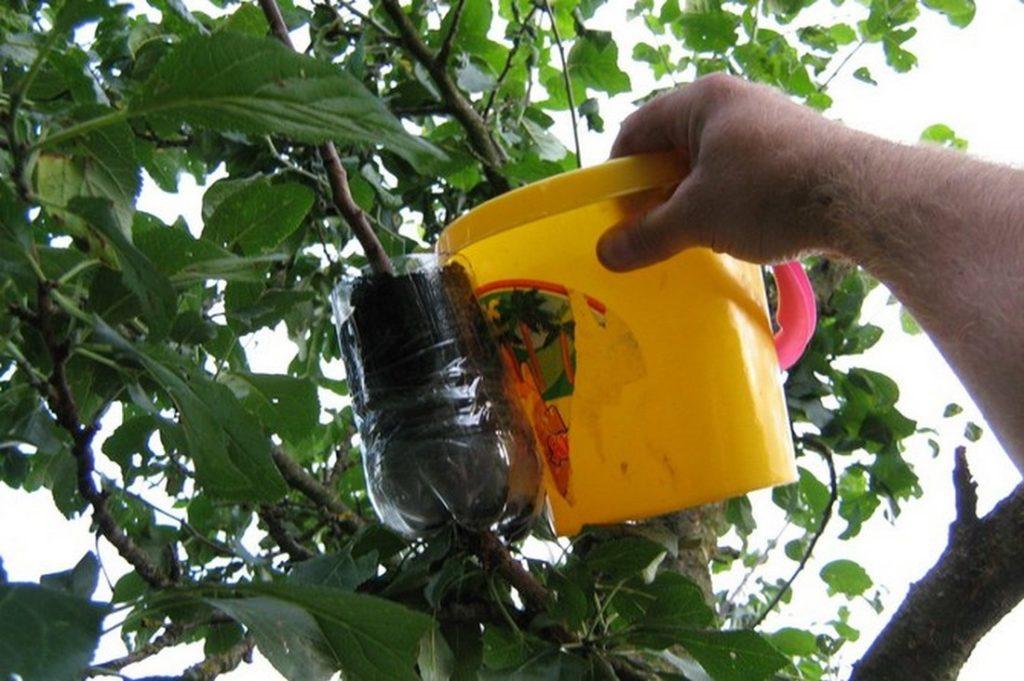
When the emerging roots grow to 6 cm, the shoot is transplanted to the site.
Air layering
To propagate your favorite apple tree variety, in early spring, all the leaves are torn off from the top of the fruiting shoot and the ring of bark is removed.
Roll a ball of damp moss, divide it in half, and wrap it around the exposed area. Treat this area with Kornevin or Zircon and wrap it in plastic wrap.
Once the sap begins to flow, the shoot is removed from the air layer. After a while, roots will form where the bark was removed, and then the shoot is cut from the parent branch, the plastic wrap is removed, and it is planted in open ground.
Rooting instructions
Sometimes, when attempting to propagate an apple tree, gardeners take numerous cuttings, only to have them rot and die. This unfortunate occurrence occurs when low-quality material is used or the procedure is not carried out correctly.
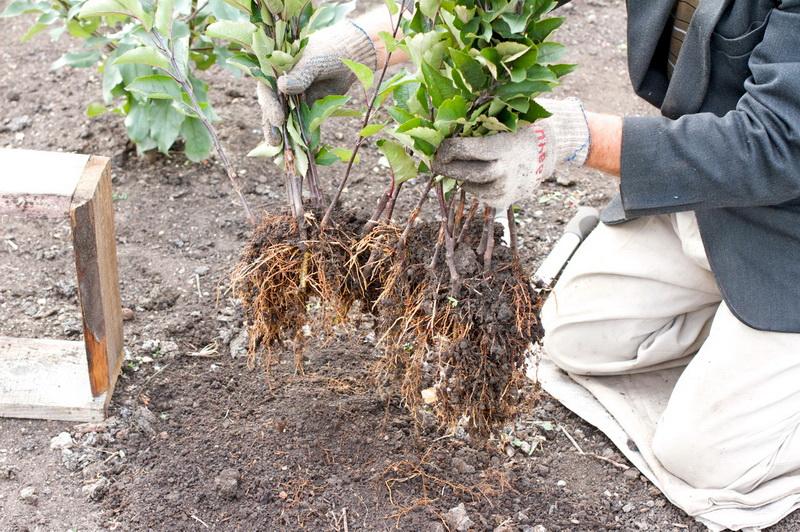
Selection of soil and fertilizers
For cuttings to sprout roots, they must have buds. The cut sites are treated with growth stimulants such as "Zircon" and "Heteroauxin" and placed in a substrate or other nutrient medium.
Rooting methods
There are several methods by which cuttings taken for propagation form callus thickenings, which over time produce roots.
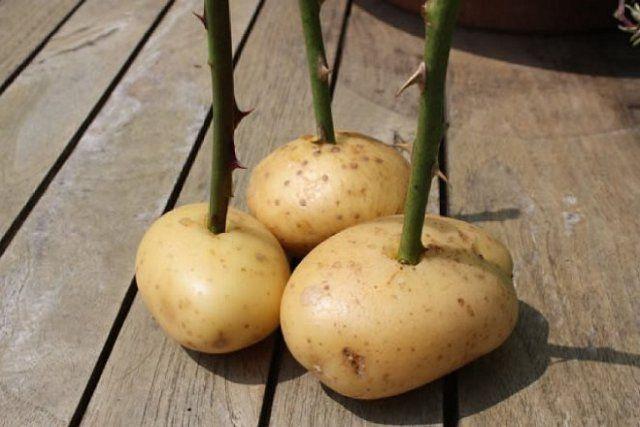
In potatoes
This unusual method allows the cuttings to access the natural nutrients, growth stimulants, and starch found in potatoes. A shoot with one or two buds is inserted into a tuber without eyes, which is then buried and watered. A plastic jar or bottle is placed on top of the cutting. It is aired and moistened, and within 7-10 days, the shoot will sprout roots.
In the box
Fill any container with a breathable substrate prepared by combining several components in equal proportions: sand, garden soil, peat, and perlite. To avoid overwatering the apple tree cuttings, place strings in the bottom of the box on the windowsill, with the ends dangling into a container of water.
When the buds begin to swell, add a complex fertilizer to the jar; when roots appear, the cuttings are shortened.
Planting in the ground
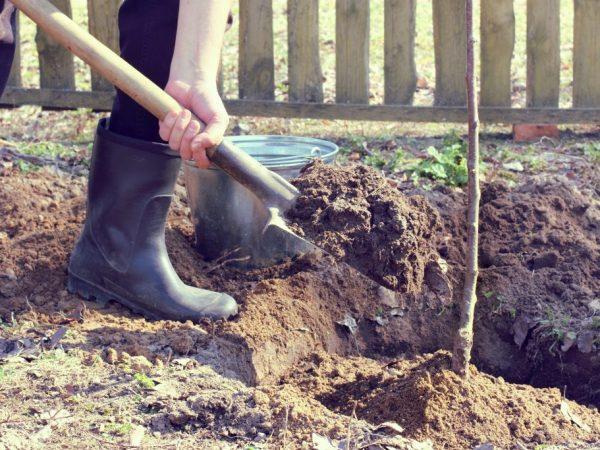
To avoid fussing with boxes, dig holes in an open area and fill them with soil and sawdust. A 10-cm layer of dry sand is added on top of the substrate to prevent weeds from growing and improve air permeability. Cuttings planted in the soil are covered with lutrasil or a plastic container and fed with chicken manure or nitrogen fertilizer.
Graft
In the second half of autumn, three-budded scions, 30–35 cm long, are harvested from apple tree shoots over a year old. They are wrapped in damp cloth and taken to the basement, where they are placed upright. The upper cut of the scion is made at an angle, while the lower cut is made depending on the grafting method used:
- budding;
- for the bark;
- into the cleft;
- into the incision.
The procedure should be performed on a clear, dry day. The end of the scion is shortened with a moving motion away from you. During the first year, the leaves of the established scion are plucked, and any new growth is removed.
In the water
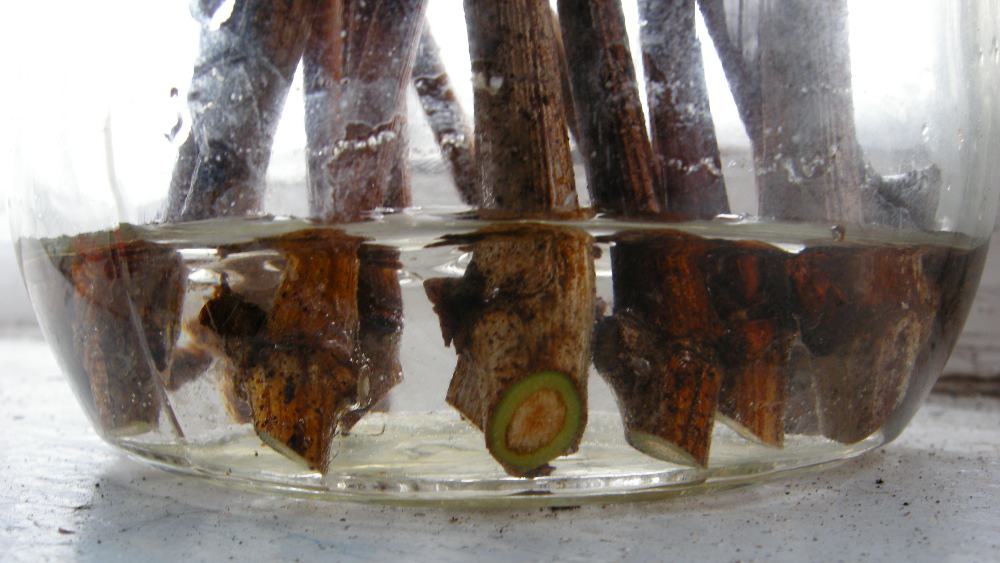
A cutting taken in early spring can be rooted at home in a simple way—by placing it in an opaque jar filled with a small amount of water. However, there are a few things to consider:
- The fluid is not changed, but topped up.
- Add activated carbon or growth stimulator to the container.
- No more than 3 cuttings are placed in one jar.
- The water is periodically saturated with oxygen.
Add a little aloe vera juice, an aspirin tablet, willow extract, or honey to the liquid. These ingredients stimulate root growth.
Peculiarities of propagation of columnar apple trees
Fruit trees are now grown in gardens and summer cottages. They begin bearing fruit early and don't take up much space because they lack lateral branches. Columnar apple trees are propagated by grafting, cuttings, and air layering.
Growth stimulants are used for rooting. Propagating dwarf varieties from seeds is difficult; an apple tree only emerges after 5-6 years, and not all seedlings grow into columnar trees; some of them are considered tall apple trees.
Basic mistakes in cuttings
Fruit propagation isn't always successful. Plants don't take root well when cuttings are taken in the spring during the sap flow period. The cuttings become elongated and fail to develop roots. Some gardeners graft the shoot at the end of a branch, but the procedure should be performed at the base. Green cuttings rot if left in cold water or lack aeration.
The shoots selected for propagation must have strong buds and be cut from a 1-year-old tree.
Related posts:
 How to propagate grapes in summer using green cuttings at home
 Signs and treatment of apple tree cancer, varieties resistant to the disease
 Description of the Chudnoe apple variety, planting and caring for a dwarf tree
 Description and varieties of the Sinap apple tree, planting and care rules
 Description of the ornamental Nedzvetsky apple tree, cultivation technology
 Description and subtleties of growing the Sverdlovsk Beauty apple tree variety
 Description and characteristics of the columnar apple tree President, planting and care
 Rules and methods for grafting plums in summer, tips for beginners