
- Advantages and objectives of vaccination
- What trees are plums grafted onto?
- On yellow cherry plum
- On apricot
- To the cherry
- On the bird cherry
- On the wild
- On the turn
- Suitable plum varieties
- When to perform the procedure
- When to take cuttings?
- Timing of vaccination
- How to prepare cuttings
- Storage of blanks
- In frozen sawdust
- In the basement and refrigerator
- In the snow
- What is needed for grafting?
- Options and step-by-step technology of grafting
- Into the cleft
- For the bark
- In the side cut
- Budding (eye grafting)
- In addition
- T-shaped
- By bridge
- Copulation
- Simple
- Improved
- Ablakirovka
- Caring for plums after grafting
Grafting plum trees in summer is an effective method that allows you to quickly get a harvest or diversify it. This procedure also helps preserve your favorite variety. To achieve good results, it's important to choose the right technique. Proper care of the plum tree after grafting is also crucial.
Advantages and objectives of vaccination
Even with ideal growing conditions, fruiting may not happen quickly. In some cases, this process can take 8-10 years. However, if you graft a plum tree onto a 3-year-old sapling, the first harvest will be possible within a couple of years.
Grafting significantly improves the base variety. This procedure also improves the plum's flavor. Furthermore, obtaining a cutting for propagation is significantly easier than purchasing a tree of the desired variety.
Grafting different varieties onto a single tree allows for greater crop diversity. This procedure also helps save space on the plot.
It is possible to graft up to 4 different varieties onto one plum tree.
Moreover, it's permissible to transplant not only different plum varieties. Other crops are also used for this purpose, including cherry plum, cherry, apricot, and other fruit trees. After grafting, the gardener can replace the unsuccessful variety with a new one. The taste will be completely satisfactory.
Often, performing this procedure is the only way to save a beloved plum variety or other crop. Damage can result from rodent activity, harsh sun exposure, or improper care. In such situations, the plant risks dying. However, taking cuttings and grafting them onto a healthy plum tree can save your favorite variety.
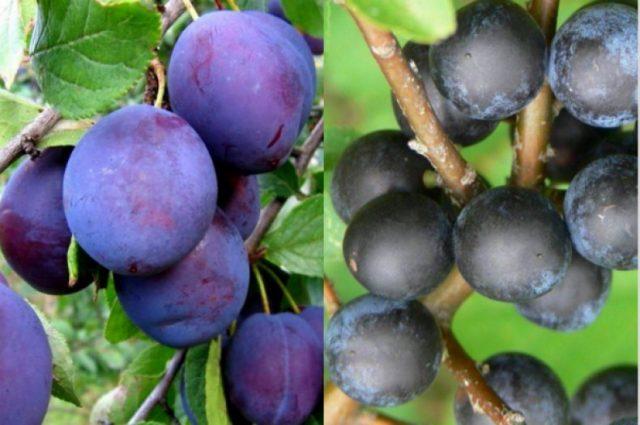
This method is often used for exotic plants that are very difficult to care for. It is also used for crops that are not adapted to the local climate. Apricots can be grafted onto plum trees., which will be difficult to obtain from a whole tree. In a couple of years, you'll be able to harvest fruits with excellent flavor.
What trees are plums grafted onto?
There are quite a few crops that can be grafted. Other plum varieties or other fruit crops can be used for this procedure.
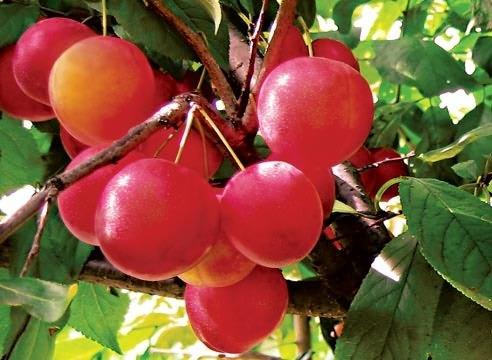
On yellow cherry plum
These are related crops, so the procedure has a high survival rate. For plum cuttings, it's recommended to choose a small rootstock. This guarantees the success of the procedure. A particularly successful combination is blue plum and yellow cherry plum. This will result in a unique fruit color.
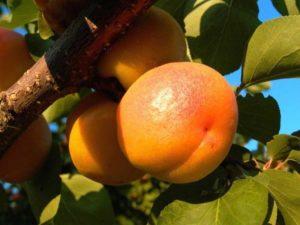
On apricot
When performing this procedure, it's important to choose the right plum and apricot varieties. This will ensure a successful grafting and help the gardener produce an excellent hybrid. It's important to note that this type of tree is more suited to warmer climates. However, it produces fruit with a wonderful aroma and flavor.
To the cherry
Felt cherry grafting is recommended for plum grafting. Care and precision are essential for proper grafting. Only then will the plum cuttings be able to survive. Once grafting is complete, an early-ripening hybrid can be obtained.
On the bird cherry
Many people believe that plums can be grafted onto bird cherry trees. However, using this tree as a rootstock will not yield positive results. The resulting hybrid will not produce excellent results and will develop poorly. The tree may also be susceptible to disease.
On the wild
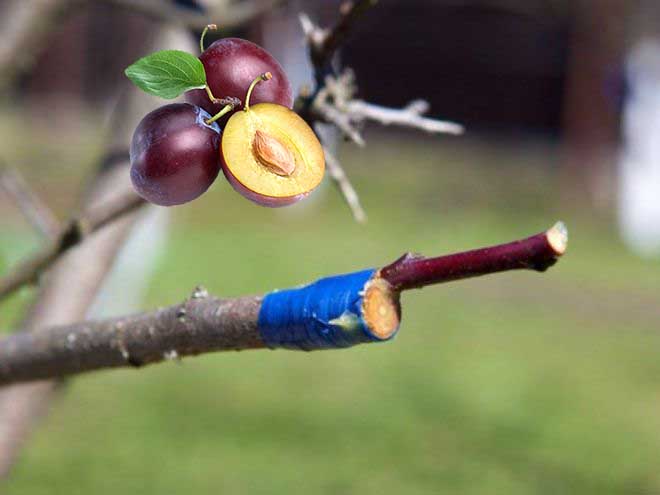
Using wild plum varieties as rootstocks is justified when improving the crop's performance. This combination will help strengthen the plant's immunity and increase resistance to disease and pests.
Wilding rootstocks are resistant to cold climates, temperature fluctuations, and high humidity. This type of rootstock can be used by novice gardeners during their learning phase.
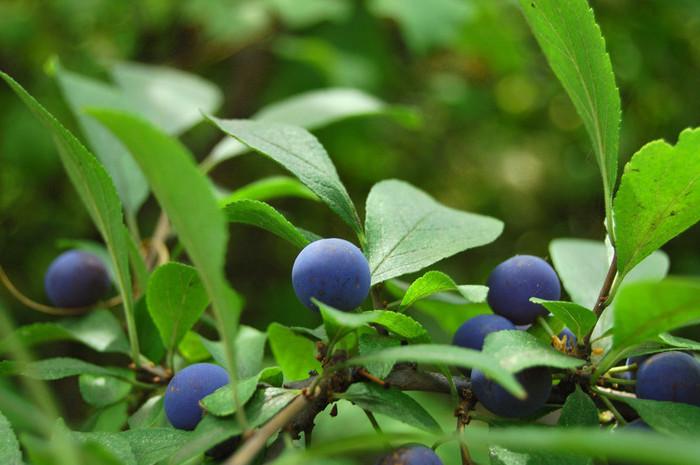
On the turn
This tree is considered a close relative of the plum. The shrub is characterized by its undemanding nature and resistance to low temperatures. To obtain a plum variety that bears fruit in the south, you can take a cutting from it and graft it onto a blackthorn. This procedure is sure to be successful.
Suitable plum varieties
Intraspecific grafting is considered the most successful. Grafting plums onto plums helps improve fruiting or maintain the tree's appearance. The procedure is also used for propagation. Many gardeners graft several varieties onto a single plum tree.
When to perform the procedure
To ensure that the manipulation is as successful as possible, it is important to strictly adhere to the rules for its implementation.
When to take cuttings?
For cuttings, it's recommended to select woody branches. Shoots 1-2 years old are best. Green branches are generally not used. It's best to choose side shoots located on the sunny side of the plant.
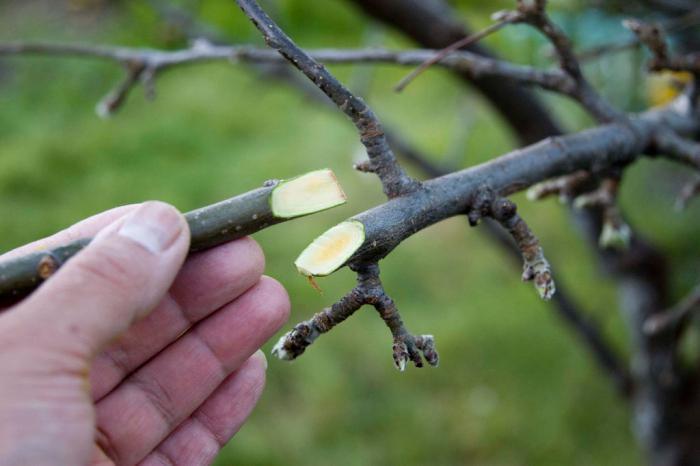
They should be taken in late autumn, after the first frost. At this time, the plant is dormant. This means the cuttings will easily survive winter storage.
Timing of vaccination
Vaccinations are most often performed in the spring. Summer vaccinations are considered less successful. They are only performed if spring vaccinations are unsuccessful.
However, grafting in summer has a good survival rate, allowing the cuttings time to strengthen.
The scarring process occurs in the area where they touch the tree. This process is completed before frost sets in. The best time to perform this procedure is from late July to mid-August.
How to prepare cuttings
To prepare cuttings, it is recommended to follow these steps:
- select a healthy, fruit-bearing tree aged 3-10 years;
- use strong 1-year-old shoots for grafting;
- cut cuttings from the shoot - it is recommended to hold it in the air without touching the cut area;
- cuttings should have short internodes;
- their diameter should be no more than 7 millimeters;
- The scion must have at least 4-5 buds.
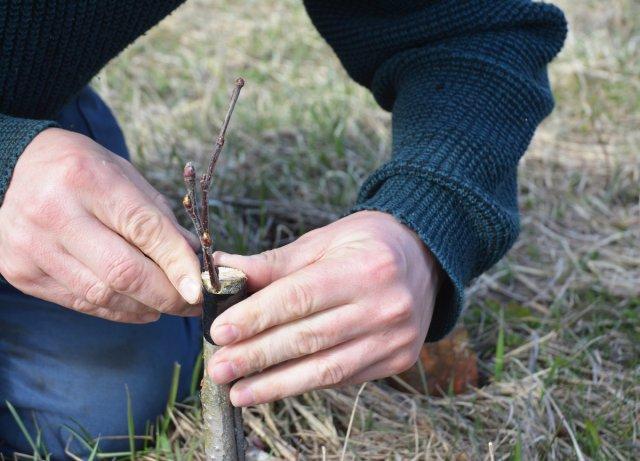
It's recommended to tie the prepared cuttings with twine. A label indicating the plant variety should be attached to the twine.
Storage of blanks
To preserve prepared cuttings, it's important to choose the right method. They can be stored in the refrigerator or basement. Often, grafting material is stored in sawdust or snow.
In frozen sawdust
This storage method is used in regions with thaws in winter. To do this, cover the soil with a layer of damp sawdust, then place the cuttings on top, tying them into a bundle. Then, sprinkle the material with damp sawdust—this layer should be approximately 20 centimeters thick. Dry sawdust is then added on top, bringing the thickness of this layer to 40 centimeters.
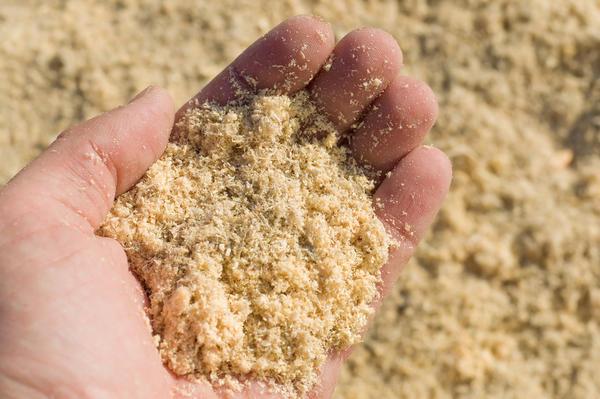
To prevent moisture from getting inside, the structure should be wrapped in plastic film. To repel rodents, sawdust can be soaked in phenolic acid. To prevent the bark from rotting, the cuttings should be placed in plastic pipes or bottles. It's important to leave room for ventilation.
In the basement and refrigerator
Cuttings can be stored in the basement. Simply place them in damp sand. Sawdust also works well. It's recommended to place the cuttings cut side down.
To maintain optimal humidity parameters, the substrate should be sprayed with water.
Cuttings also store well in a regular refrigerator. To do this, place them in a plastic bottle with a loosely sealed lid. Place the bottle on the bottom shelf of the refrigerator.
In the snow
Before the frost sets in, dig a hole in the ground. It should be approximately 35 centimeters deep. It's recommended to line the bottom with spruce branches. Place the cuttings on top, wrapped in fiberglass. This will help protect them from rodents.
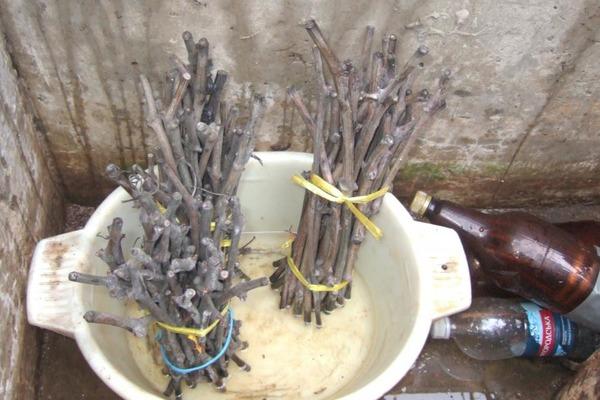 The structure is then covered with a layer of spruce branches and sprinkled with soil and sawdust. After this, the location should be marked. If snow falls, it is recommended to create a mound. Its height should be 50 centimeters.
What is needed for grafting?
To ensure a successful procedure, it's important to prepare the necessary tools in advance. You'll need the following:
- sharp knife;
- insulating tape;
- clean cloth;
- pruning shears;
- wire;
- packages;
- garden var.
Options and step-by-step technology of grafting
Plum grafting can be done using various methods. To choose the best option, it's worth analyzing the specifics of each procedure.
Into the cleft
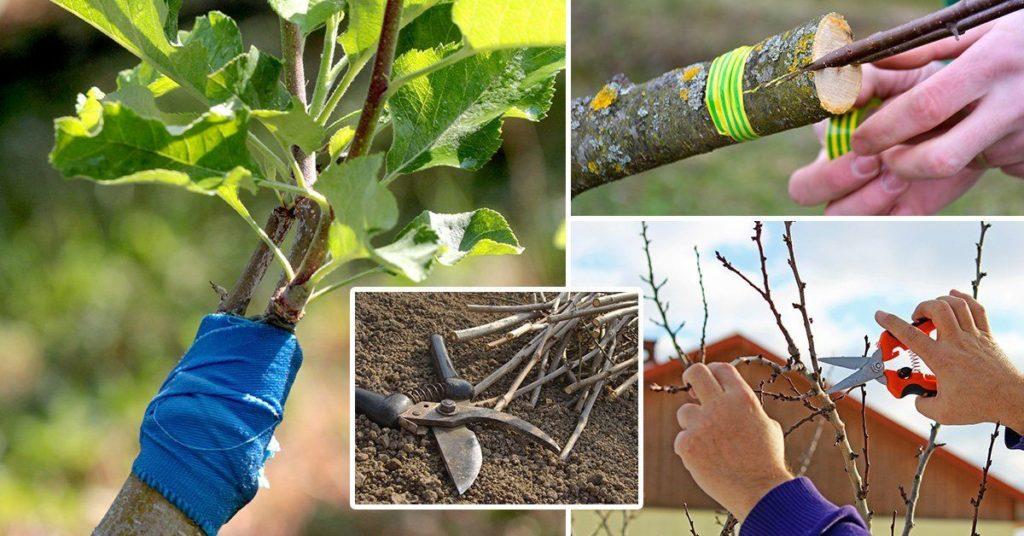
This method allows for grafting multiple cuttings. The rootstock branch should be cut straight and crosswise. The cuts should be split in the center, perpendicularly. A wedge should be made at the bottom of the cutting. It is placed in the split so that the cadmium layers are aligned. Then, the plant should be treated with varnish and the junction should be bandaged.
For the bark
If the rootstock is 2-4 centimeters thick, the graft is made behind the bark. A 2-3 centimeter-long transverse cut is made across the bark. If the scion is thin, the bark should be peeled off on one side. To facilitate the connection, a layer of bark is removed from the thin scion. The scion is placed behind the bark and the graft is bandaged.
In the side cut
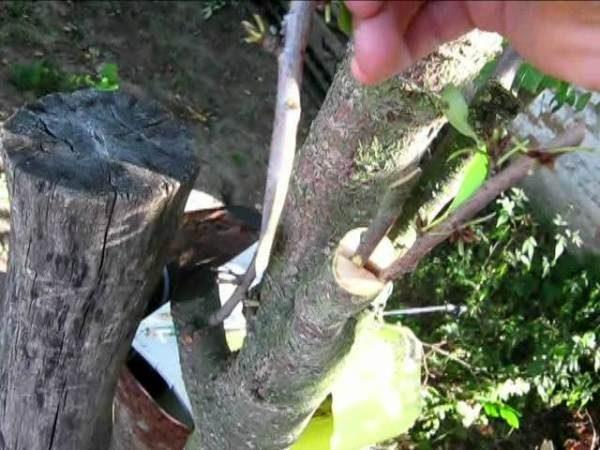
This method is suitable for a rootstock thickness of 3 centimeters. The cut is made with a sharp knife. It should be at a 25-degree angle to the rootstock axis. Make a downward wedge on the scion. Insert it into the lateral cut. The planes should align. After this, the graft is tied.
Budding (eye grafting)
This procedure can be performed using various methods. Experts distinguish between the butt-on-butt and T-on-the-toe method.
In addition
First, you need to select the scion and rootstock correctly—they should be the same diameter. Then, make identical, slanted cuts, each 3 centimeters long. Join them together, tie them together, and treat them with pitch.
T-shaped
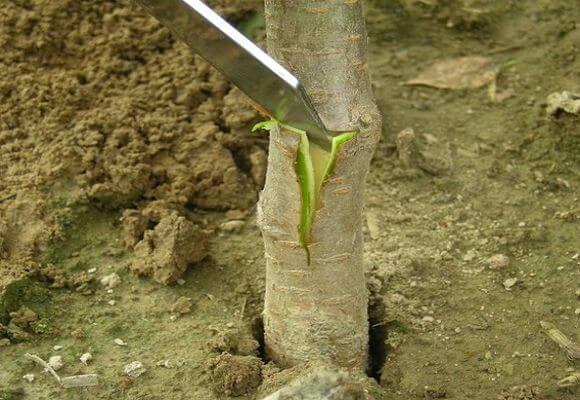
First, make a T-shaped cut, then peel back the bark layer and insert the bud shield. Secure the grafted area firmly with PVC tape.
By bridge
The rootstock should be cut crosswise, tilting the end slightly. On the higher side, trim away the bark and a piece of wood. The tongue should also be cut. The width of the cut should match the thickness of the scion. The length should be 2-3 centimeters. The scion should be attached to the rootstock, tied with bast, and covered with garden pitch.
Copulation
The procedure can be simple or improved. The first option is chosen by inexperienced gardeners who lack the necessary skills.
Simple
Beginning gardeners should take rootstock and scion of equal thickness at the cut ends. Make the cut at a 30-degree angle and pinch the ends together. Join the pieces tightly and secure with electrical tape.
Improved
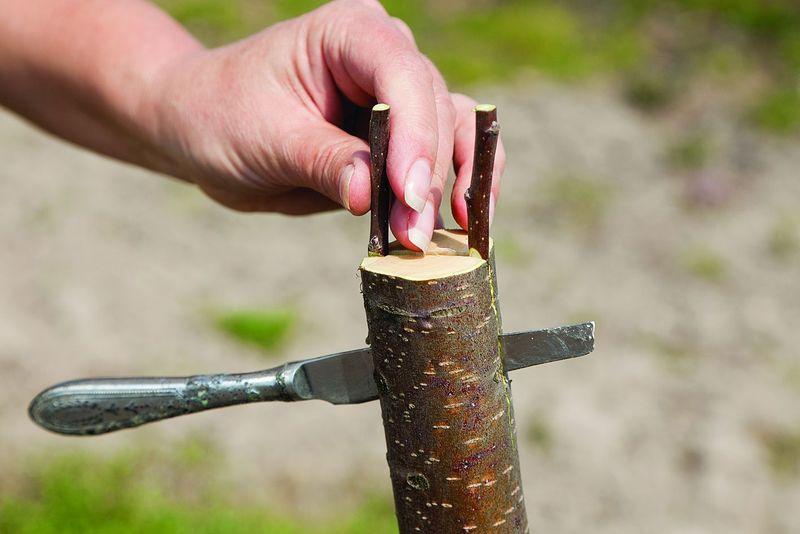
The procedure is performed on plum trees aged 1-2 years. It is important that the diameter of the rootstock and scion match. Make an additional split in the cut. This will ensure a good fusion.
Ablakirovka
This technique is suitable for forming a hedge from trees. Make cuts on adjacent shoots and join the scion and rootstock. Stack all the layers and secure these sections with electrical tape.
Caring for plums after grafting
After the procedure, it's recommended to provide the plum tree with proper care. It's also important to monitor the condition of the grafted cutting. The emergence of leaves from the buds indicates that the cutting has begun to take root. In this case, the ligature should be loosened or removed. To prevent the plant from weakening, remove shoots, inflorescences, and fruits.
Plum grafting is an effective procedure that produces excellent results. It helps increase yields and develop new varieties. However, choosing the right method is crucial.
Related posts:
 Choosing a rootstock for cherry grafting and budding rules for beginners
 Methods for planting and propagating cherries at home
 Description and characteristics of the Yakhontovaya plum variety, pollinators
 How and whether it is possible to graft an apricot, the choice of rootstock, timing and methods of budding
 Description of the Renklod plum varieties and cultivation technology
 Timing and methods of grafting a peach tree, rules of procedure
 Timing and methods for grafting walnuts at home in summer
 How and where to graft an apple tree: a step-by-step guide for beginners on budding