
- Pros and cons of the propagation method
- Recommendations for choosing deadlines
- In the spring
- In summer
- In winter
- What rootstock should I take?
- Manchurian
- Grey
- Black
- Cordate
- Siebold's nut
- The main methods of grafting
- Budding
- Copulation
- How to graft into a cleft
- For the bark
- At home
- Aftercare Rules
- Tips from experienced gardeners
Propagation of walnut Vegetative propagation is a challenging task. One-year-old walnut shoots must be grafted with extreme caution due to rapid oxidation of the cut tissue. The high content of tannins and ascorbic acid in young walnuts makes conventional propagation methods unsuitable. Walnut grafting in summer is accomplished using budding, cuttings, or cleft grafting.
Pros and cons of the propagation method
Before you begin grafting a walnut tree using any method, you should familiarize yourself with the specifics of this process, as well as its advantages and disadvantages.
Advantages of grafting walnuts in summer:
- During the summer season, the chances of a successful grafting increase. The tree receives the necessary amount of sunlight and water, and with proper care, the nut will germinate quickly.
- The seedling acquires all the properties of the parent tree, so if you choose a healthy and fruitful nut tree, you can get several more of the same trees.
- Grafting guarantees rapid fruiting, unlike traditional seed sowing. The first fruits can be harvested in as little as 3-4 years.
Before you begin manually propagating plants, you should also be aware of the disadvantages:
- There's no guarantee of results in gardening. There's a high chance all your efforts will be wasted and the graft will fail.
- Grafting should be done no later than early July. If this deadline is missed, it is recommended to postpone propagation of the walnut tree until spring.
- Grafting seedlings is very difficult to perform, and to increase the chances, you need to make a lot of preparations.
Experts believe that walnut grafting fails in most cases. However, the chances of survival can be increased by using growth stimulants. These promote cambium division. It's also important to soak the cuttings in water beforehand to ensure they absorb sufficient moisture.
Wet cuttings are not grafted; they are first allowed to dry out.
After grafting, the tree needs to be cared for. It is recommended to seal all exposed parts of the scion and rootstock with wax or garden pitch.
Recommendations for choosing deadlines
Walnut tree propagation is recommended during the warmer months. This procedure is most often performed in mid-July. Healthy, two-year-old trees are used as rootstock, and buds growing on freshly cut cuttings are used as scions.
If grafting a walnut tree in the summer isn't possible, you can choose another time, such as winter. Fall-spring grafting is not recommended.
In the spring
In practice, autumn or spring grafting of walnut trees is extremely rare. This is because cuttings don't take root well in the off-season, and all efforts are futile.
In summer
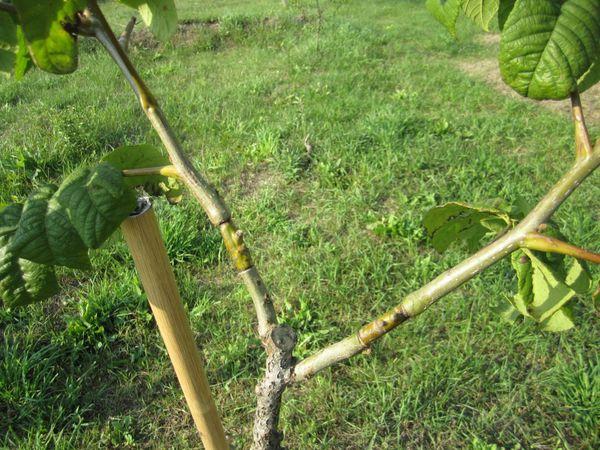
In mid-July, summer grafting is done using the semicircle budding method. To do this, you need:
- Using a special knife, the bark is cut with two parallel blades. The bark is trimmed from the branch along the entire diameter so that the bud is located between the cuts;
- Then make a longitudinal cut on the opposite side. The bark is picked out and removed from the cutting. The result should be a semicircle;
- remove all dirt from the trunk with a slightly damp cloth and cut out a rectangular shield at a height of at least 7 centimeters from the ground;
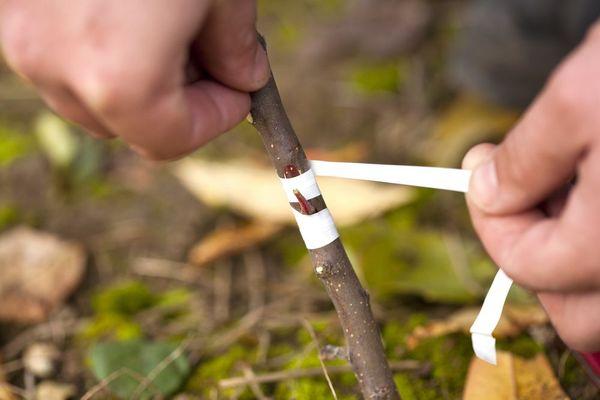
- A half-ring containing a bud, previously cut from the cutting, is applied to this spot. The grafting site is wrapped in plastic so that everything except the bud is covered. It is recommended to use plastic film at least 1 centimeter thick and 40 centimeters long, so that it can be wrapped around the trunk several times.
After 2-3 weeks, a check is made. If the grafted bud remains green, the grafting was successful. In this case, the bandage is loosened slightly to prevent pressure on the tree tissue. Once the scion has fully taken root, after two months, the film is removed completely.
Take a look Also
In winter
Winter grafting is very common among walnut gardeners. It should be done between mid-February and March, but only if the rootstock is harvested in the fall. Healthy cuttings are taken in advance from shoots no more than one year old.
You can also get vaccinated at home. To do this, you need to do the following:
- Before the onset of frost, a healthy shoot with buds is found on the tree and cut off.
- The cuttings are placed in a box filled with damp sand or sawdust. This preparation should be stored in a cool, dark place until winter.
- Just before the frost, healthy walnut seedlings are dug up, cleared of soil, and all damaged roots are removed, leaving only strong, healthy ones.
- The rootstock should be wrapped in plastic film and placed in a container. Sand or sawdust, pre-moistened with water, is sprinkled on top, and the scion and tree are stored in this manner for the winter.
If the place where the rootstock and scion are stored is very dry, you need to check the container from time to time and moisten it with water.
To propagate the common walnut, seedlings no older than one year are dug up; they are suitable for use as rootstock.
If it is decided to graft onto Manchurian, black, grey or heart-shaped walnut, then both one-year-old and two-year-old plants are used as rootstock.
What rootstock should I take?
When choosing a rootstock, choose the one that is most resilient to the climate in a particular region. The most promising seeds are those with increased frost resistance, such as Manchurian walnut or gray walnut.
Manchurian
The Manchurian walnut tree grows in Primorsky Krai, China, and the Russian Far East. To increase the tree's frost resistance, grafting Manchurian walnut trees with walnuts is recommended. This grafting is possible, but the procedure itself is complex.
Budding is performed. To do this, all the wood is removed from the bud, after which a bud is attached. Grafting can also be done with a cutting. This only becomes a problem if the trunks have different diameters. Simply make a longitudinal cut and release the sap. The survival rate is only 25-48%, so it's important to perform the procedure correctly and care for the tree.
Grey
The gray walnut tree grows up to 30 meters, and to utilize its best properties during propagation, gardeners recommend grafting in the summer. The tree grows quickly but requires constant moisture.
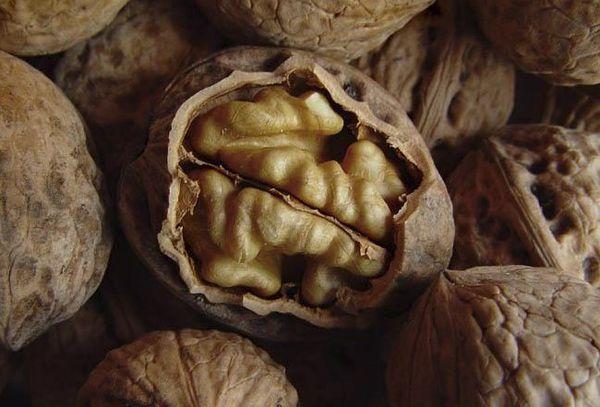
During the first winter after grafting, the gray walnut tree requires special care. It tolerates low temperatures well, but during severe frosts, it is recommended to wrap the base of the tree with plastic to protect the roots from freezing.
Black
For the grafting of American black walnut, it is best to use a common rootstock. walnut varietiesOne- and two-year-old seedlings are used. Gardeners most often use black walnut, as its survival rate is 100%.
Cordate
The unusual shape of the heart-shaped walnut fruit encourages gardeners to use this plant for grafting, imparting the variety's characteristics to new trees. The average height of the walnut is up to 15 meters, but in the Moscow region, it grows no taller than 10 meters. This walnut variety can be grown indoors, in your own garden. To preserve all the tree's properties and increase the chances of a successful outcome, summer grafting is recommended.
Siebold's nut
The survival rate of a tree after grafting ranges from 50 to 78%. Conical stamen buds are used for grafting.
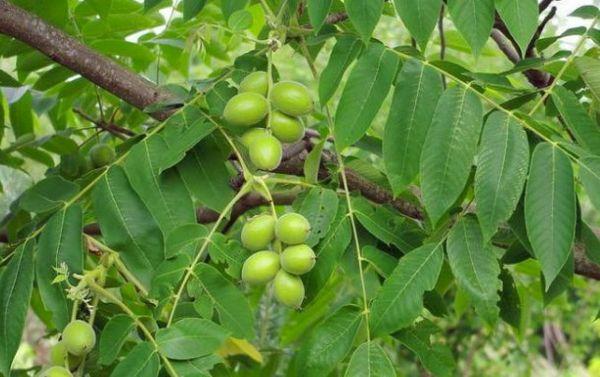
One-year-old seedlings should be selected, but two-year-olds will also work. This propagation method is the best way to impart the best characteristics of a variety to a new tree and combine the traits of two trees from different varieties. The method used is budding or copulation.

The main methods of grafting
Walnut grafting is done in different ways, depending on the tree variety and the desired result. To avoid mistakes, the grafting material should be taken from a fruiting tree, after inspecting the leaves and trunk for signs of disease and deterioration.
Budding
Summer is the best time for budding. Budding is most often done using a tube on thin branches and seedlings.
The budding process:
- Using a sharp, clean knife, trim the bark around the entire circumference of the tree. The cuts should be made in two places, no more than 4 centimeters apart. The section of the tree where the bud is located is chosen for the cut.
- Then a vertical line is made between the two cuts and the tube is removed.
- Select a bud on the scion and perform the same manipulations. The bud should be in the center of the tube.
- The grafting is performed, and for this you need to ensure that the bud from the scion is exactly in the same place where the bud from the rootstock was.
- The grafting site is wrapped with tape.
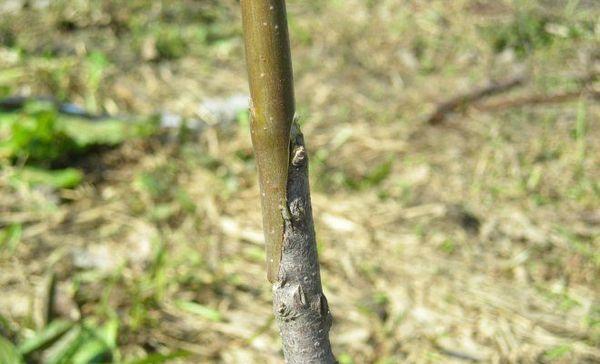
At the final stage, you need to ensure that the bud is not damaged when wrapping the tree.
Copulation
During copulation, the rootstock and scion are combined, which makes it possible to obtain a seedling of a certain variety.
The copulation process:
- The rootstock is dug up, making sure that the roots remain intact, and wrapped in film.
- The roots are covered with wet material - sand or sawdust.
- The same steps are performed for the graft.
- During the storage period, the substrate is watered as it dries out.
- Next, a diagonal cut is made on the rootstock, approximately 10 centimeters from the root. Then another cut is made higher up, creating a tongue.
- The same is done on the scion, after which the two pieces are joined and wrapped with film.
It is important to ensure that the tongues on the scion and rootstock are firmly connected and match the cuts.
How to graft into a cleft
Gardeners often use the cleft grafting method. To do this, follow these steps:
- Using pruning shears, cut off the top part of the scion.
- The rootstock is split at a distance of up to 3 centimeters, and the same is done with the scion.
- Then the two halves of the nut are joined together and tightly wrapped in film. To prevent the cut edges from oxidizing, you need to work very quickly.
This procedure is very simple and quick, and the nut grafted into the cleft usually takes root.
For the bark
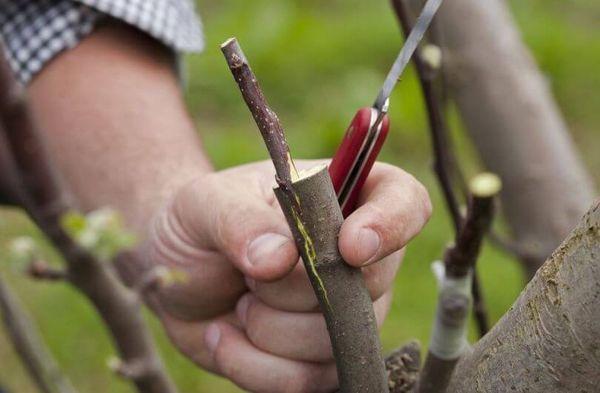
A bark graft is made on a mature tree if the branch or trunk is much larger in size than the scion.
Procedure:
- Bark grafting is done only in summer because the tree actively leaks sap in spring. Seven days before grafting, a cut is made on the tree. The cuts are made closer to the center of the tree, on the side.
- Then the top is cut off and all shoots that could interfere with the graft are removed.
- Take a cutting with two buds. Make a slanted cut of up to 6 centimeters. It's also important to make a 1-centimeter cut on the back side, completely exposing the tip of the cutting.
- A small cleft is made in the scion's bark, and the scion is immediately inserted into it. The tree is then wrapped in plastic film.
When grafting under the bark, it's important to ensure the tree doesn't bleed. Several incisions are made before grafting—this is a crucial step in the procedure.
At home
In early summer, cuttings with buds are taken from the tree. A small cut is made in the stem, ensuring that the bud is centered. The same process is repeated on the rootstock, after which the two sections are quickly joined together.
This procedure can also be performed indoors if it's too rainy outside. The process is no different from propagating walnut trees outdoors; you just need to choose a method, such as budding, and prepare the nut tree for grafting in advance.
Aftercare Rules
After grafting, the tree requires special care. The graft site is regularly checked after removing the bandage; it must be dry. Weak cuttings are first shortened and then pruned when the tree begins to grow rapidly. The strongest cutting should be cared for. Regularly clear the soil of weeds and water it regularly during the summer.
As winter approaches, stop watering the tree to avoid slowing the seedlings' growth. A prerequisite for the grafted walnut to thrive is the use of potassium, nitrogen, and phosphorus fertilizers. Apply them according to the instructions:
- In summer, nitrogen fertilizer is scattered around the trunk. On average, up to 25 grams of fertilizer should be used per square meter of soil.
- In the fall, add 35 grams of potassium chloride and 130 grams of phosphate. For a tree up to 10 years old, this amount of fertilizer is normal. In hot summers, use the same fertilizer, but in liquid form.
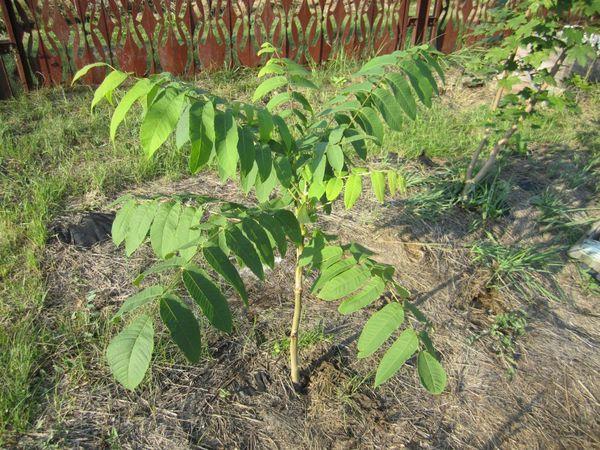
The condition of the leaves determines how quickly a walnut tree will grow after grafting. To accelerate growth and preserve the tree, it's important to pay attention to pest and disease control and fertilize. It's important to ensure all leaves are healthy and promptly address any signs of disease. Chemical treatments are strictly prohibited for young walnut trees.
Folk remedy for prevention walnut diseases:
- 2 tablespoons of tobacco, onion peel and garlic are poured into a three-liter jar;
- the preparation is poured with boiling water and left to infuse for 7 days;
- Then the solution is filtered and the tree is sprayed with it, having first diluted the infusion in 10 liters of water.
If pests do appear, to get rid of them, add 500 grams of wormwood and yarrow to 5 liters of water and let steep for two days. Purify the infusion, boil it, and cool it. Before use, dilute it in 10 liters of water.
A tree affected by aphids or codling moth should be sprayed once every ten days.
Tips from experienced gardeners
To ensure successful walnut cultivation, follow the recommendations of experienced gardeners:
- If a tree is dying, don't rush into uprooting it. You can try to revive the nut by grafting.
- Suitable regions for walnut grafting are central and northern Russia. Southern shoots are grafted onto frost-resistant varieties.
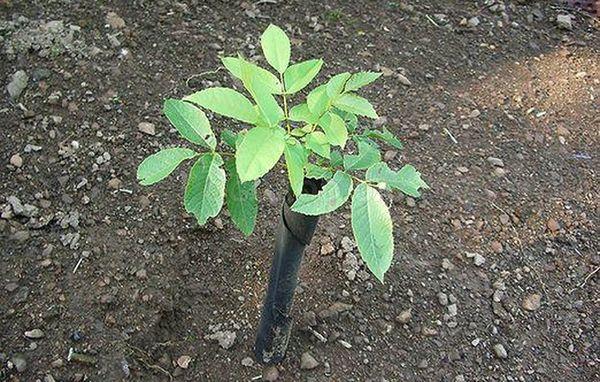
- For a successful graft, it's important to plant the seedling correctly. The tree is cared for for two years before being used as a rootstock.
- The rootstock and scion must be the same age to ensure optimal tissue fusion. The older the tree, the slower its cellular processes.
- After grafting, all shoots except one, the strongest, are removed. This usually grows from the bud closest to the graft.
It's important to understand that grafting a walnut tree doesn't guarantee good growth and a bountiful harvest. Many factors influence yield and growth. However, if you perform the grafting procedure correctly and regularly care for the tree, you can increase your chances of success in gardening.
Related posts:
 How to plant walnuts, care for them, and grow them at home
 Choosing a rootstock for cherry grafting and budding rules for beginners
 Description of the Ideal walnut variety, cultivation and care
 Description of the Lancaster walnut, planting tips, and care instructions
 How and whether it is possible to graft an apricot, the choice of rootstock, timing and methods of budding
 Description and characteristics of the 35 best walnut varieties, planting and care
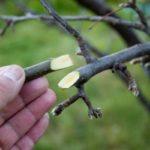 Timing and methods of grafting a peach tree, rules of procedure
 Walnut diseases and pests, why walnuts don't bear fruit, and treatment methods