
- General description of the almond tree
- History of origin
- Cultivation regions
- Dimensions and appearance
- Almond bush
- Almond tree
- Fruiting
- Flowering and pollinators
- Ripening time and harvesting of nuts
- Where are almonds used?
- Types of culture
- Ordinary
- Low, either steppe or laburnum
- Georgian
- Ledebour
- Petunnikova
- Three-lobed
- Louisiana
- Triloba
- Dessert
- Vesnyanka
- Ornamental almond varieties
- Subtleties of cultivation
- Optimal timing for planting
- Selecting a site
- Suitable soil
- Selection and preparation of planting material
- Technological process of landing
- Specifics of care
- Regularity of watering
- How to feed the crop
- Loosening and mulching the soil
- Pruning and crown shaping
- Preparing for the winter period
- Almond diseases: treatment and prevention
- Pests: protection and destruction
- Methods of reproduction
- Breeding with a bone at home
- By vaccination
- Cuttings
- Undergrowth
- Layering
- Benefits of Using Flowering Trees in Landscape Design
- Conclusion
Almonds are a healthy crop, but their cultivation and care require certain considerations. The nuts vary in flavor. Depending on the growing region, it's important to select the right variety. Almonds are a heat-loving crop and will quickly die if grown in unsuitable conditions.
General description of the almond tree
Almond trees can have up to 40 varieties. The right variety grows quickly and produces a high yield. Almond trees are classified as either trees or shrubs.
History of origin
The nut first appeared in Southwest Asia. It was used in ancient times as a healing food. It was popular in Greece, where it was used as an additive in bread making. Gradually, the tree spread throughout Europe.
Cultivation regions
Almonds are a heat-loving plant found in Crimea. They begin to bloom in May, when temperatures have warmed up and there's no longer a risk of frost. Cultivation in the Moscow region is also possible, but special varieties that are resistant to temperature fluctuations are used.
In central Russia, the plant is grown as an ornamental shrub to enhance gardens. In the Moscow region, almonds are grown using specialized varieties. The bush is insulated during the winter and begins to bloom in early summer, when there is no threat of frost. In Siberia, cultivation is carried out in greenhouses, as the harsh climate can damage the bush and reduce yields.
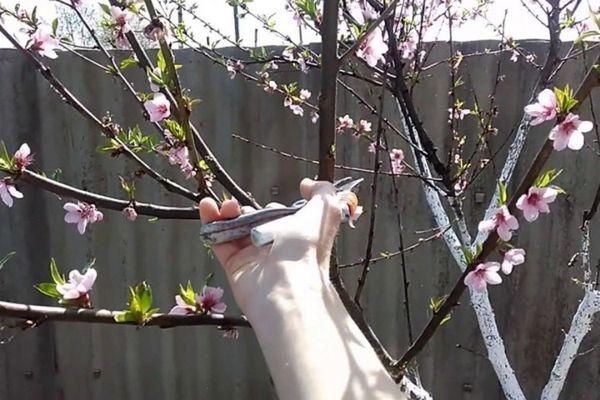
Dimensions and appearance
Each variety of crop has its own characteristics that must be taken into account when planting in a summer cottage.
Almond bush
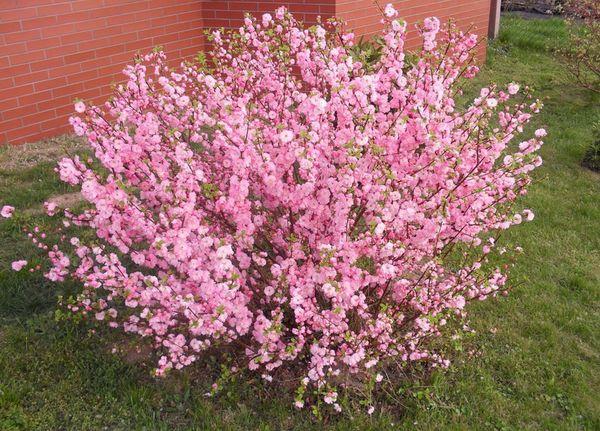
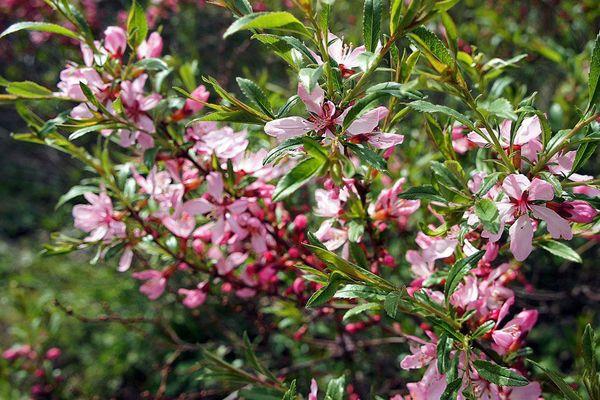
The bush is small and reaches a height of up to 2 meters. It has good ornamental qualities and is grown as a garden ornament. During flowering, the buds emit an attractive scent. The leaves are small, dark green, and fleshy.
The bush blooms in the fifth year after planting, and the flowering period can last up to three weeks. The fruits are small and have a dense shell.
Unlike the tree, the fruit of the bush has inferior taste qualities and is less often used as food.
Almond tree
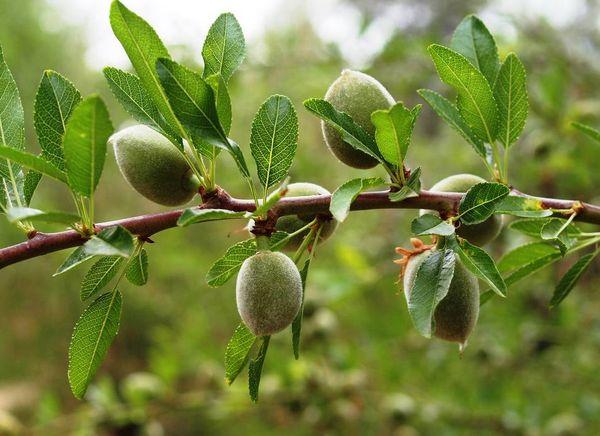
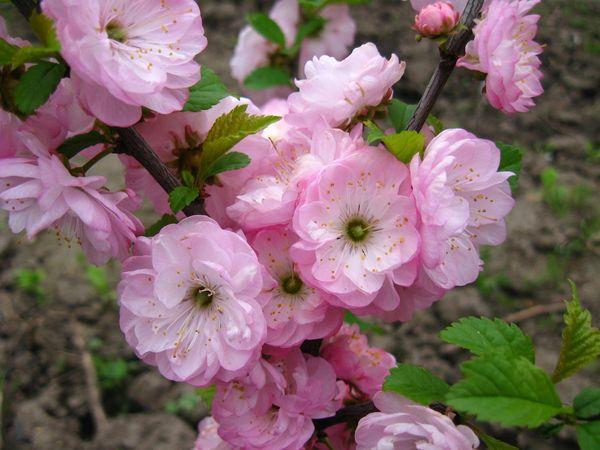
The tree can reach 5-6 meters in height. The crown is round, and the branches are spreading. The leaves are oblong, green, and slightly powdery. During flowering, the tree is covered with white-pink buds with a bright fragrance. The fruits are small, oblong, and have a detachable pit. The fruits contain a large amount of oil and are prized for their excellent taste.
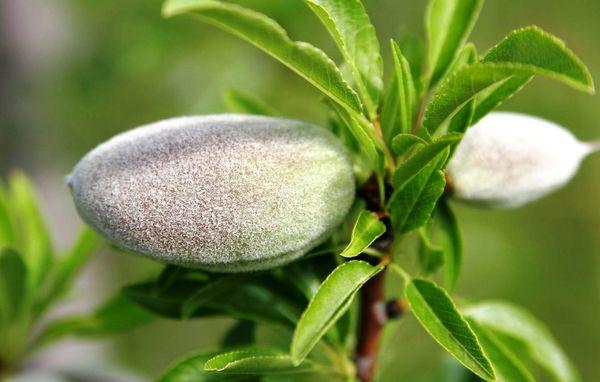
Fruiting
The first harvest from the tree can be collected only in the fifth year after planting. Depending on the nut variety, up to 10 kg of yield can be harvested. The fruits are small and can be stored and transported. The tree begins to bear fruit at full capacity only in the tenth year after planting. The tree can bear fruit for 60-70 years. After that, the yield declines.
Important: Almonds are a long-lived tree, with a lifespan of 100-120 years.
Flowering and pollinators
The tree begins to bloom before the foliage appears. Buds usually form in early April. The plant is pollinated by insects. Cross-pollination is necessary during the first year of flowering.
Ripening time and harvesting of nuts
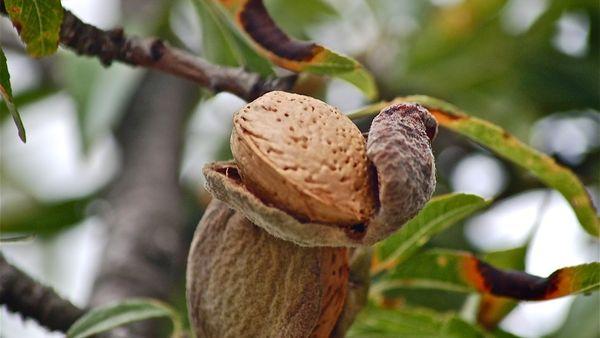
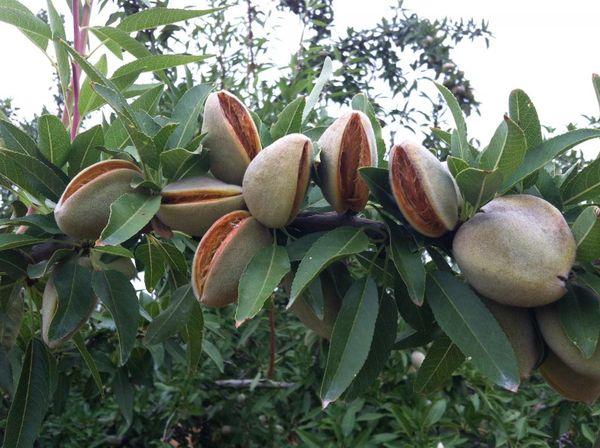
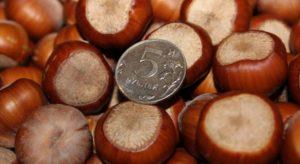
Depending on the variety, the nut ripens in July. In some cases, the harvest may be delayed. Harvesting begins after the hard shell on the nuts begins to split. After harvesting, the nuts should be dried for several days and the outer shell removed. After that, the nuts are used as intended.
Where are almonds used?
Almonds have a wide range of uses. They are most commonly used:
- for food and cooking;
- for the production of almond oil, which is used in perfumery, medicine and cooking;
- Almonds contain vitamins and minerals that are beneficial for the human body.
The crop is often used medicinally. Almonds are prescribed for the following conditions:
- treatment of skin infections;
- disease of the digestive system;
- in stressful situations;
- kidney and liver diseases;
- diseases of the human reproductive system;
- diabetes mellitus.
It is important to know that almonds are an allergenic product, so you should consume the nut in small quantities.
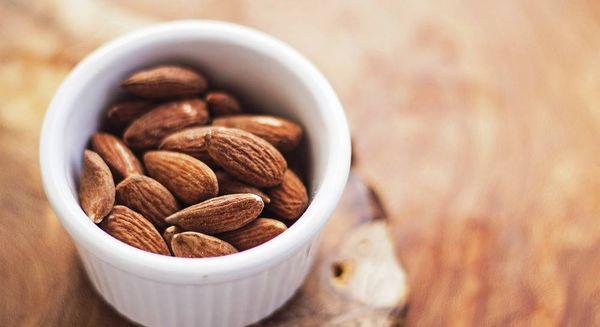
Types of culture
The culture has different varieties, the best of which need to be studied in detail.
Ordinary
This variety is divided into subspecies: bitter walnut and wild walnut. The plant is not particularly attractive in appearance. However, the fruits contain a large amount of oil and are noted for their medicinal properties and high yield.
Low, either steppe or laburnum
A small bush, 1.5 meters tall, with a rounded crown. It has an attractive appearance and is used to decorate garden plots. The fruits are edible and have a sweet, tart flavor.
Georgian
The bush grows up to 1 meter tall. The leaves are fleshy and large. The inflorescences are pink and have a distinct aroma. The fruits are small, and the plant tolerates temperature fluctuations and can be grown in various regions without special care.
Ledebour
Small bushes, most often found in the Altai Mountains. Distinguished by weak shoots that, when crowded together, form impenetrable walls. Fruits can reach up to 3-4 cm in size. The skin is red and the flavor is tart.
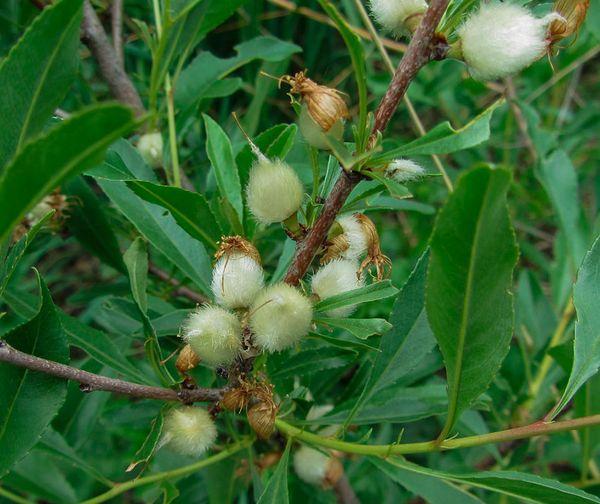
Petunnikova
The bush is medium-sized. The shoots are weak and brittle. The leaves are oblong and dark green. The fruits are small and edible.
Three-lobed
The plant is distinguished by its large size, reaching a height of up to 3 meters, with spreading, powerful branches. Its distinctive features are its serrated leaves. The buds are large and pink. The almond tree has many varieties and is most often used for ornamental purposes.
Louisiana
This small tree blooms in early April. The branches are underdeveloped, and the inflorescences are pink. The fruits are small and delicious. The plant tolerates low temperatures and can be grown in all regions.
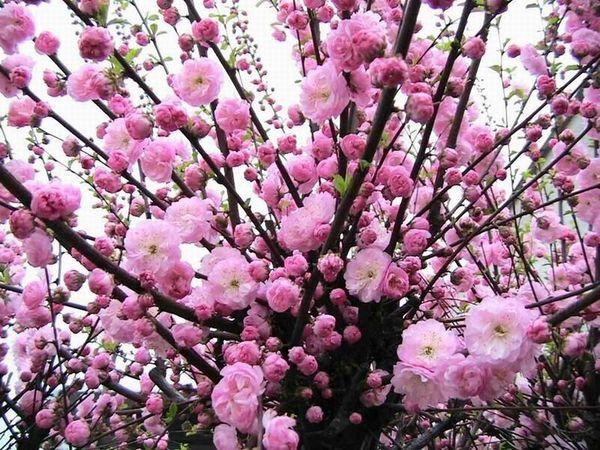
Triloba
This standard tree has a round shape and a dense crown. Its leaves are trilobed and it blooms in late May to early April. It is considered an ornamental plant, and its fruit is edible.
Dessert
A low plant with large fruits, reaching 3 cm in length. The skin is brown and peels easily when fully ripe. It is used for food and medicinal purposes. It contains a large amount of oil.
Vesnyanka
The tree is 2-3 meters tall. The crown is spreading, the branches are strong. The flowers are double, with a bright scent. The fruits are small, often not fully ripening.
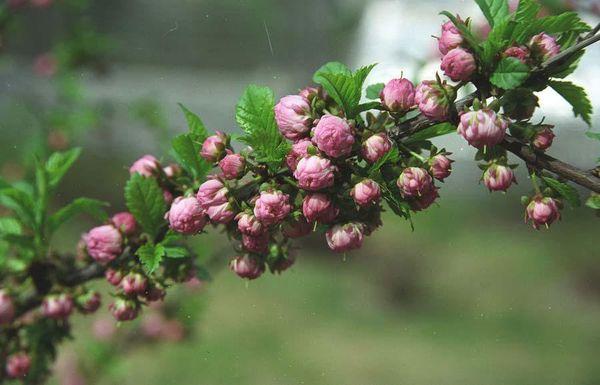
Ornamental almond varieties
Ornamental plants are distinguished by their abundant, long-lasting blooms. Popular varieties include:
- Intermediary;
- Pink fog;
- Pink flamingo;
- Anyuta;
- Tanyusha.
These varieties produce edible fruit. However, their greatest value lies in their attractive appearance.
Subtleties of cultivation
To ensure a healthy harvest, it's essential to follow proper growing practices. These guidelines help increase yields and grow a healthy crop.
Optimal timing for planting
The seedling should be planted in October after the leaves have fallen. This period is sufficient for the plant to gain strength and begin forming new shoots in the spring. In spring, the tree is planted in mid-March; however, such a seedling undergoes a long adaptation period and is often susceptible to disease.
Selecting a site
When choosing a garden site, choose a location free from drafts and winds. In the garden, almond trees are planted in multiple sets at once to facilitate pollination. The planting pattern for seedlings is simple. In open ground, seedlings are planted in sunny locations with a low water table.
Suitable soil
To plant a crop, you need to select the right soil or prepare a nutrient mixture. Before planting, prepare a hole. Place a drainage layer of pebbles or broken brick at the bottom of the hole. Before planting, prepare the nutrient mixture:
- 1 part sand;
- 2 parts soil;
- 1 part humus;
- 200 grams of lime;
- 100 grams of superphosphate.
The resulting mixture will reduce the period of adaptation to a new growth location.
Selection and preparation of planting material
When choosing a seedling, the following features must be taken into account:
- planting material must have closed roots;
- the bark of the seedling should be free of damage and rot;
- the roots should be brown in color, with at least 3 shoots;
- The seedling must have active buds.

Before planting, the seedling should be soaked in a growth activator for 2 hours. To reduce the risk of disease, the tree should also be treated with a mild solution of potassium permanganate.
Technological process of landing
To plant almonds, follow the following steps:
- the planting hole is prepared 2 weeks before planting;
- drainage is placed at the bottom of the pit;
- a quarter of the hole is filled with the mixture;
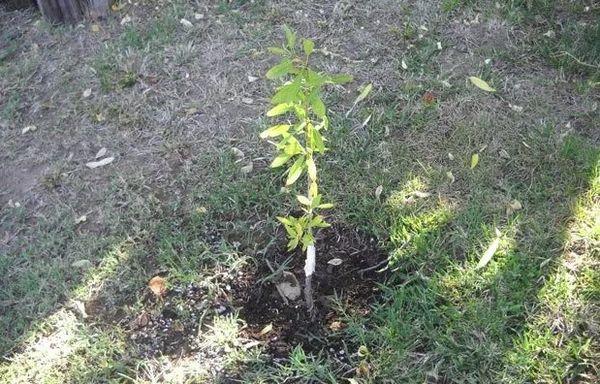
- the seedling is placed in the center of the hole, the roots are straightened, and a wooden support is installed;
- The seedling is carefully sprinkled with a nutrient mixture and compacted.
After planting, the almonds need to be watered with warm water.
Important: When planting multiple seedlings, maintain a distance of at least 1.5 meters between them.
Specifics of care
To ensure the tree develops and produces a harvest, it is important to maintain proper care after planting it in open ground.
Regularity of watering
In spring, water the tree every 7-10 days as the soil dries out. In summer, increase watering to every 4-5 days. To prevent rot, monitor soil moisture and avoid overwatering.
How to feed the crop
Fertilizers are applied according to the following scheme:
- in spring - humus;
- in summer - potassium and nitrogen;
- in autumn - potassium sulfide and superphosphate.
In late autumn, it's necessary to insulate the roots with humus or peat. This will reduce the risk of root freezing during the winter.
Loosening and mulching the soil
Almond trees require regular oxygenation of their roots, so loosen the soil before each watering. Weeds, which can carry diseases, should also be removed promptly. In the fall, humus mixed with sawdust or pine needles is applied to the root area. This layer retains moisture and nutrients, and in the spring, a layer of mulch acts as fertilizer.
Pruning and crown shaping
Crown shaping is carried out in the spring, around mid-March, while the buds are dormant. In the summer, sanitary pruning and crown shaping are necessary. In the fall, damaged shoots and diseased branches are removed. Pruning should be carried out two years after planting.
Preparing for the winter period
To preserve the tree, it's important to properly prepare it for winter. The tree's shoot tips should be pruned to reduce the risk of exposure to low temperatures. Trees up to four years old should be covered with straw or spruce branches. In colder regions, burlap can be used for insulation. Trees over five years old do not require winter cover.
Almond diseases: treatment and prevention
With proper care, almonds are rarely susceptible to disease. However, the following diseases should be noted:
- Circospora leaf spot is a fungal leaf infection. The disease quickly spreads throughout the plant and leads to the death of the plant. It manifests itself as red and brown spots on the leaves. The leaves gradually turn yellow and dry out.
- Scab attacks buds and young shoots and is difficult to treat. Fungal spores can persist on the tree even after exposure to low temperatures.
- Rust is a disease that appears as brown spots on the leaves. If left untreated, the disease affects the entire crop and spreads to neighboring plants.
Diseases are controlled using specialized chemicals. Affected areas of the tree are removed and burned. The soil around the roots is dug up and treated with a manganese solution.
Pests: protection and destruction
Almonds contain essential oils, so they are rarely attacked by pests. The following pests are known to appear on the plant:
- The almond seed beetle is a small insect that damages the plant's fruit. It can overwinter in the nuts and migrate to healthy parts of the tree in the spring. A Bordeaux mixture is used to control it.
- Aphids feed on the sap of young shoots and leaves. To control them, use soap infusion or specialized chemicals.
- Spider mites are a pest that attacks leaves. The first symptoms are the appearance of thickened areas on the leaves and webbing. Treatment requires the use of Fitoverm and Akarin.

For prevention, it is necessary to use special biological preparations, which are used to treat bushes in spring and autumn.
Methods of reproduction
Almonds can be propagated in various ways, the propagation method depends on the variety and growing region.
Breeding with a bone at home
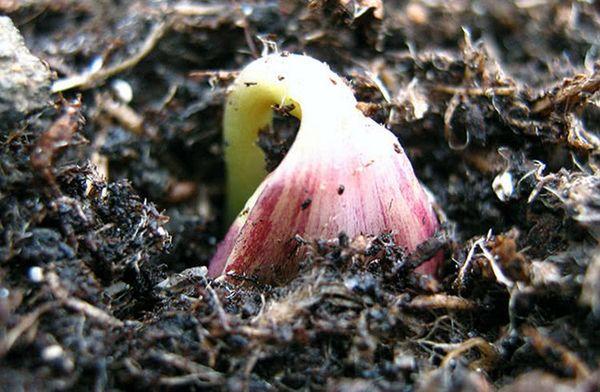
The seeds can be planted in the ground in spring or fall. Fall planting is much more common. For spring planting, the seeds must be prepared in advance by storing them in the refrigerator for 3-4 months.
Before planting, the seeds need to be germinated; sand mixed with soil can be used for this purpose. If planting is done in the fall, the seeds do not require pre-germination. To grow a tree, plant the seeds 20 cm apart. Once the seedlings emerge, water them regularly and loosen the soil around them.
You can transplant the seedling to a new growing location in the fall, after first removing the lower shoots.
By vaccination
To graft the crop, it's important to use a variety that tolerates low temperatures well. A blackthorn, cherry plum, or bird cherry seedling should be used as a rootstock.
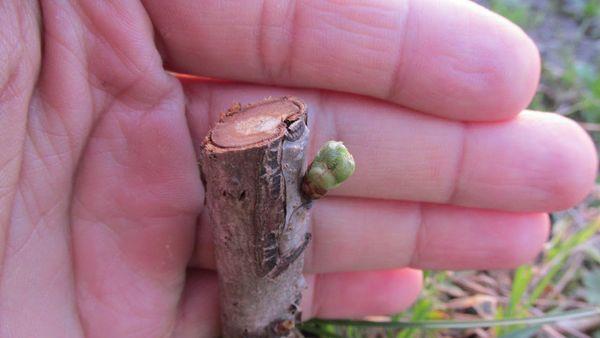
For grafting, select a young shoot with developed buds. Leaves on the shoot must be removed. Grafting is performed in late August or April. A T-shaped cut is used for grafting. The cut is wrapped in plastic film and sealed with garden pitch.
Cuttings
Propagation is done using woody shoots. Cuttings should be prepared in mid-June. They are placed in a growth activator for 24 hours. Prepare containers with equal parts sand and soil. Insert the cuttings into the soil and leave them for 4-5 weeks. They must be watered regularly.
Important: Using cuttings allows you to obtain many seedlings in a short period of time.
Undergrowth
After pruning, shoots will form around the tree. The young shoots can be used a year after they appear. The seedling is dug up along with a portion of the parent root and transplanted to a new location. This method allows you to propagate almonds in a short time.
Layering
The correct way to propagate the crop by layering is as follows:
- the young shoot bends towards the ground;
- at the point of contact, a cut is made and covered with soil;
- left until next season;
- When roots appear, the plant is transplanted to a new growth location.
Such seedlings quickly take root in a new location and are less susceptible to diseases.
Benefits of Using Flowering Trees in Landscape Design
Almonds have an attractive appearance and is often used to decorate garden plots. The crop has the following advantages:
- bright flowering;
- pleasant smell;
- You can create the required form.
Gardeners can also obtain a healthy product that contains all the necessary minerals and vitamins.
Conclusion
If all the rules are followed, growing almonds is not difficult. Before planting, it's important to assess the local conditions and select the right variety. Improper care can lead to the death of the plant and even a lack of harvest.
Related posts:
 Description and characteristics of the 22 best almond varieties, planting and care
 How to plant walnuts, care for them, and grow them at home
 Descriptions of the 20 best cherry varieties for the Moscow region, their planting and care
 Description and cultivation of the 15 best cherry plum varieties for the Moscow region, planting and care rules
 Description of the trilobed almond and the best varieties, planting and care
 Description and characteristics of the 27 best plum varieties for the Urals, planting and care
 How to propagate and grow peas, cultivation technology, and care in open ground
 How to properly plant peas in a greenhouse and open ground