
- Description of the tree and its characteristics
- How to plant correctly
- Recommendations for choosing a term
- In the spring
- Autumn
- Site and soil requirements
- Preparing the pit and the site
- Selection and preparation of planting material
- Planting diagram
- Rules for care and cultivation in open ground
- Watering mode
- Top dressing and fertilization
- Preparing for winter
- Trimming
- Deadlines
- How to trim correctly
- Transfer
- Mulching
- Methods of reproduction
- Seeds
- By vaccination
- Green cuttings
- Layering
- Diseases and pests
- Bacteriosis
- Brown spot
- Root cancer
- Fire blight
- American white butterfly
- Walnut mite
- Codling moth and codling moth
- Nut moth
- Aphid
- Varietal diversity
- Skinossky
- Codrene
- Lunguetse
- Bukovinsky 1 and Bukovinsky 2
- Carpathian
- Transnistrian
- California black walnut
- Santa Rosa Soft Shell
- Royal
- Paradox
- Dessert
- Elegant
- Aurora
- Dawn of the East
- Breeder
- Ideal
- Giant
- Abundant
- Improved landing method
- Beneficial properties
- Contraindications
- Harvesting and storage
- Tips from experienced gardeners
Walnuts are prized for their flavor and medicinal properties. The fruits of this nut grow on a large, green, spreading tree. Such a plant is a great addition to any garden. However, many gardeners don't know how to properly plant a walnut tree so that it will bring joy to their family for many years to come.
Description of the tree and its characteristics
The walnut thrives in moderate and warm climates. It is commonly found in southern and European Russia. A mature walnut tree can reach 20 meters in length and have a trunk circumference of 6 meters.
The walnut tree has a massive crown. The plant begins bearing fruit in its sixth to eighth year. However, for some varieties, this timeframe shifts.
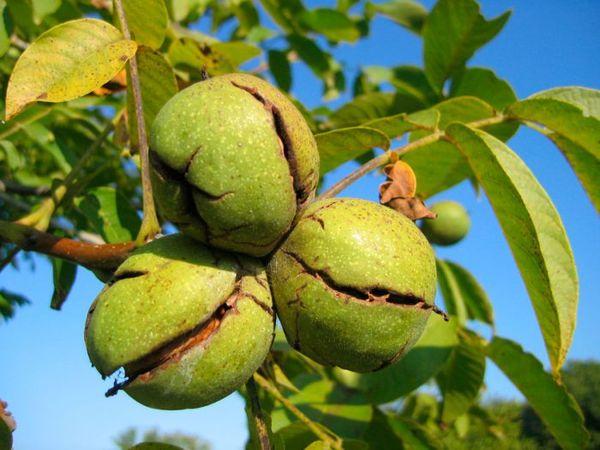
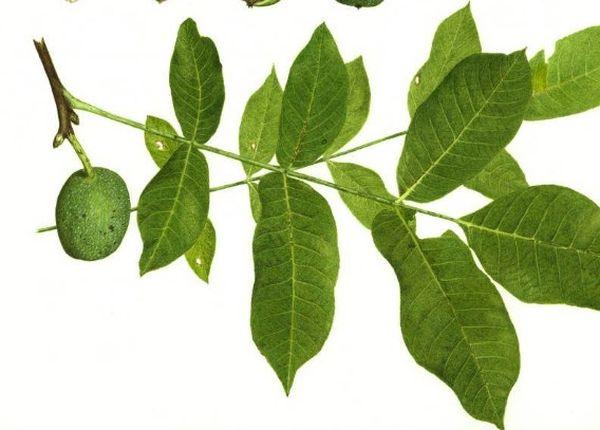
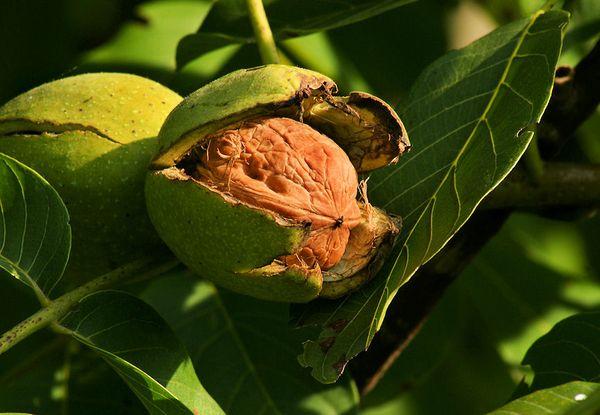
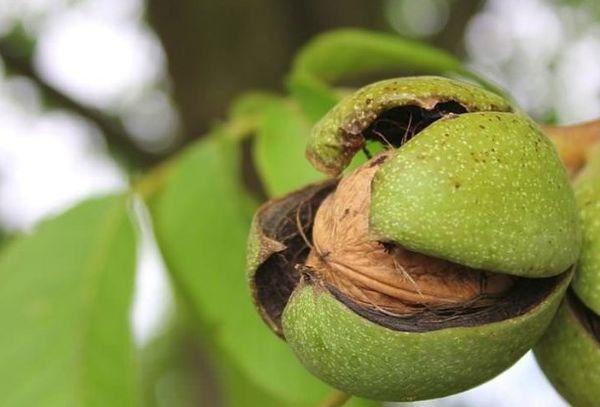
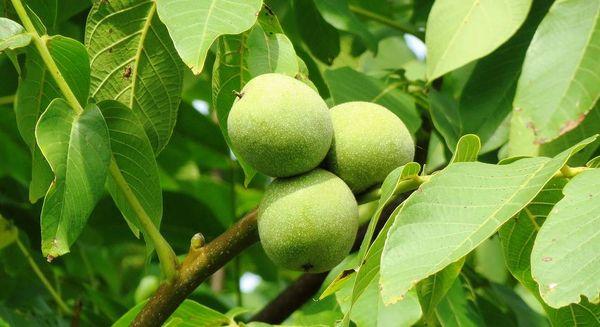
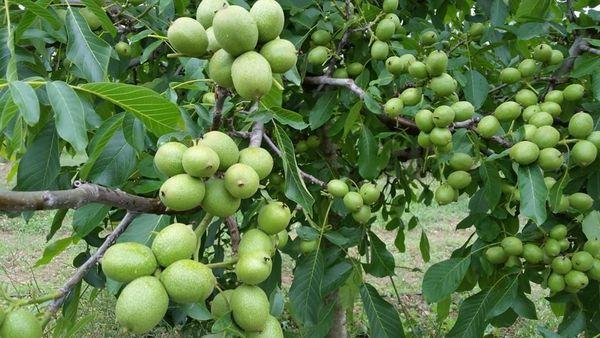
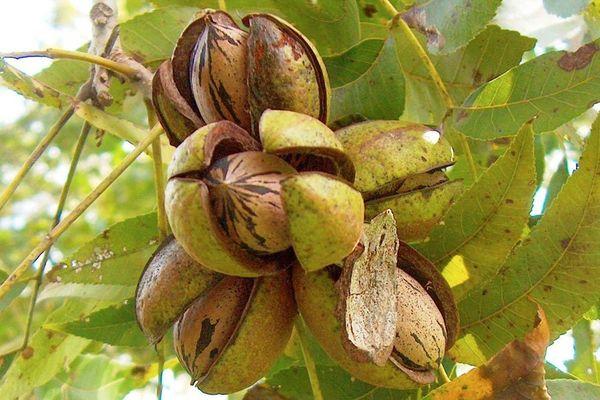
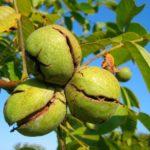
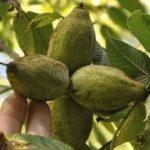
In spring, the tree bears long leaves and green flowers. In summer, the nut ripens within the green husk. In autumn, the husk cracks, revealing the familiar nuts with their hard shells and tasty kernels.
How to plant correctly
A magnificent walnut tree can become the centerpiece of a garden. The tree lives for 50 years and produces an excellent harvest throughout its lifespan. To ensure a vigorous tree, it needs to be planted correctly:
- choose a suitable seedling;
- decide on the planting time;
- select an area that will be comfortable for the plant;
- take good care of the tree.
Recommendations for choosing a term
First of all, pay attention to the planting time of young seedlings. This determines whether the young tree will be able to establish itself in its new location. It's best to plant walnuts in the fall or spring.
In the spring
Spring is the optimal time to plant this heat-loving tree. Walnut planting principles:
- It is important to wait until the average daily temperature does not drop below 10 degrees.
- It is better to plant a seedling in cloudy weather in the afternoon.
These factors occur from mid-April to mid-May.
Autumn
In autumn, you can plant both walnut seedlings and its fruits.
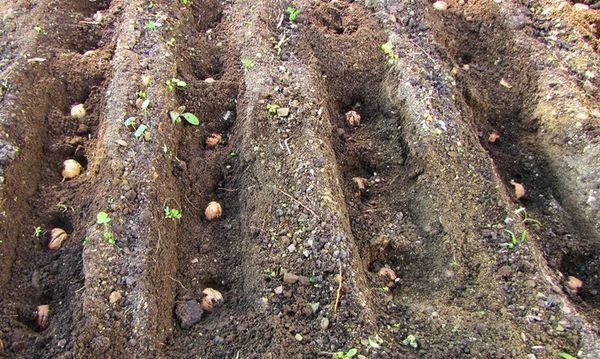
It's best to plant seedlings in September, when the weather is warm. Walnuts are sown in October. The seeds are dried in the sun for two days before planting, then 3-4 nuts are scattered per hole. In the spring, a sprout will emerge from the strongest seed.
Site and soil requirements
Walnuts won't grow in every soil type. Therefore, fertile soil is essential. For the plant to thrive and produce abundant fruit, it requires 100-point black soil with a pH of 6 to 7.5. Otherwise, you'll need to deacidify the soil with lime.
When choosing a site for walnut trees, consider the location of the groundwater table. It should be at least 2-3 meters below ground level. It's also not recommended to choose a site in a valley or at the base of a slope. Cold air accumulates in low-lying areas, which can cause the plant to freeze.
Preparing the pit and the site
Prepare the tree site in advance, preferably two years before planting. Remove all weeds in the fall. Then dig and level the entire garden area.
In the spring, it's recommended to sow the garden with mustard or buckwheat. In May or September, loosen the soil twice without uprooting the plants.
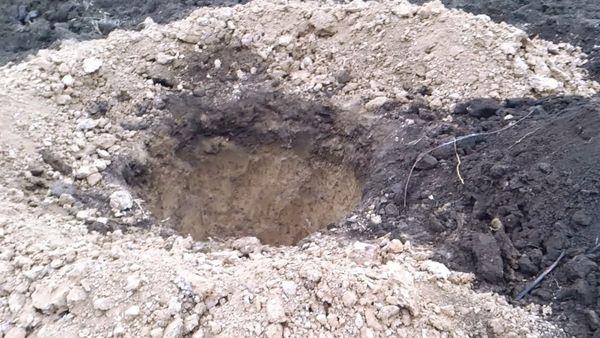
In a properly prepared area, dig holes for the walnut seeds or seedlings. Fertilize each hole with ammonium phosphate and compost.
Selection and preparation of planting material
One of the most important steps in planting a walnut tree is choosing the right planting material. It's best to plant a walnut tree from a sapling.
Factors to consider when choosing a young tree:
- A young tree must have a developed root system.
- Developed foliage is not a sign of a strong tree. On the contrary, such beautiful specimens rarely survive.
- The seedling should not have dried bark or rotting roots.
Before planting, prepare the planting material. Using a ruler, measure 25-30 cm from the root ball and trim off the top. This will help the plant establish better, become frost-resistant, and better able to survive the rigors of its first year.
It's easier to pick out walnuts. To do this, carefully inspect the nuts. From the entire mass, select firm, large nuts from which the green skin peels off easily. These seeds are suitable for planting.
Before planting, walnut tree seeds need to be germinated. To do this, plant the nut in a plastic cup at a depth of 5 cm. The seedlings should be started in mid-February. Don't forget about regular watering!
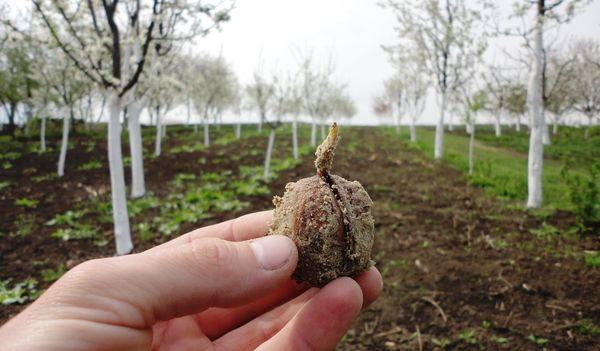
The first shoots will appear in less than a month. When the shoots reach 10 cm, they are transplanted into a larger container. From this point on, the walnut tree can be acclimated to cold temperatures. For this purpose, the plants are moved to the balcony. In mid-April, the seedlings can be planted outside.
Planting diagram
Walnut trees require a lot of attention and special care. The tree will grow even if it lacks some nutrients, but such a plant will not produce a good harvest. Therefore, a gardener should initially plant walnut trees throughout the area.
Walnut planting patterns:
- Traditional. Vigorous trees are planted at a distance of 14 x 14 or 10 x 10 meters from each other. The plants are able to independently extract nutrients from the soil.
- Semi-intensive. Planting pattern: 14 x 7 to 8 x 4. This tree arrangement is ideal for dryland cultivation. When the orchard reaches 25 years of age, half the trees are pruned.
- Intensive. Walnut trees are spaced 8 x 4 or 6 x 6 meters apart. Medium-sized trees can be planted this way. Seedlings are watered frequently and the soil is treated with herbicide.
- Super-intensive. Dwarf walnut trees can be planted using a 6 x 3 planting pattern.
Rules for care and cultivation in open ground
This heat-loving plant thrives in our country's challenging climate. There are even varieties successfully cultivated by Siberian gardeners. Proper care is key to ensuring a healthy walnut tree's fruit production.
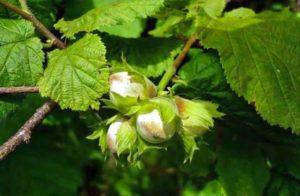
Watering mode
Young walnut trees should be watered generously and frequently. During the first few years of life, 3-4 buckets of water should be poured under each root. During dry weather, walnut trees should be watered generously. To prevent the precious moisture from evaporating too quickly, the soil around the trunk should be mulched with straw or peat.
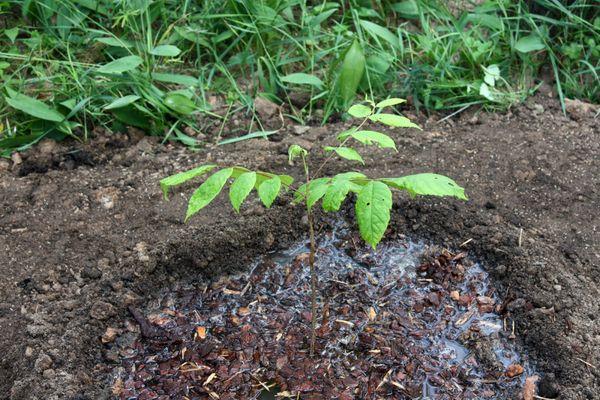
Mature trees are capable of obtaining moisture on their own. Gardeners should only water them during droughts.
Top dressing and fertilization
Walnut trees need to be fertilized twice a year. In the spring, as soon as the snow melts, the plants are fed with nitrogen fertilizers. However, use them carefully. Otherwise, they can create a favorable environment for the development of pathogens.
In the fall, trees are fed with potassium-phosphorus fertilizer. A small amount of manure can also be added to the walnut tree roots in the spring, and chicken manure in the fall.
Preparing for winter
In the fall, the nut grower's main task is to help the tree prepare for winter. To do this, in late August or early September, the plant's energy is redirected from growth to nutrient accumulation. This can be accomplished as follows:
- cut off all green shoots;
- cut back this year's thick growth;
- reduce watering from the end of July;
- we must not forget about phosphorus-potassium fertilizers;
- whitewash the trunk and large branches of the walnut tree;
- insulate the lower part of the trunk.
All these simple steps will help the walnut tree survive the cold.
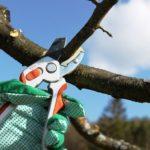
Trimming
Pruning your walnut tree periodically—cutting back any overly long branches and removing unnecessary ones—will ensure the plant remains strong, healthy, and produces abundant fruit.
Types of walnut tree pruning:
- Formative (first 3-4 years). This procedure aims to give the plant a beautiful, neat crown that allows light to pass through.
- Rejuvenating (every 3-4 years). Regularly remove old branches. This will encourage new, fruit-bearing shoots to grow in their place.
- Sanitary pruning (annually, as needed). This type of pruning is performed on overly dense crowns that have been neglected for a long time. Diseased branches are also trimmed as needed.
Deadlines
It's important to prune your walnut tree in a timely manner. This is best done in spring (late March - April) and fall (early September). During these periods, the average daily temperature is above 15 degrees Celsius. This gives the tree time to heal its wounds.
How to trim correctly
Proper pruning of a walnut tree is the key to its health and good fruit production. The first time, the tree is pruned quite short. Branches should not exceed 20-25 cm in length. The following year, the tree will grow strong, fruit-bearing shoots. Subsequently, the walnut grower should ensure that the tree's branches do not exceed 1.5-2 meters.
As for the tree's crown, it shouldn't start below a meter from the ground. Therefore, all low-growing branches must be removed. After the walnut tree reaches five years of age, it needs to be thinned out. The gardener should leave only one, the strongest branch, and prune the rest.
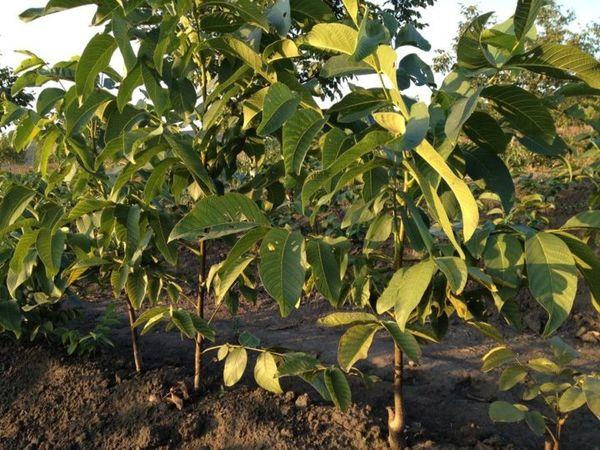
Here are the basic rules for pruning a tree:
- work can only be done with high-quality tools;
- do not treat the cuts with anything - they will heal on their own;
- Under no circumstances should the procedure be performed at low temperatures!
In the spring
In spring, gardeners can shape the tree's crown and remove old branches. These actions stimulate healthy growth and improve fruit production.
The key is to prune the tree in a timely manner. It's important to wait until the night frosts are over, but the weather hasn't yet begun to awaken. Otherwise, you could damage the tree, interrupting important processes occurring within the plant.
In the fall
In the fall, trees are pruned, primarily for sanitary reasons. The gardener removes dead and diseased branches. This protects the plant from diseases and pests. Pruning is done in September, after the harvest but before the onset of cold weather.
Transfer
There are situations when a gardener is forced to replant a walnut tree. It's important to note that only trees no older than 5 years can be replanted.
In the spring, you can transplant the young seedling. Choose a permanent location for it immediately to avoid disturbing it later. Before planting, it's a good idea to trim the rootstock slightly to encourage a denser crown.
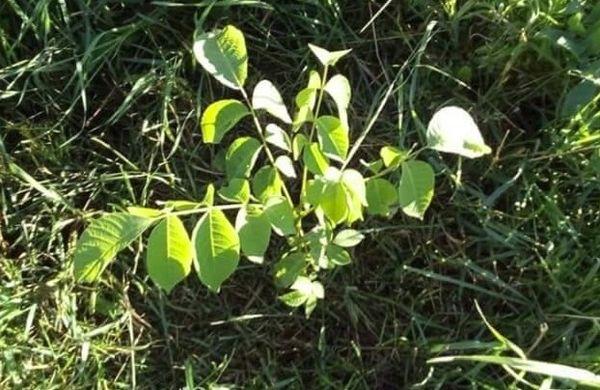
Young seedlings (1-3 years old) are transplanted in the fall or spring. The average daily temperature should be around 10 degrees Celsius.
Stages of replanting a walnut tree:
- Water the seedling generously the day before replanting. Now the tree can be dug up without damaging the roots.
- Select a site for the young plant.
- Prepare a hole for the walnut tree. Dimensions: 40 x 40.
- Now you can dig up the seedling. The root tip should be trimmed, and the damaged area should be treated with ash.
- Carefully dig the root into the hole so that the small, uppermost part of the root is on the surface.
- Drive a stake near the shoot and tie the plants in two places. For this purpose, use a fabric ribbon tied in a figure-eight pattern.
- Water the sprout generously.
- Create a root circle for watering the plant. If possible, mulch it with straw and manure. Planting is complete.
Mulching
For any plant, moisture is one of the most important factors for its life and development. Walnuts are no exception. In spring, all the processes essential for tree growth begin, requiring more intensive care.
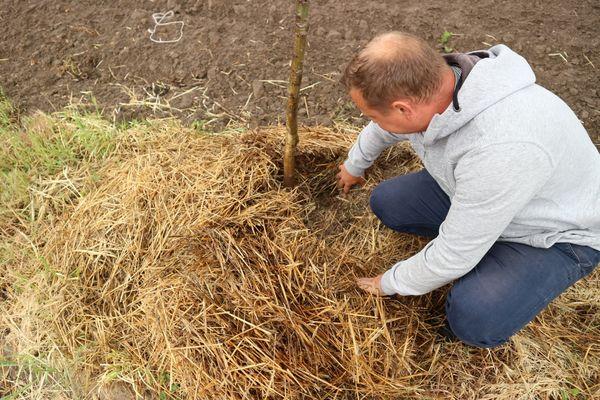
Gardeners can help walnut trees by mulching their root zone. This will prevent the soil from drying out and becoming crusty, and will help keep the soil moist longer.
Methods for mulching walnuts:
- Mulching with straw.
- Mulching with compost or rotted manure.
Both mulching methods are widely used by walnut growers. They promote better tree growth, development, reproduction, and fruit production.
Methods of reproduction
To create a beautiful walnut orchard, it's essential to know how to propagate walnut trees. This way, a walnut grower can cultivate a single species of tree on their plantation without additional financial investment.
Seeds
In the fall, immediately after harvesting, select the firmest, largest nuts, those with easily peeled green skins. The fruit should be free of any spots, dark spots, or signs of spoilage.
Dry the selected seeds in the sun for two days and store them in a cool place. Walnuts can be germinated in two ways:
- Plant the seedlings next winter. With proper care, the seeds will germinate within three weeks. In the spring, you can plant the seedlings in their designated location.
- In the fall, plant 3-4 nuts per hole and mulch the soil. The following spring, a shoot will grow from the strongest seed.
By vaccination
There's one significant drawback to propagating walnuts from seeds: there's no guarantee the young tree will inherit all the qualities of the parent tree. To maintain the walnut's vigor and good fruiting potential, it's best to propagate the plant by grafting.
Stages of grafting a walnut tree:
- Prepare a cutting with developed buds (length - 25 cm, diameter - 1 cm).
- Using a sharp knife, make two transverse cuts on the cutting at the top and bottom of the bud, then connect them with a longitudinal cut, carefully separate the bark from the scion without damaging the bud.
- Make two cuts on the tree itself in the same manner. They should be located 5-10 cm above the root collar. It's important that the length of the cuts match the diameter of the scion.
- Connect the longitudinal strips of the cut edges, remove the bark from the rootstock.
- Insert the scion shield into the rootstock. When connecting, leave a gap of 1-1.5 cm between the vertical edges of the scion and the bark of the tree itself.
- Now wrap the graft in film so that no exposed stem is visible. The bud should remain exposed.

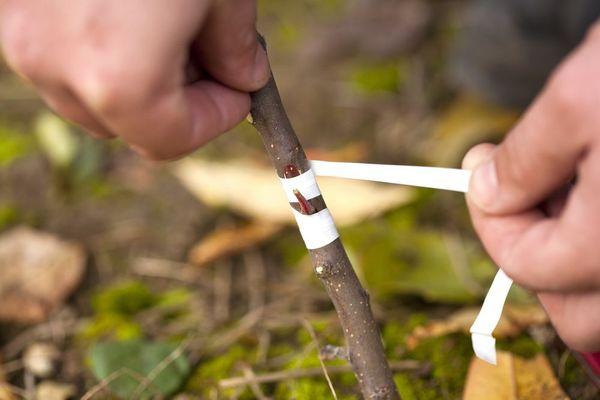
The following year, a new shoot will emerge from the graft, which is transplanted to a new location. Grafting also helps infuse new life into an already mature walnut tree.
Green cuttings
Another effective method for propagating walnuts is by cuttings. In June, take a young branch from the walnut tree. This procedure is best done early in the morning, when the tree is moist. This will ensure the cutting takes root better in its new location.
The branch should be immediately treated with rooting agents. Now the green cutting can be rooted. It should be planted in a high-humidity greenhouse. The air temperature should be 20-30 degrees Celsius.
After 2-2.5 months, rooting is complete. Young cuttings can be planted in open ground. Once they grow and become seedlings, they are transplanted to their permanent location.
Layering
One of the oldest methods of walnut propagation is layering. This method requires minimal trauma to the plant and requires special conditions for the rooting of fresh cuttings.
Prune the walnut tree a year before the procedure. This will help the plant produce many new shoots in a short time.
In the spring, select a young branch and bend it toward the ground at a right angle. Next, the gardener needs to create conditions to stimulate rooting in the cutting. The branch should be kept in a warm, shaded area. It's also important to maintain soil moisture by watering the cutting regularly.
Next year, the cutting will grow into a separate tree. It can be transplanted to a new location.
Diseases and pests
Even with proper care and excellent gardening, a walnut tree is not immune to diseases and pests. These can damage and even kill the plant. To prevent this from happening, the walnut grower must recognize the problem in time and know how to overcome it.
Bacteriosis
A disease that affects all parts of the tree. Affected young trees can die, and mature trees can lose their crop.
Symptoms: Small black spots begin to appear on the tree, which grow larger over time.
There are two ways to cure bacteriosis:
- Use a special knife to remove all diseased parts of the plant.
- Spray the tree with a copper-containing solution.
Chemicals should only be used as a last resort, as they remain in the plant's fruit. In the fall, prune the tree and remove all fallen leaves and dead branches from around it. Be sure to destroy all diseased parts of the tree.
Brown spot
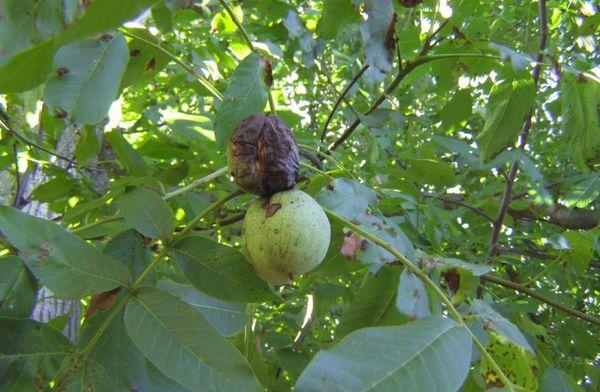
Oval gray or brown spots appear on the plant. These marks gradually expand. The disease can also penetrate the fruit, causing it to lose its flavor.
This disease can be treated in the same way as bacteriosis.
Root cancer
The pathogen is found in the soil and penetrates the plant's roots through cracks and wounds. The disease can stunt the growth of the walnut tree and reduce its fruiting.
Signs: growths appear on the plant roots and gradually expand.
Proper care of the plant will improve its well-being and reduce the severity of the disease.
Before planting, carefully inspect the roots. If there are growths, treat them with a 1% caustic soda solution. Severely affected seedlings are burned.
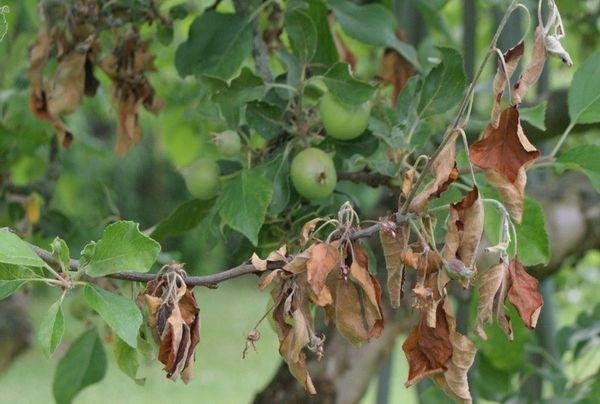
Fire blight
Water-soaked spots and ulcers appear on leaves, buds, fruits, and young shoots, which subsequently turn black. Bacterial blight can destroy the infected part of the plant.
With this disease, blackened leaves do not fall off, but continue to hang on the tree for a long time.
The treatment method for fire blight is exactly the same as for many bacterial diseases.
American white butterfly
The snow-white butterfly lives for only a few days, but during this time it can cause a lot of trouble for gardeners. A single individual can lay up to 2,500 eggs on the leaves of a walnut tree.
Upon hatching, the caterpillars immediately begin to devour greenery and entangle the plant in a thick layer of white web.
Control methods: find nests promptly, cut them off, and burn them. To prevent new pests from appearing, treat the walnut with the virus that causes nuclear polyhedrosis and granulosis of the American white butterfly.
Walnut mite
Mites parasitize walnut leaves. These tiny insects live in galls—dense balls that are difficult for acaricides to penetrate.
From above, the ball resembles a wart, and from below it is covered with a dense felt layer.
The only time when the wart mite is vulnerable is May. At this time, the walnut should be treated with pesticides.
Codling moth and codling moth
The codling moth is a two-centimeter-long gray moth. It lays eggs (150-200) on tree leaves and fruits. These hatch into caterpillars that feed on the nuts.
One insect can eat about 10 fruits. The most effective methods of controlling the parasite are trapping belts and pesticides.
Nut moth
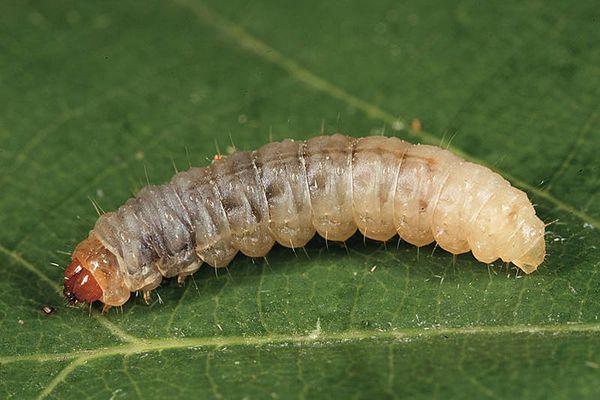
The walnut moth, which grows to 15 cm in length, is light brown in color. It inhabits kitchens and pantries. A single moth can lay up to 500 eggs in 2-3 days. These hatch into numerous voracious green caterpillars. They can destroy entire walnut stores.
To prevent this creature from infesting your nuts, check the integrity of the nuts periodically. It's recommended to hang lavender sprigs and place bay leaves in storage areas. This will repel the nut moth.
If it does appear, it is worth using aerosol insecticides.
Aphid
Aphids pose a particular threat to walnut trees. These small, voracious insects nest on the tree's leaves and feed on their sap. This causes the walnut tree to produce fewer fruits and also lose essential nutrients. In winter, the tree can freeze to death.
Signs of infestation: A row of small yellow-green insects or their larvae can be seen along the center of the walnut leaf.
The most effective method of insect control is the use of insecticides. However, these products are ineffective against insect larvae. It is recommended to wait until the aphids hatch before treating the plant.
Varietal diversity
Walnuts come in a wide variety of cultivars, allowing a walnut grower to choose the perfect tree for their needs.
Skinossky
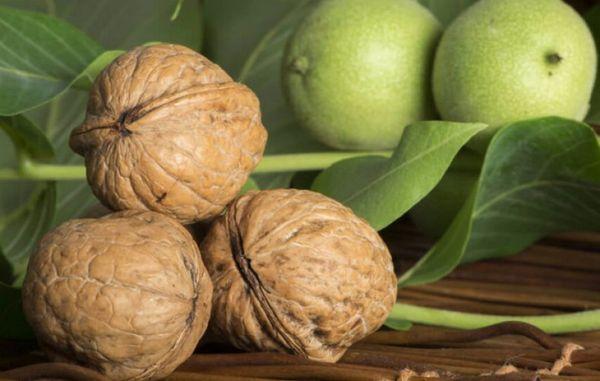
The Skinos walnut thrives in regions with low to moderate humidity and is resistant to insect pests. It is easy to grow and tolerates drought and frost. The tree grows quickly and produces abundant fruit. Each nut weighs 14 g.
Codrene
A vigorous walnut variety with a massive crown. Codrené blooms in early May. It produces large, light-brown fruits. The plant is resistant to harsh weather conditions and many types of pests.
Lunguetse
A productive variety of walnut with a long lifespan. This tree produces medium-sized fruits. The kernel accounts for half the fruit's weight. The bark is quite thin and brittle.
Bukovinsky 1 and Bukovinsky 2
The Bukovinsky 1 walnut tree reaches 4 meters in height. Despite this, the tree is highly productive (bearing medium-sized fruits). Numerous buds form on the branches.
The walnut tree can withstand harsh weather conditions: frost, wind, drought.
Bukovinsky 2 is an improved walnut variety. Unlike its predecessor, it has a larger crown and larger fruits.
Carpathian
A fairly large walnut variety with a rounded crown. The tree is disease-resistant and produces a consistent harvest each year. The average fruit weight is 12 g, and the plant can yield 70 kg of nuts per season.
Transnistrian
This tall tree has a crown that reaches 10 meters. It can survive severe frosts and enjoys light and open space. However, strong winds can damage it.
This variety is highly productive. The average fruit weight is 12 g. The nuts have a thin skin.
California black walnut
The California walnut is a tall tree (up to 25 m). The tree's fruit is a small, hard nut that is difficult to crack.
Walnut is rarely used for ornamental purposes. It's worth noting that this is a capricious plant that is difficult to establish and propagate.
Santa Rosa Soft Shell
A high-yielding walnut that begins bearing fruit early. The plant produces light-colored, medium-sized fruits with a thin shell and light, tasty kernels.
Royal
A high-yielding walnut variety, Royal produces large fruits with a thick, strong shell. The kernels have excellent flavor.
Paradox
This walnut variety is highly productive. Paradox produces large, firm fruits. The shell is difficult to separate from the kernel. The nut has a wonderful flavor.
Dessert
This variety is drought-tolerant. It produces abundant walnuts. The plant produces tasty, slightly sweet kernels.
Elegant
An easy-to-grow walnut variety. It tolerates drought well, is resistant to pests and diseases, and has moderate frost resistance. The tree produces medium-sized, sweet nuts.
Aurora
Aurora is a winter-hardy walnut variety. The tree is disease-resistant. It is a mid-season plant, producing medium-sized fruits that ripen early. The tree's yield increases with age.
Dawn of the East
Low-growing walnutThe tree is characterized by high, consistent yields. It grows primarily in the south of the country. The plant has moderate frost resistance and comparative resistance to diseases and pests.
Breeder
The breeder is a low-growing tree. The plant is resistant to diseases and pests. The nut grows only in southern regions and is frost-intolerant. The fruits weigh about 7 g.
Ideal
The Ideal walnut variety has many advantages over other varieties. It tolerates frosts down to -30-35 degrees Celsius, and even last year's shoots remain intact. The tree's crown reaches 5 meters in length.
The plant produces a high yield. The large, sweet nuts have thin shells that separate easily from the kernel.
Giant
The Velikan walnut variety is adapted to the harsh Russian climate. The plant is resistant to diseases and pests. The walnut tree is short, reaching 5-7 meters. The fruit weighs approximately 35 grams.
Abundant
The tree begins bearing fruit in its fourth year, with the harvest ripening early. Large nuts grow in clusters. This vigorous, compact plant has a well-developed root system. This variety is prized for its excellent flavor.
Improved landing method
To grow a strong and healthy tree, a gardener must decide on a planting method. Planting from green cuttings (or seedlings) is considered an effective method. The key is to fertilize the soil to ensure the young tree receives all the nutrients.
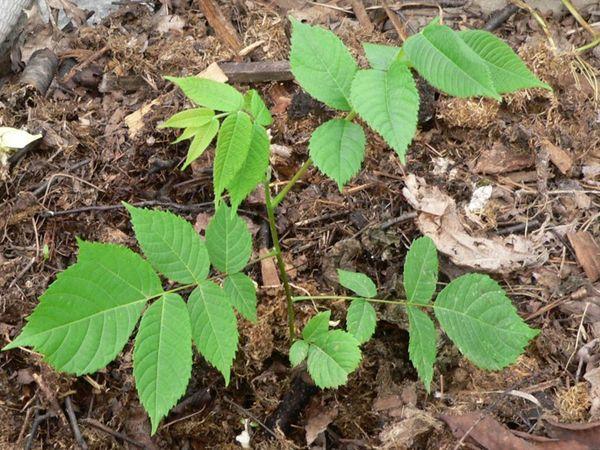
It's best to plant the plant immediately in its permanent location in the spring. After planting (see propagation by green cuttings), tie the seedling, mulch with straw, and water it—about 40 liters per bush. Over the summer, the seedling will strengthen and be ready for the cold weather.
Beneficial properties
Walnuts are prized for their unique health benefits. The kernels of this nut have a positive effect on the human body:
- boost immunity;
- increase hemoglobin (this fruit is recommended for anemia);
- strengthen the walls of blood vessels and improve heart function;
- normalize digestion;
- normalize the nervous system;
- increase performance;
- Infusions of walnut shells reduce blood sugar levels.
Contraindications
Walnut kernels don't always improve human health. Consuming too many walnuts can have the opposite effect.
Contraindications:
- obesity (nuts are a high-calorie product);
- diseases: eczema, psoriasis, neurodermatitis (strictly prohibited);
- intestinal disorders (worsens the condition).
Nuts are healthy, but don't overindulge. Avoid eating blackened or moldy nuts.
Harvesting and storage
Walnut harvesting begins as early as August, but sometimes even later. Some walnut tree varieties ripen in October. The start of harvest is signaled by the bursting of the green husk and the fall of the nuts to the ground. Sometimes the fruits ripen at different times, and the nuts are harvested in several stages.
To harvest the nuts, shake the tree vigorously or use a special roll (stick or pole). Then remove the green skins surrounding the nuts, rinse, and dry.
Walnuts should be stored in canvas bags, plastic or wooden boxes, or nets. The most important thing is that these containers are dry, clean, and free of foreign odors.
Tips from experienced gardeners
The most important thing for a nut grower is to maintain and increase the garden's yield. This can be accomplished by using a few simple tricks:
- The trunk needs to be damaged: tied with wire, made notches with an axe, or hammered in a nail. The tree experiences stress and begins to produce more fruit (produce offspring).
- When planting a seedling, stones and tiles should be poured into the bottom of the hole.
- Dig shallow channels around the trunk. This will make it easier to water the plant during dry periods.
Related posts:
 Timing and methods for grafting walnuts at home in summer
 Description of the Ideal walnut variety, cultivation and care
 Description and characteristics of the 35 best walnut varieties, planting and care
 Description of the Lancaster walnut, planting tips, and care instructions
 Walnut diseases and pests, why walnuts don't bear fruit, and treatment methods
 The benefits and harms of walnuts for the body, contraindications
 Descriptions of the 20 best cherry varieties for the Moscow region, their planting and care
 How to prune walnut trees in spring, summer, and fall