
Walnut diseases and pests appear suddenly and without warning. External factors can be the cause of this problem. To prevent diseases and pests, it's important to maintain proper care and fertilize regularly.
Basic rules of care
Proper care is essential when growing walnuts. This helps strengthen the immune system and reduce the risk of infection.
Trimming
Branch pruning is performed in early spring, before buds begin to emerge. Pruning helps shape the tree's crown and remove damaged areas. All dead branches and those showing signs of disease are removed. Pruning should be done in the fall to reduce the number of insect larvae and eggs. Pruned areas should be treated with an antiseptic and covered with garden pitch.
Whitewash
Whitewashing disinfects and eliminates disease spores. Whitewashing should be done in the spring, using lime. For young trees, it's important to treat not only the trunk but also the branches.
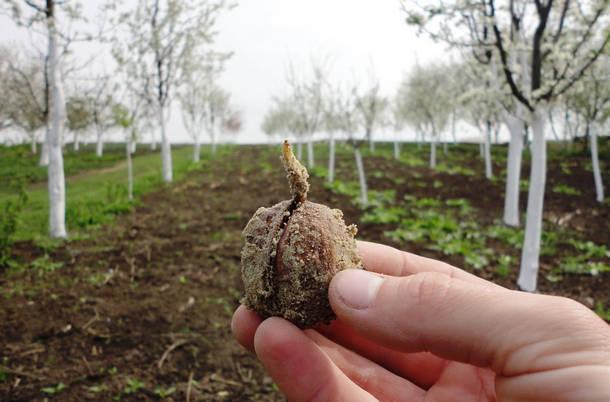 Important: During the whitewashing process, damaged bark is removed. Damaged areas are coated with a copper sulfate solution.
Watering
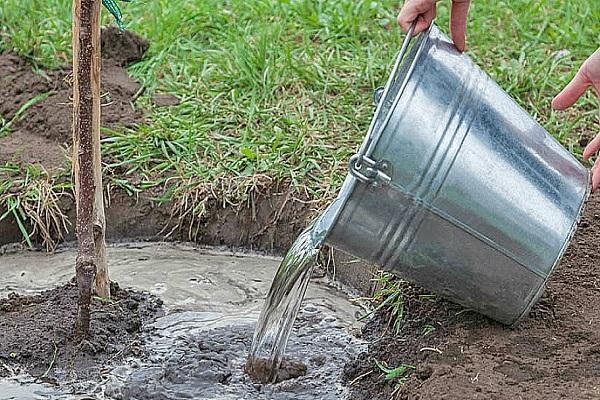
Young walnut trees require regular watering. Seedlings should be watered generously every three days. As they mature, water every 10 days. If the weather is dry, increase the watering frequency.
Top dressing
When planting, the seedling is fertilized with organic matter. However, after three years, additional feeding with saltpeter and complex fertilizers is performed in the spring. One thousand grams of saltpeter is required per tree. This substance is dissolved in 30-40 liters of water and then watered.
Preparing for winter
Young plants need to be covered after the leaves fall. Special structures are used for this purpose.
For mature crops, winter shelter is not used.
Fighting diseases
In order to increase the yield of walnuts, it is necessary to promptly identify the first signs of disease and take appropriate measures.
Bacteriosis
The disease most often manifests itself during prolonged rainfall. It manifests as spots on leaves and young shoots. As a result of infection, leaves fall off, and the disease also negatively affects walnut blossoms, leading to wilting and reduced yield.
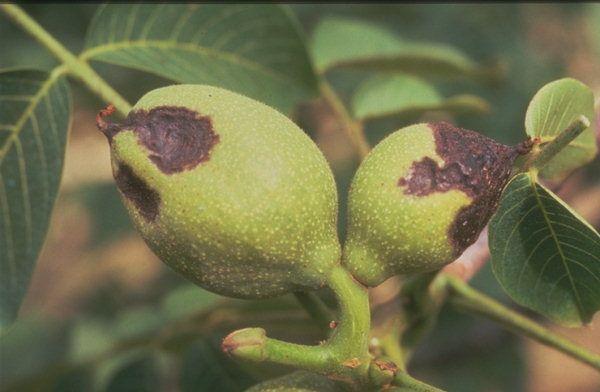
Treatment is carried out using Bordeaux mixture. A 3% solution is used, applied to the tree in early spring and before the formation of flowers.
Fire blight
The disease's name derives from the symptoms, which resemble burns. The disease affects the leaves, causing them to turn black and dry out. The affected areas then fall off. Symptoms can manifest in large numbers, leading to the death of the plant.
The disease affects not only the leaves, but also young shoots, on which growths and ulcers appear.
The disease should be treated with copper sulfate, sprayed in early spring. Other treatments, such as Tsinebon and Bordeaux mixture, can also be used. Dry leaves should be removed and burned to prevent the spread of disease spores to healthy plants.
Take a look Also
White spot
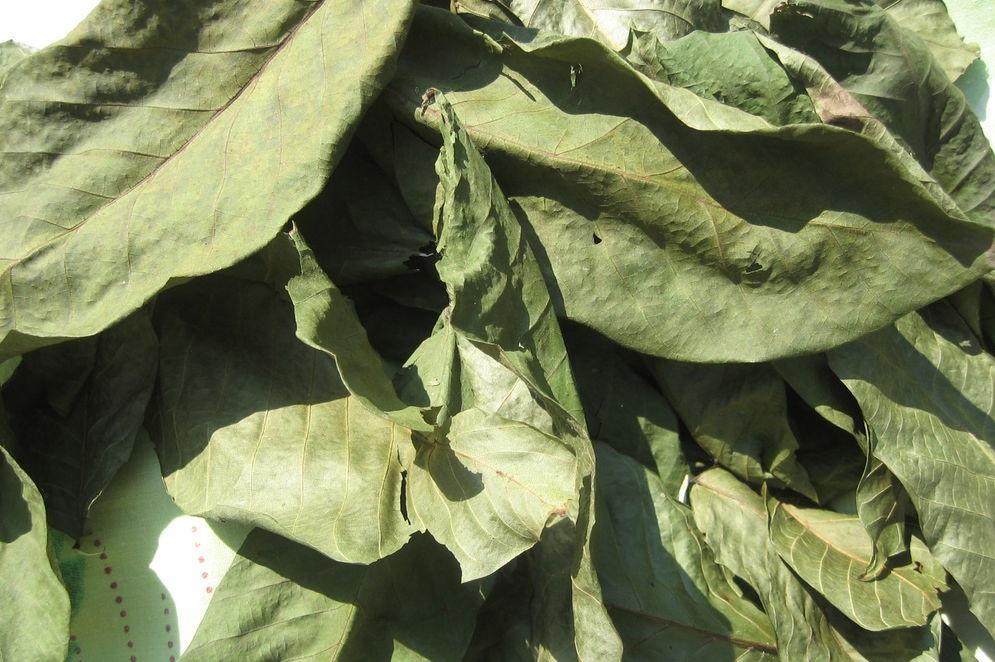
The disease is very rare. It most often affects young trees grown in nurseries. Light spots appear on the leaves, covered with a light coating of fungal spores.
The disease most often manifests itself in cold weather with high humidity.
Saplings are treated with Bordeaux mixture. Affected areas of the tree are removed and burned. If the sapling is heavily infested, treatment is pointless.
Brown spot
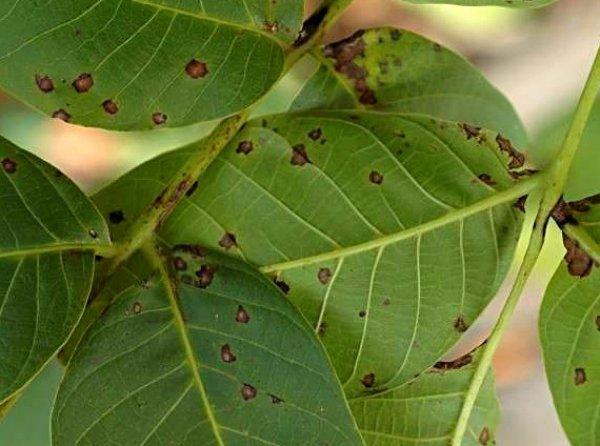
The disease manifests itself as brown spots on the leaves. Once completely infected, the leaves turn black and gradually turn yellow and fall off. Spots appear on the shoots, which gradually develop into brown spots, leading to the drying out of young shoots and buds.
To treat the plant, apply copper sulfate or Bordeaux mixture in early spring. Affected areas must be removed.
Root cancer
Symptoms of the disease are very difficult to detect in the early stages. One of the main signs is poor fruit production. The disease manifests itself as small growths on the roots. Gradually, the roots die, and the plant wilts and dies.
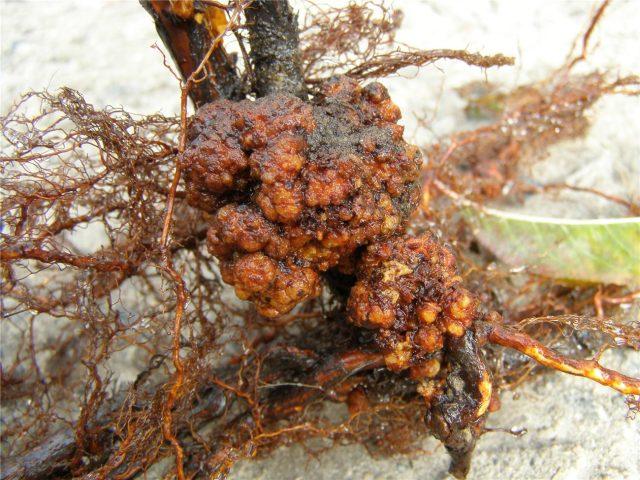
Treatment involves root pruning. Affected areas are removed. The cut areas should be treated with a potassium permanganate solution.
Marsonia
Symptoms of the disease include dark spots on leaves, shoots, and fruits. Over time, the spots enlarge and can completely cover the entire plant.
The disease can damage the bark, accumulate in cracks and manifest itself with greater severity the following year.
To eliminate the symptoms of the disease, use copper sulfate. In early spring, treat the trunk with lime, which kills fungal spores.
Pest control methods
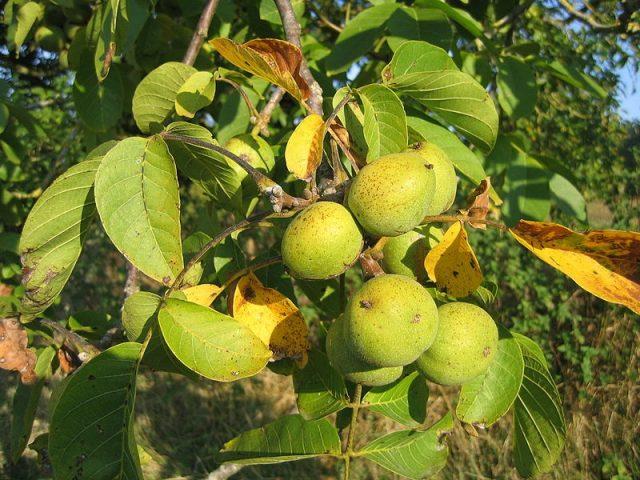
During the period of inflorescence formation, pests often appear on the tree; such insects tend to damage the harvest and cause the nuts to fall off.
American white butterfly
The insect is small, with a white body and wings. The moth poses no threat to crops, but it lays eggs, which hatch into caterpillars. These caterpillars can quickly destroy a mature tree. The larvae primarily damage foliage. The moth emerges in early spring, with the first generation appearing in June.
The following methods can be used for control:
- Mechanical butterfly collection, used on a small tree.
- Using special trapping belts. These belts work by preventing larvae located closer to the tree's roots from reaching the crown. You can make your own belt by coating a piece of fabric with a sticky substance.
- Using chemicals to spray the tree - treatment must be carried out twice, in early spring and again a month later.
Leaves damaged by the larvae fall off. The tree loses its strength and bears little fruit.
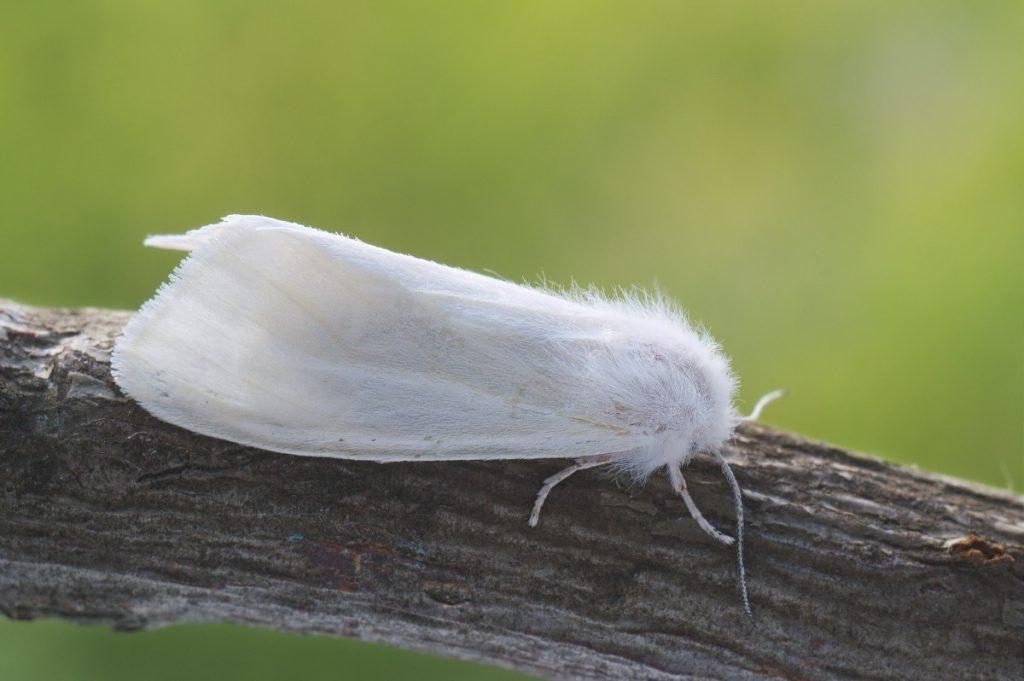 Important: A single adult butterfly can produce up to three generations of larvae in a single season.
Royal
This pest is called the royal nut moth. It is a large, light-brown insect. The moth itself does not harm the tree, but it lays eggs, which hatch into larvae. The larvae feed on the nut's sap. They can quickly destroy young shoots and reduce the yield. If infestation occurs, manual removal is recommended. Larvae are removed using specialized products, including:
- "Decamethrin";
- "Decis".
Treatment is carried out every 20 days until the pests are completely eliminated.
Nut mite
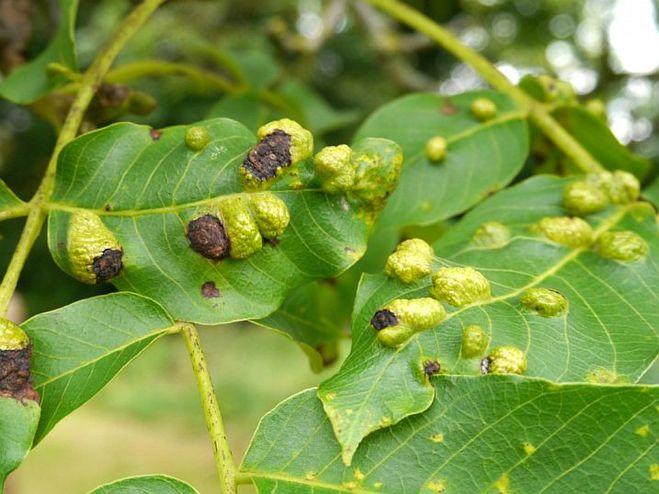
This pest most often appears on weak plants infected with fungal diseases. It most often appears during periods of high humidity. It manifests as small bumps on leaves and young shoots. These bumps harbor small insects that feed on the plant's sap. The presence of mites can be identified by the following symptoms:
- the presence of tubercles on the leaves;
- the plant is growing poorly, young shoots do not appear;
- the leaf is drying;
- traces of cobwebs appear on the leaves.
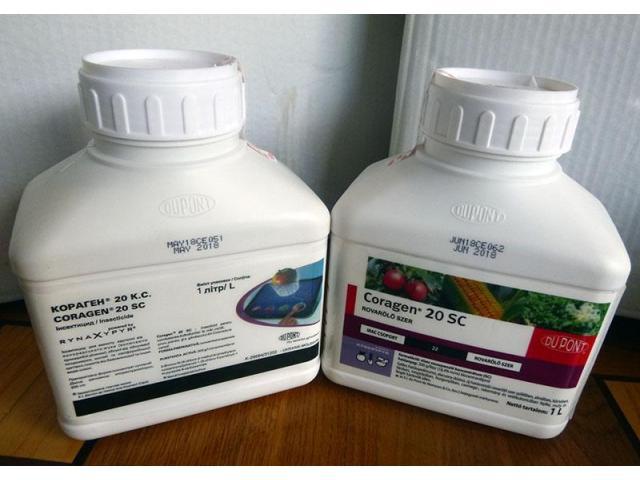
To remove ticks, use specialized products such as Aktara, Aktarin, and Actellic. Spraying should be repeated every 10 days until the problem is completely resolved.
Barkwood
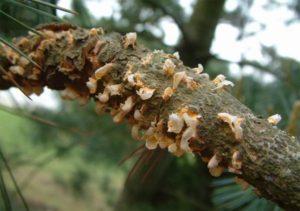
The pest resembles a beetle. It settles on weak plants damaged by a fungal disease. The beetle burrows under the bark and destroys the plant from the inside. The beetle destroys the nut buds and leads to the complete death of the plant. Identifying the insect is very difficult. To combat the pest, it is necessary to regularly prune, removing old and dry shoots in which the pest can overwinter.
Codling moth
The pest appears during fruit ripening. It resembles a butterfly, laying eggs in June. After two weeks, caterpillars emerge, damaging the nuts and eating the kernels, causing crop losses. These fruits are then unfit for consumption. Eradication is difficult; special traps containing pheromones are used.
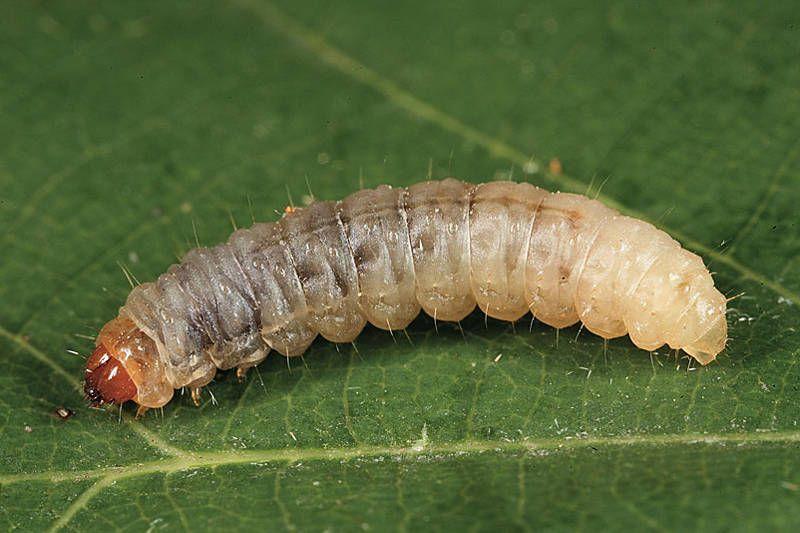
The pest can lay eggs that overwinter and infect trees the following year.
Important: If the codling moth doesn't completely damage the fruit, the nut can be eaten, but it will lose its marketable appearance.
Aphid
These small, dark-colored insects congregate in large numbers on the undersides of leaves. They feed on the sap of leaves and young shoots. Aphids secrete a sticky mixture that attracts ants and blocks oxygen from reaching leaf cells. Aphids quickly spread throughout the tree and infest nearby crops.
Take a look Also

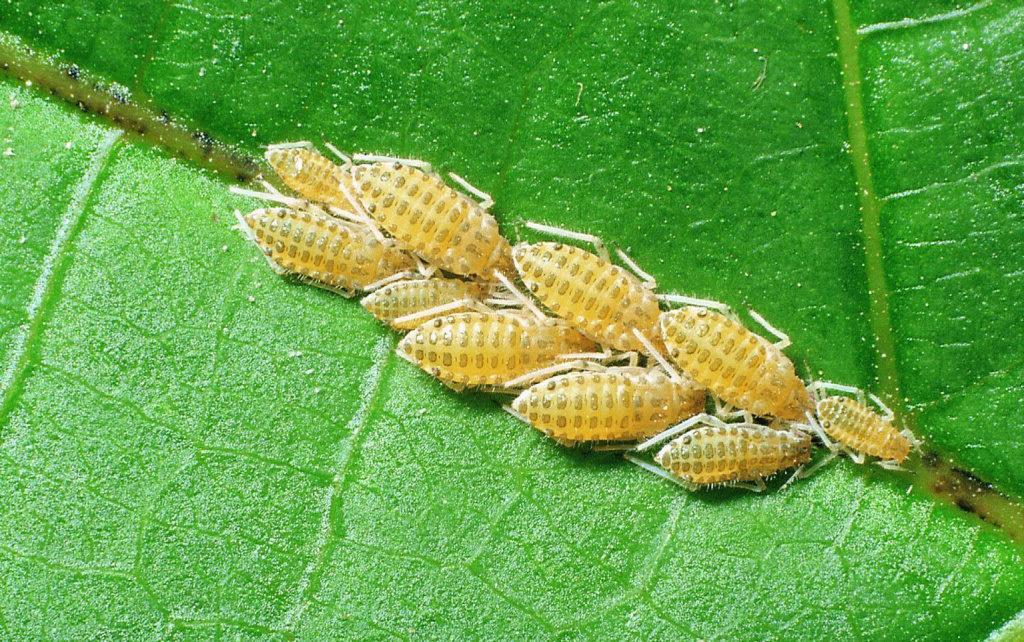
For removal, use a soap solution and copper sulfate. If these measures are insufficient, treat the nut with products such as Decis or Karate.
Preventive measures
In order to preserve the harvest, it is necessary to carry out the following preventive methods:
- in early spring, the soil in the area where the tree grows must be loosened and fertilized;
- cut off all dry and damaged parts of the tree;
- promptly remove weeds that may be a source of infection;
- promptly remove all leaves after they fall;
- spray with Bordeaux mixture in the fall for prevention;
- In spring, before the buds open, it is necessary to spray the tree;
- Feed trees regularly to develop immunity.
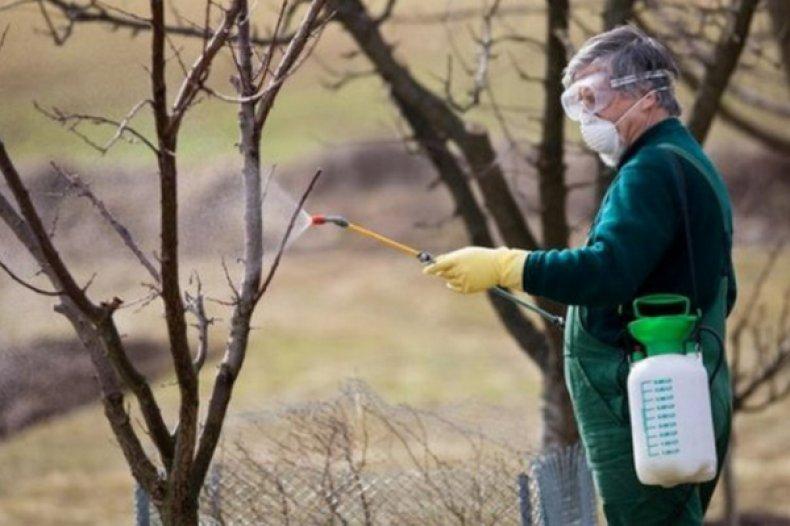
Preventative methods reduce the risk of disease infection, and such procedures are also necessary to strengthen the tree and increase the yield.
Tips from experienced gardeners
To protect the nut from diseases, it is necessary to follow the recommendations of gardeners:
- When spraying walnuts with Bordeaux mixture, add 30 grams of urea. Urea has a detrimental effect on fungal diseases.
- After the bark has swelled, remove it, as larvae that can survive frost often accumulate under the bark. The areas where the bark has been removed should be sealed with a copper sulfate solution.
- It is not recommended to spray the walnut during the flowering period, as pollinating insects may die and the plant will not produce the required harvest.
- To protect seedlings from pest attacks, plants such as parsley, dill, or calendula are planted near the planting; these crops have an intense smell that repels insects.
- When planting a seedling, treat the hole with a potassium permanganate solution. This will reduce the risk of fungal infections in the soil.
- When planting and cultivating trees, it's essential to disinfect working equipment. Gardening tools often harbor harmful microorganisms.
- Before planting a seedling in the ground, it must be treated. A 1% Bordeaux mixture solution is used for this. This treatment is necessary if you purchase a pre-planted seedling.
These tips have proven their effectiveness time and again. They are often used by inexperienced gardeners looking to grow a harvest.
Result
Growing walnuts is a simple process. However, lack of proper care leads to pests and diseases that can ruin the harvest. Timely treatment reduces the risk of infection and restores the plant's immunity.
Related posts:
 How to plant walnuts, care for them, and grow them at home
 Timing and methods for grafting walnuts at home in summer
 Description of the Ideal walnut variety, cultivation and care
 Description and characteristics of the 35 best walnut varieties, planting and care
 Description of the Lancaster walnut, planting tips, and care instructions
 How to plant grapes step by step, with a description of the process and care
 How to properly plant peas in a greenhouse and open ground
 How to propagate and grow peas, cultivation technology, and care in open ground