
- Description and characteristics of the tree
- Main characteristics
- Precocity
- Flowers
- Fruit
- Features of fruiting
- Productivity
- Frost resistance
- Disease resistance
- Soil requirements
- Pros and cons of the variety
- How to plant correctly
- Recommendations for choosing deadlines
- Site and soil requirements
- Preparing the site and the pit
- How to select and prepare planting material
- Planting diagram
- Growing and care rules
- Watering mode
- Top dressing
- Crown formation
- Preparing for winter
- Mulching
- Protection from diseases and pests
- Methods of reproduction
- Seeds
- By vaccination
- Harvesting and storage
- Tips from experienced gardeners
Walnut is a heat-loving plant, and only a few varieties are grown in Russia's climate. During the Soviet era, breeders developed a fast-growing variety. frost-resistant walnut variety under the name Ideal, and the growing area has expanded significantly. Below is information on growing walnuts on a plot, propagation methods, harvesting, and storing the crop.
Description and characteristics of the tree
The Ideal walnut is the product of Uzbek breeders. Their goal was to develop an early-ripening, hardy variety, which they successfully accomplished in 1947. The plant reaches a height of 4-5 meters, significantly shorter than other walnut varieties. Due to its hardiness and frost resistance, the cultivar's growing range has since expanded.
Main characteristics
Walnut kernels are delicious and contain a wealth of beneficial substances. The shells, membranes, and leaves are used in folk medicine to make medicinal tinctures and decoctions.
Precocity
The first fruits from the Ideal walnut tree are harvested 2-3 years after planting. Full fruiting begins in the 8th season. The harvest is in September.
Flowers
Walnut blossoms in May. The inflorescence consists of several flowers, pollinated by the wind. They are bisexual and do not require a pollinator.
Fruit
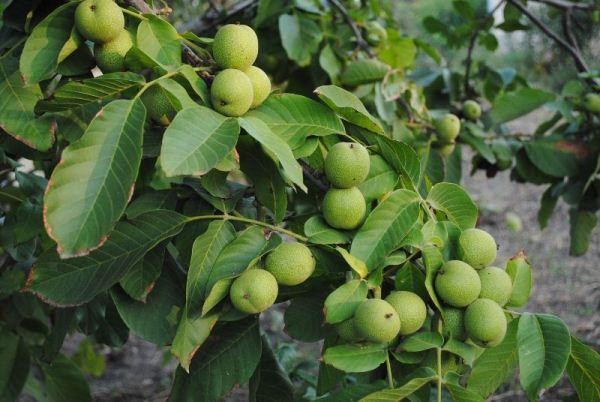
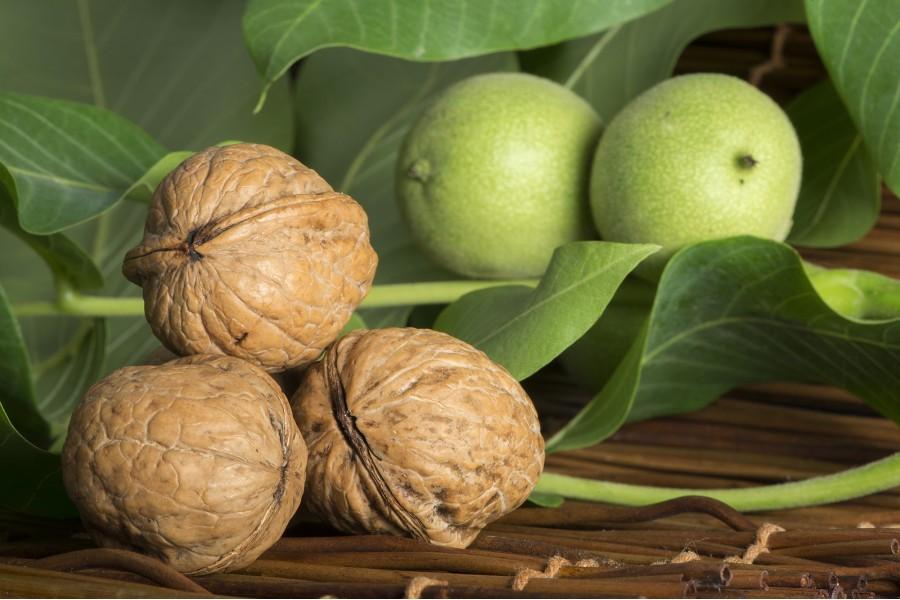
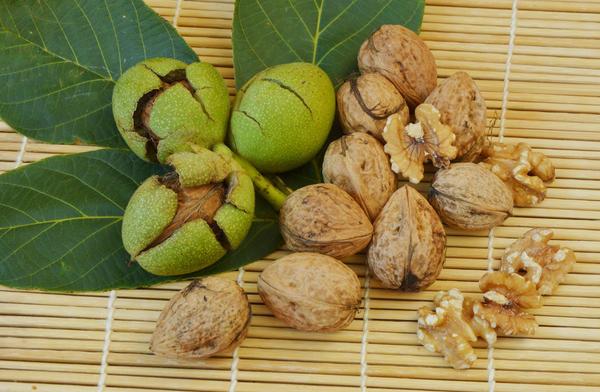
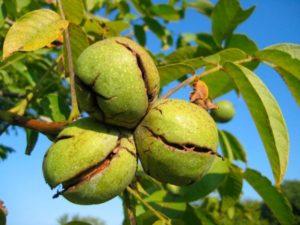
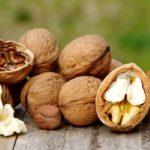
The nut is a drupe covered in a fibrous, green skin. One of the Ideal's advantages is that the shell is thin and easy to crack. Inside are large kernels containing a large amount of fat and protein.
Features of fruiting
Flowers can be damaged by spring frosts. A special feature of this variety is that a second flush of bloom may occur after this. The tree recovers and produces fruit by September.
Productivity
Starting from year 6 walnut yield Ideal is a stable, annual fruiting variety. Up to 100 kilograms of fruit can be harvested from a tree. Ripening begins in late August in the south and in September in the northern regions.
The harvest is collected within 30-40 days.
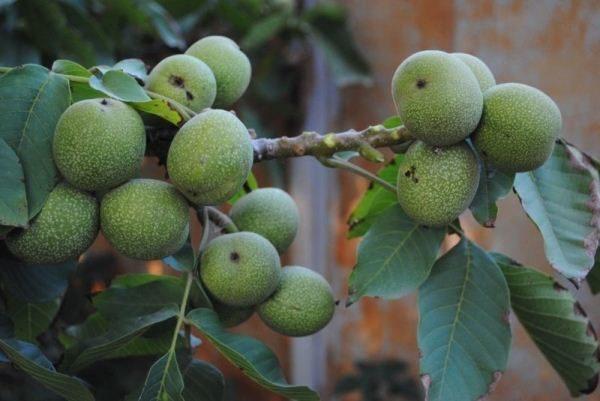 Please note! Fruit ripening occurs gradually, lasting for about a month. A sign of ripeness is the pericarp cracking and beginning to dry out.
Frost resistance
The Ideal Walnut tree can withstand temperatures down to -30-33°C without shelter. Even in high winter temperatures, the tree doesn't freeze completely; only the young shoots are affected. These are pruned, and the tree grows new branches throughout the season.
Disease resistance
The Ideal walnut tree has good immunity and is susceptible to fungal infections only in prolonged damp weather. Pruning and crown thinning will protect the trees from disease.
Soil requirements
The Ideal walnut tree doesn't have any special soil requirements, but it thrives in loamy soil with some fertile soil added. It doesn't like damp, waterlogged soil. To improve fertility, add dolomite flour and superphosphate to the planting hole.
Pros and cons of the variety
The positive characteristics of the Ideal walnut include the following:
- stable fruiting;
- high taste qualities of fruits;
- frost resistance;
- good immunity;
- undemanding to soils;
- compactness.
The disadvantages include the short lifespan of the planting: usually, a walnut tree can grow and bear fruit for about 100 years, but Ideal is viable for 40-50 years.
How to plant correctly
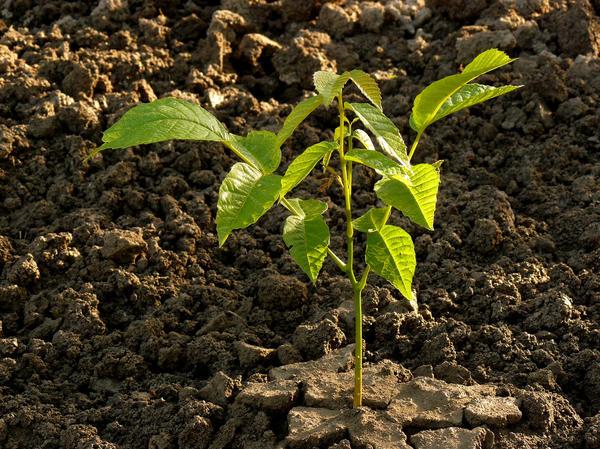
Plant young trees no more than two years old. Saplings three years or older will have a harder time establishing themselves. Purchase them from nurseries or reputable sellers.
Recommendations for choosing deadlines
Walnut trees are planted in the spring or fall. When planting early in the season, wait until the threat of frost has passed. In the fall, trees are planted a month before the onset of frost.
Site and soil requirements
The walnut tree should be planted in a sunny location, protected from northern winds. Groundwater should not be too close to the soil surface. The soil can be any type, except damp and waterlogged.
Preparing the site and the pit
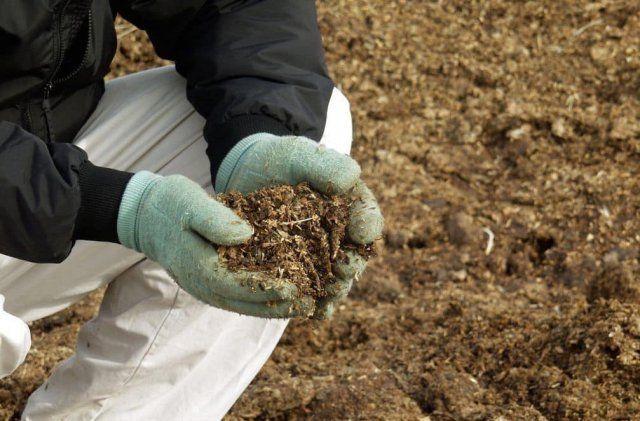
The area for planting the tree is cleared and dug. The planting hole is prepared in advance, approximately two weeks in advance. It is filled with a substrate of fertile soil, peat, and compost.
How to select and prepare planting material
It's best to purchase walnut seedlings with a closed root system. They should be healthy, firm, and free of disease. If the tree is purchased with a bare root system, soak it for 30 minutes in a mixture of 3 parts clay and 1 part fermented manure, diluted with water to the consistency of sour cream. Then, leave it to dry for 25-30 minutes and plant it in the planting hole.
Planting diagram
For the seedling, dig a hole measuring 60 x 60 x 60 centimeters. If planting multiple trees, maintain a distance of 5 meters between them. The same distance is measured from buildings. Planting the Ideal walnut tree is done as follows:
- dig a hole and fill it a third with soil;
- a seedling is placed in the middle and the roots are straightened;
- water generously;
- fill the ground.
To prevent moisture from evaporating from the soil, the tree trunk circle is mulched.
Growing and care rules
Ideal Walnut requires watering, fertilizing, and mulching. Plants need to be protected from diseases and pests and prepared for winter. Young seedlings require shelter.
Watering mode
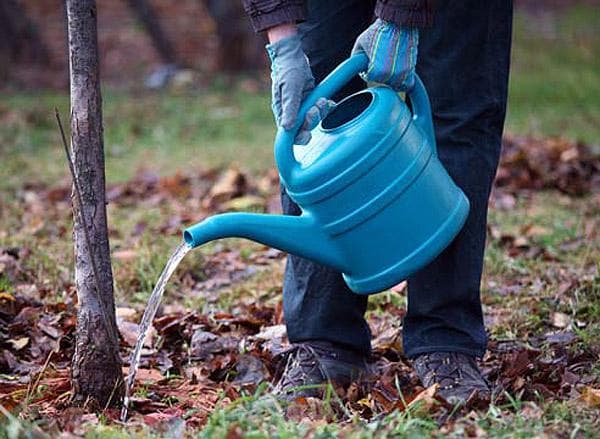
After planting, the walnut tree requires ample watering. This moisture helps the roots absorb water and establish quickly. Watering should then be done as needed: if there is prolonged drought or insufficient rainfall, 20-30 liters of water should be poured under the tree.
Top dressing
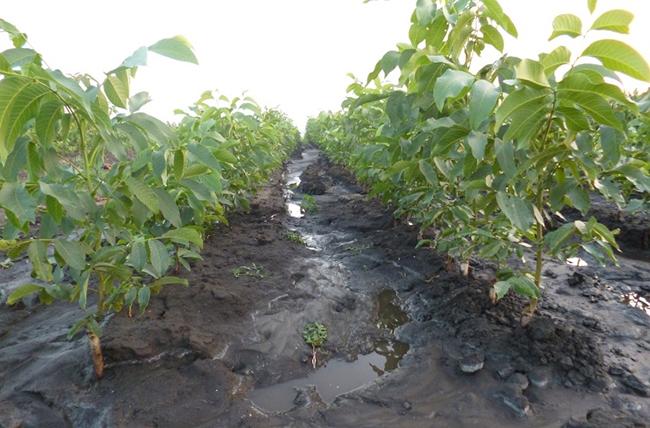
Seedlings need to be fertilized at least twice a year. In the spring, nitrogen-containing fertilizers are applied to the trees. These are essential for rapid growth of green foliage. In the fall, fertilizers with increased potassium and phosphorus levels are used, which are essential for the plants to survive the winter.
Crown formation
The first pruning is done the year the tree is planted. Subsequently, the crown is shaped to form a cup. This will ensure the branches receive adequate sunlight and ventilation, and prevent the walnut tree from becoming infected with fungal diseases.
Preparing for winter
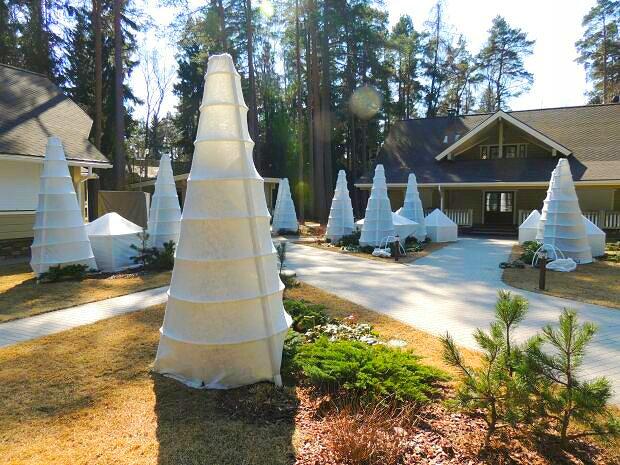
Trees planted this year require covering in the fall. First, the root system is generously watered, then the area around the trunk is mulched with manure. Next, young walnut trees are covered with spruce branches and paper. Mature trees are watered in late fall and mulched with compost.
Mulching
Immediately after planting trees, the soil beneath them is mulched with straw, grass clippings, and peat. This helps retain soil moisture and prevent weed growth. Furthermore, covering the soil prevents crust formation after watering.
Protection from diseases and pests
The Ideal walnut has good immunity but can be affected by certain fungal diseases. This is usually due to heavy rainfall. To prevent and treat diseases, trees are sprayed with copper sulfate. Walnut moth and wart mite are controlled with acaricides and insecticides.

Methods of reproduction
A gardener can easily grow walnut trees in their garden using seeds or grafting. Seed propagation may not preserve the parent tree's characteristics.
Seeds
Nut fruits for propagation are planted in spring or fall. When planting in spring, follow these steps:
- 40 days before planting, the seed material is placed in moistened sand and kept at a temperature of 15-18°C;
- then the cracked fruits are planted in a container with lowland peat;
- after 2 true leaves appear on the seedlings, they are transplanted into separate pots;
- After growing and hardening, they are planted in open ground.
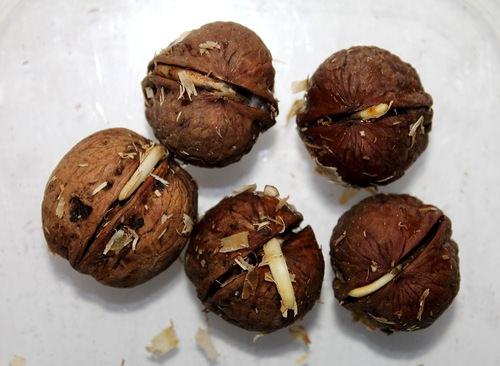
Before planting, the seedling's main root is pricked out. Seeds can be sown directly into the ground in spring or fall. They are first soaked in an insecticide solution to prevent ants from damaging the core.
By vaccination
This propagation method preserves all parental traits, and fruiting occurs several years earlier. Three-year-old seedlings of a walnut cultivar with a trunk diameter of 15 millimeters are selected as rootstock. Young shoots from the current year, taken from a fruiting Ideal walnut tree, are grafted onto the trees.
Summer budding is carried out in the first ten days of July as follows:
- on the shoot selected as a scion, a circular incision is made around the bud using a special grafting knife;
- make cuts and remove a piece of bark (half ring) with a bud;
- the same cut is made on the rootstock, choosing a place with a well-developed bud at a distance of 7-10 centimeters from the base of the tree;
- The half ring with the bud is placed on the rootstock and wrapped in film so that the bud remains open.
Take a look Also
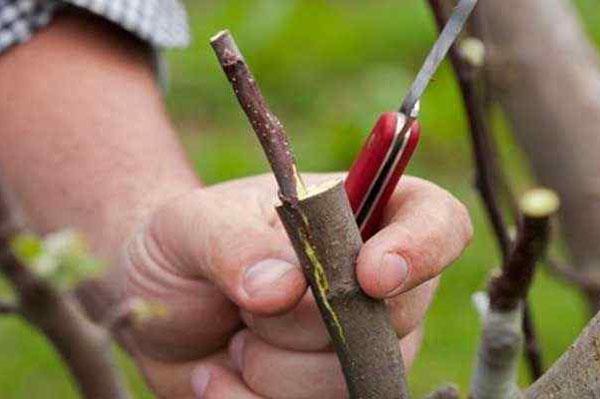
After 15-20 days the bandage is loosened and after 2-3 months it is removed completely.
Important! The grafting instrument used must be sharp and disinfected.
Harvesting and storage
When the pericarps begin to dry out and crack, harvesting begins. Often, a gust of wind causes the fruits to fall to the ground. They are collected and thoroughly dried in a ventilated area.
To do this, walnuts are poured in a single layer and constantly stirred, otherwise the core may become rotten.
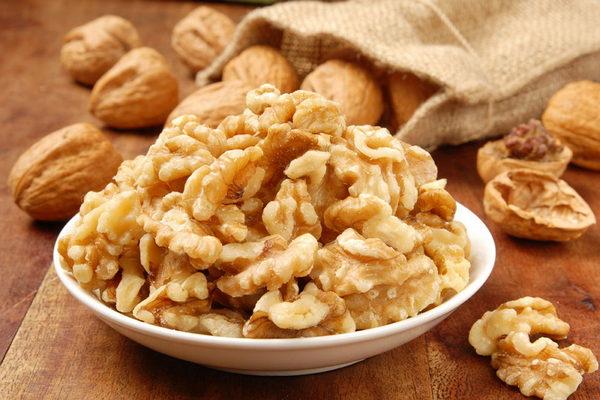
Store the nuts in a warm place at a temperature of 15-20°C in boxes, crates, or nets. Keep them away from radiators. Avoid sudden fluctuations in temperature and humidity. Under these conditions, the nuts can be stored for up to a year without losing quality.
Tips from experienced gardeners
Gardeners who have been growing Ideal walnuts for a long time give the following recommendations:
- Plant walnut trees no more than two years old. Trees three years and older have a harder time taking root.
- When grafting, the age of the scion and rootstock must match.
- Young seedlings in central Russia need to be hilled and covered with agrofibre for the winter.
- If the goal is to propagate the Ideal walnut tree in a plot, grafting is used. Planting from seeds does not transmit varietal traits; for example, the thin skin of the fruit may be lost.
- Plant trees at a distance of 5 meters from buildings and other plantings.
- Feed the plants twice per season: in the spring with nitrogen, and in the fall, before wintering, with potassium.
By following the cultivation information and the advice of experienced gardeners, farmers not only in southern Russia but also in central Russia can grow Ideal walnuts. These tasty and healthy fruits can be stored for up to a year. They are used fresh and as fillings in confectionery.
Related posts:
 How to plant walnuts, care for them, and grow them at home
 Timing and methods for grafting walnuts at home in summer
 Description of the Lancaster walnut, planting tips, and care instructions
 Description and characteristics of the 35 best walnut varieties, planting and care
 Walnut diseases and pests, why walnuts don't bear fruit, and treatment methods
 The benefits and harms of walnuts for the body, contraindications
 Instructions for use of Ideal fertilizer and its composition, pros and cons
 How to grow peanuts in a country house in the middle zone: the intricacies of planting and care