
- Description and characteristics of hazelnuts
- Types
- Common hazel
- Pontic hazel
- Large hazelnut
- Georgian hazelnut
- Manchurian hazel
- Hazelnut
- Turkish hazel
- Ornamental varieties
- Aurea
- Pendula
- Composition and beneficial properties
- Fatty acids
- Phosphorus
- Vitamin E
- Tocopherol
- Protein
- Sugar
- Calcium
- Magnesium
- Iron
- Manganese
- Vitamins
- Climate and soil requirements
- How to plant in open ground correctly
- Selection and preparation of planting material
- Recommendations for choosing deadlines
- Soil and site preparation
- Requirements for the location
- Planting diagram
- Gardening rules
- Trimming
- Thinning
- Sanitary
- Formation
- Watering
- Artificial pollination
- Top dressing
- Methods of reproduction
- Seeds
- Root shoots
- Horizontal layering
- Vertical layering
- Green cuttings
- By vaccination
- Peculiarities of growing at home
- Harvesting and storage
- Diseases and pests
- Hazel bud mite
- Spider mite
- Nut weevil
- Walnut pipe wrench
- Nut-bellied barbel
- Leafy elephants
- Hazel aphid
- Northern birch sawfly
- Powdery mildew
- Moniliosis
- Gray rot
- Brown spot
- Scale insect
- Fire blight
- Leaf beetle
- Tips and advice from experienced gardeners
Many gardeners are interested in the process of growing and caring for hazelnuts. This crop requires strict adherence to planting guidelines. The plant requires timely watering, fertilizing, and pruning. It must be protected from harmful insects and fungal diseases. Only strict adherence to agricultural practices can achieve good results.
Description and characteristics of hazelnuts
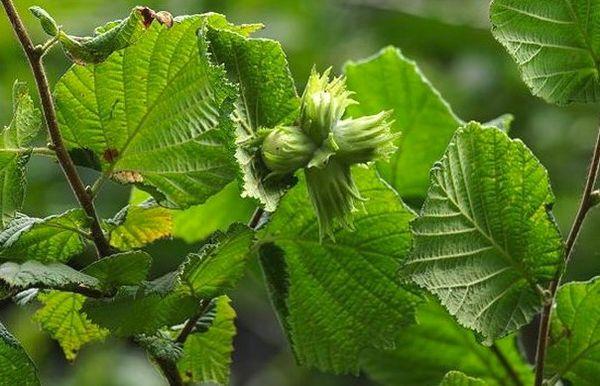
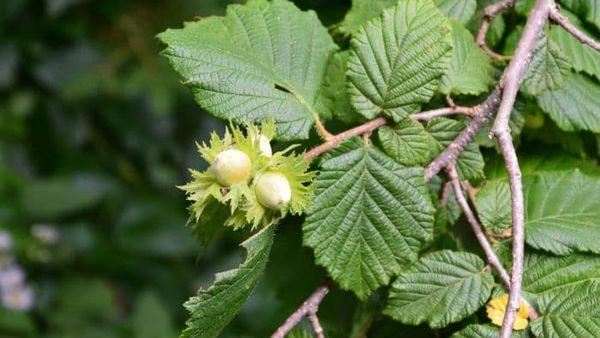
Hazelnuts, or filberts, can grow up to 7 meters in height. They have an ovoid or spherical crown. The leaves are large and round. The flowers are unisexual and appear in late March or early April.
The flowering plant is distinguished by its flowers and golden catkins. The fruits are small, about 2 centimeters in diameter.
Hazelnuts ripen in August. With vegetative propagation, the plant begins to bear fruit after 3-4 years. Peak yield occurs between 10 and 35 years. A single bush can yield 5-10 kilograms of fruit.
Types
Today, many varieties of the plant are known, each of which has certain characteristics.
Common hazel
This bush reaches 4-6 meters and has a wide, spreading crown. The stems are covered with fluff. The hazelnut begins to bloom before the leaves appear. The nuts are spherical and reach 15 millimeters in diameter. They are covered in a brown skin and ripen in September.
Pontic hazel
Most Balkan, Turkish, and Caucasian hazelnut varieties originate from this plant. In the wild, the crop grows in Asia Minor and the Transcaucasus. The bush reaches 6 meters and has round leaves. The nuts are large.
Large hazelnut
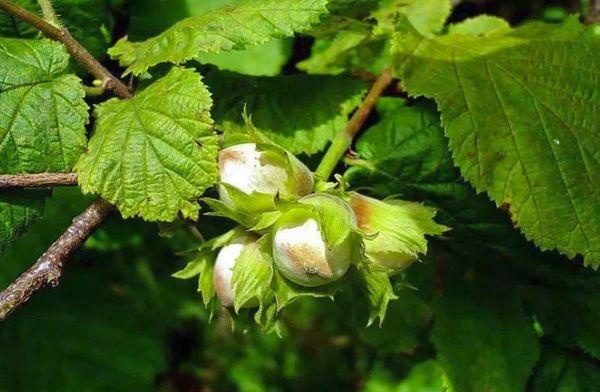
The bush reaches 10 meters. The nuts are covered in a tubular wrapper that is twice the size of the fruit. The kernels are fleshy and elongated. In the wild, the plant grows in Asian countries. It can also be found in Turkey and Italy.
Georgian hazelnut
Hazelnuts have been cultivated in this country for many years. According to historical records, they appeared as early as the sixth century BC. Subsequently, numerous cultivated varieties of Georgian hazelnuts developed, adapted to the local climate.
Manchurian hazel
This multi-stemmed shrub reaches 5 meters. Its bark is dark gray. Its distinctive features are its elongated leaves and fruits. These have a spiny coating, making them difficult to peel.
Hazelnut
The bush reaches 3 meters and has a truncated top. In spring, the plant produces catkins of male flowers and red buds of female flowers. The fruits are covered with a leaf wrapper and number 2-3. In the wild, the plant grows in China, Korea, and Japan. It is undemanding to climate conditions and thrives in the central part of the world.
Turkish hazel
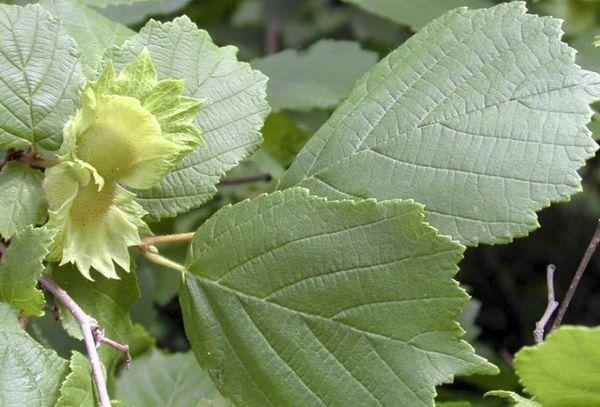
This plant variety belongs to the tree hazel family. It is not grown for harvest, but is often used in landscaping.
Ornamental varieties
Hazelnuts are cultivated not only for their harvest. This plant is also widely used to decorate garden plots.
Aurea
This is a large plant, reaching 6 meters in height and width. It is characterized by a broad crown with multiple vertical stems. Over time, this crown takes on an umbrella-like shape. Initially, the plant develops slowly, but then the process accelerates. It is characterized by beautiful yellow flowers in the form of catkins.
Pendula
This variety is characterized by a weeping crown. Depending on its height, it can grow as a wide bush or a tent-shaped tree.
Composition and beneficial properties
The fruits of the plant have a unique composition, therefore they have many beneficial properties.
Fatty acids
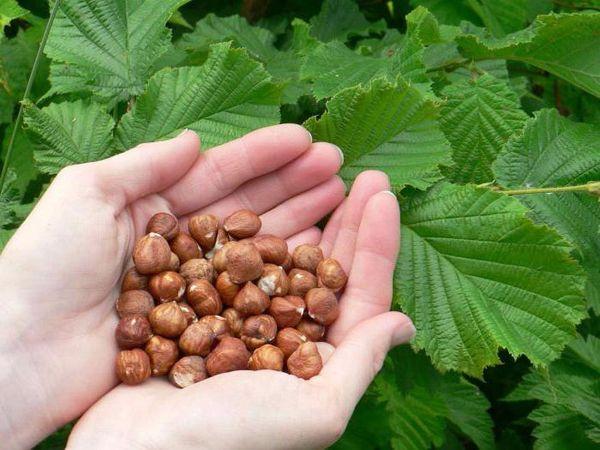
Hazelnuts contain a large amount of fatty acids. Oleic and linoleic acids are considered the most valuable. They help reduce bad cholesterol levels in the blood, which helps prevent stroke.
Phosphorus
This element takes part in the construction of bone structures and helps strengthen the immune system.
Vitamin E
Hazelnuts contain a lot of vitamin E. This substance prevents the breakdown of red blood cells.
Tocopherol
This substance has pronounced antioxidant properties. It helps prevent the development of malignant tumors and neutralize existing cells.
Protein
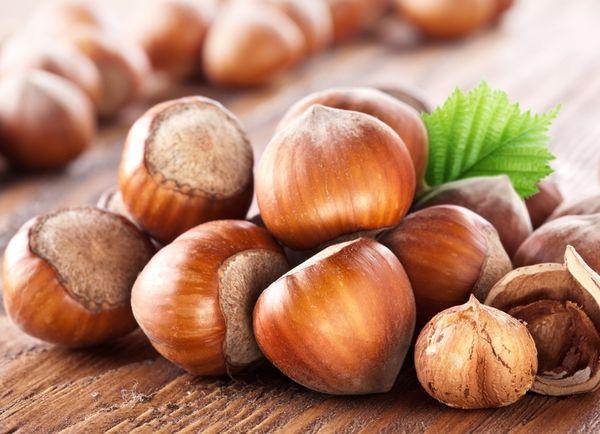
Hazelnuts contain a high amount of high-quality, easily digestible plant protein. This substance is comparable in properties to meat protein.
Sugar
Hazelnuts contain valuable sugar, which becomes a source of energy and increases the body's vitality.
Calcium
The presence of calcium in hazelnuts makes bones stronger and teeth healthier.
Magnesium
This valuable substance in hazelnuts helps the body cope with stress and nervous breakdowns. It also helps relieve discomfort during menstruation.
Iron
This element in hazelnuts is especially important for hypertensive patients, as it helps reduce blood pressure.
Manganese
Hazelnuts contain large amounts of manganese and sodium. These are essential elements for maintaining healthy brain function and the nervous system as a whole.
Vitamins
Hazelnuts also contain B vitamins, which speed up metabolic processes. Vitamin C is also highly beneficial for health, strengthening the immune system and helping fight viruses.

Climate and soil requirements
When choosing soil for hazelnuts, choose loose, humus-rich soil with a neutral or slightly acidic pH. Poor, heavy, or waterlogged soil is unsuitable.
Also, you shouldn't plant hazelnuts in loamy soil.
How to plant in open ground correctly
Growing hazelnuts outdoors requires proper planting practices. There are many factors to consider.
Selection and preparation of planting material
To grow strong plants, it's important to choose the right hazelnut seedlings. It's best to choose leafless bushes with 3-5 developed shoots. These shoots should be 1-1.5 centimeters thick and 1.5 meters long. The seedlings should also have developed roots, which should be 50 centimeters long.
Recommendations for choosing deadlines
Hazelnuts can be planted in the soil in spring or fall. However, fall planting is considered preferable. It's best to do this in early October, when the soil is still warm. If planting in the spring, it's recommended to do this in April.
Soil and site preparation
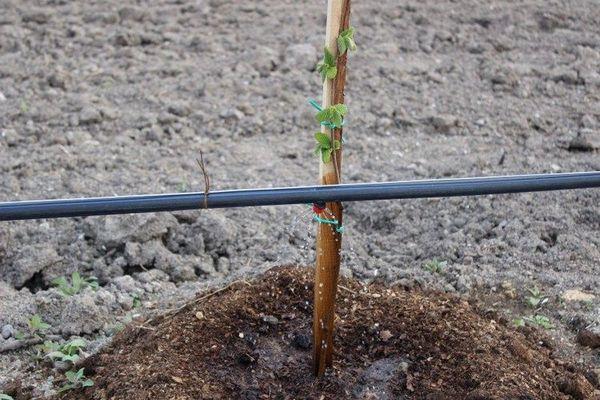
Hazelnuts are recommended to be planted in light, fertile soil. Three to four weeks before planting, dig a hole for the planting. It should be approximately 60 centimeters deep. Place fertile soil at the bottom, mixed with 200 grams of superphosphate and two buckets of compost.
Requirements for the location
To ensure hazelnuts adapt well to new conditions and produce fruit well, it's important to carefully select the site. Cultivated hazelnuts should be grown in a sunny location, protected from wind and drafts. Therefore, the plant is planted along a wall or fence. It's recommended to plant hazelnuts in a south- or west-facing area.
Planting diagram
To grow hazelnuts, you should follow these steps:
- make a mound in the center of the hole;
- treat the seedling with a clay solution;
- arrange the roots along the hill;
- sprinkle with soil;
- compact the earth;
- make a depression for watering;
- sprinkle with grass or sawdust;
- cut the seedling at a distance of 15-20 centimeters from the ground;
- tie the plant to the support.
After planting, hazelnuts must be watered. Each plant will require 20 liters of water. During severe drought, increase the amount by 10 liters.
Gardening rules
To ensure the plant receives complete and high-quality care, it is necessary to strictly follow all agricultural practices.
Trimming
Pruning the plant is acceptable in winter, when it is dormant. However, it is preferable to do this in spring.
Thinning
During the procedure, it is recommended to remove any overly dense branches. It is also worth removing any tangled or deformed hazelnut shoots.
Sanitary
Sanitary pruning of hazelnut trees is carried out annually. This involves removing broken, frozen, diseased, and pest-infested branches.
Formation
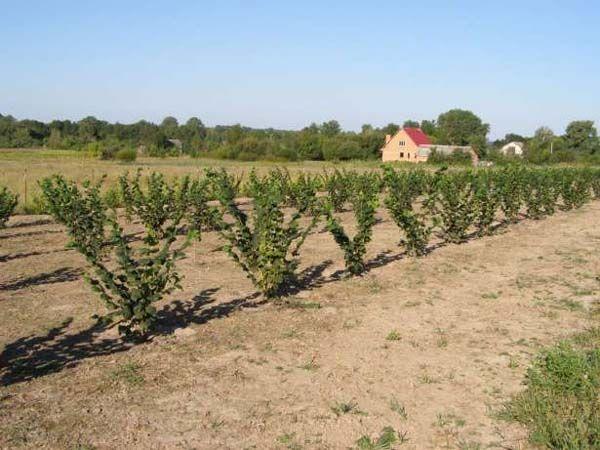
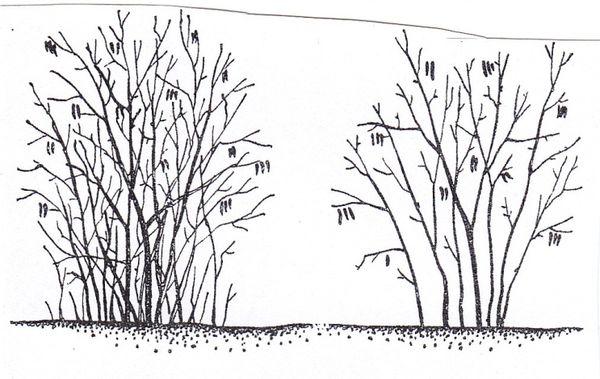
Hazelnuts can be grown as trees, with the trunk height being 35-40 centimeters. However, it's much easier to train the plant as a bush. The first pruning is done a week after planting, at a height of 25-30 centimeters from the ground.
During the summer, shoots form that don't require pruning. Hazelnuts produce fruit on one-year-old wood. The following spring, it's time to begin shaping the bush. A maximum of 10 strong shoots should be left on it.
Watering
It is recommended to water the plant as early as one week after planting. A moisture deficit will negatively impact the formation of flower buds and the ripening of hazelnuts. During the growing season, it is recommended to water the hazelnut tree 5-6 times. A mature bush will require 6-8 buckets of water. During drought, the frequency of watering should be increased. On average, it is recommended to moisten the soil once a month.
Water should be applied to the tree trunk area in small portions. Avoid puddles. The moisture should be absorbed gradually. The next day after rainfall or watering, loosen the soil around the tree.
Artificial pollination
To ensure complete pollination of hazelnuts, it is recommended to plant several hazelnut bushes in the same plot. It is important to choose different varieties of hazelnuts, as the crop requires cross-pollination. A large variety of hazelnuts in the garden will ensure a bountiful harvest.
Sometimes, male inflorescences freeze. This situation requires artificial pollination of hazelnuts. This is also done if the crop was planted without a pollinator.
The need for artificial pollination arises when the red filamentous stigmas enlarge and extend beyond the buds of the female inflorescence. To do this, it is recommended to trim several branches in early February and place them in a container of water. Only the tips should remain in the container.
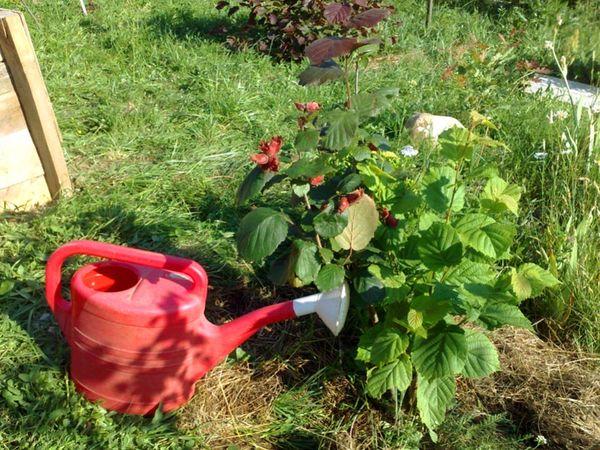
It is recommended to place a film nearby to catch the pollen.
The container should be covered with a second film to stimulate the development of male inflorescences. Once pollen appears, the film should be removed.
The collected pollen should be collected in a bag or jar and refrigerated. When the trees begin to show signs of female inflorescences, the plants can be pollinated. This is done after 10 days. To perform this procedure, the pollen is mixed with water. The procedure is repeated after 7-10 days. Wild hazelnut varieties are also suitable for pollination.
Top dressing
Successful hazelnut cultivation is impossible without fertilization. Fertilizers are applied to the trunk circle. In the fall, the plant should be fed with potassium and phosphorus. Every 2-3 years, 3-4 kilograms of manure can be applied. Also, 50 grams of superphosphate and 20-30 grams of potassium salt per bush are recommended.
In spring, the plant requires nitrogen. Urea or ammonium nitrate is used for this. When the hazelnut buds begin to swell, it is recommended to apply 20-30 grams of this substance to the trunk circle. Nitrogen supplementation will also be necessary in summer. Applying this fertilizer in July will help ensure that the fruit ripens at the same time.
Young crops require organic fertilizers, such as manure or compost. To achieve this, apply 10 kilograms of these substances per hazelnut bush every 2-3 years.

Methods of reproduction
Today, many methods of crop propagation are known. Each has its own characteristics.
Seeds
This method produces a crop that is distinct from the parent plant. This type of hazelnut propagation is commonly used by breeders. It allows for the creation of new varieties with improved properties.
To propagate hazelnuts, use developed and large nuts. First, they are stratified. When planting in the spring, be sure to cover the area with a mulch of dry leaves.
Root shoots
It's also possible to propagate the bush by root suckers. The lower part of the plant retains the ability to recover for a long time, which is very important. With the help of rhizomes, the bushes spread in a circle. In the third year, the hazelnut tree begins to sprout suckers.
For propagation, use shoots 2-3 years old. These can be separated with an axe. When transplanting the shoots, make cuts. This procedure increases the plant's survival rate.
Horizontal layering
This method is considered quite labor-intensive, but highly effective. Up to five cuttings can be obtained from a single hazelnut shoot. It is recommended to lay them horizontally in the grooves. The cuttings should be pinned down, but covering them with soil is not recommended.
Vertical shoots can be grown from vegetative shoots. They then need to be mulched. During the summer, the layers are covered with soil several times. The soil must be kept moist.
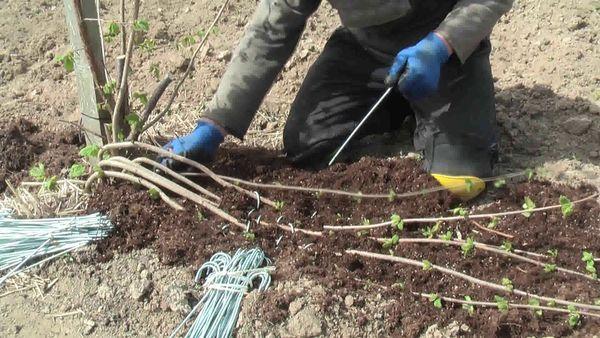
As a result of these steps, mounds can be formed over the layers. To stimulate hazelnut root development, the growth should be shortened to 50 centimeters. The following year, the layers should be dug up and divided into fragments.
Vertical layering
This method helps completely rejuvenate the entire bush. Juvenile shoots can be obtained from dormant buds near the roots. When hilling, remove the lower leaves. In the fall, cut off some of the shoots that have developed roots.
During the development of the hazelnut shoot, it is constricted. This allows it to take root. By autumn, the plant reaches 1 meter. At the constricted area, the shoots should be broken off using wire.
Green cuttings
For this purpose, it's best to use the strongest hazelnut shoots, 1-2 years old. It's best to harvest the material at the beginning of the current year's woody growth. The resulting cuttings should be placed in a mixture of peat and sand. It's recommended to keep the hazelnut leaves moist during watering.
By vaccination
Propagating hazelnuts by grafting is quite difficult. Hazelnut seedlings and bear nuts are often used for this purpose. It is recommended to graft the tree in early spring. The graft should be tied and treated with garden pitch. A special PVC film cover is also recommended.
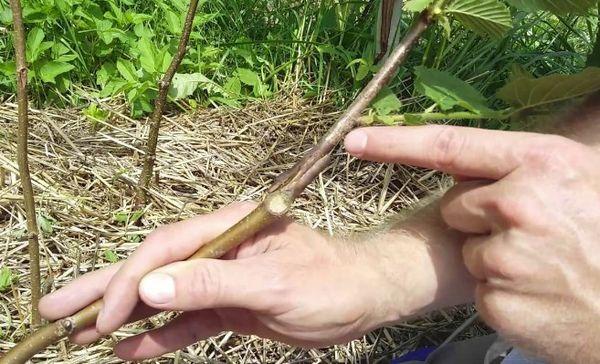
When buds appear on the hazelnut cutting, open the cap, wait two weeks, and then remove it. After the graft has grown together, it is recommended to remove all shoots from the rootstock.
Peculiarities of growing at home
Growing hazelnuts from seed is fairly easy. Properly following all the procedures will result in a strong plant. However, it's important to keep in mind that it will begin to produce fruit much later. If you grow hazelnuts from seedlings, you'll be able to harvest the first fruits in just 3-4 years. A nut-grown plant will begin bearing fruit in 6 or even 10 years.
Harvesting and storage
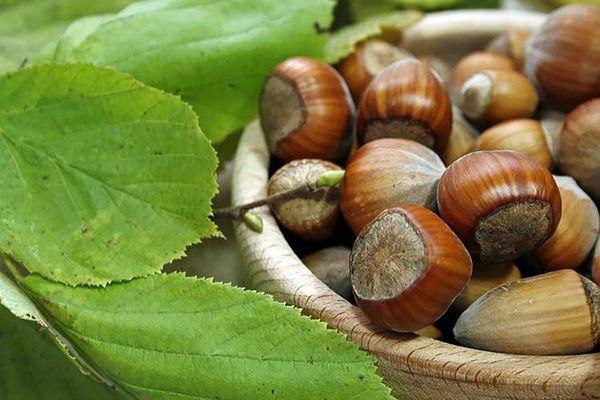
Depending on the plant variety, harvesting can take place in August or September. When ripe, the nuts turn yellow and fall out of the cup. If they don't fall out on their own, shake the bush. Hand-picking is also possible.
After harvesting, it's recommended to dry the nuts. To do this, place them, along with the shell, in a thin layer in the sun or indoors. Once the shells turn brown, it's recommended to peel the nuts and dry them further.
There is a simple method for assessing whether a nut is completely dry: a ready fruit makes characteristic sounds when tapped, while wet hazelnuts do not.
It is recommended to store nuts in a cool, dry place with good ventilation. The shelf life is 4 years. The optimal temperature for hazelnuts is 3-7 degrees Celsius, and the humidity should not exceed 11-13%.
Diseases and pests
When growing a plant, you may encounter various problems. One of these is the development of diseases or attacks by harmful insects.
Hazel bud mite
These are tiny insects, no larger than 0.3 millimeters. They overwinter in plant buds and, with the arrival of spring, lay eggs. The affected buds swell, growing to the size of a large pea. They then dry up and die.
Spider mite
These are small insects, measuring 0.3-0.6 millimeters. They are covered with sparse bristles. When a plant is infected, the leaves are destroyed, the bush becomes weaker, and is susceptible to other infections. To combat the problem, it's best to use acaricides. Insectoacaricides are also widely used.
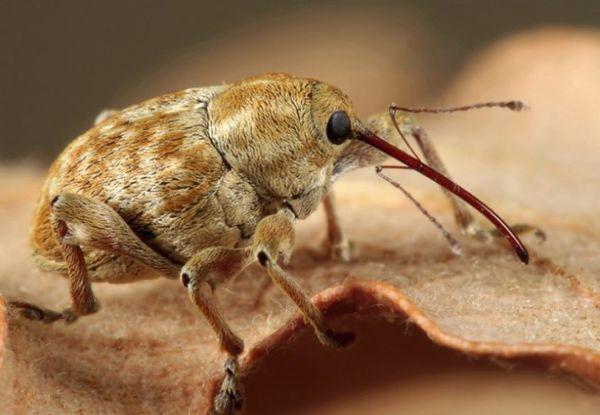
Nut weevil
This is a brown beetle that can reach 1 centimeter in length. The caterpillars have a milky-yellow body and a reddish-brown head. The parasite lays eggs in unripe fruits, where they feed on the nut flesh. Severe infestations can result in the loss of half the harvest.
Walnut pipe wrench
This insect is a small beetle, reaching 7 millimeters in length. The larvae are distinguished by their white color. These parasites absorb plant juices. As a result, the leaves become damaged. They become deformed, dry out, and fall off.
To avoid such problems, it's recommended to treat the bushes with Chemix or Fufanon before the leaves emerge. Furthermore, it's recommended to collect and destroy any curled leaves, as this is where the larvae accumulate.
Nut-bellied barbel
This one is dangerous for hazelnut pest The hazelnut borer is a black beetle that grows up to 15 millimeters in length. It lays eggs under the bark of young branches. The larvae then chew out the center of the branches, causing the shoots to die. The upper leaves of the hazelnut tree turn yellow and curl.
Leafy elephants
This beetle is distinguished by its small, shiny body and curved head. Its mass appearance occurs in June and July. Adult parasites consume leaves, beginning at the edges. This results in stunted growth. The larvae feed on hazelnut roots, which disrupts the growth of the bushes.
Take a look Also
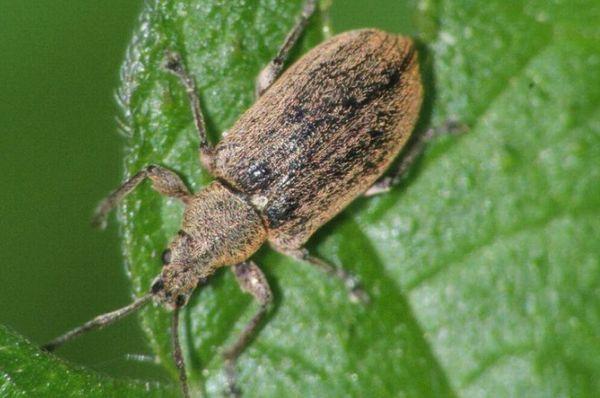
To combat the problem, the soil should be dug up. This should be done in spring and fall, to a depth of 10 centimeters. This will eliminate the larvae. If adult insects appear, chemical treatments are recommended. Products such as Decis or Calypso are suitable for this purpose.
Hazel aphid
These tiny insects absorb plant sap and facilitate the spread of viral infections. Aphids are difficult to spot, making them particularly dangerous.
Parasite activity causes hazelnut leaves to curl. Furthermore, the pests cause bud and shoot deformation. This leads to delayed development and problems with fruit ripening. To achieve good results in the fight against parasites, it is necessary to use insecticides.
Northern birch sawfly
This insect is a black wasp. Its larvae are green and reach 20 millimeters in length. When plants are infected, the leaf edges are primarily affected. Peak activity occurs in the summer—June or August. If the infestation is severe, chemical treatments, such as Karate, should be used.
Powdery mildew
This fungal disease suppresses plant growth. Symptoms become apparent in late summer. The undersides of hazelnut leaves become covered with a white coating. They begin to fall prematurely. In the fall, the foliage becomes covered in black spores.
To combat the problem, it's necessary to apply chemicals promptly. Agronomic measures are also crucial. Affected hazelnut leaves should be collected and burned immediately.
Moniliosis
This dangerous disease can damage up to 80% of the fruit. Moniliosis develops during the flowering stage of the plant. The disease most often occurs in conditions of high humidity and dense hazelnut bushes. Green fruits become covered with brown spots. After some time, they shrink, rot, and fall off.
To avoid such problems, it's important to plant plants early, spacing them out sufficiently. At the end of June, it's recommended to use products such as Topsin or Neotec.
Gray rot
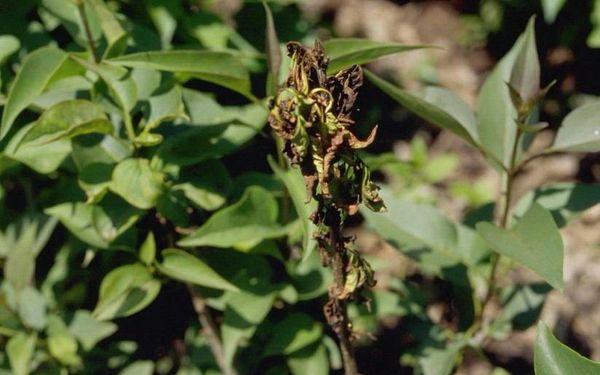
The disease affects various parts of the plant, including leaves and fruit buds. This causes stunted growth, reduced yield, and deterioration in fruit quality. When the plant is infected, gray mycelium appears.
To achieve good results in treating the disease, it's important to thin the bushes regularly. Chemical treatments such as Nimrod and Discus are suitable.
Brown spot
This is a fungal infection that often affects crops. It can spread through water or soil. The disease progresses rapidly in conditions of high humidity or temperature.
To combat the infection, treat the bush and the area around the trunk with iodine chloride. It is recommended to use 30 grams of potassium chloride and 40 drops of iodine per bucket of water. Treatment with whey or garlic infusion is also highly effective.
Scale insect
These insects attack all parts of the plant, targeting leaves, flowers, buds, and fruits. As a result, the crop weakens and stunts growth. Insect proliferation reduces the plant's resistance to frost and drought. They also lead to reduced yields. Systemic insecticides are used to combat this problem.
Fire blight
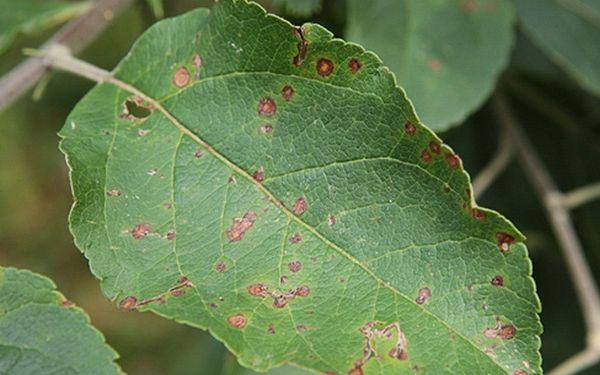
This is one of the most dangerous hazelnut diseases. The fungal infection attacks the above-ground parts of the tree, affecting flowers, leaves, branches, and fruits. High temperatures and humidity promote the disease's development. It rarely occurs in hot or dry weather.
To combat this disease, affected shoots need to be trimmed back to healthy tissue. Spraying hazelnuts during the bud swelling stage is also crucial. For this purpose, use 3% zinc sulfate.
It's also worth treating the nuts with copper-containing preparations. In the fall, it's recommended to feed the plant with potassium-containing fertilizers.
Leaf beetle
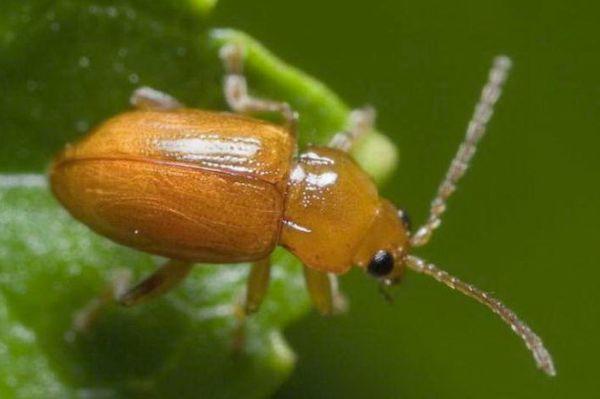
This is one of the most dangerous pests that causes leaf damage. This beetle causes significant damage to plants. The larvae are dark green and reach 10 millimeters in length. The insects overwinter in the soil under fallen leaves and become active in April. The beetles actively feed on the plant's leaves.
To control pests, treat plants with insecticides and acaricides in April and July, when the larvae and beetles are active. During the leaf beetle pupation period, which occurs in late June, it's a good idea to dig up the soil.
Tips and advice from experienced gardeners
To achieve success in growing hazelnuts, it is important to properly care for the plant:
- use only strong and high-quality seedlings for planting;
- carry out planting operations correctly;
- systematically weed the beds and get rid of weeds;
- ensure regular soil moisture;
- carry out timely treatment of plants against diseases and pests;
- Carry out crop pruning in a timely manner.
Hazelnuts are a common nut with a number of beneficial properties. This plant is quite easy to grow in your own garden.
To achieve good results and a bountiful harvest, it's important to provide the crop with high-quality and comprehensive care. This should include timely fertilization, watering, and pruning. Protection from diseases and pests is also crucial.
Related posts:
 Description and characteristics of the 30 best hazelnut varieties, cultivation
 Reasons why hazelnuts don't bear fruit in the garden and how to fix the problem
 Rules for planting and caring for red-leaved hazel, description of the best varieties
 Methods for planting and propagating cherries at home
 Planting and caring for hazelnuts in Siberia, growing hazelnuts
 The best grape varieties for growing in the Urals, planting and care rules in summer
 Description and rules for growing Solaris grapes
 Planting and caring for common hazel in the Moscow region, description of the best varieties