
- Description and characteristics of the nut
- Features of the region
- Recommended varieties
- Tambov early
- Moscow Ruby
- Firstborn
- Sugary
- Smolin
- Masha
- Pushkinsky
- Academician Yablokov
- How to plant correctly
- Recommendations for choosing deadlines
- Selection and preparation of planting material
- Requirements for the location
- Site and soil preparation
- Planting diagram
- Care instructions
- Loosening and weeding
- Mulching
- Watering
- Top dressing
- Formation
- Tiered
- Cup-shaped
- Improved-tiered
- Diseases and pests
- Animals
- Longhorn beetle
- Nut weevil
- Powdery mildew
- Alder leaf beetle
- Hazelnut barbel
- Reproduction
- Layering
- Children
- By vaccination
- Dividing the bush
- Harvesting and storage
- Tips from experienced gardeners
Hazelnuts are an easy-to-grow crop that can grow in virtually any climate. The trees can be found in forests; the word "hazel" literally means "hazelnut." The trees were first brought to Russia from Europe in the 18th century in exchange for leather and velvet. Planting and caring for common hazelnuts in the Moscow region is easy.
Description and characteristics of the nut
The common hazel, also known as the filbert, is a tall perennial shrub belonging to the Betulaceae family. It typically grows to a height of no more than 7 meters. Its crown is oval or egg-shaped, with a conical crown.
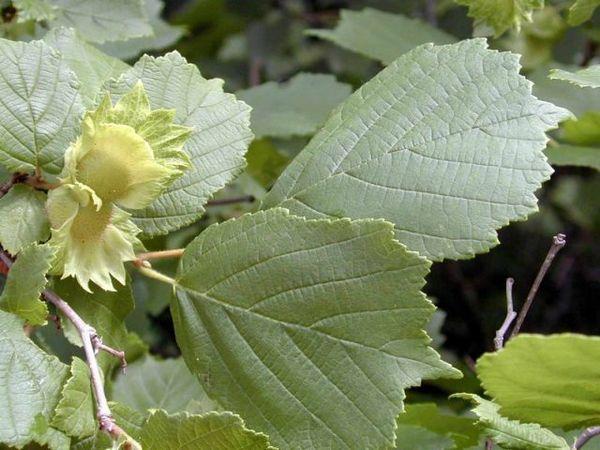
The leaves are large, oval, and serrated along the edges. The leaflets are a rich green. The flowers are monoecious and unisexual. Male inflorescences begin to form in the fall and bloom in the spring. The plant blooms from the second ten days of March to the first half of April.
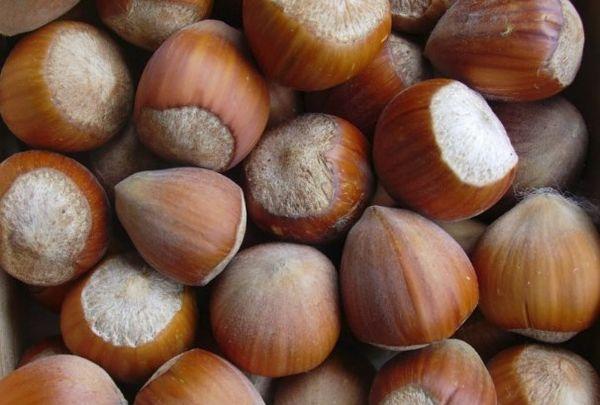
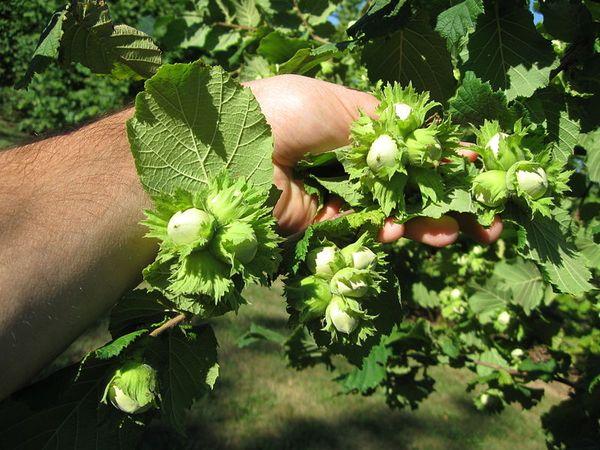
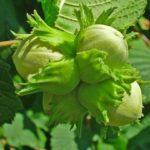
The fruit is a small nut, typically weighing 2.4-3.2 g. The nut is round, the shell is strong, and the kernel takes up most of the shell. The nut is covered with a green sheath. Closer to autumn, when the nut is fully ripe, it may fall out of the sheath.
Features of the region
The Moscow region has a temperate climate. Summers are warm, with moderate precipitation. Winters can be mild or freezing. Although hazelnuts are frost-hardy, they may not survive severe frosts, so it's recommended to consider covering the bush for the winter.
Recommended varieties
Hazelnuts generally prefer to grow in subtropical or temperate climates. For planting in the Moscow region, it is recommended to choose frost-resistant varieties with a mid-early ripening period.
Tambov early
The shrub is medium-sized, with spreading branches. The plant has medium foliage. Branches average 3-3.5 m in height. The leaves are oval-shaped, with serrated edges. The shell of the ripe nut is thin, golden in color, and cracks easily. The harvest ripens around the second ten days of August.
Moscow Ruby
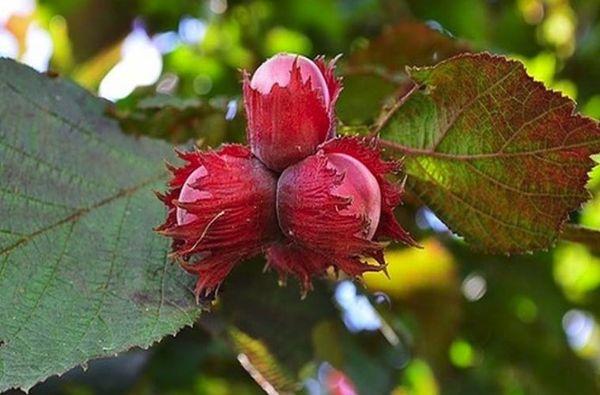
This hybrid is a mid-late variety, with the harvest ripening towards the end of September. The shrub has multi-stemmed branches with spreading habits. It reaches a height of almost 4 meters. This hybrid has an unusual foliage hue: in early summer, it is a rich purple, turning a brownish-burgundy as summer approaches. The fruits are large, weighing from 2.4 to 4 grams.
Firstborn
Among the advantages of this hybrid are its good frost resistance—the plant can survive temperatures down to -40°C—and its immunity to most walnut diseases. The mature bush is spreading, and young shoots grow rapidly. The nuts are medium-sized, weighing up to 2.5 g. The shell is brown, and the kernel occupies most of the space inside.
Sugary
This hybrid has red leaves with purple hues. This variety can also be planted as an ornamental. The harvest reaches full maturity in late August to early September. The shrub is medium-sized, with branches averaging 3.5 m in height. The nut shells are dark brown, with distinct stripes.
Smolin
The Smolin hybrid was obtained by crossing green-leaved and red-leaved hazelnut varietiesThe foliage and nut shells are purple. The shrub is vigorous and productive. Frost resistance is another advantage. The nuts are medium-sized and oblong. 10-12 nuts form in clusters.
Masha
The Masha hybrid was created by crossing a red-leaved variety with the Tambov early variety. The nuts are elongated and small. The shell is thin and cracks easily. It is resistant to frosty winters.
Pushkinsky
This hybrid was obtained by crossing varieties from the Yablokov Hybrid Collection. The nuts are large, with 10-12 nuts forming in clusters. The plant is winter-hardy. It can also be planted as an ornamental shrub.
Academician Yablokov
The plant begins to bear fruit around May. A single cluster contains up to 13 nuts. The shrub is quite decorative. The crown is spreading and dense. The hybrid is resistant to low winter temperatures.
How to plant correctly
Planting hazel In the Moscow region, the process is no different from planting any other tree sapling. Before planting, you need to choose a favorable time and prepare the site in advance.
Recommendations for choosing deadlines
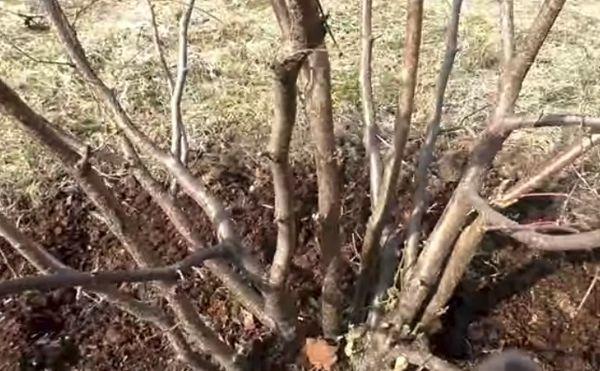
Hazelnut seedlings can be planted twice a year—in spring or fall. In spring, the bush is planted in open ground before the sap begins to flow.
In autumn, the optimal time for planting is 15-20 days before the onset of frost. However, it is recommended to plant seedlings in autumn rather than spring.
Selection and preparation of planting material
Only strong and healthy seedlings are suitable for planting. When choosing a bush, first pay attention to the root system. It should be well developed, with no kinks or dry spots. When bent, the roots should bend easily and not break. The branches should be strong, elastic, and show no signs of damage. There should be no dead twigs.
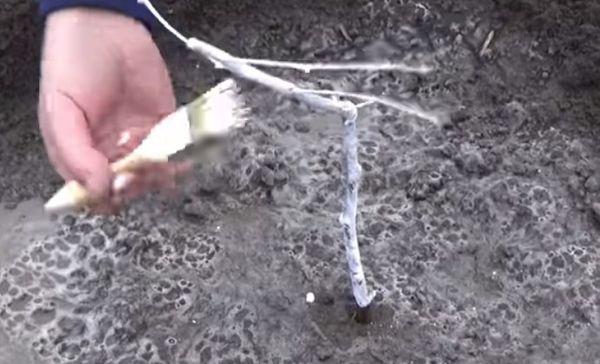
Soak the root system in a liquid clay solution 20 minutes before planting. Plant the seedling immediately, before the clay has time to dry.
Requirements for the location
Hazelnuts aren't picky about their growing location. The key is a well-lit area protected from strong winds. They can also be planted in partial shade, but the key is to ensure they receive full sun for most of the day. Ideally, they should be planted near walls on a south or west side.
The soil shouldn't be heavy or poor. Light, well-drained, and nutritious soil is best for planting. The soil's acidity is also important. It should be slightly or neutrally acidic.
Site and soil preparation
A few weeks before planting, the soil is dug to a depth of 15-20 cm. All growing weeds are then pulled out. The soil is then mixed with complex mineral fertilizer. After four weeks, the seedling can be planted in its permanent location.

Planting diagram
The seedling should be free of foliage before planting. If several plants are planned in the same area, leave a distance of up to 4 meters between them.
- Dig a hole 80-90 cm deep.
- The width of the pit is 75 cm.
- Fine drainage is poured into the bottom.
- Then a seedling is placed in it.
- Fill the hole with soil and lightly compact it around the trunk.
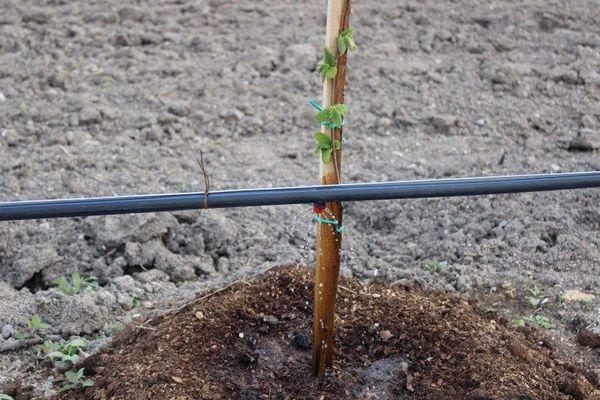
A wooden stake is driven in next to the seedling to prevent it from being blown around by strong winds. At the end of planting, the hazel tree is watered generously with warm water.
Care instructions
After planting, it's important to remember that hazelnuts require care to ensure normal growth and abundant fruiting. First and foremost, it's crucial to ensure regular application of mineral and organic fertilizers and proper watering.
Loosening and weeding
Several times a month before watering, weed the soil to a depth of 15 cm. During weeding, pull out all the weeds.
Weeding before watering will ensure that the root system receives oxygen along with the water, which in turn will have a positive effect on the harvest.
Mulching
Hazelnuts are mulched with peat, sawdust, or agrofibre. The mulch layer should be at least 15 cm thick. Before mulching, the soil is dug over and all weeds are removed. Only then is the mulch layer applied.
Watering
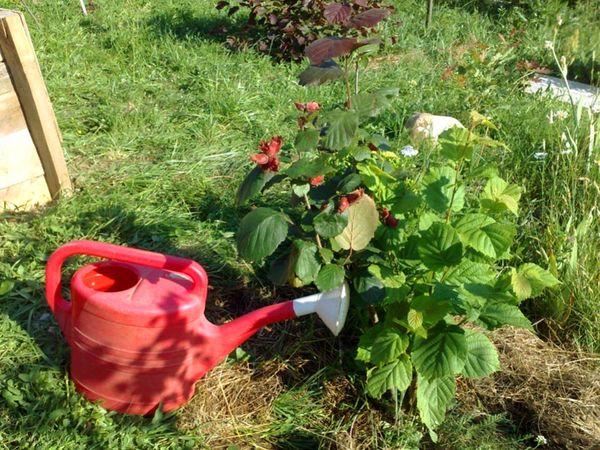
Hazelnuts require ample watering. After planting, the seedling should be watered 7 days later. During the growing season, the plant should be watered 6-7 times. During rainy weather, the frequency of watering should be reduced. On average, one tree requires 60-80 liters of water.
Top dressing
Phosphorus and potassium are added to the soil in the fall every 2-3 years. In the spring, immediately after the buds swell, the hazelnuts are watered with nitrogen-containing fertilizers. Nitrogen is added again in June, when the ovaries are forming. Well-rotted manure or compost is added to the soil every 2-3 years.
Formation
Another important procedure that should not be forgotten is bush shaping.
Tiered
All thin shoots in the center should be trimmed, leaving strong branches on the periphery of the bush. Pruning should be done before the hazelnut tree begins to bloom.
Cup-shaped
Hazelnut trees are left at a height of 2-3 m, and the stems are left at a height of up to 40 cm. When the plant reaches 4 years of age, 6-7 skeletal shoots are left, and the rest are cut off. A mature tree should have no more than 15 branches.
Improved-tiered
Pruning is done immediately after planting. Leave 6-7 buds, and cut branches back to 15-20 cm. In the second year, prune the weakest shoots. Remove some branches from the center of the bush. In the fall, shorten the central conductor.
Diseases and pests
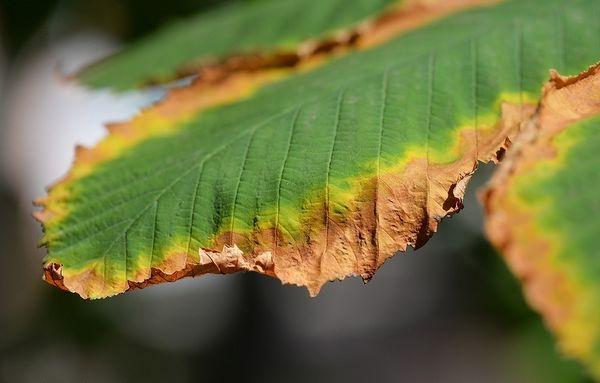
When growing hazelnuts, you may encounter pests or diseases.
Animals
Squirrels can eat nuts. You can scare them with sounds. Place a radio near the hazel bush and turn it up loud. Squirrels will be frightened by the human voice. You can also set up flashlights or hang CDs.
Longhorn beetle
After harvesting, the soil is dug over and then pruned for sanitary purposes. In early spring, the hazel trees are sprayed with Karbofos or Bordeaux mixture.
Nut weevil
In late April and early May, hazel trees are sprayed with an intestinal poison called "Fuzalon." In early spring and late fall, the soil is dug up, all leaves are raked up, and dead branches are destroyed.
Take a look Also

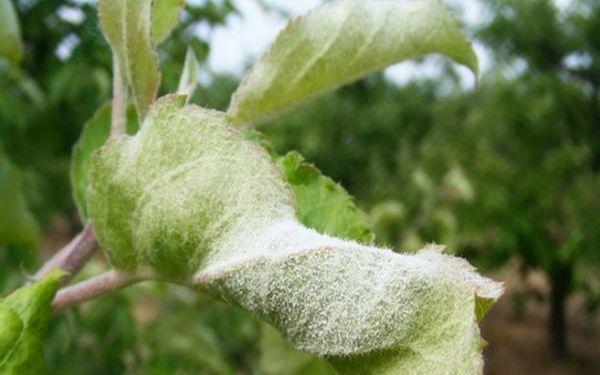
Powdery mildew
In early spring, hazel trees are sprayed with copper sulfate or Bordeaux mixture. If disease symptoms appear, use Thiovit Jet, Skor, or Raek.
Alder leaf beetle
In April and May, hazelnuts are treated with "Karbofos" or "Rogor." In the second half of June, the soil around the hazel tree should be dug over.
Hazelnut barbel
Dry and damaged branches are cut off and destroyed along with fallen leaves. In early May, hazelnuts are sprayed with "Karbofos" or "Bi-58."
Reproduction
There are four ways to propagate hazel.
Layering
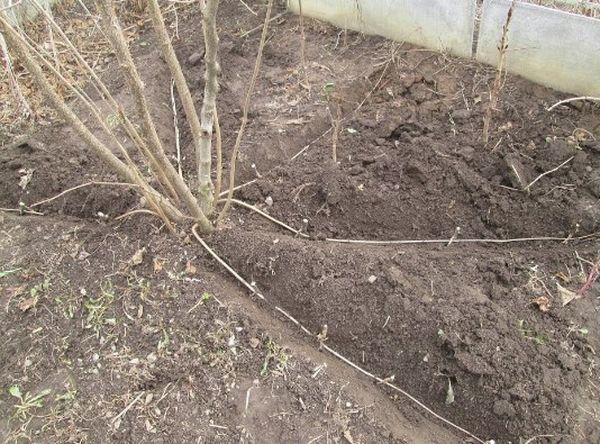
In the fall, select a sturdy branch growing close to the ground. Dig a shallow furrow, place the branch in it, cover with soil, and firm it up. In the spring, the branch will begin to produce shoots. Once the root system has formed, the shoots are separated and replanted.
Children
Young shoots grow near the bush. These can also be used to propagate hazel. To do this, dig up the shoots growing slightly further from the bush. These are dug up and separated from the mother plant. Then, transplant them to a new location.
By vaccination
Propagation by grafting:
- Four buds are left on the cutting, the top is cut off evenly, the lower part at an angle of 45 degrees.
- The top of the rootstock is also cut off at an angle of 45 degrees and a tongue is cut out, into which the cutting is then inserted.
The scion is secured to the rootstock with a thick band. Once it has taken root, the band is removed.
Dividing the bush
Hazelnut bushes are dug up and chopped into several pieces with a shovel. Each piece is then planted separately.
Harvesting and storage
Hazelnut harvesting depends on the variety of the bush, but the nuts typically ripen around the first days of August. Hazelnuts can be harvested after they begin to fall from the bush or as soon as the nuts ripen.
It's recommended to store the harvested hazelnuts in a cool place away from sunlight. The nuts should be laid out in a single layer on burlap. The hazelnut harvest can be stored for several months. You can sort the nuts beforehand and discard any damaged ones immediately.
Tips from experienced gardeners
Tips for growing hazelnuts:
- If other shrubs or trees grow nearby, the distance between them should be at least 4 m.
- After planting in the fall, it is advisable to cover the seedlings to protect them from frost.
- The bush needs to be watered in parts so that the water is immediately absorbed and does not stagnate.
Growing hazelnuts on your own plot is no more difficult than any other fruit tree or shrub.
Related posts:
 Description and characteristics of the 30 best hazelnut varieties, cultivation
 Description of the 20 best varieties and types of barberry, planting and care rules
 Description and propagation of the Bessey cherry variety, planting and care rules
 Description and cultivation of the best varieties of felt cherry, planting and care
 Planting and caring for black elderberry in open ground, propagation methods
 Description and characteristics of the 60 best sea buckthorn varieties, how to choose depending on the region
 Planting and caring for hazelnuts in Siberia, growing hazelnuts
 Planting and caring for Japanese quince in open ground, growing and propagating