
- The history of Bessey cherry breeding
- Pros and cons: is it worth planting in your garden?
- Characteristics of the Peschanaya variety
- Distribution area
- Tree size and root system branching
- Flowering and pollinating varieties
- Berries ripening time
- Harvesting and use of the crop
- What conditions does culture require?
- Climate
- Suitable soil composition
- What to plant next to it
- Features of cultivation
- Preparing the seedling and planting hole
- Timing and technological process of planting
- Care Features
- Watering
- Top dressing
- Caring for the tree trunk circle
- Formative and rejuvenating pruning
- Preparing the tree for frost
- Diseases and pests: treatment and prevention
- Reproduction
- Seed
- Cuttings
- Layering
- Reviews of the variety
The Peschanaya or Bessey cherry is a dwarf shrub that tolerates neither frost nor drought. It can grow in any soil except clay, as it does not tolerate stagnant water or high humidity. It is rarely susceptible to disease, and its crown requires pruning only in the first few years of growth. In August, it produces a consistently high yield of tart berries, which are best not picked until the cold weather sets in. As the cherries dry in the sun, they become sweeter.
The history of Bessey cherry breeding
Bessey cherry is native to North America. There, this low shrub grows in sandy soils along the shores of lakes and rivers, and is even found in prairies. Bessey cherry is a subspecies of the sand cherry, which is common in America. The shrub's botanical characteristics were first described in the 19th century by Carl Bessey. The cultivar was named after this scientist..
In Russia, this shrub is called Bessey's cherry or Sandy cherry. It's important to remember that all microcherries are related to plums. Sandy cherry does not graft onto true cherry trees, but crosses only with plums and apricots.
In the United States, active efforts to develop new varieties of this crop have been underway since the beginning of the last century. Popular American varieties of Bessey's sand cherry include Black Beauty, Golden Boy, Elais, Brooks, Honeywood, and South Dakota Ruby. Sand cherry was introduced to Russia at the beginning of the last century.
Ivan Michurin was the first to draw attention to the microcherry. The biologist recommended growing the low-growing shrub as an ornamental and protective crop. About 29 varieties of steppe shrub cherry have been developed in Russia, each possessing a number of beneficial characteristics.

Pros and cons: is it worth planting in your garden?
Advantages of Bessey cherry:
- high frost resistance;
- drought resistance;
- ease of care;
- undemanding to soil composition;
- early fruit bearing;
- high yield;
- the possibility of growing it as an ornamental crop and for its edible berries.
Disadvantages of sand cherry:
- does not tolerate high humidity well;
- specific (tart) taste of berries;
- With age, the bush loses its decorative properties.
Characteristics of the Peschanaya variety
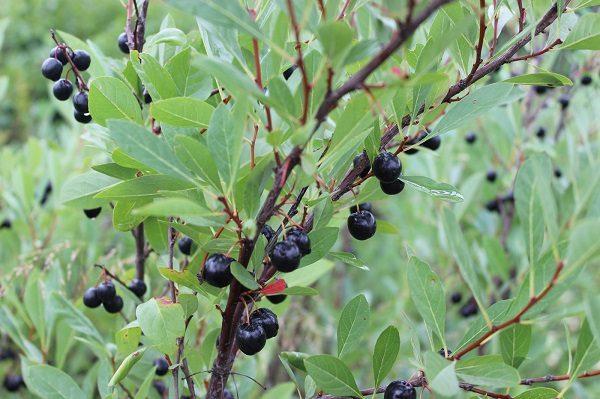
The Bessey cherry, or Peschanaya cherry, is a low-growing shrub that grows in sandy, sandy loam, and loamy soils. It is used as a garden ornamental. The berries are edible but tart.
Distribution area
Sand cherry can grow in regions with harsh climates where other stone fruit trees fail or freeze to death. This frost-hardy shrub adapts to any climate. Sand cherry can grow in steppe soil, especially in sandy, poor soil. It is drought-resistant. The shrub is cultivated in the Urals, Siberia, Asia, and central Russia.
Tree size and root system branching
The Peschanaya cherry is a spreading shrub growing 1-1.5 meters tall. The shape of the bush depends on the plant's age. A young tree has a compact crown, with reddish branches growing horizontally upward. A mature tree has grayish branches that grow horizontally, spreading along the ground surface, and the crown becomes more spread out with age.

The root system helps maintain the plant's upright position and facilitates the absorption of nutrients from the soil. The bulk of the roots are located at a depth of up to 40 centimeters. The root system has vertical (up to 1.5 meters long) and horizontal branches. The horizontal roots extend radially from the trunk at a depth of 10-30 centimeters.
The leaves are oblong, pointed, 5 centimeters long, smooth, harder than those of cherries, similar to willow leaves.
The underside is silvery, the top is dark green. In autumn, the leaves of the microcherry tree turn orange-red. The flowers are small, 1.8 centimeters in diameter, gathered in clusters of 2-3. In their place, small pitted berries appear in late summer.
Flowering and pollinating varieties
Flowers appear in late May. White or soft pink fragrant inflorescences fill the garden with a sweet aroma. The microcherry blossoms last about 20 days.
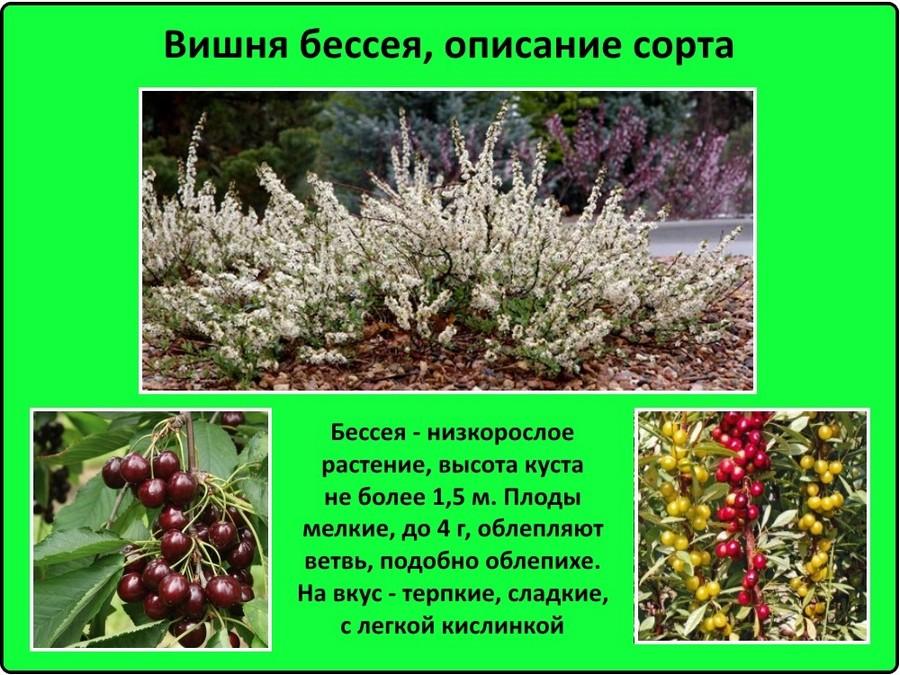
Bessey cherry is partially self-fertile. For best pollination, plant several pollinators nearby. Common plums, plum-cherry hybrids, and other varieties of sand cherry can be used for this purpose.
Berries ripening time
Depending on the variety, the berries can be yellowish-green, bright red, or dark cherry. Their flavor is similar to bird cherry—sweet, slightly tart, astringent, and slightly sour. Each berry weighs 1.5 to 5 grams and is 10-15 millimeters in diameter. Their shape is round, oval, or slightly oblong.
They ripen in August-September. The fruits do not fall off and can hang on the branches for a long time.
In a dry and hot autumn, cherries hanging on the branches for a long time dry out, lose their tartness, and become sweet.
Harvesting and use of the crop
The Bessey cherry tree begins bearing fruit in the second year after planting. The shrub lives for about 15 years. Peak yield occurs at age five. Low-growing branches are densely covered with fruit (like sea buckthorn). A single bush can yield up to 10 kilograms of berries. Bessey cherry trees begin to shed their leaves late. The shrubs sometimes go into hibernation with their leaves. The berries are used to make preserves, jellies, compotes, and juices; the fruits are also dried and frozen.

What conditions does culture require?
Bessey cherry can be planted on a mound, a low hill, or on a slope. It's best not to plant the shrub in low-lying areas where water will accumulate after rain. In waterlogged soils, the cherry will rot and become damp.
Climate
Sand cherry trees thrive in sunny, elevated sites protected from northern winds. The shrub can grow in any climate zone in Russia. This microcherry tree blooms late, is resistant to spring frosts, and produces a good harvest of berries even in northern regions. Bessey cherry trees adapt well to any conditions.
Suitable soil composition
Bessey cherry grows well in sod-podzolic, chernozem, and forest soils. It does not tolerate acidic soils. It is advisable to lime the soil before planting. If the soil acidity is unknown, dolomite flour can be applied. This additive will not harm the cherry tree, but will reduce its acidity. In acidic soils, microcherries will often become diseased.
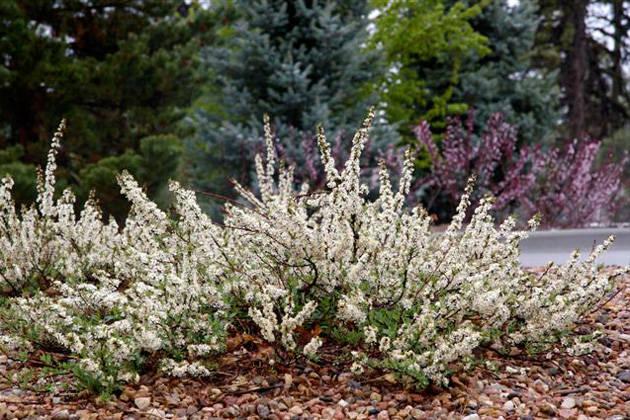
The shrub thrives in sandy, sandy loam, or loamy soil with a neutral pH. Excessively clayey soil can be diluted with sand. For poor soil, add a bucket of humus or compost.
What to plant next to it
Plums, apricots, almonds, sloes, and other varieties of sand cherry can be planted near the Bessey cherry tree. Trees and shrubs should preferably be planted 2-3 meters away from the microcherry tree. It's best not to plant gooseberry, raspberry, or sea buckthorn bushes near the Bessey cherry tree. The roots of these plants will spread throughout the garden and become entangled.

Features of cultivation
To plant, you need to purchase a 1-2 year-old Bessey cherry tree sapling. A young shrub up to 60 centimeters tall may have several shoots growing from the base.

Preparing the seedling and planting hole
The purchased seedling should have a healthy root system. The roots can be soaked in water with Kornevin or Heteroauxin for 5 hours. The hole is dug two weeks before planting. The top, fertile soil layer is set aside. The hole should be 65 centimeters deep and 75 centimeters wide. The excavated soil is mixed with a bucket of compost, peat, and sand.
Add 300 grams of wood ash, a cup of crushed eggshells, 100 grams each of superphosphate and potassium sulfate. Leave 2-3 meters of clearance from neighboring bushes or trees.
Timing and technological process of planting
It's recommended to plant Bessey cherry in the spring (April)—before bud break and sap begins to flow. A container-grown seedling with closed roots can be planted in the summer or early fall (before September 25, a month before the onset of frost).

Sometimes, when gardeners are late planting, they bury young bushes at an angle, insulate them, and plant them the following spring. They mound up some of the selected and fertilized soil into the hole, place the seedling on top, straighten its roots, and cover with the remaining soil.
The root collar should not be buried deep; it should be 5 centimeters above the soil level. The container-bought shrub is moved into the hole along with the soil ball. After planting, the soil is lightly compacted. A bucket of water is poured under the root. In the spring, the main shoot is cut back by 10 centimeters.
Care Features
The Bessey cherry tree grows vigorously during its first four years, with annual growth of 35-45 centimeters. It's during this period that the shrub requires high-quality care and fertilization.
Watering
Young seedlings should be watered weekly for the first month after planting. A bucket of water should be poured under the roots. Mature shrubs should be watered in hot and dry weather. One to two buckets of water should be poured under the roots. Watering Bessey cherry trees in the rain is not recommended.

Top dressing
During the first few years of its life, a young shrub requires enhanced nutrition with organic and mineral nutrients. In early spring, add half a bucket of rotted humus or compost to a depth of 10 centimeters around the trunk. In May, the shrub can be fertilized with ammonium nitrate (30 grams per 10 liters of water).
In summer, the bush is watered with a solution of superphosphate and potassium sulfate (35 grams per 10 liters of liquid).
Cherry trees can be fed with Kemira-Universal, a universal fertilizer. In the fall, water the bush with a Fertika solution or add a small amount of superphosphate and potassium sulfate to the soil.
Caring for the tree trunk circle
After watering, loosen the soil around the shrub, break up any crust, and remove weeds. To reduce moisture evaporation, the soil surface can be mulched with sawdust, peat, or hay.

Formative and rejuvenating pruning
On a one-year-old seedling, the main shoot is pruned back by 10 centimeters. The shrub then forms its own crown using shoots growing from the base. In the third year, in the spring, the crown is thinned, removing inward-facing or crossing branches. Eight to eleven skeletal branches are left. In the fall, after the leaves have fallen, sanitary pruning is performed. Diseased and broken branches are removed.
It's important to remember that most berries appear on one-year-old shoots. Fruit grows poorly on older branches. Branches older than five years should be pruned periodically and replaced with younger ones. Cuts can be treated with copper sulfate and garden pitch.
Take a look Also

Preparing the tree for frost
Bessey cherry tolerates winters well without shelter, but a young sapling can be insulated before frost sets in. A mound of peat and humus is placed under the base of the bush and covered with spruce branches. It's best to insulate the bush in November, not earlier.

Diseases and pests: treatment and prevention
Bessey cherry trees rarely get sick. However, during cool, rainy summers, the shrub can be susceptible to fungal or viral infections. Common diseases of sand cherry trees include leaf hole spot, coccomycosis (brownish spots on leaf blades), and moniliosis (drying and dropping of flower buds). All of these diseases are accompanied by gummosis.
As a preventative measure, the shrub is whitewashed with lime in early spring, and the area around the trunk is watered with Bordeaux mixture. The foliage is sprayed with fungicide solutions (Fitosporin-M, Horus, Quadris) before and after flowering.
All diseased leaves and flowers must be picked and burned.
In summer, the microcherry is attacked by insects: aphids, plum fruit moth, cherry weevilSpraying with insecticides (Karbofos, Actellik, Citcor) helps to cope with pests.

Reproduction
Sand cherry trees are propagated in a variety of ways: by seeds, cuttings, and layering. Older bushes produce shoots that can be used for propagation.
Seed
Ripe berry seeds should be stratified for 2-3 months. Seeds can be planted outdoors in the fall (late September) or spring (April, after the snow melts). Some gardeners prefer to grow the seedlings in a container first. To do this, fill the container with water-soaked sphagnum moss. The seeds are soaked in water for 7 days, then planted in damp moss for a couple of weeks.

To allow the seeds to germinate, place the container in a cool place (0-3°C) for two months. Once sprouted, transfer the seeds to a warmer room and transplant them into a box with fertile soil.
Cuttings
Sand cherry can be propagated by slightly woody cuttings. Young shoots with buds and leaves, 10 centimeters long, are cut in the spring.
Tear off the lower leaves and place them in a glass with a growth stimulator for 2 days.
The cuttings are then planted in moist peat-sand soil and covered with a plastic bottle with no bottom or lid. Roots appear within 2-4 weeks. The young seedling is transferred to the garden, watered throughout the summer, and covered for the winter.
Layering
Bessey cherry can be propagated by layering. To do this, bend the lower branches down to the ground and cover them with fertile soil. The tip of the shoot should be brought out. By autumn, roots and new shoots will appear. The offshoots are separated from the mother bush and planted in their permanent location. Young seedlings are insulated for the winter.
Reviews of the variety
Natasha.
"They say dwarf cherries are easy to care for. This is true, but the bush can be fertilized to increase yield. The plant survives winter well even without cover. It produces its maximum fruit in the fifth year."
Related posts:
 Description and cultivation of the best varieties of felt cherry, planting and care
 Description and pollinators of the Vladimirskaya cherry variety, planting and care
 20 Best Cherry Varieties for the Central Russian Region with Descriptions and Characteristics
 Description and characteristics of 17 dwarf cherry varieties, planting and care
 Description and varieties of Zhelezistaya cherry, planting and care
 Description and varieties of cherry variety Shpanka, planting and care
 Characteristics and description of shrub cherry varieties, planting and care rules
 Description of the 25 best cherry varieties for the Urals and Siberia, planting and care in open ground