
- Botanical characteristics of the Canary Island date palm
- Benefits and characteristics of the plant
- Varieties of the variety
- Is it possible to grow from a seed?
- Will the palm tree bear fruit?
- What you will need
- Capacity and drainage
- Required soil composition
- Selecting and preparing seeds for planting
- Step-by-step algorithm for planting a seed
- Necessary conditions for crop germination
- Placement and lighting
- Optimal temperature conditions
- Ventilation
- How to care for a sprout
- Watering
- Fertilization
- Leaf pruning
- Transfer
- Methods of reproduction
- Possible problems and their solutions
- Pests and diseases: prevention and treatment
- The leaves turn yellow and darken
- Lack of growth
Date palms have been cultivated by humans for thousands of years. For small cultures, date trees provide not only tasty and nutritious fruits but also building materials. One of the most colorful and decorative palm trees is the Canary Island date palm.
In temperate climates, this exotic tree is grown in greenhouses or indoors. In summer, the Canary Island date palm will become the centerpiece of any garden.
Botanical characteristics of the Canary Island date palm
The Canary Islands are considered the Canary Island's homeland. In the wild, these trees grow in the rainforests of South Asia and Africa.
Today, the Canary Island date palm, or Luxor date palm, is found in all regions with tropical and subtropical climates.
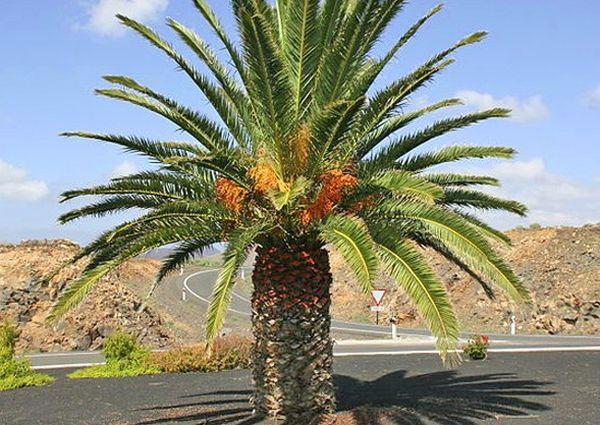
In the wild, the palm tree grows to an average height of 15 to 25 m. A date palm tree grown in a greenhouse or at home will reach a height of 1.5 to 2 m.
The trunk of this perennial palm is straight, with multiple scars left by the shedding of its leaves. The crown is lush and concentrated at the top of the tree.
Each leaf blade bears up to 150 sharp, narrow leaflets of silvery-green hues. The leaf blade of a mature tree can reach 6 m in length. In mature trees, long, sharp spines develop on the underside of the leaf blade.
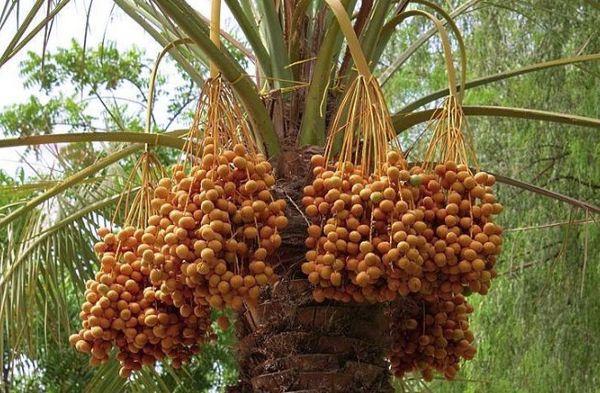
During the flowering period, inflorescences appear on the tree: male, cream-colored, and large female, yellow and orange flowers.
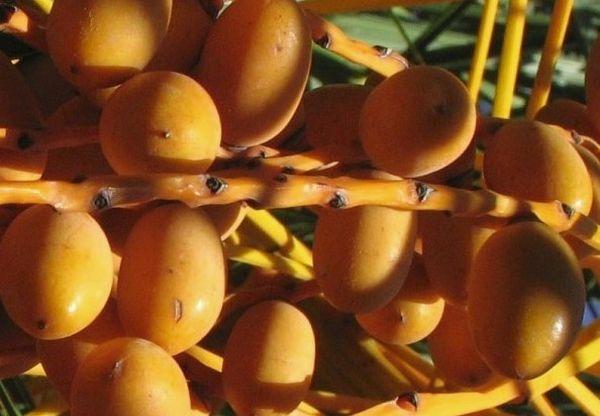
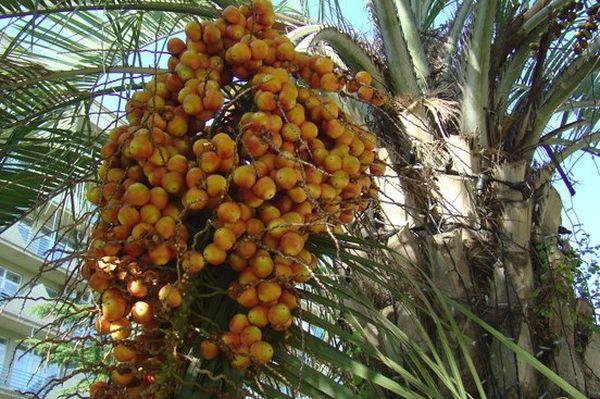
In place of the flowers, small, sweet and fleshy fruits of orange shades are formed, each of which contains a large seed.
Interesting! African tribes still use large palm leaves to cover their roofs.
Benefits and characteristics of the plant
The main advantage of the Canary Island date palm is its low maintenance requirements. With good lighting and timely watering, the tree grows and thrives quickly.
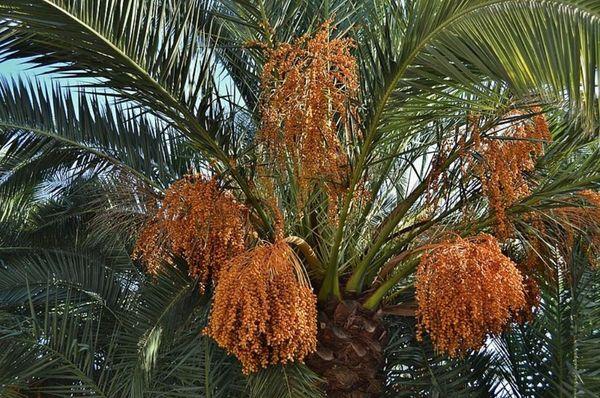
The Canary Island Date palm takes root well and purifies indoor air from the negative impact of the environment.
This exotic plant is grown in winter gardens, greenhouses, conservatories, loggias, and indoors. Indoors, date palms thrive in a well-lit, open space.
Varieties of the variety
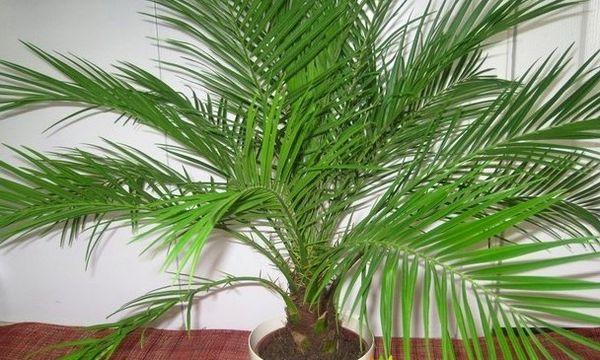
Luxor, a variety of Canary Island date palm, is adapted for indoor cultivation. The tree is distinguished by its compact size, growing from 1.5 to 2 meters with proper care. The crown is lush and branched, with numerous large, feathery leaves in vibrant green hues.
The miniature palm tree is used for landscaping apartments, houses and office premises.

Important! The Luxor palm will grow lush and beautiful only with good sunlight and high humidity.
Is it possible to grow from a seed?
For propagation of date palms, the seed method is most often used.
Growing a palm tree from seed takes a lot of time, but with the right steps, the gardener will get a beautiful, exotic plant.
Fresh date seeds are required for planting.
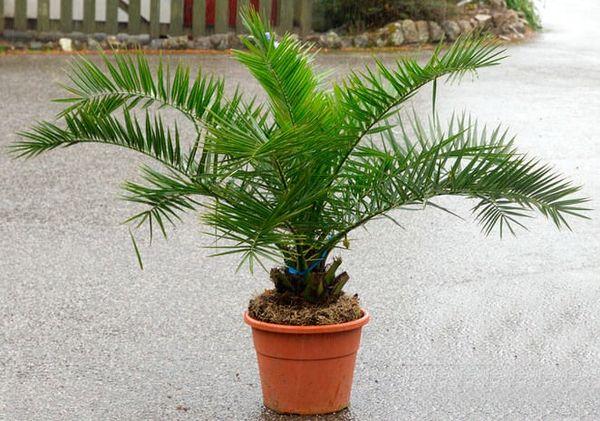
Will the palm tree bear fruit?
In their natural environment, with its hot climate and high humidity, date palms begin to bear fruit at a height of 15 meters. A compact, exotic plant grown indoors has excellent ornamental qualities, but will not flower or bear fruit.
Interesting! The Canary Island date palm tree produces its heartwood, which is then used to make syrup.
What you will need
Before planting the Canary Island date palm, stock up on fresh seeds and be patient. Germination of this exotic tree's seeds takes 2 to 4 months.
Capacity and drainage
Palm tree rhizomes develop in depth, so deep and tall pots are chosen for planting.
A thick drainage layer of small stones, crushed stone or pebbles is placed on the bottom of the container in which Luxor is planned to be planted.
Stagnant water in the pot will lead to rotting of the root system and death of the tree.
Required soil composition
Soil for planting date pits can be purchased at flower shops or prepared independently.
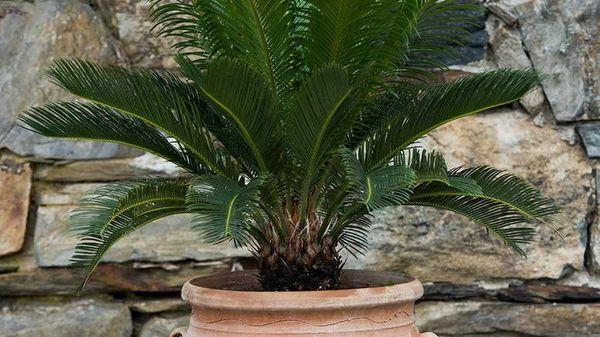
To do this, mix peat, compost, light, turfy soil, charcoal, and sand. Add a little organic matter to the mixture.
If you can't prepare the soil yourself, buy universal soil for growing flowers at the store.
Selecting and preparing seeds for planting
The main condition when choosing planting material is that the palm seeds should not be subjected to heat treatment.
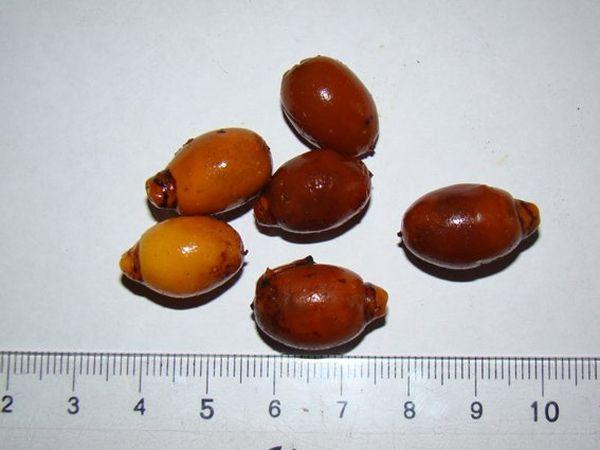
You can simply plant the seeds in fertile soil and wait 5-6 months for the first shoots to appear. However, to speed up the germination of date seeds, you'll need to take the following steps:
- The date pits are thoroughly cleaned and washed, then dried.
- Before soaking, the seeds are scalded with boiling water or small cuts are made on them. This will allow moisture to penetrate the seed more quickly.
- To soak the date pit, you will need any natural fabric or cotton wool.
- The seeds are wrapped in material and thoroughly moistened.
- The container with seeds wrapped in a wet cloth is placed in a warm place.
- Until the stone swells, constant moisture is maintained.
- As soon as the seeds have increased in volume, they are transplanted into fertile soil.
Important! For germination, prepare several date pits. Dates are prone to disease and death if transplanted incorrectly, so to ensure a healthy and beautiful tree, it's best to be on the safe side.
Step-by-step algorithm for planting a seed
The process of planting a prepared date pit is simple and does not take much time.
- Fertile soil is poured into the prepared pot.
- The soaked seeds are placed vertically into the soil at a level of 1 to 1.5 cm from the soil surface.
- The seeds are covered with a layer of soil and watered.
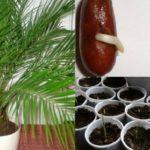
- Place the date pots in a warm, well-ventilated, and humid area and cover with plastic wrap. Remove the plastic wrap once the first shoots appear.
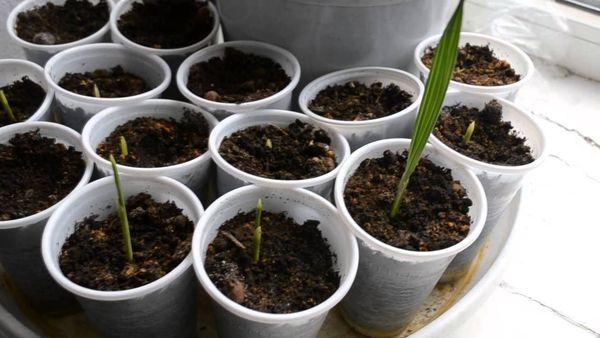
- As the tree sprouts, it pushes its bony shell to the soil surface, exposing its roots. Prevent the shoot from becoming exposed; periodically add fertile soil.
- The first above-ground shoots appear after 1.5-2 months. Young plants are transplanted into individual containers.
Take a look Also
Tip! The best time to germinate date palm seeds is early spring. In this case, during the summer period the shoots will take root and survive, receiving a sufficient amount of sunlight and warmth.
Necessary conditions for crop germination
To germinate a date palm seed at home, it is important to maintain the correct temperature and humidity levels for the plant.
Placement and lighting
The Canary Island date palm will grow beautifully and healthy only with good light. Place the seed pots on south-facing windowsills.
Luxor, an exotic plant, requires year-round sunlight. In winter, the tree is provided with additional lighting, and the plant pot is rotated evenly to ensure each side receives an equal amount of light.
Optimal temperature conditions
When humidity is low, the Canary Island date palm begins to suffer. The tree's leaves dry up and fall off. The tree and the surrounding area are additionally sprayed with water to create comfortable conditions for growth and development.
When sprouting seeds, maintaining proper temperature is also important. Maintain a temperature of at least 22 degrees Celsius in the room where the seed pots are kept. If the temperature rises, add additional humidity.
Ventilation
As the Luxor grows and develops, it requires a fresh air supply. Until the seeds germinate, remove the film daily and air out the pots containing the plant.
In the summer, an adult palm tree is taken out to the garden plot; in the winter, the room where the pot with the tree is located is ventilated.
Important! When ventilating the room, avoid excessive temperature changes.
How to care for a sprout
The Canary Island date palm is an easy-to-grow plant. Simply follow the care instructions, which include watering, maintaining humidity, and fertilizing this exotic plant regularly.
Watering
Young shoots require frequent and thorough watering. Irrigation should be carried out as soon as the top layer of soil dries out.
Date palm seedlings don't respond well to overwatering. Stagnant water in the pot causes the leaves to soften and discolor. Underwatering also doesn't work for the shoots. The green leaves droop and don't recover.
Water the tree with warm, settled water. Reduce irrigation during the winter.
Fertilization
Supplemental nutrition is essential for a growing plant. Mineral and organic fertilizers are used alternately for supplementation.
During the spring and summer, seedlings are fed once every 10-12 days. In winter, feeding is reduced to once a month.
Leaf pruning
The crown of a date palm develops as the plant grows and develops. First, broken, dry, and dead leaves are pruned.
The leaves are cut carefully, without damaging the trunk and roots of the plant.
During the winter, date palm trees often develop dried-out, yellowed leaves. They shouldn't be pruned, as the root system uses the dying leaves as additional nutrition, sucking out the last of their lifespan.
Transfer
During the first three years of growth, Luxor is repotted annually. This exotic plant develops roots quickly, so pots for the tree become too small.
Repotting containers are chosen that are twice the size of the previous one. For young trees, the soil is completely replaced. For larger palms, only the top layer of soil is replaced every 3-4 years.
Important! Repot carefully, avoiding damage to the plant's roots. Luxor plants don't tolerate repotting well and often become ill after being moved to a new location.
Methods of reproduction
The only acceptable method of propagation for Canary Island dates is by seed. This is done using the stones of uncooked dates.
Possible problems and their solutions
Canary Island date palms grown indoors are not susceptible to many fungal and viral diseases. Pests also rarely attack the plant. However, if the tree's appearance changes dramatically, or the leaves turn yellow or darken, it's time to take urgent measures to save this exotic plant.
Pests and diseases: prevention and treatment
When care is not properly implemented and humidity levels are low, pests can appear on trees. To prevent infestation, trees are carefully inspected, and if any uninvited guests are detected, the palm leaves are washed with running water and treated with professional pesticides.
The leaves turn yellow and darken
If a few leaves on a palm tree turn yellow, this is the first sign that they are dying. This is considered normal for the plant. However, when most of the leaves turn yellow, it means the tree is not getting enough sunlight and moisture.
Dark, dry leaf tips indicate a lack of humidity. In this case, spray the palm tree and the room with water. Large dark spots on the leaf blades can appear due to excess moisture or too low a room temperature.
Lack of growth
The tree stops growing for various reasons.
- Insufficient amount of minerals and nutrients in the soil.
- Increased acidity levels in the soil.
- Low indoor air temperature.
At temperatures below +15-17 degrees, the tree's rhizomes stop growing, which negatively affects the development of the Canary Island date palm.
Related posts:
 Growing a date palm from a seed at home, planting and care
 The benefits and harms of dates for men and women, contraindications
 Description and rules for eating royal dates, benefits and harms
 The best eggplant varieties for growing in a polycarbonate greenhouse: planting and care
 Causes and treatment of eggplant pests and diseases, how to combat them at home
 Growing and caring for hazelnuts in open ground, rules for planting hazelnuts
 Methods for planting and propagating cherries at home
 How to grow peppers from seeds at home: choosing a variety, planting, and care
The Canary palm is a species, but further down it talks about the cultivars, which are called "varieties." I didn't read any further, so I can't comment on the rest of the information.