
- Description and Features
- History of selection
- Main characteristics
- Leaves
- Escapes
- Fruit
- How to plant correctly
- Choosing a location
- Soil requirements
- Site preparation
- How to select and prepare planting material
- Recommendations for choosing deadlines
- Planting diagram
- Care instructions
- Watering mode
- Top dressing
- Support
- Preparing for winter
- How to shape a vine
- Methods of reproduction
- Green cuttings
- Layering
- Seeds
- Diseases and pests
- Gray rot
- Phyllostictosis
- Leaf beetle
- Kishmish moth
- Harvesting and storage
Among more than 30 The most popular variety of kolomikta is actinidia, developed by Dr. Shimanovsky. The breeder created a female form of the shrub—it grows quickly, withstands harsh Siberian frosts, and beautifully frames arbors, fences, and other structures. The climbing vine produces tasty and healthy berries, similar in flavor to kiwi, but it only bears fruit when a male actinidia is present in the same area.
Description and Features
In the wild, the Doctor Shimanovsky actinidia reaches a height of 30 meters, but in garden plots, the variety doesn't grow taller than 6-7 meters. However, the plant still requires sturdy supports. Actinidia vines are distinguished by their high frost resistance, pleasant jasmine-scented flowers, delicious berries, and beautifully colored leaves.
The plant will only produce fruit if both male and female varieties are present in the plot. Ideally, five female varieties are planted alongside one male seedling.
History of selection
The Kolomikta variety, Doctor Szymanowski, is named after its creator, who, together with other Polish breeders, developed a variegated plant that can withstand temperatures as low as -40°C (-40°F). Actinidia Szymanowski is sometimes called the Arctic Beauty. In the early 2000s, his variety was introduced to the domestic market and spread throughout Russia and neighboring countries.
Main characteristics
Female actinidia can produce a few berries without additional pollinators.
However, to ensure a 100% harvest, you will have to plant a male specimen of a different variety nearby.
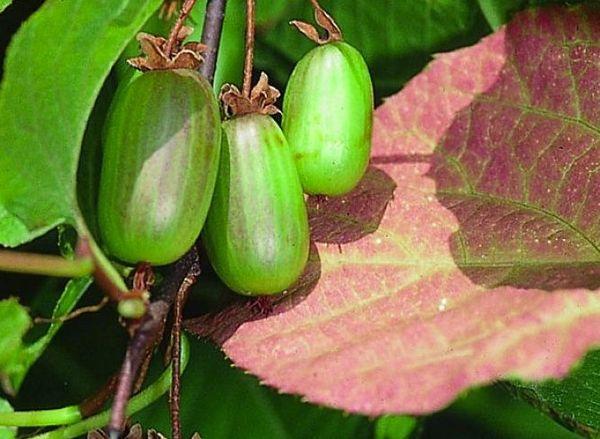
Gardeners plant actinidia not only for its tasty and healthy berries—the variety makes a beautiful frame for arbors and terraces. And thanks to its ability to change foliage color, the plant serves as a decorative ornament. Furthermore, it's low-maintenance. However, despite all these advantages, ripe berries are weak, fall easily, and ripen unevenly.
The biggest drawback is that the aroma of Shimanovsky's actinidia attracts all the local cats, who gnaw on the shoots, enjoying the juice, which has a valerian-like effect on them.
Leaves
The leaves of actinidia Doctor Shimanovsky are long and pointed, elliptical in shape, alternate, and doubly serrated.
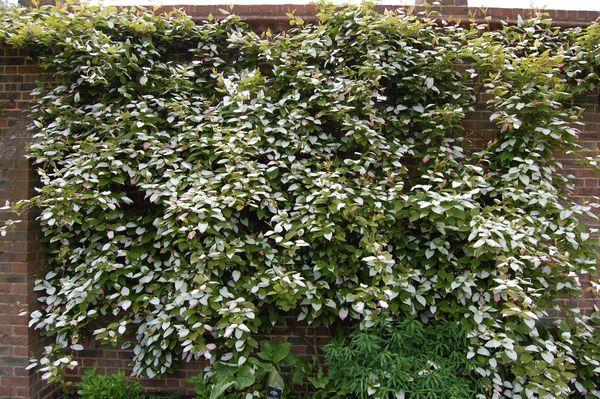
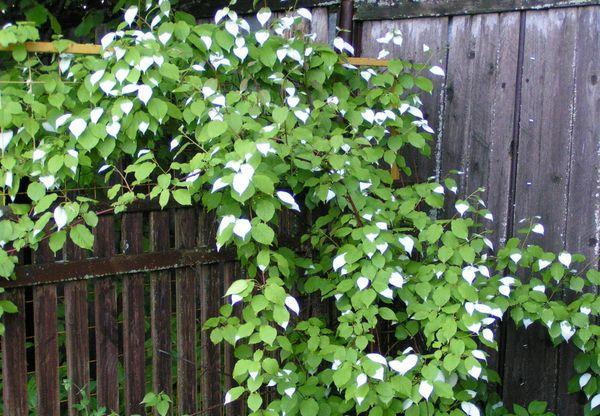
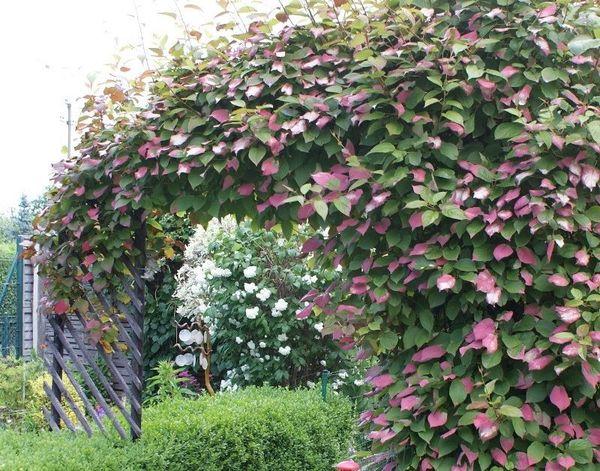
The outer leaf color begins to change in spring from light green to a deep emerald. In the second half of June, the leaf tips begin to turn white, and within three days, half the leaf is white—signaling the beginning of the actinidia kolomikta bloom. Then the leaf tips change from white to crimson or silver.
In autumn, the leaves are painted in all the colours of the rainbow, including pink, brown, red, purple, yellow and other shades.
But such a riot of colors begins 2-3 years after planting the seedling.
Escapes
Actinidia szymanowskii grows twining, vine-like shoots. The shrub is woody; as the plant grows, the lower trunk becomes stiff and thick, covered with hard, brown bark. The strong shoots twine counterclockwise around the support, clinging to it with tendrils (lenticels), which help the plant anchor itself securely. If there's nothing to cling to, the plant bends sharply toward the stem, twining around it.
Fruit
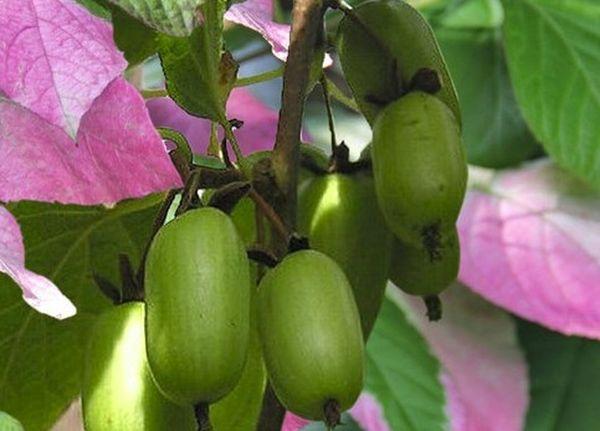
Actinidia Doctor Shimanovsky is a mid-late variety, beginning to bear fruit only after five years. In the second half of June, when the leaf tips turn white, the plant is covered with white flowers no more than 1.5 cm in diameter, exuding a strong jasmine scent.
The berries are oval, green, and sweet and sour. The fruit is aromatic, reminiscent of pineapple, kiwi, or apple, and the flesh is tender. Ripe berries are about 2.5 cm long and weigh about 3 g.
Actinidia contains a lot of vitamin C: 100 g of fruit contains about 1 g of ascorbic acid (lemon contains 10 times less, and black currant - 3 times less).
The berries ripen by the beginning of September, but they must be picked carefully, as the fruits fall off easily.
How to plant correctly
When planting, it is important to take into account the characteristics of the actinidia Doctor Shimanovsky so that the plant takes root and produces large harvests in the future.
The planting location, soil, and proper site preparation are crucial. If done correctly, actinidia will live for over 50 years.
Choosing a location
Kolomikta vines should ideally be planted on the west or southwest side of the plot, so that the plant is shaded during the first half of the day. If the actinidia is constantly exposed to shade, it will not produce fruit or berries, and the sunny side will scorch the leaves, causing them to lose their decorative appeal and damaging the root system.
Ideal neighbors for this crop include peas, black currants, beans, asters, calendula, marigolds, and petunias. Planting near fruit trees will negatively impact the roots, which will lack moisture, and the trees will take it away. Many people plant the plant along the walls of private houses, near gazebos, and fences for decoration and to protect the property from winds.
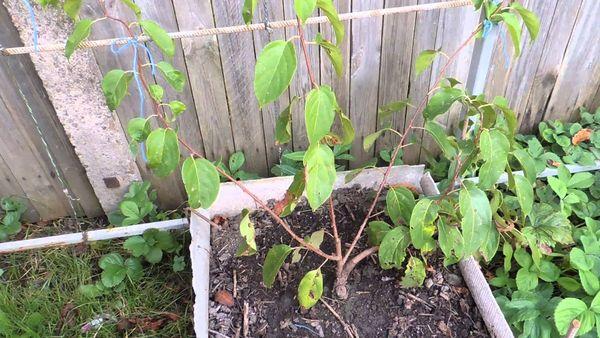
Actinidia has superficial roots, so you should not allow the soil to dry out.
Soil requirements
Actinidia prefers loose, light, sandy, slightly acidic, or neutral soils. It is not recommended to plant it in low-lying areas with excessively wet soil, or in clayey areas.
There should be no reservoir or groundwater nearby; actinidia will die in waterlogged soil.
Site preparation
12-14 days before planting actinidia seedlings Doctor Shimanovsky, it is necessary to prepare the site:
- The ground is dug up and weeds are removed.
- They dig holes measuring 60 by 60 at a distance of 1.5 m from each other.
- Place gravel or broken brick (drainage) at the bottom of the hole in a layer of about 10-13 cm to prevent water from stagnating near the roots.
- Fertile soil mixed with humus (10 kg), superphosphate (100 g), ammonium nitrate (20 g), potassium fertilizers (30 g) (or ash (200 g)) is poured on top.
- If the soil is clayey, add sand (10 liter bucket).
- A support is installed—a sturdy trellis at least 2 meters high. To do this, dig posts 2 meters apart and stretch several rows of strong wire between them.
When choosing a location for planting actinidia, it is important to consider that the plant's roots are superficial and occupy a large area, thereby suppressing other shrubs. Therefore, there should be no plantings closer than 8 m around the crop.
How to select and prepare planting material
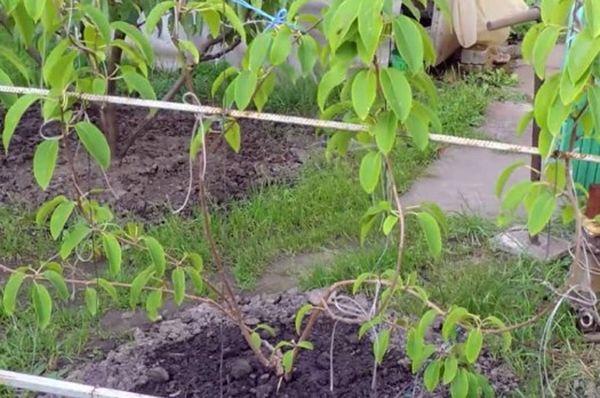
Seedlings should be purchased from specialized nurseries and centers, where each plant is carefully inspected. It's best to choose actinidias that are 2-3 years old and growing in containers. Before purchasing, inspect the seedlings:
- branches are flexible, not dry;
- leaves without spots.
You need to take the actinidia out of the packaging with a lump of earth, intertwined with roots.
Recommendations for choosing deadlines
In northern and central Russia, the plant is planted in early spring. If the growing season hasn't yet begun, it will quickly establish itself and begin growing vigorously. In the fall, the plant won't have time to adapt to the new conditions and may die at the first frost. However, if actinidia is planted in the fall in southern regions, it will thrive.
Planting diagram
It's best to plant several seedlings at once in case some die. The actinidia should be positioned from north to south, allowing the roots to remain in the shade for a sufficient period.
The seedlings are first placed in a solution of Heteroauxin or Kornevin for 30 minutes to stimulate the formation of new roots.
Next, the seedling is lowered into the prepared hole, covered with soil, leaving the root collar at ground level.
The soil is compacted to eliminate voids.
Water each with 20 liters of water, mulch with sawdust or hay in a 10 cm layer, shade with agrofibre and fence off from cats.
Temporary supports are installed next to the seedlings.
Care instructions
The growth and development of the actinidia plant (Dr. Shimanovsky) depends on proper care. It requires regular watering, loosening the soil, fertilizing, preventative care, treating diseases, and eliminating pests. For the first two years, protect the actinidia from cats with netting to prevent them from accessing the vine's still-woody shoots.
Watering mode
Actinidia roots don't go deep, so you need to water the vine frequently and prevent the soil and roots from drying out. If the moisture level isn't sufficient, the plant will drop its leaves. Misting the foliage is also recommended. Water in the morning or evening, applying approximately 50 liters of water per bush.
Top dressing
Timely fertilization will ensure a bountiful harvest. In spring, apply 100 g of nitroammophoska to mature actinidia; in midsummer, sprinkle 150 g of sodium sulfate around the trunk; and in early fall, apply 170 g of superphosphate. In summer, you can also feed the plant with 100 g of manure diluted in 10 liters of water.
Thanks to fertilizing, the crop will be less susceptible to disease and develop faster.
Support
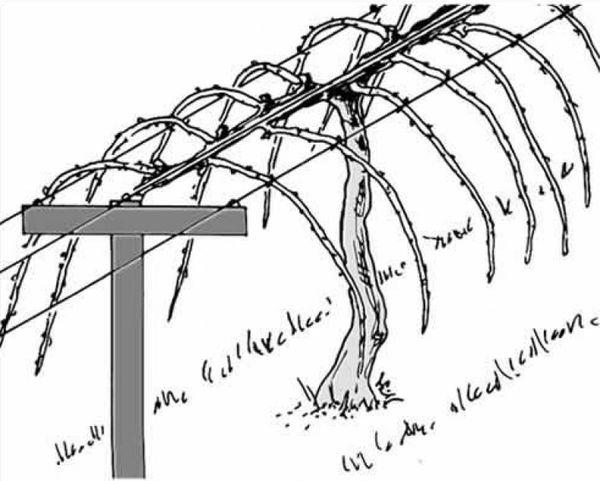
It's best to make the support no higher than 2-3 meters; it should be durable and as strong as possible. It's preferable to create a structure that can be easily bent to the ground along with the vine for winter sheltering or for treatment against diseases or pests.
Preparing for winter
Before wintering, remove weak and old shoots. Young seedlings are mulched at the roots, removed from the ground, and covered with agrofibre. Mature actinidia do not require insulation.
How to shape a vine
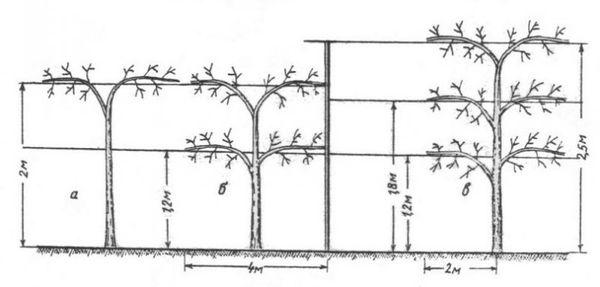
This actinidia variety requires shaping based on individual conditions. For the first 2-3 years, the plant is left unpruned to allow for vigorous growth. Then, each year, the shoots are pruned by half, leaving 3-4 fruiting vines. 50% of the annual growth is also removed. If the actinidia is older than 7-8 years, pruning away old branches that are thickening the bush, thereby rejuvenating the plant.
Methods of reproduction
Kolomikta is propagated in several ways, each of which is simple and reliable.
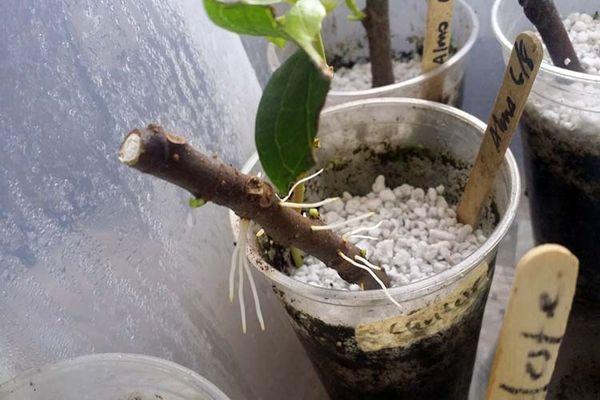
Green cuttings
Propagation by green cuttings is the most popular method. In the summer, bark-free shoots are cut and planted in moist soil made from a mixture of sand and peat at a 60° angle, with the central bud above ground. The soil is compacted, watered, and the shoots are covered with agrofibre, which is removed after 12-14 days. Before the autumn frosts, the cuttings are buried in fallen leaves or covered with spunbond. In the spring, the seedlings are transplanted to their permanent location.
Layering
In the spring, immediately after the leaves emerge, a long young shoot is bent toward the ground, secured with a staple, and covered with soil. The area is watered and mulched. The following spring, once the shoot has established roots, it is separated from the bush and planted in a prepared spot.
Seeds
The seed method is the most difficult and rarely used. Washed and dried seeds are placed in a cold place (freezer or buried in snow) for 90-100 days. They are then planted in the ground under plastic and watered. The greenhouse temperature should not drop below 23°C (73°F), and it should be ventilated periodically to remove condensation. The seedlings are planted in beds insulated for the winter. In the spring, they are transplanted to their permanent location.
Diseases and pests
Actinidia "Doctor Shimanovsky" rarely suffers from diseases or pests if properly cared for. However, like all plants, actinidia struggles to resist disease without human intervention.
You need to pay attention to the appearance of spots on leaves and berries; mold and holes should also be a warning sign.
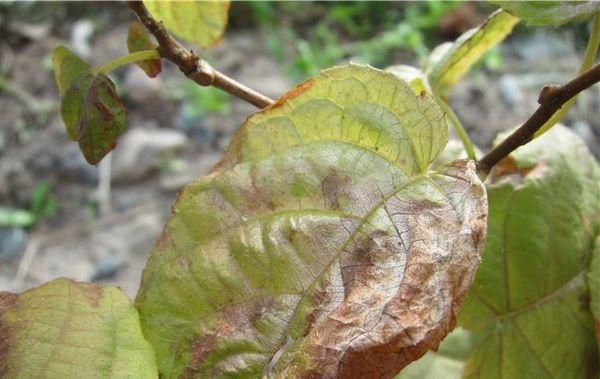 Infected parts of the crop are removed and burned, and the plant is treated with preparations.
Gray rot
If a gray coating appears on the berries, trunk, or leaves, this indicates gray mold. This disease can quickly destroy the actinidia. To prevent this, treat the vine with Fitosporin three times every 7 days in the spring, Skor after flowering, and a 3% Bordeaux mixture before winter.
Phyllostictosis
Actinidia "Dr. Shimanovsky" can be damaged by phyllostictosis, characterized by the appearance of brown-red spots on the leaves. This is caused by fungi that overwinter in fallen leaves. The disease can be prevented by collecting the fallen leaves and treating the plant with Tersel or Horus.
Leaf beetle
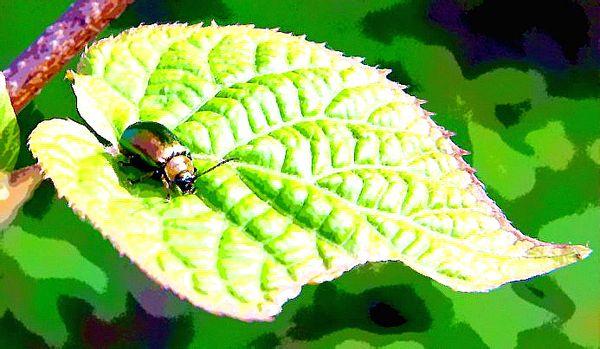
The leaf beetle is the most damaging insect to actinidia, causing severe damage to leaves, leaving only veins by the end of summer. The pests also destroy the berries, which become small and fall prematurely. To prevent leaf beetles from appearing, spray the vine with Karbofos or Karate in early spring, and with Bordeaux mixture in the fall.
Kishmish moth
The caterpillars of the Kishmishevsky looper bore holes in the leaves, ruining the shrub's ornamental appearance. The pest can be eliminated by loosening the soil where the looper pupae hide. Before flowering, actinidia can be sprayed with Iskra or Kinmiks, and after the flowers have fallen, with Tersel, Actellic, or Fufanon.
Harvesting and storage
Actinidia berries of the Doctor Shimanovsky variety ripen in late summer, but the harvest must be done several times, as they ripen unevenly. Berries can be picked a little early to prevent them from falling off; they will ripen quickly at room temperature. This will reduce their flavor, but the harvest will not be lost. Actinidia berries are used to make compotes and jams, and the berries are dried and added to pies and cakes.
Related posts:
 Planting and caring for actinidia in open ground, growing and propagating
 Rules for growing actinidia in Siberia, the nuances of planting and care
 Description of the 5 best varieties of actinidia kolomikta, planting and care instructions
 The best varieties of actinidia for growing in the Moscow region, planting and care
 Description and varieties of actinidia of the Arguta variety, planting and care
 The best grape varieties for growing in the Urals, planting and care rules in summer
 Is it possible to grow an apricot tree from a seed in your garden? How to plant and care for it?
 Growing and caring for hazelnuts in open ground, rules for planting hazelnuts